 GST & indirect tax
New GST Rules in 2026: GST 2.0 Explained, With Every Update Since September 2025
New GST rules in 2026: GST 2.0's 5% and 18% slabs plus 40% from 22 Sep 2025, the end of compensation cess, 3-day registration, faster refunds and every update since.
 Edited by Sumeet YadavFounder & editor, MSMETOOLS · fact-checked against official sources
Contents (10)
- 1. What GST 2.0 is
- 2. What changed for goods: the main moves
- 3. What changed for services
- 4. Worked example: a household's bills before and after
- 5. The end of compensation cess
- 6. Procedural changes: registration, refunds and appeals
- 7. Every notified change since September 2025
- 8. What is not yet in force
- 9. What businesses should check now
- 10. What to do next
If you searched for the "new GST rules", you probably want two things: what changed when GST 2.0 arrived in September 2025, and what has changed since. This page answers both. It is written for shoppers wondering why prices moved, and for business owners, accountants and finance teams who need the full list — the new slabs and what moved between them, the end of compensation cess, the faster registration and refund rules, the 2026 law amendments, and what is still pending. Each change is dated and marked as in force or not, checked against GST Council, CBIC and GSTN material in October 2026. Item-level detail is in our rate guides, linked throughout.
Quick answer
GST 2.0 took effect on 22 September 2025. It cut India's main GST slabs from four (5%, 12%, 18%, 28%) to two — 5% and 18% — with a 40% rate for luxury and sin goods. Compensation cess ended on 1 February 2026. Registration, refunds and appeals were also reformed.
Most 12% goods → 5%; most 28% goods → 18%; UHT milk, paneer, Indian breads, individual insurance → nil
Registration in 3 working days for low-risk applicants from 1 November 2025
90% provisional refunds for export and inverted-duty claims filed from 1 October 2025
2026: cess abolished (1 Feb), Finance Act 2026 (30 Mar), GSTAT backlog deadline (31 Jul), 57th Council (8 Oct) — decisions pending notification
What GST 2.0 is
When GST began on 1 July 2017 it had four main slabs — 5%, 12%, 18% and 28% — plus a compensation cess on top of the 28% slab for cars, tobacco, aerated drinks and coal. Over eight years the slabs produced classification disputes (is a product 12% or 18%?), inverted duty structures where inputs were taxed higher than outputs, and a cess that was supposed to end in 2022 but was extended to repay loans taken to compensate states during the pandemic.
The 56th GST Council meeting on 3 September 2025 approved what the government called a "simple tax": a standard rate of 18%, a merit rate of 5%, and a special demerit rate of 40% for a select few goods. The rate changes were notified on 17 September 2025 — Notification 9/2025-Central Tax (Rate) for goods rates, 10/2025 for nil-rated goods, with matching state and integrated tax notifications — and applied from 22 September 2025.
Two things did not change. The registration thresholds stayed where they were — ₹40 lakh for goods suppliers in most states and ₹20 lakh for services — and the special rates for gold (3%), cut diamonds (1.5%) and rough diamonds (0.25%) carried on.
GST slabs before and after 22 September 2025
| Before | After GST 2.0 | Typical goods and services |
|---|---|---|
Nil | Nil (list widened) | Fresh milk, UHT milk, paneer, roti and paratha, individual life and health insurance, 33 life-saving drugs |
5% | 5% | Packaged food, most medicines, hotel rooms up to ₹7,500, restaurants |
12% | Mostly 5% | Butter, ghee, namkeen, apparel up to ₹2,500, tractors, bicycles |
18% | 18% or 5% | Soaps, shampoo, toothpaste, biscuits, ice cream moved to 5%; most services stay at 18% |
28% (+ cess) | Mostly 18%; some 40% | ACs, TVs, cement, small cars, bikes up to 350 cc to 18%; large cars, aerated drinks, tobacco to 40% |
Nil
- After GST 2.0
Nil (list widened)
- Typical goods and services
Fresh milk, UHT milk, paneer, roti and paratha, individual life and health insurance, 33 life-saving drugs
5%
- After GST 2.0
5%
- Typical goods and services
Packaged food, most medicines, hotel rooms up to ₹7,500, restaurants
12%
- After GST 2.0
Mostly 5%
- Typical goods and services
Butter, ghee, namkeen, apparel up to ₹2,500, tractors, bicycles
18%
- After GST 2.0
18% or 5%
- Typical goods and services
Soaps, shampoo, toothpaste, biscuits, ice cream moved to 5%; most services stay at 18%
28% (+ cess)
- After GST 2.0
Mostly 18%; some 40%
- Typical goods and services
ACs, TVs, cement, small cars, bikes up to 350 cc to 18%; large cars, aerated drinks, tobacco to 40%
What changed for goods: the main moves
The rate annexures to the 56th Council's press release run to hundreds of entries. The headline moves:
To nil. UHT milk, pre-packaged and labelled paneer or chena, pizza bread, khakhra, chapati and roti (from 5%); paratha, parotta and other Indian breads (from 18%); 33 life-saving drugs and medicines (from 12%) and three more used for cancer and rare diseases (from 5%).
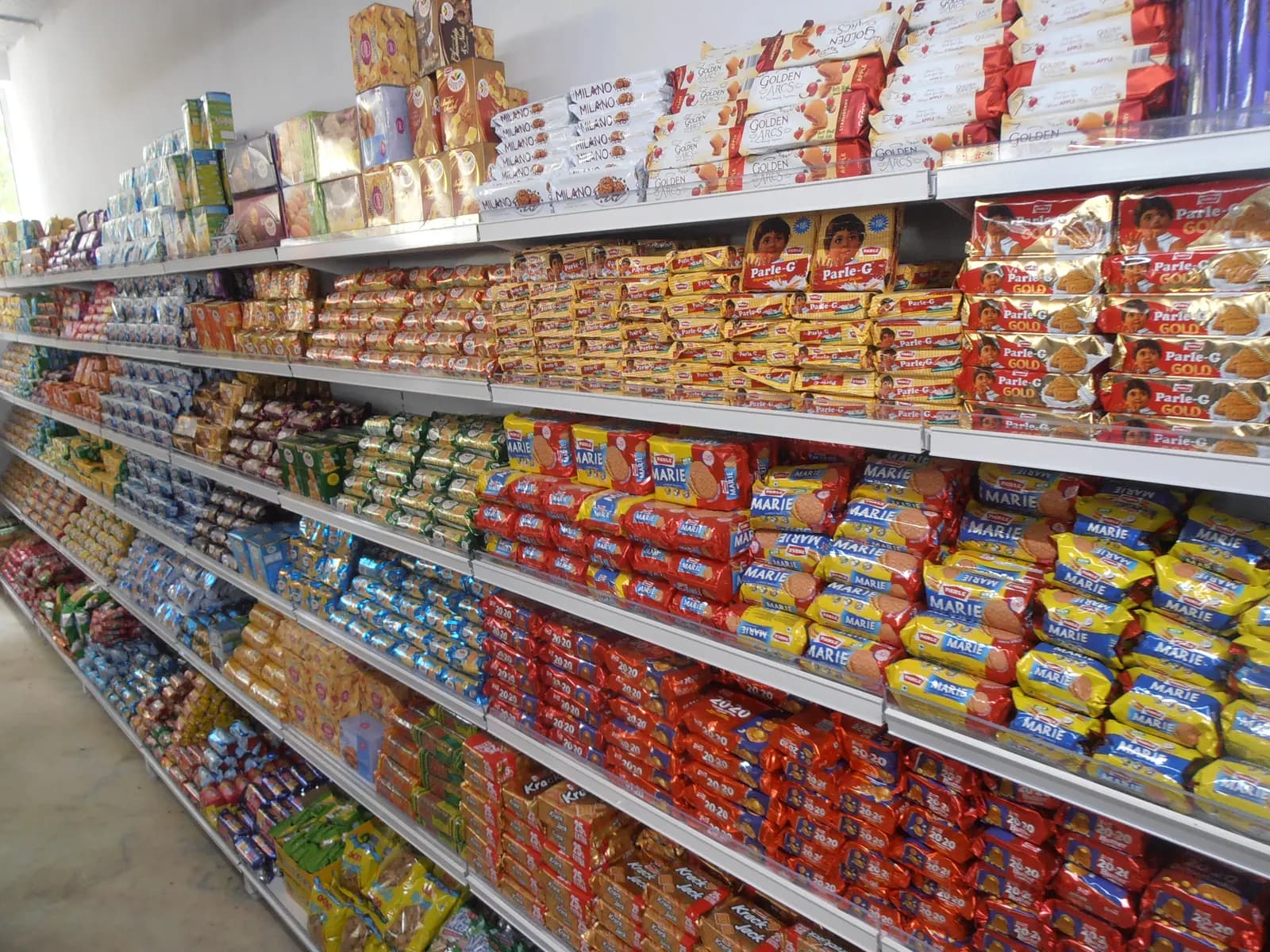
12% or 18% to 5%. Almost all packaged food — namkeen, bhujia, sauces, pasta, instant noodles, chocolates, coffee, cornflakes, biscuits, cakes, ice cream, butter, ghee, cheese — plus hair oil, soap bars, shampoo, toothpaste and toothbrushes, bicycles, tableware and kitchenware. Tractors and other farm machinery, renewable energy devices, most medicines and medical devices, and handicrafts and other labour-intensive goods also moved to 5%. Man-made fibre fell from 18% to 5% and man-made yarn from 12% to 5%, fixing an old inversion in textiles.
28% to 18%. Air-conditioners, all televisions, dishwashers, cement, small cars, motorcycles up to 350 cc, buses, trucks, ambulances and three-wheelers, and auto parts.
To 40%. Large and luxury cars, motorcycles above 350 cc, yachts and private aircraft, aerated and caffeinated sugary drinks — and, from 1 February 2026, pan masala, cigarettes and other tobacco products. These goods used to pay 28% plus a cess; the government's FAQ explains the 40% rate was set to keep the overall tax broadly where it was once the cess ended.
Upward moves. A few items went up because the 12% slab disappeared: apparel and footwear priced above ₹2,500 a piece moved to 18%, and coal moved from 5% plus cess to 18% without cess.
Rate guides by product
| Product or service | Rate now | Full guide |
|---|---|---|
| Restaurant food, packaged food, sweets | 5% (no input tax credit) in restaurants; mostly 5% on packaged food | GST on food |
| Milk, paneer, ghee, butter, curd, ice cream | Nil to 5% | GST on milk products |
| Medicines and medical devices | 5%; some nil | GST on medicine |
| Cars | 18% small, 40% large, 5% electric | GST on cars |
| Two-wheelers | 18% up to 350 cc, 40% above | GST on two-wheelers |
| ACs, TVs, laptops, appliances | 18% | GST on electronics |
| Mobile phones | 18% | GST on mobile phones |
| Cement | 18% | GST on cement |
| Garments and fabric | 5% up to ₹2,500, 18% above | GST on garments |
| Gold and jewellery | 3% | GST on gold |
| Individual health and life insurance | Nil (exempt) | GST on health insurance |
| Hotel rooms | 5% without ITC up to ₹7,500; 18% with ITC above | GST on hotel rooms |
| Goods transport (GTA) | 5% without ITC or 18% with ITC | GST on freight |
| Commercial and residential rent | 18% on commercial | GST on rent |
| Payment gateway and MDR fees | 18% on the fee | GST on online payments |
What changed for services
Most services stayed at 18% — telecom, banking, professional, IT and most business services. The Council concentrated its cuts on services used by households:
- Individual life and health insurance — term, ULIP, endowment, family floater and senior-citizen policies, and their reinsurance — became exempt, from 18%. Group policies stay at 18%.
- Hotel accommodation priced up to ₹7,500 a unit per day moved from 12% with input tax credit to 5% without ITC.
- Gyms, salons, barbers, yoga and wellness centres moved from 18% to 5% (no ITC).
- Restaurants stayed at 5% (no input tax credit), with 18% with ITC for restaurants in hotels charging above ₹7,500 for a room; the Council clarified that a standalone restaurant cannot opt for the higher rate.
- Local delivery through e-commerce operators — the delivery fee on a food or grocery app — was brought under section 9(5), with the operator paying 18%.
- Goods transport agencies keep a choice of 5% without ITC or 18% with ITC with credit, and multimodal transport without air legs moved to 5% with restricted ITC.
Where a service moved to a "5% without ITC" rate, the provider can no longer claim input tax credit on its costs, so the consumer saving is smaller than the headline cut suggests.
Worked example: a household's bills before and after
What GST 2.0 means in rupees depends on what you buy. Here is an illustrative set of purchases for a Bengaluru family, with the pre-tax value held constant to isolate the tax change.
| Purchase | Pre-tax value | Old GST | New GST | Old tax | New tax | Saving |
|---|---|---|---|---|---|---|
| Toothpaste, 4 tubes | ₹340 | 18% | 5% | ₹61.20 | ₹17.00 | ₹44.20 |
| Shampoo | ₹250 | 18% | 5% | ₹45.00 | ₹12.50 | ₹32.50 |
| Biscuits and chocolates | ₹400 | 18% | 5% | ₹72.00 | ₹20.00 | ₹52.00 |
| Ghee, 1 litre | ₹614 | 12% | 5% | ₹73.68 | ₹30.70 | ₹42.98 |
| Packaged namkeen | ₹300 | 12% | 5% | ₹36.00 | ₹15.00 | ₹21.00 |
| Individual health insurance premium (annual) | ₹20,000 | 18% | Nil | ₹3,600.00 | ₹0 | ₹3,600.00 |
| 1.5-tonne split AC | ₹35,000 | 28% | 18% | ₹9,800.00 | ₹6,300.00 | ₹3,500.00 |
| Total | ₹56,904 | ₹13,687.88 | ₹6,395.20 | ₹7,292.68 |
The everyday grocery items save about ₹193 a month between them, roughly 10% of their price. The big rupee savings come from occasional purchases — the insurance renewal and the appliance — because the cuts there were steep and the amounts are large. Real shelf prices did not always fall by the full amount: some companies adjusted pack sizes or prices, and a business that lost input tax credit (for example on newly exempt insurance) has a higher cost base to recover.
Use the GST calculator to rework any line at your own prices.
The end of compensation cess
Compensation cess was introduced in 2017 to make up states' revenue shortfall for five years. When that period ended in June 2022, it was kept on to repay the loans the Centre had raised in 2020-21 and 2021-22 to compensate states.
GST 2.0 wound it down in two steps:
- 22 September 2025 — cess was removed from cars, aerated drinks, coal and every other good except tobacco and pan masala. Those goods were moved directly to 18% or 40% without cess.
- 1 February 2026 — once the loan obligations were met, cess was abolished on the remaining goods. Under Notification 19/2025-Central Tax (Rate) of 31 December 2025, cigarettes, chewing tobacco, zarda, gutkha, unmanufactured tobacco and pan masala moved to the 40% rate, with GST calculated on the retail sale price. To keep the overall tax on these goods high, the Centre raised central excise duty on tobacco products and introduced a Health Security se National Security cess on pan masala, levied on manufacturing capacity. Bidis moved to 18%.
For most businesses, the practical effect is simple: there is no cess column on invoices any more, no cess to pay in GSTR-3B, and no cess credit to track. Businesses that still held unused compensation cess credit on 1 February 2026 should take advice on its treatment rather than assume it can be used against GST.
Procedural changes: registration, refunds and appeals
The 56th Council paired the rate cuts with process reforms. These were notified separately, on their own dates.
Registration in three working days (from 1 November 2025). Notification 18/2025-Central Tax added two rules to the CGST Rules. Rule 9A lets the portal grant registration electronically within 3 working days to applicants identified as low risk by data analysis. Rule 14A is an optional simplified scheme for businesses that expect their output tax on supplies to registered buyers to stay within ₹2.5 lakh a month — the Council estimated this would cover about 96% of new applicants. It needs Aadhaar authentication and allows only one registration per PAN in a state. You can leave the scheme by filing REG-32; from 1 April 2026 you need to have filed returns for at least one tax period first. Our GST registration guide walks through the application.
Faster refunds (claims filed from 1 October 2025). CBIC's Instruction 06/2025-GST of 3 October 2025 told officers to sanction 90% of a refund claim provisionally, on the basis of the system's risk assessment, for exports and supplies to SEZs (zero-rated supplies) and — as an interim administrative step — for credit accumulated through an inverted duty structure. The law change that puts the inverted-duty part on a statutory footing is in the Finance Act 2026 but, as of October 2026, had not been brought into force.
The GST Appellate Tribunal. After years of delay, GSTAT began accepting appeals online on 24 September 2025, with benches starting hearings from early 2026. The Council set 30 June 2026 as the last date for filing the backlog of old appeals; a notification of 30 June 2026 extended it to 31 July 2026 after the portal struggled with the volume. Orders communicated from 1 May 2026 follow the normal three-month limit under section 112. The Principal Bench also acts as the national appellate authority for advance rulings.
Post-sale discounts. Circular 251/08/2025-GST (12 September 2025) clarified that financial or commercial credit notes for post-sale discounts do not require the buyer to reverse input tax credit, and when such discounts count as consideration for promotional work by a dealer.
Every notified change since September 2025
GST 2.0 and later changes — in force
3 Sep 2025
56th GST Council approves the 5%/18%/40% structure and process reforms
12 Sep 2025
Circular 251/08/2025-GST on post-sale discounts
22 Sep 2025
New rates for all services and all goods except tobacco and pan masala; cess removed from most goods
24 Sep 2025
GSTAT starts accepting appeals online
1 Oct 2025
90% provisional refunds for zero-rated and inverted-duty claims filed from this date (Instruction 06/2025)
1 Nov 2025
Registration in 3 working days (Rule 9A) and simplified Rule 14A scheme
Jan 2026 period
GSTR-3B Table 5.1 interest auto-calculated by the portal
1 Feb 2026
Compensation cess abolished; tobacco and pan masala at 40% on retail sale price
30 Mar 2026
Finance Act 2026: intermediary services' special place-of-supply rule omitted
1 Apr 2026
Rule 14A exit after one tax period; GSTAT can be notified as interim appellate authority for advance rulings
31 Jul 2026
Last date for backlog GSTAT appeals (extended from 30 June)
8 Oct 2026
57th GST Council meets — decisions await notification
Returns got stricter alongside. Since the July 2025 tax period, the outward-tax figures auto-filled in GSTR-3B from GSTR-1 cannot be edited, and returns more than 3 years past their due date can no longer be filed. From the January 2026 period the portal also works out interest on late payments itself, using the lowest cash-ledger balance between the due date and the payment date. These are GSTN changes rather than GST 2.0 decisions, but they arrived in the same window and matter just as much for day-to-day compliance.
Intermediary services. The Finance Act 2026 omitted section 13(8)(b) of the IGST Act from 30 March 2026. An Indian agent or broker arranging supplies for a foreign client now has the place of supply at the client's location, so the service can qualify as an export. Bills raised before that date follow the old rule.
What is not yet in force
Some changes have been agreed or enacted but still need a notification. Don't apply them until they are notified.
- Post-sale discounts by credit note (sections 15 and 34). The Finance Act 2026 removes the requirement that a discount be agreed before the sale, letting it reduce the value through a GST credit note if the buyer reverses the matching credit. The sections commence on a date to be notified; as of October 2026 that date had not been announced.
- Statutory 90% provisional refund for inverted duty, and refunds on low-value exports (section 54). Also enacted in the Finance Act 2026 and awaiting notification. The inverted-duty part already runs administratively.
- Simplified registration for small e-commerce sellers across states. Approved in principle by the 56th Council; detailed rules have not yet been put to the Council.
- Ship-to GSTIN in e-way bills. Announced for 1 August 2026 but put on hold by GSTN on 29 July 2026 — see our e-way bill guide.
- 57th GST Council (8 October 2026). Expected to take up input tax credit protection for buyers whose suppliers don't pay the tax, wider credit on some blocked items, decriminalisation and higher prosecution thresholds, and further registration and refund reforms. Rate changes were not the focus. Until CBIC and the states notify specific changes, the current rules apply.
What businesses should check now
GST 2.0 housekeeping for businesses
0/7Transition invoices. The government's FAQ is clear that GST is charged on supply, so the new rate applied to goods and services supplied on or after 22 September 2025, regardless of when the stock was bought. Where the supply, the invoice and the payment fell on different sides of the date, section 14 of the CGST Act fixes the time of supply — and so the rate. Broadly, the new rate applies when both the invoice and the payment came after the change; if either came before it, the old rate can still apply, so work through each straddling transaction rather than assuming.
Input tax credit on old stock. Credit already claimed on stock bought at the old, higher rates stays usable — you don't have to reverse it because the output rate fell. The exception is goods or services that became exempt: from 22 September 2025, credit relating to those supplies must be reversed. Packed paneer and individual insurance policies are the best-known examples. For the mechanics, see our input tax credit guide.
Official links
- 56th GST Council — PIB press release (PDF)Rates, phasing, process reforms
- FAQs on GST rate rationalisation (PDF)Effective dates, ITC, cess
- CGST (Rate) notifications9/2025, 10/2025, 19/2025 and later
- CGST notificationsRegistration and procedure (e.g. 18/2025-CT)
- GSTN advisory — interest in GSTR-3B (PDF)From the January 2026 period
- GST portalRegistration, returns, refunds, advisories
What to do next
If you run a business, spend an hour on the checklist above, and set a reminder to check CBIC's notifications in the weeks after the 57th Council meeting. If you are new to GST, start with what GST is and how to calculate GST, then look up your own products in the rate guides above or with the HSN code finder. We update this page as each new change is notified.
This is general information, not legal or tax advice — confirm on the official source or with a professional.
Frequently asked questions
GST 2.0 is the name for the overhaul approved by the 56th GST Council on 3 September 2025. It replaced the four main slabs of 5%, 12%, 18% and 28% with two — 5% and 18% — plus a 40% rate for a short list of luxury and sin goods, and paired the rate cuts with process reforms in registration, refunds and appeals.
The new rates apply to supplies made on or after 22 September 2025, for both goods and services. Cigarettes, pan masala, gutkha, chewing tobacco and bidi stayed on the old rates plus compensation cess until 1 February 2026, when they moved to the new structure. The procedural changes have their own dates: 3-day registration from 1 November 2025 and 90% provisional refunds for claims filed from 1 October 2025.
Yes, as general slabs. Most 12% items moved to 5% and most 28% items to 18%. A few goods that were at 28% plus cess — large cars, aerated sugary drinks, pan masala, tobacco — now sit at 40%. Special low rates continue for gold and silver (3%), cut diamonds and rough diamonds, and some construction services.
Yes. Compensation cess was removed from most goods on 22 September 2025 and abolished on all goods and services from 1 February 2026. On that date tobacco products and pan masala moved to 40% GST on retail sale price, with a higher central excise duty on tobacco and a new Health Security se National Security cess on pan masala.
The main 2026 changes are the end of compensation cess on 1 February; the Finance Act 2026, which removed the special place-of-supply rule for intermediary services from 30 March; GSTR-3B interest auto-calculation from the January 2026 period; the GSTAT appeal window for old cases, which closed on 31 July; and the 57th GST Council meeting on 8 October 2026, whose decisions still need notification.
The 57th meeting was held on 8 October 2026 and was expected to focus on process reforms — input tax credit protection for genuine buyers, decriminalisation, registration and refunds — rather than rates. Council decisions only take effect once notified by CBIC and the states, so as of this update no change from it is in force. Check CBIC's notifications page before acting on any report.
Sources & verification
Figures on this page were checked against the sources below when it was last reviewed on 8 October 2026. Each rate and limit is stored once with its own official source and review date, and official update channels are monitored daily so changes are picked up. How we verify
- 1.Recommendations of the 56th GST Council meeting (PIB press release with annexures) — GST Council / PIB · accessed 8 October 2026
- 2.FAQs on GST rate rationalisation (56th GST Council) — GST Council / Ministry of Finance · accessed 8 October 2026
- 3.Notification No. 9/2025–State Tax (Rate), Maharashtra (mirrors 9/2025–Central Tax (Rate)) — Government of Maharashtra, Finance Department · accessed 8 October 2026
- 4.Advisory on interest collection and related enhancements in GSTR-3B — GSTN · accessed 8 October 2026
- 5.Government extends GSTAT appeal filing deadline till 31 July — All India Radio News (Prasar Bharati) · accessed 8 October 2026
- 6.Rules for GST registration in 3 working days from 1 November 2025 notified — TaxGuru · accessed 8 October 2026
- 7.CBIC instructions on 90% provisional refund through risk identification — VJM Global · accessed 8 October 2026
- 8.New taxation regime for tobacco and pan masala from 1 February 2026 — TaxTMI · accessed 8 October 2026
- 9.Finance Act 2026 enacted on 30.03.2026: key amendments in valuation, refunds and place of supply — Taxo · accessed 8 October 2026
- 10.Recent updates in GST: a review of statutory, administrative and judicial developments (Sept 2025–Sept 2026) — TaxGuru · accessed 8 October 2026
- 11.57th GST Council meeting rescheduled to October 8 — Free Press Journal · accessed 8 October 2026
MSMETOOLS is an independent platform and is not affiliated with any government agency, ministry or department.
Tools for this
GST Calculator (India)
Calculate GST for your sales and purchases with current rates.
HSN Code Finder (India)
Find the correct HSN/SAC code for your product.
Invoice Generator
Create professional invoices with tax, logo and custom details.
Related guides
 GST on Cars 2026: 18% vs 40% Rates, EVs, Used Cars & ITCRead guide
 GST Registration 2026: Documents, Limits & Online ProcessRead guide
 GST on Milk Products 2026: Paneer, Ghee, Butter, Curd RatesRead guide
 GST on Medicine 2026: 5% Rate, Nil Drugs, HSN 3004 & MRPRead guide
Official links open the government site in a new tab.