 GST & indirect tax
GST on Bikes and Two-Wheelers in 2026: Rates, EVs, Bicycles and Insurance
GST on bikes in 2026: 18% up to 350 cc, 40% above, 5% on electric two-wheelers and bicycles, 18% on insurance. Worked ₹ on-road prices and ITC rules.
 Edited by Sumeet YadavFounder & editor, MSMETOOLS · fact-checked against official sources
Contents (10)
- 1. GST on bikes in 2026: the rate table
- 2. Is a 350 cc bike 18% or 40%?
- 3. How to calculate GST on a bike: worked ₹ examples
- 4. From ex-showroom to on-road price
- 5. GST on electric scooters and e-bikes
- 6. GST on bicycles and cycle parts
- 7. GST on bike insurance
- 8. Servicing, spare parts and used bikes
- 9. Can a business claim ITC on two-wheelers?
- 10. What to do next
Two-wheeler prices in India were reset on 22 September 2025, when GST 2.0 split motorcycles into two bands at 350 cc. If you're buying a commuter bike, a scooter, a big-engine motorcycle, an electric scooter or a bicycle, or you sell or insure them, this guide gives the 2026 position: which bikes pay 18% and which pay 40%, how EVs and cycles are taxed, worked ₹ on-road prices, GST on insurance and servicing, used-bike rules and input tax credit (ITC) limits. Rates were checked against the notified rate schedule and the GST Council's FAQs in October 2026.
Quick answer
From 22 September 2025, motorcycles and scooters up to 350 cc pay 18% GST (down from 28%), and motorcycles above 350 cc pay 40% (up from 28% + 3% cess). There is no compensation cess on top.
Electric scooters, e-bikes and e-bicycles: 5%
Bicycles and bicycle parts: 5%, down from 12%
Bike spare parts and accessories: 18%, down from 28%
Two-wheeler insurance: 18% on the premium
Businesses generally can't claim ITC on two-wheelers — section 17(5)(a)
GST on bikes in 2026: the rate table
The 56th GST Council replaced India's 5%, 12%, 18% and 28% slabs with two main rates, 5% and 18%, and a special 40% rate for a short list of luxury and sin goods. At the same time it ended compensation cess on vehicles. For two-wheelers, the result was a cut for almost every bike Indians actually buy, and a rise for premium motorcycles.
GST on two-wheelers and cycles from 22 Sep 2025
| Vehicle (HSN) | Old GST + cess | GST now |
|---|---|---|
Motorcycles, scooters and mopeds up to 350 cc (8711) | 28% | 18% |
Motorcycles above 350 cc (8711) | 28% + 3% cess | 40% |
Electric scooters and motorcycles (87) | 5% | 5% (unchanged) |
Bicycles and delivery tricycles, not motorised (8712) | 12% | 5% |
Electric bicycles | 5% | 5% |
Motorcycle parts and accessories (8714) | 28% | 18% |
Bicycle parts and accessories (8714) | 12% | 5% |
EV chargers and charging stations (8504) | 5% | 5% |
Motorcycles, scooters and mopeds up to 350 cc (8711)
- Old GST + cess
28%
- GST now
18%
Motorcycles above 350 cc (8711)
- Old GST + cess
28% + 3% cess
- GST now
40%
Electric scooters and motorcycles (87)
- Old GST + cess
5%
- GST now
5% (unchanged)
Bicycles and delivery tricycles, not motorised (8712)
- Old GST + cess
12%
- GST now
5%
Electric bicycles
- Old GST + cess
5%
- GST now
5%
Motorcycle parts and accessories (8714)
- Old GST + cess
28%
- GST now
18%
Bicycle parts and accessories (8714)
- Old GST + cess
12%
- GST now
5%
EV chargers and charging stations (8504)
- Old GST + cess
5%
- GST now
5%
These rates come from Notification No. 9/2025–Central Tax (Rate), which replaced the 2017 goods rate schedule from 22 September 2025. Motorcycles up to 350 cc sit in its Schedule II (18%), motorcycles above 350 cc in Schedule III (40%), and bicycles and electric vehicles in Schedule I (5%). The rate applies to every bike supplied on or after that date, including dealer stock bought earlier at 28%.
Industry has asked for change since. In November 2025, the chief executive of one of the largest premium motorcycle makers said it was talking to the government about a single 18% rate for all motorcycles. As of October 2026, no such change has been notified, and the GST Council's meeting rescheduled to 7 October 2026 was reported to be focused on credit and refund issues rather than rate cuts.
Is a 350 cc bike 18% or 40%?
This is the most-asked question about the new rules, and the answer is clear: 350 cc is 18%. The GST Council's FAQs say the 40% rate applies only to motorcycles of engine capacity exceeding 350 cc, so anything at or below 350 cc stays at 18%. The notification's wording for the 18% entry — motorcycles, mopeds and cycles with an auxiliary motor, "not exceeding 350 cc" — says the same thing.
That puts the dividing line in an interesting place for buyers:
- Commuters, scooters and 150–250 cc bikes — the bulk of the market — all moved from 28% to 18%.
- 349 cc and 350 cc retro and roadster models also got the cut, so their showroom prices fell along with the commuter segment.
- 373 cc, 390 cc, 400 cc, 450 cc and larger bikes moved from 31% (28% GST plus 3% cess) to 40%, so their prices rose.
Engine capacity is taken from the vehicle's type-approval and registration documents, not the marketing name. A bike badged "400" with a 373 cc engine is still above 350 cc and pays 40%. The tax invoice shows the HSN (8711) and the rate applied — check it before you pay the balance.
How to calculate GST on a bike: worked ₹ examples
GST is charged on the transaction value before tax. The examples below hold the pre-tax price constant so you can see the effect of the rate change alone; real showroom prices also moved with each manufacturer's own pricing.
| Bike | Pre-tax price | Tax before 22 Sep 2025 | Price then | GST now | Price now | Change |
|---|---|---|---|---|---|---|
| 125 cc scooter | ₹80,000 | 28% = ₹22,400 | ₹1,02,400 | 18% = ₹14,400 | ₹94,400 | −₹8,000 |
| 350 cc roadster | ₹1,60,000 | 28% = ₹44,800 | ₹2,04,800 | 18% = ₹28,800 | ₹1,88,800 | −₹16,000 |
| 390 cc sports bike | ₹2,50,000 | 28% + 3% = ₹77,500 | ₹3,27,500 | 40% = ₹1,00,000 | ₹3,50,000 | +₹22,500 |
| Electric scooter | ₹1,00,000 | 5% = ₹5,000 | ₹1,05,000 | 5% = ₹5,000 | ₹1,05,000 | No change |
How to calculate GST on a 125 cc bike from the showroom price. Dealers quote an ex-showroom price that already includes GST. To find the tax inside it, multiply by the rate and divide by 100 plus the rate. For a 125 cc bike quoted at ₹94,400: ₹94,400 × 18 ÷ 118 = ₹14,400 of GST, leaving a pre-tax value of ₹80,000. For a bike above 350 cc quoted at ₹3,50,000: ₹3,50,000 × 40 ÷ 140 = ₹1,00,000 of GST. For an electric scooter at ₹1,05,000: ₹1,05,000 × 5 ÷ 105 = ₹5,000.
On a tax invoice from a dealer in your own state, the GST is split equally into CGST and SGST — ₹7,200 each on the 125 cc example. If you buy from a dealer in another state, the full amount appears as IGST, but the total is the same.
From ex-showroom to on-road price
GST is only one part of what you pay to ride away. The on-road price stacks four or five items, each with its own tax treatment:
- Ex-showroom price — the bike's price including GST at 18%, 40% or 5%.
- Road tax and registration — levied by your state under its motor vehicles tax law, usually as a percentage of the vehicle's cost that varies by state, fuel type and price band. Many states charge EVs a reduced rate or none. No GST is charged on road tax or registration fees.
- Insurance — a general-insurance service taxed at 18% on the whole premium. New two-wheelers are sold with multi-year third-party cover, so the first premium is larger than later renewals.
- Accessories — helmets, crash guards, seat covers and the like, billed at their own rates. Helmets and most bike accessories attract 18%.
- Extended warranty, roadside assistance and handling — services at 18% if billed separately.
On-road example (125 cc scooter, illustrative).
| Item | Amount | GST inside |
|---|---|---|
| Ex-showroom price | ₹94,400 | ₹14,400 |
| State road tax and registration (assumed — check your RTO) | ₹9,000 | Nil |
| Insurance: ₹6,000 premium + 18% | ₹7,080 | ₹1,080 |
| Helmet and accessories: ₹2,500 + 18% | ₹2,950 | ₹450 |
| On-road price | ₹1,13,430 | ₹15,930 |
About 14% of this on-road price is GST. Road tax is the main figure that differs between states, which is why the same scooter can cost several thousand rupees more in one city than another even though the GST is identical everywhere.
GST on electric scooters and e-bikes
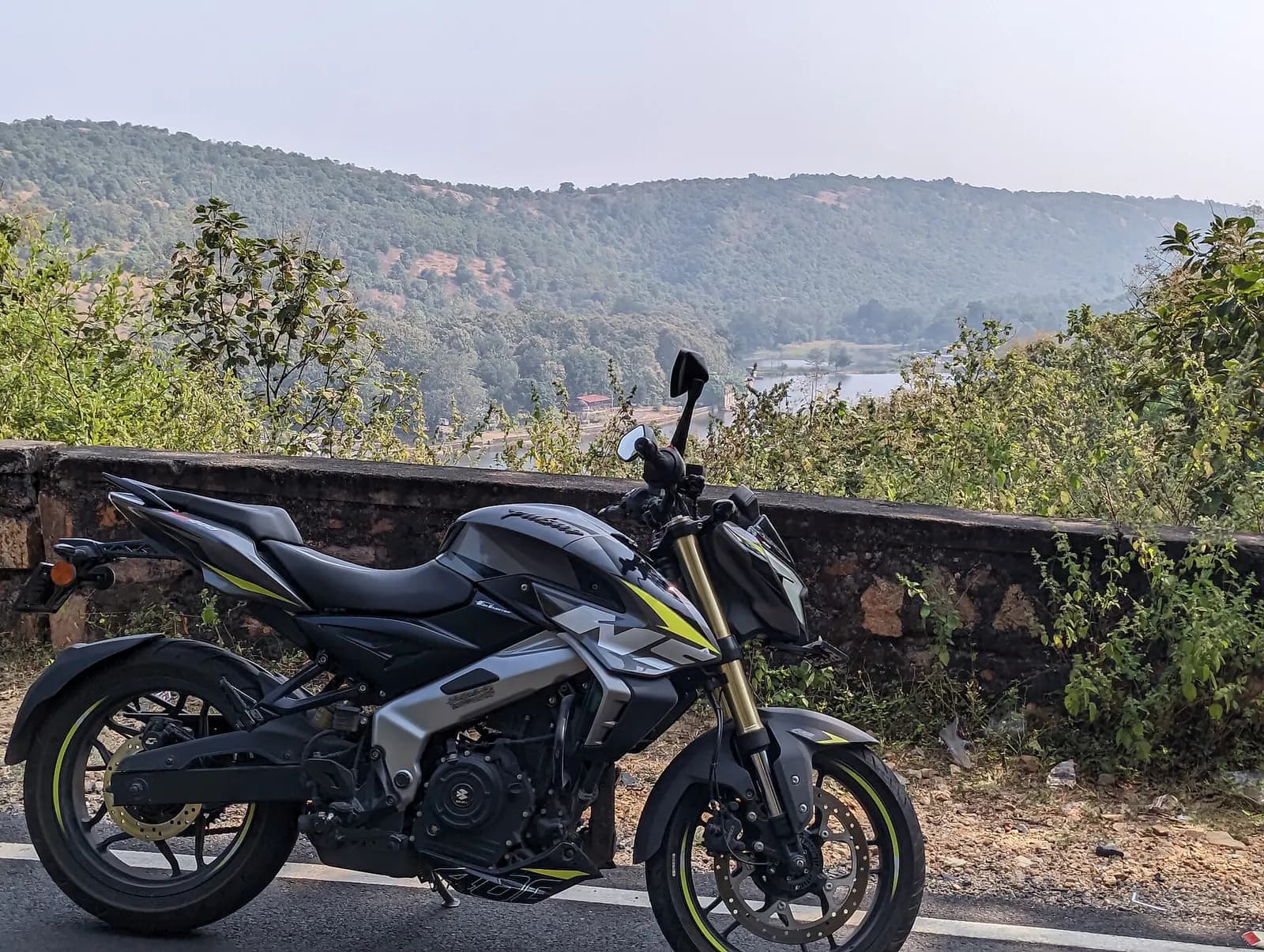
Electric two-wheelers sit in a single entry for "electrically operated vehicles", which covers two- and three-wheelers that run solely on battery power and expressly includes e-bicycles. They attract 5%, whatever the price, motor power or brand — the same rate that has applied since 2019 and that GST 2.0 left alone. Chargers and charging stations for EVs are also at 5%.
The 5% rate applies only to vehicles running solely on electricity. A hybrid two-wheeler with a petrol engine is classified as a motorcycle under 8711 and pays 18% or 40% depending on its engine size. Replacement lithium-ion battery packs bought separately are goods under heading 8507 and attract 18%, not the vehicle's 5% — worth knowing when you budget for a battery replacement after the warranty ends.
Because the gap between petrol and electric narrowed from 23 percentage points (28% vs 5%) to 13 (18% vs 5%), the GST advantage of a ₹1,00,000 electric scooter over a petrol one at the same pre-tax price is now ₹13,000 rather than ₹23,000. State road-tax waivers and lower running costs still tilt the total cost in favour of EVs in many states.
GST on bicycles and cycle parts
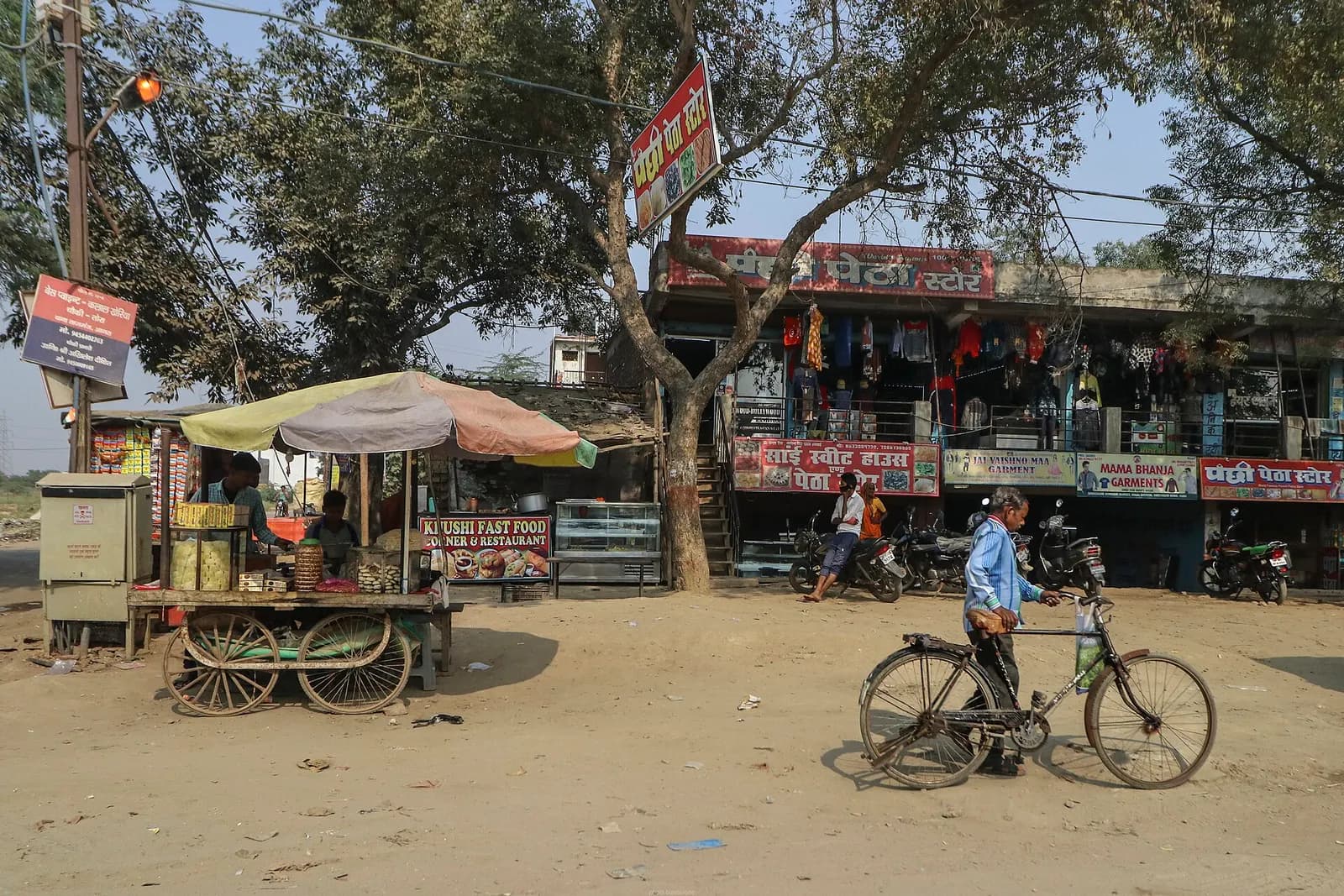
Bicycles were one of the "common man" items the Council moved to the lowest rate. Bicycles and other cycles that are not motorised, including delivery tricycles, now attract 5% instead of 12%, and their parts and accessories — tyres for bicycles, chains, saddles, brakes, rims — moved down with them.
Example. A geared cycle with a pre-tax price of ₹8,000 used to carry ₹960 of GST, for a total of ₹8,960. At 5%, GST is ₹400 and the price is ₹8,400 — ₹560 cheaper. A children's bicycle at ₹4,000 before tax now costs ₹4,200 instead of ₹4,480. An electric bicycle priced at ₹30,000 before tax carries ₹1,500 of GST at the EV rate.
For cycle dealers, the cut has a side effect: if they bought stock or parts at 12% and now sell at 5%, input credit can build up in their ledger. The Council's FAQs say credit already in the ledger can be used against any output tax, but a refund for an inverted duty structure is not available where the input and output are the same goods taxed at different rates at different times. Dealers should plan purchases so that unused credit does not pile up.
GST on bike insurance
Every motor insurance policy — third-party only, standalone own-damage or comprehensive — attracts 18% GST on the premium. The September 2025 exemption covered only individual life and individual health policies; it did not touch motor insurance. The one cut in motor cover was for third-party insurance of goods carriages — trucks and tempos — which moved from 12% to 5% with ITC. Two-wheelers are not goods carriages, so that cut does not apply to them.
Renewal example. A comprehensive policy on a three-year-old 150 cc bike with a premium of ₹2,500 before tax carries ₹450 of GST, for a total of ₹2,950. Add-ons such as zero depreciation or roadside assistance are part of the same policy and taxed at the same 18%. If a claim is settled, the insurer's payout carries no GST; but the garage's repair bill, which you may pay part of as a deductible, includes GST on parts and labour.
For a full view of how GST works on other policies — including the life and health exemption — see our guide to GST on health insurance.
Servicing, spare parts and used bikes
Running costs became cheaper too. Parts and accessories of motorcycles (heading 8714) moved from 28% to 18% — this covers everything from brake shoes and clutch plates to mirrors and crash guards, for bikes of every engine size. Labour for servicing and repairs is a service taxed at 18%.
Service-bill example. Parts ₹1,200 + labour ₹500 = ₹1,700 before tax. GST at 18% on both is ₹306, so the bill is ₹2,006. Before September 2025, the parts alone would have carried ₹336 of GST at 28%, making the tax ₹426 — ₹120 more on a routine service.
| Service-bill line | Pre-tax | GST before 22 Sep 2025 | GST now |
|---|---|---|---|
| Spare parts (brake shoes, oil filter, chain set) | ₹1,200 | 28% = ₹336 | 18% = ₹216 |
| Labour | ₹500 | 18% = ₹90 | 18% = ₹90 |
| Bill total | ₹1,700 | ₹2,126 | ₹2,006 |
Engine oil is billed as goods at its own rate, and a free service under the manufacturer's schedule usually still carries GST on the parts and consumables you pay for. Ask the workshop for a tax invoice rather than a plain estimate slip — without it you have no record of the GST charged if you later dispute a bill.
Used bikes. A private sale between two individuals carries no GST — it is not a supply in the course of business. A registered used-vehicle dealer that buys from individuals and resells without claiming input credit can pay GST only on its margin under Rule 32(5) of the CGST Rules. If a dealer buys a used scooter for ₹45,000 and sells it for ₹52,000, the taxable value is ₹7,000, at the rate notified for old and used vehicles. If the margin is negative, no GST is due.
Booked before the change? Section 14 of the CGST Act decides the rate when the rate changes mid-transaction. If the invoice was raised on or after 22 September 2025, the new rate applies even if you paid a booking amount earlier. Only where both the invoice and the full payment were made before the change did the old rate apply. If a dealer charged 28% on a post-change invoice, ask for a credit note.
Can a business claim ITC on two-wheelers?
Section 17(5)(a) of the CGST Act blocks input tax credit on motor vehicles for transporting people with an approved seating capacity of 13 or fewer, including the driver — which takes in every motorcycle and scooter. The block lifts only where the business uses the vehicle for:
- further supply of such vehicles — manufacturers and dealers claim credit in the normal way;
- transporting passengers — for example a bike-taxi operator running its own fleet; or
- imparting training on driving them — a licensed driving school.
Clause (ab) extends the block to insurance, servicing, repair and maintenance of the same vehicles, with the same exceptions. So a dealer can claim credit on its demo bikes' insurance and repairs; a consultancy that buys a scooter for its office boy cannot.
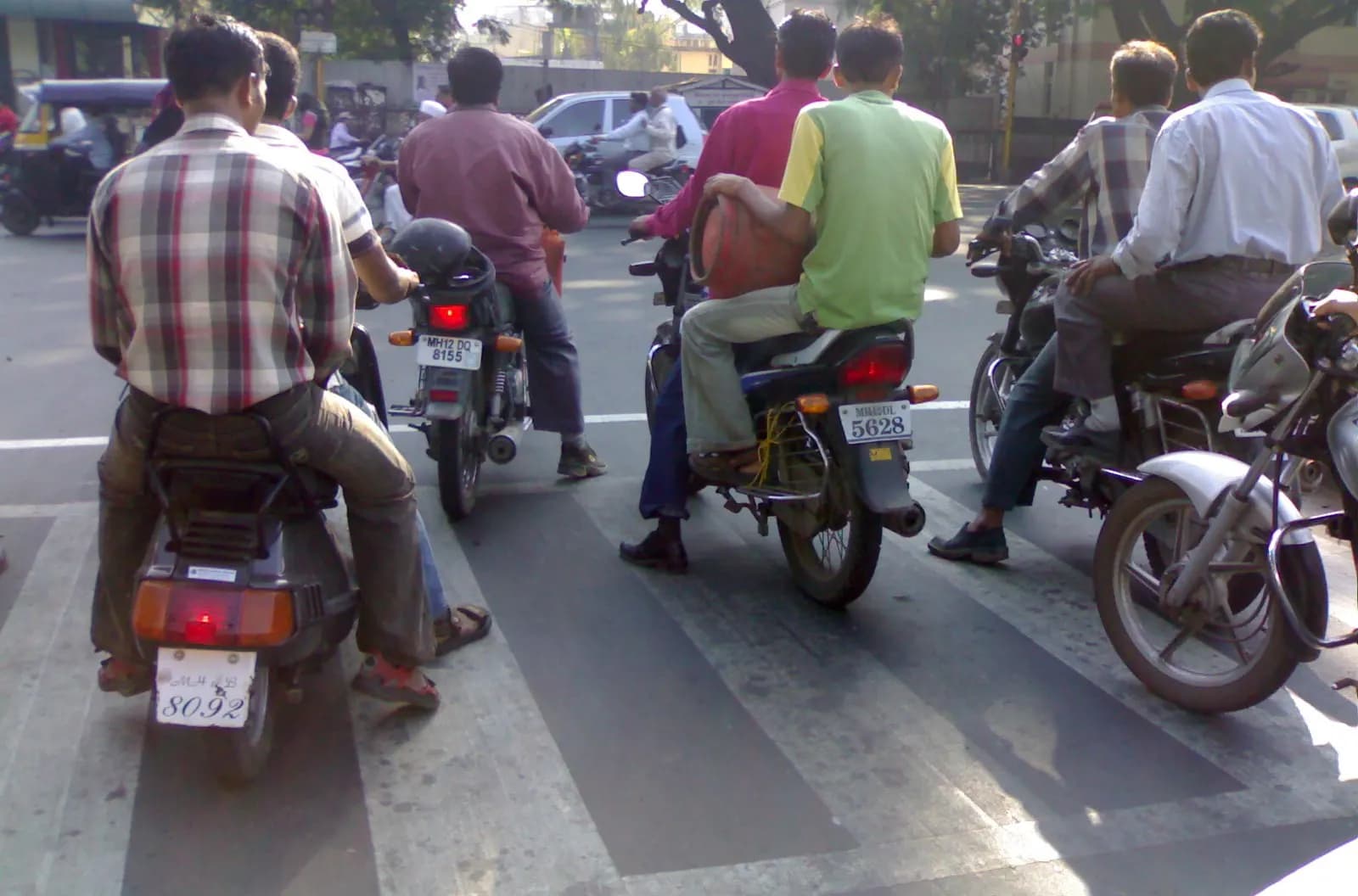
Example. A Jaipur trading firm buys two 125 cc scooters for its sales staff at ₹94,400 each. The ₹28,800 of GST is not creditable; the full ₹1,88,800 becomes the asset's cost for income-tax depreciation, and the GST on their insurance and servicing is a cost too. Delivery businesses that use two-wheelers only to carry goods sometimes argue the block doesn't apply because the vehicle isn't used to carry passengers; that position has been contested, so take advice before claiming.
Two other points catch people out. Gig workers and delivery riders who are not registered for GST cannot claim any credit, so the full GST on their bike, insurance and servicing is part of their cost — the only relief is the lower 18% rate. And a registered business that later sells a used company bike must charge GST on that sale; because no credit was taken on the purchase, the valuation rules for such vehicles can allow tax on the margin rather than the full price, so check with your accountant before you raise the invoice.
Before you sign the bike invoice
0/6Official links
- Notification 9/2025–Central Tax (Rate)Rate schedules — HSN 8711, 8712, 8714 and electric vehicles
- PIB FAQs on GST rate rationalisation350 cc rule, bicycles, cess removal
- 56th GST Council recommendationsVehicle and insurance rate tables
- Section 17, CGST ActBlocked ITC on motor vehicles
- Section 14, CGST ActWhich rate applies when the rate changes
- Rule 32, CGST RulesMargin scheme for used vehicles
What to do next
Check the engine capacity of the bike you want against the 350 cc line, then use the GST calculator to see how much of the ex-showroom price is tax and the EMI calculator to plan a loan. If you're comparing a bike with a small car, our guide to GST on cars covers the 18% and 40% car bands, and the input tax credit guide explains what a business can and can't claim.
This is general information, not legal or tax advice — confirm on the official source or with a professional.
Frequently asked questions
Since 22 September 2025, motorcycles and scooters with engines up to 350 cc attract 18% GST, down from 28%. Motorcycles above 350 cc attract 40%, up from 28% plus 3% compensation cess. Electric two-wheelers attract 5%. No cess is charged on top of any of these rates.
A 125 cc motorcycle or scooter attracts 18%. On a pre-tax price of ₹80,000, GST is ₹14,400 and the ex-showroom price is ₹94,400. Before 22 September 2025, the same bike paid 28%, or ₹22,400, so the rate change alone cut ₹8,000. To find the GST inside a showroom price, multiply it by 18 and divide by 118.
A 350 cc bike pays 18%. The GST Council's FAQs confirm that the 40% rate applies only to motorcycles exceeding 350 cc, so engines of exactly 350 cc or less stay at 18%. Popular 349 cc and 350 cc models therefore became cheaper, while 373 cc, 390 cc and larger bikes became costlier.
Bicycles and other non-motorised cycles, including delivery tricycles, attract 5% GST from 22 September 2025, down from 12%. Bicycle parts and accessories under HSN 8714 also fell to 5%. Electric bicycles are taxed as electric vehicles at 5%. On an ₹8,000 pre-tax cycle, GST is now ₹400 instead of ₹960.
Motor insurance for two-wheelers — third-party, own-damage and comprehensive — attracts 18% GST. The 2025 exemption covered only individual life and health insurance, not motor policies. On a ₹2,500 premium before tax, GST is ₹450. Only third-party insurance of goods carriages moved to a lower rate of 5% with ITC.
Generally no. Section 17(5)(a) of the CGST Act blocks credit on motor vehicles for carrying people with 13 seats or fewer, which includes two-wheelers, unless the business sells such vehicles, carries passengers for a fare (such as a bike-taxi operator) or runs a driving school. Credit on insurance, servicing and repairs of those vehicles is blocked on the same terms.
Sources & verification
Figures on this page were checked against the sources below when it was last reviewed on 7 October 2026. Each rate and limit is stored once with its own official source and review date, and official update channels are monitored daily so changes are picked up. How we verify
- 1.Notification No. 9/2025–Central Tax (Rate), 17 September 2025 (Gazette of India) — Ministry of Finance / Gazette of India · accessed 7 October 2026
- 2.FAQs on the decisions of the 56th GST Council — PIB · accessed 7 October 2026
- 3.Recommendations of the 56th GST Council meeting (press release with annexures) — GST Council / PIB · accessed 7 October 2026
- 4.Section 17 – CGST Act, 2017 (blocked credits) — CBIC · accessed 7 October 2026
- 5.Rule 32 – CGST Rules, 2017 (margin scheme for second-hand goods) — CBIC · accessed 7 October 2026
- 6.Section 14 – CGST Act, 2017 (change in rate of tax) — CBIC · accessed 7 October 2026
- 7.GST on bikes and two-wheelers 2025 — Motilal Oswal · accessed 7 October 2026
- 8.Royal Enfield is engaging with govt for a single GST rate of 18% on motorcycles: CEO — Business Today · accessed 7 October 2026
MSMETOOLS is an independent platform and is not affiliated with any government agency, ministry or department.
Tools for this
GST Calculator (India)
Calculate GST for your sales and purchases with current rates.
EMI Calculator
Calculate loan EMIs for business and personal loans.
Invoice Generator
Create professional invoices with tax, logo and custom details.
Related guides
 GST on Cars 2026: 18% vs 40% Rates, EVs, Used Cars & ITCRead guide
 GST on Bicycle 2026: 5% on Cycles, Parts & E-Bikes, HSN 8712Read guide
 GST on Repair & Maintenance 2026: 18% Rate, AMC & WarrantyRead guide
 GST on Insurance Premium 2026: Life, Health & Car RatesRead guide
Official links open the government site in a new tab.