 GST & indirect tax
GST on Rent in 2026: Residential vs Commercial, RCM, ITC and TDS
GST on rental income in 2026: residential rent exempt, 18% on commercial rent, RCM when the tenant is registered, the ₹20 lakh landlord limit, ITC and TDS.
 Edited by Sumeet YadavFounder & editor, MSMETOOLS · fact-checked against official sources
Contents (9)
- 1. Who pays GST on rent: the 2026 matrix
- 2. GST on residential rent
- 3. GST on commercial rent
- 4. How a registered tenant pays GST under reverse charge
- 5. Does a landlord need GST registration?
- 6. Can tenants claim ITC on rent?
- 7. TDS on rent and how it interacts with GST
- 8. Common mistakes and how to fix them
- 9. What to do next
Whether GST applies to rent depends on three things: what kind of property it is, who the landlord is, and whether the tenant is registered for GST. Get the combination wrong and either the landlord collects tax it shouldn't, or the tenant misses a reverse-charge payment and loses the credit. This guide is for landlords with rental income, and for shops, offices and companies paying rent. It covers residential versus commercial rent, reverse charge (RCM), the landlord's registration limit, input tax credit (ITC) for tenants, how TDS on rent interacts with GST, and worked ₹ examples. Rules were checked against the rate notifications in October 2026.
Quick answer
Commercial rent — shops, offices, warehouses, godowns — attracts 18% GST. Residential rent for use as a home is exempt when the tenant is unregistered. If the tenant is GST-registered, the tenant usually pays the 18% itself under reverse charge and claims it back as ITC.
Registered landlord + commercial property: landlord charges 18% on the invoice
Unregistered landlord + commercial property + registered tenant: tenant pays 18% under RCM (from 10 October 2024)
Residential dwelling + registered tenant: tenant pays 18% under RCM (from 18 July 2022), except a proprietor renting for their own home
Landlord registration: aggregate turnover above ₹20 lakh, counting exempt residential rent too
TDS on rent is worked out on the rent before GST
Who pays GST on rent: the 2026 matrix
Renting out immovable property is a supply of service under GST, classified under heading 9972 and taxed at 18% — a rate that GST 2.0 did not change in September 2025. On top of that general rule, two notifications decide the outcome in practice. Notification 12/2017–Central Tax (Rate) exempts renting of a residential dwelling for use as a residence (with a carve-out for registered tenants), and Notification 13/2017–Central Tax (Rate) moves the tax liability to the tenant in specified cases — the reverse charge.
| Landlord | Tenant | Property | Who pays 18%? | Since |
|---|---|---|---|---|
| Registered | Anyone | Commercial / non-residential | Landlord (forward charge) | 1 July 2017 |
| Unregistered | Registered (regular scheme) | Commercial / non-residential | Tenant under RCM (entry 5AB) | 10 October 2024 |
| Unregistered | Registered composition taxpayer | Commercial / non-residential | Nobody — excluded from RCM | 16 January 2025 |
| Unregistered | Unregistered | Commercial / non-residential | Nobody | — |
| Anyone | Unregistered person, for use as residence | Residential dwelling | Exempt | 1 July 2017 |
| Anyone | Registered person | Residential dwelling | Tenant under RCM (entry 5AA) | 18 July 2022 |
| Anyone | Registered proprietor, renting in personal capacity for own home | Residential dwelling | Exempt | 1 January 2023 |
| Central / State Government or local authority | Registered person | Any immovable property | Tenant under RCM (entry 5A) | 25 January 2018 |
Read the table from the landlord's side first. If you are registered for GST, every commercial letting carries 18% on your invoice, whoever the tenant is. If you are not registered, you never charge GST yourself — but your registered tenants may owe it under reverse charge.
GST on residential rent
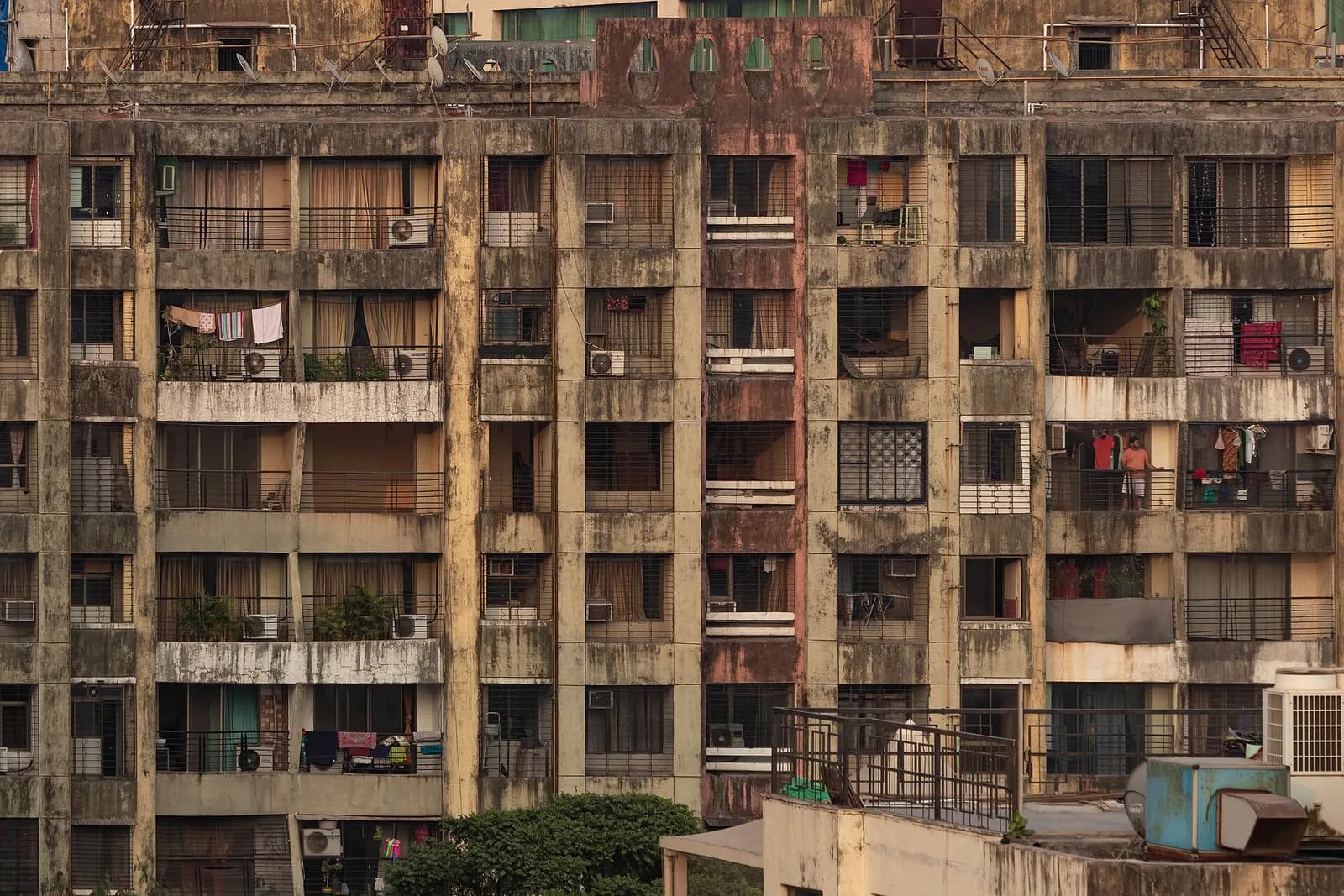
Renting a house, flat or room to someone who lives in it is exempt — the most common rental arrangement in India pays no GST at all. A salaried family renting a ₹40,000-a-month flat in Bengaluru pays no GST, and the landlord charges none, however many flats the landlord owns.
The position changed for registered tenants on 18 July 2022. Notification 05/2022–Central Tax (Rate) inserted entry 5AA in the reverse-charge list: when a residential dwelling is rented to a registered person, the tenant pays 18% under RCM, whether the landlord is registered or not. The aim was to stop businesses from renting flats as offices or guest houses tax-free.
Six months later, Notification 15/2022–Central Tax (Rate) narrowed the rule from 1 January 2023. Renting to a registered person stays exempt where that person is a proprietor of a proprietorship concern who rents the dwelling in a personal capacity for use as their own residence, on their own account and not that of the business. So a shopkeeper with a GSTIN who rents a flat to live in does not pay RCM. A partnership firm, LLP or company that rents a flat for a partner, director or employee does.
Three edge cases come up often:
- A residential flat used as an office. The exemption covers renting "for use as residence". If an unregistered startup rents a flat and runs its office there, the exemption does not apply, and a registered landlord must charge 18%.
- Paying-guest and hostel accommodation. Since 15 July 2024, accommodation services valued up to ₹20,000 per person a month are exempt, provided the stay is for at least 90 continuous days. That covers most student hostels and PGs outside educational institutions.
- Short stays. Renting a room or flat by the night, including through booking apps, is treated as hotel-type accommodation, not residential renting. See our guide to GST on hotel rooms.
GST on commercial rent
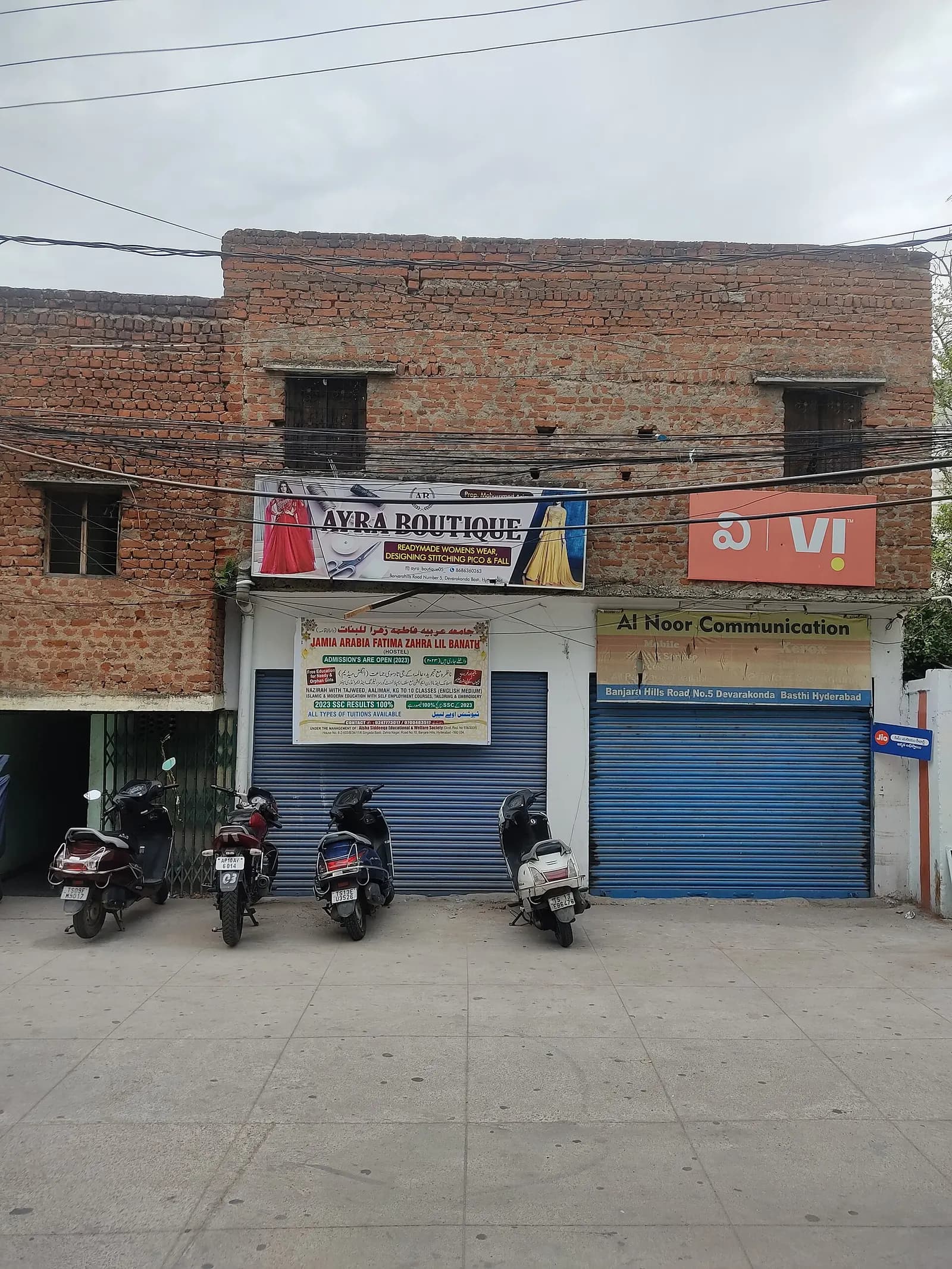
Shops, offices, showrooms, warehouses, factory sheds, godowns, hoardings and land let for business use are taxable at 18%. How the tax is paid depends on the landlord.
Registered landlord — forward charge. The landlord issues a tax invoice each rent period, charges CGST and SGST at 9% each (or IGST at 18% where the tenant's registration is in another state and the place of supply rules point there — for immovable property, the place of supply is where the property is located, so most rent is intra-state), and pays the tax in its own GSTR-3B.
Unregistered landlord, registered tenant — reverse charge. From 10 October 2024, Notification 09/2024–Central Tax (Rate) added entry 5AB to the reverse-charge list: renting of any property other than a residential dwelling, by an unregistered person to a registered person. The tenant pays the 18% and books it as ITC in the same return, so for a fully taxable business the tax is cash-neutral over the month — but it still has to be paid. Many small landlords who are below the registration limit let shops to registered traders, so this caught a large number of tenants by surprise.
Composition tenants. The 55th GST Council noted that composition dealers cannot claim ITC, so the reverse charge was a pure cost for them. Notification 07/2025–Central Tax (Rate) amended entry 5AB from 16 January 2025 to exclude tenants who have opted for composition, and the Council regularised the period from 10 October 2024 to 15 January 2025 on an "as is where is" basis.
What forms part of the taxable rent. GST is charged on the full consideration for the letting: the monthly rent, plus any maintenance or common-area charges billed by the landlord as part of the letting, plus property tax or other costs the tenant pays on the landlord's behalf. A refundable security deposit is generally not consideration while it is held as a deposit; it becomes taxable if it is adjusted against rent or forfeited.
Worked examples
| Situation | Monthly rent | GST | Who pays | Tenant's ITC |
|---|---|---|---|---|
| Registered landlord lets a shop to a registered retailer | ₹80,000 | ₹14,400 on landlord's invoice | Landlord collects and pays | ₹14,400 |
| Unregistered landlord lets an office to a registered CA firm | ₹1,00,000 | ₹18,000 under RCM | Tenant, in cash | ₹18,000 |
| Unregistered landlord lets a shop to a composition dealer | ₹30,000 | Nil | — | — |
| Landlord lets a flat to a family | ₹40,000 | Nil (exempt) | — | — |
| Landlord lets a flat to a company for its manager | ₹60,000 | ₹10,800 under RCM | Company | See ITC section |
The second and fifth rows are the ones businesses most often miss. In the CA-firm example, the landlord's bill shows only ₹1,00,000 because an unregistered landlord cannot charge GST; the firm adds ₹18,000 of tax itself, pays it in cash with its GSTR-3B, and claims the same ₹18,000 as credit. Over a year that is ₹2,16,000 of tax flowing through the cash ledger — money that has to be available by the GSTR-3B due date even though it comes back as credit. In the company-flat example, the reverse charge is due because the tenant is registered and the property is residential; whether the company can then claim the ₹10,800 as credit is a separate question, covered below.
A useful habit for tenants: record the landlord's GST status in the lease itself, with a clause requiring the landlord to tell you within a month if it registers. The day a landlord registers, the arrangement flips from reverse charge to forward charge, and paying RCM on a rent that the landlord has already taxed on its own invoice means paying the same tax twice.
How a registered tenant pays GST under reverse charge
Reverse charge on rent has a few mechanics that differ from ordinary purchases, and they are where most errors happen.
Reverse charge on rent — step by step
- 1
Check the landlord's status
Ask whether the landlord holds a GSTIN. If yes, expect a tax invoice with 18%. If no, and the property is commercial (or residential and you're registered), RCM applies.
Tip: Verify a GSTIN on the GST portal's 'Search Taxpayer' page.
- 2
Issue a self-invoice
When the supplier is unregistered, you raise the invoice on yourself within 30 days of receiving the service (Rule 47A), and a payment voucher when you pay.
- 3
Pay the tax in cash
Reverse-charge tax must be paid through the electronic cash ledger. Existing ITC cannot be used to pay it.
- 4
Report it in GSTR-3B
Show the liability in Table 3.1(d) and claim the same amount as ITC in Table 4(A)(3) of the same return.
- 5
Deduct TDS on the rent, not the GST
If TDS applies, deduct it on the rent before GST and pay the landlord the balance.
Time of supply. For a reverse-charge service, the tax point is the earlier of the date you pay the landlord or the date 60 days after the landlord's invoice. Where the landlord is unregistered and issues no invoice, the self-invoice date and payment date drive it. In practice, monthly rent paid on time means paying the RCM in that month's return.
Interest and penalties. If you miss the reverse charge, interest at 18% a year runs on the unpaid tax from its due date, and an officer can also question the credit you claimed for that period. Because the tax is cash-neutral for most tenants, the interest is usually the main cost of a mistake — another reason to set the RCM entry up as a recurring monthly item in your accounts.
Does a landlord need GST registration?
A landlord is a supplier of services, so the registration threshold for services applies: register once aggregate turnover in a financial year exceeds ₹20 lakh, or ₹10 lakh if you are in a special category state. Aggregate turnover is worked out on your PAN across India and includes exempt supplies — so residential rent counts towards the limit even though no GST is charged on it.
Example. Mrs Rao in Hyderabad earns ₹15 lakh a year from two shops let to unregistered small traders, and ₹9 lakh a year from three flats let to families. Her aggregate turnover is ₹24 lakh, above the ₹20 lakh limit, so she must register. Once registered, she charges 18% on the shop rent — ₹2.7 lakh a year — while the flat rent stays exempt.
Two provisions keep small landlords out of the net:
- Only exempt rent. Section 23(1)(a) of the CGST Act says a person who supplies only exempt services need not register. A landlord whose only income is residential rent from people living in the homes never needs a GSTIN, however large the rent.
- Only reverse-charge rent. Notification 5/2017–Central Tax, issued under section 23, exempts from registration a person whose taxable supplies are all ones on which the recipient pays tax under reverse charge. A landlord who lets commercial space only to registered tenants, who pay under entry 5AB, can stay unregistered.
Once registered, a landlord can claim ITC on GST paid for repairs, maintenance, brokerage and other costs of the commercial property, but not on construction of the building itself, which section 17(5)(d) blocks. Credit relating to exempt residential lettings has to be reversed in proportion.
Can tenants claim ITC on rent?
Rent for a shop, office, warehouse or factory used in the business is one of the cleanest credits under GST. Whether the 18% arrives on the landlord's invoice or is paid by you under reverse charge, it is creditable once the conditions of section 16 are met: you hold the invoice (or self-invoice), you have received the service, the tax has been paid, and — for forward-charge invoices — the landlord has reported the invoice so it appears in your GSTR-2B.
Credit is restricted in four cases:
- Composition taxpayers cannot claim any ITC, which is why the 2025 amendment removed them from the commercial-rent reverse charge.
- Exempt businesses. If the premises are used for exempt supplies — a clinic providing exempt healthcare, for example — the credit attributable to them must be reversed under section 17(2).
- Personal use. Credit on goods or services used for personal consumption is blocked by section 17(5)(g). Where a company rents a flat to house an employee, the credit on the reverse-charge tax has been disputed; some advance rulings have treated it as a benefit for the employee's personal use. Many companies pay the RCM and take advice before claiming it.
- Mixed premises. If part of a rented building is used as a residence and part as a shop, apportion the credit to the business part.
Example (cash flow). A registered garment retailer in Surat pays ₹80,000 a month rent to a registered landlord. The landlord's invoice is ₹94,400. The retailer deducts TDS of ₹8,000 (10% of ₹80,000 — see below), pays the landlord ₹86,400, and claims ₹14,400 of ITC against the GST on its sales. Its true occupancy cost is ₹80,000.
TDS on rent and how it interacts with GST
TDS is an income-tax deduction, separate from GST, but most commercial tenants have to deal with both on the same payment. From 1 April 2026 the deduction rules sit in section 393 of the Income-tax Act, 2025, which replaced the 1961 Act; the rates and limits carried over unchanged. See our guide to what TDS is for the new section mapping.
| Old section | Who deducts | Rate | When |
|---|---|---|---|
| 194-I | Businesses and others required to deduct (companies, firms, audited individuals) | 10% on land and buildings; 2% on plant and machinery | Rent above ₹50,000 a month (or part of a month) |
| 194-IB | Individuals and HUFs not liable to tax audit | 2% (reduced from 5% on 1 October 2024) | Rent above ₹50,000 a month |
TDS is on the rent before GST. CBDT Circular No. 23/2017 says that where the GST component is shown separately in the agreement or invoice, tax is deducted on the amount excluding GST. On ₹80,000 rent plus ₹14,400 GST, 10% TDS is ₹8,000, not ₹9,440. If the agreement quotes a single "inclusive" figure without showing GST, TDS applies to the whole amount — another reason to show GST as a separate line in the lease.
GST is on the rent before TDS. The landlord charges GST on the full ₹80,000; the tenant's deduction of TDS does not reduce the GST. The landlord recovers the TDS as a credit in its income-tax return.
GST on rent — how the rules got here
1 July 2017
Commercial rent taxable at 18%; residential rent for use as residence exempt
25 January 2018
Government and local-authority rent to registered persons moved to RCM
18 July 2022
Residential dwelling rented to a registered person moved to RCM (entry 5AA)
1 January 2023
Proprietor renting a home in personal capacity carved out of RCM
15 July 2024
Hostel/PG accommodation up to ₹20,000 a person a month (90+ days) exempted
10 October 2024
Commercial rent from unregistered landlords to registered tenants moved to RCM (entry 5AB)
16 January 2025
Composition taxpayers excluded from commercial-rent RCM
22 September 2025
GST 2.0 — rent rate unchanged at 18%
1 April 2026
TDS on rent moves to section 393 of the Income-tax Act, 2025 — rates unchanged
Common mistakes and how to fix them
- Tenant ignoring RCM because "the landlord isn't registered". That is exactly when entry 5AB applies. Pay the missed tax with interest in the next GSTR-3B and claim the credit; credit for a financial year can be claimed only until 30 November of the following year.
- Unregistered landlord charging GST. A person without a GSTIN cannot collect GST. If a tenant has been paying "GST" to such a landlord, it is not creditable, and the tenant still owes RCM.
- Registered landlord not charging GST on commercial rent. The landlord owes the 18% anyway, out of pocket, if it didn't collect it. Raise tax invoices from the first rent period after registration.
- Treating the deposit as rent, or rent as a deposit. A genuine refundable deposit is outside GST; amounts called "deposit" but adjusted against monthly rent are taxable when adjusted.
- Deducting TDS on the GST. Overdeduction leaves the landlord short of cash and creates mismatches in Form 26AS; deduct on the rent only.
Official links
- CGST (Rate) notificationsNotifications 11/2017, 12/2017 and 13/2017 with amendments
- Section 23, CGST ActPersons not liable for registration
- Section 17, CGST ActApportionment and blocked credits
- GST portal — Search TaxpayerCheck a landlord's GSTIN
- Income Tax e-filing — TDS helpTDS on rent under section 393
What to do next
If you're a landlord, add up all your rent — residential included — against the ₹20 lakh limit and see our GST registration guide if you're over it; the rental yield calculator shows what the property earns after costs. If you're a tenant, check your landlord's GSTIN, set up the reverse-charge entry if needed, and use the TDS calculator to work out the deduction. Our input tax credit guide covers the conditions for claiming the GST back.
This is general information, not legal or tax advice — confirm on the official source or with a professional.
Frequently asked questions
Yes, on commercial rent. Renting a shop, office, warehouse or other non-residential property is a taxable service at 18%. Renting a house or flat for use as a residence is exempt when the tenant is unregistered. When a GST-registered tenant rents a residential dwelling, the tenant pays 18% under reverse charge, unless it is a proprietor renting in a personal capacity for their own home.
A landlord must register once aggregate turnover crosses ₹20 lakh in a financial year (₹10 lakh in special category states). Aggregate turnover includes exempt residential rent as well as taxable commercial rent. A landlord whose only taxable rent is paid by registered tenants under reverse charge is exempt from registration.
From 10 October 2024, when an unregistered landlord rents a shop, office or other non-residential property to a GST-registered tenant, the tenant pays the 18% GST under reverse charge, issues a self-invoice and can claim it back as ITC. Composition taxpayers were excluded from this reverse charge from 16 January 2025.
Not if you are an individual tenant who isn't registered for GST — residential rent for use as a residence is exempt. If you are GST-registered, reverse charge at 18% applies from 18 July 2022, except where you are a proprietor renting the house in your personal capacity for your own residence. Companies and firms renting homes for staff pay the reverse charge.
No. A CBDT circular of 2017 says that where GST is shown separately in the rent agreement or invoice, TDS is deducted on the rent excluding GST. On ₹80,000 rent plus ₹14,400 GST, TDS at 10% is ₹8,000, not ₹9,440. TDS applies when rent exceeds ₹50,000 a month.
Yes, if the premises are used for business. GST charged by a registered landlord, or paid by the tenant under reverse charge, is creditable once the conditions of section 16 are met. Credit is not available to composition taxpayers, for premises used for exempt supplies, or where the space is used for personal purposes.
Sources & verification
Figures on this page were checked against the sources below when it was last reviewed on 7 October 2026. Each rate and limit is stored once with its own official source and review date, and official update channels are monitored daily so changes are picked up. How we verify
- 1.CGST (Rate) notifications — Notifications 11/2017, 12/2017 and 13/2017 as amended — GST Council · accessed 7 October 2026
- 2.Section 23 – CGST Act, 2017 (persons not liable for registration) — CBIC · accessed 7 October 2026
- 3.Section 17 – CGST Act, 2017 (apportionment and blocked credits) — CBIC · accessed 7 October 2026
- 4.Recommendations of the 56th GST Council meeting (press release with annexures) — GST Council / PIB · accessed 7 October 2026
- 5.Note on GST on renting of immovable property (June 2026) — HNA LLP · accessed 7 October 2026
- 6.Renting of commercial property excluded from RCM for composition taxpayers (Notification 07/2025-CT(Rate)) — A2Z Taxcorp · accessed 7 October 2026
- 7.CBIC exempts several services as recommended in the 53rd GST Council meeting — Taxmann · accessed 7 October 2026
- 8.CBDT Circular No. 23/2017 — TDS on the GST component — CBDT (copy hosted by ITATonline) · accessed 7 October 2026
- 9.Recent updates on compliance for payment of rent under section 194-IB — EY India · accessed 7 October 2026
- 10.CBIC issues notifications on 54th GST Council recommendations — EY India · accessed 7 October 2026
MSMETOOLS is an independent platform and is not affiliated with any government agency, ministry or department.
Tools for this
GST Calculator (India)
Calculate GST for your sales and purchases with current rates.
TDS Calculator (India)
Calculate TDS for payments and generate reports.
Rental Yield Calculator
Calculate gross and net rental yield.
Invoice Generator
Create professional invoices with tax, logo and custom details.
Related guides
 Input Tax Credit under GST 2026: Rules, Limits & ExamplesRead guide
 GST on Renting of Motor Vehicles 2026: 5% or 18% & RCMRead guide
 GST on Commission 2026: Rate, Agent Registration & RCMRead guide
 GST on Advertising Services 2026: 5% Print, 18% OthersRead guide
Official links open the government site in a new tab.