 GST & indirect tax
GSTR-3B in 2026: Due Dates, Table-by-Table Guide, Late Fee and Interest
GSTR-3B for 2026: monthly and QRMP due dates, every table explained, which fields are locked from GSTR-1/2B, late fee caps, 18% interest and a worked ₹ example.
 Edited by Sumeet YadavFounder & editor, MSMETOOLS · fact-checked against official sources
Contents (9)
- 1. What is GSTR-3B and who must file it?
- 2. GSTR-3B due dates: monthly, QRMP and PMT-06
- 3. Table-by-table walkthrough of GSTR-3B
- 4. What's auto-filled and locked in 2026
- 5. Worked example: GSTR-3B for a Pune trader
- 6. Late fee, interest and the 3-year bar
- 7. How to file GSTR-3B on the GST portal
- 8. Common GSTR-3B mismatches and how to fix them
- 9. What to do next
GSTR-3B is the return where GST actually gets paid. Every month (or quarter) you declare the tax on what you sold, claim credit on what you bought, set one off against the other and pay the balance in cash. This guide is for business owners and accountants who file it themselves or check what their consultant files. It covers who must file, monthly and QRMP due dates, what goes in each table, which figures the portal now locks from GSTR-1 and GSTR-2B, the late fee and interest, and a full ₹ worked example. Everything was checked against the GST portal, CBIC rules and GSTN advisories in October 2026.
Quick answer
GSTR-3B is the monthly or quarterly summary return in which a regular GST taxpayer reports sales, claims input tax credit (ITC) and pays the net tax. Monthly filers file by the 20th of the next month; QRMP filers (turnover up to ₹5 crore) file by the 22nd of the month after the quarter or 24th of the month after the quarter, depending on the state.
Late fee ₹50 a day (₹20 a day if nil), capped between ₹500 and ₹10,000; interest 18% a year on tax paid late in cash
Table 3 tax liability is locked from GSTR-1/1A since the July 2025 period; Table 3.2 since November 2025
Table 4 ITC comes from GSTR-2B and is still editable — but over-claims trigger a DRC-01C notice
A filed GSTR-3B can't be revised; fix sales errors in GSTR-1A first
What is GSTR-3B and who must file it?
GSTR-3B is the return under section 39(1) of the CGST Act and Rule 61 in which a registered person self-assesses tax for a period and pays it. Think of GSTR-1 as the detailed sales list and GSTR-3B as the bill you settle.
Who files: every normal taxpayer and casual taxable person — including those with no business in the period, who file a nil return.
Who does not: composition dealers (they pay through CMP-08 and file GSTR-4 annually), Input Service Distributors (GSTR-6), non-resident taxable persons (GSTR-5), OIDAR suppliers (GSTR-5A), and TDS deductors and e-commerce operators in those capacities (GSTR-7, GSTR-8).
If you're not yet registered or unsure whether you need to be, start with our GST registration guide and the plain-English what is GST explainer.
Where GSTR-3B gets its numbers
Step 1
Your GSTR-1 / IFF / GSTR-1A
sales → Table 3 (locked)
Step 2
Suppliers' GSTR-1
→ your IMS
Step 3
Your GSTR-2B
→ Table 4 ITC (editable)
Step 4
GSTR-3B
set-off + cash payment
Step 5
Electronic ledgers updated
GSTR-3B due dates: monthly, QRMP and PMT-06
You file monthly unless you've opted into the QRMP scheme (Quarterly Return, Monthly Payment), open to businesses with aggregate turnover up to ₹5 crore in the previous financial year.
| Filer | What | Due date | Example |
|---|---|---|---|
| Monthly | GSTR-3B for each month | 20th of the next month | September → 20 October |
| QRMP, Category A | Quarterly GSTR-3B | 22nd of the month after the quarter | July–September → 22 October |
| QRMP, Category B | Quarterly GSTR-3B | 24th of the month after the quarter | July–September → 24 October |
| QRMP, months 1 and 2 | Tax payment via PMT-06 challan | 25th of the next month | July tax → 25 August |
Which category is your state? Rule 61 sets it by your principal place of business:
- Category A (22nd): Chhattisgarh, Madhya Pradesh, Gujarat, Maharashtra, Karnataka, Goa, Kerala, Tamil Nadu, Telangana, Andhra Pradesh, and the UTs of Dadra and Nagar Haveli and Daman and Diu, Puducherry, Andaman and Nicobar Islands and Lakshadweep.
- Category B (24th): Himachal Pradesh, Punjab, Uttarakhand, Haryana, Rajasthan, Uttar Pradesh, Bihar, Sikkim, Arunachal Pradesh, Nagaland, Manipur, Mizoram, Tripura, Meghalaya, Assam, West Bengal, Jharkhand, Odisha, and the UTs of Jammu and Kashmir, Ladakh, Chandigarh and Delhi.
Paying in months 1 and 2 under QRMP. You have two options. The fixed-sum method lets the portal pre-fill a PMT-06 challan for 35% of the tax you paid in cash in the previous quarter. The self-assessment method means you work out the actual liability for the month, net of credit, and pay that. If the fixed sum turns out lower than the real liability, no interest is charged as long as the full quarter's tax is paid by the quarterly GSTR-3B due date (Circular 143/13/2020-GST).
The government sometimes extends deadlines by notification, often for specific states after floods or portal outages. Check News and Updates on gst.gov.in in the week before the due date.
Table-by-table walkthrough of GSTR-3B

| Table | What you report | Source in 2026 | Can you edit it? |
|---|---|---|---|
| 3.1 (a) | Taxable outward supplies (other than zero-rated, nil and exempt) | GSTR-1 / IFF / GSTR-1A | No — locked since July 2025 period |
| 3.1 (b) | Zero-rated supplies: exports and SEZ supplies | GSTR-1 / GSTR-1A | No |
| 3.1 (c) | Nil-rated and exempt supplies | GSTR-1 / GSTR-1A | No |
| 3.1 (d) | Inward supplies on which you pay tax under reverse charge | GSTR-2B | Yes |
| 3.1 (e) | Non-GST outward supplies (e.g. alcohol for human consumption, petrol) | GSTR-1 / GSTR-1A | No |
| 3.1.1 | Supplies through e-commerce operators who pay tax under section 9(5) — restaurant food via apps, cab rides, etc. | GSTR-1 / GSTR-1A | No |
| 3.2 | Of 3.1, inter-state supplies to unregistered persons, composition dealers and UIN holders, state-wise | GSTR-1 / GSTR-1A / IFF | No — locked since November 2025 period |
| 4A | ITC available: imports of goods and services, reverse charge, ISD, all other ITC | GSTR-2B | Yes (warning if you raise it) |
| 4B | ITC reversed: Rules 38, 42, 43 and section 17(5), and other reversals | GSTR-2B (partly) | Yes |
| 4C | Net ITC available (4A − 4B) | Calculated | — |
| 4D | ITC reclaimed that was reversed earlier; ineligible ITC (section 16(4), place-of-supply rules) | Manual | Yes |
| 5 | Exempt, nil-rated and non-GST inward supplies | Manual | Yes |
| 5.1 | Interest and late fee | Portal-computed | Interest can only be raised, not lowered |
| 6.1 | Payment of tax: set-off from credit ledger, cash payment | You choose | Yes |
A few tables trip people up:
- 3.1(d) reverse charge is tax you pay in cash on purchases such as legal fees from an advocate or goods transport from an unregistered GTA. The same amount usually comes back to you as credit in Table 4A(3) in the same return.
- 4B reversals are where you give up credit you can't keep: blocked credit under section 17(5) (food, cars for personal use and similar), common credit attributable to exempt supplies (Rules 42 and 43), and Rule 37 reversals for suppliers you haven't paid within 180 days.
- 4D(1) is for re-claiming credit you reversed earlier (for example, you've now paid the supplier). Reporting it here keeps your electronic credit reversal and reclaimed statement in sync.
For the rules on which credit you can claim, see our full input tax credit guide.
What's auto-filled and locked in 2026
Since 2025 GSTR-3B has moved from typing your own figures to accepting what the portal computes and fixing errors at source. Where things stand in October 2026:
How GSTR-3B became hard-locked
July 2025 period
Outward tax liability in Table 3 auto-filled from GSTR-1, IFF and GSTR-1A becomes non-editable (GSTN advisory, June 2025)
July 2025 period
Returns more than 3 years past their due date can no longer be filed
November 2025 period
Table 3.2 (inter-state supplies to unregistered persons, composition dealers, UIN holders) becomes non-editable
January 2026 period
Table 5.1 interest auto-computed using the minimum cash-ledger balance; it can't be reduced, only increased
January 2026 period
Tax liability breakup auto-filled from document dates; IGST may be paid from CGST and SGST credit in any order once IGST credit is used up
Table 3 (outward tax). The tax you declared in GSTR-1, IFF and GSTR-1A flows into GSTR-3B and cannot be changed. If GSTR-1 under-reported a sale, you correct it in GSTR-1A — which stays open until you file GSTR-3B for that period — and the change shows up in GSTR-3B immediately. Once GSTR-3B is filed, the correction goes into the next period's GSTR-1.
Table 4 (ITC). Credit is filled from your GSTR-2B, which is generated on the 14th of the following month after you accept, reject or leave invoices pending on IMS. Table 4 is still editable — you may need to defer credit for goods not yet received or reverse blocked credit. As of October 2026, GSTN has not issued an advisory locking Table 4; articles describing a "Phase 2" ITC lock from July 2026 are not backed by an official notice. If you claim much more ITC than GSTR-2B shows, Rule 88D lets the portal send a DRC-01C intimation asking you to pay the excess or explain the difference.
Table 5.1 (interest). For delayed returns from the January 2026 period onwards, the portal calculates interest using the formula in Rule 88B — giving you credit for the lowest balance sitting in your electronic cash ledger between the due date and the payment date — and puts it in the next return's Table 5.1. You can raise this figure if your own working shows more, but you can't lower it.
Worked example: GSTR-3B for a Pune trader
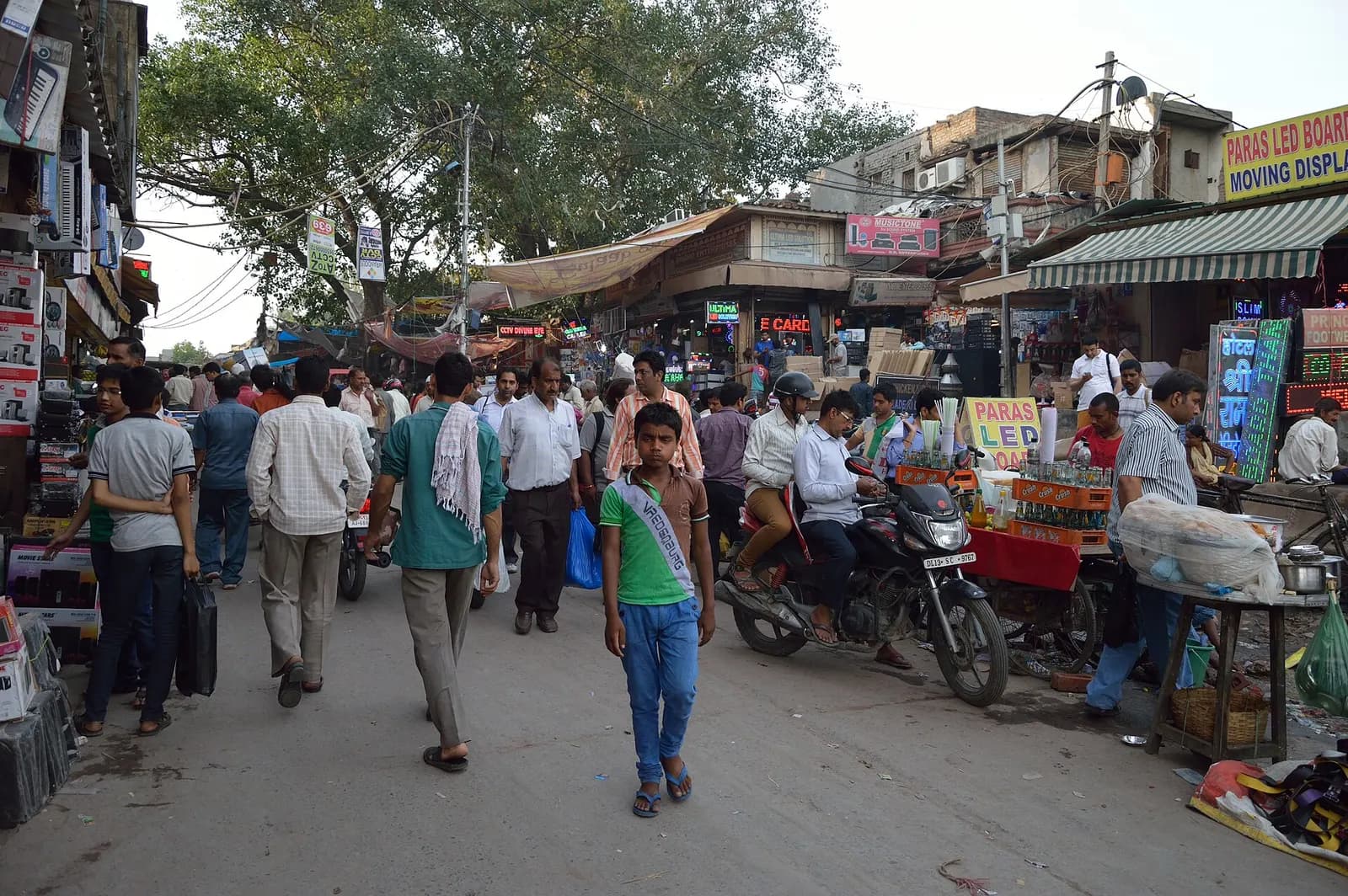
Sharma Electronics in Pune is a monthly filer with turnover of ₹3 crore. For September 2026 its books show:
- Sales within Maharashtra: ₹10,00,000 at 18% → CGST ₹90,000 + SGST ₹90,000
- Sales to a dealer in Gujarat: ₹2,00,000 at 18% → IGST ₹36,000
- ITC in GSTR-2B (all eligible): IGST ₹40,000, CGST ₹60,000, SGST ₹60,000
Step 1 — Table 3.1(a) auto-fills from GSTR-1: taxable value ₹12,00,000; IGST ₹36,000, CGST ₹90,000, SGST ₹90,000. Total liability ₹2,16,000.
Step 2 — Table 4A(5) auto-fills ₹1,60,000 of ITC from GSTR-2B. Nothing to reverse, so net ITC (4C) is ₹1,60,000.
Step 3 — Set-off in Table 6.1 (Rule 88A and section 49): IGST credit goes first against IGST.
| Head | Liability | ITC used | Cash payable |
|---|---|---|---|
| IGST | ₹36,000 | ₹36,000 from IGST credit | ₹0 |
| CGST | ₹90,000 | ₹4,000 leftover IGST credit + ₹60,000 CGST credit | ₹26,000 |
| SGST | ₹90,000 | ₹60,000 SGST credit | ₹30,000 |
| Total | ₹2,16,000 | ₹1,60,000 | ₹56,000 |
CGST credit can never pay SGST and vice versa, which is why the leftover IGST credit matters.
Step 4 — If it files 5 days late (on 25 October):
- Interest: ₹56,000 × 18% a year × 5 ÷ 365 ≈ ₹138 (on the cash portion only, since section 50 charges interest on net cash liability). The portal adds it to the October return's Table 5.1.
- Late fee: 5 days × ₹50 a day = ₹250, well under the ₹5,000 cap for its turnover band — payable in cash.
Late fee, interest and the 3-year bar
Late fee (section 47). It runs from the day after the due date until the day you file:
- Per day: ₹50 a day (CGST + SGST), or ₹20 a day if no tax is payable.
- Maximum per return: ₹500 for a nil return; ₹2,000 if turnover is up to ₹1.5 crore; ₹5,000 for ₹1.5–5 crore; ₹10,000 above ₹5 crore.
Caps come from Notification 19/2021-Central Tax (tax periods from June 2021), with the matching state-law notifications. Late fee must be paid in cash.
Interest (section 50). 18% a year on tax paid late, from the day after the due date, on the portion paid in cash. Wrongly availed and utilised ITC also attracts interest at 18% a year.
Sequence and time bar. You can't file GSTR-3B for a period while an earlier one is pending, and Rule 59(6) blocks your GSTR-1 if the previous GSTR-3B isn't filed. Since the July 2025 period, the portal no longer accepts a return filed more than 3 years after its due date — so an old unfiled GSTR-3B can become impossible to file, leaving you with assessment proceedings instead.
The 57th GST Council meeting, scheduled for 8 October 2026, has process reforms on its agenda, including possible late-fee relief for small taxpayers. Nothing is notified yet; check CBIC notifications after the meeting before relying on any change.
How to file GSTR-3B on the GST portal
File GSTR-3B step by step
- 1
File GSTR-1 (and GSTR-1A if needed) first
Your Table 3 figures come from GSTR-1, IFF and GSTR-1A and can't be edited later. Check the GSTR-1 summary against your sales register; correct anything in GSTR-1A before moving on.
- 2
Act on IMS and check GSTR-2B
Accept, reject or keep pending your suppliers' invoices on IMS before the 14th. Download GSTR-2B and reconcile it with your purchase register.
- 3
Open GSTR-3B
Log in at gst.gov.in → Services → Returns → Returns Dashboard → choose the financial year and period → GSTR-3B → Prepare Online. Answer the questionnaire (nil return? supplies through e-commerce?).
- 4
Review each tile
Tables 3.1, 3.1.1 and 3.2 are locked. In Table 4, reverse blocked credit (4B), add reverse-charge ITC if needed and report ineligible ITC in 4D. Fill Table 5 for exempt inward supplies.
Tip: A red tile means you changed a figure against the system value — check you meant to.
- 5
Save, pay and offset
Click Save, then Proceed to Payment. Use credit in the order the portal suggests (IGST first), create a challan for the cash balance and pay by net banking, UPI or card.
- 6
File with DSC or EVC
Tick the declaration, choose the authorised signatory and file with a digital signature or Aadhaar/mobile OTP. Download the filed return and ARN acknowledgement.
Nil return. If you have no sales, no reverse-charge purchases, no GSTR-2B for the period and no interest or late fee pending, you can file a nil GSTR-3B on the portal in a few clicks, or by SMS from your registered mobile number.
Common GSTR-3B mismatches and how to fix them
Before you file each month, run through four checks: GSTR-1 matches your sales register, IMS actions are done before the 14th, blocked credit and Rule 37/42/43 reversals are in Table 4B, and the cash ledger is topped up before the due date. Most notices start with one of the mismatches below.
GSTR-1 vs GSTR-3B (sales). Since Table 3 is locked, a mismatch now usually means GSTR-1 itself is wrong. Use GSTR-1A for the same period; if GSTR-3B is already filed, amend in the next GSTR-1 and pay any extra tax with interest.
GSTR-2B vs GSTR-3B (ITC). Claim only what's in GSTR-2B and eligible. If a supplier filed late, the invoice appears in a later GSTR-2B and you claim it then — the deadline for claiming a year's credit is 30 November of the following year.
Reverse charge missed. Pay it in a later GSTR-3B with interest, and claim the matching credit in the same return.
Wrong tax head (IGST paid as CGST/SGST). You can't move it by revision. Pay under the correct head and claim a refund of the wrong payment under section 77 through RFD-01.
E-invoice not reflecting. If you generate e-invoices, they auto-populate GSTR-1. A cancelled IRN that's still in GSTR-1 will inflate your locked Table 3 — delete it from GSTR-1 before filing.
Official links
- GST portal – Returns DashboardFile GSTR-3B, GSTR-1A and PMT-06
- GSTR-3B FAQs (GST portal user guide)Tables, auto-population, nil filing
- Rule 61, CGST RulesDue dates and 22nd/24th state lists
- Notification 19/2021-Central TaxLate fee caps
- GSTN advisory on interest in GSTR-3BTable 5.1 interest from January 2026
- CBIC central tax notificationsWatch for due-date extensions
What to do next
Put two reminders in your calendar: the 10th for GSTR-1 and the 18th for GSTR-3B, so there's time to fix GSTR-1A and reconcile GSTR-2B. Issue clean invoices with our free invoice generator and credit note generator, and if sales errors keep creeping in, start with the GSTR-1 guide.
This is general information, not legal or tax advice — confirm on the official source or with a professional.
Frequently asked questions
Monthly filers must file GSTR-3B by the 20th of the next month. QRMP taxpayers file quarterly by the 22nd of the month after the quarter (Category A states such as Maharashtra, Gujarat, Karnataka and Tamil Nadu) or the 24th of the month after the quarter (Category B states such as Delhi, Uttar Pradesh, Punjab and West Bengal), and pay tax for the first two months through PMT-06 by the 25th of the next month.
The late fee is ₹50 a day (₹20 a day for a nil return) until you file. It is capped at ₹500 for nil returns, ₹2,000 if turnover is up to ₹1.5 crore, ₹5,000 between ₹1.5 crore and ₹5 crore, and ₹10,000 above ₹5 crore. Late fee must be paid in cash, not from input tax credit.
No. A filed GSTR-3B cannot be revised. Under-reported tax or ITC is adjusted in a later month's GSTR-3B, with interest where tax was paid late. Because the outward liability is now auto-filled from GSTR-1 and GSTR-1A and cannot be edited, the cleanest fix is to correct GSTR-1A before you file GSTR-3B for that period.
Yes. Every normal and casual taxpayer must file GSTR-3B for every period, even with no business. If you have no sales, no purchases in GSTR-2B and no interest or late fee due, you can file a nil return on the portal or by SMS. Missing it attracts the late fee and blocks your next GSTR-1.
GSTR-1 is an invoice-level statement of your sales that feeds your buyers' GSTR-2B. GSTR-3B is the summary return where you actually pay tax and claim input tax credit. GSTR-1 is due on the 11th (monthly), GSTR-3B on the 20th. Since the July 2025 period, GSTR-3B's outward tax figures come locked from GSTR-1 and GSTR-1A.
Yes. Table 4 is auto-filled from GSTR-2B but you can still change it — for example to reverse blocked credit or to defer credit on goods not yet received. Large upward edits beyond GSTR-2B can trigger a DRC-01C intimation under Rule 88D. As of October 2026, GSTN has not issued an advisory locking Table 4.
Sources & verification
Figures on this page were checked against the sources below when it was last reviewed on 7 October 2026. Each rate and limit is stored once with its own official source and review date, and official update channels are monitored daily so changes are picked up. How we verify
- 1.FAQs > Form GSTR-3B — GSTN (GST portal user guide) · accessed 7 October 2026
- 2.Rule 61 – CGST Rules, 2017 (form and manner of furnishing return) — CBIC · accessed 7 October 2026
- 3.Notification No. 19/2021 – Central Tax (GSTR-3B late fee caps) — CBIC · accessed 7 October 2026
- 4.Circular No. 143/13/2020-GST – QRMP scheme — CBIC (hosted by Office of DC-MSME) · accessed 7 October 2026
- 5.Advisory on Interest Collection and Related Enhancements in GSTR-3B — GSTN · accessed 7 October 2026
- 6.GSTN advisory: auto-populated liability in GSTR-3B non-editable from July 2025 — Taxscan · accessed 7 October 2026
- 7.GST advisory: GSTR-3B Table 3.2 auto-populated values non-editable — SAG Infotech · accessed 7 October 2026
- 8.GSTR-3B ITC auto-population: is Table 4A locked? — TaxGarden · accessed 7 October 2026
- 9.GSTN advisory on bar on filing GST returns after three years — TeamLease RegTech · accessed 7 October 2026
- 10.GST Council meeting rescheduled to October 8: what's on the agenda — Business Today · accessed 7 October 2026
MSMETOOLS is an independent platform and is not affiliated with any government agency, ministry or department.
Tools for this
GST Calculator (India)
Calculate GST for your sales and purchases with current rates.
Invoice Generator
Create professional invoices with tax, logo and custom details.
Credit Note Generator
Issue credit notes for returns and adjustments.
HSN Code Finder (India)
Find the correct HSN/SAC code for your product.
Related guides
 GSTR-1 in 2026: Due Dates, Tables, Late Fee & Filing StepsRead guide
 GSTR-4 in 2026: Due Date, CMP-08, Late Fee & How to FileRead guide
 GST Return Filing in 2026: Types, Due Dates & ProcessRead guide
 GST Late Fee 2026: Per-Day Rates, Caps, Interest & WaiverRead guide
Official links open the government site in a new tab.