 GST & indirect tax
GST on Medicines in 2026: Rates, Nil-Rated Life-Saving Drugs, HSN Codes, MRP and Pharmacy Billing
GST on medicine in 2026: most drugs at 5% and 36 life-saving drugs at nil from 22 Sep 2025, HSN 3003/3004, devices at 5%, MRP rules and worked ₹ pharmacy bills.
 Edited by Sumeet YadavFounder & editor, MSMETOOLS · fact-checked against official sources
Contents (12)
- 1. GST rates on medicines after GST 2.0
- 2. Which medicines are nil-rated
- 3. HSN codes for medicines and pharmaceutical goods
- 4. Medical devices, diagnostics and spectacles
- 5. How MRP had to change: NPPA's directions
- 6. How to calculate GST on a medicine bill
- 7. Worked pharmacy bill
- 8. Old stock, input tax credit and the chemist's margin
- 9. Manufacturers: inverted duty and refunds
- 10. Hospitals, clinics and online pharmacies
- 11. Common mistakes
- 12. What to do next
Medicines got one of the biggest GST cuts of the September 2025 reform. From 22 September 2025 almost every drug moved to 5%, 36 life-saving drugs dropped to nil, and most medical devices — from glucometers to X-ray machines — fell to 5% too. This guide is for chemists and pharmacy owners, distributors, small pharma manufacturers, hospital billing teams and patients checking a bill. It covers the current rates, the nil-rated drugs, HSN codes 3002 to 3006, medical devices, how MRP had to change, how to calculate GST on a medicine bill, input tax credit and refunds, and worked ₹ examples. All rates were checked against the GST Council's health-sector annexure and NPPA's directions in October 2026.
Quick answer
From 22 September 2025, all drugs and medicines attract 5% GST — including Ayurvedic, Unani, Siddha and homoeopathic medicines under HSN 3003 and 3004 — except 36 notified life-saving drugs at nil. Most were at 12% before. Medical devices, diagnostic kits, glucometers, thermometers and spectacles are also at 5%. GST is included in the MRP, so the tax on a 5% medicine is MRP × 5 ÷ 105.
33 drugs moved from 12% to nil and 3 from 5% to nil — mainly cancer and rare-disease therapies
NPPA required revised MRPs and price lists from 22 September 2025; re-stickering was optional
Medicines given to hospital in-patients are part of exempt healthcare, not taxed separately
Manufacturers with 18% inputs can claim inverted-duty refunds, with 90% paid provisionally
GST rates on medicines after GST 2.0
The 56th GST Council meeting, held on 3 September 2025, collapsed GST's four main slabs into 5% and 18%. For healthcare it went further than a simple move down a slab. The Council's FAQ states the outcome plainly: "All drugs/ medicines have been prescribed a concessional rate of GST of 5%, except those specified at nil rate." The new rates took effect on 22 September 2025 through Notification 9/2025–Central Tax (Rate) and the matching State notifications.
The Council chose 5% rather than a full exemption for a reason that matters to anyone in the trade. If medicines were exempt, manufacturers and distributors could not claim input tax credit on the GST paid on raw materials, packaging and services, and would have to reverse credit already taken. The FAQ notes that this would raise production costs and could push prices up — the opposite of the aim. At 5%, the supply chain keeps its credit.
GST on medicines at a glance (2026)
5%
All drugs and medicines
HSN 3001–3006, from 22 Sep 2025
Nil
36 notified life-saving drugs
33 from 12%, 3 from 5%
5%
Medical devices and diagnostics
Was 12% or 18%
MRP × 5 ÷ 105
GST inside a 5% MRP
Split equally into CGST and SGST
Which medicines are nil-rated
Two groups of drugs went to nil. The first group of three — Agalsidase Beta, Imiglucerase and Eptacog alfa activated recombinant coagulation factor VIIa — was already at 5% and moved to nil. The second group of 33 moved straight from 12% to nil. Together they are mostly therapies for cancer, rare genetic disorders such as spinal muscular atrophy, Gaucher, Fabry and Pompe disease, haemophilia and severe chronic conditions.
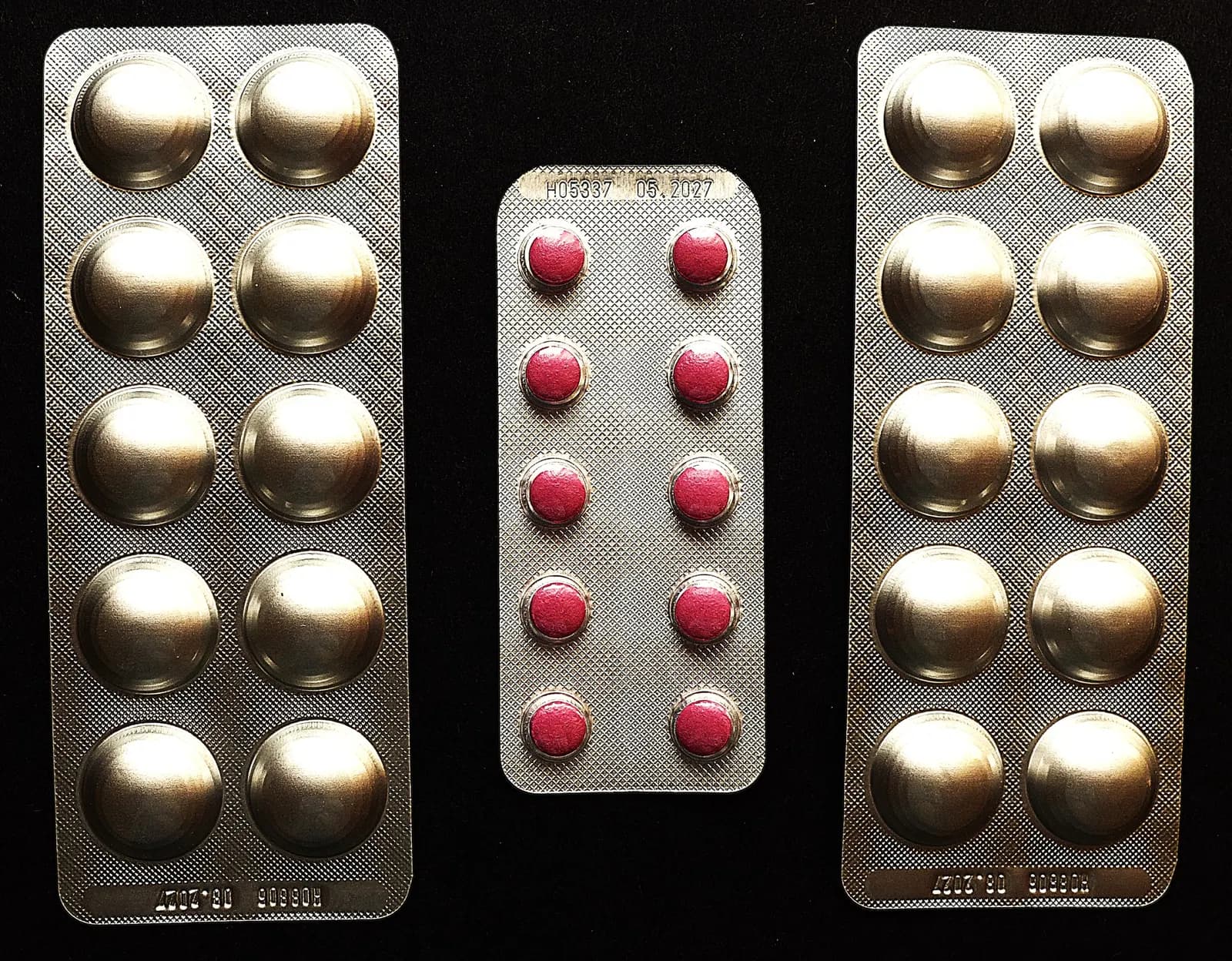
The 33 drugs moved from 12% to nil are: Onasemnogene abeparvovec, Asciminib, Mepolizumab, Pegylated Liposomal Irinotecan, Daratumumab, Daratumumab subcutaneous, Teclistamab, Amivantamab, Alectinib, Risdiplam, Obinutuzumab, Polatuzumab vedotin, Entrectinib, Atezolizumab, Spesolimab, Velaglucerase Alpha, Agalsidase Alfa, Rurioctocog Alpha Pegol, Idursulphatase, Alglucosidase Alfa, Laronidase, Olipudase Alfa, Tepotinib, Avelumab, Emicizumab, Belumosudil, Miglustat, Velmanase Alfa, Alirocumab, Evolocumab, Cystamine Bitartrate, C1-Inhibitor injection and Inclisiran.
Several high-cost cancer drugs that patients often ask about — Brentuximab Vedotin, Ocrelizumab, Pertuzumab, Pertuzumab with trastuzumab, Faricimab and the inhaler combination Fluticasone Furoate + Umeclidinium + Vilanterol — were named in the Council's list but at 5%, not nil. If a drug is not on the nil list, assume 5%. Nil-rated status attaches to the molecule as named; a different brand of the same molecule gets the same treatment, but a combination product or a different molecule for the same disease does not automatically follow.
HSN codes for medicines and pharmaceutical goods
Pharmaceutical products are in chapter 30 of the Customs Tariff, which GST follows. The heading depends on what the product is and how it is packed, not on the disease it treats.
| HSN | What it covers | GST from 22 Sep 2025 |
|---|---|---|
| 3001 | Glands and organs for organo-therapeutic use, heparin and similar substances | 5% |
| 3002 | Vaccines, antisera, blood fractions, immunological products, cultures of micro-organisms | 5% |
| 3003 | Mixed medicaments not put up in measured doses or retail packs (bulk), including Ayurvedic, Unani, Siddha, homoeopathic | 5% |
| 3004 | Medicaments in measured doses or retail packs — tablets, capsules, syrups, injections, transdermal patches — including traditional systems | 5% |
| 3005 | Wadding, gauze, bandages, dressings and adhesive plasters for medical use | 5% |
| 3006 | Sterile sutures and tissue adhesives, haemostatics, adhesion barriers, waste pharmaceuticals | 5% |
| 3822 | Diagnostic kits and reagents | 5% |
| 9804 | Drugs and medicines imported for personal use | 5% |
Most pharmacy stock is 3004. On B2B invoices and in GSTR-1, businesses with aggregate turnover up to ₹5 crore show 4-digit HSN digits and larger ones 6-digit HSN. Use our HSN code finder for specific products. Ayurvedic and homoeopathic products sold as cosmetics or toiletries — a herbal shampoo, for example — are classified as cosmetics, not medicaments, and follow cosmetics rates.
Ayurvedic, homoeopathic and other traditional medicines
Headings 3003 and 3004 expressly include Ayurvedic, Unani, Siddha, homoeopathic and bio-chemic medicaments, so a classical Ayurvedic preparation, a homoeopathic dilution or a Unani syrup sold as a medicine carries the same 5% as an allopathic tablet. Before 22 September 2025 most of these were at 12%. The test is whether the product is a medicament — made and sold for therapeutic or prophylactic use, usually under an AYUSH drug licence — rather than a food supplement or a cosmetic with herbal ingredients, which are classified under their own headings.
Medical devices, diagnostics and spectacles
The cut extended across medical equipment. The Council's health-sector annexure moved these to 5%:
- From 12%: medical, surgical, dental and veterinary instruments (9018), including electro-medical apparatus; mechano-therapy and breathing apparatus such as oxygen concentrators and nebulisers (9019, 9020); X-ray and radiation apparatus (9022); diagnostic kits and reagents (3822); blood glucose monitors and test strips; surgical and examination rubber gloves (4015); spectacles and corrective goggles (9004); PDA and ASD occlusion devices; medical-grade oxygen and anaesthetics.
- From 18%: medical thermometers (9025) and instruments for physical or chemical analysis used in medicine (9027).
The FAQ confirms that 5% applies to "all medical devices, instruments, apparatus used in medical, surgical, dental and veterinary uses" other than those exempted specifically. A clinic buying an ECG machine, a diagnostic lab buying analysers and reagents, and an optician selling spectacles all now pay or charge 5%. Hospital beds, furniture and general-purpose equipment are not medical devices for this purpose and follow their own headings.
How MRP had to change: NPPA's directions
Medicines are sold at a printed MRP that includes GST, and many are under price control. To make sure the GST cut reached patients, the National Pharmaceutical Pricing Authority issued office memoranda on 12 and 13 September 2025. Manufacturers and marketing companies had to revise the MRP of drugs and medical devices from 22 September 2025 to reflect the lower GST, and issue revised or supplementary price lists in Form V or VI to dealers and retailers for display to consumers, and to State Drug Controllers and the government.
The revised OM made re-labelling or re-stickering of stock already in the market optional, to be done in phases so it would not cause shortages. CDSCO issued parallel directions under rule 104A of the Drugs and Cosmetics Rules on 11 September 2025. In practice that means a strip printed with an old MRP may still be on the shelf, but the chemist must charge the revised MRP from the company's price list, not the printed figure.
How much should the MRP fall? If the pre-tax price stays the same, a medicine with an old MRP of ₹112 at 12% (₹100 value plus ₹12 tax) should now cost ₹105 at 5% (₹100 plus ₹5) — a cut of 6.25%. A nil-rated drug that was ₹1,12,000 at 12% should fall to ₹1,00,000. Complaints about overcharging can go to NPPA through its Pharma Jan Samadhan grievance system.
How to calculate GST on a medicine bill
Because the MRP includes GST, a chemist works backwards from the price charged. The formula for a 5% item is:
- GST = price charged × 5 ÷ 105
- Taxable value = price charged × 100 ÷ 105
- Within a State, split the GST equally into CGST and SGST; for a sale to another State it is IGST.
Discounts change the base. Under section 15(3)(a) of the CGST Act, a discount given at the time of sale and shown on the bill is excluded from the value. If a chemist sells a ₹210-MRP strip at 15% off, the customer pays ₹178.50; GST is ₹178.50 × 5 ÷ 105 = ₹8.50, and the taxable value ₹170. Our GST calculator and the guide on how to calculate GST handle the reverse calculation for any rate.
Try it — GST inside a ₹210 medicine MRP at 5%
Worked pharmacy bill
A chemist in Lucknow, Uttar Pradesh, sells to a walk-in customer. All prices are MRPs inclusive of GST, with a 10% discount on the 5% items.
The chemist starts from the MRP, applies the discount, and then backs out the 5% GST from the discounted price, line by line. Rounding is done at the line level, and the bill shows HSN, rate and the CGST/SGST split so the customer — or an insurer reimbursing the bill — can see the tax charged.
| Item | HSN | MRP | After 10% discount | Rate | Taxable value | CGST | SGST |
|---|---|---|---|---|---|---|---|
| Antibiotic, 10 tablets | 3004 | ₹210.00 | ₹189.00 | 5% | ₹180.00 | ₹4.50 | ₹4.50 |
| Cough syrup, 100 ml | 3004 | ₹105.00 | ₹94.50 | 5% | ₹90.00 | ₹2.25 | ₹2.25 |
| Glucometer test strips, 50 | 3822 | ₹1,050.00 | ₹945.00 | 5% | ₹900.00 | ₹22.50 | ₹22.50 |
| Crepe bandage | 3005 | ₹126.00 | ₹113.40 | 5% | ₹108.00 | ₹2.70 | ₹2.70 |
| Total | ₹1,491.00 | ₹1,341.90 | ₹1,278.00 | ₹31.95 | ₹31.95 |
If the same customer also buys a nil-rated drug, that line shows a taxable value with no GST. The bill must also carry the details the Drugs Rules require — batch number, expiry date, manufacturer and the prescriber's name for scheduled drugs — which our drug licence guide covers.
Old stock, input tax credit and the chemist's margin
A chemist who bought stock before 22 September 2025 paid 12% GST on it and now sells at 5%. Take a strip bought at a price to retailer of ₹80 plus 12% GST (₹9.60), with an old MRP of ₹112. After the cut it must be sold at the revised MRP of ₹105: taxable value ₹100, output GST ₹5. The ₹9.60 input tax credit exceeds the ₹5 output tax, so ₹4.60 stays in the electronic credit ledger.
The chemist's margin is not lost: revenue before tax is still ₹100 and cost before tax ₹80. The cash difference sits in the credit ledger and is used against output tax on future sales of stock bought at 5%. Because the inversion comes from a one-time rate change on the same goods rather than from higher-rated inputs, chemists should plan to use it up rather than expect a refund. A pharmacy that sells mostly nil-rated drugs, such as a specialised oncology pharmacy, must also reverse the credit attributable to those exempt sales under rules 42 and 43.
Small chemists with aggregate turnover up to ₹1.5 crore can consider the composition scheme at 1% of turnover. With medicines now at 5% and chemist margins of 15–20%, the saving is modest and the loss of input tax credit matters — run the numbers before switching.
Manufacturers: inverted duty and refunds
Pharma manufacturers face the opposite problem. Many active pharmaceutical ingredients, solvents, excipients and packaging materials carry 18%, while finished formulations now sell at 5%. Credit therefore builds up. Section 54(3) allows a refund of accumulated credit on account of this inverted duty structure, using the rule 89(5) formula, in which only credit on inputs — not input services — is refundable. The Council's FAQ acknowledged that the cut "may deepen the inversion" for medical devices and pointed to refunds as the remedy.
From 1 October 2025, CBIC's Instruction 06/2025-GST lets officers sanction 90% of an inverted-duty refund claim provisionally where the system rates the claim low-risk, pending an amendment to the CGST Act. Contract manufacturers also benefit: job work on pharmaceutical products moved from 12% to 5% with input tax credit. Makers of nil-rated drugs cannot charge GST at all and must reverse credit linked to those sales, which is why the Council kept the nil list narrow.
Key dates for GST on medicines
3 September 2025
56th GST Council recommends 5% for all medicines and nil for 36 drugs
11 September 2025
CDSCO directions under rule 104A on re-labelling
12–13 September 2025
NPPA office memoranda on revised MRPs and price lists
22 September 2025
New rates take effect; revised MRPs apply
1 October 2025
90% provisional refunds for low-risk inverted-duty claims
Hospitals, clinics and online pharmacies
Medicines supplied to in-patients as part of treatment are not taxed separately. CBIC Circular 32/06/2018-GST treats medicines, consumables and implants given to admitted patients as part of a composite supply of healthcare services, which is exempt. Sales from a hospital's out-patient pharmacy to walk-in customers are ordinary sales of goods at 5% (or nil). Health insurance has its own treatment — see our guide to GST on health insurance.
Online pharmacies charge the same 5% and must apply revised MRPs on their platforms. A delivery charge billed separately by the pharmacy is part of the value of the medicines it delivers and taxed at the same rate when the pharmacy itself arranges delivery as part of the sale. When a chemist sells through an e-commerce marketplace, the platform collects TCS at 0.5% (0.25% CGST + 0.25% SGST, or 0.5% IGST) on the net value, which the chemist can claim back against its own tax.
Common mistakes
Pharmacy GST check after the rate change
0/6Charging the printed old MRP. Since 22 September 2025, old-MRP stock must be billed at the revised MRP from the company's price list. Overcharging can attract action under the Drugs (Prices Control) Order as well as GST.
Assuming every cancer drug is nil. Only the 36 named drugs are nil; drugs such as Pertuzumab and Ocrelizumab are at 5%.
Applying 12% from an old product master. Billing software set up before the change may still apply 12% to 3004 items or 18% to thermometers. Update every HSN line.
Ignoring discounts in the tax calculation. GST is on the discounted price actually charged, not on the MRP.
Claiming credit on nil-rated sales. Credit linked to nil-rated drugs must be reversed in GSTR-3B.
Official links
- 56th GST Council recommendations with health-sector annexureNil list and 5% rates
- NPPA OM of 13 September 2025 on MRP revisionPrice lists in Form V/VI; re-labelling optional
- NPPA — National Pharmaceutical Pricing AuthorityPrice lists, ceiling prices and grievances
- CBIC GST rates for goodsRate notifications
- GST portal — returns and refund applications (RFD-01)Services > Returns / Refunds
What to do next
If you run a pharmacy, check that your billing software applies 5% to every 3003–3006 item and nil to the 36 named drugs, and that revised price lists are on display. If you manufacture, review last quarter's credit ledger for an inverted-duty refund. Calculate any bill with our GST calculator or create one with the invoice generator.
This is general information, not legal or tax advice — confirm on the official source or with a professional.
Frequently asked questions
All drugs and medicines attract 5% GST, except 36 notified life-saving drugs that are at nil. This has applied since 22 September 2025, when the GST Council moved medicines from the 12% slab to 5%. The 5% rate also covers Ayurvedic, Unani, Siddha, homoeopathic and bio-chemic medicaments under HSN 3003 and 3004.
The 56th GST Council moved 33 drugs from 12% to nil and 3 from 5% to nil, mostly for cancer, rare genetic disorders and severe chronic conditions. They include Onasemnogene abeparvovec, Risdiplam, Daratumumab, Atezolizumab, Alectinib, Emicizumab, Evolocumab, Inclisiran, Agalsidase Beta, Imiglucerase and Eptacog alfa. The full list is in the Council's health-sector annexure.
Medicines packed for retail sale or in measured doses — tablets, capsules, syrups, injections — fall under HSN 3004. Mixed medicaments not packed for retail sale are 3003. Vaccines, blood products and antisera are 3002, bandages and dressings 3005, and sutures and other pharmaceutical goods 3006. All are at 5% unless specifically nil-rated.
MRP includes GST. To find the tax in a 5% medicine, multiply the MRP by 5 and divide by 105. For a strip with an MRP of ₹210, GST is ₹10 and the taxable value ₹200; within a State that is ₹5 CGST and ₹5 SGST. If the chemist gives a discount on the bill, apply the same formula to the discounted price.
They were meant to. NPPA directed manufacturers and marketers to revise MRPs from 22 September 2025 so the cut reached patients, and to issue revised price lists in Form V or VI to dealers and retailers for display. Re-stickering old stock was not made compulsory, so a chemist must bill old-MRP stock at the lower, revised price.
Medical, surgical and dental instruments, X-ray apparatus, diagnostic kits and reagents, glucometers and test strips, medical thermometers, spectacles and surgical gloves attract 5% from 22 September 2025, down from 12% or 18%. Items specifically exempted, such as certain implants, follow their own entries.
Sources & verification
Figures on this page were checked against the sources below when it was last reviewed on 7 October 2026. Each rate and limit is stored once with its own official source and review date, and official update channels are monitored daily so changes are picked up. How we verify
- 1.Recommendations of the 56th GST Council meeting (press release with health-sector annexure) — GST Council / PIB · accessed 7 October 2026
- 2.FAQs on the decisions of the 56th GST Council — PIB, Ministry of Finance · accessed 7 October 2026
- 3.NPPA Office Memorandum dated 13 September 2025 — implementation of revision in MRP due to GST reduction — National Pharmaceutical Pricing Authority · accessed 7 October 2026
- 4.Implementation of revision in MRP due to reduction in GST rates — revised direction — CliniExperts · accessed 7 October 2026
- 5.Revision of MRP post GST 2.0 — MRP labelling norms for FMCG and pharma — Lakshmikumaran & Sridharan · accessed 7 October 2026
- 6.CGST Act 2017, section 15 — value of supply (discounts) — CBIC · accessed 7 October 2026
- 7.GST exemption on medicine and food supplied to in-patients (Circular 32/06/2018-GST) — TaxGuru · accessed 7 October 2026
- 8.CBIC instructions on 90% provisional refund (Instruction 06/2025-GST) — VJM & Associates · accessed 7 October 2026
MSMETOOLS is an independent platform and is not affiliated with any government agency, ministry or department.
Tools for this
GST Calculator (India)
Calculate GST for your sales and purchases with current rates.
Invoice Generator
Create professional invoices with tax, logo and custom details.
HSN Code Finder (India)
Find the correct HSN/SAC code for your product.
Related guides
 GST on Health Insurance in 2026: 0% for IndividualsRead guide
 How to Calculate GST in 2026: Formulas, Slabs & ExamplesRead guide
 GST on Tiles 2026: Vitrified, Marble & Granite Rates, HSNRead guide
 GST Rate on Dry Fruits 2026: 5% on Almonds, Cashew, HSNRead guide
Official links open the government site in a new tab.