 GST & indirect tax
GST on Garments and Clothes in 2026: Rates, the ₹2,500 Per-Piece Rule, HSN Codes and Worked Invoices
GST on garments in 2026: 5% up to ₹2,500 a piece, 18% above, HSN 61/62/63, fabrics, footwear, discounts, inverted-duty refunds and worked ₹ invoices.
 Edited by Sumeet YadavFounder & editor, MSMETOOLS · fact-checked against official sources

Contents (12)
- 1. GST rates on garments after GST 2.0
- 2. How the ₹2,500 per-piece rule works
- 3. HSN codes for garments, made-ups and fabrics
- 4. Fabrics, sarees and dress material
- 5. Footwear
- 6. How discounts affect the ₹2,500 threshold
- 7. The GST-inclusive price trap
- 8. Worked invoices
- 9. Input tax credit and inverted-duty refunds
- 10. Small clothing businesses: composition and e-commerce
- 11. Common mistakes
- 12. What to do next
Since 22 September 2025 one number decides the GST on most clothes in India: ₹2,500 per piece. Below or at it, a garment carries 5%; above it, 18%. That sounds simple until you sell a kurta at a festive discount, price tags inclusive of tax, bundle three shirts in a combo, or sell a silk saree that is legally fabric, not a garment. This guide is for clothing retailers, garment manufacturers, wholesalers, online sellers and shoppers who want to check a bill. It covers the rates after GST 2.0, HSN chapters 61, 62 and 63, fabrics and sarees, footwear, how discounts move the threshold, input tax credit and inverted-duty refunds, and worked ₹ invoices. Rates were checked against the 56th GST Council's HSN-wise annexures in October 2026.
Quick answer
Garments and clothing accessories (HSN 61 and 62) and made-up textile articles (HSN 63) attract 5% GST when the sale value is up to ₹2,500 per piece and 18% above it, from 22 September 2025. Before that the line was ₹1,000, with 5% and 12%. Most fabrics, including sarees, stay at 5% at any price.
The test is per piece and on the value before GST, not the MRP or the bill total
A discount shown on the invoice lowers the value — and can bring a piece down to 5%
Footwear follows the same split: 5% up to ₹2,500 a pair, 18% above
Man-made fibre and yarn cut to 5%, easing the inverted duty for garment makers
GST rates on garments after GST 2.0
The 56th GST Council meeting on 3 September 2025 replaced the four main slabs with two — 5% and 18% — plus a 40% rate for a few luxury and sin goods. For clothing the Council kept a price-based split but moved both the line and the upper rate. Garments with a sale value up to ₹2,500 a piece stay at the merit rate; anything above moves to the standard rate. The changes took effect on 22 September 2025 under Notification 9/2025–Central Tax (Rate).
The effect depends on the price band. A ₹1,800 shirt that was taxed at 12% until 21 September 2025 now carries 5%. A ₹4,000 blazer that was at 12% now carries 18%. Garments up to ₹1,000 were already at 5% and did not change.
Clothing and footwear rates before and after 22 September 2025
| Product (sale value) | Until 21 Sep 2025 | From 22 Sep 2025 |
|---|---|---|
Garments, HSN 61/62 — up to ₹1,000 a piece | 5% | 5% |
Garments — ₹1,001 to ₹2,500 a piece | 12% | 5% |
Garments — above ₹2,500 a piece | 12% | 18% |
Made-ups, HSN 63 (bed linen, curtains, blankets) — same thresholds | 5% / 12% | 5% / 18% |
Cotton quilts, HSN 9404 — up to / above ₹2,500 | 5% / 12% | 5% / 18% |
Footwear — up to ₹1,000 a pair | 12% | 5% |
Footwear — ₹1,001 to ₹2,500 a pair | 18% | 5% |
Footwear — above ₹2,500 a pair | 18% | 18% |
Woven fabrics (cotton, silk, wool, man-made) | 5% | 5% |
Man-made fibre / man-made yarn | 18% / 12% | 5% / 5% |
Garments, HSN 61/62 — up to ₹1,000 a piece
- Until 21 Sep 2025
5%
- From 22 Sep 2025
5%
Garments — ₹1,001 to ₹2,500 a piece
- Until 21 Sep 2025
12%
- From 22 Sep 2025
5%
Garments — above ₹2,500 a piece
- Until 21 Sep 2025
12%
- From 22 Sep 2025
18%
Made-ups, HSN 63 (bed linen, curtains, blankets) — same thresholds
- Until 21 Sep 2025
5% / 12%
- From 22 Sep 2025
5% / 18%
Cotton quilts, HSN 9404 — up to / above ₹2,500
- Until 21 Sep 2025
5% / 12%
- From 22 Sep 2025
5% / 18%
Footwear — up to ₹1,000 a pair
- Until 21 Sep 2025
12%
- From 22 Sep 2025
5%
Footwear — ₹1,001 to ₹2,500 a pair
- Until 21 Sep 2025
18%
- From 22 Sep 2025
5%
Footwear — above ₹2,500 a pair
- Until 21 Sep 2025
18%
- From 22 Sep 2025
18%
Woven fabrics (cotton, silk, wool, man-made)
- Until 21 Sep 2025
5%
- From 22 Sep 2025
5%
Man-made fibre / man-made yarn
- Until 21 Sep 2025
18% / 12%
- From 22 Sep 2025
5% / 5%
How the ₹2,500 per-piece rule works
The rate schedule describes the goods as articles of apparel "of sale value not exceeding Rs. 2500 per piece". Three consequences follow, and most billing errors come from ignoring one of them.
It is per piece, not per bill. A customer who buys four shirts at ₹1,500 each spends ₹6,000, but each shirt is ₹1,500, so every line is at 5%. One bill can legitimately carry two rates — a ₹1,800 shirt at 5% and a ₹3,200 jacket at 18%.
It is the value before GST. The sale value is the transaction value on which tax is charged under section 15 — not the GST-inclusive amount. A garment sold for exactly ₹2,500 plus ₹125 GST stays at 5%. One sold for ₹2,510 plus tax goes to 18%, adding about ₹452 of tax rather than ₹126.
It is the actual selling price, not the MRP. Since 2017 the threshold has been applied to the transaction value, not the printed retail price. A garment with an MRP of ₹3,500 that the retailer actually sells at ₹2,400 before tax is taxed at 5%.
The rule does not apply to fabric sold by the metre, to sarees and unstitched suit material (which are fabrics), or to worn clothing under 6309. Sacks and bags of polyethylene or polypropylene strip under 6305 32 00 and 6305 33 00 are also outside the threshold.
HSN codes for garments, made-ups and fabrics
GST classification follows the Customs Tariff, which follows the international Harmonised System. Garments are classified first by construction — knitted or woven — and then by type and wearer.
| HSN | What it covers | Examples |
|---|---|---|
| 61 | Apparel and accessories, knitted or crocheted | 6104 women's suits and dresses, 6109 T-shirts and vests, 6110 sweaters and pullovers, 6111 babies' garments, 6112 track suits, 6115 socks and hosiery |
| 62 | Apparel and accessories, not knitted (woven) | 6203 men's suits, trousers and shorts, 6204 women's suits, dresses and skirts, 6205 men's shirts, 6206 women's blouses, 6209 babies' garments, 6214 shawls and scarves, 6215 ties |
| 63 | Other made-up textile articles | 6301 blankets, 6302 bed, table and kitchen linen and towels, 6303 curtains, 6304 furnishing articles, 6306 tarpaulins and tents, 6307 other made-ups |
| 9404 | Mattress supports, bedding, quilts | Cotton quilts and quilted products, under the same ₹2,500 test |
| 64 | Footwear | 6402 rubber or plastic, 6403 leather uppers, 6404 textile uppers |
| 50–55 | Yarn and woven fabric by fibre | 5007 silk fabric, 5111–5113 wool, 5208–5212 cotton, 5407–5408 man-made filament, 5512–5516 man-made staple |
On a B2B invoice and in GSTR-1, businesses with aggregate turnover up to ₹5 crore must show at least 4-digit HSN digits of HSN and larger businesses 6-digit HSN. Look up a specific code with our HSN code finder.
The knitted-or-woven question matters for classification but not for the rate — both chapters follow the same ₹2,500 rule. It does matter for exports and for HSN-wise reporting, so get it right on your product master.
Fabrics, sarees and dress material
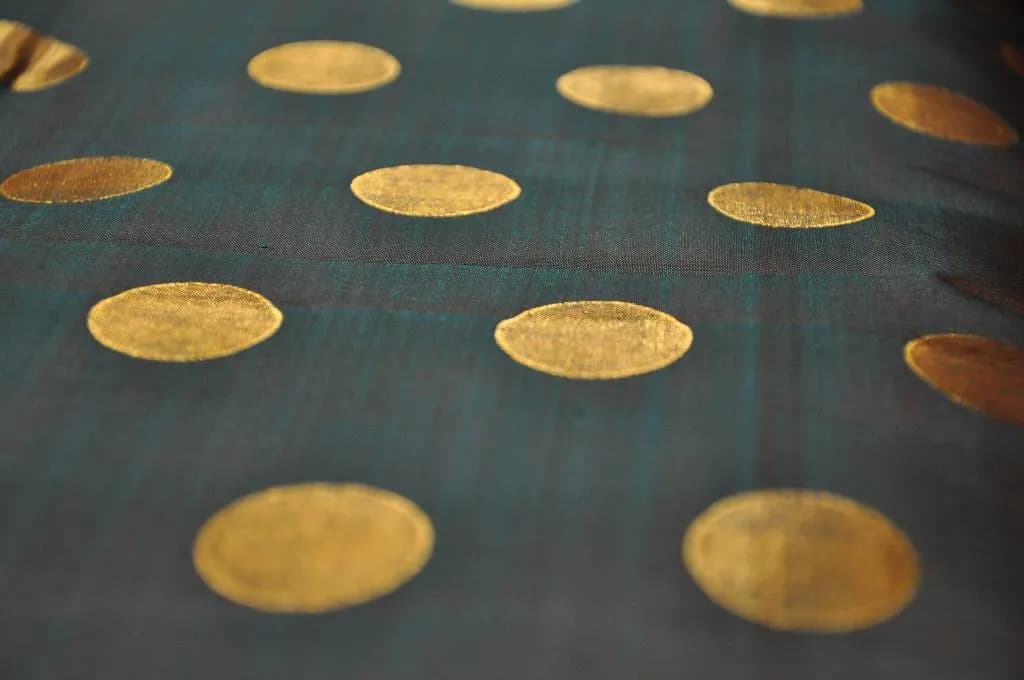
Fabric is not apparel. Woven fabric of cotton, silk, wool or man-made fibre sold by the metre or as a saree length attracts 5% regardless of its price. A ₹12,000 Kanchipuram silk saree and a ₹400 cotton saree both carry 5%, because a saree is generally classified as woven fabric of its fibre rather than as a garment. Unstitched salwar-suit material sold as fabric pieces is treated the same way.
That changes once fabric is made into a garment. A lehenga, a stitched blouse or a readymade salwar suit is apparel under chapter 62 and falls under the ₹2,500 test. A boutique that sells the same silk as a saree at 5% and as a stitched ₹6,000 lehenga at 18% is applying the law correctly.
Upstream, GST 2.0 fixed a long-running problem in the man-made-fibre chain. Polyester and viscose staple fibre fell from 18% to 5% and man-made yarn from 12% to 5%, so a weaver of polyester fabric at 5% no longer pays more tax on its yarn than it collects on its cloth. Cotton yarn and fabric were already at 5%. The Council did not cut the rate on dyes, zips, elastics, buttons and embellishments, saying in its FAQs that these are multi-use goods and an end-use exemption would go against policy — so those inputs still carry higher GST for garment makers.
Footwear
Footwear follows the same pattern with the line set per pair. From 22 September 2025, shoes, sandals, slippers and other footwear under chapter 64 with a sale value up to ₹2,500 a pair attract 5%, and those above it 18%. Until then the line was ₹1,000 a pair, with 12% below and 18% above, so a ₹1,999 pair of sports shoes went from 18% to 5%. As with garments, the test is the value per pair before GST.
How discounts affect the ₹2,500 threshold
Section 15(3) of the CGST Act sets out when a discount reduces the value of a supply, and the timing of the discount decides whether it changes the rate.
A discount given before or at the time of sale and shown on the invoice is excluded from the value under section 15(3)(a). A kurta tagged at ₹2,800 before tax and sold in a 15% festive sale is invoiced at ₹2,380. Its sale value is ₹2,380, so it attracts 5% — ₹119 of tax instead of the ₹504 it would carry at 18% without the discount.
A discount given after the sale through a credit note reduces the taxable value under section 15(3)(b) if it was agreed beforehand and linked to the invoice, but it does not change the rate on the original invoice. A retailer that bills a jacket at ₹2,700 at 18% and later gives a ₹300 loyalty credit note reduces the tax by ₹54, not to the 5% rate.
Combo and buy-one-get-one offers need care. If you sell "two shirts for ₹4,000", the invoice should show each piece at ₹2,000 so the per-piece value is clear. A "free" item in a bundle is usually treated as part of one priced supply, so allocate the price across the pieces on the invoice rather than showing one at full price and one at zero. Our discount calculator helps set sale prices that stay under the line.
Try it — GST on a ₹2,380 discounted kurta at 5%
The GST-inclusive price trap
Retail tags in India are usually printed inclusive of tax. That creates a band where neither rate works arithmetically. A tag of ₹2,625 inclusive of 5% means a value of exactly ₹2,500 — fine at 5%. A tag of ₹2,950 inclusive of 18% means a value of exactly ₹2,500 — which is "not exceeding ₹2,500", so 18% cannot apply and the piece belongs at 5%. For any inclusive tag between about ₹2,626 and ₹2,950, backing out 5% gives a value above ₹2,500, while backing out 18% gives a value below it.
We have not found CBIC guidance on how to treat this band. The safe course is to avoid it: set inclusive prices at ₹2,625 or below, or above ₹2,950, or quote prices exclusive of GST so the rate is clear. Check any price with our GST calculator and the how to calculate GST guide.
Worked invoices
Retail bill, intra-state (Jaipur). A customer buys four items. Prices are before GST; CGST and SGST are each half the rate.
| Item | HSN | Value | Rate | CGST | SGST | Line total |
|---|---|---|---|---|---|---|
| Cotton shirt | 6205 | ₹1,800 | 5% | ₹45 | ₹45 | ₹1,890 |
| Wool-blend jacket | 6201 | ₹3,200 | 18% | ₹288 | ₹288 | ₹3,776 |
| Silk saree | 5007 | ₹6,000 | 5% | ₹150 | ₹150 | ₹6,300 |
| Leather shoes (pair) | 6403 | ₹2,400 | 5% | ₹60 | ₹60 | ₹2,520 |
| Total | ₹13,400 | ₹543 | ₹543 | ₹14,486 |
Wholesale, inter-state. A Tiruppur manufacturer sells 200 knitted T-shirts (6109) at ₹350 each to a retailer in Hyderabad: value ₹70,000, IGST at 5% = ₹3,500, invoice total ₹73,500. The wholesale price per piece decides the rate, not the retailer's later shelf price.
Premium garment. A designer kurta set billed at ₹5,500 before tax attracts 18%, or ₹990, for a total of ₹6,490. Under the old rules it carried 12%, or ₹660.
Create invoices with the right per-line rates using our invoice generator.
Input tax credit and inverted-duty refunds
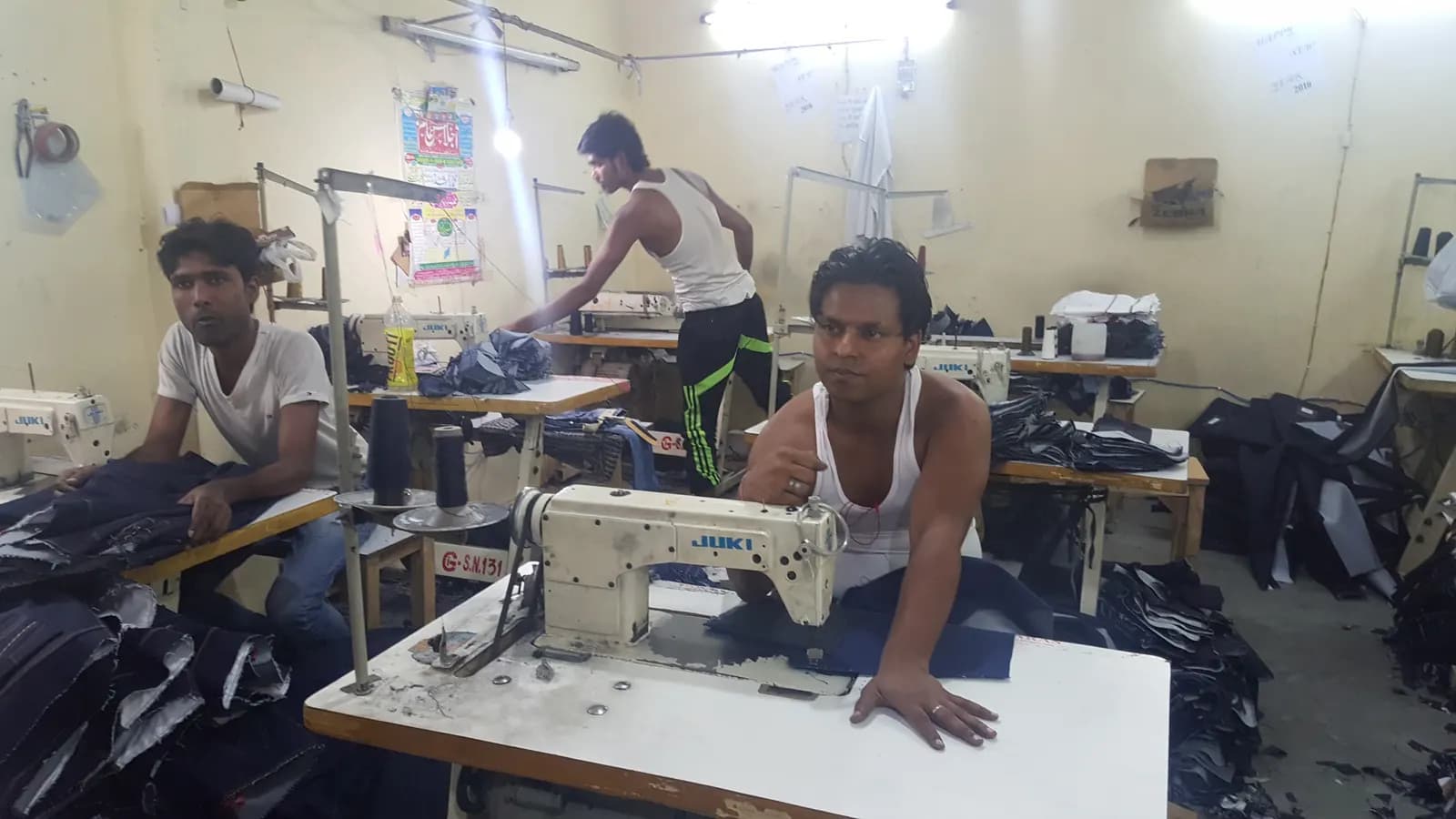
A garment maker that sells at 5% often pays more tax on its inputs than it collects. Fabric comes in at 5%, but buttons, zips, labels, packing material and machinery spares come in at 18%. When input tax credit exceeds output tax month after month, the credit builds up in the electronic credit ledger. Section 54(3) allows a refund of that unused credit where it arises because the rate on inputs is higher than the rate on output supplies — the "inverted duty structure".
The refund is limited by the formula in rule 89(5). Only credit on inputs counts as "Net ITC"; credit on input services such as job work, rent or freight is not refundable, and tax on output is apportioned between inputs and input services.
Example. In one quarter a Ludhiana unit sells kurtas of ₹1,500 each worth ₹20,00,000, with output GST at 5% of ₹1,00,000. It buys fabric of ₹8,00,000 (ITC ₹40,000 at 5%), accessories and packing of ₹4,00,000 (ITC ₹72,000 at 18%) and job work of ₹2,00,000 (ITC ₹10,000 at 5%). Total ITC is ₹1,22,000, of which Net ITC on inputs is ₹1,12,000.
- First part: ₹20,00,000 × ₹1,12,000 ÷ ₹20,00,000 = ₹1,12,000
- Second part: ₹1,00,000 × (₹1,12,000 ÷ ₹1,22,000) = ₹91,803
- Maximum refund: ₹1,12,000 − ₹91,803 = ₹20,197
Of the ₹22,000 of credit left over, ₹20,197 can be claimed back through FORM GST RFD-01; the ₹1,803 linked to job work stays in the ledger. From 1 October 2025, CBIC's Instruction 06/2025-GST lets officers sanction 90% of an inverted-duty claim provisionally where the system rates it low-risk — within seven days of acknowledgment — pending a formal amendment of the law. Garments above ₹2,500 sold at 18% generally have no inversion, so their makers use their credit against output tax instead.
Retailers rarely face inversion, because they buy and sell the same garments at the same rate. A retailer who bought ₹1,800 shirts at 12% before 22 September 2025 and sold them at 5% afterwards may have accumulated credit; that is a one-time effect of the rate change on the same goods rather than an inverted structure, so it is generally used up against future output tax rather than refunded. Our input tax credit guide explains the conditions for claiming credit.
Small clothing businesses: composition and e-commerce
A clothing shop with aggregate turnover up to ₹1.5 crore can opt for the composition scheme and pay 1% of turnover instead of 5% or 18% on each piece. For a boutique selling mostly premium pieces at 18% with a good margin, that can save a lot; for a shop selling sub-₹2,500 garments at 5% on thin margins, the regular scheme with credit is often cheaper. Composition sellers can list goods on marketplaces for buyers in their own State, but cannot make inter-state sales.
When you sell through a marketplace, the platform collects TCS at 0.5% (0.25% CGST + 0.25% SGST, or 0.5% IGST) on your net sales, which you can claim against your own tax. Marketplace listing tools often ask for one rate per product; if a garment's selling price moves across ₹2,500 during a sale, update the tax rate along with the price. If you are just starting out, our guide on how to start a clothing business covers registration and setup.
Common mistakes
Before you bill a garment
0/6Applying the rate to the bill total. The test is per piece. Ten T-shirts at ₹400 are ten 5% items, not one ₹4,000 item.
Using MRP instead of the selling price. Rate and tax follow the transaction value. Print the real selling price and any discount on the invoice.
Treating sarees as garments. Sarees and dress material are fabric at 5%; a stitched lehenga is a garment.
Missing the 18% on premium pieces. Since 22 September 2025, anything above ₹2,500 a piece is at 18%, not 12%. Update item masters, especially for winter wear and wedding wear.
Forgetting inverted-duty refunds. Garment makers selling mostly at 5% should check the electronic credit ledger every quarter and file RFD-01; the claim must be filed within two years of the relevant date under section 54 — broadly, the due date of the return for the period in which the credit built up.
Official links
- 56th GST Council recommendations with HSN-wise rate annexuresTextiles, apparel and footwear rate changes
- CBIC GST rates for goodsRate notifications and schedules
- CGST Act section 15 — value of supply and discountsCBIC tax information portal
- CGST Rule 89 — refund formulaSub-rule (5) for inverted duty
- GST portal — RFD-01 refund applicationServices > Refunds
What to do next
Check your item master: tag every garment, made-up and footwear line with its HSN and set the rate from the actual selling price per piece, not the MRP. If you manufacture at 5%, run the rule 89(5) formula on last quarter's numbers to see whether a refund is waiting. For pricing and billing, try the GST calculator and the invoice generator.
This is general information, not legal or tax advice — confirm on the official source or with a professional.
Frequently asked questions
Readymade garments and clothing accessories under HSN chapters 61 and 62 attract 5% GST when the sale value is up to ₹2,500 per piece and 18% when it is above. The rule has applied since 22 September 2025; before that the threshold was ₹1,000 and the rates were 5% and 12%.
Before GST. The test is the sale value of each piece — the transaction value on which tax is charged — not the GST-inclusive price and not the MRP. A shirt sold for ₹2,500 plus 5% GST (₹2,625 total) stays at 5%. A shirt sold for ₹2,501 before tax attracts 18%.
It can. Under section 15(3)(a) of the CGST Act, a discount given before or at the time of sale and shown on the invoice is excluded from the value. If that brings a garment's value to ₹2,500 or less, the 5% rate applies. A discount given later through a credit note reduces the value but does not change the rate on the original invoice.
Knitted or crocheted garments fall under chapter 61 (for example 6109 for T-shirts, 6110 for sweaters) and woven garments under chapter 62 (6203 for men's suits and trousers, 6204 for women's suits and dresses, 6205 for men's shirts). Bed linen, curtains, blankets and other made-ups are in chapter 63.
Sarees and unstitched dress material are generally classified as woven fabric under the chapter for their fibre — 5007 for silk, 5208–5212 for cotton, 5407–5408 or 5512–5516 for man-made fibres — and attract 5% whatever the price. The ₹2,500 rule applies only to chapters 61, 62 and 63.
Footwear of sale value up to ₹2,500 per pair attracts 5% GST and footwear above that attracts 18%, from 22 September 2025. Earlier the threshold was ₹1,000 per pair, with 12% below it and 18% above.
Sources & verification
Figures on this page were checked against the sources below when it was last reviewed on 7 October 2026. Each rate and limit is stored once with its own official source and review date, and official update channels are monitored daily so changes are picked up. How we verify
- 1.Recommendations of the 56th GST Council meeting (press release with HSN-wise annexures) — GST Council / PIB · accessed 7 October 2026
- 2.FAQs on the decisions of the 56th GST Council — PIB, Ministry of Finance · accessed 7 October 2026
- 3.CGST Act 2017, section 15 — value of taxable supply — CBIC · accessed 7 October 2026
- 4.CGST Rules, rule 89 — refund application and inverted-duty formula — CBIC · accessed 7 October 2026
- 5.CBIC instructions on 90% provisional refund through risk identification (Instruction 06/2025-GST) — VJM & Associates · accessed 7 October 2026
- 6.GST rates on textile and cloths — transaction value or MRP? — TaxHeal · accessed 7 October 2026
- 7.GST on garments above ₹2,500: the per-piece rule — Accountune · accessed 7 October 2026
MSMETOOLS is an independent platform and is not affiliated with any government agency, ministry or department.
Tools for this
HSN Code Finder (India)
Find the correct HSN/SAC code for your product.
GST Calculator (India)
Calculate GST for your sales and purchases with current rates.
Invoice Generator
Create professional invoices with tax, logo and custom details.
Discount Calculator
Work out sale prices and stacked discounts.
Related guides
 GST on Footwear 2026: 5% up to ₹2,500, 18% Above, HSN 64Read guide
 HSN Code for Cotton 2026: 5201–5212, GST Rates and RCMRead guide
 GST on Gold 2026: 3% Rate, Making Charges & Old Gold RulesRead guide
 GST on Fertilizers 2026: Urea, DAP, Organic & Inputs RatesRead guide
Official links open the government site in a new tab.