 GST & indirect tax
E-Way Bill under GST in 2026: Limits, Validity and How to Generate One
E-way bill rules for 2026: the ₹50,000 limit and state limits, Part A and Part B, validity by distance, generation steps, extension, cancellation and penalties.
 Edited by Sumeet YadavFounder & editor, MSMETOOLS · fact-checked against official sources
Contents (9)
- 1. What is an e-way bill?
- 2. When is an e-way bill required? The ₹50,000 rule
- 3. State-wise e-way bill limits in 2026
- 4. E-way bill validity: how distance decides the days
- 5. How to generate an e-way bill on ewaybillgst.gov.in
- 6. Updating, extending, cancelling and rejecting
- 7. Changes in 2025–26 every business should know
- 8. Penalties for moving goods without a valid e-way bill
- 9. What to do next
If your business moves goods, sooner or later a truck will be stopped and the officer will ask for one document: the e-way bill. This guide gives traders, manufacturers, transporters and accountants the 2026 rules in one place — when you need one, national and state limits, validity, how to generate, extend and cancel it on ewaybillgst.gov.in, and what a mistake costs. Every rule was checked against Rule 138, the NIC portal and GSTN advisories in October 2026.
Quick answer
An e-way bill is an electronic document generated on the GST e-way bill portal before goods worth more than ₹50,000 start moving in a motorised vehicle. Part A carries invoice details; Part B carries the vehicle or transport document number. It is valid for one day per 200 km of distance.
Limit: ₹50,000 consignment value (including GST) for inter-state movement; states set their own intra-state limits
Validity: 1 day per 200 km (over-dimensional cargo: per 20 km)
Cancel within 24 hours; extend within about 8 hours of expiry
Invoice older than 180 days? The portal will not generate an e-way bill (since 1 January 2025)
No e-way bill: goods and vehicle can be detained; release penalty is 200% of the tax payable
What is an e-way bill?
An e-way bill (EWB) is the electronic permit for moving goods under GST. It is created on the common portal run by NIC — ewaybillgst.gov.in (EWB-1) or its mirror ewaybill2.gst.gov.in (EWB-2) — in Form GST EWB-01, and gives each consignment a unique e-way bill number (EBN). The legal basis is section 68 of the CGST Act and Rule 138 of the CGST Rules.
The form has two parts:
- Part A — supplier and recipient GSTINs, dispatch and delivery PIN codes, invoice or challan number and date, value, HSN and reason for transport. Filled by the supplier, the recipient or, on authorisation, the transporter.
- Part B — the vehicle number (road) or transport document number (LR, railway receipt, airway bill, bill of lading). Filled by whoever moves the goods.
If you fill only Part A, the portal gives you a Part A slip — a temporary number your transporter can complete later. It stays usable for 15 days for updating Part B. It is not a valid e-way bill for road movement until Part B is added, except in one case: when you send goods up to 50 km within your state to your transporter's place of business for onward transport.
Who can generate it: the registered consignor or consignee, the transporter (registered or enrolled), or any citizen who enrols on the portal to move goods for personal use.
When is an e-way bill required? The ₹50,000 rule
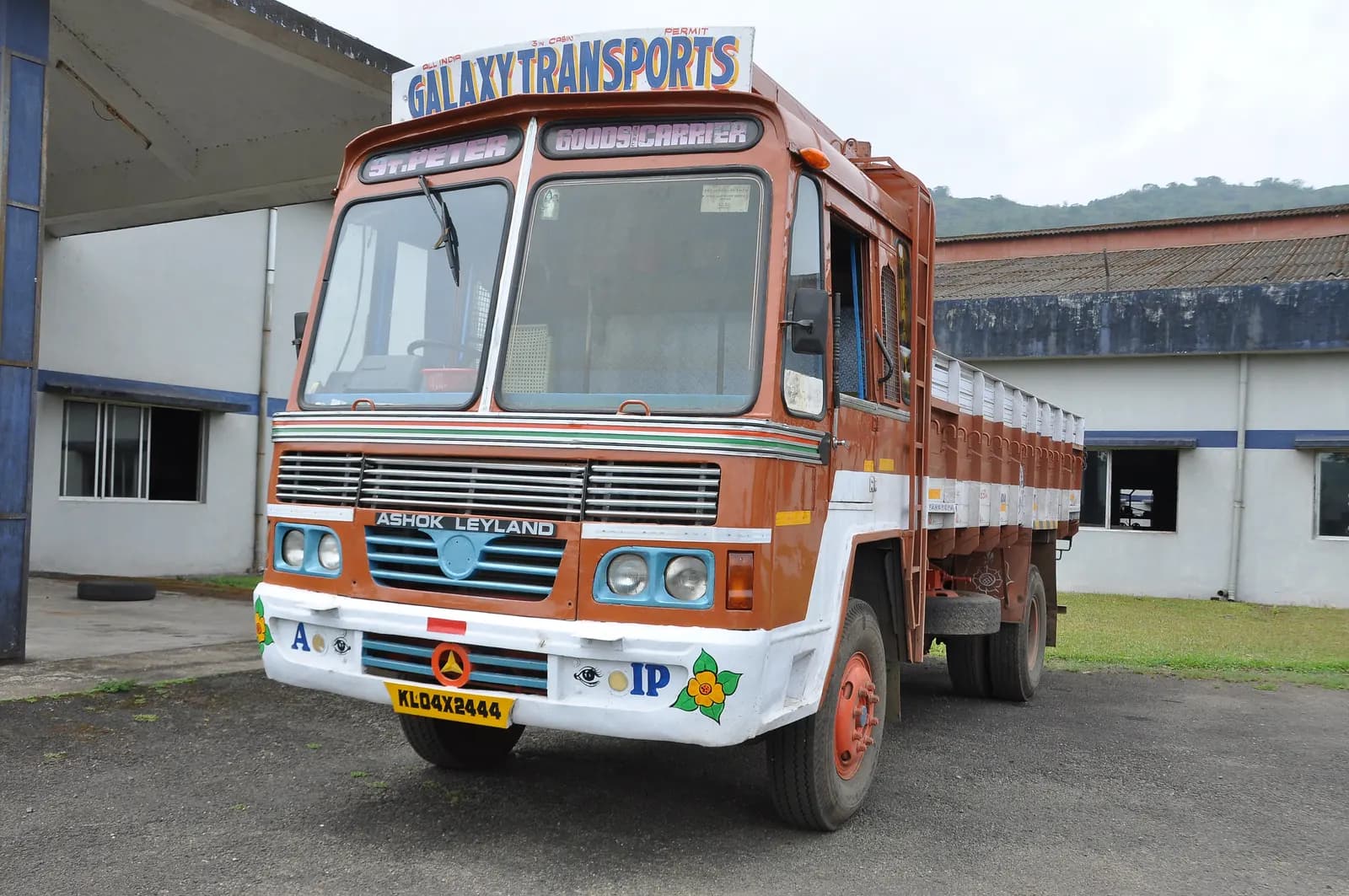
Rule 138(1) requires an e-way bill before goods start moving if the consignment value exceeds ₹50,000 and the movement is:
- in relation to a supply (sale, branch transfer, barter), or
- for reasons other than supply (sending goods for job work, on approval, to an exhibition, sales return), or
- due to an inward supply from an unregistered person.
"Consignment value" is the value on the invoice, bill of supply or delivery challan including CGST, SGST/UTGST, IGST and cess, but excluding exempt goods billed on the same invoice. A bill of ₹44,000 + 18% GST = ₹51,920 crosses the limit even though the taxable value doesn't.
Two cases need an e-way bill whatever the value:
- Job work across states — goods sent by a principal to a job worker in another state (the principal or registered job worker generates it).
- Handicraft goods moved inter-state by a person exempt from registration.
When you do not need an e-way bill
Rule 138(14) and its Annexure exempt, among others:
- Goods moved by a non-motorised conveyance (handcart, cycle-rickshaw, bullock cart)
- Goods exempt from GST under Notification 2/2017-Central Tax (Rate) — fresh vegetables, fruit, milk, grains sold loose (de-oiled cake excepted)
- Alcoholic liquor, petrol, diesel, crude, natural gas and ATF
- Goods from a customs port, airport or land customs station to an ICD/CFS for clearance, and goods under customs bond or seal
- Transit cargo to or from Nepal and Bhutan; goods moved by or for the Ministry of Defence
- Transactions treated as "no supply" under Schedule III
State-wise e-way bill limits in 2026
The ₹50,000 figure is fixed for inter-state movement. For movement within a state, each state notifies its own limit under its SGST rules — so the answer to "do I need one?" depends on where the truck is going.
| State | Intra-state limit | Note |
|---|---|---|
| Maharashtra | ₹1 lakh | Notification 15E/2018, since 1 July 2018 |
| West Bengal | ₹50,000 | Cut from ₹1 lakh by Notification 02/2026, from 1 June 2026; job work excluded |
| Delhi, Tamil Nadu, Punjab, Bihar | ₹1 lakh | As notified by each state |
| Rajasthan | ₹1 lakh (₹2 lakh within one city) | Tobacco products have no relaxation |
| Kerala | No general intra-state requirement | Gold and other Chapter 71 goods need one above ₹10 lakh |
| Most other states (Karnataka, UP, Gujarat, Telangana, Haryana…) | ₹50,000 | Some limit it to notified goods |
State limits change by notification — West Bengal's 2026 cut is the latest example — so confirm on your state commercial-tax website (linked from Other State Tax Sites on the e-way bill portal) before relying on a higher limit.
Example. A Pune distributor sends ₹80,000 of paint to a dealer in Nashik: no e-way bill needed (Maharashtra intra-state limit is ₹1 lakh). The same ₹80,000 consignment to Surat needs one, because it is inter-state. A Kolkata trader sending ₹60,000 of fabric to Howrah needed nothing in May 2026, but needs an e-way bill from 1 June 2026.
E-way bill validity: how distance decides the days
Validity is counted from the time of generation (for road movement, from the time Part B is first entered), and each "day" ends at midnight of the following day.
| Type of cargo | Validity |
|---|---|
| Normal cargo, up to 200 km | 1 day |
| Every further 200 km or part of it | +1 day |
| Over-dimensional cargo, or multimodal shipment with a sea leg, up to 20 km | 1 day |
| Every further 20 km or part of it (ODC / ship leg) | +1 day |
Worked example. You generate an e-way bill at 11:30 pm on 10 October for a 450 km trip from Ahmedabad to Udaipur and on. 450 km ÷ 200 = 2.25, rounded up to 3 days. Day 1 ends at midnight of 11 October, so the e-way bill expires at midnight between 13 and 14 October. Had you generated it at 12:05 am on 11 October, it would have run until midnight between 14 and 15 October — which is why transporters often wait until just after midnight to generate.
Getting the distance right
The portal calculates the motorable pin-to-pin distance from the PIN codes you enter. You may type the actual distance, but no more than 10% above the auto-calculated figure. If the source and destination share a PIN code, you can enter 1–100 km. Use Search → Pin to Pin distance on the portal before you quote a delivery date to a customer.
How to generate an e-way bill on ewaybillgst.gov.in
You need a GST registration (or a transporter enrolment), a one-time registration on the e-way bill portal using your GSTIN and the OTP sent to your registered mobile, and the invoice or delivery challan in hand. If you e-invoice, you can create the e-way bill straight from the IRN — see our e-invoice guide.
Generate an e-way bill on the portal
- 1
Log in with two-factor authentication
Open the e-way bill portalOpen ewaybillgst.gov.in (or ewaybill2.gst.gov.in), enter your username and password, then the OTP. 2FA has been mandatory for every taxpayer and transporter since 1 April 2025.
- 2
Choose e-Waybill → Generate New
Select the transaction type (Outward or Inward), sub-type (Supply, Job Work, Export, SKD/CKD, Sales Return…) and the document type — tax invoice, bill of supply, delivery challan or bill of entry.
- 3
Enter the document number and date
The document date cannot be more than 180 days before today; the portal rejects older documents. If goods are billed to one party and delivered to another, pick Bill To – Ship To and enter both addresses.
- 4
Fill supplier, recipient and item details
GSTINs (or URP for an unregistered party), dispatch and delivery PIN codes, then each item's HSN, quantity, taxable value and tax rates. Look up codes with the HSN code finder.
- 5
Add transport details (Part B)
Choose the mode, enter the approximate distance (max 10% above the pin-to-pin figure), and either the vehicle number or the transporter ID and LR/RR/airway bill number. Leave Part B for the transporter if you only have a transporter ID — you'll get a Part A slip.
- 6
Submit and print
The portal issues the EBN with its validity. Print it or share the number; officers can verify it from the EBN or the QR code, so a printout isn't strictly required.
Tip: Generating many bills? Use the free bulk-generation tool or the SMS facility listed under Help on the portal.
A transporter carrying several consignments in one vehicle can bundle their EBNs into one consolidated e-way bill (Form EWB-02).
Updating, extending, cancelling and rejecting
- Vehicle change or transhipment: update Part B every time goods move to a new vehicle. Since August 2025 NIC lets you update Part B, change the transporter and extend validity from either portal, whichever generated the e-way bill.
- Extension: possible only for circumstances such as breakdown, accident, natural calamity, law-and-order trouble or transhipment delay. Rule 138(10) allows extension within 8 hours of expiry, and the portal opens the option from about 8 hours before expiry to 8 hours after. You enter the reason, the current location and the remaining distance; the new validity is calculated on that distance. Since 1 January 2025 the total life is capped at 360 days from original generation.
- Cancellation: only the generator can cancel, only within 24 hours, and only if the goods did not move or moved differently from what the e-way bill says. An e-way bill already verified in transit cannot be cancelled. If you e-invoice, cancel the e-way bill before cancelling the IRN.
- Rejection by the other party: the recipient (or supplier, if the recipient generated it) can reject an e-way bill raised on its GSTIN within 72 hours or before delivery, whichever is earlier; silence counts as acceptance.
- No editing: apart from Part B, nothing can be edited. If the GSTIN, value or HSN is wrong, cancel within 24 hours and generate a fresh one.
Changes in 2025–26 every business should know
E-way bill changes, 2025–26
1 Jan 2025
Documents older than 180 days blocked; extension capped at 360 days; MFA mandatory for AATO above ₹20 crore
1 Feb 2025
MFA mandatory for AATO above ₹5 crore
1 Apr 2025
MFA (2FA) mandatory for all taxpayers and transporters
Aug 2025
Part B update, extension and transporter change allowed across EWB-1 and EWB-2
1 Feb 2026
RSP-based tax validation for tobacco and pan masala (Notifications 19 & 20/2025-CT)
1 Jun 2026
West Bengal intra-state limit cut to ₹50,000
29 Jul 2026
Mandatory Ship-to GSTIN and voluntary EWB closure, planned for 1 Aug 2026, put on hold
The Ship-to GSTIN rule is not live. GSTN had announced that from 1 August 2026 the Ship-to GSTIN would be mandatory in Bill-to/Ship-to e-way bills (with "URP" for unregistered consignees), along with a voluntary facility to close an e-way bill on delivery. On 29 July 2026 GSTN's Advisory 668 put both on hold "until further notice", withdrew the related advisories and FAQs, and told businesses no production changes were needed. Many explainers still describe it as in force; as of October 2026 it is not — though capturing ship-to GSTINs in your ERP is sensible, as it is likely to return.
Blocking for non-filers. Under Rule 138E, if you fail to file GSTR-3B for two consecutive tax periods, your GSTIN is blocked from e-way bill generation — as supplier and as recipient, so your customers can't generate one naming you either. Filing the pending returns unblocks it. Keep your GSTR-1 and GSTR-3B current to avoid a halt in dispatches.
Penalties for moving goods without a valid e-way bill
Goods moving without an e-way bill — or with one that has expired, or whose details don't match the goods — can be detained along with the vehicle under section 129 of the CGST Act. The officer must issue a notice within 7 days of detention and an order within 7 days of serving the notice.
| Situation | Penalty to release goods (s.129) |
|---|---|
| Owner comes forward | 200% of the tax payable on the goods |
| Owner does not come forward | Higher of 50% of the goods' value or 200% of the tax |
| Exempt goods, owner comes forward | Lower of 2% of value or ₹25,000 |
| Exempt goods, owner does not come forward | Lower of 5% of value or ₹25,000 |
If the penalty is not paid within 15 days of the order, the goods or vehicle can be sold. The transporter can get the vehicle released by paying the penalty or ₹1 lakh, whichever is less. Separately, section 122 provides a penalty of ₹10,000 or the tax evaded, whichever is higher, for transporting taxable goods without the prescribed documents.
Example in ₹. A truck carries ₹5,00,000 of electrical goods taxed at 18% (₹90,000 GST) without an e-way bill. If the owner comes forward, the release penalty is 200% × ₹90,000 = ₹1,80,000. If nobody claims the goods, it is the higher of 50% × ₹5,00,000 = ₹2,50,000 or ₹1,80,000 — ₹2,50,000. An e-way bill takes five minutes.
Dispatch checklist before the truck leaves
0/7Official links
- E-Way Bill portal (EWB-1)Registration, generation, extension, cancellation, pin-to-pin distance
- E-Way Bill portal (EWB-2)Backup portal; interoperable with EWB-1
- E-way bill FAQsNIC's official answers on validity, Part B, cancellation, blocking
- Rule 138, CGST RulesThe law: limits, validity, exemptions
- Section 129, CGST ActDetention and penalties
- NIC advisory, January 2025 changes180-day and 360-day limits, MFA
What to do next
Register on the e-way bill portal now, set up 2FA and at least one sub-user, and check your state's intra-state limit before your next dispatch. For goods sent on approval or for job work, create the delivery challan first and generate the e-way bill against it; for sales, use our invoice generator and check the tax with the GST calculator. If you are not yet registered, start with the GST registration guide.
This is general information, not legal or tax advice — confirm on the official source or with a professional.
Frequently asked questions
For inter-state movement the limit is ₹50,000 of consignment value, counted including GST and cess. For movement inside one state, each state notifies its own limit: Maharashtra uses ₹1 lakh, and West Bengal cut its limit to ₹50,000 from 1 June 2026. Job-work and inter-state handicraft movements need an e-way bill whatever the value.
Validity is one day for every 200 km of road distance or part of it, counted from generation and ending at midnight. A 450 km trip gets three days. Over-dimensional cargo, and multimodal shipments with a sea leg, get one day per 20 km. Part A alone is not a valid e-way bill until vehicle or transport details are added in Part B.
No. The generator can cancel an e-way bill only within 24 hours of generation, and not at all once an officer has verified it in transit. If goods did not move after that window, keep evidence (cancelled invoice, gate records) and let the e-way bill lapse. The recipient can reject an e-way bill raised on its GSTIN within 72 hours or before delivery.
Yes, if the consignment value crosses the limit and the goods move in any motorised vehicle, including your own car or a hired tempo. The supplier can generate it from the invoice, or you can enrol on the portal as a citizen and generate it yourself. Non-motorised conveyances such as handcarts are exempt under Rule 138(14).
The goods and vehicle can be detained under section 129. The owner can get them released by paying 200% of the tax payable on those goods; if the owner does not come forward, the penalty is the higher of 50% of the goods' value or 200% of the tax. A separate penalty of ₹10,000 or the tax evaded can also apply under section 122.
Sources & verification
Figures on this page were checked against the sources below when it was last reviewed on 7 October 2026. Each rate and limit is stored once with its own official source and review date, and official update channels are monitored daily so changes are picked up. How we verify
- 1.Rule 138 – CGST Rules, 2017 (information to be furnished prior to commencement of movement of goods) — CBIC · accessed 7 October 2026
- 2.Section 129 – CGST Act, 2017 (detention, seizure and release of goods in transit) — CBIC · accessed 7 October 2026
- 3.E-Way Bill System – home page and latest updates — NIC / GSTN · accessed 7 October 2026
- 4.E-Way Bill System – Frequently Asked Questions — NIC · accessed 7 October 2026
- 5.Updates to E-Way Bill and E-Invoice Systems (advisory, effective 1 January 2025) — NIC · accessed 7 October 2026
- 6.Enhancement of Interoperable Services between E-Way Bill 1 and E-Way Bill 2 portals — NIC · accessed 7 October 2026
- 7.GSTN Advisory 668: e-Way Bill enhancements put on hold — TaxUpdate · accessed 7 October 2026
- 8.West Bengal lowers intra-state e-way bill threshold from ₹1 lakh to ₹50,000 from 1 June 2026 — Juris Hour · accessed 7 October 2026
- 9.Maharashtra: no intra-state e-way bill up to ₹1 lakh from 1 July 2018 — TaxGuru · accessed 7 October 2026
- 10.State-wise e-way bill thresholds — ClearTax · accessed 7 October 2026
MSMETOOLS is an independent platform and is not affiliated with any government agency, ministry or department.
Tools for this
Delivery Challan Generator (India)
Create delivery challans easily.
Invoice Generator
Create professional invoices with tax, logo and custom details.
HSN Code Finder (India)
Find the correct HSN/SAC code for your product.
GST Calculator (India)
Calculate GST for your sales and purchases with current rates.
Related guides
 E-Invoice under GST 2026: Limit, IRN, Portals & StepsRead guide
 GST Cancellation 2026: REG-16, Suo Moto, Revocation & GSTR-10Read guide
 GST on Gold 2026: 3% Rate, Making Charges & Old Gold RulesRead guide
 GST on Job Work 2026: Rates, Section 143 & ITC-04 RulesRead guide
Official links open the government site in a new tab.