 GST & indirect tax
GST on Online Payments in 2026: UPI, Cards, Wallets and Payment Gateway Fees
GST on online payments in 2026: no GST on the UPI or card payment itself, 18% on gateway and MDR fees, the new 0.4% UPI MDR above ₹2,000, wallets and claiming ITC.
 Edited by Sumeet YadavFounder & editor, MSMETOOLS · fact-checked against official sources
Contents (9)
- 1. Is there GST on online payments? The short version
- 2. The new UPI MDR, deferred to after Diwali 2026
- 3. GST on payment gateway charges and MDR
- 4. Worked example: one month of online sales for a small brand
- 5. Claiming input tax credit on payment fees
- 6. Wallets, cards, net banking: what each one costs in GST
- 7. Paying your own GST online
- 8. Common mistakes merchants make
- 9. What to do next
Every few months a message goes viral claiming that the government will charge GST on UPI payments above ₹2,000. It has never been true — GST is a tax on the goods and services you buy, not on the way you pay for them. What is true is that the fees banks and payment gateways charge merchants carry GST, and in September 2026 the government allowed a merchant fee on larger UPI payments for the first time since 2020. This guide is for shop owners, online sellers, freelancers and anyone who pays online and wants to know where GST actually applies: the payment itself, the gateway's fee, the new UPI MDR, wallets and cards, and how merchants recover the GST as input tax credit. It was checked against the Ministry of Finance's MDR FAQs, CBIC circulars and the GST rate notifications in October 2026.
Quick answer
There is no GST on an online payment itself — UPI, card, net banking or wallet. GST is charged on what you buy, at that item's rate. GST at 18% applies only to fees: the merchant discount rate (MDR) or gateway charge a merchant pays, and any convenience or loading fee a customer pays.
Coming soon: merchants will pay 0.4% MDR on UPI payments above ₹2,000 (capped at ₹300), plus 18% GST on that fee — NPCI has put the start back to a date after Diwali 2026 still to be notified
Still zero MDR: UPI payments up to ₹2,000, RuPay debit cards, P2P transfers and small P2PM merchants up to ₹1 lakh a month
Customers pay nothing extra on UPI — merchants can't pass the MDR on
GST-registered merchants claim the GST on fees as input tax credit
Is there GST on online payments? The short version
GST is levied on a supply of goods or services. When you pay ₹1,180 for a shirt by UPI, the shirt carries GST — say ₹180 at 18% inside the price — and the shop pays that to the government. The ₹1,180 moving from your bank account to the shop's is just money changing hands; money is excluded from the definition of goods and services, so the transfer itself is not taxed. That is why the same shirt carries the same GST whether you pay cash, by card or by UPI.
GST enters the picture where someone charges a fee for handling the payment:
- Merchants pay a merchant discount rate (MDR) to their bank or payment aggregator for accepting cards, wallets and — once the new charge starts after Diwali 2026 — larger UPI payments. These are financial services taxed at 18% under the services rate notification (SAC 9971).
- Customers sometimes pay a convenience fee — on a train ticket, a movie booking, rent paid by credit card through an app, or a utility bill paid through a platform. The fee is a service and carries 18% GST. The rent, ticket or bill underneath keeps its own GST treatment.
- Card issuers charge annual fees, late payment fees and interest on credit card dues. The GST exemption for interest on loans specifically leaves out interest involved in credit card services, so finance charges on a revolving card balance carry 18% GST, as do the fees.
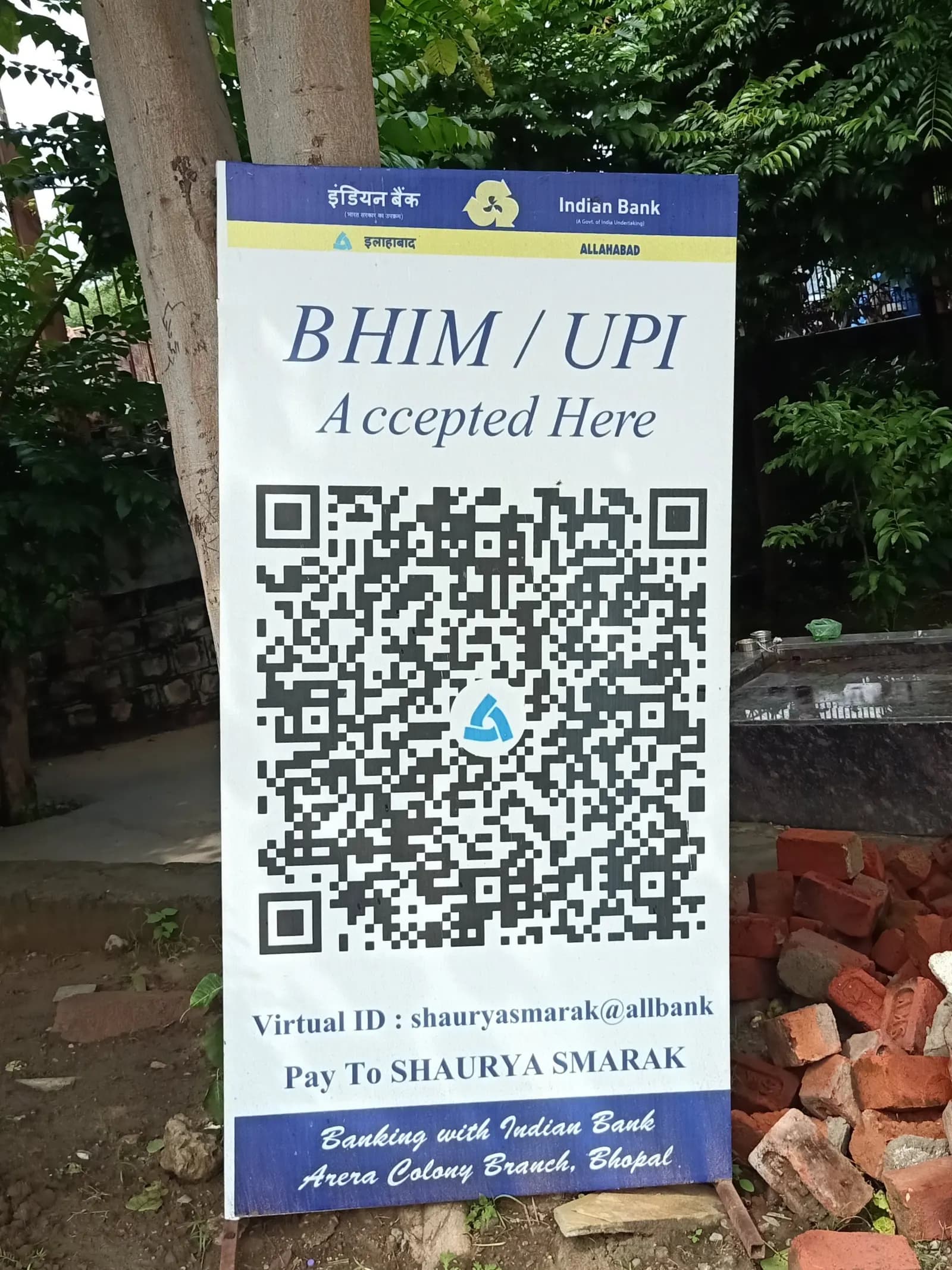
A customer-side example. Say you pay ₹25,000 of rent by credit card through a rent-payment app that charges a 1.5% convenience fee (an illustrative figure — apps set their own). The fee is ₹375 and GST on it is ₹67.50, so your card is charged ₹25,442.50. Residential rent paid by an individual tenant to a landlord carries no GST of its own, so the only GST in the whole transaction is the ₹67.50 on the app's fee. If you are a business paying commercial rent this way, the ₹67.50 is input tax credit like any other fee.
The Ministry of Finance made exactly this point in April 2025 when it called the "GST on UPI above ₹2,000" reports false: GST applies to MDR, and at the time there was no MDR on person-to-merchant UPI. The 2026 change adds an MDR for some UPI payments, so GST now applies to that fee — but still not to the payment.
The new UPI MDR, deferred to after Diwali 2026
From 1 January 2020, banks and payment system providers were barred from charging merchants any fee on payments through BHIM-UPI and RuPay debit cards — the "zero MDR" regime. The government compensated the industry through an annual incentive scheme for low-value UPI and RuPay transactions; Budget 2026-27 provided ₹2,000 crore for it.
On 14 September 2026 a Finance Ministry gazette notification narrowed the zero-charge rule to UPI payments of up to ₹2,000 and RuPay debit card payments, and the Department of Financial Services published FAQs the next day setting out the new charges from 15 October 2026. On 13 October 2026 NPCI's UPI and Services Steering Committee put the start back because of the festive season: the charges will apply "immediately post Diwali at a date to be notified separately". Until that date is notified, UPI payments to merchants stay free of MDR. The rates themselves are unchanged:
| UPI payment type | MDR paid by the merchant |
|---|---|
| Person-to-person transfers, self-transfers | None |
| Person-to-merchant (P2M) payment up to ₹2,000 | None |
| P2M payment above ₹2,000 | 0.4% |
| P2M payment of ₹75,000 or more | Capped at ₹300 |
| Railways, telecom, insurance, fuel, utilities — above ₹2,000 | Flat ₹5 a transaction |
| Mutual funds, brokers, securities | 0.02% (max ₹300) |
| Small merchants in the P2PM category (up to ₹1 lakh a month received by QR) | None, whatever the payment size |
| UPI AutoPay mandates (subscriptions, SIPs, recurring bills) | None |
| UPI on RuPay credit cards or credit lines | Card rules apply, not this framework |
What the FAQs promise customers. UPI stays free to use. Merchants who are onboarded cannot add the MDR to the customer's bill, and UPI apps may not charge a platform fee on UPI payments. There is no limit on the number of free transactions.
Small merchants. A vendor receiving payments into a personal account under NPCI's P2PM (person-to-person-merchant) category keeps zero MDR as long as UPI receipts stay within ₹1 lakh a month. If inward UPI credits exceed that for three consecutive months, the bank moves the merchant to the regular P2M category, where the MDR applies to payments above ₹2,000. GST registration plays no part in this test.
Still being challenged. A public interest petition in the Supreme Court questions the notification, arguing among other things that the rate and caps appear in the FAQs and NPCI's circular rather than the gazette itself. The court has not stayed the change, so plan on it applying from the date NPCI notifies after Diwali.
How it compares. The FAQs put typical credit card MDR at 1.5% to 2.5% and debit card MDR at up to 0.9%, so even after the change UPI remains the cheapest way for most businesses to accept money. Use our payment fee calculator to compare what each method costs you.
GST on payment gateway charges and MDR
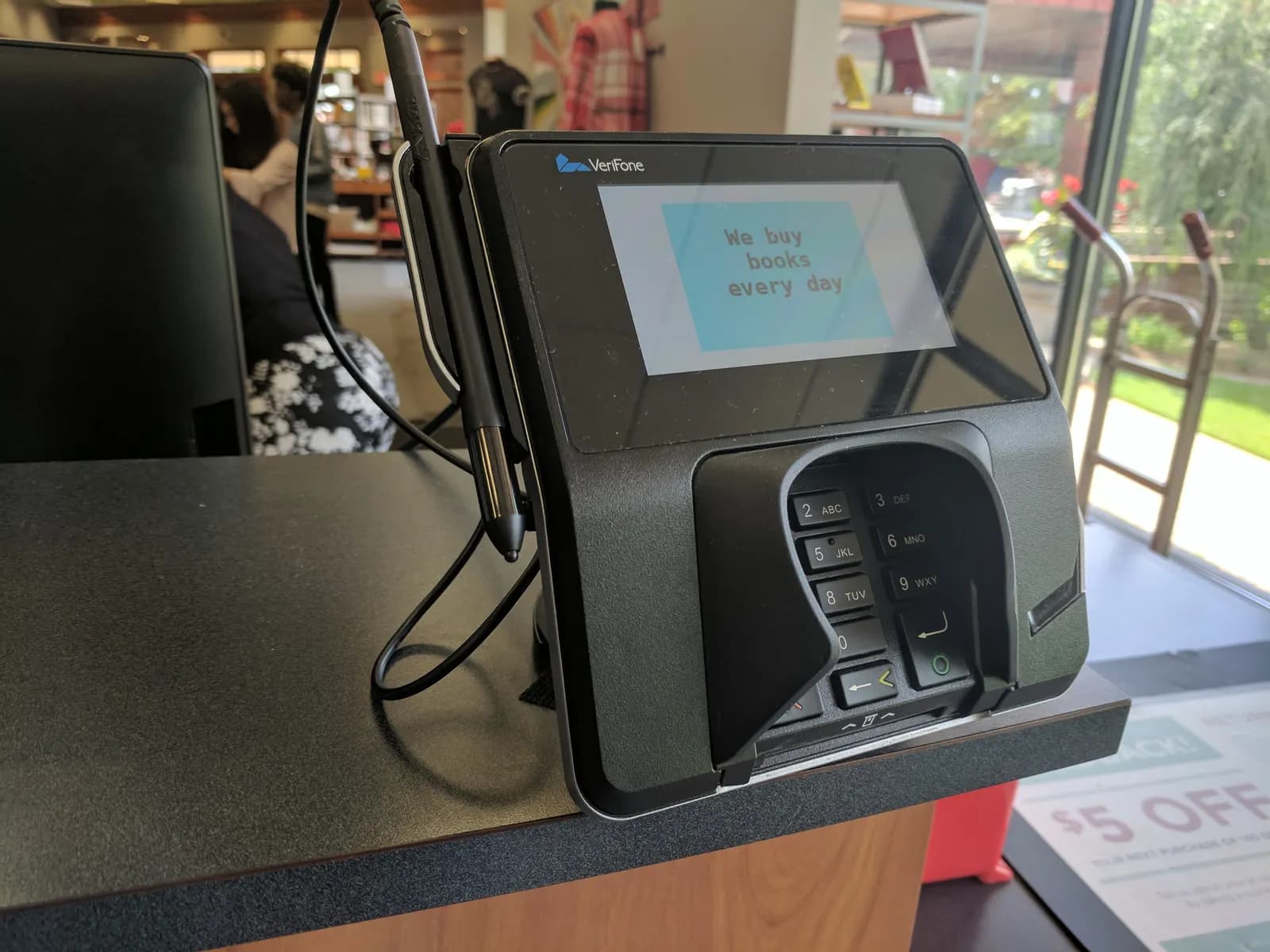
Whatever the payment method, the arithmetic for the merchant is the same: MDR or gateway fee × 18% = GST. The payment gateway deducts its fee plus GST from your settlement, and issues a monthly tax invoice for the total.
A few rules worth knowing:
- The GST is on the fee, not on GST. If your customer paid ₹11,800 including ₹1,800 GST, the gateway's 2% is worked out on ₹11,800 and 18% GST is added to that fee. That is GST on a separate service — the payment processing — not GST charged twice on your sale.
- Card settlements up to ₹2,000 can be exempt. Entry 34 of Notification 12/2017-CT(Rate) exempts an acquiring bank's services in settling card payments of up to ₹2,000 per transaction. CBIC's Circular 245/02/2025-GST (28 January 2025) confirmed that RBI-regulated payment aggregators count as acquiring banks for this purpose, because they handle and pass on the money. Pure payment gateway services — technology that routes the transaction without touching the funds — are not covered and remain taxable. Your provider decides how to split its invoice, so check what it shows as exempt.
- Foreign providers. If you pay a gateway or marketplace located outside India for its services, GST may be payable by you under the reverse charge mechanism as an import of services.
- Interstate invoices. A gateway registered in another state charges IGST; one in your state charges CGST and SGST. Either way the credit is the same.
Worked example: one month of online sales for a small brand
A home-décor brand in Jaipur, registered for GST, sells through its own website and a shop counter. In November 2026 its customers pay ₹12,00,000 in total. Its payment aggregator charges 2% on cards (a typical published plan — your rate depends on your agreement) and follows the new UPI MDR rules. The brand's monthly receipts are well above ₹1 lakh, so it is a regular P2M merchant.
| Payment type | Amount received | Fee rate | Fee | GST at 18% |
|---|---|---|---|---|
| Credit and non-RuPay debit cards | ₹4,00,000 | 2% | ₹8,000 | ₹1,440 |
| RuPay debit cards | ₹50,000 | Zero MDR | ₹0 | ₹0 |
| UPI payments up to ₹2,000 | ₹1,50,000 | Zero MDR | ₹0 | ₹0 |
| UPI payments above ₹2,000 (none over ₹75,000) | ₹6,00,000 | 0.4% | ₹2,400 | ₹432 |
| Total | ₹12,00,000 | ₹10,400 | ₹1,872 |
The aggregator settles ₹12,00,000 − ₹10,400 − ₹1,872 = ₹11,87,728 to the brand's bank account over the month and sends one tax invoice for ₹10,400 plus ₹1,872 GST.
What it really costs. Because the brand is a regular GST taxpayer, it claims the ₹1,872 as input tax credit against the GST it owes on its sales. Its real cost is the ₹10,400 fee — 0.87% of receipts. A composition-scheme seller or an unregistered seller with the same receipts would bear the full ₹12,272.
What changes once the UPI MDR starts. Until then the ₹6,00,000 of larger UPI payments cost nothing. The new MDR adds ₹2,400 plus ₹432 GST a month. Over a year that is ₹28,800 in fees — worth knowing when you set prices or decide whether to nudge customers from cards to UPI, which is still far cheaper than a 2% card fee.
The customers' side. Every customer paid the listed price. The GST on the décor items — 18% on most furnishings, 5% on some handicrafts — is part of that price and is paid by the brand in its GSTR-3B, exactly as it would be for a cash sale.
Add 18% GST to a gateway or MDR fee
Claiming input tax credit on payment fees
The GST on MDR and gateway charges is ordinary input tax credit, available under section 16 of the CGST Act when four things line up:
- Your GSTIN is on the invoice. Add it in your payment provider's dashboard or account settings. If you have registrations in more than one state, make sure each is linked to the right merchant account.
- The provider files its GSTR-1 and the invoice appears in your GSTR-2B for the month. Large providers issue one consolidated invoice per month, often downloadable from the dashboard.
- The service is used for your business. Payment processing for taxable sales is clearly business use; it is not on the blocked list in section 17(5).
- You claim it in time — by 30 November following the end of the financial year, or the date you file the annual return, if earlier.
If you make both taxable and exempt sales — a dairy selling milk and ghee, say, or a clinic selling medicines and exempt healthcare — the GST on common payment fees has to be split, and the share relating to exempt sales reversed under Rules 42 and 43.
Missing credit. If the fee GST does not appear in GSTR-2B, the most common reasons are a missing GSTIN on the provider's account, a GSTIN for the wrong state, or the provider reporting the invoice as B2C. Ask the provider to amend its GSTR-1; the credit will flow into a later GSTR-2B.
Wallets, cards, net banking: what each one costs in GST
Where GST applies on each online payment method
| Method | GST on the payment? | Fee and GST on the fee |
|---|---|---|
UPI (bank account) | No | None up to ₹2,000; 0.4% MDR above it once the new charge starts (after Diwali 2026) + 18% GST (merchant pays) |
RuPay debit card | No | Zero MDR — no fee, no GST |
Other debit cards | No | MDR (up to 0.9% per the DFS FAQs) + 18% GST |
Credit cards | No | MDR typically 1.5–2.5% + 18% GST; card fees and interest to the cardholder also carry 18% |
Wallet (PPI) | No GST on loading money | Any loading fee + 18%; merchant interchange up to 1.1% on UPI wallet payments above ₹2,000 |
Net banking | No | Gateway fee + 18% GST (merchant pays) |
UPI (bank account)
- GST on the payment?
No
- Fee and GST on the fee
None up to ₹2,000; 0.4% MDR above it once the new charge starts (after Diwali 2026) + 18% GST (merchant pays)
RuPay debit card
- GST on the payment?
No
- Fee and GST on the fee
Zero MDR — no fee, no GST
Other debit cards
- GST on the payment?
No
- Fee and GST on the fee
MDR (up to 0.9% per the DFS FAQs) + 18% GST
Credit cards
- GST on the payment?
No
- Fee and GST on the fee
MDR typically 1.5–2.5% + 18% GST; card fees and interest to the cardholder also carry 18%
Wallet (PPI)
- GST on the payment?
No GST on loading money
- Fee and GST on the fee
Any loading fee + 18%; merchant interchange up to 1.1% on UPI wallet payments above ₹2,000
Net banking
- GST on the payment?
No
- Fee and GST on the fee
Gateway fee + 18% GST (merchant pays)
Wallets in more detail. Loading ₹5,000 into a prepaid wallet is just a transfer of money — no GST. Two charges can arise around it. If the wallet provider charges you for loading by credit card, that fee carries 18% GST. And since 1 April 2023, NPCI has allowed an interchange of up to 1.1% on merchant payments above ₹2,000 made from wallets over UPI; this is paid on the merchant side, between banks and wallet companies, not by the customer. NPCI's rules also provide for a 15 basis point charge between the wallet issuer and the bank when more than ₹2,000 is loaded.
Cash on delivery. If you collect COD through a courier or a marketplace, the collection or COD fee is a service with 18% GST — another input tax credit for a registered seller. Marketplaces also collect GST TCS of 0.5% (0.25% CGST + 0.25% SGST, or 0.5% IGST) from what they pass on to sellers; that is not a fee but an advance of your own GST, credited to your cash ledger. Our guide to starting an e-commerce business covers marketplace charges in more detail.
Paying your own GST online
The other meaning of "online GST payment" is paying your tax. You create a PMT-06 challan on the GST portal and pay it through:
- Net banking with an authorised bank;
- NEFT/RTGS from any bank, using the mandate form generated with the challan;
- Over the counter at an authorised bank, for challans up to ₹10,000;
- UPI and debit or credit cards, added under e-payment by GSTN's advisory of January 2024, processed through a designated bank.
Pay a GST challan by UPI or card
- 1
Create the challan
Log in at gst.gov.in → Services → Payments → Create Challan, and enter the tax, interest or fee amounts.
- 2
Choose e-payment
Pick net banking, or UPI / debit / credit card where your state's challan screen offers it.
Tip: If UPI or cards don't show, use net banking or NEFT/RTGS instead.
- 3
Pay and check the ledger
GST portalAfter payment, download the paid challan (CPIN/CIN) and confirm the amount in your electronic cash ledger before filing GSTR-3B.
No GST is charged on the tax you pay — tax is not a supply. If your card issuer charges a fee or interest on a card payment, that is between you and the issuer. For monthly filers the payment must reach your electronic cash ledger by the GSTR-3B due date — the 20th of the next month for monthly filers; late payment attracts interest at 18% a year.
Common mistakes merchants make
Adding a "UPI surcharge" to bills. The MDR FAQs say onboarded merchants cannot pass the UPI MDR on to customers. Build payment costs into your prices instead.
Not linking the GSTIN with the payment provider. Without it, the provider's invoice is issued as a consumer invoice and the 18% GST on your fees never reaches GSTR-2B. On ₹10,400 of monthly fees that is ₹22,464 of lost credit a year.
Ignoring the P2PM limit. Small sellers who receive more than ₹1 lakh a month in UPI payments for three months running are moved to the regular merchant category and start paying MDR above ₹2,000. Watch your monthly totals and your bank's notices.
Forgetting refunds and chargebacks. When you refund an online order, the GST on the sale is reversed through a credit note in your GSTR-1, but many providers do not return the original MDR. The GST you paid on that fee remains valid input tax credit, because the processing service was still supplied. Keep the provider's refund reports with your credit notes so the two reconcile at year end.
Believing the rumours. No GST has been introduced on UPI payments, and the coming UPI MDR does not affect customers or person-to-person transfers. Check the Finance Ministry, RBI or NPCI before reacting to a forwarded message.
Official links
- DFS — FAQs on MDR on select UPI P2M transactions (PDF)Rates, caps, P2PM (15 October start since deferred)
- NPCI — UPI MDR to be implemented post Diwali (13 Oct 2026)Start date to be notified separately
- CGST (Rate) notificationsServices rates (11/2017) and exemptions (12/2017)
- NPCI — UPIOfficial UPI circulars and updates
- GST portal — create a challanPMT-06 payment by net banking, UPI or card
- RBI — payment systemsPayment aggregator and PPI rules
What to do next
If you accept payments, log in to your payment provider's dashboard this week: confirm your GSTIN is on file, download last month's tax invoice, and check whether you are in the P2PM or regular merchant category for UPI. Watch for NPCI's notice of the post-Diwali start date, then add the UPI MDR to your monthly cost tracking and keep claiming the 18% GST as credit in GSTR-3B. For more on recovering tax on business costs, read our input tax credit guide, and see GST 2.0 for the other rule changes of the past year.
This is general information, not legal or tax advice — confirm on the official source or with a professional.
Frequently asked questions
No. GST is never charged on the money you send by UPI — it applies to the goods or services you buy. What is changing is that, from a date after Diwali 2026 still to be notified, merchants will pay a 0.4% fee (MDR) on person-to-merchant UPI payments above ₹2,000, and GST at 18% applies to that fee. Customers pay nothing extra, and person-to-person transfers stay free.
18%. Payment gateways, payment aggregators and banks supply a financial service, so GST is added to their transaction fee (the merchant discount rate), not to the sale amount. On a 2% fee for a ₹10,000 card sale, the fee is ₹200 and the GST is ₹36. A GST-registered merchant can claim that ₹36 as input tax credit.
The merchant. The Ministry of Finance FAQs of 15 September 2026 say merchants cannot pass the MDR to customers, UPI apps cannot charge a platform fee, and small merchants receiving up to ₹1 lakh a month through QR codes under the P2PM category keep zero MDR. The fee is 0.4% above ₹2,000, capped at ₹300.
No. Loading money into a prepaid wallet is not a supply of goods or services, so the amount you load carries no GST. If the wallet charges a fee — for example for loading by credit card — GST at 18% applies to that fee only. Merchant payments from wallets over UPI above ₹2,000 carry an interchange of up to 1.1%, paid on the merchant side.
Yes, if you are GST-registered under the regular scheme and the fees relate to your business. Give the provider your GSTIN, make sure its monthly tax invoice shows your GSTIN, and check that the invoice appears in your GSTR-2B before claiming it in GSTR-3B. Composition taxpayers and unregistered merchants cannot claim the credit, so the GST is a cost for them.
Yes. A PMT-06 challan on the GST portal can be paid by net banking, NEFT/RTGS, over the counter, and — since GSTN's advisory of January 2024 — by UPI and debit or credit card through the designated bank. Paying GST by card does not create any GST on the tax itself; any fee your bank or card issuer charges is a separate matter.
Sources & verification
Figures on this page were checked against the sources below when it was last reviewed on 16 October 2026. Each rate and limit is stored once with its own official source and review date, and official update channels are monitored daily so changes are picked up. How we verify
- 1.UPI MDR on select merchant transactions shall be implemented post Diwali (press release, 13 October 2026) — National Payments Corporation of India · accessed 16 October 2026
- 2.FAQs — Merchant Discount Rate (MDR) on select UPI (P2M) transactions (15 September 2026) — Department of Financial Services, Ministry of Finance · accessed 8 October 2026
- 3.Government allows MDR on UPI payments above ₹2,000 (gazette notification of 14 September 2026) — Digital Terminal · accessed 8 October 2026
- 4.UPI MDR above ₹2,000 may attract 18% GST; merchants can claim ITC — Business Standard · accessed 8 October 2026
- 5.UPI MDR and GST: treatment of tax on MDR and input tax credit — TaxGuru · accessed 8 October 2026
- 6.UPI's zero-fee era ends October 15 — and why it's already in court — StartupTalky · accessed 8 October 2026
- 7.Circular No. 245/02/2025-GST — payment aggregators and entry 34 of Notification 12/2017 — StudyCafe (text of CBIC circular) · accessed 8 October 2026
- 8.Fact check: no GST on UPI transactions over ₹2,000 (Ministry of Finance, 18 April 2025) — Moneylife (reporting PIB statement) · accessed 8 October 2026
- 9.UPI payments: which transactions attract NPCI's 1.1% interchange fee — Business Today · accessed 8 October 2026
- 10.Advisory on payment through credit card, debit card and UPI (GSTN, January 2024) — TaxHeal (text of GSTN advisory) · accessed 8 October 2026
- 11.Budget 2026: UPI, RuPay subsidy for FY27 at ₹2,000 crore; MDR unchanged — Business Standard · accessed 8 October 2026
- 12.CGST (Rate) notifications — GST Council · accessed 8 October 2026
MSMETOOLS is an independent platform and is not affiliated with any government agency, ministry or department.
Tools for this
Payment Processing Fee Calculator
Calculate Stripe, PayPal, Square and gateway fees.
GST Calculator (India)
Calculate GST for your sales and purchases with current rates.
Invoice Generator
Create professional invoices with tax, logo and custom details.
Related guides
 What Is GST? Goods and Services Tax in India Explained (2026)Read guide
 GSTR-3B in 2026: Due Dates, Tables, Late Fee & InterestRead guide
 What Is a Credit Note & Debit Note in GST? Rules 2026Read guide
 GSTR-2B in 2026: IMS, Cut-off Dates & ITC ReconciliationRead guide
Official links open the government site in a new tab.