 GST & indirect tax
GST on Cars in 2026: New Rates, Price Impact, EVs and ITC Rules
GST on cars in 2026: 18% on small cars, 40% on bigger cars and SUVs, 5% on EVs, no compensation cess. Worked ₹ price examples, used-car margin rules and ITC.
 Edited by Sumeet YadavFounder & editor, MSMETOOLS · fact-checked against official sources

Contents (8)
Car prices in India were reset on 22 September 2025, when GST 2.0 replaced the old "28% plus cess" system with two simple rates for cars. If you are buying a car, running a dealership, or deciding whether your business can claim tax back on a company vehicle, this guide gives you the 2026 position: which cars pay 18% and which pay 40%, how hybrids and EVs are treated, worked ₹ examples of the price change, the rules for used cars and the input tax credit (ITC) limits. Rates were checked against the GST Council's notified decisions and PIB FAQs in October 2026.
Quick answer
From 22 September 2025, small cars pay 18% GST and all other cars and SUVs pay 40%, with no compensation cess. Electric cars stay at 5%. Whether a car is "small" depends on fuel, engine size and length — not price.
Small car = petrol/CNG/LPG up to 1,200 cc or diesel up to 1,500 cc, and length up to 4,000 mm
Everything else (sedans, most SUVs, larger hybrids): 40%, down from 45–50% with cess
Battery electric cars: 5%; car parts and accessories: 18%
Businesses generally can't claim ITC on cars — section 17(5)(a)
GST on cars in 2026: the rate table
The 56th GST Council collapsed India's four main GST slabs into 5% and 18%, plus a special 40% rate for a short list of luxury and sin goods — including bigger cars. At the same time it ended the compensation cess on cars, which had been charged on top of 28% GST since 2017. The new rates apply to every car supplied on or after 22 September 2025, including dealer stock bought earlier.
GST on passenger vehicles (HSN 8703) from 22 Sep 2025
| Vehicle | Old GST + cess | GST now |
|---|---|---|
Petrol/CNG/LPG, up to 1,200 cc and up to 4 m | 28% + 1% | 18% |
Diesel, up to 1,500 cc and up to 4 m | 28% + 3% | 18% |
Petrol hybrid up to 1,200 cc / diesel hybrid up to 1,500 cc, up to 4 m | 28% + cess | 18% |
All other cars, sedans, SUVs, MUVs, MPVs | 28% + 17–22% | 40% |
Larger hybrids (above the small-car limits) | 28% + cess | 40% |
Battery electric cars | 5% | 5% (unchanged) |
Hydrogen fuel-cell vehicles | 12% | 5% |
Petrol/CNG/LPG, up to 1,200 cc and up to 4 m
- Old GST + cess
28% + 1%
- GST now
18%
Diesel, up to 1,500 cc and up to 4 m
- Old GST + cess
28% + 3%
- GST now
18%
Petrol hybrid up to 1,200 cc / diesel hybrid up to 1,500 cc, up to 4 m
- Old GST + cess
28% + cess
- GST now
18%
All other cars, sedans, SUVs, MUVs, MPVs
- Old GST + cess
28% + 17–22%
- GST now
40%
Larger hybrids (above the small-car limits)
- Old GST + cess
28% + cess
- GST now
40%
Battery electric cars
- Old GST + cess
5%
- GST now
5% (unchanged)
Hydrogen fuel-cell vehicles
- Old GST + cess
12%
- GST now
5%
The same reform cut GST on buses and 10-plus-seat vehicles, three-wheelers, goods vehicles, ambulances, and all motor-vehicle parts and accessories (HSN 8708) from 28% to 18%.
What counts as a "small car" for GST?
A car qualifies for 18% only if it meets both tests — engine and length:
| Fuel | Engine limit | Length limit |
|---|---|---|
| Petrol, CNG or LPG (including petrol hybrids) | 1,200 cc | 4,000 mm |
| Diesel (including diesel hybrids) | 1,500 cc | 4,000 mm |
Miss either limit and the car moves to 40%. That creates some surprises:
- Sub-4-metre petrol cars with a 1.5-litre engine — common in compact SUVs — pay 40%, because 1,462 cc or 1,497 cc exceeds the 1,200 cc petrol limit even though the car is short.
- Sub-4-metre diesels with a 1.5-litre engine — usually 1,493–1,498 cc — stay at 18%.
- A 1.2-litre petrol sedan longer than 4 metres pays 40% on length alone.
- Utility vehicles (SUV, MUV, MPV, XUV) above 1,500 cc, longer than 4,000 mm and with ground clearance of 170 mm or more are spelt out by the Council as 40% "without any cess".
Engine capacity and length come from the vehicle's homologation documents; the dealer invoice will show the HSN and the rate applied.

How much cheaper did cars get? Worked ₹ examples
GST is charged on the transaction value before tax. The examples below use a round pre-tax price so you can see the effect of the rate change alone; actual showroom prices also moved with manufacturers' own pricing.
| Car | Pre-tax price | Tax before 22 Sep 2025 | Price then | GST now | Price now | Change |
|---|---|---|---|---|---|---|
| 1.2 L petrol hatchback | ₹5,00,000 | 28% + 1% = ₹1,45,000 | ₹6,45,000 | 18% = ₹90,000 | ₹5,90,000 | −₹55,000 |
| 1.5 L diesel compact SUV (under 4 m) | ₹8,00,000 | 28% + 3% = ₹2,48,000 | ₹10,48,000 | 18% = ₹1,44,000 | ₹9,44,000 | −₹1,04,000 |
| Large SUV (over 1,500 cc, over 4 m) | ₹20,00,000 | 28% + 22% = ₹10,00,000 | ₹30,00,000 | 40% = ₹8,00,000 | ₹28,00,000 | −₹2,00,000 |
| Battery electric SUV | ₹15,00,000 | 5% = ₹75,000 | ₹15,75,000 | 5% = ₹75,000 | ₹15,75,000 | No change |
Working backwards from a showroom price. If a small car's ex-showroom price is ₹7,08,000 including 18% GST, the GST inside it is ₹7,08,000 × 18 ÷ 118 = ₹1,08,000, and the pre-tax value is ₹6,00,000. For a 40% car priced at ₹14,00,000, GST = ₹14,00,000 × 40 ÷ 140 = ₹4,00,000.
Try it — GST inside a car's ex-showroom price
From ex-showroom to on-road price
GST is only one layer. The on-road price adds items that are taxed separately:
- Ex-showroom price — includes GST at 18% or 40%.
- Road tax and registration — levied by your state under its motor vehicles tax law, usually as a percentage of the vehicle price that varies by state, fuel and price band. No GST is charged on road tax.
- Motor insurance — a general-insurance service taxed at 18%. The 2025 exemption covered only individual life and health policies, not motor policies. On a ₹25,000 premium before tax, GST is ₹4,500.
- Accessories, extended warranty and handling — taxed at the rate for each item; most accessories and parts are at 18%.
On-road example (illustrative). Hatchback ex-showroom ₹5,90,000 + state road tax and registration (say ₹50,000 — check your RTO) + insurance ₹29,500 (₹25,000 + ₹4,500 GST) + accessories ₹11,800 (₹10,000 + 18%) = ₹6,81,300. Of this, ₹1,05,800 is GST.
GST on electric and hybrid cars
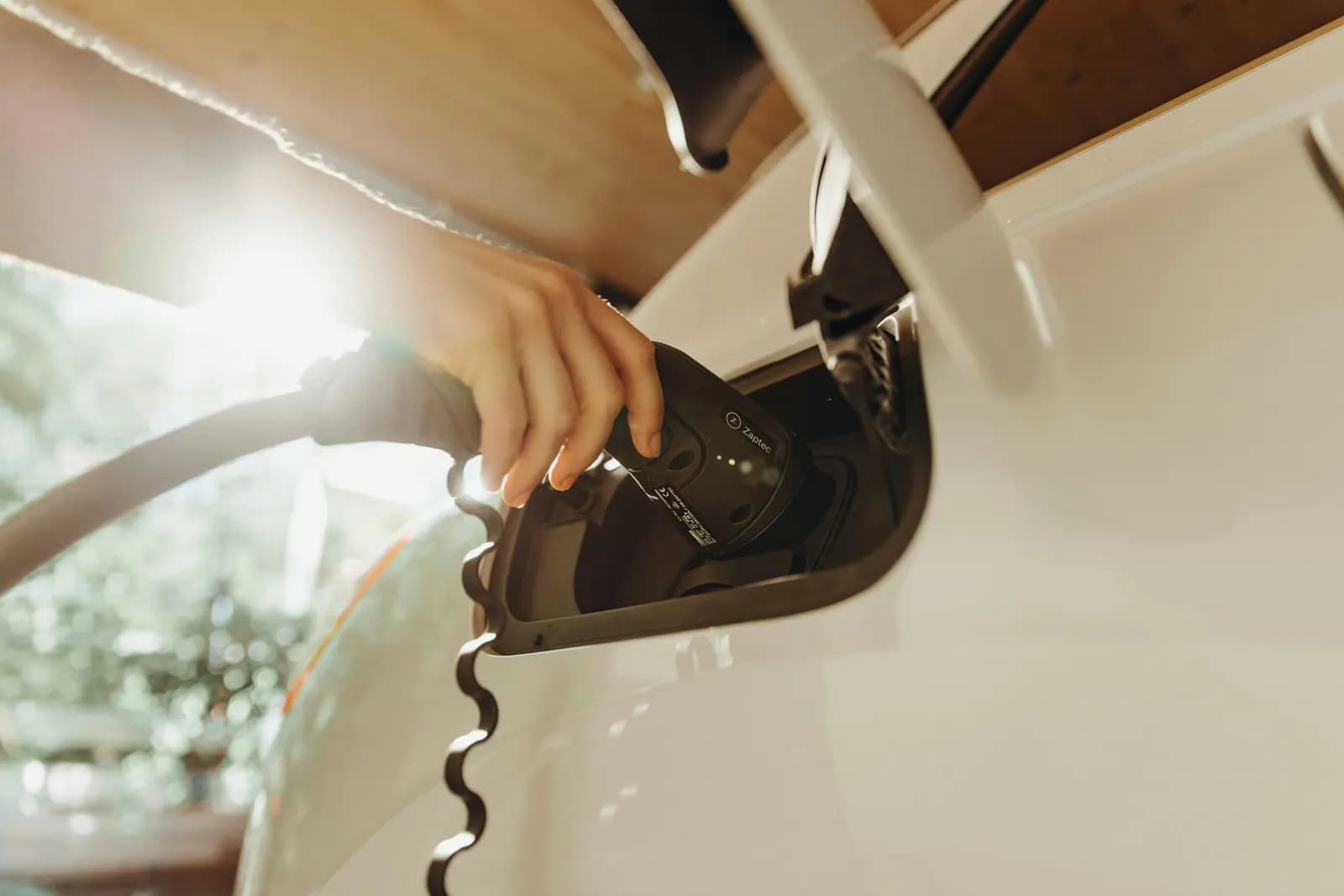
Battery electric cars pay 5% — the rate set in 2019 and left untouched by GST 2.0 — whatever their size, price or length. Chargers and charging services are taxed separately at their own rates. Hydrogen fuel-cell vehicles were cut from 12% to 5%.
Hybrids are no longer a separate high-cess class. A petrol hybrid up to 1,200 cc or diesel hybrid up to 1,500 cc, under 4,000 mm, pays 18%; every other hybrid pays 40%.
GST on servicing, repairs and accessories
Running costs are taxed separately from the car:
- Spare parts and accessories (HSN 8708 — brake pads, bumpers, seat covers, alloy wheels) dropped from 28% to 18% in the same reform, so service bills fell too.
- Labour for servicing and repairs is a service taxed at the 18% standard rate.
- Tyres and batteries follow their own entries; lithium-ion and most other car batteries are at 18%.
Service-bill example. Parts ₹6,000 + labour ₹2,500 = ₹8,500 before tax. GST at 18% on both = ₹1,530, so the bill is ₹10,030. Before September 2025, the same parts at 28% would have added ₹600 more.
Booked before the rate change?
For a car delivered after 22 September 2025, section 14(b) of the CGST Act decides the rate. If the invoice was raised after the change, the new rate applies even if you paid a booking amount earlier. If the dealer invoiced before the change but you paid after, the date of payment counts — again the new rate. Only where both the invoice and full payment were before the change did the old rate apply. If a dealer charged the old rate on a post-change invoice, ask for a credit note.
GST on used and second-hand cars
How GST applies depends on who is selling:
- Individual to individual — no GST. A private sale is not a supply in the course of business.
- Registered used-car dealer (margin scheme) — under Rule 32(5) of the CGST Rules, a dealer who buys used cars and resells them as they are (or after minor refurbishing), without claiming input credit on the purchase, pays GST only on the margin: selling price minus purchase price. If the margin is negative, it's ignored and no GST is due.
- A registered business selling its own used car — GST applies on the sale. Special valuation rules exist for vehicles on which depreciation was claimed, so check the treatment with your accountant before invoicing.
Margin example. A dealer buys a used SUV from an individual for ₹6,00,000, spends ₹15,000 on detailing, and sells it for ₹6,80,000. The taxable value is ₹80,000 — not ₹6,80,000 — and GST at the rate notified for old and used vehicles applies only to that ₹80,000. Ask the dealer to show the margin and rate on the invoice.
Used car — how the GST base is worked out
Step 1
Dealer buys from individual: ₹6,00,000
Step 2
No ITC claimed
Step 3
Sells for ₹6,80,000
Rule 32(5)
Step 4
GST base = ₹80,000 margin
negative margin → nil
Can a business claim ITC on a car?
Section 17(5)(a) of the CGST Act blocks input tax credit on motor vehicles for transporting people with seating of 13 or fewer, including the driver, except when the business uses them for:
- further supply of such vehicles (car dealers and manufacturers),
- transporting passengers (taxi, cab-aggregator fleets, tour operators), or
- imparting driving training (driving schools).
The block extends, by clause (ab), to insurance, servicing, repair and maintenance of those cars, and by clause (b) to leasing, renting or hiring them — with the same exceptions. Goods carriages and vehicles seating more than 13 aren't caught.
Example. A Pune IT firm buys a ₹14,00,000 SUV (₹10,00,000 + ₹4,00,000 GST at 40%) for its director. None of the ₹4,00,000 is creditable; the full ₹14,00,000 becomes the asset's cost for income-tax depreciation. A cab operator buying the same SUV to run as a taxi can claim the ₹4,00,000, subject to the usual ITC conditions.
Leasing. Leasing or renting a car without an operator follows the rate of the car itself: if the car attracts 40%, so does the lease (the Council moved this from 28% to 40% with ITC).
Before you sign the car invoice
0/6Official links
- PIB FAQs on GST rate rationalisationSmall-car definition, 40% rate, cess removal
- 56th GST Council recommendationsHSN-wise rate tables for vehicles and parts
- Section 17, CGST ActBlocked ITC on motor vehicles
- Section 14, CGST ActTime of supply when the rate changes
- Rule 32, CGST RulesMargin scheme for second-hand goods
- CBIC GST portalRate notifications
What to do next
Before you visit a showroom, check the car's engine size and length against the small-car limits, then use the GST calculator to see how much of the quoted price is tax and the EMI calculator to plan the loan. If you're buying through your business, read our input tax credit guide first, and see how to calculate GST for the reverse-calculation method dealers use.
This is general information, not legal or tax advice — confirm on the official source or with a professional.
Frequently asked questions
Since 22 September 2025, small cars — petrol, LPG or CNG up to 1,200 cc and diesel up to 1,500 cc, both no longer than 4,000 mm — attract 18%. All other passenger cars, SUVs and larger hybrids attract 40%. Battery electric cars attract 5%. There is no compensation cess on top of any of these rates.
GST depends on engine size, fuel and length, not on price. A ₹12 lakh sub-4-metre diesel car with a 1,497 cc engine pays 18%, while a ₹9 lakh sub-4-metre petrol model with a 1,462 cc engine pays 40% because it exceeds the 1,200 cc petrol limit. An electric car pays 5% whatever its price.
No. The 56th GST Council ended compensation cess on cars from 22 September 2025 and folded it into the new rates. Earlier, small cars paid 28% GST plus 1–3% cess, and mid-size and large cars paid 28% plus 17–22% cess, a total of 45–50%. Now the total tax is simply 18% or 40%.
Usually not. Section 17(5)(a) of the CGST Act blocks credit on motor vehicles seating up to 13 people, including the driver, unless the business uses them to sell cars, carry passengers for a fee, or run a driving school. Credit on the car's insurance, servicing and repairs follows the same rule. Blocked GST becomes part of the car's cost for income-tax depreciation.
If you buy from an individual who isn't in the car business, there is no GST. If you buy from a registered used-car dealer who claimed no input credit on the purchase, the dealer can charge GST only on the margin — selling price minus purchase price — under Rule 32(5), at the rate notified for used vehicles — currently 18% on the margin. If the margin is negative, no GST is due. See our GST on used cars guide for worked examples.
Sources & verification
Figures on this page were checked against the sources below when it was last reviewed on 7 October 2026. Each rate and limit is stored once with its own official source and review date, and official update channels are monitored daily so changes are picked up. How we verify
- 1.FAQs on GST rate rationalisation (56th GST Council) — PIB · accessed 7 October 2026
- 2.Recommendations of the 56th GST Council meeting (press release with annexures) — GST Council / PIB · accessed 7 October 2026
- 3.GST reforms 2025 explainer — PIB · accessed 7 October 2026
- 4.Section 17 – CGST Act, 2017 (blocked credits) — CBIC · accessed 7 October 2026
- 5.Rule 32 – CGST Rules, 2017 (determination of value in respect of certain supplies) — CBIC · accessed 7 October 2026
- 6.Section 14 – CGST Act, 2017 (change in rate of tax in respect of supply) — CBIC · accessed 7 October 2026
- 7.GST on cars in India — ClearTax · accessed 7 October 2026
MSMETOOLS is an independent platform and is not affiliated with any government agency, ministry or department.
Tools for this
GST Calculator (India)
Calculate GST for your sales and purchases with current rates.
EMI Calculator
Calculate loan EMIs for business and personal loans.
Invoice Generator
Create professional invoices with tax, logo and custom details.
Related guides
 GST on Mobile Phones 2026: 18% Rate, HSN 8517 & ITC RulesRead guide
 GST on Bikes 2026: 18% vs 40%, EVs, Bicycles & InsuranceRead guide
 GST on Second Hand Cars 2026: 18% on Margin, Rules & ExamplesRead guide
 GST on Online Payments 2026: UPI, MDR & Gateway Fees ExplainedRead guide
Official links open the government site in a new tab.