 GST & indirect tax
How to Calculate GST in 2026: Formulas, Reverse Calculation and Worked Examples
How to calculate GST in 2026: add-on and reverse formulas, CGST/SGST vs IGST split, the 5%, 18% and 40% slabs, MRP and gold examples, rounding and Excel.
 Edited by Sumeet YadavFounder & editor, MSMETOOLS · fact-checked against official sources
Contents (8)
Calculating GST takes two formulas: one to add tax to a price, one to pull it out of a price that already includes it. The rest is knowing the right rate after the 2026 slab changes and splitting the tax correctly between CGST, SGST and IGST. This guide is for shop owners, freelancers, accountants and buyers checking a bill. Every formula comes with a worked ₹ example, and the rates were checked against GST Council notifications in October 2026.
Quick answer
GST = taxable value × rate ÷ 100. If the price already includes GST, use GST = total × rate ÷ (100 + rate). Within one state, split the tax equally into CGST and SGST; across states, charge it all as IGST.
₹10,000 + 18% = ₹1,800 GST → ₹11,800 total (₹900 CGST + ₹900 SGST)
₹11,800 incl. 18% → ₹11,800 × 18 ÷ 118 = ₹1,800 GST
Main slabs since 22 Sep 2025: 0%, 5%, 18% and 40%
Tax payable is rounded to the nearest rupee (section 170)
The GST formulas you need
Every GST calculation starts from the taxable value: the price of the goods or services plus anything the supplier charges with them (packing, freight, installation, commission), minus any discount shown on the invoice. GST is charged on that figure.
| You know | You want | Formula | Example at 18% |
|---|---|---|---|
| Price before tax | GST amount | Price × rate ÷ 100 | ₹10,000 × 18 ÷ 100 = ₹1,800 |
| Price before tax | Price with GST | Price × (1 + rate ÷ 100) | ₹10,000 × 1.18 = ₹11,800 |
| Price with GST | GST inside it | Total × rate ÷ (100 + rate) | ₹11,800 × 18 ÷ 118 = ₹1,800 |
| Price with GST | Price before tax | Total ÷ (1 + rate ÷ 100) | ₹11,800 ÷ 1.18 = ₹10,000 |
| GST amount and taxable value | GST % charged | GST ÷ taxable value × 100 | ₹1,800 ÷ ₹10,000 × 100 = 18% |
The most common mistake is taking 18% of a GST-inclusive total. On ₹11,800 that gives ₹2,124 — ₹324 too much. The tax is 18% of the base, so it is 18/118 (about 15.25%) of the total.
Quick multipliers for each rate
- 5%: tax = base × 0.05; total = base × 1.05; tax inside a total = total × 5/105 (≈ 4.76%)
- 18%: tax = base × 0.18; total = base × 1.18; tax inside a total = total × 18/118 (≈ 15.25%)
- 40%: tax = base × 0.40; total = base × 1.40; tax inside a total = total × 40/140 (≈ 28.57%)
- 3% (gold): tax = base × 0.03; tax inside a total = total × 3/103 (≈ 2.91%)
GST slabs in 2026 after GST 2.0
From 22 September 2025, the GST Council's rate rationalisation (56th meeting) replaced the old 5/12/18/28% structure with two main rates and a special demerit rate. Most items earlier at 12% moved to 5%; most at 28% moved to 18%.
Which rate applies — GST 2.0 slabs
| Slab | Rate | Typical items |
|---|---|---|
Nil | 0% | Fresh food staples, UHT milk, paneer, Indian breads, individual life and health insurance |
Merit | 5% | Packaged foods, soaps, shampoo, most medicines, apparel up to ₹2,500 a piece, hotel rooms up to ₹7,500 a day, salons and gyms |
Standard | 18% | Most goods and services, cement, ACs and TVs, small cars, bikes up to 350cc, auto parts, professional services |
Demerit | 40% | Luxury cars, bikes above 350cc, aerated and sugared drinks; tobacco and pan masala from 1 Feb 2026 |
Special | 3% / 1.5% / 0.25% | Gold, silver and jewellery / cut and polished diamonds / rough diamonds |
Nil
- Rate
0%
- Typical items
Fresh food staples, UHT milk, paneer, Indian breads, individual life and health insurance
Merit
- Rate
5%
- Typical items
Packaged foods, soaps, shampoo, most medicines, apparel up to ₹2,500 a piece, hotel rooms up to ₹7,500 a day, salons and gyms
Standard
- Rate
18%
- Typical items
Most goods and services, cement, ACs and TVs, small cars, bikes up to 350cc, auto parts, professional services
Demerit
- Rate
40%
- Typical items
Luxury cars, bikes above 350cc, aerated and sugared drinks; tobacco and pan masala from 1 Feb 2026
Special
- Rate
3% / 1.5% / 0.25%
- Typical items
Gold, silver and jewellery / cut and polished diamonds / rough diamonds
Two points catch people out:
- Price-linked rates. Clothing and footwear are 5% up to ₹2,500 per piece and 18% above it. Hotel rooms are 5% (without input tax credit) up to ₹7,500 per night. Check the per-piece or per-night value, not the bill total.
- Compensation cess is gone. It ended for most goods on 22 September 2025, and for tobacco and pan masala on 1 February 2026, when those moved to 40% GST charged on retail sale price plus separate excise duty or a new cess. Don't add cess to your calculations for cars or drinks any more.
Not sure of your product's rate? Look up its HSN code with our HSN code finder and confirm against the rate notification.
CGST, SGST and IGST: how to split the tax
The rate is the same everywhere in India; only the label changes with the place of supply:
- Intra-state (supplier and place of supply in the same state): half CGST, half SGST. 18% becomes 9% + 9%; 5% becomes 2.5% + 2.5%. In a Union Territory without a legislature, UTGST replaces SGST.
- Inter-state (different states, exports, supplies to SEZ): the full rate as IGST.
Try it — split GST on your amount
Example. A Jaipur printer bills ₹50,000 + 18% for brochures.
- To a Jaipur client: CGST 9% = ₹4,500, SGST 9% = ₹4,500, total ₹59,000.
- To a Delhi client: IGST 18% = ₹9,000, total ₹59,000.
The customer pays the same either way. The split matters for your return and for the buyer's input tax credit: charging CGST+SGST on what should be an IGST sale means paying the right tax under the wrong head, and the fix is to pay it correctly and claim a refund of the wrong tax.
Reverse GST calculation: GST from a total amount
Use the reverse formula whenever a price is quoted "inclusive of GST": MRPs, restaurant menus, retail bills, rent quoted all-in, or when checking what a supplier charged.
Step by step for ₹23,600 inclusive of 18%:
- Add 100 to the rate: 100 + 18 = 118.
- Taxable value = 23,600 × 100 ÷ 118 = ₹20,000.
- GST = 23,600 − 20,000 = ₹3,600 (or 23,600 × 18 ÷ 118).
- Split if intra-state: ₹1,800 CGST + ₹1,800 SGST.
GST on MRP
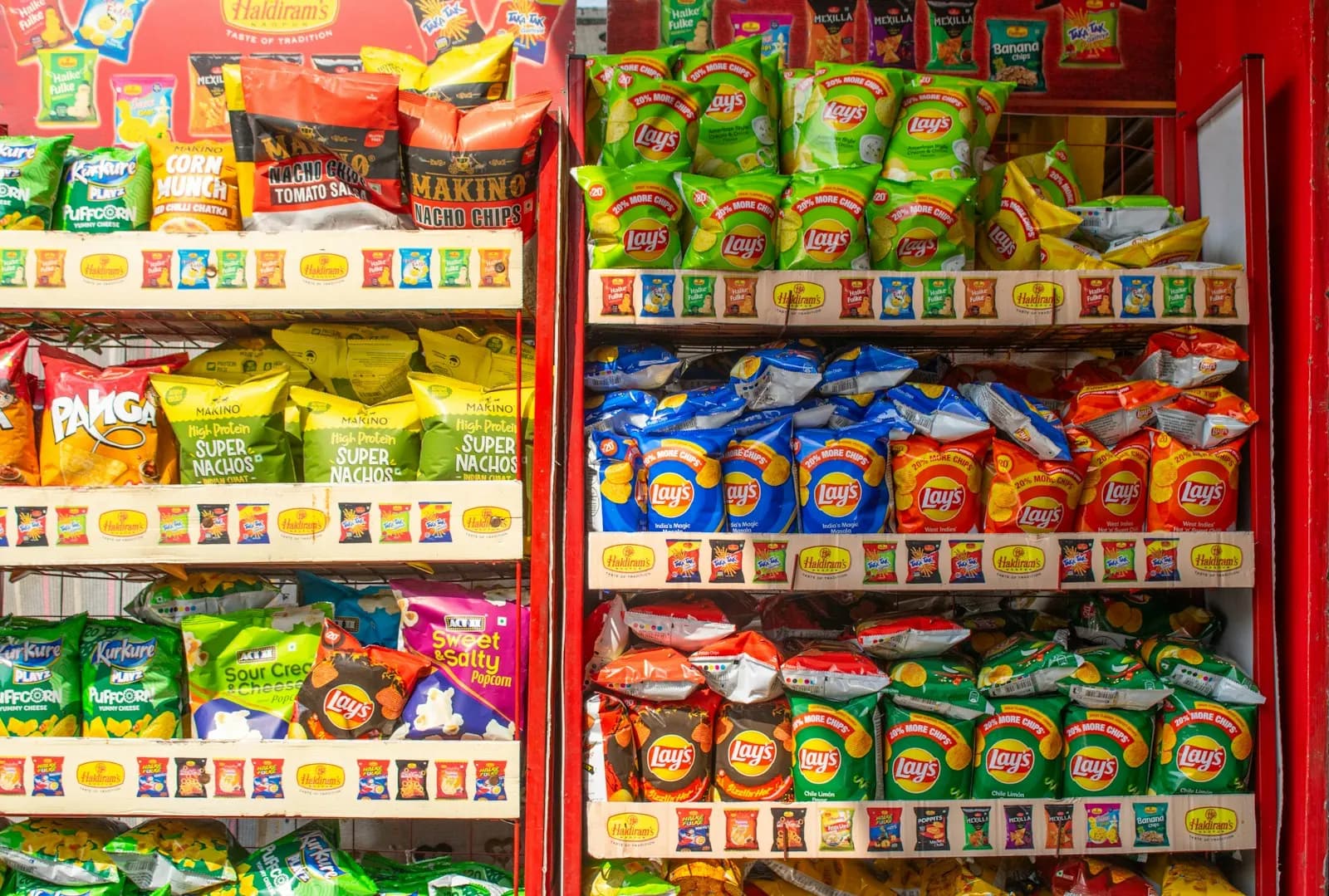
MRP includes all taxes. A shampoo with MRP ₹525 at 5%: GST = 525 × 5 ÷ 105 = ₹25; taxable value ₹500. If the shop sells it for ₹472.50 after a discount shown on the bill, GST is worked on ₹472.50: 472.50 × 5 ÷ 105 = ₹22.50.
Tobacco and pan masala are the exception. From 1 February 2026 their GST is computed on the declared retail sale price under Rule 31D: tax = RSP × 40 ÷ 140. On a ₹140 RSP pack, GST is ₹40 — about 28.57% of the shelf price.
Worked examples for common searches
Ready reckoner — GST on ₹1,00,000 (exclusive)
₹5,000
At 5%
₹2,500 CGST + ₹2,500 SGST
₹18,000
At 18%
₹9,000 CGST + ₹9,000 SGST
₹40,000
At 40%
₹20,000 + ₹20,000, or ₹40,000 IGST
₹3,000
At 3% (gold)
₹1,500 CGST + ₹1,500 SGST
Gold jewellery. A necklace priced at ₹1,20,000 including making charges, sold by a jeweller: GST at 3% = ₹3,600, bill ₹1,23,600. If the jeweller quotes ₹1,23,600 all-in, the tax inside is 1,23,600 × 3 ÷ 103 = ₹3,600.
Motorcycle above 350cc. Taxable value ₹2,50,000 at 40% = ₹1,00,000 GST. Before 22 September 2025 this bike carried 28% GST plus cess; now a single 40% rate applies. A 150cc commuter at the same ₹1,00,000 price pays 18% = ₹18,000.
Clothing. A kurta at ₹2,200 is taxed at 5% (₹110). A jacket at ₹3,000 is taxed at 18% (₹540). On one bill, calculate each line at its own rate.
Medicines. Most medicines moved from 12% to 5% on 22 September 2025, and 36 life-saving drugs became nil-rated. A ₹420 strip at 5% (MRP-inclusive) carries ₹20 of GST.
Services. A CA charges ₹25,000 for a return filing: 18% = ₹4,500. A salon haircut at ₹600 inclusive of 5%: GST = 600 × 5 ÷ 105 = ₹28.57.
How to calculate GST on a full invoice
A real invoice mixes rates, discounts and extra charges. The order matters:
Invoice-level GST, in order
- 1
Price each line
Quantity × rate per unit, line by line, each with its HSN or SAC code.
- 2
Deduct discounts shown on the invoice
A trade discount given at or before supply and recorded on the invoice reduces the taxable value (section 15(3)).
- 3
Add charges that belong to the supply
Packing, freight or installation billed by you are part of the value and take the rate of the main supply.
- 4
Apply the rate per line
Work out tax per line at that line's rate; show CGST+SGST or IGST separately.
- 5
Total and round off
Add taxable values and taxes, then show a separate round-off line to reach the nearest rupee.
Worked invoice (Mumbai seller to Mumbai buyer):
| Item | Qty × price | Taxable value | Rate | CGST | SGST |
|---|---|---|---|---|---|
| Cotton shirts (₹1,200 each) | 20 × ₹1,200 | ₹24,000.00 | 5% | ₹600.00 | ₹600.00 |
| Wool blazers (₹4,000 each) | 2 × ₹4,000 | ₹8,000.00 | 18% | ₹720.00 | ₹720.00 |
| Packing & courier billed by seller | 1 | ₹457.35 | 18% | ₹41.16 | ₹41.16 |
| Total | ₹32,457.35 | ₹1,361.16 | ₹1,361.16 |
Invoice total = 32,457.35 + 2,722.32 = ₹35,179.67 → round-off +₹0.33 → ₹35,180. Billed to a Pune buyer, the same tax would appear as IGST of ₹2,722.32.
Freight takes the rate of the main supply only when it is part of a composite supply; where an invoice mixes items at different rates, many businesses apportion freight across lines or tax it at the highest applicable rate. Ask your CA which treatment fits your contracts.
Discounts after the sale
A discount given after the invoice (a year-end volume rebate, say) reduces GST only if you issue a credit note and the buyer reverses the matching input tax credit. Until now the discount also had to be agreed before the sale and linked to specific invoices. The Finance Act 2026 removes that prior-agreement condition, but CBIC's statute text shows the amendment as "yet to be notified" — check the notification before you rely on it.
Rounding, Excel and common mistakes
Rounding. Section 170 of the CGST Act rounds tax payable to the nearest rupee: 50 paise or more up, below 50 paise ignored. In practice you compute lines to the paisa, round the invoice total, and the GST portal rounds the amounts in your return. Don't round each line's CGST and SGST separately in a way that makes them unequal.
Excel formulas (base in A2, rate in B2 as a number like 18):
- GST on a base:
=A2*B2/100 - Total with GST:
=A2*(1+B2/100) - GST inside a total:
=A2*B2/(100+B2) - Base from a total:
=A2/(1+B2/100) - CGST or SGST half:
=ROUND(A2*B2/200,2)
Check before you send the bill — the six errors we see most:
- Taking the rate on a GST-inclusive total instead of backing it out
- Using a pre-22 Sep 2025 rate (12% or 28%) or adding compensation cess
- CGST+SGST charged on an inter-state sale (should be IGST)
- Freight or packing left out of the taxable value
- Clothing above ₹2,500 a piece billed at 5%
- Discount given after the sale deducted without a credit note
Official links
- 56th GST Council press release (GST 2.0 rates)Slab changes effective 22 Sep 2025
- GST Council FAQs on the 56th meetingRate-change questions answered
- CGST rate notificationsNotification 9/2025-CT(Rate) and amendments
- CBIC tax information portalCurrent text of the CGST Act and rate schedules
- GST portalReturns and payments
What to do next
Run your own numbers in the GST calculator — it handles add-on and reverse calculation and the CGST/SGST or IGST split. When the figures are right, issue a compliant bill with the invoice generator, and if your turnover has crossed ₹5 crore, read our e-invoice guide before you bill a business customer. To see how the GST you pay on purchases offsets what you collect, go to input tax credit.
This is general information, not legal or tax advice — confirm on the official source or with a professional.
Frequently asked questions
Multiply the pre-tax price by 0.18. On ₹10,000 that is ₹1,800, so the customer pays ₹11,800. For a sale within your state, split it as ₹900 CGST and ₹900 SGST; for a sale to another state, charge ₹1,800 as IGST. In Excel, use =A218% for the tax and =A21.18 for the total.
Divide the total by (1 + rate/100) to get the taxable value, then subtract. For ₹11,800 at 18%: 11,800 ÷ 1.18 = ₹10,000 taxable value, so GST is ₹1,800. A shortcut is total × rate ÷ (100 + rate): 11,800 × 18 ÷ 118 = ₹1,800. Never take 18% of the total — that overstates the tax.
Since 22 September 2025 (GST 2.0), most goods and services fall in three rates: 5% (merit), 18% (standard) and 40% (demerit, for luxury and sin goods), plus nil-rated items. The old 12% and 28% slabs were folded in. Special rates continue: 3% on gold and jewellery, 1.5% on cut diamonds and 0.25% on rough diamonds.
MRP is the maximum retail price including all taxes, so GST sits inside it. Use the reverse formula: GST = MRP × rate ÷ (100 + rate). For a ₹525 MRP item at 5%, GST is ₹25 and the taxable value ₹500. A retailer selling below MRP calculates GST on the actual selling price, not the printed MRP.
Section 170 of the CGST Act rounds tax, interest and penalty payable to the nearest rupee: 50 paise or more goes up, less than 50 paise is dropped. On invoices, most businesses compute each line to the paisa and show a separate round-off line on the grand total. Keep the treatment consistent so GSTR-1 matches your books.
Sources & verification
Figures on this page were checked against the sources below when it was last reviewed on 7 October 2026. Each rate and limit is stored once with its own official source and review date, and official update channels are monitored daily so changes are picked up. How we verify
- 1.Recommendations of the 56th GST Council meeting (PIB press release) — GST Council / PIB · accessed 7 October 2026
- 2.FAQs on the decisions of the 56th GST Council meeting — GST Council · accessed 7 October 2026
- 3.CGST Rate Notifications (incl. Notification 9/2025-Central Tax (Rate)) — GST Council / CBIC · accessed 7 October 2026
- 4.CGST Act, 2017 – Section 15 (Value of taxable supply) — CBIC · accessed 7 October 2026
- 5.CGST Act, 2017 – Section 170 (Rounding off of tax) — CBIC · accessed 7 October 2026
- 6.New taxation regime for tobacco and pan masala w.e.f. 1 February 2026 — TaxTMI · accessed 7 October 2026
- 7.Notification 9/2025-CT(Rate): HSN-wise GST rate chart effective 22 Sept 2025 — TaxGuru · accessed 7 October 2026
- 8.Finance Act 2026 notified – key GST amendments — TaxReply · accessed 7 October 2026
MSMETOOLS is an independent platform and is not affiliated with any government agency, ministry or department.
Tools for this
GST Calculator (India)
Calculate GST for your sales and purchases with current rates.
Invoice Generator
Create professional invoices with tax, logo and custom details.
HSN Code Finder (India)
Find the correct HSN/SAC code for your product.
Related guides
 E-Invoice under GST 2026: Limit, IRN, Portals & StepsRead guide
 GST Set Off Rules 2026: ITC Order with Worked ExamplesRead guide
 GST Invoice Format 2026: Rule 46 Fields & Excel Template GuideRead guide
 How to Calculate Customs Duty in India (2026 Formula)Read guide
Official links open the government site in a new tab.