 GST & indirect tax
GST on Food in 2026: Restaurant Bills, Food Items and the GST 2.0 Rates
GST on food in 2026: restaurant bills at 5% vs 18%, Swiggy/Zomato orders, catering, and GST 2.0 rates on packaged food, sweets and namkeen, with bill examples.
 Edited by Sumeet YadavFounder & editor, MSMETOOLS · fact-checked against official sources
Contents (8)
- 1. Restaurant food vs food items: why the rate differs
- 2. GST on restaurant food: 5% without ITC or 18% with ITC
- 3. GST on food ordered through Swiggy, Zomato and other apps
- 4. Outdoor catering, canteens and tiffin services
- 5. GST rates on food items after GST 2.0 (22 September 2025)
- 6. Worked example: the same ₹1,200 meal, three ways
- 7. Common mistakes on food GST
- 8. What to do next
"How much GST is on this food?" has two very different answers in India. If you're eating at a restaurant, ordering on an app or hiring a caterer, the food is a service and one flat restaurant rate covers the whole bill. If you're buying packaged namkeen, butter or chocolate from a shop, each item is goods with its own rate — and many of those rates fell on 22 September 2025 under GST 2.0. This guide is for diners checking a bill and for restaurant, sweet-shop, bakery and food-brand owners setting prices. All rates were checked against the GST Council's notifications and CBIC material in October 2026.
Quick answer
Restaurant food — dine-in, takeaway or delivery, AC or not — carries 5% (no input tax credit). Restaurants inside hotels that charged more than ₹7,500 a day for any room last year charge 18% with ITC. On packaged food items, most rates are now 5% or nil after GST 2.0 (22 September 2025).
Swiggy/Zomato orders: the app pays the 5% (no input tax credit) GST under section 9(5); delivery and platform fees carry 18%
Nil: roti, chapati, paratha, khakhra, pizza bread, UHT milk, packaged paneer; loose cereals, fresh vegetables and milk
5%: packaged namkeen, mithai, butter, ghee, cheese, chocolates, biscuits, ice cream, juices, sauces, pasta
40%: aerated sugary drinks and caffeinated beverages
Restaurant food vs food items: why the rate differs
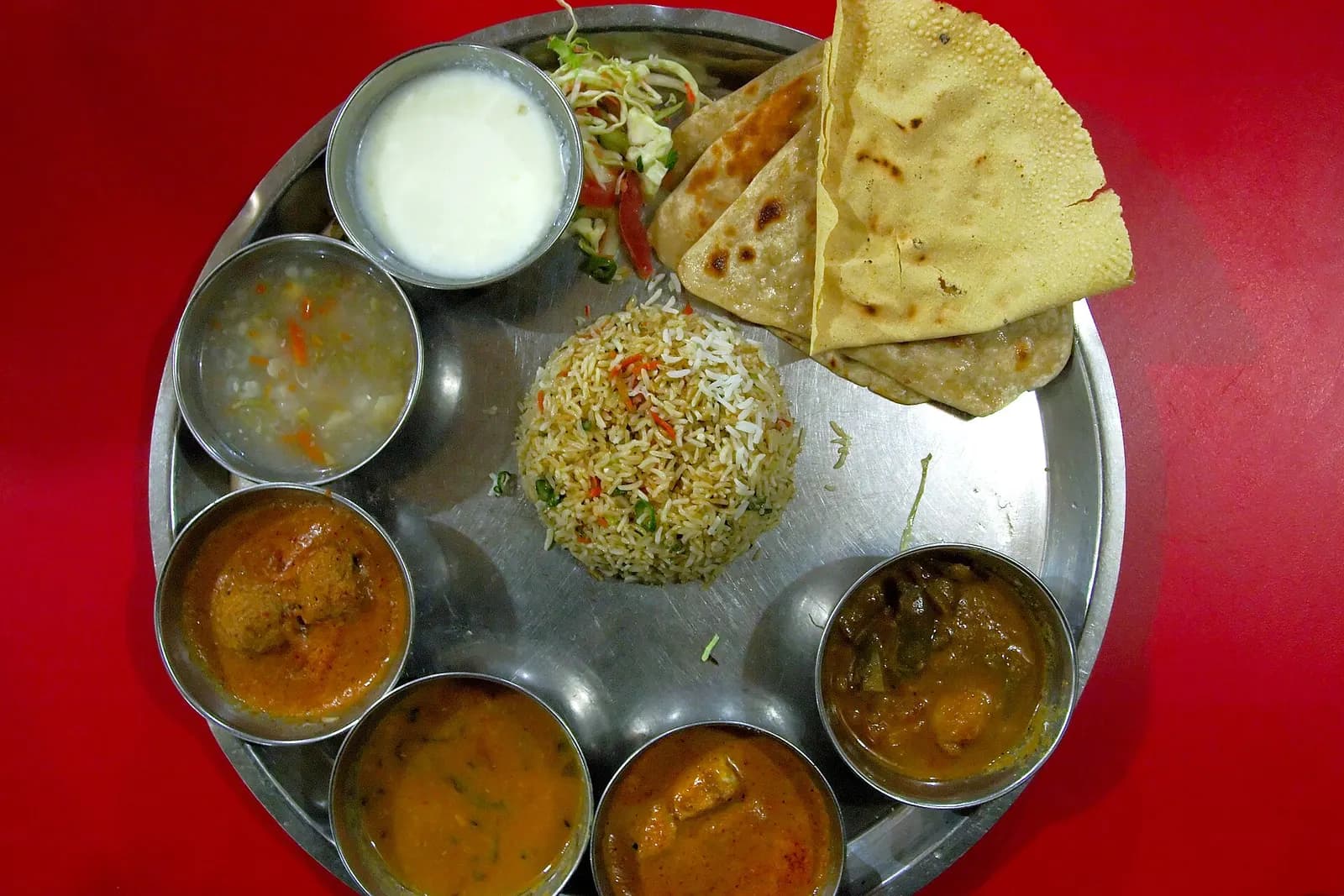
GST treats a restaurant meal as a composite supply of service — the cooking, serving and seating come bundled with the food, so the whole bill goes under one service entry (SAC 996331) in Notification 11/2017-Central Tax (Rate). It doesn't matter whether you ordered a ₹40 roti or a ₹400 biryani; everything on the bill takes the restaurant rate.
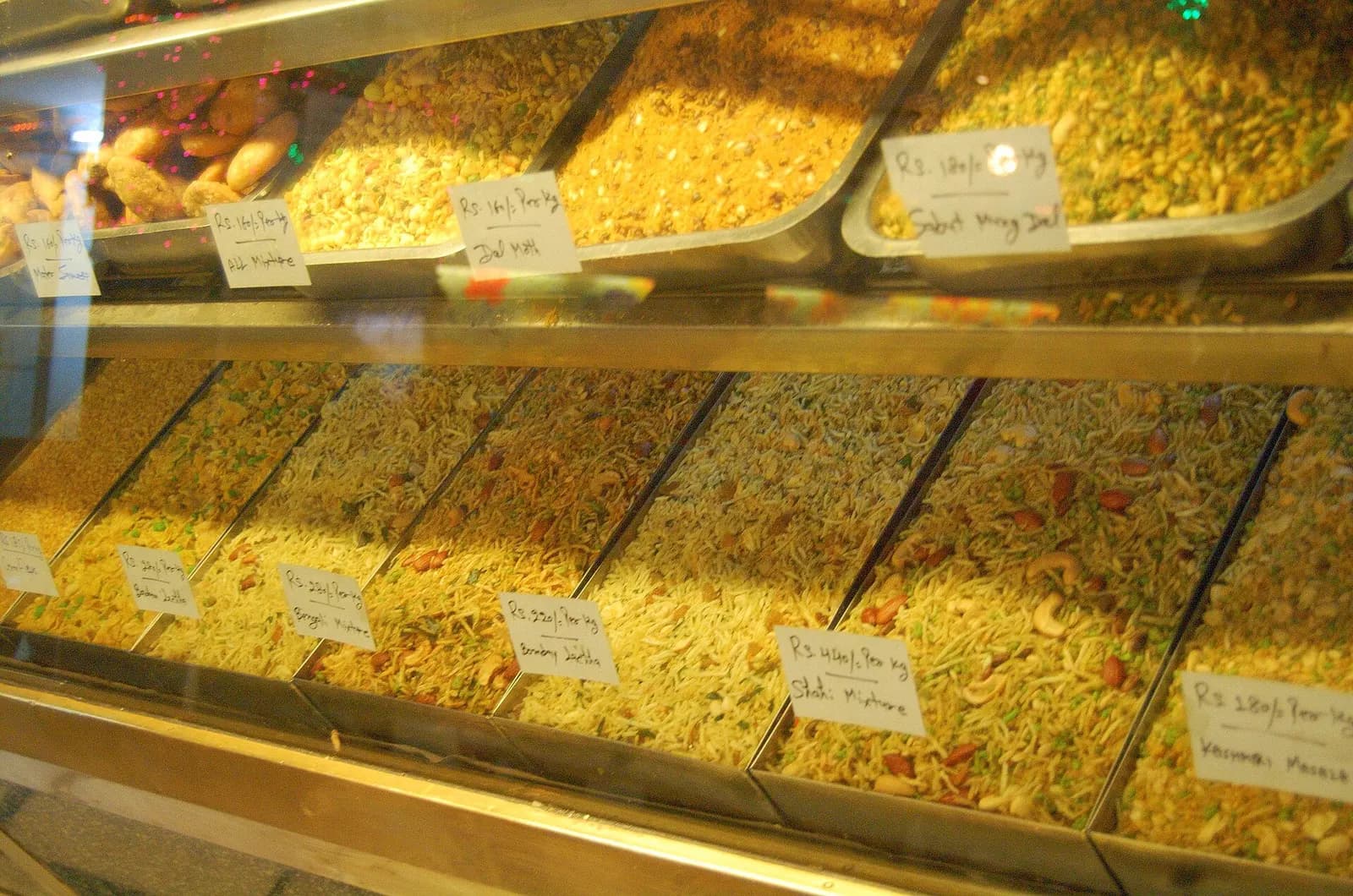
Food bought off a shelf or counter is a supply of goods, and each product is taxed by its HSN code. A packet of bhujia, a block of cheese and a bottle of cola can carry three different rates on the same supermarket receipt.
The practical consequences:
- A standalone restaurant charges 5% (no input tax credit) — 2.5% CGST plus 2.5% SGST — and cannot claim input tax credit on its purchases.
- A sweet shop or bakery has two kinds of sales: counter sales of sweets, namkeen and cakes are goods at their own rates, while plates served at its tables are restaurant service at 5% (no input tax credit). Advance rulings have told such businesses to bill and account for the two separately.
- A food manufacturer selling packaged snacks pays goods rates and gets full input tax credit on ingredients and packaging.
GST on restaurant food: 5% without ITC or 18% with ITC
| Where you eat | GST rate | Input tax credit for the restaurant? |
|---|---|---|
| Standalone restaurant, dhaba, café, food court — dine-in, takeaway or own delivery | 5% (no input tax credit) | No |
| Restaurant in a hotel where no room crossed ₹7,500 a day last financial year | 5% (no input tax credit) | No |
| Restaurant in a specified premises (hotel where any room crossed ₹7,500 a day last year, or hotel that opted in) | 18% with ITC | Yes |
| Restaurant food ordered via Swiggy, Zomato or another app | 5% (no input tax credit), paid by the app | No |
| Composition-scheme restaurant (turnover up to ₹1.5 crore) | Can't charge GST; pays 5% of turnover itself | No |
What "specified premises" means now. Since 1 April 2025 the test is the actual value of hotel rooms, not a declared tariff: if the hotel supplied any unit of accommodation for more than ₹7,500 per day in the preceding financial year, its restaurant is in a specified premises for the current year. A hotel below that line can also file a declaration to be treated as a specified premises — useful if it wants to claim input tax credit on a big kitchen fit-out. The 56th GST Council (September 2025) added explanations making clear that a standalone restaurant cannot declare itself a specified premises, so it cannot switch to 18% with ITC with ITC.
Air-conditioning, alcohol and service charge. AC no longer affects the rate. Alcohol for human consumption is outside GST and attracts state VAT, so a bar bill may show both. A service charge, where a restaurant levies one, forms part of the value on which GST is calculated.
GST on food ordered through Swiggy, Zomato and other apps
Since 1 January 2022, section 9(5) of the CGST Act (with Notification 17/2021-CT(Rate)) has made the e-commerce operator liable to pay GST on restaurant services supplied through it, as if it were the restaurant.
Who pays what on a food-app order
Step 1
Customer pays app
food + 5% + fees
Step 2
App deposits 5% on food
section 9(5)
Step 3
Restaurant bills app
no GST on food
Step 4
App's own fees
18% GST
- The restaurant reports these sales in its GSTR-1 (Table 14/15) and GSTR-3B (Table 3.1.1) but doesn't pay tax on them — see our GSTR-3B guide.
- The app charges the customer 5% (no input tax credit) on the food value and deposits it.
- The app's commission to the restaurant carries 18% GST, which a regular restaurant can't use as credit.
- From 22 September 2025, local delivery services supplied through an e-commerce operator by unregistered delivery persons were also brought under section 9(5): the platform pays GST at 18% on the delivery fee.
Cloud kitchens are restaurants for GST. Orders through apps are taxed in the platform's hands; orders on their own website or phone line are billed at 5% (no input tax credit) by the kitchen itself. Planning one? Read our cloud kitchen guide.
Outdoor catering, canteens and tiffin services
Outdoor catering — weddings, corporate events, parties — is taxed like restaurant service: 5% (no input tax credit) without ITC, or 18% with ITC with ITC when the catering is supplied at a specified premises (for example a banquet hall inside a hotel above the ₹7,500 line). A caterer can't simply choose 18% to get credit.
Tiffin and mess services that cook and deliver meals are generally restaurant-type service at 5% (no input tax credit). The registration threshold for services is ₹20 lakh of aggregate turnover in most states; if you plan to list on food apps, check their onboarding requirements and our GST registration guide first.
Before you start any food business you'll also need an FSSAI licence or registration — see the FSSAI registration guide.
GST rates on food items after GST 2.0 (22 September 2025)
The 56th GST Council meeting on 3 September 2025 moved India to a two-slab structure — 5% and 18%, plus 40% for a few demerit goods — effective 22 September 2025. Food was the biggest winner.
| Food item | HSN | Before 22 Sep 2025 | From 22 Sep 2025 |
|---|---|---|---|
| UHT milk; pre-packaged, labelled paneer or chena | 0401, 0406 | 5% | Nil |
| Chapati, roti, khakhra, pizza bread | 1905 / 2106 | 5% | Nil |
| Paratha, parotta and other Indian breads | 2106 | 18% | Nil |
| Butter, ghee, cheese, condensed milk | 0405, 0406, 0402 | 12% | 5% |
| Almonds, pistachios, dates, dried fruits | 0801–0813 | 12% | 5% |
| Packaged namkeen, bhujia, mixture, chabena | 2106 90 | 12% | 5% |
| Pasta, noodles; sausages and preserved meat or fish | 1902, 1601–1604 | 12% | 5% |
| Jams, pickles, fruit juices, sauces, curry paste | 2001–2009, 2103 | 12% | 5% |
| Chocolates, cocoa powder, sugar confectionery | 1704, 1805, 1806 | 18% | 5% |
| Biscuits, cakes, pastries; corn flakes | 1905, 1904 | 18% | 5% |
| Ice cream; soups; instant coffee and tea extracts | 2105, 2104, 2101 | 18% | 5% |
| Packaged drinking water (other than 20-litre jars) | 2201 | 18% | 5% |
| 20-litre drinking water jars; fruit-juice drinks; milk-based drinks | 2201, 2202 99 | 12% | 5% |
| Aerated drinks with sugar or flavour; caffeinated beverages | 2202 10, 2202 99 90 | 28% + cess | 40% |
| Other non-alcoholic beverages | 2202 91, 2202 99 | 18% | 40% |
What didn't change: traditional sweets (mithai — laddoo, barfi, rasgulla) under HSN 2106 90 stay at 5%. Loose, unbranded rice, wheat, atta and pulses, fresh fruit and vegetables, eggs and fresh milk stay nil, while the same staples pre-packaged and labelled carry 5%.
Need the exact code for an item you sell? Search it in our HSN code finder before raising an invoice — the HSN decides the rate, not the shop name or the menu label.
Worked example: the same ₹1,200 meal, three ways
A family orders the same food worth ₹1,200 in Bengaluru (an intra-state supply, so tax splits equally into CGST and SGST).
| Standalone restaurant | Restaurant in a 5-star hotel (rooms above ₹7,500) | Food app order | |
|---|---|---|---|
| Food value | ₹1,200 | ₹1,200 | ₹1,200 |
| GST on food | 5% (no input tax credit) = ₹60 (CGST ₹30 + SGST ₹30) | 18% with ITC = ₹216 (CGST ₹108 + SGST ₹108) | 5% (no input tax credit) = ₹60, paid by the app |
| Delivery fee | — | — | ₹40 + 18% = ₹47.20 |
| Platform fee | — | — | ₹10 + 18% = ₹11.80 |
| Customer pays | ₹1,260 | ₹1,416 | ₹1,319 |
The hotel restaurant's higher rate isn't pure cost to it: it claims input tax credit on its ingredients, rent and equipment, while the standalone restaurant's ₹60 is all it collects and it absorbs the GST on its purchases.
A grocery basket shows the item-wise side. 1 kg branded atta at ₹60 (5%), 200 g packaged paneer at ₹90 (nil), a ₹50 packet of bhujia (5%) and a ₹40 chocolate (5%) — GST-inclusive MRPs. Tax inside the bill: ₹150 × 5/105 ≈ ₹7.14. Before 22 September 2025 the bhujia (12%) and chocolate (18%) alone carried about ₹11.46.
Work out GST on your food bill
Common mistakes on food GST
Check before you bill
0/7Price cuts must reach customers. Businesses were expected to pass on the 22 September 2025 rate cuts through lower prices; revised MRP stickers were allowed on old stock. If your menu or MRP still reflects old rates, fix it — over-collected GST still has to be paid to the government.
What to do next
If you run a food business, update your billing software with the current rates, cost your menu with the food cost calculator, and test prices with the menu profitability checker. If you're new to GST, read our plain-English what is GST guide, then register on the GST portal once you cross the threshold.
This is general information, not legal or tax advice — confirm on the official source or with a professional.
Frequently asked questions
Food served by a standalone restaurant — dine-in, takeaway or home delivery, AC or non-AC — carries 5% (no input tax credit) (2.5% CGST + 2.5% SGST). Restaurants in 'specified premises', meaning hotels that charged more than ₹7,500 a day for any room in the previous financial year or that opted in, charge 18% with ITC.
Only if it is in a specified premises — a hotel whose room tariff for any unit exceeded ₹7,500 a day in the previous financial year, or a hotel that has declared itself one. The 56th GST Council clarified that a standalone restaurant cannot declare itself a specified premises, so it must charge 5% (no input tax credit).
Under section 9(5), the app pays the 5% (no input tax credit) GST on restaurant food sold through it, not the restaurant. The restaurant bills the platform without GST on the food. Separately, the platform's own delivery and platform fees carry GST at 18%.
Yes. Traditional sweets (mithai) are taxed at 5%, unchanged by GST 2.0. Pre-packaged and labelled namkeen, bhujia and mixtures fell from 12% to 5% on 22 September 2025. Chocolates, biscuits, cakes and ice cream fell from 18% to 5%. Sweets served at a sweet shop's dining tables are billed as restaurant service.
No. From 22 September 2025 chapati, roti, paratha, parotta, khakhra and pizza bread are nil-rated, as are UHT milk and pre-packaged, labelled paneer or chena. Fresh milk and loose paneer were already exempt. But when a restaurant serves roti as part of a meal, the whole bill is restaurant service at 5% (no input tax credit).
Outdoor catering for weddings and events is taxed like restaurant service: 5% (no input tax credit), or 18% with ITC when served at a specified premises. Cloud kitchens are restaurants for GST — 5% (no input tax credit) on their own orders, and the app pays the tax on orders placed through it.
Sources & verification
Figures on this page were checked against the sources below when it was last reviewed on 7 October 2026. Each rate and limit is stored once with its own official source and review date, and official update channels are monitored daily so changes are picked up. How we verify
- 1.Recommendations of the 56th GST Council meeting (PIB press release with rate annexures) — GST Council / PIB · accessed 7 October 2026
- 2.CGST (Rate) notifications — GST Council · accessed 7 October 2026
- 3.Section 9 – CGST Act, 2017 (levy; section 9(5) e-commerce operators) — CBIC · accessed 7 October 2026
- 4.Frequently asked questions on 'restaurant services' supplied at 'specified premises' — Mondaq (summary of CBIC FAQs) · accessed 7 October 2026
- 5.GST on restaurant and food services in India: rates, rules and compliance (2026) — TaxGarden · accessed 7 October 2026
- 6.'Militry Malai Mithai' is 'sweetmeat'; 5% GST applicable: MP AAR — TaxGuru · accessed 7 October 2026
- 7.CBIC issues FAQs on GST rates for specified premises — SAG Infotech · accessed 7 October 2026
- 8.New GST for food 2026: 0% to 18% rate on food items — Busy · accessed 7 October 2026
MSMETOOLS is an independent platform and is not affiliated with any government agency, ministry or department.
Tools for this
Food Cost Calculator
Calculate food cost, menu pricing and profit margins.
Menu Profitability Checker
Find the most profitable items on your menu.
GST Calculator (India)
Calculate GST for your sales and purchases with current rates.
Invoice Generator
Create professional invoices with tax, logo and custom details.
Related guides
 GST on Catering Services 2026: 5% vs 18%, SAC & ITC RulesRead guide
 GST on Cold Drinks 2026: 40% Rate, Juices, Water & RestaurantsRead guide
 GST on Tea & Coffee 2026: 5% Rate, Nil Leaf, Café BillsRead guide
 GST on Liquor 2026: Why Alcohol Is Outside GST & Bar BillsRead guide
Official links open the government site in a new tab.