 GST & indirect tax
GST on Mobile Phones in 2026: Rate, HSN Code, Accessories and ITC
GST on mobile phones in 2026 is 18% under HSN 8517. See accessory and repair rates, refurbished-phone rules, ITC for businesses and a worked bill in ₹.
 Edited by Sumeet YadavFounder & editor, MSMETOOLS · fact-checked against official sources
Contents (8)
- 1. GST rate on mobile phones in 2026
- 2. HSN code for mobile phones and accessories
- 3. Worked example: GST on a mobile phone bill
- 4. GST on mobile repairs and servicing
- 5. Refurbished and second-hand phones
- 6. GST for mobile shops: registration and the composition option
- 7. ITC on mobile phones for businesses
- 8. What to do next
Whether you are buying a phone, running a mobile shop, fixing handsets, or claiming a work phone through your business, the GST question is the same: what rate applies, and what can be claimed back? This guide gives you the 2026 answer for new phones, accessories, repairs and refurbished handsets — with the HSN codes to put on invoices, a worked bill in rupees and the input tax credit (ITC) rules for businesses. Rates were checked against the GST Council's September 2025 rate tables and current sources in October 2026, including the status of the proposed rate cut.
Quick answer
Mobile phones attract 18% GST under HSN 8517 — the rate since 1 April 2020. GST 2.0 (22 September 2025) did not change it, and a 2026 industry request to cut it to 5% had not been accepted as of October 2026.
Smartphones: HSN 8517 13 00; other mobile phones: 8517 14 00
Chargers, earphones, power banks, memory cards and screen guards: 18%
Repair labour: 18%; refurbished phones from a dealer: GST on the margin only
Businesses can claim ITC on phones used for business — they are not blocked under section 17(5)
GST rate on mobile phones in 2026
GST on phones at a glance (2026)
18%
GST on mobile phones
HSN 8517
18%
Most accessories
chargers, earphones, power banks
18%
Repair labour
service
1 Apr 2020
Rate in force since
raised from 12%
When GST began in July 2017, phones were taxed at 12%. The 39th GST Council raised the rate to 18% from 1 April 2020 to fix an inverted duty structure — many components were taxed at 18%, so manufacturers were piling up unusable credit. The rate has been 18% ever since.
GST 2.0 left phones alone. The September 2025 reform cut hundreds of items from 28% to 18% and from 12% to 5%. Phones were already at 18%, which became the standard rate, so prices didn't move — unlike TVs, ACs and small cars. The one change that touched the category was the end of the 12% slab, which some older rate tables still show for phone parts.
What about the cut to 5%? In 2026, handset makers asked the government to reduce GST on phones to 5%, arguing that rising memory and component prices were pushing up handset prices and hurting demand. Reports in August 2026 suggested the GST Council might consider it. The meeting was then rescheduled to 7 October 2026, and the Finance Minister said on 17 September that it would focus only on process reforms. Until CBIC issues a rate notification, phones stay at 18% — don't reprice stock on the strength of a news report.
HSN code for mobile phones and accessories
Use these codes on invoices and in Table 12 of GSTR-1. Businesses with turnover up to ₹5 crore report a 4-digit HSN; above ₹5 crore, a 6-digit HSN. Look up anything not listed with the HSN code finder.
| Item | HSN | GST |
|---|---|---|
| Smartphones | 8517 13 00 | 18% |
| Other mobile (cellular) phones, feature phones | 8517 14 00 | 18% |
| Chargers and adapters | 8504 | 18% |
| Earphones, headphones, Bluetooth speakers | 8518 | 18% |
| Power banks and lithium-ion batteries | 8507 | 18% |
| Memory cards | 8523 | 18% |
| Tempered-glass screen guards | 7007 | 18% |
| Plastic screen guards and films | 3919 | 18% |
| Mobile repair and maintenance (service) | SAC 9987 | 18% |
Phone covers and cases are classified by material (plastic, leather, silicone), so check the exact code; most fall at 18% after GST 2.0, but leather goods can differ.
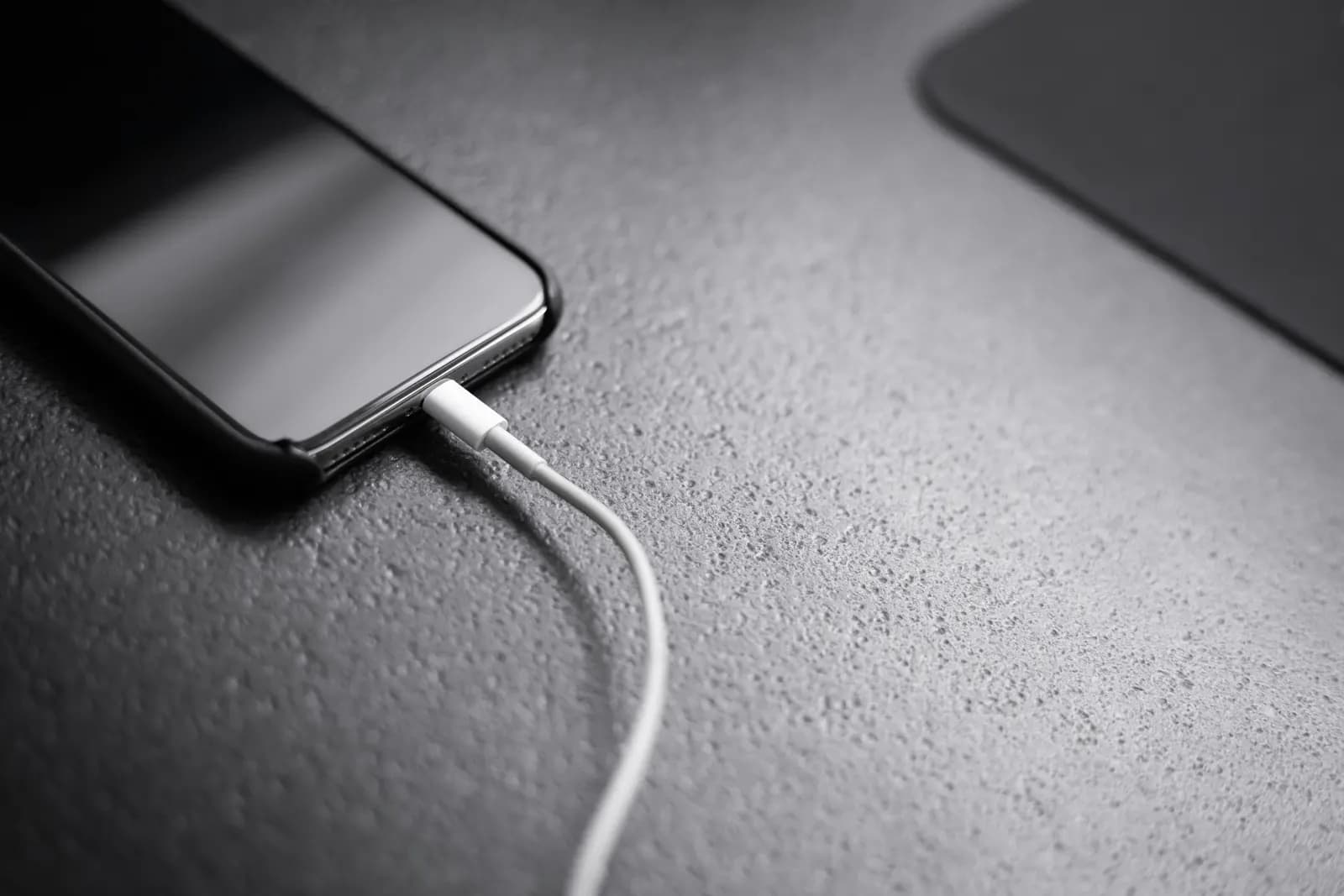
Phone with a charger in the box
A phone sold with its charger, cable and earphones in one box at one price is a composite supply: the phone is the principal supply, so the whole box is taxed at the phone's rate. Since phones and accessories are both at 18%, the tax is the same either way — but your invoice should show one line for the handset, not split values.
Worked example: GST on a mobile phone bill
GST is charged on the transaction value. Within your state, the 18% splits into 9% CGST and 9% SGST; on an online order shipped from another state, the seller charges 18% IGST.
| Line | Taxable value | GST @ 18% | Total |
|---|---|---|---|
| Smartphone | ₹25,000 | ₹4,500 | ₹29,500 |
| Tempered-glass screen guard | ₹500 | ₹90 | ₹590 |
| 20,000 mAh power bank | ₹1,500 | ₹270 | ₹1,770 |
| Total | ₹27,000 | ₹4,860 | ₹31,860 |
In a Mumbai shop, that ₹4,860 is shown as CGST ₹2,430 + SGST ₹2,430. Ordered online from a seller in Bengaluru, it is IGST ₹4,860. Either way you pay the same.
Working backwards from MRP. Phone prices are quoted inclusive of GST. A ₹17,699 phone contains ₹17,699 × 18 ÷ 118 = ₹2,700 of GST; the pre-tax value is ₹14,999.
Try it — find the GST inside a phone's price
Exchange offers. If you trade in your old phone for a ₹3,000 discount on a ₹20,000 phone, GST is generally charged on the full ₹20,000, because your old handset is part of the payment. Bank-card instant discounts given on the invoice reduce the taxable value; cashback credited later does not.
GST on mobile repairs and servicing
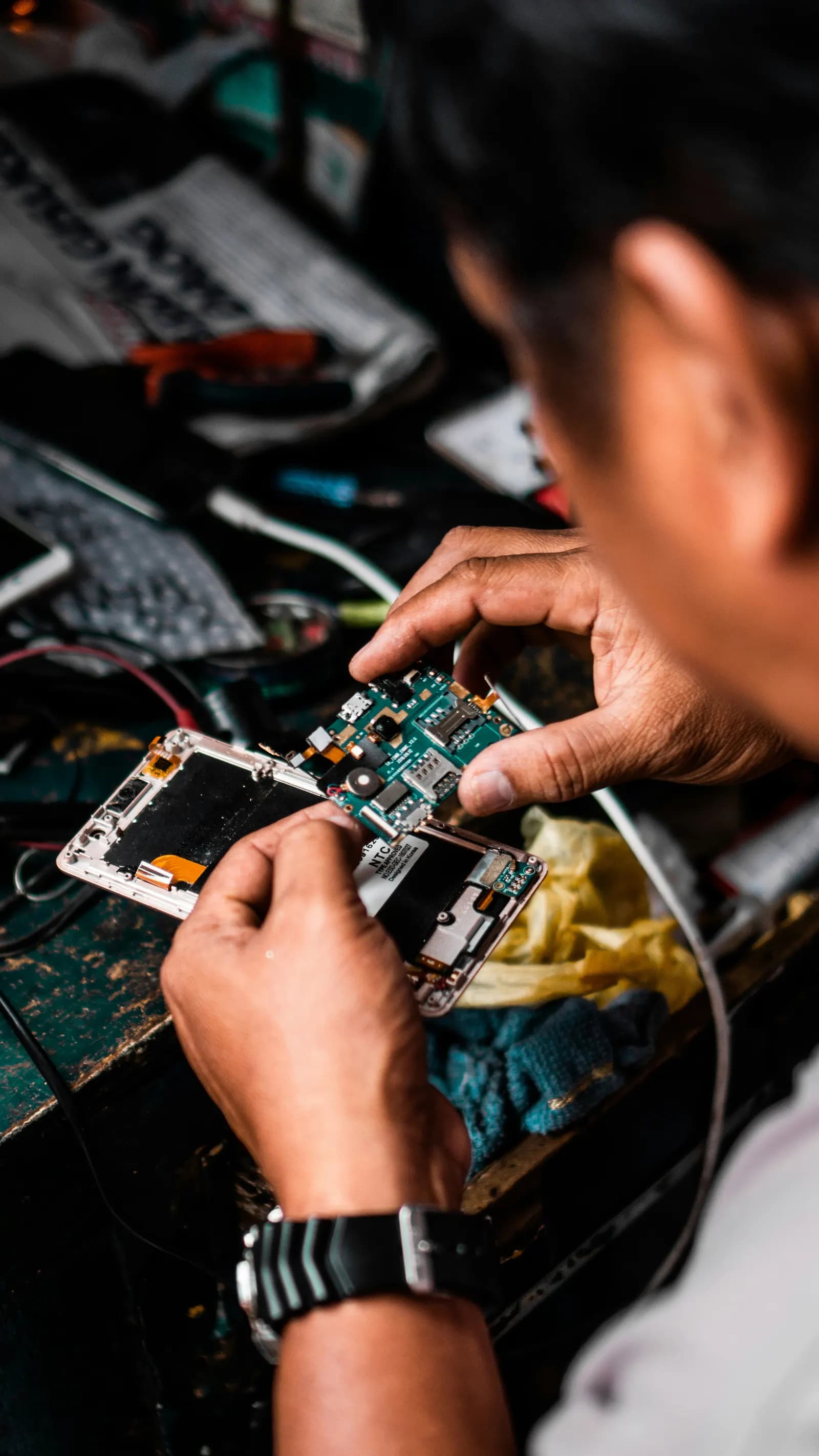
A repair bill usually has two parts:
- Labour or service charge — taxed at 18%.
- Spare parts — a replacement display, battery or charging port — taxed at the rate for that part; most phone parts are at 18%.
Repair-bill example. Screen replacement: part ₹4,200 + labour ₹800 = ₹5,000. GST at 18% = ₹900. Total ₹5,900.
Repairs done free under the manufacturer's warranty carry no charge to you, so no GST is collected from you. Extended-warranty and screen-protection plans are services taxed at 18%. A small repair shop that is not GST-registered — because its turnover is below the registration threshold — must not charge GST at all; if it does, ask for its GSTIN and check it on the GST portal.
Refurbished and second-hand phones
- Buying from an individual (a friend, or a private OLX-style sale): no GST, because the seller isn't supplying in the course of business.
- Buying from a registered refurbished-phone dealer: under Rule 32(5) of the CGST Rules, a dealer who buys used phones and resells them as they are (or after minor repairs), without claiming ITC on the purchase, pays GST only on the margin — selling price minus purchase price. A negative margin is ignored.
New vs refurbished phone — where the GST falls
| New phone from a retailer | Refurbished phone from a dealer (margin scheme) | |
|---|---|---|
Price before GST | ₹25,000 | ₹11,000 (bought by dealer for ₹8,000) |
GST base | ₹25,000 | ₹3,000 margin |
GST @ 18% | ₹4,500 | ₹540 |
You pay | ₹29,500 | ₹11,540 |
Buyer can claim ITC? | Yes, if registered and for business | No — tax on margin isn't passed as credit |
Price before GST
- New phone from a retailer
₹25,000
- Refurbished phone from a dealer (margin scheme)
₹11,000 (bought by dealer for ₹8,000)
GST base
- New phone from a retailer
₹25,000
- Refurbished phone from a dealer (margin scheme)
₹3,000 margin
GST @ 18%
- New phone from a retailer
₹4,500
- Refurbished phone from a dealer (margin scheme)
₹540
You pay
- New phone from a retailer
₹29,500
- Refurbished phone from a dealer (margin scheme)
₹11,540
Buyer can claim ITC?
- New phone from a retailer
Yes, if registered and for business
- Refurbished phone from a dealer (margin scheme)
No — tax on margin isn't passed as credit
If a dealer does claim ITC on refurbishing inputs and wants to pass credit to business buyers, it charges full GST on the selling price instead.
GST for mobile shops: registration and the composition option
A shop that only sells phones and accessories (goods) must register for GST once its aggregate turnover crosses ₹40 lakh in a year in most states; lower limits apply in some special-category states. A shop that also earns repair income is a mixed supplier, and the lower services threshold can bring it in earlier — see the GST registration guide. Selling to other states or through online marketplaces has its own registration rules, so check before you list.
Small shops with turnover up to ₹1.5 crore can opt for the composition scheme and pay a flat 1% of turnover instead of 18%. The trade-offs matter in this trade:
- You cannot charge GST on your bills or issue tax invoices, so business customers get no ITC from you.
- You cannot claim ITC on the 18% GST you pay to distributors — on phones, that is a large cost.
- Repair labour can be covered only within the scheme's small allowance for services.
Example. A shop buys phones for ₹40 lakh + ₹7.2 lakh GST and sells them for ₹45 lakh before tax. As a regular taxpayer it collects ₹8.1 lakh, sets off ₹7.2 lakh of credit and pays ₹0.9 lakh in cash. Under composition it pays 1% of ₹45 lakh (₹45,000) but the ₹7.2 lakh paid to distributors becomes a cost it can't recover. Work through your own margins before choosing.
ITC on mobile phones for businesses
Unlike cars, phones are not on the blocked-credit list in section 17(5). A registered business can claim the GST on a phone used in the course of business, provided the usual conditions are met — tax invoice in the business's GSTIN, goods received, supplier has reported the invoice so it appears in GSTR-2B, and the tax has been paid. See our input tax credit guide for the full checklist.
Three situations restrict the credit:
- Mixed use. If a phone is used partly for personal purposes, section 17(1) allows credit only on the business share. A founder's phone used 60% for work: claim 60% of the GST.
- Personal consumption. Phones bought for a family member or for personal use are blocked under section 17(5)(g).
- Gifts. Phones given as Diwali gifts to staff or as dealer incentives are blocked under section 17(5)(h). If you've already claimed credit, reverse it.
Example. A Hyderabad agency buys five ₹30,000 phones for its sales team (₹1,50,000 + ₹27,000 GST). Used only for client calls and CRM work, the full ₹27,000 is creditable against its output GST. Had the same phones been given as year-end gifts, none of the ₹27,000 would be creditable.
Checklist for phone shops and business buyers
0/6Official links
- 56th GST Council recommendationsRate tables effective 22 Sep 2025
- PIB FAQs on GST rate rationalisationEffective dates, stock and ITC questions
- Section 17, CGST ActITC apportionment and blocked credits
- Rule 32, CGST RulesMargin scheme for second-hand goods
- GST portal – HSN searchLook up HSN and SAC codes
What to do next
If you sell or repair phones, set up your billing with the right HSN codes using the HSN code finder and issue compliant bills with the invoice generator. To see how much tax is inside any price, use the GST calculator or read how to calculate GST. Check this page again after each GST Council meeting — if the 5% proposal is ever accepted, we'll update the rate here.
This is general information, not legal or tax advice — confirm on the official source or with a professional.
Frequently asked questions
Mobile phones, including smartphones and feature phones, attract 18% GST under HSN 8517. The rate has applied since 1 April 2020, when the GST Council raised it from 12%, and the September 2025 GST 2.0 reform left it unchanged. Handset makers have asked for a cut to 5%, but as of October 2026 no new rate has been notified.
Mobile phones fall under heading 8517. Smartphones are classified at 8517 13 00 and other phones for cellular networks at 8517 14 00. A business with turnover up to ₹5 crore reports the 4-digit HSN (8517) in GSTR-1; above ₹5 crore it must report a 6-digit HSN (851713 or 851714).
Industry bodies asked for a cut from 18% to 5% in 2026, citing rising component and memory prices. The GST Council had not cut the rate as of October 2026, and the Finance Minister said the Council meeting rescheduled to 7 October 2026 would focus on process reforms, not rates. Any change would need a rate notification from CBIC.
Yes. Phones are not on the blocked-credit list in section 17(5), so a registered business can claim the GST paid if the phone is used for business and the invoice shows its GSTIN. If it's partly personal, credit is limited to the business share under section 17(1). No credit is allowed on phones given away as gifts.
Yes. Repair labour is a service taxed at 18%, and replacement parts such as screens and batteries are billed at their own rates — 18% for most phone parts. Repairs done free under the manufacturer's warranty carry no charge to you, so no GST. A repair shop must charge GST only if it is registered.
Sources & verification
Figures on this page were checked against the sources below when it was last reviewed on 7 October 2026. Each rate and limit is stored once with its own official source and review date, and official update channels are monitored daily so changes are picked up. How we verify
- 1.Recommendations of the 56th GST Council meeting (press release with annexures) — GST Council / PIB · accessed 7 October 2026
- 2.FAQs on GST rate rationalisation (56th GST Council) — PIB · accessed 7 October 2026
- 3.Section 17 – CGST Act, 2017 (apportionment and blocked credits) — CBIC · accessed 7 October 2026
- 4.Rule 32 – CGST Rules, 2017 (margin scheme for second-hand goods) — CBIC · accessed 7 October 2026
- 5.Reporting of HSN codes in Table 12 of GSTR-1/1A — GSTN · accessed 7 October 2026
- 6.GST on mobile phones: all you need to know (updated 31 July 2026) — Tax2win · accessed 7 October 2026
- 7.GST Council may consider reducing 18% GST rate on mobile phones — SAG Infotech · accessed 7 October 2026
- 8.GST updates September 2026 — TaxSlabs · accessed 7 October 2026
MSMETOOLS is an independent platform and is not affiliated with any government agency, ministry or department.
Tools for this
GST Calculator (India)
Calculate GST for your sales and purchases with current rates.
HSN Code Finder (India)
Find the correct HSN/SAC code for your product.
Invoice Generator
Create professional invoices with tax, logo and custom details.
Related guides
 GST on Cars 2026: 18% vs 40% Rates, EVs, Used Cars & ITCRead guide
 Input Tax Credit under GST 2026: Rules, Limits & ExamplesRead guide
 GST on Repair & Maintenance 2026: 18% Rate, AMC & WarrantyRead guide
 GST on Painting & Works Contract 2026: 18% Rate, SAC & ITCRead guide
Official links open the government site in a new tab.