 Starting & growing a business
How to Start a Construction Company in 2026: Licensing, Bonding, Insurance, OSHA and Job Costing
How to start a construction company in 2026: contractor licenses by state (CA, FL, TX), bonds, insurance, OSHA rules, startup costs and job costing, worked.
 Edited by Sumeet YadavFounder & editor, MSMETOOLS · fact-checked against official sources

Contents (11)
- 1. Choose what kind of construction company you'll be
- 2. Register the business
- 3. Contractor licensing: how it works in five states
- 4. Bonding: license bonds, bid bonds, performance and payment bonds
- 5. Insurance for a construction company
- 6. OSHA safety rules every contractor must follow
- 7. Startup costs for a small construction company
- 8. Job costing: a worked example
- 9. Cash flow, contracts and taxes
- 10. Common mistakes when starting a construction company
- 11. What to do next
Construction is one of the most common businesses skilled tradespeople start, and one of the riskiest. The work is there: homeowners need remodels and additions, businesses need tenant buildouts and repairs, and public agencies put millions of dollars of work out to bid every week. What sinks new contractors is rarely the building. It's licensing gaps, a bond they can't get, an uninsured injury, a bid priced without overhead, or a profitable job that runs out of cash before the final payment. This guide is for anyone starting a general contracting, remodeling or specialty construction company in 2026. It covers state contractor licensing with real examples, bonding, insurance, OSHA rules, startup costs, taxes and a worked job-costing example. Rules were checked against state boards, OSHA, the FAR, the SBA and the IRS in October 2026.
Quick answer
To start a construction company, pick your niche, form an LLC or corporation, get an EIN, and get the contractor license your state requires before you bid, which usually means proving experience, passing exams and filing a bond. Buy general liability, commercial auto and workers' compensation, set up OSHA-compliant safety practices, and price every job from a detailed estimate with overhead and profit built in.
California: CSLB license for jobs of $1,000 or more; 4 years within the last 10 of experience and a $25,000 bond
Florida: state certification or registration; general contractors need $300,000 liability insurance
Texas: no state general contractor license, but HVAC, electrical and plumbing are state-licensed
Federal jobs over $150,000 need performance and payment bonds (Miller Act)
OSHA fall protection starts at 6 feet; serious violations up to $16,550 per violation
Choose what kind of construction company you'll be
"Construction company" covers very different businesses, and your choice decides your license, your bonding needs and how much cash you'll tie up. A general contractor manages whole projects, hires subcontractors for most trades and makes money on coordination and markup. A remodeling contractor does kitchens, baths, additions and repairs for homeowners, usually with a small crew and subs for plumbing, electrical and HVAC. A specialty contractor does one trade, such as concrete, framing, drywall, roofing or painting, usually as a subcontractor to general contractors. A commercial or public works contractor bids on tenant improvements, schools and government jobs, where bonding capacity and paperwork matter as much as craft.
Most new firms start where the owner already has experience and relationships. A framer who has run crews for a builder often starts as a framing subcontractor, because the customers already know them and the license and insurance are simpler. A project manager from a general contractor may start with small commercial work. Homeowner remodeling has the easiest entry but the most consumer-protection rules, from written contract requirements to limits on down payments. In California, for example, a home improvement contract over $500 must be in writing, and the down payment can't exceed $1,000 or 10% of the contract price, whichever is less.
Register the business
Before you get a contractor license, the license board will usually want to know which entity it's being issued to. Most contractors form an LLC or corporation, because construction claims can be large and you want them to stay with the business. State LLC filing fees run $35 – $500, and an EIN from the IRS is Free ($0). Then add the city or county business license and any local contractor registration. Our guides to LLC registration, getting an EIN and business licenses walk through each step.
Get the order right. In California and Florida, the contractor license is issued to a specific entity, so changing from a sole proprietorship to an LLC later generally means applying again under the new entity. Form the entity you intend to keep, then apply for the license in its name.
Contractor licensing: how it works in five states
There's no federal contractor license. Each state decides who needs one, and many cities and counties add their own registration on top. The patterns below show the range you'll meet.
Contractor licensing — five state examples
| State | Who needs a state license | Key requirements |
|---|---|---|
California (CSLB) | Any job of $1,000 or more, or any job needing a permit or using employees | 4 years within the last 10 of experience, Law and Business exam plus trade exam, $25,000 bond, $450 application fee |
Florida (CILB) | General, building, residential, roofing and other listed contractors | Certification exam after 4 years (at least 1 as a foreman), or local registration; insurance minimums by category |
Texas | No statewide general contractor license | HVAC and electrical licensed by TDLR; plumbing by the plumbing board; city registration |
Virginia (DPOR) | Contracts of $1,000 or more | Class C, B or A by job size; Class A from $150,000 per job or $1 million a year |
Tennessee | Projects of $25,000 or more | State contractor license with financial and exam requirements |
California (CSLB)
- Who needs a state license
Any job of $1,000 or more, or any job needing a permit or using employees
- Key requirements
4 years within the last 10 of experience, Law and Business exam plus trade exam, $25,000 bond, $450 application fee
Florida (CILB)
- Who needs a state license
General, building, residential, roofing and other listed contractors
- Key requirements
Certification exam after 4 years (at least 1 as a foreman), or local registration; insurance minimums by category
Texas
- Who needs a state license
No statewide general contractor license
- Key requirements
HVAC and electrical licensed by TDLR; plumbing by the plumbing board; city registration
Virginia (DPOR)
- Who needs a state license
Contracts of $1,000 or more
- Key requirements
Class C, B or A by job size; Class A from $150,000 per job or $1 million a year
Tennessee
- Who needs a state license
Projects of $25,000 or more
- Key requirements
State contractor license with financial and exam requirements
California: the CSLB license
California is one of the strictest states. The Contractors State License Board says anyone who builds or alters a structure must be licensed if the job needs a building permit, uses employees, or costs $1,000 or more in combined labor and materials. The license is issued in a classification: B General Building for projects combining multiple trades, or a C specialty such as C-8 Concrete or C-39 Roofing.
Every license needs a qualifying individual, who must be at least 18 and have at least 4 years within the last 10 of journey-level experience, or experience as a foreman, supervisor or contractor, within the last 10 years, verifiable by someone who saw the work. With few exceptions, the qualifier must pass two exams: the Law and Business exam, which covers contracts, employment law, safety and business finance, and a trade exam for the classification. The fees include a $450 application fee and an initial license fee of $200 for a sole owner or $350 for an entity, and you must file a $25,000 contractor's bond before the license is issued.
Workers' compensation is changing. Today, licensees must show a workers' comp certificate or file an exemption if they have no employees, but contractors in the C-8 Concrete, C-20 HVAC, C-22 Asbestos, C-39 Roofing and C-61/D-49 Tree Service classifications must carry coverage whether or not they have employees. A 2024 law, SB 1455, moved the date when every licensee must carry workers' comp from 2026 to January 1, 2028, and required CSLB to set up a process to verify exemptions. Check CSLB's site before you file, because the exemption rules are still being revised.
Florida: certified or registered
Florida licenses contractors through the Construction Industry Licensing Board at the Department of Business and Professional Regulation. State law defines a general contractor as one whose services are unlimited as to type of work, a building contractor as limited mainly to commercial buildings and residential buildings up to three stories, and a residential contractor as limited to one-, two- and three-family homes. A certified contractor passes the state exam and can work anywhere in Florida; a registered contractor holds a local competency license and can work only in the jurisdictions where it's registered.
To sit the certification exam through the apprenticeship route, you need 4 years (at least 1 as a foreman), and other routes combine college credits in construction, engineering or architecture with shorter experience. The board also requires proof of financial responsibility and liability insurance: general and building contractors must carry at least $300,000 of public liability and $50,000 of property damage coverage, while residential contractors need $100,000 and $25,000.
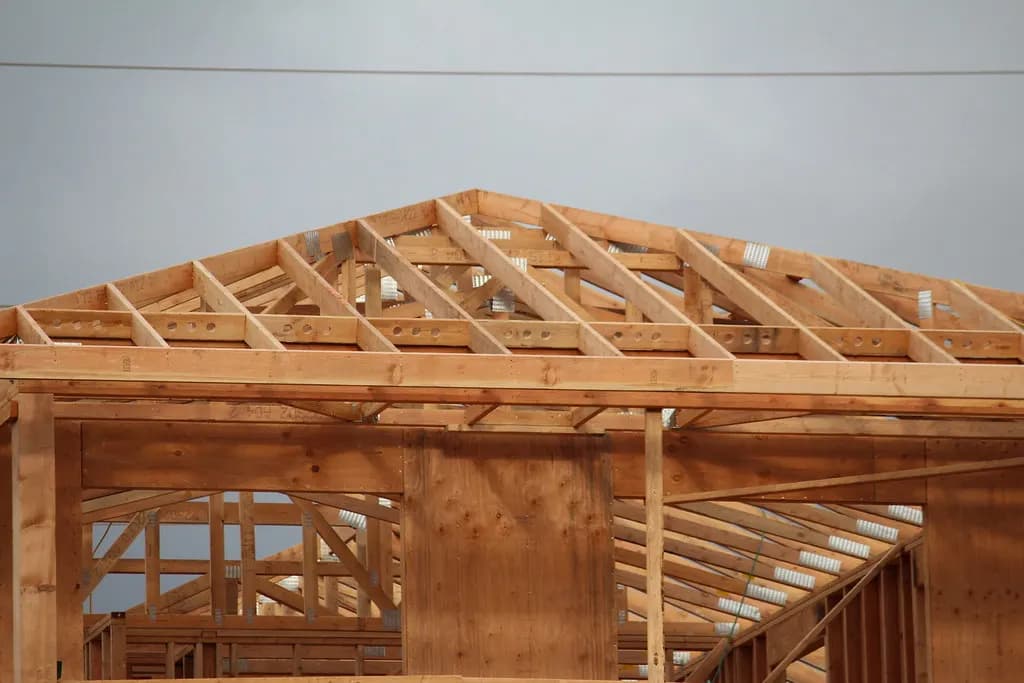
Texas: no general contractor license, but trades are licensed
Texas doesn't issue a statewide general contractor license, so a general or remodeling contractor can start without passing a state exam. That doesn't mean the work is unregulated. Air conditioning and refrigeration contractors must hold a license from the Texas Department of Licensing and Regulation, electricians are licensed by the same agency, and plumbers by the State Board of Plumbing Examiners, so a general contractor must hire licensed subs or licensed employees for that work. Cities such as Dallas, Houston and Austin run their own contractor registration and permit systems, and some require proof of insurance to pull permits. If you're in Texas, call the building department in each city you plan to work in.
Other states
Most other states fall between these models. Virginia's Department of Professional and Occupational Regulation licenses contractors in three classes by job size: Class C from $1,000 per contract, Class B from $30,000, and Class A from $150,000 per contract or $1 million a year. Tennessee requires a state contractor license for projects of $25,000 or more. Several states, including New Jersey and New York's localities, register home improvement contractors rather than licensing them by exam. Search your state's contractor board before bidding, and check every city you'll work in.
Bonding: license bonds, bid bonds, performance and payment bonds
A surety bond is a three-party guarantee: you (the principal) promise to do something, the surety guarantees it, and the owner or the state (the obligee) can claim against the bond if you don't. Unlike insurance, the surety expects you to repay any claim it pays, which is why underwriters look closely at your credit, financial statements and experience.
The bonds on a typical public job
Step 1
License bond (to stay licensed)
Step 2
Bid bond
with your bid
Step 3
Performance bond
when you sign
Step 4
Payment bond
protects subs and suppliers
Step 5
Released at completion
There are two families. A license bond is required by many states as a condition of the license, such as California's $25,000 contractor's bond. It's usually cheap for a contractor with good credit: an annual premium of roughly 1 to 3% of the bond amount is a common market range, though that's our estimate rather than a published rate. Contract bonds guarantee a specific job. A bid bond promises you'll sign the contract and provide the other bonds if you win; a performance bond promises you'll finish the work; a payment bond promises you'll pay your subs and suppliers.
Public owners require contract bonds by law. Under the federal Miller Act, as implemented in the Federal Acquisition Regulation, federal construction contracts over $150,000 need performance and payment bonds, generally each at 100% of the contract price, and contracts over $35,000 need a payment bond or another payment protection. When a solicitation calls for a bid guarantee, it must be at least 20% of the bid price of the bid price, up to $3 million. Most states have similar "Little Miller Act" laws for state and local projects, with their own thresholds. Our construction bid guide covers public bidding in detail.
New contractors often struggle to get their first contract bonds because they have no track record. The SBA's Surety Bond Guarantee program helps by guaranteeing bonds that participating sureties issue to small businesses, for contracts of up to $9 million on non-federal work and $14 million on federal work. The SBA charges a fee of 0.6% of the contract price on performance and payment bond guarantees, and no SBA fee on bid bonds.
How to get your first bonds
- 1
Clean up your financials
Sureties want a business balance sheet, profit and loss statement and work-in-progress schedule, ideally prepared or reviewed by a CPA who knows construction.
- 2
Find a surety agent
Use an agent who specializes in contractors. They match you to sureties that take on new firms.
- 3
Start with a license bond and small jobs
A license bond and a few bonded jobs under $100,000 build the history underwriters look for.
- 4
Ask about the SBA guarantee
SBA surety bondsIf a surety declines you, ask whether it participates in the SBA Surety Bond Guarantee program.
- 5
Grow your bonding line
Each completed job on time and on budget raises the single-job and total limits a surety will support.
Insurance for a construction company
Insurance is often required by licensing boards, by general contractors hiring you as a sub, and by every commercial client. Start with these:
General liability covers injury to third parties and damage to their property: a client's flooring ruined by a leak, a passer-by hit by falling material. Florida sets minimums for licensed contractors, and most commercial clients and general contractors require $1 million per occurrence and will want to be named as additional insured on your certificate. Commercial auto covers trucks and trailers used for work, which personal auto policies typically exclude. Workers' compensation pays medical bills and lost wages for injured employees. Florida requires construction employers with 1 or more employees to carry it, much stricter than the four-employee rule for other Florida businesses, and allows no more than 3 officers (each owning at least 10%) officers of a construction corporation to exempt themselves. Builder's risk covers the building under construction against fire, theft and storm, and inland marine covers tools and equipment that move from site to site. Our business insurance guide explains each policy.
Workers' comp is usually the biggest insurance cost in construction, because premiums are based on payroll and on class codes that reflect how dangerous the trade is. Roofing and framing rates are far higher than carpentry or painting. Don't solve the problem by paying workers as 1099 contractors: a worker who follows your schedule, uses your tools and works only for you is almost always an employee, and misclassification brings back taxes, penalties and uninsured injury claims. Our 1099 vs W-2 guide explains the tests.
OSHA safety rules every contractor must follow
Construction work is covered by OSHA's construction standards in 29 CFR Part 1926, whether you have one employee or a hundred. The single most important rule for most new firms is fall protection: employees working on a surface with an unprotected side or edge 6 feet or more above a lower level must be protected by guardrails, safety nets or personal fall arrest systems, and the same height applies to roofing and residential construction. Falls are the leading cause of death in construction, and fall protection is the standard OSHA cites most often.
Other standards come up on almost every job: ladders and scaffolds, trenching and excavation (cave-in protection for trenches 5 feet deep or more), electrical safety, hazard communication for chemicals, personal protective equipment, and respirable crystalline silica when you cut or grind concrete, masonry or tile. Penalties are significant for a small firm: the maximum for a serious or other-than-serious violation is $16,550 per violation per violation, and $165,514 per violation for a willful or repeated one.
Federal law doesn't require OSHA 10-hour or 30-hour cards for private jobs, but some states and cities do for certain projects, and many general contractors require them. Write a short safety program, hold weekly toolbox talks, document training, and keep the records. It costs little and is the first thing an inspector or insurer will ask for.
Startup costs for a small construction company
There's no official benchmark for what it costs to start a construction company, so the table shows our planning estimates for a small general or remodeling contractor that subcontracts most trades and rents heavy equipment. Replace every line with your own quotes.
| Item | Our estimate | Notes |
|---|---|---|
| Entity, EIN, local licenses | $35 – $500 + local fees | EIN is Free ($0) |
| State license fees and exam prep | $500–$2,000 | California fees $450 + $350 for an entity |
| License bond premium | $100–$1,000 a year | Depends on credit; a $25,000 bond in California |
| General liability and auto deposits | $2,000–$8,000 | Higher for roofing and framing |
| Workers' comp deposit | $1,500–$10,000 | Based on payroll and class codes |
| Tools and safety equipment | $3,000–$15,000 | Fall protection, ladders, power tools |
| Estimating, accounting and project software | $1,000–$4,000 a year | Job costing is essential |
| Working capital (three months of overhead) | $10,000–$30,000 | Covers the gap before progress payments |
That puts a lean start at roughly $15,000 to $60,000 before a work truck. Trucks, trailers and equipment can often be deducted in the year you place them in service under Section 179 (limit $2,560,000) or bonus depreciation; see our depreciation guide. Construction lenders and sureties both look at working capital, so keep more cash in the business than you think you need.
Job costing: a worked example
Job costing means tracking every dollar of labor, materials, subcontracts and equipment against the estimate, job by job and cost code by cost code. It's how you find out that framing labor is running 20% over while there's still time to fix it, rather than when the job closes and the profit is gone.
Worked example. You're pricing a 400-square-foot single-story addition. The estimate's direct costs are: your own crew's labor, including payroll taxes and workers' comp, $38,000; materials, $52,000; subcontractors for electrical, plumbing, HVAC and drywall, $41,000; equipment rental and dumpsters, $4,000; and permits and fees, $3,500. That's $138,500 of direct cost.
Next comes overhead: costs that don't belong to one job, such as the office, your salary as owner, the estimator, insurance not charged to jobs, vehicles, software and accounting. Say you expect $240,000 of overhead this year and $1,200,000 of direct costs across all jobs. Your overhead rate is 240,000 ÷ 1,200,000 = 20% of direct cost, so this job carries $27,700 of overhead. Total cost is $166,200. Adding a 10% markup for profit, $16,620, gives a price of $182,820. The net margin is 16,620 ÷ 182,820 = 9.1%, which shows why markup and margin aren't the same; our markup guide explains the difference.
Try it — how much work covers your overhead?
Each addition like this contributes $44,320 toward overhead and profit, so you need about 5.4 of them a year, or the same contribution from other jobs, just to cover $240,000 of overhead. During the job, track costs weekly by code. If the framing labor estimate was 160 hours and the crew has used 150 with a third of the framing left, the job is heading for about 225 hours and $4,000 or more of overrun. That's the moment to look for causes such as an incomplete drawing, a slow crew or an unpriced change, and to write a change order if the owner changed the scope.
Cash flow, contracts and taxes
Construction is paid in arrears. You buy materials and meet payroll weekly, then bill monthly or at milestones and wait 30 to 60 days for payment, often with 5 to 10% held back as retainage until the job is finished. Negotiate a deposit where the law allows it, bill promptly with a clear schedule of values, and file preliminary notices so you keep your mechanics' lien rights; each state's lien law has its own deadlines.
Use written contracts for every job, with scope, price, payment schedule, change-order procedure, warranty and dispute terms. Most disputes come from scope that was never written down. Price changes before you do the extra work and get them signed.
For taxes, contractors face a special rule: long-term contracts that start in one tax year and finish in another generally must be reported on the percentage-of-completion method under section 460. Smaller contractors get an exception for contracts expected to finish within a set period if their average annual gross receipts pass the section 448(c) test, which is $32 million for tax years beginning in 2026, and the 2025 tax law broadened the exception for residential construction contracts. This choice can shift large amounts of income between years, so use a CPA who works with contractors. You'll also need to handle sales tax on materials, which varies by state, and pay quarterly estimated taxes on your profit.
Common mistakes when starting a construction company
The most expensive mistake is contracting without the license your state requires. In California, an unlicensed contractor generally can't sue to collect payment for the work, and in many states it's a crime. The second is underpricing: leaving overhead out of bids, or using a markup on cost as if it were a margin on price. The third is growing faster than your cash: a few large jobs with retainage and slow payers can leave a profitable company unable to meet payroll.
Other common errors include treating workers as 1099 contractors to save on workers' comp, starting work on a handshake without a signed scope and change-order process, ignoring OSHA fall protection on "quick" roof or ladder jobs, and skipping job costing until year-end. Each of them is avoidable with a checklist and a habit.
Launch checklist
0/10Official links
- CSLB — before applying for a licenseCalifornia license requirements
- CSLB — workers' compensationCoverage and exemptions
- Florida Statutes §489.111Florida certification exam eligibility
- Florida rule 61G4-15.003Contractor insurance minimums
- TDLR — air conditioning and refrigerationTexas trade licensing
- FAR 28.102-1 — Miller Act bondsFederal bond thresholds
- SBA — surety bondsSurety Bond Guarantee program
- OSHA — fall protection, 29 CFR 1926.5016-foot rule
What to do next
Start with your state contractor board and the building departments where you'll work, then book the exams, line up a surety agent and get insurance quotes. Build your first estimates carefully: our guides on writing a construction bid and calculating concrete walk through the math, and the concrete calculator checks your quantities. Send polished quotes with the quotation generator and bill progress payments with the invoice generator. Planning a trade specialty instead? See our guides to starting a roofing business and starting a plumbing business.
This is general information, not legal or tax advice — confirm on the official source or with a professional.
Frequently asked questions
It depends on the state and the work. California requires a CSLB license for any job of $1,000 or more in labor and materials, or any job needing a permit. Florida requires a state certificate or registration for general, building and residential contracting. Texas has no statewide general contractor license, but licenses electrical, HVAC and plumbing work, and many cities require registration.
There's no official figure. Our estimate for a small remodeling or general contracting firm that subcontracts most trades is roughly $15,000 to $60,000 before a truck: licensing and exam fees, a license bond, the first insurance deposits, tools, software and three months of overhead. Owning heavy equipment pushes that into six figures, which is why most new firms rent it.
A license bond is a guarantee, bought from a surety, that pays consumers or the state if you break licensing law. California requires a $25,000 contractor's bond. Separate performance and payment bonds guarantee a specific job; federal construction contracts over $150,000 need them under the Miller Act, and states have similar laws for public work.
At minimum, general liability and commercial auto, plus workers' compensation once you hire. Florida requires construction employers with 1 or more employees to carry workers' comp, and sets liability minimums for licensed contractors, $300,000 for a general contractor. Add builder's risk for projects under construction and inland marine for tools and equipment.
You can own one, but licensing usually requires a qualified person. California needs a qualifier with 4 years within the last 10 of journey-level experience, and Florida's certification exam requires 4 years (at least 1 as a foreman) through the apprenticeship route. Owners without experience often hire a licensed qualifier, or start in a state or trade where no license is required while they build experience.
It can be, but margins are thin and risk is high. In our worked example a $182,820 addition earns about 9% net after overhead. Profit is won or lost on accurate estimates, tight change-order control and job costing that spots overruns while you can still fix them. Cash flow, not profit, is what sinks most new contractors.
Sources & verification
Figures on this page were checked against the sources below when it was last reviewed on 11 October 2026. Each rate and limit is stored once with its own official source and review date, and official update channels are monitored daily so changes are picked up. How we verify
- 1.Before applying for a license — California Contractors State License Board · accessed 11 October 2026
- 2.Studying for the examination — California Contractors State License Board · accessed 11 October 2026
- 3.Workers' compensation requirements — California Contractors State License Board · accessed 11 October 2026
- 4.Senate Bill 1455 — board analysis — California Contractors State License Board · accessed 11 October 2026
- 5.Florida Statutes §489.105 — Definitions — Florida Legislature · accessed 11 October 2026
- 6.Florida Statutes §489.111 — Licensure by examination — Florida Legislature · accessed 11 October 2026
- 7.Fla. Admin. Code R. 61G4-15.003 — Financial responsibility (insurance) — Florida Construction Industry Licensing Board (via LII) · accessed 11 October 2026
- 8.Florida Statutes §440.02 — Workers' compensation definitions — Florida Legislature · accessed 11 October 2026
- 9.Air conditioning and refrigeration contractors — Texas Department of Licensing and Regulation · accessed 11 October 2026
- 10.Do you have to be licensed to be a general contractor in Texas? — Silberman Law Firm · accessed 11 October 2026
- 11.FAR 28.102-1 — Performance and payment bonds (Miller Act) — Federal Acquisition Regulation (acquisition.gov) · accessed 11 October 2026
- 12.Surety bonds — U.S. Small Business Administration · accessed 11 October 2026
- 13.OSHA penalties — U.S. Occupational Safety and Health Administration · accessed 11 October 2026
- 14.29 CFR 1926.501 — Duty to have fall protection — U.S. Occupational Safety and Health Administration · accessed 11 October 2026
- 15.Revenue Procedure 2025-32 — Internal Revenue Service · accessed 11 October 2026
- 16.Contractor year-end tax planning post-OBBBA — CBIZ · accessed 11 October 2026
MSMETOOLS is an independent platform and is not affiliated with any government agency, ministry or department.
Tools for this
Construction Material Calculator
Estimate cement, sand and aggregate for slabs.
Quotation Generator
Create professional quotes for clients.
Invoice Generator
Create professional invoices with tax, logo and custom details.
Startup Cost Calculator
Estimate how much capital you need to launch.
Related guides
 How to Start a Roofing Business in 2026: Licenses & PricingRead guide
 How to Start a Concrete Business in 2026: Licenses & PricingRead guide
 How to Start a Medical Courier Business in 2026Read guide
 Start a Plumbing Business in 2026: Licenses & PricingRead guide
Official links open the government site in a new tab.