 Starting & growing a business
How to Start a Medical Courier Business in 2026: Rules, Contracts, Costs and Pricing
How to start a medical courier business in 2026: HIPAA, OSHA bloodborne pathogens, DOT UN3373 specimen rules, insurance, lab contracts, startup costs and pricing.
 Edited by Sumeet YadavFounder & editor, MSMETOOLS · fact-checked against official sources
Contents (11)
- 1. What a medical courier business does and who pays for it
- 2. Licenses and registrations: what you actually need
- 3. DOT rules for specimens: UN3373 and the exceptions
- 4. OSHA bloodborne pathogens: your duties once you hire
- 5. HIPAA: when a courier is a business associate
- 6. Insurance and what clients will ask for
- 7. How to get contracts for a medical courier business
- 8. Startup costs for a medical courier business
- 9. Medical courier pricing: work out your daily floor first
- 10. Common mistakes when starting a medical courier business
- 11. What to do next
A medical courier moves things that can't wait and can't be mishandled: blood and urine specimens to a lab, prescriptions to a patient's door, surgical instruments between hospitals, records and small equipment between clinics. The work is steady because healthcare runs every day, and the barrier to entry is lower than most people expect. There's no special federal license. What separates a medical courier from a general delivery driver is knowing the rules for what's in the box. This guide is for anyone in the US planning a medical courier business in 2026, whether you'll drive yourself or build a small fleet. It covers the DOT rules for specimens, OSHA's bloodborne pathogens standard, where HIPAA really applies, insurance, how to win lab and pharmacy contracts, startup costs and a worked pricing example. Rules were checked against the federal regulations in October 2026.
Quick answer
To start a medical courier business, form an LLC or other entity, get an EIN and local business license, buy commercial auto and liability insurance, and learn the rules for what you'll carry: DOT packaging and marking for Category B specimens (UN3373), OSHA's bloodborne pathogens standard once you hire, and HIPAA handling expected by clients. Then win one dependable lab or pharmacy route and price from your own costs.
No federal medical courier license; a USDOT number is needed only for interstate vehicles of 10,001 pounds or more (or placarded hazmat)
Specimen packages: triple packaging, 1.2 meters (3.9 feet) drop test, UN3373 diamond at least 50 mm (1.97 inches) a side
With employees: written Exposure Control Plan, annual training and hepatitis B vaccine offered within 10 working days
Couriers that only carry sealed items are usually HIPAA conduits, but many clients still ask for a business associate agreement
Published 2026 rates: $30–$45 standard same-day and $65–$100 STAT within 10 miles (Dropoff)
What a medical courier business does and who pays for it
Most medical courier revenue comes from a handful of buyer types. Clinical laboratories need specimens collected from doctors' offices, patient service centers and nursing homes on fixed schedules, often several times a day. Hospitals and health systems move specimens, blood products, pharmacy orders, instruments and supplies between campuses. Pharmacies, especially specialty, compounding and long-term care pharmacies, deliver to patients and facilities, sometimes with refrigeration. Clinics, dialysis centers, dental and optical labs, home health agencies and imaging centers need records, impressions, equipment and supplies moved.
Each buyer wants something slightly different. Labs care about pickup windows and specimen temperature. Hospitals care about speed on STAT orders and chain of custody for anything sensitive. Pharmacies care about proof of delivery, signature capture and, for refrigerated drugs, a temperature record. Before you buy anything, decide which of these you'll serve first, because it determines your vehicle, equipment, training and insurance.
The work splits into three service types. Scheduled routes are the backbone: the same stops at the same times every weekday, usually paid per day, per stop or per month. On-demand deliveries are booked as needed with a delivery window, such as same day or within four hours. STAT runs are immediate pickups for urgent clinical needs and carry the highest rates. A business that has only STAT work is unpredictable; one with only routes is capped. Most successful small couriers build routes first and fill gaps with on-demand and STAT jobs.
A typical medical courier day
Step 1
Morning lab route
Step 2
Pharmacy loop
per-stop pricing
Step 3
STAT calls
highest rate
Step 4
Afternoon lab sweep
Step 5
Proof of delivery + invoice
weekly
Licenses and registrations: what you actually need
There's no federal license called a medical courier license, and in most places no state one either. You need the same setup as any other service business: a legal entity, an EIN, any city or county business license, and a sales tax permit only if you sell taxable goods (delivery services usually aren't). An LLC is the common choice because a damaged specimen or a crash can bring a claim, and filing fees run $35 – $500 depending on the state. The EIN is Free ($0) from the IRS. Our LLC registration guide and business licenses guide cover the steps.
Vehicle registration is where federal rules can apply. FMCSA defines a commercial motor vehicle in interstate commerce as one with a gross vehicle weight rating of 10,001 pounds or more, one designed or used to carry more than 8 passengers for pay, or one carrying hazardous materials in amounts that need placards. A courier using cars, SUVs and light cargo vans usually falls below the weight line. If you run heavier vans or box trucks across state lines, you'll need a USDOT number and must follow the federal safety rules. Some states apply similar rules to intrastate trucks, so check with your state's motor vehicle or transportation department if you plan larger vehicles.
Two specialized loads need extra permits. Regulated medical waste, such as used sharps and contaminated waste from clinics, is regulated by states, which usually require a medical waste transporter registration or permit. Controlled substances are a different story: federal law exempts a common or contract carrier and its employees from DEA registration when they possess controlled substances in the usual course of business, so a courier delivering prescriptions for a pharmacy doesn't register with the DEA. Your pharmacy clients will still impose strict custody and signature procedures.
DOT rules for specimens: UN3373 and the exceptions
Specimens are the core of most medical courier work, and the Department of Transportation's hazardous materials rules decide how they must be packed. Most diagnostic specimens that might contain pathogens are classed as Category B infectious substances, shipped as UN3373 under the proper shipping name "Biological substance, Category B." When packaged under 49 CFR 173.199, Category B material is excepted from almost all the other hazardous materials rules, which is why a courier can carry it in an ordinary car.

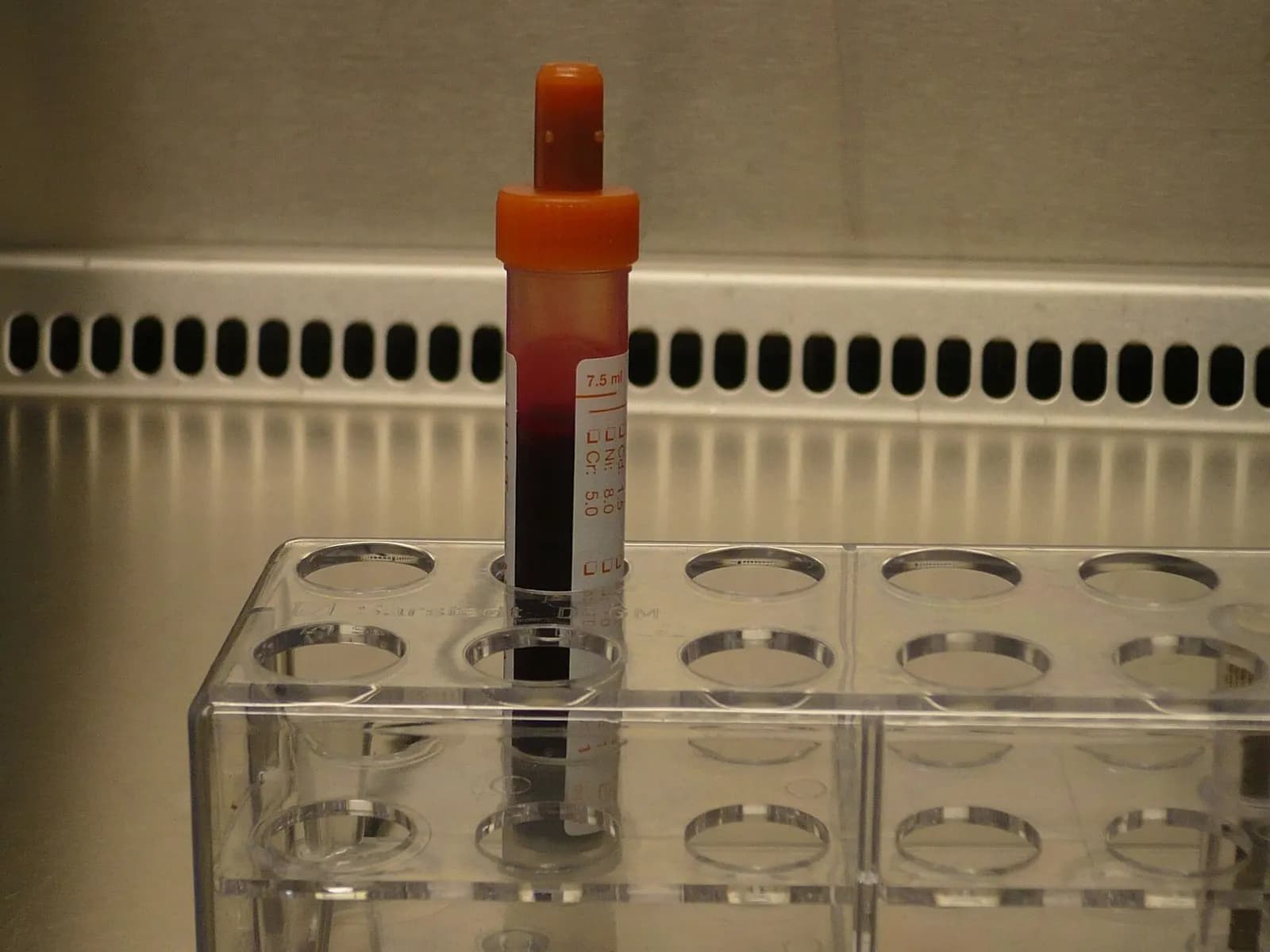
The rule rests on triple packaging. The specimen sits in a leakproof primary receptacle, such as a capped tube. That goes into a leakproof secondary packaging, such as a sealed specimen bag, with enough absorbent material to soak up the entire contents if it's a liquid. The secondary packaging is then secured, with cushioning, in a rigid outer packaging. The finished package must survive a drop test from at least 1.2 meters (3.9 feet), have at least one surface measuring 100 mm by 100 mm, and carry the UN3373 diamond (no side shorter than 50 mm (1.97 inches)) with the proper shipping name beside it. The name and phone number of someone knowledgeable about the shipment must be on the package or on a document such as the manifest.
Refrigerants have their own rules. Ice or dry ice goes outside the secondary packaging; ice needs a leakproof outer box or liner, and dry ice needs a package that lets carbon dioxide gas escape and is marked "Dry ice" or "Carbon dioxide, solid" with a note that the contents are for diagnostic or treatment purposes. If a specimen will ever go by air, tighter limits apply: no more than 1 liter in each primary receptacle and 4 liters in each outer package for liquids.
Two exceptions matter to couriers. First, 49 CFR 173.134 excepts patient specimens (other than Category A) carried by a private or contract carrier in a motor vehicle used exclusively to transport such materials, along with properly packaged medical equipment and lab products. If your van carries only specimens and medical supplies, the specimens don't need UN3373 packaging under the federal rules, though most labs will still insist on it. The moment you mix in parcels for other customers, the exception falls away. Second, specimens with only a minimal likelihood of containing pathogens can travel as exempt specimens with lighter packaging, but the shipper makes that judgment, not you.
On training, section 173.199 says everyone who offers or transports Category B material under that section must know its requirements. That's a lighter duty than the full hazmat employee training regime, but you still need it documented. Category A substances (UN2814 and UN2900), cultures of dangerous pathogens and regulated medical waste carry much heavier obligations, so turn those loads down until you're trained and equipped.
OSHA bloodborne pathogens: your duties once you hire
OSHA's bloodborne pathogens standard, 29 CFR 1910.1030, applies to employers whose employees could reasonably be expected to contact blood or other potentially infectious materials. A driver who handles specimen bags, cleans up a leaking tube or picks up from a phlebotomy station fits that description. If you're a sole owner with no employees, OSHA's standard doesn't technically cover you, but clients will expect you to follow it anyway, and you'll need it the day you hire your first driver.
Bloodborne pathogens program for a courier business
0/7The plan doesn't need to be long, but it must be specific: which jobs have exposure, how drivers handle a leaking package, how vehicles are cleaned, and who to call after a needlestick or splash. Annual training must happen within one year of the previous session, and the hepatitis B vaccine must be offered within 10 working days of initial assignment. Training records stay on file for 3 years. Clients often ask for proof of all of this during credentialing, so keep it in a binder or shared folder you can send the same day.
HIPAA: when a courier is a business associate
Many medical courier guides say drivers must be "HIPAA certified." There's no official HIPAA certification, and the legal picture is more precise than that. HIPAA's Privacy Rule applies to covered entities, such as health plans and most providers, and to their business associates, which handle protected health information on their behalf. When HHS finalized the 2013 Omnibus Rule, it confirmed a conduit exception: entities that only transport information and access it no more than randomly or infrequently, like the Postal Service or a parcel carrier, aren't business associates. HHS also stressed that the exception is narrow and depends on whether you need routine access to patient information to do the job.
In practice, a courier who carries sealed specimen bags and closed pharmacy totes is usually a conduit. A courier that scans requisition forms into its own app, keeps electronic delivery logs with patient names and addresses, or stores records between pickups starts to look like a business associate. Pharmacy home delivery is a gray area, because the delivery manifest itself shows a patient's name, address and the fact that they receive a prescription.
The practical answer: expect to sign a business associate agreement with hospital and pharmacy clients, train every driver on privacy basics (never open packages, never leave paperwork visible in the car, verify recipients, report anything lost at once), and choose dispatch software that offers access controls and encryption. Online HIPAA awareness and bloodborne pathogens courses for drivers are widely available at low cost; keep each completion certificate in the driver's file.
Insurance and what clients will ask for
Your personal auto policy almost certainly excludes business deliveries, so commercial auto is the first policy to buy. Insureon reports that small businesses pay a median of about $245 a month for commercial auto, with a very wide range depending on vehicles, driving records and state. Add general liability for injuries and property damage away from the road, and cargo or inland marine cover for the goods you carry, because a cooler of specimens can be worth far more than its contents suggest when recollection, repeat procedures and delays are counted.
Hospitals and lab networks set their own minimums in vendor contracts. Commonly requested terms include $1 million of auto liability and general liability per occurrence, the client named as additional insured, a waiver of subrogation, and workers' compensation once you have employees, which most states require by law. Larger clients may also ask for professional liability or cyber cover if you handle electronic records. If you use independent-contractor drivers, check that their own commercial auto coverage is in force and consider hired and non-owned auto cover for your company, but read the next section on classification first.
How to get contracts for a medical courier business
Contracts come from relationships and reliability more than advertising. Start with the people who schedule pickups: lab courier supervisors, pharmacy managers, hospital supply chain and materials management staff, and office managers at large practices. Ask what their current courier misses. Common answers are late afternoon pickups, weekend coverage, rural stops and STAT runs after 5 p.m.; that's where a new courier can win work.
Winning your first medical courier contract
- 1
Build a credentials pack
Certificates of insurance, W-9, business license, Exposure Control Plan, driver training records, background check and drug-screen policy.
- 2
Pick a niche and a radius
For example, independent labs and long-term care pharmacies within 30 miles. A tight radius keeps deadhead miles down.
- 3
Offer a trial route
Ask to cover one route or the after-hours STAT calls for 30 days at a set price, with on-time and temperature data reported weekly.
- 4
Register with vendor credentialing systems
Many hospitals require vendors to register, upload documents and keep vaccinations and training current before they can enter.
- 5
Put it in writing
Quotation generatorA service agreement with stops, windows, rates, fuel surcharge, payment terms, liability limits and a business associate agreement if required.
Expect payment terms of 30 to 60 days from institutional clients, which strains cash flow while you're paying for fuel and insurance up front. Invoice weekly, keep proof-of-delivery records attached to each invoice, and consider invoice factoring only if a slow-paying contract is otherwise profitable. Our invoice generator is free for your first invoices.
Watch the driver model. Many courier companies use independent contractors, but whether a driver is legally an employee depends on federal and state tests about control, not on what the contract says. Misclassification can bring back payroll taxes, penalties and workers' compensation claims. Read our 1099 vs W-2 guide before you add drivers.
Startup costs for a medical courier business
The vehicle and insurance are most of the budget. The cheapest start uses a reliable car you already own; a cargo van makes sense once you have routes with bulky totes or equipment.
| Item | Estimated cost | Basis |
|---|---|---|
| LLC or other entity filing | $35 – $500 | State filing fees |
| EIN | Free ($0) | IRS |
| Local business license | Varies by city or county | Local licensing office |
| Used cargo van (if needed) | Roughly $15,000–$30,000 | Our estimate for a several-year-old van; check local listings |
| Commercial auto insurance | About $245 a month median | Insureon, all small businesses |
| Coolers, ice packs, temperature loggers | $200–$1,500 | Our estimate: passive coolers to validated shipping coolers with data loggers |
| Spill kits, gloves, disinfectant, biohazard bags | A few hundred dollars | Our estimate from typical supply prices |
| Driver HIPAA and bloodborne pathogens training | Low cost per person online | Our estimate; in-person courses cost more |
| Dispatch and proof-of-delivery software | Monthly subscription | Depends on vendor and drivers |
With a used van, plus insurance deposits, equipment and a few months of working capital, budget roughly $20,000 to $40,000 (our estimate from the table). Starting with your own car and a few coolers, the cash outlay can stay in the low thousands, which is the realistic answer to how to start a medical courier business with no money: use the vehicle you have, start with one client and keep fixed costs low until routes justify a van.
Medical courier pricing: work out your daily floor first
Published rates show the market, not what you need. Dropoff's 2026 survey lists standard same-day deliveries within 10 miles at $30 to $45, rush deliveries (two to four hours) at $40 to $60, and STAT runs at $65 to $100, rising with distance. It quotes sedan work at $1.40 to $1.90 a mile, cargo vans at $2.20 to $3.75, refrigerated vehicles at $3.50 to $5.25, and a typical daily lab route of about 28 miles at $60 to $115 a day. Fuel surcharges of 8% to 12%, after-hours fees and weekend multipliers are common add-ons.
Worked example. A solo courier wants $55,000 a year take-home and drives about 128 miles a day, 250 days a year: 32,000 miles. Using the IRS business mileage rate of 76 cents per mile (in effect from July 1, 2026) as a stand-in for the full cost of running a car, including depreciation, fuel, maintenance and insurance on the vehicle, that's $24,320. Other business costs add $10,500: business insurance beyond the vehicle $4,500, phone and dispatch software $1,500, coolers and supplies $1,000, training and compliance $500, marketing $1,500 and accounting $1,500. Allowing a 25% effective tax rate, revenue must be $55,000 ÷ 0.75 + $34,820 = $108,153, or about $433 per working day.
Try it — your medical courier hourly floor
At 40 hours a week for 50 weeks, that's about $54 an hour. Now compare it with a single per-mile contract. At $1.75 a mile, 128 miles earns $224 a day, roughly half the floor. That's why one route rarely sustains a courier business, and why route stacking matters. In this example, a morning lab route at $110 a day, a midday pharmacy loop of 20 stops at $8 a stop ($160), and two afternoon STAT runs at $85 each ($170) make $440 a day on the same miles. Self-employed couriers also owe self-employment tax of 15.3% on most net earnings, which is inside the 25% here; set money aside for quarterly estimated taxes.
Pricing models for medical courier work
| Model | Best for | Watch out for |
|---|---|---|
Per day or per month | Fixed lab and hospital routes | Stops creeping up without a price review |
Per stop | Pharmacy and multi-stop loops | Long gaps between stops in rural areas |
Per mile | Long one-off runs between facilities | Undercharging short urban jobs with waiting time |
Flat zone rate + urgency fee | On-demand and STAT orders | Not charging wait time, after-hours and weekend premiums |
Per day or per month
- Best for
Fixed lab and hospital routes
- Watch out for
Stops creeping up without a price review
Per stop
- Best for
Pharmacy and multi-stop loops
- Watch out for
Long gaps between stops in rural areas
Per mile
- Best for
Long one-off runs between facilities
- Watch out for
Undercharging short urban jobs with waiting time
Flat zone rate + urgency fee
- Best for
On-demand and STAT orders
- Watch out for
Not charging wait time, after-hours and weekend premiums
Price wait time explicitly: Dropoff lists $1.25 to $2.25 a minute after a grace period, and a STAT run that waits 30 minutes at a hospital lab is a different job from one that doesn't. Tie your fuel surcharge to a published index so you can adjust it monthly without renegotiating the contract.
Common mistakes when starting a medical courier business
The first mistake is mixing loads. Carrying retail parcels in the same vehicle as specimens can void the exclusive-use exception and exposes specimens to damage and temperature swings. The second is treating HIPAA as a certificate rather than a habit: a manifest left on the passenger seat or a photo of a requisition in a driver's phone is the kind of slip that ends a contract. The third is underpricing to win the first route, then discovering that the per-mile price barely covers the car.
The fourth is skipping temperature records. Labs and pharmacies increasingly ask for proof that refrigerated or frozen items stayed in range, so use logging thermometers and keep the data. The fifth is ignoring cash flow on 45-day payment terms. Finally, don't accept Category A material, regulated medical waste or dry-ice air shipments until you've trained for them; the penalties and liability are of a different order.
Official links
- 49 CFR 173.199 — Category B infectious substancesTriple packaging, UN3373 mark, training
- 49 CFR 173.134 — Division 6.2 definitions and exceptionsPatient specimens, exclusive-use vehicle exception
- OSHA bloodborne pathogens standard, 29 CFR 1910.1030Exposure Control Plan, vaccine, training
- HIPAA Omnibus Rule, 78 FR 5566Business associates and the conduit exception
- 49 CFR 390.5 — commercial motor vehicle definitionWhen FMCSA rules and a USDOT number apply
- IRS standard mileage ratesBusiness mileage rate for 2026
What to do next
Pick your first buyer type and a tight service radius, then build your numbers before you sign anything. Use the hourly rate calculator to set your daily floor, the startup cost calculator to total your launch budget, and the quotation generator for your first route proposal. If you're writing a plan for a lender, our how to write a business plan guide walks through each section, and the pharmaceutical wholesale guide explains the supply chain many pharmacy couriers serve.
This is general information, not legal or tax advice — confirm on the official source or with a professional.
Frequently asked questions
There's no single federal medical courier license. You need the normal business setup: an LLC or other entity, an EIN, and any city or county business license. What's regulated is what you carry and how: DOT packaging rules for specimens, OSHA's bloodborne pathogens standard once you have employees, HIPAA expectations from clients, and a USDOT number only if you run vehicles of 10,001 pounds or more across state lines.
Often not. HHS treats couriers that only carry sealed items as conduits, which don't need a business associate agreement. HHS also calls that exception narrow: if you routinely see, log or store patient information, for example by scanning requisitions into an app, you can become a business associate. Many labs and hospitals ask for a BAA anyway, so be ready to sign one and to train drivers.
If you start with a reliable car you already own, launch costs can stay in the low thousands: formation fees of $35 – $500, a free EIN, insurance deposits, coolers and temperature loggers, spill kits and training. Buying a used cargo van adds the largest single cost. Commercial auto insurance is a recurring cost, at a median of about $245 a month for small businesses according to Insureon.
One courier marketplace's 2026 survey lists $30 to $45 for a standard same-day delivery within 10 miles, $65 to $100 for an immediate STAT run of the same distance, and $1.40 to $1.90 a mile for sedan work. Scheduled lab routes are usually priced per day or per stop. Set your own floor from your costs first: in our example it's about $433 a working day.
Start with buyers that need regular runs: independent and hospital labs, specialty and long-term care pharmacies, clinics, dialysis centers, dental labs and home health agencies. Expect vendor credentialing: certificates of insurance, background checks and drug screens, training records and sometimes vaccination records. Win one reliable daily route, then stack STAT and pharmacy work around it.
For Category B specimens (UN3373) packaged under 49 CFR 173.199, the rule is that everyone who offers or transports them must know that section's requirements, rather than full hazmat employee training. Category A infectious substances, dry ice by air and regulated medical waste bring heavier obligations, so don't take those loads until you've trained for them.
Sources & verification
Figures on this page were checked against the sources below when it was last reviewed on 9 October 2026. Each rate and limit is stored once with its own official source and review date, and official update channels are monitored daily so changes are picked up. How we verify
- 1.49 CFR 173.199 — Category B infectious substances — U.S. DOT, PHMSA (eCFR) · accessed 9 October 2026
- 2.49 CFR 173.134 — Class 6, Division 6.2 definitions and exceptions — U.S. DOT, PHMSA (eCFR) · accessed 9 October 2026
- 3.29 CFR 1910.1030 — Bloodborne pathogens — OSHA (eCFR) · accessed 9 October 2026
- 4.Modifications to the HIPAA Privacy, Security, Enforcement, and Breach Notification Rules (Omnibus Rule), 78 FR 5566 — HHS Office for Civil Rights (Federal Register) · accessed 9 October 2026
- 5.49 CFR 390.5 and 390.201 — definitions and USDOT registration — FMCSA (eCFR) · accessed 9 October 2026
- 6.Standard mileage rates — Internal Revenue Service · accessed 9 October 2026
- 7.21 U.S. Code § 822 — Persons required to register — Cornell Legal Information Institute (U.S. Code) · accessed 9 October 2026
- 8.Medical courier service rates in 2026 — Dropoff (secondary) · accessed 9 October 2026
- 9.Commercial auto insurance cost — Insureon (secondary) · accessed 9 October 2026
MSMETOOLS is an independent platform and is not affiliated with any government agency, ministry or department.
Tools for this
Freelance Hourly Rate Calculator
Work out the hourly rate you need to charge.
Startup Cost Calculator
Estimate how much capital you need to launch.
Invoice Generator
Create professional invoices with tax, logo and custom details.
Quotation Generator
Create professional quotes for clients.
Related guides
 How to Start a Construction Company in 2026: Full GuideRead guide
 Pharmaceutical Wholesale Business (2026): Licenses & DSCSARead guide
 How to Start a Photography Business in 2026: Costs & PricingRead guide
 How to Start a Business With No Money (2026): 30-Day PlanRead guide
Official links open the government site in a new tab.