 Starting & growing a business
Small Business Insurance in 2026: What You Legally Need, What Contracts Demand and What It Costs
Small business insurance in 2026: what the law requires vs what landlords and clients require, GL, BOP, professional, auto and cyber cover, and labelled costs.
 Edited by Sumeet YadavFounder & editor, MSMETOOLS · fact-checked against official sources
Contents (10)
- 1. Legally required vs contractually required insurance
- 2. General liability insurance
- 3. Business owner's policy (BOP)
- 4. Professional liability (errors and omissions)
- 5. Commercial auto insurance
- 6. Cyber liability insurance
- 7. Other coverage worth considering
- 8. What small business insurance costs
- 9. How to buy business insurance
- 10. What to do next
Small business insurance is a set of policies, not one product, and the hard part is knowing which ones you actually need. Some coverage is required by law, some is required by the people you do business with, and the rest protects you from risks that could close the business. This guide separates those three groups. It explains general liability, the business owner's policy, professional liability, commercial auto and cyber insurance in plain terms, shows which policies state and federal law require, and gives labelled cost estimates so you can budget for 2026.
Quick answer
By law, most small businesses need workers' compensation once they have employees (Texas lets most employers opt out), state unemployment insurance, temporary disability coverage in six jurisdictions, and auto liability on business vehicles. Some licences also require general liability. Landlords, lenders and clients usually require general liability and often professional liability, with proof on a certificate of insurance. A typical small business budgets roughly $500 to $3,000 a year for its core policies, more for vehicles, construction or high payroll.
General liability: injuries and property damage to others (estimated median about $45 a month)
BOP: general liability + property + business interruption in one package
Professional liability: mistakes in the service you sell
Commercial auto and cyber: needed once you drive for work or hold customer data
Legally required vs contractually required insurance
Owners often hear that a policy is "required" without knowing who requires it. The answer changes what happens if you skip it: breaking a legal requirement brings fines or loss of a licence; breaking a contractual one costs you the lease, the loan or the client.
Who requires which insurance
| Coverage | Required by law? | Commonly required by contract? |
|---|---|---|
Workers' compensation | Yes in nearly all states once you have employees (Texas: optional for most) | Yes, by general contractors and many clients |
Unemployment insurance | Yes, paid as a state payroll tax | No |
Temporary disability | Yes in CA, HI, NJ, NY, RI and Puerto Rico | No |
Commercial auto liability | Yes for vehicles the business owns or leases; federal minimums for interstate trucking | Yes, by clients if you drive for them |
General liability | Only for some licensed trades and professions | Almost always: landlords, clients, event venues, lenders |
Professional liability | Required for some licensed professions in some states | Often by clients of consultants, IT firms and agencies |
Commercial property | No | By lenders and landlords for buildings and financed equipment |
Cyber liability | No | Increasingly in vendor contracts that involve customer data |
Workers' compensation
- Required by law?
Yes in nearly all states once you have employees (Texas: optional for most)
- Commonly required by contract?
Yes, by general contractors and many clients
Unemployment insurance
- Required by law?
Yes, paid as a state payroll tax
- Commonly required by contract?
No
Temporary disability
- Required by law?
Yes in CA, HI, NJ, NY, RI and Puerto Rico
- Commonly required by contract?
No
Commercial auto liability
- Required by law?
Yes for vehicles the business owns or leases; federal minimums for interstate trucking
- Commonly required by contract?
Yes, by clients if you drive for them
General liability
- Required by law?
Only for some licensed trades and professions
- Commonly required by contract?
Almost always: landlords, clients, event venues, lenders
Professional liability
- Required by law?
Required for some licensed professions in some states
- Commonly required by contract?
Often by clients of consultants, IT firms and agencies
Commercial property
- Required by law?
No
- Commonly required by contract?
By lenders and landlords for buildings and financed equipment
Cyber liability
- Required by law?
No
- Commonly required by contract?
Increasingly in vendor contracts that involve customer data
What the law requires
Workers' compensation. Almost every state requires it from your first employee, although some start at a higher headcount, and Texas lets most private employers opt out with a filing. See our workers' compensation insurance guide for the state rules, class-code rates and penalties.
Unemployment insurance. Every state runs an unemployment insurance program funded by an employer payroll tax. You don't buy it from an insurer; you register with the state and pay it with payroll, as explained in our payroll taxes guide.
Temporary disability insurance. Six jurisdictions run programs that replace wages when an employee can't work because of an illness or injury that isn't job-related: California, Hawaii, New Jersey, New York, Puerto Rico and Rhode Island. In California and New Jersey the state plan is funded at least partly through employee withholding, though employers can substitute an approved private plan; in Hawaii and New York, employers must provide the coverage through an insurer or self-insurance, and New York's disability policy is often bought from the same carrier as workers' comp.
Auto liability. Nearly every state requires liability insurance on registered vehicles, and a vehicle owned or leased by the business should be insured on a commercial auto policy in the business's name. For-hire trucking firms operating interstate face federal minimums: $750,000 of public liability for carriers of non-hazardous property in vehicles of 10,001 pounds or more, rising to $1 million or $5 million for some hazardous loads.
Licence-linked liability insurance. Many states require proof of general liability before issuing or renewing a trade licence. Examples: New Jersey home improvement contractors must carry at least $500,000 per occurrence of general liability; a Texas responsible master plumber needs $300,000; and Florida pest control businesses need $500,000 of combined single-limit liability for non-fumigation work. Contractors, movers, security firms, child care centres and many health professions face similar rules, so check your licensing board's requirements. Our business licenses guide explains how to find which licences apply to you.
Examples of insurance minimums set by law
$500,000 per occurrence
General liability
New Jersey home improvement contractors
$300,000
General liability
Texas responsible master plumbers
$500,000
Combined single limit
Florida pest control (non-fumigation)
$750,000
Public liability
Interstate for-hire freight, 10,001+ lbs
What contracts require
A commercial lease almost always requires general liability insurance with the landlord named as an additional insured, plus property insurance on your own contents and improvements. A $1 million per-occurrence and $2 million aggregate general liability limit is a common lease and client requirement, though the numbers vary. Lenders, including those making SBA loans, typically require property insurance on collateral and may require other coverage, and large clients often require professional liability and cyber insurance in their vendor agreements.
You prove coverage with a certificate of insurance (COI), which your agent issues on request, usually free. Read contract insurance clauses before you sign: requirements such as "waiver of subrogation" or "primary and non-contributory" wording need endorsements on your policy, and your insurer has to agree to them.
General liability insurance
Commercial general liability (CGL) is the foundation policy for most businesses. It pays for claims that your business caused bodily injury or property damage to someone else, along with your legal defence costs, and it usually includes personal and advertising injury, such as libel, slander or copyright infringement in your advertising. It also typically covers products and completed operations: injuries from a product you sold or work you finished.
Typical claims include a customer tripping over a box in your shop, a cleaner breaking a client's vase, a contractor's ladder denting a car, or a cake that makes a guest sick. General liability doesn't cover injuries to your own employees (that's workers' comp), damage to your own property, your vehicles, professional mistakes or data breaches.

General liability is usually written on an occurrence basis: the policy in force when the injury happened responds, even if the claim comes years later. Limits are stated per occurrence and in aggregate for the policy year. If your contracts or risks need more than $1 million or $2 million, an umbrella policy adds a layer on top of general liability, auto and employer's liability. The NAIC notes umbrella limits typically range from $1 million to $5 million.
Business owner's policy (BOP)
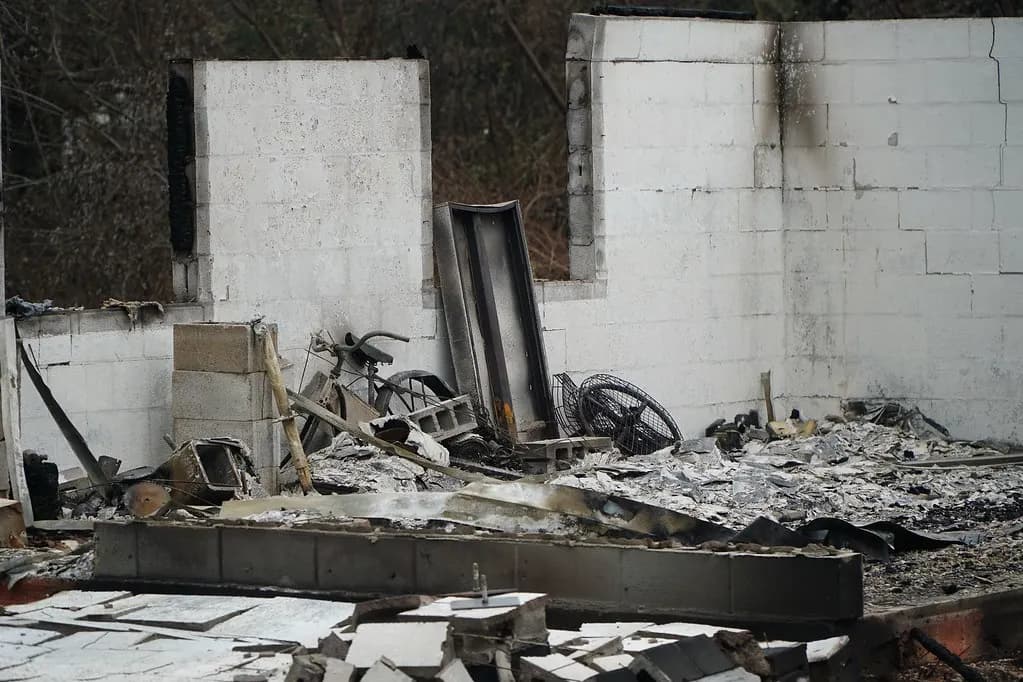
A business owner's policy packages three coverages that small businesses usually need together: general liability, commercial property (your building if you own it, plus equipment, inventory, furniture and improvements) and business interruption (lost income and continuing expenses such as rent and payroll while you're closed after a covered loss). Because insurers bundle them, a BOP usually costs less than the three bought separately.
BOPs are designed for small, lower-risk businesses: shops, offices, cafés, small restaurants, salons and service firms. Insurers set their own eligibility limits on size and type of business, and the NAIC notes that some businesses, such as manufacturers or jewelry stores, need custom coverage instead. A BOP doesn't include workers' comp, commercial auto, professional liability, or employee health and disability benefits. Common add-ons include equipment breakdown, data breach response, hired and non-owned auto liability and employee dishonesty coverage.
Check two property details when you buy. First, choose replacement cost rather than actual cash value, so a loss pays to replace equipment rather than its depreciated value. Second, standard property policies exclude flood and earthquake; buy those separately if you're exposed.
Professional liability (errors and omissions)
Professional liability, called errors and omissions (E&O) or malpractice insurance in some professions, covers claims that your professional service caused a client financial harm: a bookkeeper's mistake that triggers tax penalties, a marketing agency missing a launch date, an IT consultant's configuration error that takes a client offline, or an architect's design flaw. It pays defence costs, which are often the largest part of the bill, and settlements or judgments.
Unlike general liability, professional liability is usually written on a claims-made basis: it covers claims made while the policy is active, for work done after the policy's retroactive date. That has two consequences. If you switch insurers, keep your original retroactive date. If you close the business or retire, buy an extended reporting period ("tail") so claims arriving later are still covered.
Occurrence vs claims-made policies
| Occurrence (most general liability) | Claims-made (most professional and cyber) | |
|---|---|---|
Which policy pays | The one in force when the injury or damage happened | The one in force when the claim is made |
Switching insurers | Old policy still answers for past incidents | Keep your retroactive date or past work is uncovered |
Closing the business | Nothing extra to buy | Buy a tail (extended reporting period) |
Which policy pays
- Occurrence (most general liability)
The one in force when the injury or damage happened
- Claims-made (most professional and cyber)
The one in force when the claim is made
Switching insurers
- Occurrence (most general liability)
Old policy still answers for past incidents
- Claims-made (most professional and cyber)
Keep your retroactive date or past work is uncovered
Closing the business
- Occurrence (most general liability)
Nothing extra to buy
- Claims-made (most professional and cyber)
Buy a tail (extended reporting period)
Who needs it: consultants, accountants, lawyers, architects and engineers, IT and software firms, marketing and design agencies, real estate agents, insurance agents, and health and wellness providers. Some professions must carry it by law or licensing rule in some states; many clients require it by contract.
Commercial auto insurance
A personal auto policy is built for commuting and errands and often excludes or limits business use, such as carrying paying passengers, making deliveries, or hauling tools and equipment between job sites. If the business owns or leases a vehicle, insure it on a commercial auto policy in the business's name, with liability limits that match your contracts. The NAIC points out that commercial policies typically carry higher limits, such as $1 million, and can extend to rented and non-owned vehicles.
Hired and non-owned auto (HNOA) coverage is the piece many small businesses miss. It covers the business's liability when employees drive their own cars or rented vehicles on company business: the employee's personal policy pays first, but the injured party will often sue your business too. If you don't own vehicles but staff run errands, HNOA, often added to a BOP or general liability policy, is inexpensive protection.
Trucking and for-hire transport carry their own rules. Interstate carriers need an FMCSA filing showing at least $750,000 of liability for general freight in heavier vehicles, and brokers, shippers and freight platforms commonly require more. Our trucking business plan guide covers the start-up side.
Cyber liability insurance
Cyber insurance responds to data breaches, ransomware, funds-transfer fraud and network outages. It usually has two parts. First-party coverage pays your own costs: forensic investigation, restoring data and systems, notifying affected customers as state breach laws require, credit monitoring, public relations, ransomware negotiation and lost income while systems are down. Third-party coverage pays for claims and regulatory actions from customers, card brands or regulators after a breach.
Small businesses are targeted precisely because their defences are weaker. If you store customer names with card, health or Social Security data, take online payments, or rely on email to approve payments, cyber cover is worth pricing. Insurers increasingly require basic controls before they'll quote, typically multi-factor authentication on email and remote access, regular offline backups and timely software updates, and they may deny claims if those controls weren't in place. Read the social engineering or funds-transfer fraud section carefully: many policies cap that coverage at a low sub-limit unless you buy more.
What a cyber policy typically pays for
| First-party (your own costs) | Third-party (claims against you) |
|---|---|
Forensic investigation and system restoration | Customer lawsuits after a breach |
Breach notification and credit monitoring | Regulatory investigations and fines where insurable |
Ransomware response and extortion payments | Payment card industry assessments |
Lost income while systems are down | Defence costs |
Forensic investigation and system restoration
- Third-party (claims against you)
Customer lawsuits after a breach
Breach notification and credit monitoring
- Third-party (claims against you)
Regulatory investigations and fines where insurable
Ransomware response and extortion payments
- Third-party (claims against you)
Payment card industry assessments
Lost income while systems are down
- Third-party (claims against you)
Defence costs
Other coverage worth considering
- Employment practices liability (EPLI). Covers claims by employees or applicants of discrimination, harassment, wrongful termination and retaliation. General liability doesn't cover these. Worth a quote once you have a few employees.
- Product liability. Usually included in general liability, but manufacturers, importers and private-label sellers may need higher limits or a dedicated policy.
- Commercial crime and fidelity bonds. Covers employee theft, forgery and some fraud. Required by some contracts and for certain licences.
- Inland marine or tools and equipment. Covers equipment that travels with you to job sites, which a BOP's property section often limits.
- Home-based business coverage. The NAIC notes homeowners and renters policies often cap business property at $2,500 at home and $250 away, and commonly exclude business liability. A home-business endorsement or in-home business policy closes the gap for very small operations.
- Key person and business life insurance. Lenders sometimes require life insurance on owners as a loan condition.
What small business insurance costs
Prices depend on your industry, location, revenue, payroll, claims history, limits and deductibles, so averages are a starting point only. The figures below are estimates from Insureon, an online broker, based on median premiums for policies its small business customers bought, most of whom have fewer than five employees. Expect to pay more in high-risk trades, large cities and states with high litigation costs.
| Policy | Estimated median cost | Annual equivalent | Basis |
|---|---|---|---|
| General liability | about $45 a month | about $538 | Insureon customer median (estimate) |
| Business owner's policy | about $83 a month | about $990 | Insureon customer median (estimate) |
| Professional liability / E&O | about $88 a month | about $1,056 | Insureon customer median (estimate) |
| Workers' compensation | about $54 a month | about $643 | Insureon customer median; varies by class and payroll |
| Cyber liability | about $129 a month | about $1,548 | Insureon customer median (estimate) |
| Commercial auto | about $245 a month | about $2,940 | Insureon average; ranges from under $375 to over $16,000 a year |
Here's how that might add up. A two-person marketing consultancy working from a small office might buy a BOP (about $990), professional liability (about $1,056) and cyber (about $1,548), roughly $3,600 a year at those medians. A solo cleaner working in clients' homes might need only general liability with hired and non-owned auto, often under $1,000 a year, but would add workers' comp, bonding and commercial auto as the business hires and buys a van. A small residential contractor with a truck and two employees could pay several times more, because workers' comp in construction classes and commercial auto dominate the bill.
Ways to keep premiums down: raise deductibles you can afford, pay annually rather than monthly, bundle in a BOP, keep a clean claims record, and ask about credits for safety training, alarms or security controls. Shop at renewal every couple of years, but don't let coverage lapse, because a gap can raise future prices and breach your contracts.
Small business insurance checklist
0/8How to buy business insurance
Map your risks first. Write down what could go wrong: customers on your premises, work at clients' sites, vehicles, data, employees, key equipment, inventory, a fire or flood that closes you for months. The SBA's guidance starts here too: assess risks, then find coverage.
Choose how to buy. Independent agents and brokers compare several insurers and help with claims and certificates; captive agents sell one company's products; online brokers and insurers are fastest for simple, low-risk businesses. Make sure whoever you use is licensed in your state; your state insurance department's website lets you check licences and complaint records.
Compare like with like. Line up limits, deductibles, exclusions, occurrence vs claims-made wording, and endorsements such as additional insured and waiver of subrogation. The cheapest quote often has a lower limit or a broad exclusion that matters for your work.
Keep it current. Tell your insurer when you hire, buy a vehicle, move, add a location or start a new service. Workers' comp and general liability are often audited on payroll or sales at year end, so honest estimates avoid surprise bills.
Official links
- SBA — Get business insuranceTypes of coverage and how to buy
- NAIC — Small business insuranceConsumer guide from state insurance regulators
- NAIC — Find your state insurance departmentCheck licences and file complaints
- FMCSA — Insurance filing requirementsInterstate carriers and brokers
- DOL — State temporary disability insurance lawsCA, HI, NJ, NY, PR, RI
- Texas DWC — Employer coverage optionsWorkers' comp opt-out rules
What to do next
Start with the legal list: if you're hiring, set up workers' comp, unemployment and any state disability coverage alongside payroll using our first employee checklist. Then pull out your lease and client contracts, note every insurance clause, and ask two agents to quote a BOP or general liability policy that meets them. Add the premiums to your start-up budget with the startup cost calculator so your prices cover them from day one.
This is general information, not legal or insurance advice — confirm on the official source or with a licensed professional.
Frequently asked questions
With employees, workers' compensation is required in almost every state (Texas lets most private employers opt out), and you pay state unemployment insurance tax. California, Hawaii, New Jersey, New York, Rhode Island and Puerto Rico also require temporary disability coverage. Business-owned vehicles need auto liability insurance. General liability is not required by law for most businesses, but some licences require it, and landlords and clients usually demand it.
As a rough guide, Insureon reports median premiums among its small business customers of about $45 a month for general liability, $83 for a business owner's policy, $88 for professional liability, $129 for cyber and $54 for workers' comp, with commercial auto averaging about $245 a month. These are estimates from one broker's data; your industry, location, revenue, payroll and claims history drive the real price.
General liability covers bodily injury and property damage to other people, such as a customer who slips in your shop or a pipe you damage at a client's home, plus advertising injury. Professional liability, also called errors and omissions, covers financial loss caused by a mistake, missed deadline or bad advice in the professional service you provide. Consultants, accountants, designers and IT firms usually need both.
A BOP bundles general liability, commercial property and business interruption coverage into one package, usually at a lower price than buying them separately. It suits small, lower-risk businesses such as shops, offices and restaurants. It doesn't include workers' comp, commercial auto, professional liability or employee health or disability benefits, and some higher-risk businesses don't qualify.
Usually only a little. The NAIC notes homeowners and renters policies often cap business property at about $2,500 at home and $250 away from home, commonly exclude liability for business visitors, and don't replace lost income. A home-business endorsement can fill small gaps; once you see clients at home, hold inventory or have employees, you'll typically need a BOP or separate commercial policies.
If the business owns or leases the vehicle, yes; it should be insured under a commercial policy in the business's name. If you or employees use personal cars for errands, a personal policy may exclude business use, so check it, and consider hired and non-owned auto coverage, which protects the business when employees drive their own or rented cars on company business.
Sources & verification
Figures on this page were checked against the sources below when it was last reviewed on 9 October 2026. Each rate and limit is stored once with its own official source and review date, and official update channels are monitored daily so changes are picked up. How we verify
- 1.Get business insurance — U.S. Small Business Administration · accessed 9 October 2026
- 2.Small Business Insurance — National Association of Insurance Commissioners · accessed 9 October 2026
- 3.Comparison of State Unemployment Laws — Chapter 8, Temporary Disability Insurance — U.S. Department of Labor · accessed 9 October 2026
- 4.49 CFR § 387.9 — Financial responsibility, minimum levels — Legal Information Institute (Code of Federal Regulations) · accessed 9 October 2026
- 5.Workers' compensation — employer information — Texas Department of Insurance · accessed 9 October 2026
- 6.How much does small business insurance cost? — Insureon · accessed 9 October 2026
- 7.How much does commercial auto insurance cost? — Insureon · accessed 9 October 2026
MSMETOOLS is an independent platform and is not affiliated with any government agency, ministry or department.
Tools for this
Startup Cost Calculator
Estimate how much capital you need to launch.
Break Even Calculator
Find your break even point and units.
Budget Planner
Plan and track your business budget easily.
Related guides
 How to Start a Business in 2026: 12 Steps, Costs & TaxesRead guide
 Business Owners Policy (BOP) 2026: Coverage, Eligibility, CostRead guide
 How to Start a Web Page for Your Business in 2026Read guide
 Cottage Food Law 2026: State Rules, Limits & LabelsRead guide
Official links open the government site in a new tab.