 Finance & accounting
How to Bid a Construction Job: Estimating, Overhead and Markup, Bid Bonds, Public Bids and Change Orders
How to bid a construction job in 2026: estimating, overhead and markup, bid bonds, public bids under the Miller Act, change orders and a fully worked bid example.
 Edited by Sumeet YadavFounder & editor, MSMETOOLS · fact-checked against official sources
Contents (10)
- 1. Step 1: Decide whether to bid at all
- 2. Step 2: Do the quantity takeoff
- 3. Step 3: Price labor, materials, equipment and subcontractors
- 4. Step 4: Add contingency, overhead and profit
- 5. A worked example: bidding a tenant buildout
- 6. Step 5: Write the bid proposal
- 7. Bid bonds and public bidding
- 8. Change orders: pricing work that wasn't in the bid
- 9. Common bidding mistakes
- 10. What to do next
A construction bid is a promise to build a defined scope for a fixed price, and once it's accepted you live with the number. Bid too high and you lose the job; bid too low and you win a job that costs you money for months. Most small contractors don't lose money because they can't build. They lose it because the estimate missed a scope item, the overhead wasn't in the price, or a change was done on a handshake. This guide shows how to bid a construction job in 2026, from reading the drawings to the takeoff, pricing, overhead and markup, writing the proposal, bid bonds and public bidding rules, and change orders. It includes a fully worked bid for a commercial tenant buildout. Federal rules were checked against the Federal Acquisition Regulation and SBA pages in October 2026.
Quick answer
To bid a construction job, study the plans and specs, do a quantity takeoff, price labor, materials, equipment and subcontractors, and add general conditions. Then add contingency, overhead and profit, write a proposal with a clear scope, exclusions, schedule and payment terms, and submit it on the owner's form with any bid bond. Price every later change the same way, in writing, before you do the work.
Direct cost = labor + materials + equipment + subs + general conditions + permits
Add contingency, overhead (your company's real rate) and profit; markup is not margin
Federal bid guarantees: at least 20% of the bid price of the bid, up to $3 million
Miller Act performance and payment bonds above $150,000
Change orders: written, priced and signed before the work
Step 1: Decide whether to bid at all
Every bid costs money: an estimator's week, sub coordination, sometimes a bid bond. Before you start, check whether the job fits. Is it in your trade and license class? Is it the right size for your crew, bonding capacity and cash? Can you meet the schedule with your current backlog? Who's the owner, and do they pay on time? How many bidders are there? A job with ten bidders and a low-price award is a different bet from a negotiated job with two.
Read the bid documents before you commit: the invitation, instructions to bidders, bid form, contract conditions, drawings, specifications and every addendum. Note the bid due date and time, the pre-bid meeting, the deadline for questions, required forms and bonds, liquidated damages, retainage and payment terms, insurance requirements and any prevailing wage rules. Federal construction contracts over $2,000 carry Davis-Bacon prevailing wage requirements, which change your labor cost and paperwork.
Step 2: Do the quantity takeoff
The takeoff turns drawings into quantities: cubic yards of concrete, linear feet of wall, square feet of drywall and flooring, number of doors and fixtures. Work sheet by sheet and trade by trade, and mark up a set of drawings as you go so you can see what you've counted. Use the units suppliers and subs price in. For concrete, our concrete calculation guide and concrete calculator show how to get yards for slabs, footings and columns, with waste.

Add waste factors where they're real: drywall, flooring, framing lumber, concrete and roofing all have cut-off and spillage. Then cross-check: does the specification call for something the drawings don't show, like a vapor barrier or fire caulking? Specs usually govern, and items found only in the specs are the ones bidders miss. If the documents conflict or are unclear, submit a written question before the deadline; the answer usually comes back as an addendum to all bidders.
Step 3: Price labor, materials, equipment and subcontractors
Labor is the riskiest number because it depends on your crew's productivity. Price it in hours first, from your own past jobs if you track them, then multiply by a loaded hourly rate: wages plus payroll taxes, workers' comp, benefits and paid time off. A carpenter earning $34 an hour can easily cost $45 to $50 an hour loaded.
Materials come from current supplier quotes, not last year's price list. Prices move: the Bureau of Labor Statistics producer price index for ready-mixed concrete, for example, was up 2.3% in the year to August 2026. Include delivery, sales tax where you pay it on materials, and an escalation allowance or a price-adjustment clause if the job starts months after the bid.
Equipment includes rentals, fuel, delivery and pickup, and an hourly charge for equipment you own. Subcontractors usually make up most of a general contractor's bid. Ask at least two or three subs per trade for quotes, and level them: line up each quote's scope, exclusions and assumptions side by side, because the lowest number often leaves something out. A plumbing quote that excludes trenching or permits isn't really the low bid.
General conditions are job costs that aren't part of any trade: the superintendent's time, temporary toilets, fencing, dumpsters, temporary power, final cleaning, small tools and project insurance. They grow with the schedule, so a longer job costs more even with the same scope.
Step 4: Add contingency, overhead and profit
From direct cost to bid price
Step 1
Direct cost
Step 2
+ Contingency
estimate risk
Step 3
+ Overhead
your own rate
Step 4
+ Profit
job risk and competition
Step 5
Bid price
Once direct costs are complete, add three things. Contingency covers the risk in the estimate itself: incomplete drawings, unknown site conditions, quantities you couldn't confirm. Many contractors use 2% to 5% on reasonably complete documents; it's a judgment, not a rule. Overhead pays for the business: office, owner and estimator salaries, vehicles, insurance not charged to jobs, software, accounting, marketing. Work out your own rate by dividing last year's overhead by last year's direct job costs; don't borrow someone else's percentage. Profit is the return for taking the risk, and it depends on competition, risk and how much you want the job.
Markup and margin are different. If you add 25% to cost, the margin on the selling price is 20%, not 25%. Contractors who confuse the two consistently underprice. Our markup guide explains the conversion, and the worked example below shows it with real numbers.
A worked example: bidding a tenant buildout
The job. A 2,500-square-foot retail tenant improvement: new partition walls, ceilings, lighting and power, a restroom, HVAC changes, flooring and paint. You'll self-perform framing, drywall, doors and finish carpentry, and sub out the rest. The schedule is six weeks.
| Cost item | Basis | Amount |
|---|---|---|
| Self-performed labor | 520 hours at $48 loaded | $24,960 |
| Materials (framing, drywall, doors, ceilings, hardware) | Supplier quotes | $38,400 |
| Electrical subcontractor | Leveled low quote | $28,500 |
| HVAC subcontractor | Leveled low quote | $22,800 |
| Plumbing subcontractor | Leveled low quote | $14,200 |
| Flooring and painting subcontractors | Leveled quotes | $15,900 |
| Equipment rental (lifts, tools) | Rental quotes | $3,200 |
| General conditions (supervision, dumpsters, temporary facilities, cleaning) | 6 weeks | $16,200 |
| Permits and fees | City fee schedule | $4,100 |
| Direct cost | $168,260 | |
| Contingency, 3% | of direct cost | $5,048 |
| Overhead, 12% | company rate on cost | $20,797 |
| Profit, 8% | on cost | $15,528 |
| Bid price | $209,633 → $209,600 |
All figures are our illustrative estimates; replace them with your own quotes and rates. Contingency, overhead and profit add $41,373 to the $168,260 of direct cost, a markup of 24.6% on cost. But as a share of the selling price, that's a gross margin of 19.7%, and the profit alone is 7.4% of the price. If you'd simply added "20%" to cost, thinking it was your margin, you'd have bid $201,912 and left almost $8,000 of overhead and profit on the table.
Try it — direct cost to bid price
Before you submit, sanity-check the number. At $83.84 per square foot, is it in line with similar buildouts you've done? Which three line items carry the most risk? If the electrical sub's quote is far below the others, call them to confirm the scope. A short checklist review by someone who didn't build the estimate catches more errors than a second pass by the estimator.
Step 5: Write the bid proposal
On public jobs you'll fill in the owner's bid form exactly as instructed, and the form is the bid; extra conditions can make it nonresponsive. On private jobs, your proposal is the document the owner signs, so it needs to protect you. A good construction proposal includes:
What to put in a construction bid proposal
0/10Allowances and alternates deserve their own lines. An allowance is a placeholder amount for something not yet selected, such as $4,000 for light fixtures; state that the owner pays the difference if the final choice costs more. An alternate is an optional add or deduct, such as upgraded flooring, priced separately so the owner can choose without you rebidding the job. Public bid forms often list alternates the owner wants priced, and leaving one blank can make the bid nonresponsive.
The exclusions list is where you control risk. If the drawings don't show what's above the ceiling, say that concealed conditions are excluded and will be priced as a change. If you've assumed normal working hours, say so. Our guide to writing a quotation covers the structure of a written quote, and the quotation generator builds one with line items and terms.
Bid bonds and public bidding
Public owners award most construction by competitive sealed bidding, and the rules are strict. Under the Federal Acquisition Regulation, a sealed bid contract goes to the responsible bidder whose bid conforms to the invitation and is most advantageous to the government, considering only price and the price-related factors in the solicitation. "Conforms" means responsive: you signed the form, acknowledged every addendum, included the bid guarantee and priced every item. "Responsible" means you have the capacity, record and finances to do the work. A low bid that's nonresponsive is thrown out.
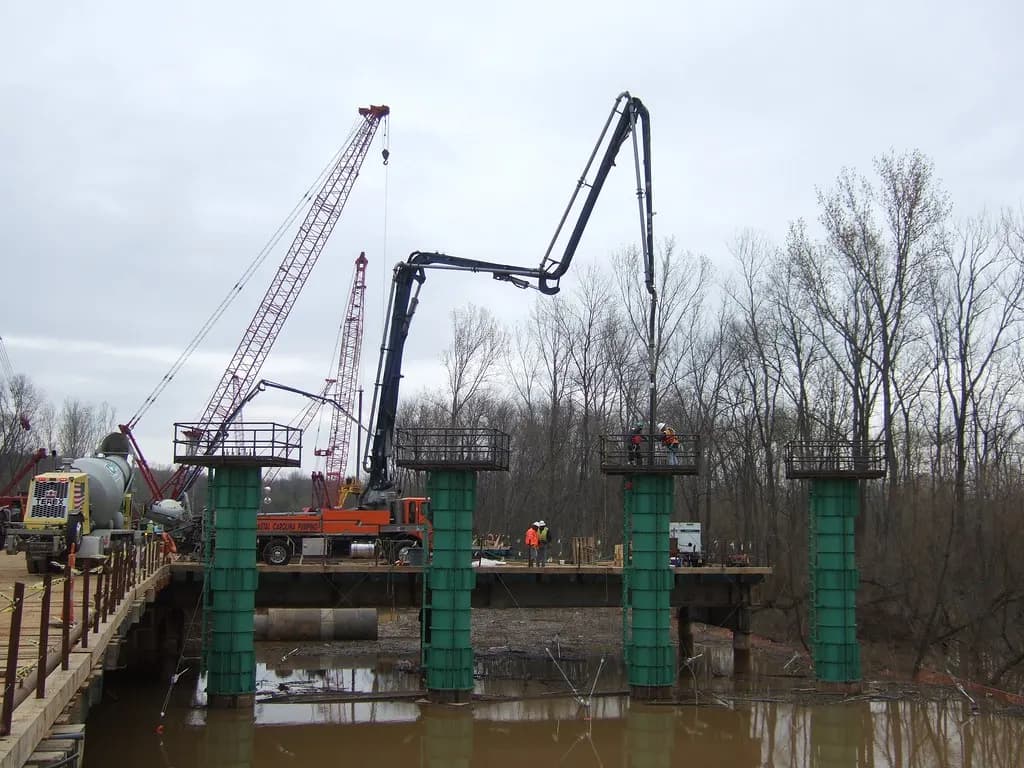
Bid bonds. When a federal solicitation requires a bid guarantee, it must be at least 20% of the bid price of the bid price, up to $3 million. On a $1.2 million bid, that's a guarantee of at least $240,000, usually provided as a bid bond from your surety. It guarantees that if you win, you'll sign the contract and furnish the required bonds; if you refuse, the owner can claim against it. Sureties typically issue bid bonds to established clients at little or no charge, because they're underwriting the performance bond that follows. If you can't get bonded, the SBA's Surety Bond Guarantee program backs bonds for small contractors on contracts up to $9 million for non-federal work and $14 million for federal work, with no SBA fee on bid bonds.
Performance and payment bonds. Under the Miller Act, federal construction contracts over $150,000 require a performance bond and a payment bond, generally each equal to 100% of the contract price, and contracts over $35,000 need a payment bond or other payment protection. States have their own Little Miller Acts for state and local public work, with different thresholds. Bond premiums are a real cost: include them in your bid as a line item.
Bonds on a federal construction bid
| Bond | What it guarantees | Federal amount |
|---|---|---|
Bid bond (bid guarantee) | You'll sign the contract and furnish bonds if you win | At least 20% of the bid price of the bid, up to $3 million |
Performance bond | You'll complete the work | 100% of contract price, above $150,000 |
Payment bond | Subs and suppliers get paid | 100% of contract price; payment protection above $35,000 |
Bid bond (bid guarantee)
- What it guarantees
You'll sign the contract and furnish bonds if you win
- Federal amount
At least 20% of the bid price of the bid, up to $3 million
Performance bond
- What it guarantees
You'll complete the work
- Federal amount
100% of contract price, above $150,000
Payment bond
- What it guarantees
Subs and suppliers get paid
- Federal amount
100% of contract price; payment protection above $35,000
Bid day. Public bids close at an exact time, and late bids are generally rejected however close they were. Most estimators lock their own numbers the day before and leave the last hours for sub quotes, which often arrive minutes before the deadline. Have the bid form filled in except for the totals, the bond and addendum acknowledgments attached, and one person responsible for getting it delivered or uploaded. After the opening, review the bid tabulation: where you ranked, and how far apart the bids were, tells you a lot about your pricing.
Getting started with federal work. Register your business in SAM.gov, which is free and required before you can be awarded a federal contract, and learn your NAICS codes and the small business set-asides you may qualify for. Find opportunities on SAM.gov and on state and city procurement portals.
Cash flow on public work. Federal construction payments have rules worth pricing in. Progress payments are due 14 days after the billing office receives a proper payment request, and prime contractors must pay their subs within 7 days of receiving payment of receiving payment. Retainage on federal jobs is limited to 10% and is meant only for unsatisfactory progress, but state, local and private contracts often hold 5% to 10% as a matter of course until completion. If retainage will tie up your profit for months, your bid needs to carry the financing cost.
Change orders: pricing work that wasn't in the bid
Almost every job changes. The owner adds outlets, the architect revises a detail, or you open a wall and find rot. A change order is a written amendment to the contract that changes the scope, price or schedule. Treat each one as a small bid: quantities, labor, materials, equipment, subs, then overhead and profit at the rate your contract allows, plus any extra days.
Worked example. During the tenant buildout, the owner asks for six more power outlets and to move a wall two feet. Your carpenters need 16 hours at $48, or $768; materials cost $420; the electrical sub quotes $1,850. Direct cost is $3,038. Your contract allows 20% for overhead and profit on changes, so the change order is $3,646, plus two days added to the schedule. Get the owner's signature before the work starts.
A change order process that gets you paid
- 1
Flag the change in writing the same day
Email or a field notice: what changed, who asked, and that it's extra to the contract.
- 2
Price it like a bid
Labor, materials, equipment and subs, plus contract overhead and profit, plus schedule impact.
- 3
Get it signed before you do the work
CSLB on contracts and change ordersSome laws require this. California says home improvement change orders must be written and signed by both parties before the change.
- 4
Track it separately
Give each change its own cost code so you can see whether it made money.
- 5
Bill it with the next progress payment
Add approved changes to the schedule of values; don't let them pile up until the end.
Don't let small changes slide. Ten "no charge" favors of $500 each are $5,000 of profit given away, and undocumented changes are the main source of payment disputes at the end of a job.
Common bidding mistakes
The most common mistake is missing scope: an item in the specs but not on the drawings, a sub quote with exclusions nobody read, or an addendum that changed a finish. A bid checklist and a written sub-leveling sheet prevent most of these. The second is using a borrowed overhead percentage instead of your own, so a business with a $300,000 overhead budget bids as if it had half that. The third is confusing markup with margin.
On public jobs, the expensive mistakes are procedural: a late bid, an unsigned form, a missing bid bond or addendum acknowledgment. Any one can make a bid nonresponsive. Finally, don't let the desire to win drive the number down. If you can't win the job at a price that covers your costs, the right move is usually not to win it.
Official links
- FAR 28.101-2 — bid guarantees20% of bid, up to $3 million
- FAR 28.102-1 — Miller Act bondsPerformance and payment bond thresholds
- FAR 14.408-1 — award of sealed bidsResponsive and responsible bidders
- FAR 52.232-27 — prompt payment for constructionPayment timing for primes and subs
- SBA — surety bondsSurety Bond Guarantee program
- SAM.govRegister to bid federal contracts
What to do next
Build a bid template once and reuse it: a takeoff sheet, a sub-leveling sheet, a cost summary with your real overhead rate, and a proposal with standard exclusions and a change order clause. Use the markup calculator to check that your markup delivers the margin you need, the concrete calculator for concrete quantities, and the quotation generator to send a clean proposal. New to contracting? Our guides on starting a construction company and starting a roofing business cover licensing, bonding and insurance.
This is general information, not legal or tax advice — confirm on the official source or with a professional.
Frequently asked questions
Read the drawings, specifications and addenda, do a quantity takeoff, price labor, materials, equipment and subcontractors, add general conditions such as supervision and dumpsters, then add contingency, overhead and profit. Write the bid with a clear scope, inclusions, exclusions, schedule and payment terms, attach any required bid bond, and submit it on time on the owner's bid form.
There's no official rate. Overhead depends on your company's own costs, often 10% to 20% of job cost for a small contractor, and profit is commonly 5% to 15% depending on risk and competition. In our worked example, overhead of 12%, profit of 8% and a 3% contingency add up to a 24.6% markup on direct cost, which is a 19.7% gross margin on the price.
A bid bond is a surety's guarantee that if you win, you'll sign the contract and provide the required performance and payment bonds. If you walk away, the owner can claim the difference up to the bond amount. On federal jobs that require one, the bid guarantee must be at least 20% of the bid price of the bid price, up to $3 million.
On federal construction contracts over $150,000, the Miller Act requires both, generally each for 100% of the contract price. Contracts over $35,000 need a payment bond or other payment protection. Most states have similar laws, often called Little Miller Acts, for state and local public projects, with their own thresholds. Private owners can require bonds by contract.
Price it like a small bid: direct labor, materials, equipment and subcontractor costs for the changed work, plus overhead and profit at the rate your contract allows, plus any schedule time. Get it signed before you do the work. California, for example, requires home improvement change orders to be in writing and signed by both parties before the change.
In sealed bidding, generally yes, if the bidder is responsible and the bid is responsive. Federal sealed bids go to the responsible bidder whose conforming bid is most advantageous considering only price and price-related factors. A bid that misses an addendum, a bond or a required form can be rejected as nonresponsive, however low it is.
Sources & verification
Figures on this page were checked against the sources below when it was last reviewed on 11 October 2026. Each rate and limit is stored once with its own official source and review date, and official update channels are monitored daily so changes are picked up. How we verify
- 1.FAR 28.101-2 — Solicitation provision or contract clause (bid guarantees) — Federal Acquisition Regulation (acquisition.gov) · accessed 11 October 2026
- 2.FAR 28.102-1 — Performance and payment bonds (Miller Act) — Federal Acquisition Regulation (acquisition.gov) · accessed 11 October 2026
- 3.FAR 28.102-2 — Amount required — Federal Acquisition Regulation (acquisition.gov) · accessed 11 October 2026
- 4.FAR 14.408-1 — Award (sealed bidding) — Federal Acquisition Regulation (acquisition.gov) · accessed 11 October 2026
- 5.FAR 22.403-1 — Construction wage rate requirements statute — Federal Acquisition Regulation (acquisition.gov) · accessed 11 October 2026
- 6.FAR 32.103 — Progress payments under construction contracts — Federal Acquisition Regulation (acquisition.gov) · accessed 11 October 2026
- 7.FAR 52.232-27 — Prompt payment for construction contracts — Federal Acquisition Regulation (acquisition.gov) · accessed 11 October 2026
- 8.Surety bonds — U.S. Small Business Administration · accessed 11 October 2026
- 9.What is a home improvement contract? — California Contractors State License Board · accessed 11 October 2026
- 10.Producer Price Index: ready-mixed concrete (PCU327320327320) — U.S. Bureau of Labor Statistics · accessed 11 October 2026
MSMETOOLS is an independent platform and is not affiliated with any government agency, ministry or department.
Tools for this
Quotation Generator
Create professional quotes for clients.
Markup Calculator
Turn cost and markup into a selling price.
Construction Material Calculator
Estimate cement, sand and aggregate for slabs.
Profit Margin Calculator
Calculate profit, markup and margin for your products or services.
Related guides
 How to Write a Quotation (2026): Template, Terms & Tax LinesRead guide
 How to Calculate Concrete (2026): Yards, Bags & CostRead guide
 Cost-Plus Pricing (2026): Formula, Examples & ContractsRead guide
 Estimate vs Quote (2026): Binding Rules, Overruns & ChangesRead guide
Official links open the government site in a new tab.