 Starting & growing a business
How to Start a Roofing Business in 2026: Licenses, Fall Protection, Insurance, Warranties and Pricing per Square
How to start a roofing business in 2026: roofing licenses (FL, AZ, MN), OSHA fall protection, insurance, warranties and how to price a roof per square, worked.
 Edited by Sumeet YadavFounder & editor, MSMETOOLS · fact-checked against official sources
Contents (10)
- 1. Choose your roofing niche
- 2. Roofing licenses: how states differ
- 3. OSHA fall protection for roofers
- 4. Insurance for a roofing business
- 5. How to price a roof per square, with a worked example
- 6. Warranties: manufacturer vs workmanship
- 7. Storm work, insurance claims and reputation
- 8. Startup costs and equipment
- 9. Common mistakes when starting a roofing business
- 10. What to do next
Roofing is one of the most in-demand trades in the US and one of the most dangerous. Every house needs a new roof every couple of decades, storms create surges of work, and a single residential reroof can bring in more than a month of revenue for a small lawn or cleaning business. But roofing also has some of the highest insurance costs in construction, strict fall protection rules, a patchwork of state licenses and a reputation problem caused by storm chasers. This guide is for anyone starting a residential or light commercial roofing business in 2026. It covers roofing licenses with real state examples, OSHA fall protection, insurance, warranties, storm-work rules and a worked example of pricing a roof per square. Rules were checked against state licensing boards, statutes, OSHA and BLS in October 2026.
Quick answer
To start a roofing business, form an LLC, get an EIN, and get the roofing license your state requires, such as a Florida roofing contractor certificate, an Arizona R-42 or C-42 license or a Minnesota residential roofer license. Buy general liability, commercial auto and workers' compensation, equip every crew for OSHA fall protection from 6 feet, and price each roof per square from your real costs plus overhead and profit.
Florida: state roofing license; insurance minimum $100,000 liability + $25,000 property damage
Minnesota: residential roofer license, $180 fee and $15,000 bond
Arizona: R-42, C-42 or CR-42 license; the handyman exemption stops below $1,000 and never covers permitted work
OSHA: steep roofs need guardrails, nets or personal fall arrest
Our worked example sells a 24-square tear-off at about $569 a square
Choose your roofing niche
Roofing businesses differ by market and material. Residential reroofing with asphalt shingles is the largest market and the easiest entry: jobs take one to three days, homeowners pay on completion, and much of the work comes from insurance claims after hail and wind. Residential specialty roofers install metal, tile, slate or cedar, with higher prices per square and fewer competitors, but they need specialized skills and tools. Commercial low-slope roofing covers single-ply membranes such as TPO and EPDM, modified bitumen and built-up roofs on flat buildings. Commercial jobs are larger and more often bonded, with longer payment terms and more paperwork. Repair and maintenance work, such as leak repairs, flashing and inspections, needs little capital and builds a customer list for future replacements.
Most new roofers start with residential shingle replacement and repairs, often after working for another roofer as a crew leader or estimator. Decide your niche early, because it determines which license class you apply for, which manufacturers will certify you and what your insurer charges.
Roofing licenses: how states differ
There's no federal roofing license. Some states license roofing as its own trade, some include it in a general or residential contractor license, and some don't license it at all. Start by registering the business, forming an LLC (state filing fees run $35 – $500) and getting an EIN (Free ($0)); see our LLC registration guide. Then check your state's roofing rules.
Roofing licensing — state examples
| State | License | Key requirements |
|---|---|---|
Florida | Certified or registered roofing contractor (CILB) | Exam after 4 years (at least 1 as a foreman) or a college-plus-experience route; insurance $100,000 / $25,000 |
Arizona | C-42 commercial, R-42 residential or CR-42 dual roofing (ROC) | Qualifying party exams; bond $1,000 to $7,500 residential, $2,500 to $50,000 commercial |
Minnesota | Residential roofer license (DLI) | Qualifying person exam, $180 fee, $15,000 bond, liability $300,000 per occurrence (incl. $10,000 property damage) |
California | C-39 Roofing (CSLB) | Jobs of $1,000 or more; $25,000 bond; workers' comp required even with no employees |
Texas | No state roofing license | City registration and permits; voluntary industry credentials |
Florida
- License
Certified or registered roofing contractor (CILB)
- Key requirements
Exam after 4 years (at least 1 as a foreman) or a college-plus-experience route; insurance $100,000 / $25,000
Arizona
- License
C-42 commercial, R-42 residential or CR-42 dual roofing (ROC)
- Key requirements
Qualifying party exams; bond $1,000 to $7,500 residential, $2,500 to $50,000 commercial
Minnesota
- License
Residential roofer license (DLI)
- Key requirements
Qualifying person exam, $180 fee, $15,000 bond, liability $300,000 per occurrence (incl. $10,000 property damage)
California
- License
C-39 Roofing (CSLB)
- Key requirements
Jobs of $1,000 or more; $25,000 bond; workers' comp required even with no employees
Texas
- License
No state roofing license
- Key requirements
City registration and permits; voluntary industry credentials
Florida
Florida law defines a roofing contractor as one whose services are unlimited in the roofing trade, including installing, maintaining and repairing roofing and waterproofing. You can be a certified roofing contractor, who passes the state exam and can work anywhere in Florida, or a registered roofing contractor, licensed by a local jurisdiction and limited to it. To sit the certification exam through the apprenticeship route, you need 4 years (at least 1 as a foreman), and the board requires proof of financial responsibility and liability insurance of at least $100,000 for public liability and $25,000 for property damage. Florida construction employers with 1 or more employees must carry workers' compensation.
Florida also tightly regulates storm work. Since 2021, section 489.147 has barred contractors from offering homeowners a rebate, gift card, cash, deductible waiver or any other thing of value in exchange for a roof inspection or for filing an insurance claim. Advertisements that solicit roof claims must carry specific notices about deductibles and insurance fraud, and a contractor can't interpret the policy or adjust the claim for the owner unless it's a licensed public adjuster. Each violation can bring a fine of up to $10,000.
Arizona
Arizona's Registrar of Contractors licenses roofing as a specialty in three forms: C-42 for commercial work, R-42 for residential work and CR-42 for dual licensees doing both. The license is issued to the business, with a qualifying party who meets the experience requirement and passes the exams. Bonds are set by statute based on expected annual volume: $1,000 to $7,500 for a residential specialty license and $2,500 to $50,000 for a commercial specialty license. Residential and dual licensees must also either pay into the Residential Contractors' Recovery Fund or post an extra $200,000 bond.
Arizona's handyman exemption doesn't help much with roofing. It covers only jobs where the total price for the project is under $1,000, it doesn't apply to any work that needs a building permit, and anyone relying on it must say "not a licensed contractor" in their advertising.
Roofing in numbers
$26.65 an hour
Median roofer pay per hour
BLS, May 2025
5%
Projected job growth, 2025–2035
BLS
6 feet
OSHA fall protection trigger
100 sq ft
One roofing square
Minnesota
Minnesota's Department of Labor and Industry requires a residential roofer license for companies doing roofing on residential buildings. The company names a qualifying person who must pass the department's exam before the company applies; DLI says no prior experience or education is required to sit it, and the qualifying person must keep up continuing education. The license fee is $180, the company must file a $15,000 surety bond, and it needs liability insurance of at least $300,000 per occurrence (incl. $10,000 property damage). You can't start roofing work until the license is issued.
California and Texas
California includes roofing in its CSLB system as the C-39 Roofing classification, with the same rules as other contractors: a license for any job of $1,000 or more, 4 years within the last 10 of experience for the qualifier, two exams and a $25,000 bond. One difference matters a lot for costs: C-39 roofers can't file a workers' compensation exemption and must carry coverage whether or not they have employees. Texas has no state roofing license, so anyone can start a roofing business there, but cities require permits and some require contractor registration, and many homeowners and insurers ask for proof of insurance and voluntary industry credentials. Our construction company guide covers licensing in more states.
OSHA fall protection for roofers
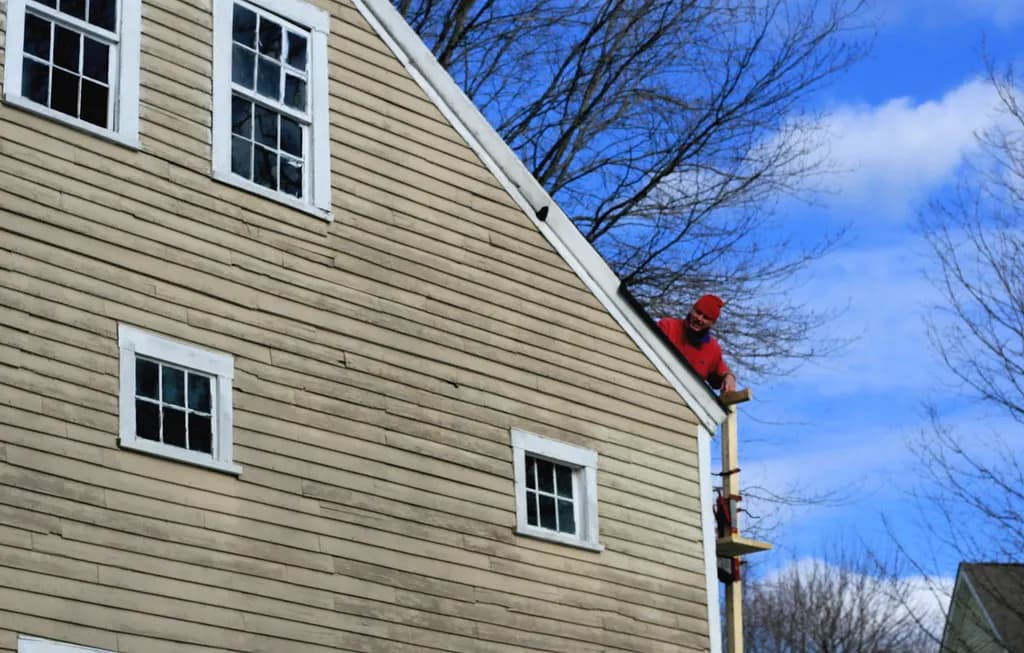
Falls are the leading cause of death in construction, and roofers face the risk every day. OSHA's construction rules in 29 CFR 1926 Subpart M apply to every roofing employer, and the trigger height is 6 feet above a lower level. What protection you use depends on the slope.
OSHA defines a low-slope roof as 4 in 12 or less and a steep roof as anything steeper. On a low-slope roof, roofers can be protected by guardrails, safety nets or personal fall arrest systems; by a warning line system combined with one of those or with a safety monitoring system; or, on roofs 50 feet wide or less, by a safety monitor alone. On a steep roof, the only options are guardrails with toeboards, safety nets or personal fall arrest systems, which in residential reroofing usually means roof anchors, lifelines and harnesses for every worker on the roof. If you can show conventional systems are infeasible on a residential job, OSHA allows a written, site-specific fall protection plan instead, but the burden is on you.
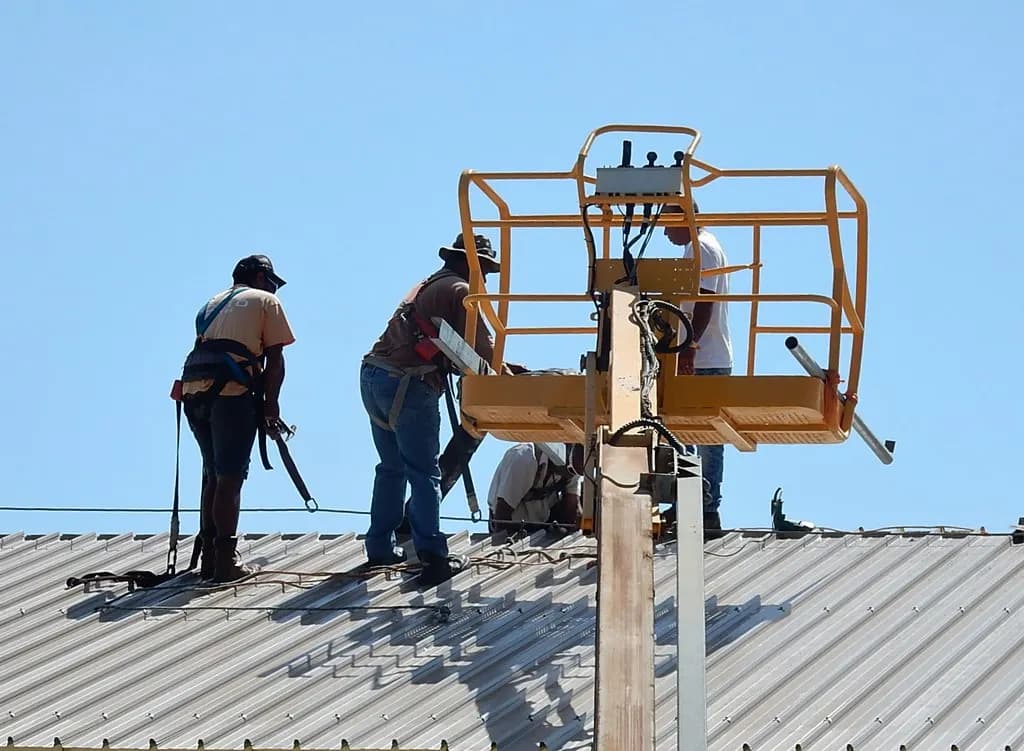
Ladders matter too. Portable ladders used to reach a roof must extend at least 3 feet above the landing, be secured and be rated for the load. Cover or guard skylights and holes, keep debris chutes and dumpsters set up so falling material can't hit anyone, and train every worker on the equipment before they go up. OSHA penalties reach $16,550 per violation for a serious violation and $165,514 per violation for a willful or repeated one, and a single inspection of a crew with no tie-offs can produce several citations.
Budget for fall protection as a cost of every job, not an extra. A harness, lanyard and rope grab for each roofer, permanent or reusable anchors and roof brackets for staging are cheap compared with one citation or one injury claim, and insurers price your workers' comp partly on your safety record.
Insurance for a roofing business
Roofing insurance is expensive because the risks are real: falls, a dropped bundle through a skylight, a tarp that blows off in a storm and lets water into a house. Plan for these policies:
General liability covers damage to the customer's property and injuries to the public. Florida and Minnesota set minimums for licensed roofers, and general contractors and commercial clients usually want $1 million per occurrence and to be named as additional insured. Read the policy for roofing exclusions: some policies exclude height work, hot work such as torch-down roofing, or work on buildings above a certain number of stories. Workers' compensation is required by most states once you hire, and roofing class codes have some of the highest rates of any trade, so it's often your largest overhead item. Commercial auto covers trucks and trailers. Inland marine covers tools, compressors and a material lift. If you do commercial work, expect to need contract bonds as well.
Paying roofers as 1099 subcontractors to avoid workers' comp is common and risky. If a "sub" works only for you, on your schedule, with your materials, they're likely an employee, and an injury can leave you paying the medical bills and back premiums. See our 1099 vs W-2 guide and our business insurance guide.
How to price a roof per square, with a worked example
Roofers price by the square, which is 100 square feet of roof surface. Measure the actual roof area, not the house footprint: a steeper pitch and overhangs make the roof larger than the floor plan. Many roofers use satellite or drone measurement reports to start, then confirm on site.
Build the price from four parts: materials with waste, labor, job costs such as disposal and permits, and overhead and profit. Waste on shingles is often around 10% on simple gable roofs and 15% or more on hip roofs and roofs with many valleys, because of cuts; check the manufacturer's coverage per bundle and order full squares.
Worked example. A 24-square house with a 6/12 pitch needs a tear-off of one layer and new architectural shingles. With 12% waste you order 27 squares of shingles. Our cost estimates, based on 2026 supplier and labor pricing, are: shingles, 27 squares at $140, $3,780; underlayment, ice and water barrier, drip edge, starter, ridge cap, vents and nails, $1,900; dumpster and disposal, $650; permit, $350. Labor is a five-person crew for two 9-hour days, 90 hours at a loaded cost of $36 an hour (wages near the BLS median of $26.65 an hour plus payroll taxes and workers' comp), $3,240. Direct cost is $9,920.
Overhead covers everything not charged to a job: office, sales, the estimator's truck, insurance not in labor, software, marketing and your salary. If you expect $210,000 of overhead and 3,000 squares a year, that's $70 a square, or $1,680 on this roof. Total cost is $11,600. To earn a 15% net margin, divide by 0.85: 11,600 ÷ 0.85 = $13,647, which you'd quote as $13,650. That's about $569 a square, within the $350 to $1,200 range that 2026 published price guides show for asphalt shingle replacement.
Try it — turn the roof's $11,600 cost into a price
A 17.6% markup on cost gives the same price as a 15% margin, which is the trap many roofers fall into: adding "15%" to cost leaves you with a 13% margin. Our markup guide explains the conversion. Price extras separately and in writing: replacing rotted decking by the sheet, extra layers to tear off, steep-pitch charges, chimney and skylight flashing, and gutter work. A clear line-item quote from our quotation generator reduces disputes when the decking turns out worse than expected.
| Line item | Our estimate | Basis |
|---|---|---|
| Shingles (27 squares) | $3,780 | 24 squares + 12% waste, rounded up |
| Underlayment, ice and water, flashing, vents, nails | $1,900 | Supplier quote |
| Dumpster and disposal | $650 | One layer of tear-off |
| Permit | $350 | Varies by city |
| Labor, 90 hours | $3,240 | $36 loaded hourly cost |
| Overhead, 24 squares | $1,680 | $70 per square |
| Profit (15% margin) | $2,050 | Price minus total cost |
| Price | $13,650 | About $569 per square |
Warranties: manufacturer vs workmanship
Homeowners see one "warranty" but there are usually two. The manufacturer's warranty covers defects in the shingles or membrane, and its length and coverage depend on the product and often on registration and installation by a certified or credentialed contractor. Enhanced manufacturer warranties that also cover labor usually require you to install the manufacturer's full system of underlayment, starter, ridge and ventilation. The workmanship warranty is your promise about the installation itself, such as leaks from flashing or nailing, and it's paid by you.
Write both clearly into your contract: what's covered, for how long, what voids it (for example, other trades cutting into the roof), and how claims are handled. Then budget for it. Set aside a small reserve per job, track every callback by crew and cause, and fix the root cause. A workmanship warranty you can't afford to honor is worse than a shorter one you can.
Storm work, insurance claims and reputation
Hail and wind storms create sudden demand, and many roofers build their business on insurance replacement work. Do it carefully. Several states regulate storm-related roofing: Florida bans incentives for roof inspections or claims, requires specific notices in claim-related ads and forbids contractors from acting as public adjusters without a license. Other states have rules on door-to-door solicitation, cancellation rights for contracts signed after a storm and out-of-state contractors. Waiving a homeowner's deductible or inflating a claim can be insurance fraud.
The safer model is to inspect honestly, document damage with photos, give the homeowner a written estimate, and let them deal with their insurer. Get a signed contract and permit before you start, and never take a large deposit for materials you haven't ordered. Reviews and referrals from neighbors last far longer than a storm season.
Startup costs and equipment
There's no official benchmark for roofing startup costs; these are our planning estimates for a small residential roofer that already owns a pickup.
Roofing business startup checklist
0/9That adds up to roughly $20,000 to $60,000 to start. Ladders, nailers and trailers can usually be deducted in the year you place them in service under Section 179 (limit $2,560,000), and manufacturers' contractor programs, suppliers' trade credit and a solid insurance history all get easier after your first year.
Common mistakes when starting a roofing business
The first mistake is working without the license, bond or insurance your state requires, which can make your contracts unenforceable and your customers' insurers refuse to deal with you. The second is pricing from a national average per square instead of your own costs, especially when workers' comp and overhead are high. The third is skipping fall protection on "quick" repair jobs: OSHA's rules don't depend on how long you're on the roof.
Others include taking large deposits and using them for payroll on an earlier job, offering deductible waivers or gift cards after storms where that's illegal, not photographing the roof before and during work, and failing to price decking replacement in the contract. Each of these can turn a profitable job into a dispute.
Official links
- Florida Statutes §489.147 — roof claim practicesIncentive and solicitation ban
- Florida rule 61G4-15.003Roofing contractor insurance minimums
- Arizona A.R.S. §32-1152 — contractor bondsBond ranges by license type
- Minnesota DLI — roofer licenseResidential roofer requirements
- CSLB — workers' compensationC-39 roofers must carry coverage
- OSHA 29 CFR 1926.501 — fall protectionLow-slope and steep roof rules
What to do next
Check your state's roofing license and bond rules, get insurance quotes before you set prices, and buy fall protection for every crew member. Then measure a few roofs and build your price per square from your own costs, using our markup calculator to hit the margin you want, and send each customer a line-item quote with the quotation generator. For bigger commercial and public jobs, our guide to writing a construction bid covers bid bonds and change orders, and our guide to starting a construction company covers licensing in more states.
This is general information, not legal or tax advice — confirm on the official source or with a professional.
Frequently asked questions
In many states, yes. Florida licenses roofing contractors through its Construction Industry Licensing Board, Minnesota requires a residential roofer license with a $15,000 bond, and Arizona's Registrar of Contractors licenses residential and commercial roofers. California requires a C-39 license above $1,000. Texas has no state roofing license, but cities may require registration.
There's no official figure. Our estimate is roughly $20,000 to $60,000 for a small residential roofer that already owns a pickup: licensing and bond, insurance deposits (workers' comp is expensive for roofing), fall protection, ladders, nail guns and compressors, a dump trailer, marketing and two to three months of overhead. A used dump truck or a material lift adds more.
A square is 100 square feet of roof surface. Measure the roof, add waste, then price materials, labor, disposal, permits, overhead and profit, and divide by the number of squares. In our worked example a 24-square architectural shingle tear-off costs $11,600 including overhead and sells for about $13,650, or $569 a square, for a 15% margin.
OSHA requires fall protection when roofers work 6 feet or more above a lower level. On steep roofs, steeper than 4 in 12, that means guardrails with toeboards, safety nets or personal fall arrest systems. Low-slope roofs can also use warning lines with a safety monitor, and a safety monitor alone on roofs 50 feet wide or less.
General liability, commercial auto and workers' compensation are the core. Roofing has some of the highest workers' comp rates of any trade, and California requires C-39 roofers to carry it even with no employees. Florida requires roofing contractors to carry at least $100,000 of liability and $25,000 of property damage coverage.
It can be. Roofing jobs are large, demand is steady from storms and aging roofs, and BLS projects roofer employment to grow about 5% from 2025 to 2035. Profit depends on accurate measurements, pricing that covers high insurance and overhead, crew productivity and avoiding warranty callbacks. Many roofers target 10% to 20% net margins, though that's a planning range, not a published benchmark.
Sources & verification
Figures on this page were checked against the sources below when it was last reviewed on 11 October 2026. Each rate and limit is stored once with its own official source and review date, and official update channels are monitored daily so changes are picked up. How we verify
- 1.Florida Statutes §489.105 — Definitions (roofing contractor) — Florida Legislature · accessed 11 October 2026
- 2.Fla. Admin. Code R. 61G4-15.003 — Financial responsibility (insurance) — Florida Construction Industry Licensing Board (via LII) · accessed 11 October 2026
- 3.Florida Statutes §489.147 — Prohibited property insurance claim practices — Florida Legislature · accessed 11 October 2026
- 4.A.R.S. §32-1121 — Persons not required to be licensed — Arizona Legislature · accessed 11 October 2026
- 5.A.R.S. §32-1152 — Bonds — Arizona Legislature · accessed 11 October 2026
- 6.License classification requirements — Arizona Registrar of Contractors · accessed 11 October 2026
- 7.Roofer license — Minnesota Department of Labor and Industry · accessed 11 October 2026
- 8.Workers' compensation requirements — California Contractors State License Board · accessed 11 October 2026
- 9.29 CFR 1926.501 — Duty to have fall protection — U.S. Occupational Safety and Health Administration · accessed 11 October 2026
- 10.29 CFR 1926.500 — Scope, application and definitions — U.S. Occupational Safety and Health Administration · accessed 11 October 2026
- 11.29 CFR 1926.1053 — Ladders — U.S. Occupational Safety and Health Administration · accessed 11 October 2026
- 12.OSHA penalties — U.S. Occupational Safety and Health Administration · accessed 11 October 2026
- 13.Roofers — Occupational Outlook Handbook — U.S. Bureau of Labor Statistics · accessed 11 October 2026
- 14.How much does a new roof really cost in 2026? — JobNimbus · accessed 11 October 2026
MSMETOOLS is an independent platform and is not affiliated with any government agency, ministry or department.
Tools for this
Quotation Generator
Create professional quotes for clients.
Invoice Generator
Create professional invoices with tax, logo and custom details.
Markup Calculator
Turn cost and markup into a selling price.
Break Even Calculator
Find your break even point and units.
Related guides
 How to Start a Concrete Business in 2026: Licenses & PricingRead guide
 How to Start a Construction Company in 2026: Full GuideRead guide
 How to Start a Painting Business in 2026: Licenses & PricingRead guide
 How to Start an HVAC Business in 2026: Licenses & PricingRead guide
Official links open the government site in a new tab.