 Finance & accounting
How to Calculate Markup: Formulas, a Margin Conversion Table and Worked Pricing Examples
How to calculate markup in 2026: the markup formula, markup vs margin conversion table, typical markups by industry, and pricing with sales tax and card fees.
 Edited by Sumeet YadavFounder & editor, MSMETOOLS · fact-checked against official sources
Contents (11)
- 1. The markup formula, step by step
- 2. Markup vs margin: why the same sale has two percentages
- 3. Get the cost right before you mark it up
- 4. Typical markups by industry
- 5. How to price with sales tax
- 6. How to build credit card fees into your price
- 7. Worked example: pricing a product from cost to card receipt
- 8. Markup for service businesses and contractors
- 9. Discounts, sales and markdowns: how fast markup disappears
- 10. Common markup mistakes and how to fix them
- 11. What to do next
Markup is the number most small businesses use to turn a cost into a price, and it's also the number most often miscalculated. This guide is for US retailers, makers, contractors and service firms who want to price with confidence. You'll get the markup formula in both directions, a markup-to-margin conversion table, typical markups by industry with their source, and step-by-step examples that carry a price all the way through sales tax and card processing fees, so the markup you plan is the markup you actually keep.
Quick answer
Markup % = (price − cost) ÷ cost × 100. To set a price, use price = cost × (1 + markup): a $40 item with a 50% markup sells for $60. Markup is measured on cost; margin is measured on price, so that same sale is only a 33.3% margin.
Convert: margin = markup ÷ (1 + markup); markup = margin ÷ (1 − margin)
A 100% markup (doubling cost) gives a 50% margin — the retail 'keystone'
Use full landed cost: purchase price plus freight-in, packaging and direct labor
Calculate markup on the pre-tax price — sales tax is collected for the state, not earned
Card fees come off the selling price, so gross the price up or your real markup shrinks
The markup formula, step by step
Markup is the amount you add to what something costs you to arrive at a selling price, expressed as a percentage of that cost. Three numbers are involved, and if you know any two you can find the third.
To find a selling price from a cost and a markup, multiply the cost by one plus the markup written as a decimal. A product that costs you $40 with a 50% markup sells for $40 × 1.50 = $60. With a 35% markup it sells for $40 × 1.35 = $54. With a 120% markup, $40 × 2.20 = $88.
To find the markup percentage from a price and a cost, subtract cost from price, divide the result by cost and multiply by 100. If you buy a jacket for $45 and sell it for $75, your markup is ($75 − $45) ÷ $45 = 0.667, or 66.7%. The $30 difference is your gross profit in dollars, sometimes called the markup amount.
To find the cost that a price and markup imply, divide the price by one plus the markup. This is useful when a supplier quotes a suggested retail price and you want to know the most you can pay. If shoppers expect to pay $90 and you need a 60% markup, the highest cost that works is $90 ÷ 1.60 = $56.25.
Two habits make the arithmetic reliable. First, always convert percentages to decimals before multiplying (60% is 0.60). Second, keep markup and margin in separate columns of your spreadsheet with clear labels, because they look alike and they are not interchangeable.
Markup vs margin: why the same sale has two percentages
Markup and margin both describe the same dollar profit, but against different bases. Markup divides profit by cost. Gross margin divides profit by the selling price. Since the price is always bigger than the cost when you make a profit, the margin percentage is always smaller than the markup percentage.
Take the $40 item sold at $60. Profit is $20. Markup is $20 ÷ $40 = 50%. Margin is $20 ÷ $60 = 33.3%. Neither number is wrong; they answer different questions. Markup tells you how much you added on top of cost. Margin tells you how much of every sales dollar you keep before overheads. Retail buyers, lenders and most accounting software talk in margin, while many owners set prices in markup. The trouble starts when someone hears "we work on 50" and doesn't ask which one.
The conversion formulas are short. Margin = markup ÷ (1 + markup) and markup = margin ÷ (1 − margin). A 25% markup is 0.25 ÷ 1.25 = 20% margin. A 40% target margin needs 0.40 ÷ 0.60 = 66.7% markup. The table below covers the conversions you'll use most, with the price each one produces on a $10 cost.
| Markup on cost | Gross margin on price | Price for a $10 cost |
|---|---|---|
| 10% | 9.1% | $11.00 |
| 20% | 16.7% | $12.00 |
| 25% | 20.0% | $12.50 |
| 33.3% | 25.0% | $13.33 |
| 40% | 28.6% | $14.00 |
| 50% | 33.3% | $15.00 |
| 66.7% | 40.0% | $16.67 |
| 75% | 42.9% | $17.50 |
| 100% | 50.0% | $20.00 |
| 150% | 60.0% | $25.00 |
| 200% | 66.7% | $30.00 |
| 300% | 75.0% | $40.00 |
Notice that margin can never reach 100%, while markup has no ceiling. A 300% markup still only gives a 75% margin. That's why high-markup products such as software, cosmetics or custom framing show triple-digit markups but margins in the 60s and 70s.
If you prefer to start from a target margin rather than a markup, skip the conversion and price directly: price = cost ÷ (1 − margin). For a 40% margin on a $10 cost, $10 ÷ 0.60 = $16.67, the same answer the table gives for a 66.7% markup. Our wholesale pricing guide uses this form to build a full price ladder from factory cost to shelf price.
Get the cost right before you mark it up
A markup is only as good as the cost it's applied to. If your cost figure leaves things out, every price built on it is too low, and the more you sell, the more you lose.
For products you buy and resell, the cost base is your landed cost: the supplier's price plus inbound freight, duties, packaging you add and any handling before the item is sellable. These are the same costs the IRS treats as part of cost of goods sold for small businesses in Publication 334, which lists purchases, the cost of labor directly tied to production, materials and supplies, and freight-in among the items that go into COGS. Our cost of goods sold guide walks through that calculation in detail.
For products you make, add direct materials, the labor that goes into each unit (including your own time at a realistic wage) and an allowance for scrap or defects. If 4% of your production is unsellable, spread that cost over the good units rather than ignoring it.
Then decide what your markup must cover beyond cost. A markup applied to product cost has to pay for everything else in the business: rent, salaries, software, insurance, marketing, card fees, returns and, finally, profit. That's why a shop with expensive Main Street rent typically needs a bigger markup than an online seller with a garage. A quick check is to add up a year's operating expenses, divide by expected annual sales at cost, and see what markup you need just to break even. If your overheads come to $120,000 and you expect to buy $200,000 of goods, you need a 60% markup to cover overheads alone ($120,000 ÷ $200,000), before any profit.
Selling costs that vary with each sale, such as marketplace commissions, outbound shipping you don't charge for, and payment processing, aren't part of product cost. But they come straight off each sale, so measure them per channel with contribution margin once you've set a price.
Typical markups by industry
Owners often ask what a "normal" markup is. The honest answer is that it depends on your costs, turnover and competition. Still, benchmarks help you spot a price that's far out of line. The table converts average gross margins for US public companies, published by NYU Stern professor Aswath Damodaran in January 2026, into the average markup each margin implies.
Average gross margin and implied markup by industry (US public companies, Jan 2026)
| Industry | Avg gross margin | Implied avg markup on cost |
|---|---|---|
Food wholesalers | 15.4% | 18.3% |
Auto parts | 15.8% | 18.8% |
Auto retail | 22.0% | 28.1% |
Grocery and food retail | 26.3% | 35.7% |
Retail distributors | 30.6% | 44.0% |
Restaurants and dining | 32.2% | 47.6% |
General retail | 33.2% | 49.7% |
Building supply retail | 34.2% | 52.0% |
Apparel | 56.9% | 131.9% |
System and application software | 71.7% | 253.6% |
Food wholesalers
- Avg gross margin
15.4%
- Implied avg markup on cost
18.3%
Auto parts
- Avg gross margin
15.8%
- Implied avg markup on cost
18.8%
Auto retail
- Avg gross margin
22.0%
- Implied avg markup on cost
28.1%
Grocery and food retail
- Avg gross margin
26.3%
- Implied avg markup on cost
35.7%
Retail distributors
- Avg gross margin
30.6%
- Implied avg markup on cost
44.0%
Restaurants and dining
- Avg gross margin
32.2%
- Implied avg markup on cost
47.6%
General retail
- Avg gross margin
33.2%
- Implied avg markup on cost
49.7%
Building supply retail
- Avg gross margin
34.2%
- Implied avg markup on cost
52.0%
Apparel
- Avg gross margin
56.9%
- Implied avg markup on cost
131.9%
System and application software
- Avg gross margin
71.7%
- Implied avg markup on cost
253.6%
Read these as estimates with clear limits. They are averages across large listed companies, whose cost accounting differs from a small shop's: restaurant chains, for example, put far more than food into cost of sales, so the figure isn't a food-cost target. Big chains also buy at volume discounts a small business can't get. Use the table to sanity-check, not to set your price. If you run a small grocery and your average markup is 80%, either your costs are unusual or your shelf prices will be hard to defend against the supermarket down the road.
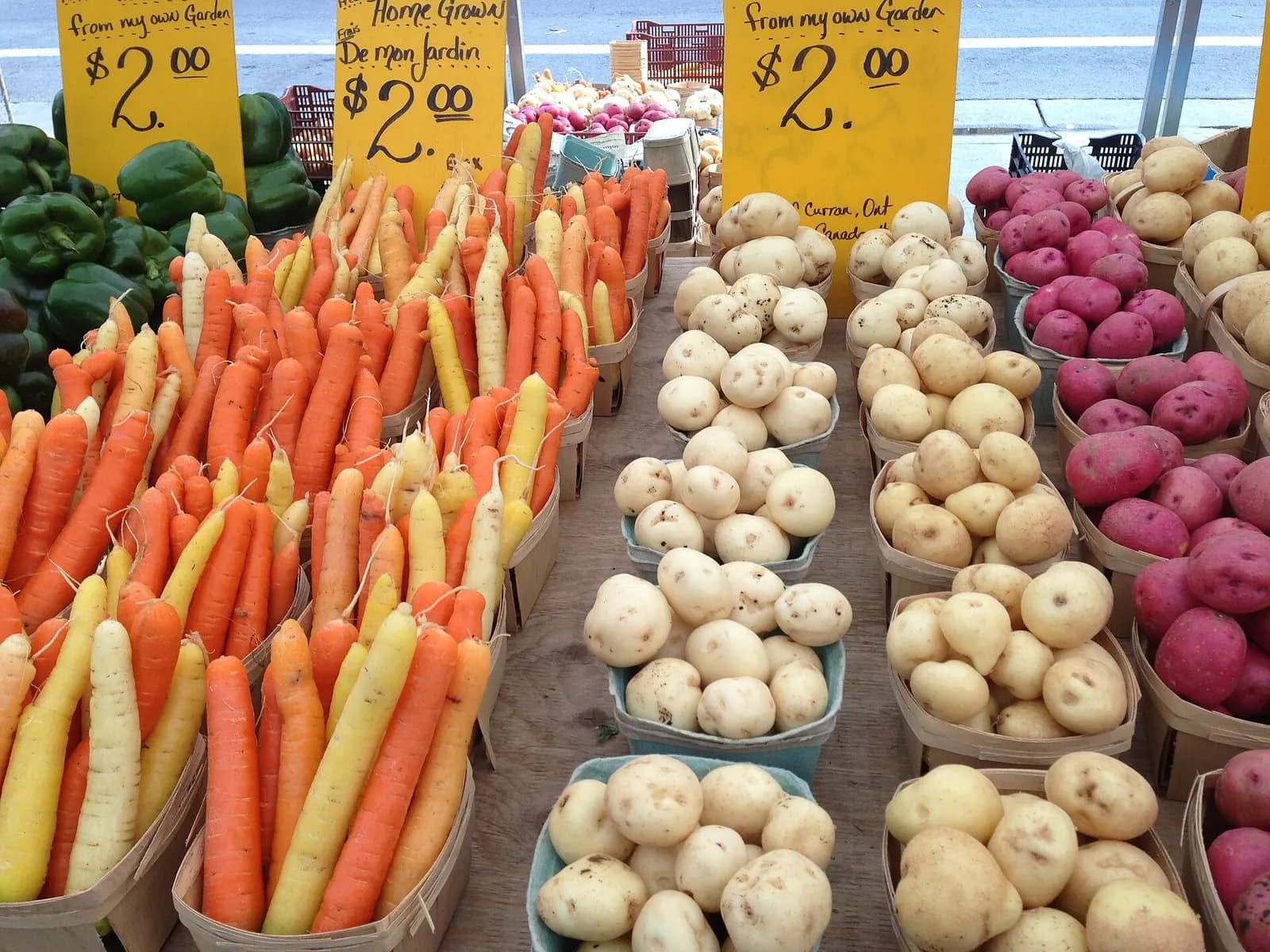
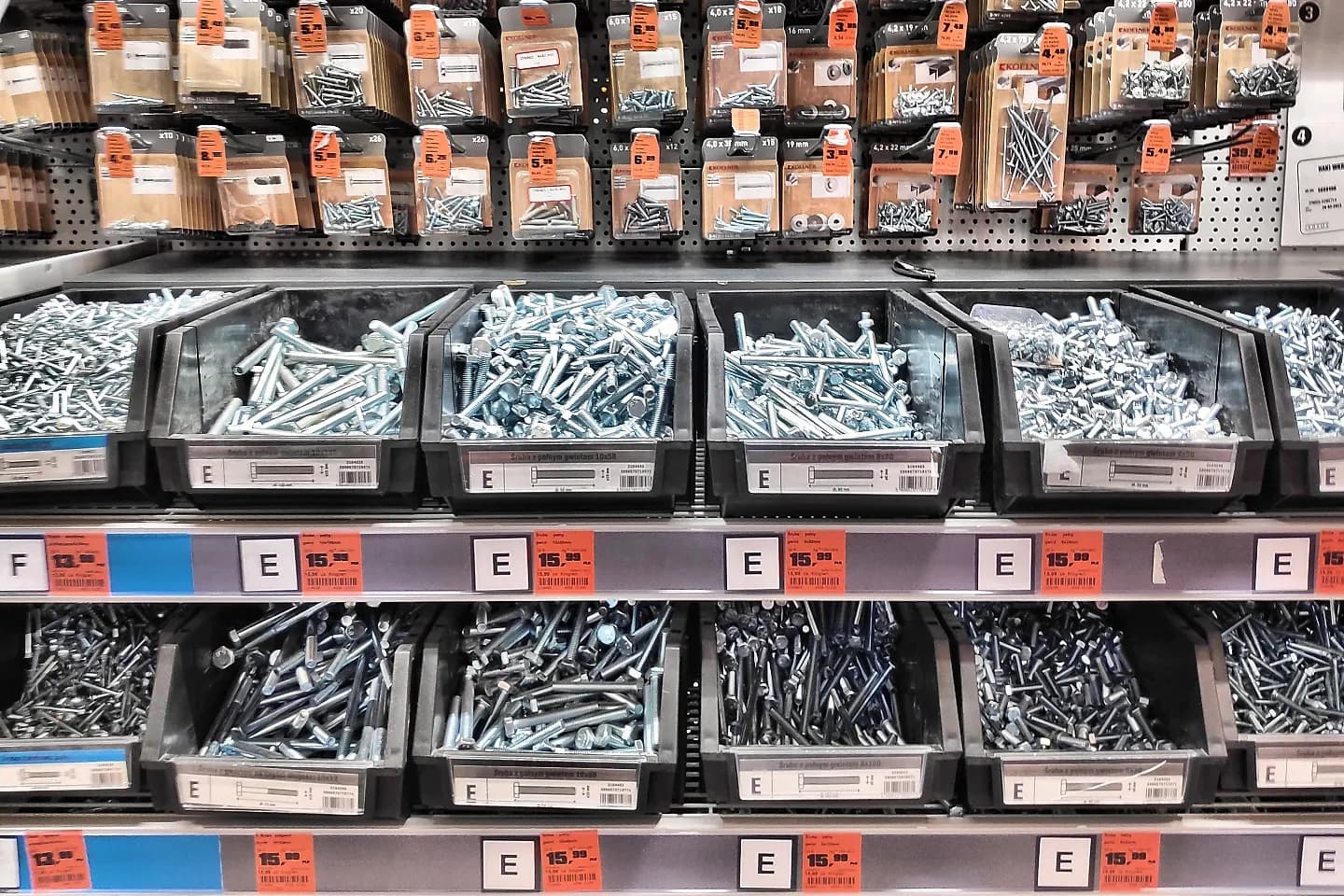
Within a single store, markups vary a lot by item. Grocers often run thin markups on staples like milk and eggs and much fatter ones on deli, flowers and prepared foods. Hardware stores make little on lumber and much more on fasteners and small parts sold by the piece. A blended markup across your whole catalog is what pays the bills, so look at sales mix as well as individual prices.
How to price with sales tax
Sales tax sits on top of your price. You collect it from the customer and pass it to the state (and in many states, to the county or city as well). It isn't revenue and it isn't part of your markup, so always calculate markup and margin on the pre-tax price.
Say you run a shop in Orlando. Florida's state sales tax rate is 6% and Orange County adds a discretionary sales surtax of 0.5%, so the combined rate is 6.5%. You price a $40-cost item at $60 with a 50% markup. At the register the customer pays $60 plus $3.90 tax, or $63.90. You keep $60; the $3.90 goes to the Florida Department of Revenue. Your markup is still 50%.
Problems appear when you advertise a tax-included price, which some businesses do for round numbers at markets, bars or events. If you want everything to cost an even $65 including tax, the pre-tax price is $65 ÷ 1.065 = $61.03, and $3.97 of each sale is tax. Your markup on the $40 item is ($61.03 − $40) ÷ $40 = 52.6%, not the 62.5% you'd get if you forgot the tax was inside the $65. Whenever you set a tax-inclusive price, divide by one plus the combined rate first, then check your markup on what's left. Make sure your point-of-sale system and receipts show the tax correctly, because states expect you to report and remit tax on the pre-tax amount.
Rates differ by location, and some states tax certain goods at reduced rates or exempt them entirely, such as groceries in many states. Our guide on how to calculate sales tax explains combined rates and how to look them up, and the Florida sales tax guide covers the county surtax and its $5,000 single-item cap.
The Orlando example at a glance
$60.00
Pre-tax price on a $40 cost
50% markup
6.5%
Combined rate
6% state + 0.5% Orange County
$63.90
Customer pays
$3.90 goes to the state
$61.03
Pre-tax part of a $65 tax-included price
How to build credit card fees into your price
Card processing fees are usually a percentage of the transaction plus a small fixed amount. A common flat online rate is 2.9% + 30¢ per successful domestic card charge. Because the fee is taken from the selling price, not the cost, it erodes your markup more than many owners expect.
On a $60 sale, a 2.9% + 30¢ fee is $2.04, so you net $57.96. Your effective markup on a $40 cost falls from 50% to 44.9%. To net the full $60 you need to gross up the price: price = (target net + fixed fee) ÷ (1 − percentage fee) = ($60 + $0.30) ÷ 0.971 = $62.10.
There's one more wrinkle. Processors charge their percentage on the whole amount the card is charged for, and that includes the sales tax you collected. In Orlando at 6.5%, a customer paying by card on a $62.10 item is charged $66.14, and the fee is calculated on $66.14. To net exactly $60 after a fee that also applies to tax, the formula becomes price = (target net + fixed fee) ÷ (1 − fee% × (1 + tax rate)) = $60.30 ÷ (1 − 0.029 × 1.065) = $62.22. The difference is small on one sale but adds up over a year of transactions.
Most shops don't price each item this precisely. A practical approach is to work out your average processing cost as a percentage of card sales from last year's statements, then add that percentage to the margin you target when you set markups across the board. If cards cost you 3.1% of card sales and 85% of your sales are on cards, build in about 2.6% (3.1% × 85%).
Try it — a $40 item at a 50% markup
Card surcharges and cash discounts: check your state's rules
Instead of building fees into every price, some businesses add a separate surcharge for card payments or offer a cash discount. These are regulated at the state level, and card networks have their own rules and caps that your processor will spell out. Three examples show how much the rules vary:
Card surcharge rules in three states
| State | Surcharge allowed? | Key conditions |
|---|---|---|
New York (GBL § 518, from Feb 11, 2024) | Yes, with conditions | Post the highest total card price (excluding sales tax); surcharge ≤ your card cost; no itemized 'processing fee' on receipts; up to $500 per violation |
California (SB 478, from July 1, 2024) | Avoidable card fees may be shown separately | If you accept only cards, the fee is mandatory and must be in the advertised price; sales tax and reasonable shipping can be separate |
Massachusetts (G.L. c. 140D § 28A) | No | Sellers can't surcharge credit card purchases, including through a third party (Division of Banks) |
New York (GBL § 518, from Feb 11, 2024)
- Surcharge allowed?
Yes, with conditions
- Key conditions
Post the highest total card price (excluding sales tax); surcharge ≤ your card cost; no itemized 'processing fee' on receipts; up to $500 per violation
California (SB 478, from July 1, 2024)
- Surcharge allowed?
Avoidable card fees may be shown separately
- Key conditions
If you accept only cards, the fee is mandatory and must be in the advertised price; sales tax and reasonable shipping can be separate
Massachusetts (G.L. c. 140D § 28A)
- Surcharge allowed?
No
- Key conditions
Sellers can't surcharge credit card purchases, including through a third party (Division of Banks)
New York's rule is the one that catches most small businesses out. Since the 2024 amendment, a blanket sign saying "3% fee on all card payments" next to cash prices isn't enough: the dollar price for card payment has to be posted, and Erie County's consumer protection office notes that itemizing a convenience or processing fee on the receipt isn't allowed. California's Attorney General draws the line at whether the customer can avoid the fee; Massachusetts doesn't allow the fee at all.
At the federal level, the FTC's Rule on Unfair or Deceptive Fees, effective May 12, 2025, requires total-price advertising for live-event tickets and short-term lodging. If you sell either, mandatory fees must be in the price you show up front. For everyone else, building fees into your markup is the simplest way to stay on the right side of these rules and avoid irritating customers at checkout.
Worked example: pricing a product from cost to card receipt
Here's a complete example for a gift shop in Orlando that buys ceramic planters from a supplier. The shop wants a 50% gross margin after card fees, which is the keystone norm in gift retail.
Step 1 — landed cost. Supplier price $15.00, freight-in $1.80 per unit, tissue and gift box $0.70. Landed cost: $17.50.
Step 2 — first-pass price. A 50% margin is a 100% markup: $17.50 × 2 = $35.00.
Step 3 — check the card fee. With combined sales tax of 6.5%, a card customer is charged $37.28. At 2.9% + 30¢ the fee is $1.38, so the shop nets $33.62. Gross profit falls to $16.12, a real margin of 46.1% and a markup of 92%.
Step 4 — gross up. To keep $17.50 of profit after fees: ($35.00 + $0.30) ÷ (1 − 0.029 × 1.065) = $36.42. The shop rounds to a shelf price of $36.99.
Step 5 — confirm. At $36.99 the card total is $39.39, the fee is $1.44, and the shop nets $35.55, a gross profit of $18.05 on the $17.50 cost: a 48.8% margin of the shelf price and a 103% markup after fees.
The extra $1.99 on the shelf price is what keeps the shop at its planned profit. Across 2,000 planters a year, skipping step 4 would cost about $2,760 in profit ($17.50 planned minus $16.12 actual, times 2,000 units), roughly the price of another 160 planters at cost.
Markup for service businesses and contractors
Service businesses use markup in two ways. The first is on materials and subcontracts: a plumber, electrician or remodeler buys parts and materials and charges the customer more than cost to cover the time spent sourcing, collecting and warrantying them. If a contractor pays $800 for fixtures and applies a 25% markup, the customer's line item is $1,000. Be consistent and say so in your quote or contract if the customer has a right to see cost; some contracts, such as cost-plus jobs, spell out exactly what markup is allowed.
The second is on labor. If you pay a technician $30 an hour and employer payroll taxes, insurance and benefits add another $9, the labor cost is $39 an hour. Billing that hour at $95 is a markup of 144% on labor cost. That markup has to cover unbillable time (driving, estimating, training), the van, tools, insurance, office staff and profit. Many trades price from a target hourly rate rather than a markup on wages, which comes to the same thing; our hourly rate calculator works it out from your costs and billable hours.
When you put prices in front of a customer, list the totals clearly and keep your internal markup math off the page. Our guide to writing a quotation shows how to set out materials, labor, tax and validity dates so the price you quote is the price that sticks.
Discounts, sales and markdowns: how fast markup disappears
Markup also tells you how much room you have to discount. Because a percentage discount comes off the price, not the cost, it takes a bigger bite out of profit than its size suggests. On the $60 item with a $40 cost, a 20% off sale drops the price to $48. Profit falls from $20 to $8, a 60% cut in profit for a 20% cut in price. At 33% off, you're selling at cost.
A useful rule: the maximum discount you can give before you hit cost equals your margin percentage, not your markup percentage. With a 50% markup (33.3% margin), anything beyond 33.3% off loses money on every unit before you even count overheads and card fees. Use the discount calculator to see what a promotion does to profit before you print the signs.
Markdowns on slow stock are sometimes the right decision, because cash tied up in old inventory has a cost too. Just make the decision with the numbers in front of you, and adjust future buying so the same product doesn't need marking down again.
Before you set or change a price
0/7Common markup mistakes and how to fix them
Using markup when the buyer meant margin. If a retailer asks for "50 points" and you price with a 50% markup, they'll earn a third less than they expected. Ask which one they mean, and quote margins to retail buyers.
Marking up the purchase price only. Leaving out freight and packaging is the fastest way to discover that a best-seller barely breaks even. Recalculate landed cost whenever supplier prices or shipping rates change.
Including sales tax in your markup. If your till or spreadsheet treats the tax-inclusive total as revenue, your reported markup and margin are overstated and your sales tax return may not reconcile. Keep tax in its own account.
Ignoring fees that scale with price. Card fees, marketplace commissions and sales-rep commissions all rise with the selling price. Gross the price up or include them in your target margin.
One markup for everything. A single storewide markup is simple but leaves money on the table on low-competition items and overprices commodities that shoppers compare. Set markups by category and watch the blended result.
Never revisiting prices. Costs rarely stand still. Review your markups at least once a year, and immediately after a supplier increase, a rent change or a jump in card costs.
Official references
- IRS Publication 334 — Tax Guide for Small BusinessWhat goes into cost of goods sold
- NY GBL §518 surcharge rules (Erie County summary)Posting the total card price
- California AG — Honest Pricing Law (SB 478)Mandatory fees in advertised prices
- Massachusetts Division of Banks — Opinion 98-239Ban on card surcharges
- FTC — Rule on Unfair or Deceptive FeesLive-event tickets and short-term lodging
What to do next
Pick your ten best-selling items, recalculate their landed cost, and run each through the markup calculator to see the markup and margin you're really earning. Then check what card and marketplace fees take with the payment fee calculator and adjust prices where the numbers fall short. If you sell to other businesses as well as to consumers, the wholesale pricing guide shows how to leave room for retailers, and the contribution margin guide helps you compare channels.
This is general information, not legal or tax advice — confirm on the official source or with a professional.
Frequently asked questions
Markup percentage = (selling price − cost) ÷ cost × 100. To go the other way and find a price, use selling price = cost × (1 + markup). An item that costs $40 with a 50% markup sells for $40 × 1.5 = $60. The $20 difference is your gross profit per unit, before overheads such as rent, wages and card fees.
Divide the markup by one plus the markup: margin = markup ÷ (1 + markup). A 50% markup is 0.5 ÷ 1.5 = 33.3% margin, and a 100% markup is a 50% margin. To convert margin back to markup, use markup = margin ÷ (1 − margin), so a 40% margin needs a 66.7% markup.
No. A 50% markup on a $10 cost gives a $15 price and a $5 profit, which is only a 33.3% margin. To earn a 50% margin you need a 100% markup, pricing the item at $20. Confusing the two is the most common pricing error and leaves roughly a third less profit than planned.
Before. Sales tax isn't your revenue: you collect it for the state and pass it on, so markup and margin are always worked out on the pre-tax price. If you advertise tax-included prices, back the tax out first by dividing the total by one plus the combined rate, then measure your markup on what's left.
Treat the fee as a percentage of the sale, not of cost. Gross up the price: price = (target net + fixed fee) ÷ (1 − percentage fee). To net $60 on a 2.9% + 30¢ plan, charge about $62.10, or slightly more if the fee also applies to the sales tax you collect. Separate card surcharges are restricted in some states.
There's no single number. Public-company data from NYU Stern for January 2026 implies average markups of about 18% for food wholesalers, 36% for grocery retail, 50% for general retail and over 130% for apparel brands. Your markup must cover your own overheads and profit, so start from your costs and check it against what competitors charge.
Sources & verification
Figures on this page were checked against the sources below when it was last reviewed on 9 October 2026. Each rate and limit is stored once with its own official source and review date, and official update channels are monitored daily so changes are picked up. How we verify
- 1.Publication 334 (2025), Tax Guide for Small Business — IRS · accessed 9 October 2026
- 2.NYS General Business Law §518 changes — February 11, 2024 — Erie County Department of Consumer Protection (New York) · accessed 9 October 2026
- 3.SB 478 — Honest Pricing Law (hidden fees) — California Attorney General · accessed 9 October 2026
- 4.Summary of Selected Opinion 98-239 — Massachusetts Division of Banks · accessed 9 October 2026
- 5.FTC Rule on Unfair or Deceptive Fees to take effect on May 12, 2025 — Federal Trade Commission · accessed 9 October 2026
- 6.Margins by sector (US), January 2026 — NYU Stern — Aswath Damodaran · accessed 9 October 2026
- 7.Stripe pricing — Stripe · accessed 9 October 2026
MSMETOOLS is an independent platform and is not affiliated with any government agency, ministry or department.
Tools for this
Markup Calculator
Turn cost and markup into a selling price.
Profit Margin Calculator
Calculate profit, markup and margin for your products or services.
Payment Processing Fee Calculator
Calculate Stripe, PayPal, Square and gateway fees.
Sales Tax Calculator (US)
Calculate sales tax for all US states and cities.
Related guides
 Net Profit Margin (2026): Formula, Benchmarks & ExamplesRead guide
 Wholesale Pricing (2026): Formula, Keystone & MAP ExplainedRead guide
 Gross Profit Margin (2026): Formula, Benchmarks & ExamplesRead guide
 How to Calculate ROI (2026): Formula, Examples & MarginsRead guide
Official links open the government site in a new tab.