 Starting & growing a business
How to Start a Pressure Washing Business in 2026: Water Rules, Chemicals, Equipment and Pricing
How to start a power washing business in 2026: stormwater and wash water rules, OSHA chemical safety, lead paint, insurance, equipment costs and pricing per sq ft.
 Edited by Sumeet YadavFounder & editor, MSMETOOLS · fact-checked against official sources
Contents (11)
- 1. Pressure washing vs soft washing: choose your services
- 2. Register the business
- 3. Stormwater and wash water rules
- 4. Chemicals and OSHA hazard communication
- 5. Lead paint: when pressure washing becomes renovation
- 6. Insurance
- 7. Equipment and startup costs
- 8. Pricing pressure washing: per hour, per square foot
- 9. Winning your first customers
- 10. Common mistakes new pressure washing businesses make
- 11. What to do next
Pressure washing is one of the fastest service businesses to start: a truck, a commercial pressure washer, a surface cleaner and a few driveways to show off on social media. What separates a business that lasts from a summer side hustle is the part nobody films: where the dirty water goes, how you handle bleach-based soft-wash chemicals safely, whether a paint-stripping job brings lead rules into play, insurance that actually covers property damage, and prices built from your real costs. This guide is for anyone starting a pressure washing or power washing business in 2026. It covers registration, stormwater and wash water rules, OSHA chemical safety, lead-safe rules, insurance, labelled equipment costs and pricing per square foot from a worked example. Rules were checked against EPA, OSHA and state agency sources in October 2026.
Quick answer
To start a pressure washing business, form an LLC or register a DBA, get an EIN and a local business license, buy general liability and commercial auto insurance, and start with a commercial gas pressure washer, a surface cleaner and a soft-wash setup. Keep soapy or dirty wash water out of storm drains, follow OSHA rules for chemicals once you hire, use lead-safe practices when stripping paint on pre-1978 homes, and price from your hourly cost.
No state trade license in most states; local business license, entity and EIN (Free ($0))
Wash water with soap, chemicals, oil or paint shouldn't reach storm drains: capture it and dispose of it properly
Stripping paint on pre-1978 homes over 20 square feet of exterior surface needs an EPA-certified firm
Our worked example charges $125 an hour, about 16 cents a square foot for a driveway, with a $150 minimum
Solo startup estimate: about $5,000 to $15,000 if you already own a truck
Pressure washing vs soft washing: choose your services
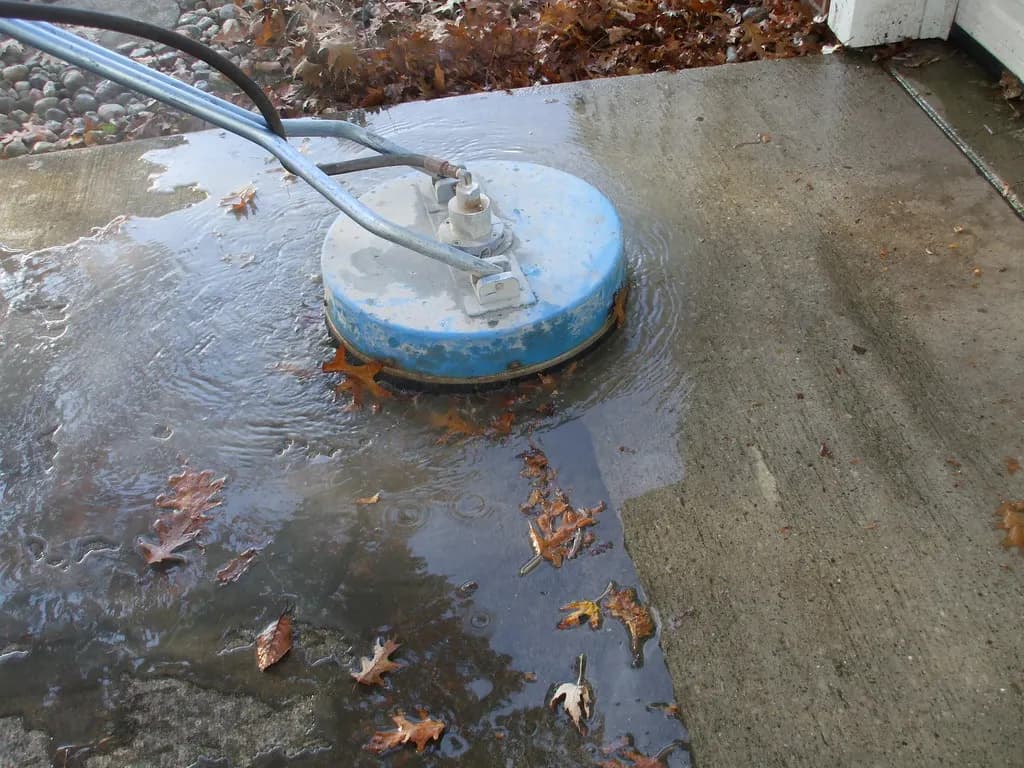
"Pressure washing" covers two quite different methods, and most successful businesses offer both. Pressure washing uses high-pressure water, often with a rotary surface cleaner, to clean hard surfaces: concrete driveways, sidewalks, patios, pool decks, parking areas, dumpster pads and drive-throughs. Soft washing uses low pressure with a cleaning solution, usually diluted sodium hypochlorite plus a surfactant, to clean house siding, roofs, stucco and fences where high pressure would damage the surface or force water behind it.
Pressure washing vs soft washing
| Pressure washing | Soft washing | |
|---|---|---|
Surfaces | Concrete, pavers, pool decks, dumpster pads | Siding, roofs, stucco, fences, painted surfaces |
Pressure | High, often with a surface cleaner | Low, similar to a garden hose |
What cleans | Water force (hot water for grease) | Cleaning solution, usually diluted sodium hypochlorite |
Main risks | Etching, wood damage, runoff | Plant damage, chemical burns, runoff |
Surfaces
- Pressure washing
Concrete, pavers, pool decks, dumpster pads
- Soft washing
Siding, roofs, stucco, fences, painted surfaces
Pressure
- Pressure washing
High, often with a surface cleaner
- Soft washing
Low, similar to a garden hose
What cleans
- Pressure washing
Water force (hot water for grease)
- Soft washing
Cleaning solution, usually diluted sodium hypochlorite
Main risks
- Pressure washing
Etching, wood damage, runoff
- Soft washing
Plant damage, chemical burns, runoff
Residential work, such as house washes, driveways, decks and fences, pays well per job but is seasonal and depends on constant marketing. Commercial work, such as storefronts, restaurant drive-throughs, gas station pads, parking garages, fleet washing and HOA common areas, often comes as recurring contracts at night or early morning, which smooths cash flow and fills the winter in warmer states. Decide early which you want, because commercial clients will ask for higher insurance limits and sometimes for hot-water equipment for grease.
Register the business
There's no federal pressure washing license, and most states don't license the trade. Start with the registrations every business needs. An LLC is a sensible choice because a pressure washer can etch concrete, strip paint, break a window or flood a crawl space, and you want claims to stay with the business. State LLC filing fees run $35 – $500, and an EIN from the IRS is Free ($0). Then get the city or county business license. Our guides to LLC registration, the EIN application and business licenses cover each step.
Check two more things. Some states tax building cleaning and similar services, so ask your state revenue department whether you need to collect sales tax. And if a job includes repairs or construction, such as replacing deck boards or sealing and staining, check whether your state's contractor licensing rules kick in above a job value.
Before your first paid job
0/6Stormwater and wash water rules
This is the part competitor guides skip, and the part that brings fines. Storm drains in streets and parking lots usually carry water straight to streams, lakes or the ocean with no treatment. Under the Clean Water Act, municipalities with separate storm sewer systems (MS4s) must run programs to find and eliminate illicit discharges. EPA's guidance describes an illicit discharge as generally any discharge into a permitted storm drain that isn't entirely stormwater. Each MS4 permit lists allowable exceptions, typically things like firefighting water and residential car washing, not commercial cleaning runoff. Cities enforce this through local ordinances, often with fines per violation.
Pressure washing water is a problem because it carries what you clean off: oil and grease from driveways and drive-throughs, food waste from restaurant pads, paint chips, sediment, and the detergents or chlorine you add. Washington's Department of Ecology notes that water from pressure washing and steam cleaning is likely to carry more pollutants than cold, low-pressure rinsing. Discharging pollutants to waters of the United States without an NPDES permit violates the Clean Water Act, and cities pass that responsibility on to the contractor doing the work.
How to handle wash water in practice
Washington's guidance for mobile washers gives a clear model that many cities follow in some form. Wash water must be collected and discharged to a municipal wastewater system, reused in a closed-loop system, or hauled to a treatment facility. Work happens on an impervious surface, with portable containment extending at least 4 feet on all sides when washing vehicles or equipment on porous ground, and a wash pit or vacuum recovery unit collects the water. Where the work area drains to a storm sewer, you plug the drain temporarily and pump the collected water to the sanitary sewer or haul it away.
Handling wash water on a job
Step 1
Walk the site: find storm drains and slopes
Step 2
Cover or plug drains; set berms
Step 3
Wash and recover water with a vacuum
Step 4
Sanitary sewer
with permission
Step 5
Or haul to treatment
keep disposal records
Rules vary by city and by what you're cleaning. Some cities allow clear-water rinsing of sidewalks with no detergent to go to landscaping; others require recovery for all commercial work. Restaurant and fuel station jobs usually need full recovery because of grease and oil. Ask your city's stormwater or environmental services office for its mobile surface cleaning guidance, and keep records of where you disposed of recovered water. Commercial clients increasingly ask for this in contracts, and a written water recovery plan helps you win bids.
Chemicals and OSHA hazard communication
Soft washing relies on chemicals that can hurt people, plants and property. Sodium hypochlorite burns skin and eyes and kills plants; degreasers can be strongly alkaline; and some rust and concrete cleaners are acids. Mixing chlorine with acids or ammonia-based products releases toxic gas, so store and mix them separately.
Once you have employees, OSHA's Hazard Communication Standard applies. You need labels on every container, including the spray tanks you fill from bulk drums, a safety data sheet for each hazardous chemical available to workers, and training on the hazards and protective equipment. OSHA updated the standard in 2024 (effective July 19, 2024), and later extended its compliance dates by four months; the changes mostly affect labels and safety data sheets from suppliers, so ask for current versions. Provide chemical-resistant gloves, eye protection and boots, and keep an eyewash bottle on the truck.
Protect the customer's property too. Pre-wet plants and lawn before soft washing and rinse them afterward, cover outlets and light fixtures, close windows, and test chemicals on a small area of painted or stained surfaces. Some states regulate products labeled to kill mold, mildew or algae as pesticides, which can bring applicator licensing for work done for hire. If you advertise "mold removal" or "algae killing", ask your state department of agriculture whether a license applies.
Lead paint: when pressure washing becomes renovation
Houses built before 1978 may have lead-based paint. EPA's Renovation, Repair and Painting (RRP) rule applies to work for pay that disturbs painted surfaces in pre-1978 homes, child care facilities and kindergartens. The rule's definition of renovation expressly includes surface preparation that can create paint dust, such as sanding or scraping, and removing painted surfaces. Pressure washing that strips or blasts off paint to prepare for repainting falls into that territory.
Work is exempt as minor repair and maintenance only if it disturbs 20 square feet or less of painted surface outside, or 6 square feet per room inside, and doesn't use prohibited practices. Above that, the job must be done by an EPA- or state-certified firm with a certified renovator, using lead-safe work practices and containment. Renovator certification from hands-on training lasts five years. A gentle house wash that removes dirt and mildew isn't usually paint disturbance, but peeling paint coming off under the wand is. If you'll offer paint prep, get certified; if you won't, train your crew to stop when paint starts lifting on an older home.
Insurance
Pressure washing claims are mostly about property damage: etched concrete, stripped paint, water forced behind siding or into a crawl space, broken windows, dead shrubs and chemical stains on cars. Your insurance needs to match that risk.
- General liability with limits your commercial clients require; ask how it handles damage to property you're working on, often called care, custody and control.
- Commercial auto for the truck, plus coverage for the trailer and what it carries.
- Inland marine or tools and equipment coverage for the pressure washer, pumps and tanks, which a business auto policy may not cover.
- Workers' compensation once you hire, required in most states.
- Pollution liability, worth asking about if you do commercial or fleet work where runoff carries oil or chemicals.
Ask the broker about exclusions for roof work, water intrusion and chemical damage to plants. Premiums depend on your state, services, revenue and claims history, so get two or three quotes.
Equipment and startup costs
There's no official figure for pressure washing startup costs, so the table below is our estimate, based on typical retail prices for commercial-grade equipment. Prices vary by brand, region and whether you buy new or used.
| Item | Estimate | Notes |
|---|---|---|
| Commercial gas cold-water pressure washer (4 GPM or more) | $1,000–$3,500 | Flow (GPM) matters more than PSI for speed |
| Hot-water pressure washer (optional, for grease) | $6,000–$15,000 | Needed for restaurant pads and fleet work |
| Surface cleaner(s) | $200–$1,500 | Biggest time-saver on flat concrete |
| Soft-wash pump system and chemical tank | $800–$3,000 | 12-volt pump systems are common |
| Water tank (200–525 gallons) | $300–$1,500 | Lets you work where the spigot is weak |
| Hoses, reels, wands, tips, ladders, PPE | $700–$2,000 | Keep spare tips, O-rings and unloaders |
| Water recovery vacuum, berms and drain covers | $1,000–$6,000 | Often required for commercial work |
| Trailer or skid setup | $2,000–$8,000 | Optional at first if gear fits the truck |
| Insurance, licenses, LLC, branding, website | $1,500–$4,000 | First-year estimate |
| Total, solo operator with a truck | About $5,000–$15,000 | Full trailer rig: about $20,000–$45,000 |
Equipment usually qualifies for Section 179 or bonus depreciation in the year you start using it; see our depreciation guide. If you use the IRS standard mileage rate for the truck, it's 72.5 cents per mile for business miles from January 1 to June 30, 2026 and 76 cents per mile from July 1, 2026. You'll also owe quarterly estimated taxes on your profit as a sole proprietor or single-member LLC owner.
Pricing pressure washing: per hour, per square foot
Most homeowners compare prices per job, and many competitors quote per square foot. Both are fine as long as the number comes from your costs. The worked example below is illustrative; every figure is an assumption to replace with your own.
Assumptions. A solo owner-operator works about 30 weeks a year with about 25 billable hours a week, or 750 billable hours. Fixed costs are $27,000 a year: truck payment $9,600, equipment payments $4,800, insurance $3,000, marketing $6,000, phone, software and accounting $1,200 and other overhead $2,400. Job costs (fuel, chemicals, water, wear parts) average about $15 per billable hour. The owner wants $55,000 a year in pay before income tax.
Hourly rate. ($27,000 + $55,000) ÷ 750 hours = about $109, plus $15 of job costs, gives about $125 per billable hour.
| Job (example) | Size | Time incl. setup | Price at $125/hour | Per sq ft |
|---|---|---|---|---|
| Driveway, surface cleaner | 1,000 sq ft | 1.25 hours | about $155 | about $0.16 |
| House soft wash, siding | 2,500 sq ft of siding | 2.5 hours | about $310 | about $0.12 |
| Wood deck clean | 400 sq ft | 1.5 hours | about $190 | about $0.47 |
| Commercial drive-through with water recovery | 1,500 sq ft | 2.5 hours | about $310 | about $0.21 |
Set a minimum charge, such as $150, because driving to a site and setting up takes time no matter how small the job. Charge extra for heavy staining, rust or oil removal, second stories and water recovery. Compare your numbers with local competitors' published prices; if your rate is far above the market, look first at your fixed costs and your billable hours, not your price.
Try it — billable hours to cover your fixed costs
At $125 an hour with $15 of job costs, the business covers its $27,000 of fixed costs after about 246 billable hours. Every hour after that goes toward the owner's pay. If your season is short, recurring commercial contracts, holiday light installation or gutter cleaning can fill the gap.
Winning your first customers
Pressure washing sells on visible results, so start with before-and-after photos taken from the same angle, posted on a Google Business Profile and your social accounts. Neighborhood density matters as much as it does in lawn care: once you've cleaned one driveway on a street, offer the neighbors a small discount for booking the same day, which cuts your drive time and setup per job.
For steadier work, approach businesses that need cleaning on a schedule: restaurants with drive-throughs and dumpster pads, gas stations, property managers, HOAs and retail centers. They care less about the lowest price and more about reliability, night or early-morning scheduling, proof of insurance and a written plan for handling wash water. A one-page capability sheet listing your services, equipment, insurance limits and water recovery method sets you apart from operators who only quote driveways. Ask satisfied residential customers for reviews right after the job, while the result is still obvious, and book repeat cleanings for the following year before you leave.
Common mistakes new pressure washing businesses make
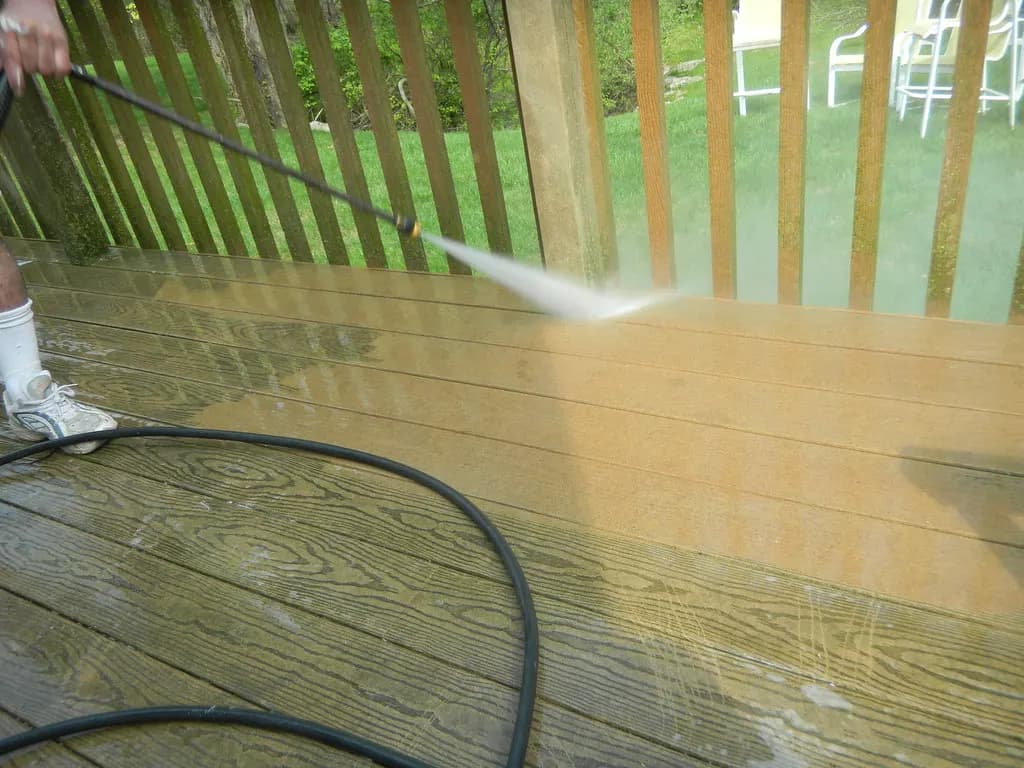
Using too much pressure. High pressure etches concrete, scars wood and forces water behind siding. Use the right tip, distance and soft-wash methods for anything that isn't hard flat concrete.
Letting runoff reach the storm drain. One complaint from a neighbor can lead to a city notice of violation. Plan water handling before you start spraying.
Skipping the walk-around. Photograph existing damage, cracks, loose paint and oxidized siding before you start, and get the customer to acknowledge it. It's your best defense against claims.
Pricing per square foot from someone else's list. Your costs, travel time and market aren't theirs. Start from your hourly rate.
Ignoring paint on older homes. On pre-1978 houses, paint coming off under the wand can turn a wash into a regulated renovation.
Official links
- EPA — Illicit discharge program development (BMP fact sheet)Why wash water can't go to storm drains
- Washington Ecology — Vehicle washwater BMP manualMobile washer collection and disposal
- OSHA — Hazard communicationLabels, safety data sheets, training
- EPA — Lead RRP program rulesFirm and renovator certification
- 40 CFR 745.83 — RRP definitionsMinor repair thresholds
What to do next
Call your city's stormwater or environmental services office and ask what it requires for mobile surface cleaning; that answer shapes your equipment list. Then work out your own hourly rate with the hourly rate calculator, and send your first estimates with the quotation generator. If you want to grow into a fixed site, our car wash business plan covers wastewater permits and membership economics, and our guides to starting a cleaning business and starting a landscaping business cover services you can sell to the same customers.
This is general information, not legal or tax advice — confirm on the official source or with a professional.
Frequently asked questions
Usually not a state trade license. You'll need a business entity or DBA, an EIN, and a local business license, plus sales tax registration in states that tax cleaning services. Check three special cases: wash water discharge rules in your city, lead-safe certification if you strip paint on pre-1978 homes, and possible pesticide licensing if you apply products labeled to kill mold or algae.
Generally no, if it contains soap, chemicals, oil or paint. Storm drains usually flow straight to streams, and municipal stormwater programs treat non-stormwater discharges as illicit. Use drain covers or berms, recover the water with a vacuum, and send it to a sanitary sewer with permission, or as your city allows. Washington's guidance says mobile washers must collect wash water for proper disposal.
There's no official figure. Our estimate is about $5,000 to $15,000 for a solo operator who already owns a pickup: a commercial gas pressure washer, surface cleaner, hoses, a soft-wash pump, a water tank, water recovery gear, insurance and marketing. A trailer rig with a hot-water unit and a larger tank typically runs $20,000 to $45,000.
Build your rate from costs and time, then convert to square feet. In our worked example, a solo operator needs about $125 per working hour. A 1,000-square-foot driveway taking about 1.25 hours including setup costs about $155, or roughly 16 cents a square foot, with a $150 minimum. Market ranges are wide, so check local quotes.
At minimum, general liability that covers damage to customers' property, commercial auto for the truck and trailer, and inland marine or equipment coverage for the rig. Add workers' compensation once you hire. Ask your broker specifically whether the policy covers damage from water intrusion, chemicals on plants and surfaces, and work on roofs.
It can be, because equipment costs are modest and jobs are short. Profit depends on billable hours and seasonality. In our example, an owner-operator working 750 billable hours a season at $125 an hour earns about $55,000 after covering $27,000 of fixed costs and job costs. Recurring commercial contracts, such as storefronts, dumpster pads and drive-throughs, smooth the off-season.
Sources & verification
Figures on this page were checked against the sources below when it was last reviewed on 9 October 2026. Each rate and limit is stored once with its own official source and review date, and official update channels are monitored daily so changes are picked up. How we verify
- 1.Stormwater best management practice: illicit discharge detection and elimination program development — U.S. Environmental Protection Agency · accessed 9 October 2026
- 2.Stormwater best management practice: municipal vehicle and equipment washing — U.S. Environmental Protection Agency · accessed 9 October 2026
- 3.About NPDES — U.S. Environmental Protection Agency · accessed 9 October 2026
- 4.Vehicle and equipment washwater discharges: best management practices manual (WQ-R-95-056) — Washington State Department of Ecology · accessed 9 October 2026
- 5.Hazard communication — Occupational Safety and Health Administration · accessed 9 October 2026
- 6.Hazard communication standard 2024 update — compliance date extension — Occupational Safety and Health Administration · accessed 9 October 2026
- 7.Lead renovation, repair and painting program rules — U.S. Environmental Protection Agency · accessed 9 October 2026
- 8.40 CFR 745.83 — Definitions — U.S. EPA (via Legal Information Institute) · accessed 9 October 2026
MSMETOOLS is an independent platform and is not affiliated with any government agency, ministry or department.
Tools for this
Freelance Hourly Rate Calculator
Work out the hourly rate you need to charge.
Break Even Calculator
Find your break even point and units.
Quotation Generator
Create professional quotes for clients.
Invoice Generator
Create professional invoices with tax, logo and custom details.
Related guides
 How to Start a Landscaping Business in 2026: Full GuideRead guide
 Car Wash Business Plan 2026: Water Rules, Costs & MembersRead guide
 How to Start a Rubbish Removal Business in 2026Read guide
 How to Start a Concrete Business in 2026: Licenses & PricingRead guide
Official links open the government site in a new tab.