 Starting & growing a business
How to Start a Landscaping Business in 2026: Licenses, Equipment, Pricing and Seasonal Labor
How to start a landscaping or lawn care business in 2026: pesticide and contractor licenses by state, equipment costs, per-visit pricing, seasonality and H-2B.
 Edited by Sumeet YadavFounder & editor, MSMETOOLS · fact-checked against official sources
Contents (11)
- 1. Landscaping vs lawn care: choose your service model
- 2. Register the business
- 3. The licenses that catch landscapers out
- 4. Equipment and startup costs
- 5. How to price lawn care, with a worked example
- 6. Sales tax on lawn care and landscaping
- 7. Insurance and employees
- 8. Seasonality: keeping cash flowing all year
- 9. H-2B seasonal workers: how the program works
- 10. Common mistakes when starting a landscaping business
- 11. What to do next
Landscaping and lawn care is one of the most common first businesses in the US, because you can start with a pickup, a mower and a few neighbors who'd rather not cut their own grass. Growing it into a real company is harder. The owners who last know which jobs need a state license, what their equipment really costs per visit, how to price a lawn from the minutes it takes, and how to keep cash coming in when the grass stops growing. This guide is for anyone starting a landscaping, lawn mowing or lawn care business in 2026. It covers registration, the pesticide, fertilizer and contractor licenses that catch new owners out, equipment costs, a worked per-visit pricing example, sales tax, seasonality and the H-2B seasonal worker program. Rules were checked against federal and state agency pages in October 2026.
Quick answer
To start a landscaping business, form an LLC or register a DBA, get an EIN and a local business license, buy general liability and commercial auto insurance, and start with maintenance work such as mowing, trimming and cleanups, which generally needs no state trade license. Get a state pesticide applicator license before you spray weed killer for pay, and a contractor license before installation work in states that require one. Price each visit from your costs and the minutes it takes.
Mowing and routine maintenance: usually just a business license, entity and EIN (Free ($0))
Spraying any pesticide for hire: state license in most states (Texas requires it even for over-the-counter products)
Installs such as irrigation, patios and walls: contractor license in states like California (above $1,000) and Oregon
Our worked example charges $65 a visit for a typical lawn and breaks even at about 51 visits a week
H-2B seasonal visas: 66,000 a year, filed no more than 90 and no less than 75 days before the date of need
Landscaping vs lawn care: choose your service model
"Landscaping business" covers three quite different businesses, and the one you pick decides your licensing, equipment and cash flow. Lawn maintenance is recurring work: weekly or biweekly mowing, edging, string trimming, blowing, shrub trimming and seasonal cleanups. It needs the least capital and brings predictable revenue, but margins depend on how tightly you pack your route. Lawn treatment means fertilizer, weed control and pest control applications on a schedule, typically five to eight visits a year. It has high margins per hour, but nearly every state licenses pesticide application. Landscape installation covers planting, sod, mulch beds, irrigation, lighting, patios and retaining walls. Jobs are bigger and more profitable per ticket, but they bring contractor licensing in some states, more equipment and more risk.
Most new owners start with maintenance, add cleanups, mulching and aeration as upsells, then decide whether to get licensed for treatments or move into installation. Maintenance clients pay monthly and renew; installation clients pay once and must be replaced.
Register the business
There's no federal landscaping license. Start with the registrations every business needs. An LLC is the usual choice, because a mower can throw a rock through a window and a crew member can damage a sprinkler line or a car, and you want those claims to stay with the business. State LLC filing fees run $35 – $500, and the EIN from the IRS is Free ($0). Then get the business license or tax registration your city or county requires; some cities also want a home occupation permit if you park trailers and equipment at home. Our LLC registration guide, EIN guide and business licenses guide cover each step.
Check HOA and zoning rules before you park a trailer in the driveway: many neighborhoods limit commercial vehicles and outdoor equipment storage.
The licenses that catch landscapers out
The licenses that matter in landscaping are triggered by what you do, not by the name of the business. Three activities need attention: applying pesticides, applying fertilizer in some states, and construction-type landscaping.
Which landscaping work needs a state license?
| Work | Typical rule | Examples |
|---|---|---|
Mowing, edging, trimming, blowing, cleanups | No state trade license in most states; local business license only | California CSLB says routine yard maintenance generally needs no state license |
Weed control, insect or disease spraying for pay | State pesticide applicator license in most states | Texas: license for any pesticide on lawns and ornamentals for hire, plus a decal on each vehicle |
Fertilizer application | Varies; some states certify commercial fertilizer applicators | Florida: certification for urban landscape fertilizer, $25, valid 4 years; Texas: fertilizer-only work exempt |
Irrigation, hardscape, walls, lighting, sod installs | Contractor license in some states above a job size | California C-27 above $1,000; Oregon Landscape Contractors Board license |
Mowing, edging, trimming, blowing, cleanups
- Typical rule
No state trade license in most states; local business license only
- Examples
California CSLB says routine yard maintenance generally needs no state license
Weed control, insect or disease spraying for pay
- Typical rule
State pesticide applicator license in most states
- Examples
Texas: license for any pesticide on lawns and ornamentals for hire, plus a decal on each vehicle
Fertilizer application
- Typical rule
Varies; some states certify commercial fertilizer applicators
- Examples
Florida: certification for urban landscape fertilizer, $25, valid 4 years; Texas: fertilizer-only work exempt
Irrigation, hardscape, walls, lighting, sod installs
- Typical rule
Contractor license in some states above a job size
- Examples
California C-27 above $1,000; Oregon Landscape Contractors Board license
Pesticide applicator licenses
Federal law sets the floor. EPA's certification rule requires anyone who applies restricted use pesticides, or supervises their use, to be a certified applicator, at least 18 years old, and to recertify at intervals of no more than 5 years. Most lawn products aren't restricted use, but that doesn't get you off the hook, because states license commercial application of any pesticide, including general-use products bought at a garden center.
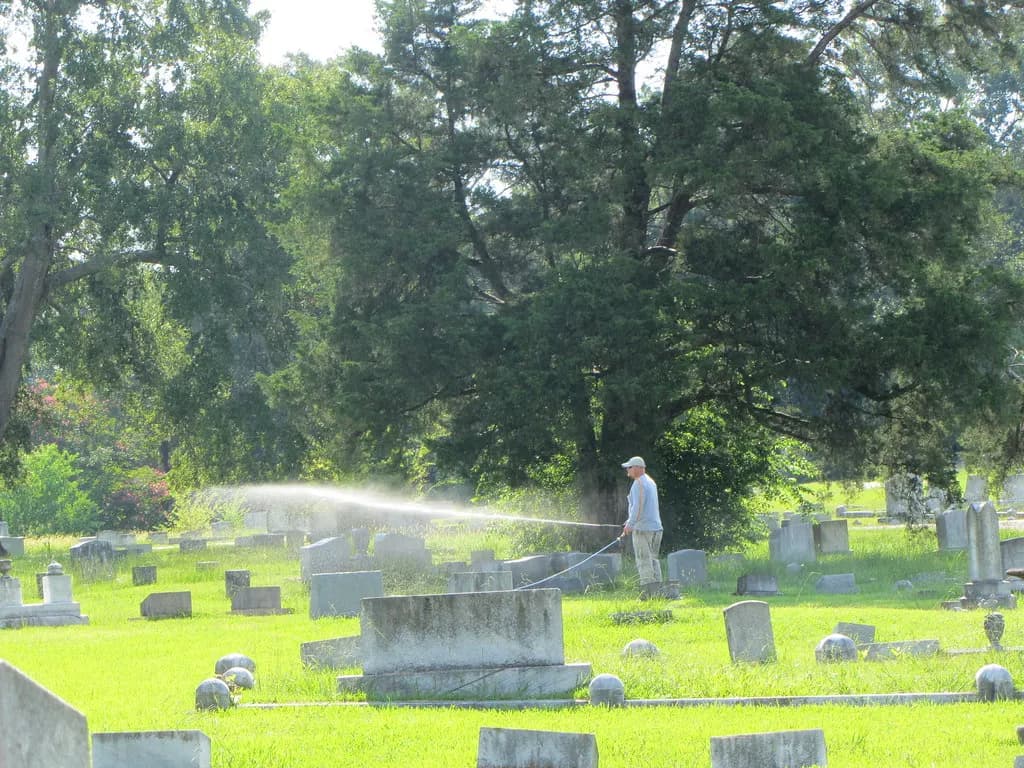
Texas is a good example of how strict this is. The Texas Department of Agriculture says anyone applying any pesticide, regardless of classification and including general-use products, to ornamental plants, trees, lawns or weeds for hire must be licensed. Landscape applicators certify in the 3A Landscape Maintenance category, or the 5 Vegetation Management category for right-of-way and industrial weed work, and every vehicle used for 3A work must carry a department-issued applicator business vehicle decal. Applicators who apply only fertilizer don't need a TDA license. Texas also allows a structural pest control license from the Structural Pest Control Service to cover lawn and ornamental work, which suits businesses that also treat homes for insects; our pest control business guide covers that route.
Other states use different names, such as commercial applicator, ornamental and turf category or lawn care operator, but the pattern is the same: exams on safety, laws and the turf and ornamental category, insurance or financial responsibility proof, a business registration and continuing education. Ask your state department of agriculture which category covers lawn treatments before you buy a sprayer.
Fertilizer certification
Fertilizer rules exist mostly to protect waterways. In Florida, anyone applying commercial fertilizer to an urban landscape must hold a limited certification from the Department of Agriculture and Consumer Services, issued after training under the state's green industry best management practices program. The statute sets the fee at $25 until the department sets it by rule, the certificate lasts 4 years, and renewal requires four classroom hours of continuing education. The certification doesn't authorize pesticide or weed-and-feed applications, which need a pest control license. Many Florida counties and cities also have fertilizer ordinances with summer blackout periods, so check locally too.
Contractor licenses for installation work
In California, the Contractors State License Board says gardeners who routinely maintain yards, by mowing, weeding and trimming shrubs, generally don't need a state license. Construction-type work does: CSLB lists irrigation systems, drainage, landscape lighting, artificial turf, plants and sod, trenching, tree trimming at 15 feet and above, and patios, walkways and walls as projects that need a licensed contractor, usually with a C-27 Landscaping license. The exemption for minor work covers jobs under $1,000 in combined labor and materials, and only when the work needs no building permit and you have no employees. A C-27 license costs a $450 application fee plus a $200 initial license fee for a sole owner, and you must file a $25,000 contractor's bond.
Oregon has a separate Landscape Contractors Board. People and businesses that offer landscape construction, such as planting lawns, shrubs and trees, irrigation, drainage, water features, fences, decks and walls, must be licensed with it, with an exemption for maintenance businesses doing work for customers who mainly buy maintenance from them. Other states fold landscaping into general home improvement contractor registration. If you plan installs, check your state's contractor board before quoting your first patio.
Equipment and startup costs
Equipment is your biggest decision, because it sets your capacity per day and your fixed costs. A solo operator can start with a commercial walk-behind mower, a string trimmer, an edger and a backpack blower on a small open trailer behind a pickup they already own. A two-person crew usually adds a stand-on or zero-turn mower, which cuts mowing time sharply on larger lawns, and a hedge trimmer. Buy commercial-grade equipment: residential mowers aren't built for 30 to 50 hours a week.
There's no official benchmark for landscaping startup costs, so the table shows our estimates for planning, based on typical new and used commercial equipment prices in 2026. Replace each line with your own quotes.
California's small engine rule. Since model year 2024, most new small off-road engines sold in California, the kind in mowers, blowers and trimmers, must be zero-emission. The rule applies to manufacturers and new equipment: CARB says you can keep using CARB-compliant gas equipment you already own, and gas generators and large pressure washers follow from 2028. California crews should budget for battery equipment and spare batteries when they replace gear, and some cities elsewhere restrict gas leaf blowers by ordinance.
| Item | Our estimate | Notes |
|---|---|---|
| LLC filing and EIN | $35 – $500 + Free ($0) | State filing fees; EIN is free |
| Commercial walk-behind mower (36–48 inch) | $3,000–$6,000 new | Used units for less; check hours and deck condition |
| Zero-turn or stand-on mower (48–60 inch) | $8,000–$15,000 new | Often financed; used units $4,000–$9,000 |
| String trimmer, edger, backpack blower, hedge trimmer | $1,500–$3,000 | Commercial gas or battery |
| Open utility trailer (6x12 to 7x16) | $2,000–$6,000 | Larger enclosed trailers cost more |
| Hand tools, safety gear, fuel cans, spare blades | $300–$800 | Hearing and eye protection for every worker |
| Insurance deposit (general liability, commercial auto) | $500–$2,000 | Depends on state, vehicles and payroll |
| Website, listings, door hangers, yard signs | $300–$1,500 | Local search listings matter most |
That puts a solo start at about $3,000 to $8,000 with an existing truck, and a two-person crew with a zero-turn and a bigger trailer at roughly $15,000 to $35,000. Mowers and trailers can usually be deducted in the year you place them in service under Section 179 (limit $2,560,000) or bonus depreciation, and up to $5,000 of startup costs is deductible in the first year; our depreciation guide explains the choice.
How to price lawn care, with a worked example
Lawn care is sold by the visit, by the month on a seasonal contract, or by the job for cleanups and installs. Whichever you show the customer, build the number from time, because time is what you're really selling. Square footage is a useful shortcut only once you know how many square feet your crew cuts per minute with your equipment.
Start with three cost buckets. Fixed costs don't change with the number of lawns: truck and equipment payments, insurance, marketing, phone and software, accounting and licenses, maintenance, and your own pay. Variable costs rise with each visit: the helper's wages and payroll taxes, fuel for the truck and mower, and wear items such as blades and trimmer line. Route density links them: every minute driving between lawns is paid time that earns nothing.
Worked example. An owner and one helper run a mowing route from March to October, 32 weeks. Fixed costs are $26,700 a year: truck payment $7,200, equipment payments $6,000, insurance $4,800, marketing $3,000, phone and software $1,200, accounting and licenses $1,500, and maintenance $3,000. Adding the owner's target pay of $50,000 gives $76,700 to cover. A typical visit to a lawn of 5,000 to 10,000 square feet takes 25 minutes on site plus 10 minutes of driving. The helper earns $19 an hour, close to the BLS median of $18.82 an hour for landscaping workers, plus about 10% for payroll taxes, so 35 minutes cost $12.20. Fuel is about $4 a visit and wear items $1.50, for $17.70 of variable cost per visit. At $65 a visit, each one contributes $47.30 toward fixed costs.
Try it — lawn visits you need to break even
The business breaks even at about 1,620 visits a season, or about 51 a week. At 14 lawns a day, that's under four days of mowing, which leaves a day a week for cleanups, mulching and the rain days that always come. Turn the same math into a price list by charging for minutes, at roughly $1.85 per crew-minute including the drive.
| Lawn size (turf area) | Time on site (2-person crew) | Price per visit |
|---|---|---|
| Under 5,000 sq ft | 20 minutes | $55 (minimum) |
| 5,000–10,000 sq ft | 25 minutes | $65 |
| 10,000–20,000 sq ft | 40 minutes | $93 |
| Over 20,000 sq ft or steep, gated, heavy trimming | Time the first visit | Quote by the minute |
Price the extras separately. Spring and fall cleanups, aeration and overseeding, mulch installation, hedge trimming and leaf removal are usually priced per job from labor hours, materials at cost plus a markup, and disposal. Biweekly service should cost more per visit than weekly, because the grass is longer and takes longer to cut and bag. Put every price on a written quote with the scope, frequency and what happens on rain days; our quotation generator creates one in a few minutes.
Sales tax on lawn care and landscaping
Landscaping services are taxable in some states and not in others, so check before you send your first invoice. Texas is the clearest example: the Comptroller treats landscaping and lawn care as taxable real property services, including mowing, edging, trimming, planting, pruning, spraying, fertilizing and watering, at the state rate of 6.25% plus local tax. A self-employed person who does the work alone, with no employees or partners, doesn't collect tax while their receipts are $5,000 or less over the last four quarters, so the moment you hire a helper or pass that amount, you need a sales tax permit. Other states, including several that don't tax most services, still tax the plants, mulch and materials you sell. Our Texas sales tax guide explains permits and filing.
Insurance and employees
Buy general liability before your first job: thrown stones, cut cables and damaged sprinkler heads are routine claims, and HOAs and commercial clients will ask for a certificate of insurance naming them as additional insured. Your personal auto policy usually won't cover a truck used for business, so add commercial auto coverage that includes the trailer. Most states require workers' compensation once you hire, and pesticide licensing in many states requires proof of liability insurance or financial responsibility. Consider inland marine or equipment coverage for mowers and trailers, which are common theft targets.
Hiring is where many lawn businesses get into trouble. A helper who works your route, on your schedule, with your equipment is an employee, not an independent contractor, and misclassification brings back taxes and penalties; see our 1099 vs W-2 guide. Train every worker on mower safety, hearing and eye protection, heat and hydration, and never let unlicensed workers mix or apply pesticides unless your state's supervision rules allow it.
Keep a mileage log for the truck. If you use the IRS standard mileage rate, it's 72.5 cents per mile for business miles driven from January 1 to June 30, 2026 and 76 cents per mile from July 1, 2026. You can't switch to the standard rate for a truck after claiming Section 179 or bonus depreciation on it, and the standard rate can't be used if you operate five or more vehicles at the same time, so larger fleets deduct actual costs. As a sole proprietor or single-member LLC owner, you'll also pay quarterly estimated taxes on your profit.
Seasonality: keeping cash flowing all year
In most of the country, mowing runs about 28 to 36 weeks a year, and revenue drops to almost nothing in winter while truck payments and insurance keep coming. Plan for it from day one.
A typical year in a mid-latitude climate looks like this:
- January–February: sell seasonal contracts, file H-2B paperwork, service equipment, plow snow.
- March–April: spring cleanups, first mows, pre-emergent treatments, mulch installs.
- May–August: peak mowing, irrigation checks, hedge trimming, installs.
- September–October: aeration and overseeding, first fall cleanups.
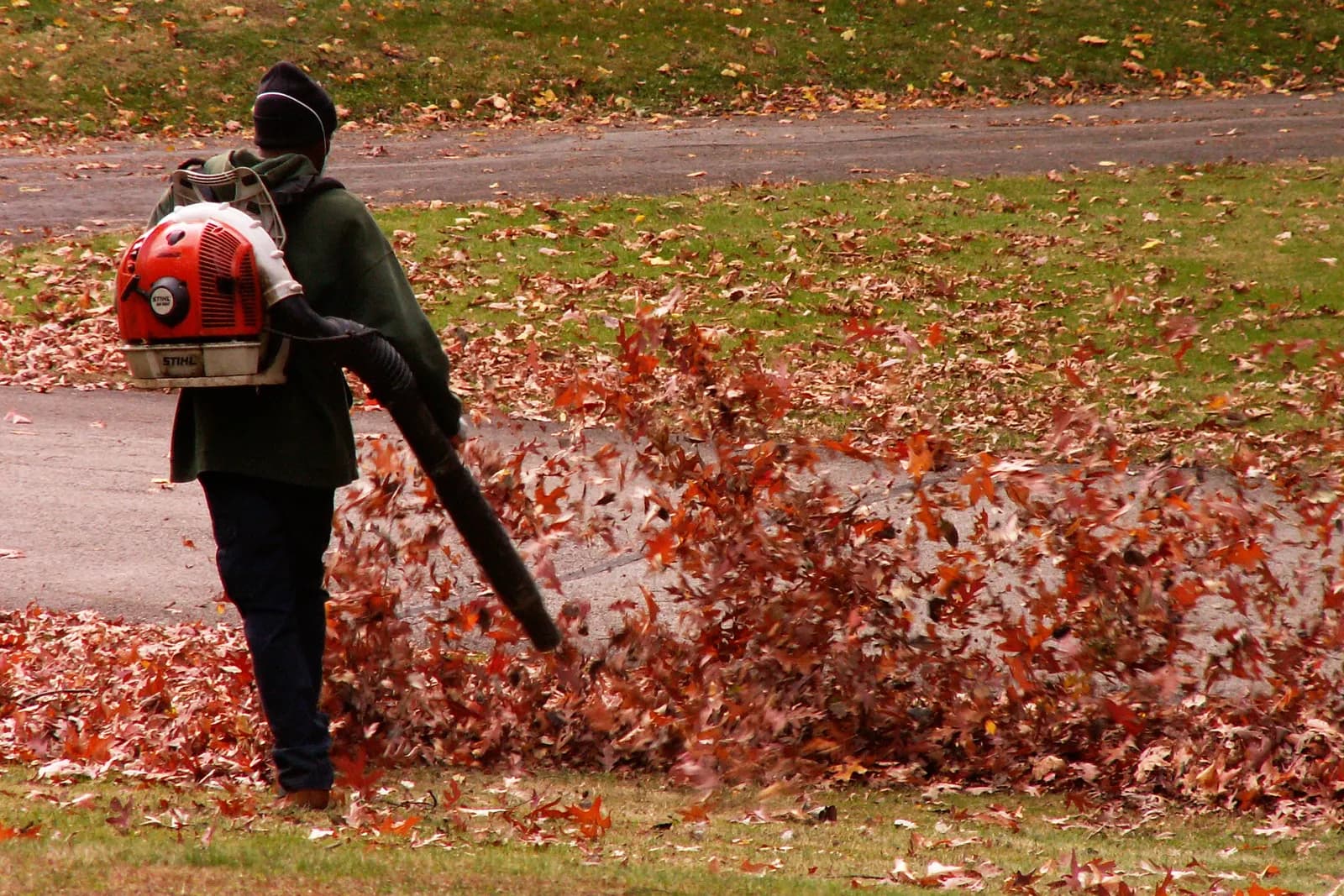
- November–December: leaf removal, gutter cleaning, holiday lighting, winterizing irrigation.
The most reliable fix is to sell seasonal or annual contracts billed in equal monthly installments, for example a 32-visit mowing season billed over 10 or 12 months. Customers like the predictability, and you get cash in winter, though you'll need to track what you've earned versus collected. Add winter services that fit your equipment: snow plowing and shoveling in the north, holiday light installation, firewood, gutter cleaning, or tree and shrub pruning during dormancy. In the South and West, year-round growth means less of a gap but tougher price competition. Keep three months of fixed costs in reserve before your first winter.
H-2B seasonal workers: how the program works
Landscaping is one of the largest users of the H-2B program, which lets US employers hire foreign workers for temporary, non-agricultural jobs. The need must be temporary, normally a seasonal or peak-load need of up to 9 months, and the job full-time.
H-2B steps for a landscaping employer
- 1
Request a prevailing wage determination
File with DOL's National Prevailing Wage Center. DOL suggests starting about 60 days before you need the determination.
- 2
File the labor certification (Form ETA-9142B)
DOL H-2B programFile no more than 90 and no less than 75 days before the date of need, with the job order sent to your state workforce agency.
- 3
Recruit US workers
Within 14 days of the notice of acceptance: ads, contacting former US workers and any recruitment DOL directs. Hire qualified US applicants who apply.
- 4
File Form I-129 with USCIS
Once certified, petition USCIS, subject to the cap.
- 5
Workers apply for visas
Workers interview at a US consulate abroad, then travel for the start date.
The problem is the cap. Congress allows 66,000 H-2B visas a year: 33,000 for workers starting between October 1 and March 31, and 33,000 for April 1 to September 30. Demand is far higher than supply. For the first half of fiscal year 2027, USCIS reached the cap with a final receipt date of September 4, 2026, before most employers' start dates. For fiscal year 2026, DHS and DOL issued a temporary rule allowing up to 64,716 extra visas, but only for employers who attested they would suffer irreparable harm without the workers, and that rule expired on September 30, 2026. Whether supplemental visas are offered again is decided each year, so don't build a business plan that only works with H-2B labor.
For an April 1 start date, the labor certification window opens about January 1, which is why many landscapers file on the first possible day and use agents or attorneys. You must pay at least the prevailing wage, cover certain travel and visa costs, and offer the same terms to US workers in the same jobs.
Common mistakes when starting a landscaping business
The first mistake is spraying weed killer without a license because the product came from a hardware store. It's one of the easiest violations for a state inspector or a competitor to spot, especially in states with vehicle decal rules. The second is quoting installs, such as irrigation or a paver patio, without the contractor license your state requires; in California that can leave you unable to collect payment. The third is pricing from competitors' flyers without timing your own visits, which can mean losing money on every large lawn.
The fourth is a scattered route. Ten lawns spread across a county earn less than eight on two streets, so turn down far-flung clients or price the drive in. The fifth is skipping written agreements: a simple service agreement covering frequency, rain days, payment terms and cancellation prevents most disputes. Finally, many owners forget winter. Without contracts billed monthly or a winter service, the first December can wipe out the summer's profit.
Official links
- Texas Department of Agriculture — pesticides on lawns, trees and ornamentals3A licensing and vehicle decals
- Florida Statutes §482.1562Commercial fertilizer certification
- CSLB — gardener or landscaping contractor?When California landscaping work needs a license
- EPA — certification standards for pesticide applicatorsFederal applicator rules
- Texas Comptroller — landscaping and lawn care servicesSales tax on lawn care
- USCIS — H-2B cap countCap status by half-year
- DOL — H-2B programPrevailing wage and labor certification
What to do next
Decide your service model first: maintenance only, maintenance plus treatments, or installs. Then call your state department of agriculture about pesticide and fertilizer licensing, and your contractor board if you'll do installation work. Time a few lawns with your own equipment, plug your numbers into the break-even calculator to set your per-visit price, and send your first quotes with the quotation generator. Our guides on starting a cleaning business and starting a junk removal business cover services you can offer the same property managers and homeowners.
This is general information, not legal or tax advice — confirm on the official source or with a professional.
Frequently asked questions
For mowing, edging, trimming and cleanups, usually only a general business license, an entity or DBA and an EIN. Two activities trigger state licenses: applying pesticides or weed killers for pay, which most states license, and construction-type landscaping such as irrigation, patios and walls, which states like California and Oregon license. California's minor work exemption ends at $1,000.
In most states, yes, even for products sold over the counter. Texas, for example, says anyone applying any pesticide to lawns, trees, shrubs or ornamentals for hire must be licensed, and each vehicle used must carry a decal. Fertilizer-only work is exempt in Texas, but Florida requires a fertilizer certification costing $25 for commercial fertilizer application on urban landscapes.
There's no official figure. Our estimate is $3,000 to $8,000 if you already own a pickup and start with a commercial walk-behind mower, trimmer, edger and blower on a small trailer. A starter crew with a used zero-turn mower and an enclosed or larger open trailer typically needs $15,000 to $35,000, before the truck.
Price by the time a visit takes, not by a competitor's flyer. In our worked example, a two-person crew with $76,700 of yearly fixed costs including the owner's pay and about $17.70 of variable cost per visit charges $65 for a typical 5,000 to 10,000 square foot lawn, with a $55 minimum. Larger lawns are priced by the extra minutes on site.
Yes. Landscaping is one of the largest users of H-2B seasonal visas. The cap is 66,000 a year, split into two halves of 33,000, and both halves fill quickly. Employers need a prevailing wage determination and a labor certification filed no more than 90 and no less than 75 days before the date of need, then a USCIS petition. Plan at least five months ahead.
It can be, mainly through route density and recurring contracts. In our example, the business breaks even at about 1,620 visits a season, roughly 51 a week over 32 weeks. Owners who add higher-margin services such as aeration, mulching, cleanups and installs, and fill winter with snow removal or holiday lighting, smooth out the seasonal cash gap.
Sources & verification
Figures on this page were checked against the sources below when it was last reviewed on 9 October 2026. Each rate and limit is stored once with its own official source and review date, and official update channels are monitored daily so changes are picked up. How we verify
- 1.Applying pesticides to lawns, trees, ornamentals — Texas Department of Agriculture · accessed 9 October 2026
- 2.Florida Statutes §482.1562 — Limited certification for urban landscape commercial fertilizer application — Florida Legislature · accessed 9 October 2026
- 3.Gardener or landscaping contractor — what's the difference? — California Contractors State License Board · accessed 9 October 2026
- 4.Before applying for a license — California Contractors State License Board · accessed 9 October 2026
- 5.Certification standards for pesticide applicators — U.S. EPA · accessed 9 October 2026
- 6.Landscaping and lawn care services (Publication 94-112) — Texas Comptroller of Public Accounts · accessed 9 October 2026
- 7.CARB approves updated regulations requiring most new small off-road engines be zero emission by 2024 — California Air Resources Board · accessed 9 October 2026
- 8.Cap count for H-2B nonimmigrants — U.S. Citizenship and Immigration Services · accessed 9 October 2026
- 9.H-2B program — U.S. Department of Labor, Office of Foreign Labor Certification · accessed 9 October 2026
- 10.20 CFR 655.15 — Requirements for filing — U.S. Department of Labor (via LII) · accessed 9 October 2026
- 11.FY2026 H-2B supplemental visas temporary final rule — Federal Register (DHS and DOL) · accessed 9 October 2026
- 12.Grounds maintenance workers — U.S. Bureau of Labor Statistics · accessed 9 October 2026
- 13.Standard mileage rates — Internal Revenue Service · accessed 9 October 2026
MSMETOOLS is an independent platform and is not affiliated with any government agency, ministry or department.
Tools for this
Break Even Calculator
Find your break even point and units.
Quotation Generator
Create professional quotes for clients.
Invoice Generator
Create professional invoices with tax, logo and custom details.
Startup Cost Calculator
Estimate how much capital you need to launch.
Related guides
 Start a Pest Control Business in 2026: Licenses & PricingRead guide
 How to Start a Rubbish Removal Business in 2026Read guide
 How to Start a Cleaning Business in 2026: Costs & PricingRead guide
 How to Start a Mobile Detailing Business in 2026: Full GuideRead guide
Official links open the government site in a new tab.