 Starting & growing a business
How to Start a Rubbish Removal Business in 2026: Licenses, Disposal Rules, Trucks and Pricing by Volume
How to start a rubbish or junk removal business in 2026: hauler permits, e-waste and appliance rules, truck and CDL limits, insurance and volume pricing.
 Edited by Sumeet YadavFounder & editor, MSMETOOLS · fact-checked against official sources
Contents (9)
- 1. What a junk removal business does
- 2. Licenses and hauler permits
- 3. Disposal rules: appliances, electronics, tires, mattresses and hazardous items
- 4. Choosing a truck: capacity, weight and the CDL line
- 5. Insurance for a junk removal business
- 6. Startup costs
- 7. Junk removal pricing by volume, with a worked example
- 8. Common mistakes when starting a junk removal business
- 9. What to do next
Rubbish removal, usually called junk removal in the US, is one of the simplest service businesses to start: a truck, two people who can lift, a phone number and a place to take the load. It's also easy to do badly. The businesses that last know which items cost money to dump, which ones carry legal rules, how much their truck can legally carry, and how to price a load so the disposal fee doesn't eat the profit. This guide is for anyone in the US starting a junk removal, trash removal or garbage hauling business in 2026. It covers licenses and city hauler permits, the federal and state rules for appliances, electronics, tires and mattresses, how to choose a truck without needing a CDL, insurance, and pricing by volume with a worked cost-per-cubic-yard example. Rules were checked against federal regulations and official city and state pages in October 2026.
Quick answer
To start a rubbish removal business, form an LLC or register a DBA, get an EIN and your local business license, check whether your city licenses waste haulers, buy commercial auto and general liability insurance, choose a truck under the CDL weight line, line up disposal and recycling outlets, and price by volume from your own costs: fixed overhead, crew labor and the tipping fee at your dump.
No federal junk removal license; some cities license haulers (NYC's Business Integrity Commission is one)
A CDL is needed only for single trucks with a GVWR of 26,001 pounds or more
Fridges and window ACs: the final processor must recover refrigerant or get a signed statement (EPA rule)
Tires, mattresses and electronics often have state-specific rules and fees
Our worked example prices at $45 a cubic yard, with a $675 full load and a $125 minimum
What a junk removal business does
A junk removal business hauls away things people can't put in their household bins: old furniture, mattresses, appliances, garage and basement contents, yard debris, renovation debris, hot tubs and sheds. Customers are homeowners clearing out after a move or a death in the family, landlords and property managers turning over apartments, real estate agents preparing listings, contractors who want debris gone without renting a dumpster, and businesses clearing offices or stores.
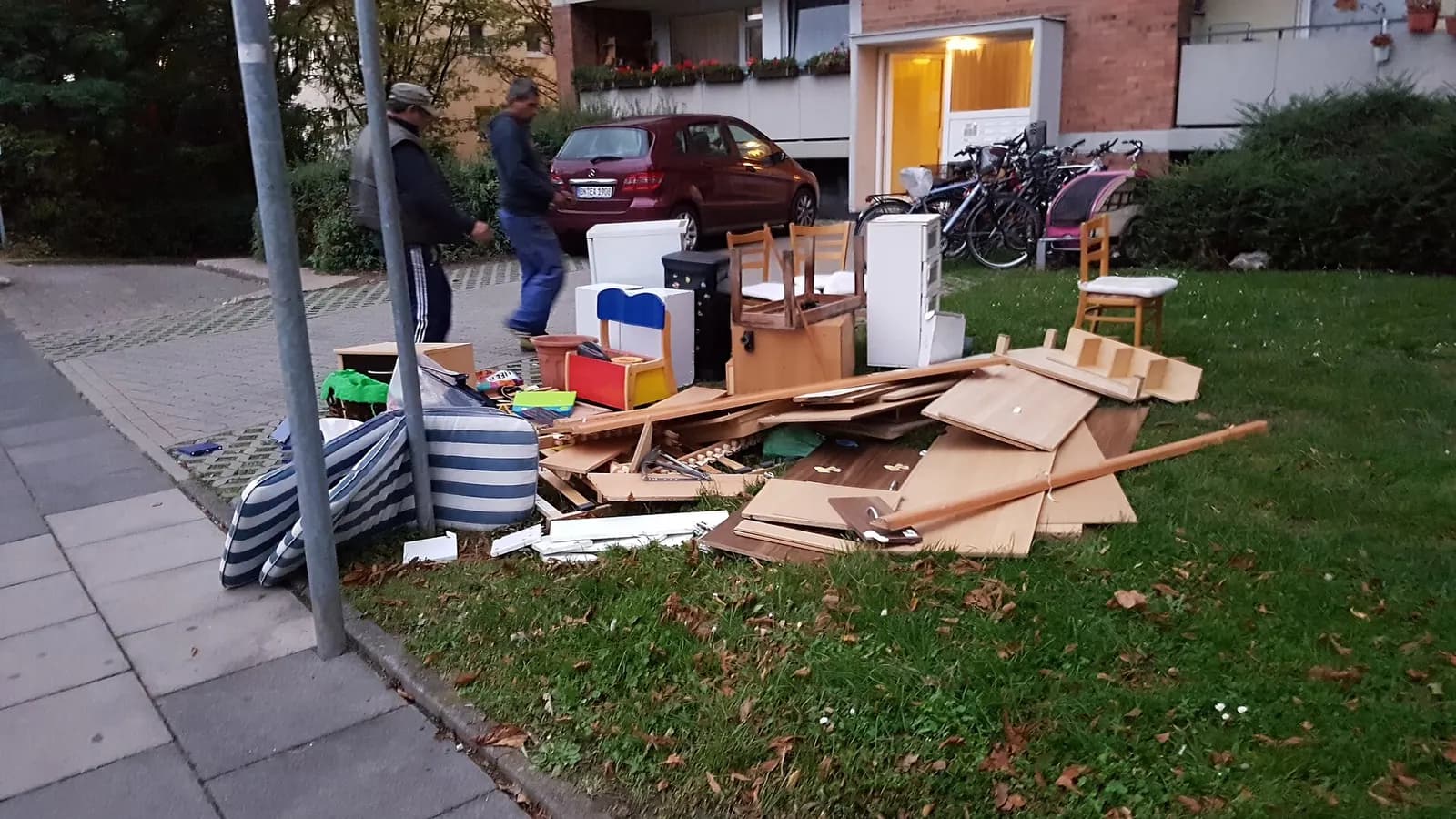
The service you sell is labor and convenience. Unlike a dumpster rental, your crew does the lifting, loads the truck and leaves the space swept. That's why customers will pay more than the disposal cost alone, and why reliability, arrival windows and a clean finish matter as much as price. Many operators also earn from the load itself by donating usable furniture, selling scrap metal and recycling cardboard, which reduces what goes to the landfill and cuts tipping fees.
There are three common models. Full-service junk removal sends a truck and crew to load everything. Dumpster or trailer drop-off leaves a container for the customer to fill. Specialty hauling focuses on one stream, such as construction debris, estate cleanouts, appliance removal or hoarding cleanups. Most new businesses start with full-service residential work and add property managers and contractors as repeat clients.
Licenses and hauler permits
There's no federal license for junk removal. Start with the basics every business needs: a legal entity or a registered assumed name, an EIN, and the business license or tax registration your city or county requires. An LLC is the common choice, because a dropped dresser can damage a staircase or a wall and a crash with a loaded truck can bring a large claim. State filing fees run $35 – $500, and the EIN is Free ($0). Our LLC registration guide and business licenses guide cover the steps.
Then check whether your city regulates haulers. Many cities grant exclusive franchises for curbside trash and commercial waste collection, and some require anyone hauling waste for pay to hold a hauler permit or registration. In New York City, the Business Integrity Commission says a person or business must obtain a license or registration before conducting a waste removal business. Licensed carters can remove all types of commercial waste; haulers that remove only construction, demolition, alteration or excavation debris can apply for a Class 2 construction and demolition registration; and the commission also issues micro-hauler licenses and self-hauler registrations. Other large cities have their own rules, so ask your city's sanitation or solid waste department whether hauling junk for pay requires a permit, and whether commercial clients are inside a franchise zone you can't serve.
Questions to ask your city's sanitation department
0/5Some streams need state permits regardless of the city. Scrap tires are a good example: in Texas, the Commission on Environmental Quality regulates scrap tire transportation, and transporters must register, track tires with a manifest and file annual reports. Other states run similar tire hauler programs. Medical waste and hazardous waste need their own transporter permits and are outside what a general junk business should accept. If you plan construction debris work, ask your state environmental agency whether a construction and demolition hauler registration applies.
Disposal rules: appliances, electronics, tires, mattresses and hazardous items
Knowing what you can legally dump, and where, is the core skill of the business. Most household junk is ordinary solid waste. Federal law excludes household waste from the hazardous waste rules even after it's been collected and transported, and EPA notes that household hazardous waste is instead regulated as solid waste at the state and local level. That exclusion covers waste from homes, not from businesses, so be more careful with commercial cleanouts: a business's leftover paint, solvents or chemicals can be hazardous waste with the business as the generator. Decline those loads or refer the client to a licensed hazardous waste hauler.
Items that need special handling
| Item | Rule or issue | What to do |
|---|---|---|
Refrigerators, freezers, window ACs, dehumidifiers | EPA: final processor must recover refrigerant or get a signed statement | Take to a scrap yard or recycler that handles refrigerant; keep their paperwork |
TVs, monitors, computers | Many states restrict landfill disposal or run take-back programs | Use a certified electronics recycler or state program; budget a per-item fee |
Lithium-ion batteries and devices | EPA: shouldn't go in household garbage; fire risk in trucks | Remove batteries and take to a battery drop-off |
Tires | State tire rules; Texas requires transporter registration and manifests | Use a registered tire processor; charge per tire |
Mattresses and box springs | State recycling programs in CA, CT, OR and RI | Use program drop-off sites where available; charge per piece |
Paint, chemicals, propane tanks | Household hazardous waste rules are local; business chemicals may be hazardous waste | Decline or direct customers to HHW collection days |
Refrigerators, freezers, window ACs, dehumidifiers
- Rule or issue
EPA: final processor must recover refrigerant or get a signed statement
- What to do
Take to a scrap yard or recycler that handles refrigerant; keep their paperwork
TVs, monitors, computers
- Rule or issue
Many states restrict landfill disposal or run take-back programs
- What to do
Use a certified electronics recycler or state program; budget a per-item fee
Lithium-ion batteries and devices
- Rule or issue
EPA: shouldn't go in household garbage; fire risk in trucks
- What to do
Remove batteries and take to a battery drop-off
Tires
- Rule or issue
State tire rules; Texas requires transporter registration and manifests
- What to do
Use a registered tire processor; charge per tire
Mattresses and box springs
- Rule or issue
State recycling programs in CA, CT, OR and RI
- What to do
Use program drop-off sites where available; charge per piece
Paint, chemicals, propane tanks
- Rule or issue
Household hazardous waste rules are local; business chemicals may be hazardous waste
- What to do
Decline or direct customers to HHW collection days
Appliances with refrigerant. Under EPA's safe disposal rule, the final processor of a small appliance, such as a scrap recycler or landfill, must either recover any remaining refrigerant or obtain a signed statement, with the name and address of whoever recovered it and the date, confirming it was recovered. The final processor keeps those statements for three years, and EPA doesn't accept a sticker as proof. In practice, this means your scrap yard will either charge you to recover the refrigerant or refuse the fridge without paperwork. Find out which before you quote a fridge pickup, and never cut refrigerant lines yourself.
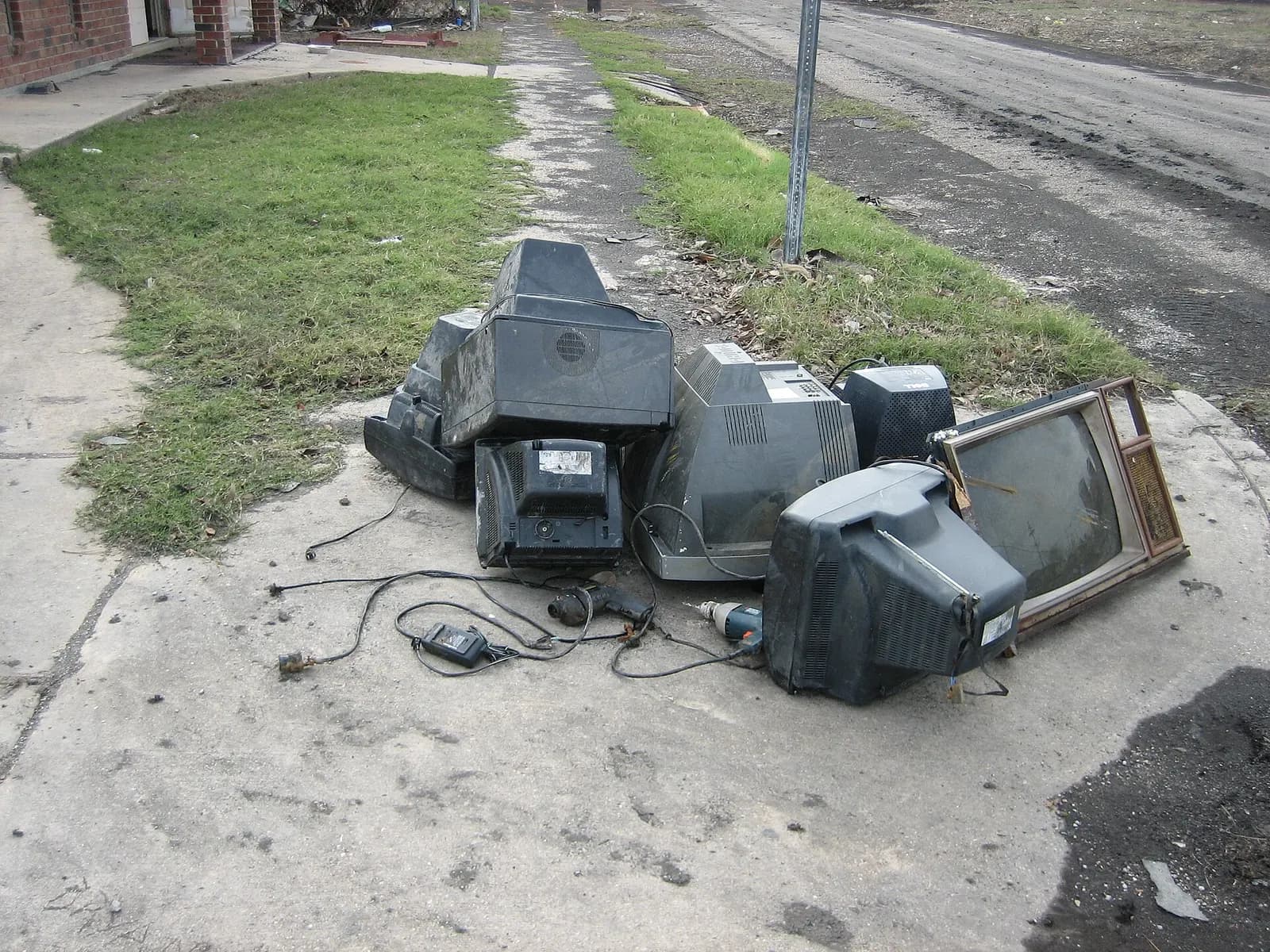
Electronics. Federal rules don't ban putting most electronics in the trash, but many states do, and the rules differ on which devices are covered. EPA's universal waste program covers five types federally: batteries, pesticides, mercury-containing equipment, lamps and aerosol cans. EPA has also said it plans to propose new universal waste rules for lithium batteries and end-of-life solar panels, so expect battery handling rules to tighten. Build relationships with a certified electronics recycler and check your state environmental agency's e-waste page.
Mattresses and tires. The Mattress Recycling Council runs state programs in California, Connecticut, Oregon and Rhode Island, where recycling fees are collected at sale and drop-off sites take used mattresses. Elsewhere, many landfills charge a per-piece fee for mattresses because they're bulky and hard to compact. Tires carry per-tire disposal fees almost everywhere. Price both as line items rather than by volume.
Choosing a truck: capacity, weight and the CDL line
Your truck sets your capacity, your licensing and much of your cost. Most junk businesses use one of three setups. A pickup with a dump trailer is the cheapest start and tips quickly at the landfill. A box truck carries bulky furniture and keeps loads covered, but has to be unloaded by hand unless you add a dump body. A dump truck with high sides (often called a junk truck body) loads from the back and tips in minutes, which is why it's the industry favorite once volume justifies it.
Work out capacity in cubic yards, because that's how you'll price. Multiply the inside length, width and height of the load space in feet and divide by 27. A dump body 12 feet long, 7.5 feet wide and 4.5 feet high holds 405 cubic feet, or 15 cubic yards. That number goes straight into your price list.
Then check weight. A commercial driver's license is needed for a single vehicle with a gross vehicle weight rating of 26,001 pounds or more, or for a combination over that weight towing a trailer rated over 10,000 pounds. Many junk trucks are deliberately built just under that line, so any licensed driver can drive them. Separately, FMCSA treats vehicles of 10,001 pounds or more used in interstate commerce as commercial motor vehicles, which brings a USDOT number and federal safety rules such as driver medical cards and vehicle inspections; many states apply similar rules within the state. Junk is heavier than it looks, especially with plaster, tile or wet yard waste, so watch the payload and never exceed the truck's rated weight.
Secure every load. Most states have tarping or covered-load laws with fines for debris falling from vehicles, and a mattress flying off on the highway is a liability claim waiting to happen.
Launch checklist for a junk removal business
- 1
Register the business
LLC registrationLLC or DBA, EIN (Free ($0)) and local business license.
- 2
Ask your city about hauler permits
Sanitation or solid waste department: permits, franchise zones and any registration for construction debris.
- 3
Buy insurance
Commercial auto, general liability and workers' compensation once you hire.
- 4
Choose your truck and measure it
Calculate cubic yards and stay under the CDL weight line unless you'll hire CDL drivers.
- 5
Line up disposal outlets
Landfill or transfer station, scrap yard, electronics recycler, tire processor and donation partners. Note each one's fees and hours.
- 6
Build your price list
Quotation generatorPer-cubic-yard rate, minimum charge and item surcharges.
Insurance for a junk removal business
Insurance protects you from the two biggest risks: crashes with a loaded truck and damage at the customer's property. Commercial auto comes first, because personal auto policies usually exclude business hauling; Insureon reports small businesses pay a median of about $245 a month, with premiums varying widely by vehicle size, driving records and location. General liability covers damage to walls, floors, door frames and landscaping, and injuries to customers. Workers' compensation is required in most states once you hire, and lifting work carries real injury risk. Consider inland marine cover for tools and dollies, and pollution liability if you take construction debris or anything that could leak.
Property managers, HOAs and commercial clients usually ask for a certificate of insurance before you can work on site, often with them named as additional insured. Keep certificates ready to send the same day you quote. Our property management guide explains what those clients need from vendors.
Startup costs
The truck decides your budget. Everything else is small by comparison.
| Item | Estimated cost | Basis |
|---|---|---|
| LLC or DBA filing | $35 – $500 (LLC) | State filing fees |
| EIN | Free ($0) | IRS |
| Business license and hauler permit | Varies by city | Local licensing office |
| Truck: pickup + dump trailer you add to an existing pickup | Roughly $8,000–$20,000 for the trailer | Our estimate for new and used dump trailers |
| Truck: used dump or junk truck | Roughly $25,000–$70,000 | Our estimate; depends on age, mileage and body |
| Commercial auto insurance | About $245 a month median | Insureon, all small businesses |
| Dollies, straps, tarps, gloves, tools | A few hundred to $1,500 | Our estimate |
| Website, listings and first ads | $500–$3,000 | Our estimate |
With a pickup you already own and a trailer, you can start for well under $25,000. With a financed used junk truck, budget for the down payment, the first few months of payments and insurance, and two to three months of operating cash while you build reviews.
Junk removal pricing by volume, with a worked example
Most junk removal companies quote by volume: how much of the truck the load fills. A typical price list has a minimum charge for a single item or a small pile, then prices for one-eighth, a quarter, half, three-quarters and a full truck, plus surcharges for heavy materials and items with special disposal costs. Volume pricing is easy for customers to understand, but the price behind each fraction must come from your costs, not from a competitor's website.
Start with three cost buckets. Fixed costs don't change with the number of jobs: truck payments, insurance, marketing, phone and software, accounting and your own pay. Labor is the crew time to load, drive and unload. Disposal is the tipping fee at the landfill or transfer station, usually charged per ton, plus per-item fees for things like mattresses and tires. Disposal fees vary enormously. King County, Washington, for example, will charge $264.01 per ton for self-haul vehicles other than standard cars from January 1, 2027, with a $43.50 minimum for standard vehicles. Many landfills charge far less, so call yours and get the posted rates in writing.
Worked example. An owner-operator with one helper and a 15-cubic-yard junk truck sets fixed costs of $32,000 a year: truck payments $9,600, insurance $6,000, marketing $9,000, phone and software $2,400, licenses and accounting $2,000, and maintenance $3,000. Adding the owner's target pay of $60,000 makes $92,000 a year to cover. For a full load, the variable costs are disposal of an assumed 1.5 tons at an assumed $75 a ton ($112.50), fuel of $30, and three hours of the helper's time at $22 an hour plus about 10% for payroll taxes ($72.60): about $215 a load. If the business hauls the equivalent of four full loads a week for 50 weeks, that's 200 loads, so each load must also carry $460 of fixed costs. The full-load price is $460 + $215 = $675, or $45 a cubic yard.
Try it — loads you need to break even
Turn that into a price list by multiplying cubic yards by the rate, with a minimum charge that covers a short trip and a helper's time.
| Load size | Cubic yards (15-yard truck) | Price at $45 a yard |
|---|---|---|
| Minimum (single item or small pile) | Under 2 | $125 |
| Quarter load | 3.75 | $175 |
| Half load | 7.5 | $340 |
| Three-quarter load | 11.25 | $505 |
| Full load | 15 | $675 |
Now run the same truck through a high-fee area. At King County's 2027 rate of $264.01 per ton, the 1.5-ton disposal cost becomes about $396, the variable cost per load about $499, and the full-load price about $960, or $64 a yard. This is why national price averages are misleading: the same service costs very different amounts to deliver depending on where you dump.
Heavy materials. Concrete, brick, dirt, roofing shingles and wet yard waste weigh far more per yard than furniture, so price them by weight or limit them to a fraction of a load. Item surcharges cover mattresses, tires, refrigerators and electronics where your outlet charges a per-item fee. Labor surcharges apply to jobs with stairs, long carries or demolition, such as taking apart a shed or a hot tub.
Common mistakes when starting a junk removal business
The first mistake is pricing from a competitor's website without knowing your own tipping fee. If your landfill is expensive or far away, copied prices will lose money on every full load. The second is underestimating weight: a half-load of tile and plaster can exceed your payload and overload the truck. The third is taking items you can't dispose of legally, like refrigerators without a refrigerant outlet, paint and chemicals, or tires without a registered processor, and then storing them in your yard or, worse, dumping them illegally.
The fourth is skipping insurance certificates and written quotes. A scuffed wall without a signed quote and photos becomes a dispute you can't win. The fifth is ignoring the helper's classification: treating regular crew as independent contractors invites back taxes and penalties, so read our 1099 vs W-2 guide before you hire. Finally, don't neglect donations and recycling. They lower disposal costs and give you something to say in your marketing that most customers care about.
Official links
- NYC Business Integrity Commission — carter informationLicenses and registrations for waste haulers
- EPA safe disposal of appliances, 40 CFR 82.155Refrigerant recovery and signed statements
- EPA universal wasteBatteries, lamps and other universal wastes
- EPA household hazardous wasteWhat households can and can't put in the trash
- TCEQ used and scrap tire managementTexas scrap tire transporter registration
- FMCSA CDL definitions, 49 CFR 383.5When a truck needs a CDL
What to do next
Call your landfill or transfer station and your city's sanitation department first: the tipping fee and any hauler permit will shape everything else. Then measure your truck in cubic yards, use the break-even calculator to set your per-yard rate, and send your first quotes with the quotation generator. Our guides on starting a cleaning business and property management cover the clients most likely to send you repeat work.
This is general information, not legal or tax advice — confirm on the official source or with a professional.
Frequently asked questions
There's no federal junk removal license. You need a business entity or DBA, an EIN, and the city or county business license where you operate. Some cities also license or register haulers: New York City, for example, requires a Business Integrity Commission license or registration before you remove commercial or construction waste. Tires, medical waste and hazardous waste need separate state permits.
The truck is the big cost. Using a pickup and trailer you already own, you can launch for a few thousand dollars in formation, insurance, tools and marketing. A used dump truck or box truck adds tens of thousands. Commercial auto insurance alone runs a median of about $245 a month for small businesses, according to Insureon.
Most price by volume: the share of the truck a load fills, quoted as a minimum charge, quarter, half, three-quarter and full load, with surcharges for heavy materials and items that cost extra to dispose of, such as mattresses, tires and appliances. Build the per-cubic-yard rate from your own fixed costs, labor and disposal fees. In our example it's $45 a cubic yard.
Not for most junk trucks. A commercial driver's license is required for a single vehicle with a gross vehicle weight rating of 26,001 pounds or more, or for combinations over that weight towing more than 10,000 pounds. Many dump and box trucks used for junk removal are built under that line. Interstate trucks of 10,001 pounds or more need a USDOT number.
Yes, but with care. Under EPA rules the final processor, such as a scrap yard, must recover refrigerant or get a signed statement that it was recovered, so take fridges and window ACs to a facility that handles this. Many states restrict landfilling TVs, computers and monitors, so route electronics to a certified recycler or a state take-back program.
It can be, because labor and disposal are the main variable costs and customers pay for speed and convenience. In our example, with $92,000 of fixed costs including the owner's pay, the business breaks even at 200 full-load equivalents a year, about four a week. Disposal fees decide margins: in high-fee areas, the same load costs far more to tip.
Sources & verification
Figures on this page were checked against the sources below when it was last reviewed on 9 October 2026. Each rate and limit is stored once with its own official source and review date, and official update channels are monitored daily so changes are picked up. How we verify
- 1.Carter information — NYC Business Integrity Commission · accessed 9 October 2026
- 2.Trade waste forms — NYC Business Integrity Commission · accessed 9 October 2026
- 3.40 CFR 82.155 — Safe disposal of appliances — U.S. EPA (eCFR) · accessed 9 October 2026
- 4.Stationary refrigeration safe disposal requirements — U.S. EPA · accessed 9 October 2026
- 5.Household hazardous waste (HHW) — U.S. EPA · accessed 9 October 2026
- 6.Universal waste — U.S. EPA · accessed 9 October 2026
- 7.Electronics donation and recycling — U.S. EPA · accessed 9 October 2026
- 8.Used and scrap tire management — Texas Commission on Environmental Quality · accessed 9 October 2026
- 9.49 CFR 383.5 and 390.5 — CDL and FMCSA commercial motor vehicle definitions — FMCSA (eCFR) · accessed 9 October 2026
- 10.King County Solid Waste Division announces 2027 rates — King County, Washington · accessed 9 October 2026
- 11.Bye Bye Mattress — programs by state — Mattress Recycling Council (secondary) · accessed 9 October 2026
- 12.Commercial auto insurance cost — Insureon (secondary) · accessed 9 October 2026
MSMETOOLS is an independent platform and is not affiliated with any government agency, ministry or department.
Tools for this
Break Even Calculator
Find your break even point and units.
Quotation Generator
Create professional quotes for clients.
Invoice Generator
Create professional invoices with tax, logo and custom details.
Startup Cost Calculator
Estimate how much capital you need to launch.
Related guides
 Start a Plumbing Business in 2026: Licenses & PricingRead guide
 How to Start a Cleaning Business in 2026: Costs & PricingRead guide
 How to Start a Property Management Business in 2026Read guide
 How to Start a Landscaping Business in 2026: Full GuideRead guide
Official links open the government site in a new tab.