 Starting & growing a business
How to Start a Cleaning Business in 2026: Licenses, Insurance, Pricing and Hiring
Start a cleaning business in 2026: residential vs commercial, licenses, bonding and insurance costs, pricing per square foot, hiring vs 1099 cleaners and profit.
 Edited by Sumeet YadavFounder & editor, MSMETOOLS · fact-checked against official sources
Contents (11)
- 1. Residential or commercial: choose your cleaning business model
- 2. How to start a cleaning business, step by step
- 3. Cleaning business license and state rules
- 4. Insurance for a cleaning business
- 5. Supplies and equipment for a cleaning business
- 6. How to price cleaning jobs
- 7. Hiring cleaners: employees or 1099 contractors?
- 8. Startup costs and a worked profit example
- 9. Finding clients and keeping them
- 10. Mistakes to avoid when starting a cleaning business
- 11. What to do next
A cleaning business is one of the few you can start this month with a car, a phone and a few hundred dollars of supplies, and it's built on recurring work that pays every week or two. That low barrier also means plenty of competition, so the businesses that last are the ones that price properly, carry the right insurance and handle hiring legally. This guide is for anyone in the US starting a residential or commercial cleaning business in 2026. It covers which model to choose, licenses and state rules, bonding and insurance costs, pricing per square foot and per visit, hiring employees versus 1099 cleaners, supplies, and a worked profit and break-even. Rules were checked against IRS, OSHA, BLS and state sources in October 2026.
Quick answer
To start a cleaning business, choose residential or commercial work, register the business (sole proprietorship or LLC) and get a local business license, buy general liability insurance and a janitorial bond, set prices from your cost per visit, and decide early whether helpers will be W-2 employees. Most cleaners who work on your schedule, with your supplies and training, are employees.
No general state license in most states; local business licenses and sales tax permits still apply
California janitorial employers register yearly with the Labor Commissioner ($500 a year)
General liability averages about $59 a month and a janitorial bond about $9 (Insureon data)
Recurring office cleaning is often quoted at $0.07–$0.20 per sq ft; homes near $0.10
Texas charges sales tax on most cleaning services, including maid services
Residential or commercial: choose your cleaning business model
The first decision shapes everything else, from equipment to insurance to the hours you work. Residential cleaning means houses and apartments, usually during the day, priced per visit. Clients are individuals who care about trust and consistency, and recurring weekly or every-other-week service is the core of the business. Commercial cleaning means offices, medical practices, retail and industrial sites, usually in the evening, priced per month on a contract. Clients are businesses that care about reliability, documentation and insurance certificates.
Residential vs commercial cleaning
| Residential | Commercial | |
|---|---|---|
Typical pricing | Per visit or per hour | Monthly contract, priced per sq ft |
Hours | Weekdays, daytime | Evenings, nights, weekends |
Start-up equipment | Supplies, vacuum, caddy | Floor machines, wet-dry vacuums, carts |
Sales cycle | Days; referrals and reviews | Weeks; walk-throughs and bids |
Insurance asked for | General liability, bond | Higher limits, certificates naming the client |
Revenue per client | Lower, many clients | Higher, fewer clients |
Typical pricing
- Residential
Per visit or per hour
- Commercial
Monthly contract, priced per sq ft
Hours
- Residential
Weekdays, daytime
- Commercial
Evenings, nights, weekends
Start-up equipment
- Residential
Supplies, vacuum, caddy
- Commercial
Floor machines, wet-dry vacuums, carts
Sales cycle
- Residential
Days; referrals and reviews
- Commercial
Weeks; walk-throughs and bids
Insurance asked for
- Residential
General liability, bond
- Commercial
Higher limits, certificates naming the client
Revenue per client
- Residential
Lower, many clients
- Commercial
Higher, fewer clients
Many owners start residential because it's quicker to land the first customers, then add small commercial accounts such as dental offices or real estate offices once they have staff who can work evenings. Specialties like move-out cleaning, post-construction cleaning, carpet cleaning, window cleaning and short-term rental turnovers can be a niche on their own or an add-on with a higher price per hour.
How to start a cleaning business, step by step
From idea to first paying client
- 1
Pick your model and service area
Residential, commercial or a niche, within a radius that keeps drive time under 20–30 minutes between jobs.
- 2
Register the business
LLC registrationSole proprietorship or LLC ($35 – $500 state filing fee). File a DBA if you use a brand name.
- 3
Get an EIN and local licenses
Business licensesThe EIN is Free ($0). Check city and county business license and home occupation rules.
- 4
Register for sales tax if your state taxes cleaning
Texas taxes most cleaning services; many states don't tax residential cleaning. Check your state revenue department.
- 5
Buy insurance and a bond
General liability and a janitorial bond before the first job; workers' comp before the first hire.
- 6
Set your prices and write a service agreement
Quotation generatorScope, frequency, price, cancellation and lockout fees, what's excluded, how keys are handled.
- 7
Buy supplies and set up scheduling
A starter kit of concentrates, microfiber and a good vacuum, plus booking and invoicing software.
- 8
Find the first ten recurring clients
Neighbors, local groups, realtors, property managers and online reviews.
Cleaning business license and state rules
There's no federal license for cleaning, and most states don't license house or office cleaning as a trade. What you will need is the same set of registrations as any small business. Most cities and counties require a general business license, and some require a home occupation permit if you run the business from home. If you trade under a name other than your own legal name, file a DBA (see our DBA guide). The SBA's point that state and local rules vary by activity and location applies here: call your city clerk or check its website before you take paid work. Our business licenses guide explains how to find each one.
A few state rules catch cleaning businesses that assume there's nothing to register:
- California janitorial registration. Under the Property Service Workers Protection Act, janitorial employers must register with the Labor Commissioner and renew every year, with a fee of $500 a year. Employers and janitors must also complete sexual violence and harassment prevention training every two years, and businesses that hire an unregistered janitorial contractor face fines too. Check the current requirements on the Department of Industrial Relations site before you hire in California.
- Sales tax on cleaning. Texas treats cleaning and janitorial services as taxable, including maid services at a home. The only exception the Comptroller describes is a self-employed housekeeper who works directly for the household, not as a subcontractor for a maid service. Texas cleaning businesses must also pay tax on the soaps, chemicals and equipment they use; only items left with the customer, such as restroom paper and hand soap, can be bought tax-free for resale. Many other states don't tax residential cleaning, but several tax some commercial building services, so check your state.
- Specialty services. Pest control, mold remediation, biohazard cleanup and some pressure washing that discharges to storm drains can need separate licenses or permits. Keep to standard cleaning until you've checked.
Bonding: what it is and whether you need it
A janitorial bond, sometimes called a business services bond, pays a client if one of your employees steals from them, after the theft is proven. It isn't legally required in most places, but many homeowners and property managers ask "are you bonded?", and some commercial contracts require it. Insureon reports cleaning businesses pay about $9 a month for a janitorial bond, which makes it an easy yes. Note that a bond protects the client, not you: the surety will seek repayment from your business after paying a claim.
Insurance for a cleaning business
General liability insurance for a cleaning business covers the two most common claims: a client or visitor injured on a wet floor, and property you damage while cleaning, such as a scratched floor or a broken lamp. Commercial clients will ask for a certificate of insurance, often naming them as an additional insured, before you start.
Insureon's figures from its cleaning business customers give a realistic idea of premiums:
| Policy | What it covers | Average cost (Insureon) |
|---|---|---|
| General liability | Client injuries and property damage | $59 a month ($705 a year) |
| Janitorial bond | Employee theft from clients | $9 a month ($112 a year) |
| Workers' compensation | Employee injuries on the job | $114 a month ($1,364 a year) |
| Business owner's policy | General liability plus your equipment and property | $81 a month ($968 a year) |
| Commercial auto | Vehicles used for business | $250 a month ($3,001 a year) |
These are averages, not quotes. Your premium depends on your state, payroll, the services you offer and your claims history. Workers' compensation is required once you have employees in almost every state; Texas is the notable exception, where most private employers may opt out but must report that they don't carry it. Cleaning is physical work with chemicals, ladders and lifting, so injuries happen, and without coverage you pay medical costs and lost wages yourself. Your personal car policy may not cover driving between client jobs, so tell your insurer how you use the vehicle.
Supplies and equipment for a cleaning business
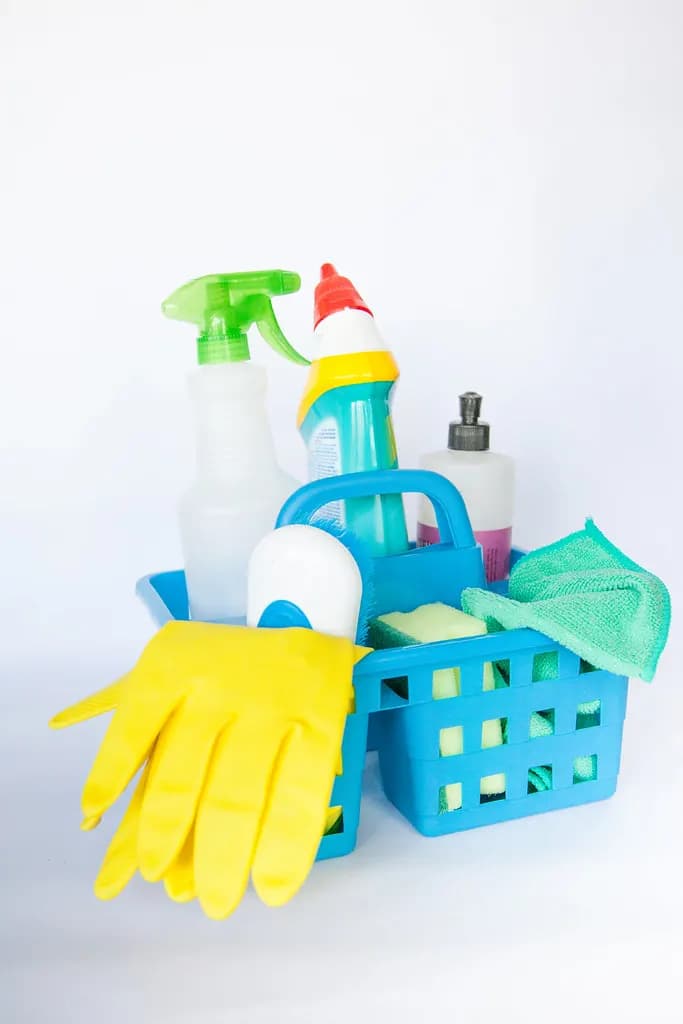
You don't need much to start, but buying the right supplies saves money every week. Professional concentrates diluted in labelled spray bottles cost far less per use than retail cleaners. Microfiber cloths in different colors for kitchens, bathrooms and general surfaces prevent cross-contamination and are what clients notice. A commercial-grade vacuum with a HEPA filter is the one piece of equipment worth spending on early.
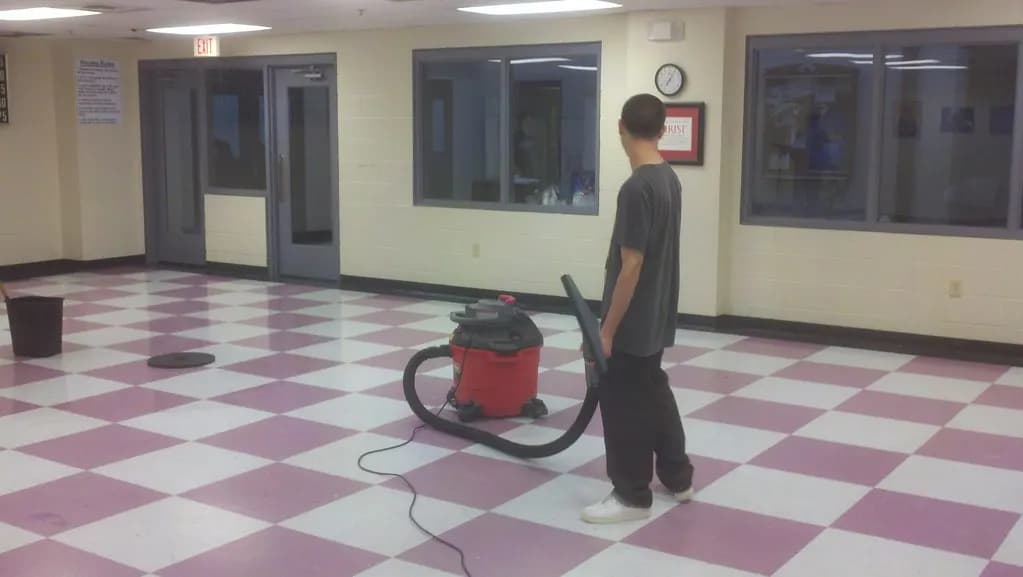
A typical residential starter kit includes an all-purpose cleaner, glass cleaner, bathroom cleaner and descaler, disinfectant, degreaser, a neutral floor cleaner, microfiber cloths and mop pads, scrub brushes and sponges, a mop and bucket, a vacuum, a step stool, gloves, and a caddy for each cleaner. Commercial work adds wet-dry vacuums, floor scrubbers or buffers, janitorial carts and trash liners in bulk. Buying through a janitorial supply wholesaler is usually cheaper than retail once you have a few regular clients.
If anyone other than you uses those chemicals, OSHA's Hazard Communication Standard applies. You need labels on every container, including spray bottles you fill from concentrate, a safety data sheet for each hazardous chemical, and training so staff know how to handle them. Never mix bleach and ammonia-based products, and choose lower-hazard products where they do the job. If you clean medical or dental offices where staff could be exposed to blood, OSHA's bloodborne pathogens rules add training and protective equipment requirements.
How to price cleaning jobs
Cleaning businesses price in three ways: per hour, per square foot, or a flat rate per visit. Clients prefer flat rates because they know the cost; you need to know what's underneath it.
Published cleaning price ranges (secondary sources, 2026)
| Service | Typical price range | Source |
|---|---|---|
Office, recurring | $0.07–$0.20 per sq ft | Housecall Pro |
Medical facility | $0.12–$0.30 per sq ft | Housecall Pro |
Retail | $0.08–$0.18 per sq ft | Housecall Pro |
Post-construction | $0.15–$0.30 per sq ft | Housecall Pro |
Commercial, hourly | $30–$75 per hour | Housecall Pro |
House cleaning, recurring | About $0.10–$0.11 per sq ft ($190 for 1,800 sq ft) | CleanerHQ worked example |
Office, recurring
- Typical price range
$0.07–$0.20 per sq ft
- Source
Housecall Pro
Medical facility
- Typical price range
$0.12–$0.30 per sq ft
- Source
Housecall Pro
Retail
- Typical price range
$0.08–$0.18 per sq ft
- Source
Housecall Pro
Post-construction
- Typical price range
$0.15–$0.30 per sq ft
- Source
Housecall Pro
Commercial, hourly
- Typical price range
$30–$75 per hour
- Source
Housecall Pro
House cleaning, recurring
- Typical price range
About $0.10–$0.11 per sq ft ($190 for 1,800 sq ft)
- Source
CleanerHQ worked example
These ranges are market estimates, useful only as a check. Your price should come from your costs. The method that works is simple: add up the paid worker-hours for the job, including travel (two cleaners for two hours is four worker-hours), multiply by your wage cost including payroll taxes, add supplies, fuel and a share of overhead, then divide by one minus your target margin. A job that costs you $140 to deliver priced for a 30% margin is $140 ÷ 0.70, or $200.
Labor is most of the cost. The BLS puts the median wage for janitors and building cleaners at $17.71 an hour, and good residential cleaners in expensive metros earn well above that. If your price doesn't allow you to pay enough to keep good staff, you'll spend your time hiring and training instead of growing.
For commercial bids, walk the site, measure the cleanable square footage, note restrooms, kitchens and floor types, and estimate the hours each visit needs. Then price the monthly contract from those hours, not just from a per-square-foot rate: two buildings of the same size can need very different time. Add separate prices for periodic work such as floor stripping and waxing, carpet extraction and window cleaning.
Hiring cleaners: employees or 1099 contractors?
This is the decision that gets cleaning businesses into the most trouble. It's tempting to pay helpers as 1099 contractors because you avoid payroll taxes, workers' comp and overtime. But the label you choose doesn't decide the question; the working relationship does.
The IRS looks at three kinds of evidence. Behavioral control: do you decide how, when and in what order the cleaning is done, and do you train people in your methods? Financial control: do you supply the products and equipment, set the pay, and does the worker have any chance of profit or loss? Relationship: is the work ongoing and central to your business? A cleaner you schedule, train, supply and send to your clients under your brand is almost always an employee on every count. Our guide to 1099 vs W-2 workers walks through the tests in detail.
Federal wage law uses its own test. The Department of Labor proposed a new rule in February 2026 to replace the 2024 independent contractor regulation with a test focused on control and opportunity for profit or loss; the 2024 rule technically remains in place but the DOL has said it isn't enforcing it. Several states are stricter than either federal test. California, for example, presumes a worker is an employee unless the business proves the work is outside its usual course of business, which a cleaning business can't do for cleaners.
Getting this wrong costs back payroll taxes, penalties, unpaid overtime and, in some states, fines per worker. If you're not ready for payroll, a better route is to stay solo or partner with genuinely independent cleaning businesses that have their own clients, insurance and equipment, and subcontract specific jobs to them under a written agreement.
Startup costs and a worked profit example
Here's what a residential cleaning business typically spends to start. The figures are estimates based on the insurance data above, state filing fees and typical retail and software prices.
| Startup item | Estimated cost | Basis |
|---|---|---|
| Business registration | $35 – $500 for an LLC | State filing fee; a sole proprietorship pays little or nothing |
| Local business license | $0–$200 | Typical city and county fees |
| General liability and bond (first payment or year) | $70–$820 | Insureon averages, monthly vs annual billing |
| Supplies and equipment | $400–$1,200 | Concentrates, microfiber, vacuum, caddies |
| Scheduling and invoicing software | $0–$60 a month | Free tiers to paid plans |
| Website, logo, cards and flyers | $200–$800 | Template site and local print |
| Uniforms or branded shirts | $100–$300 | Optional, but builds trust |
| Total | About $1,500–$4,000 | Before any vehicle |
Now a worked month for an imagined business: the owner plus one W-2 employee, mostly recurring residential clients. A typical home is 2,000 sq ft, priced at $200 per visit (about $0.10 per sq ft). Each visit takes two cleaners about two hours, plus travel.
Direct costs per visit come to $75: the employee's 2.5 paid hours at $20 plus payroll taxes ($55), supplies ($6), fuel and mileage ($8), and card fees ($6). That leaves $125 per visit toward fixed costs. Fixed monthly costs are $4,992: insurance and bond ($182), vehicle insurance top-up ($150), software ($50), phone ($60), marketing ($400), bookkeeping ($150) and an owner's salary of $4,000.
Break-even is $4,992 ÷ $125, or about 40 visits a month. At 60 visits a month, three a day over 20 working days, revenue is $12,000 and the business keeps about $2,508 a month after paying the owner. Add a second team and fixed costs barely move, which is why growth in cleaning comes from adding crews and tightening routes.
Try it — cleaning business break-even per month
Finding clients and keeping them
Recurring clients are the whole business: a weekly client is worth over $10,000 a year at our example price, so it's worth spending real money to win one. The cheapest channels are local: neighborhood groups, referrals from existing clients (offer a free clean for each referral who books), real estate agents and property managers who need move-out cleans, and short-term rental hosts who need turnovers. A complete business profile on map and review sites, with photos and fast replies, brings steady inbound requests.
Keeping clients is about consistency. Send the same cleaner where you can, use a checklist for every visit, confirm appointments the day before and follow up on any complaint the same day. A written service agreement covering lockouts, cancellations, pets, keys and what's excluded avoids most disputes.
Mistakes to avoid when starting a cleaning business
- Pricing from competitors instead of costs. Work out your cost per visit, including travel time, before you quote.
- Calling employees contractors. If you control the work, they're employees; misclassification is expensive.
- Starting without insurance. One broken heirloom or slip claim can cost more than a year's profit.
- Ignoring sales tax. In states like Texas, cleaning is taxable and you owe the tax whether or not you charged it.
- Unlabelled spray bottles. OSHA requires labels and safety data sheets once you have staff using chemicals.
- Spreading too thin. Clients scattered across a metro area mean hours of unpaid driving. Build dense routes.
- Discounting recurring clients too far. Recurring visits are easier, but price them on actual time, not hope.
Official links
- OSHA — Hazard CommunicationLabels, safety data sheets and training
- IRS — Independent contractor or employee?Worker classification tests
- Texas Comptroller — Cleaning and janitorial servicesSales tax on cleaning services and supplies
- California DIR — Janitorial providers and contractorsAnnual janitorial employer registration
- Texas Department of Insurance — Workers' comp for employersCoverage and non-subscriber reporting
- BLS — Janitors and building cleanersWage data for pricing labor
- IRS — Apply for an EIN onlineFree, issued immediately
What to do next
Decide on residential or commercial, then price three sample jobs from your own costs before you quote anyone. Register the business, get an EIN, buy general liability insurance and a bond, and check whether your state taxes cleaning services. Send your first quotes with the quotation generator and model your month in the break-even calculator.
This is general information, not legal or tax advice — confirm on the official source or with a professional.
Frequently asked questions
Most states don't have a specific license for house or office cleaning, but you'll normally need a general business license from your city or county and a sales tax permit in states that tax cleaning, such as Texas. California also requires janitorial employers to register with the Labor Commissioner every year for $500 a year. Check your city and state before taking the first job.
A solo residential cleaning business can start for roughly $1,500 to $4,000: business registration, a first payment on general liability insurance and a janitorial bond, supplies and equipment, scheduling software and some local marketing. Commercial cleaning costs more because of floor machines, a vehicle that carries equipment and higher insurance limits. Your own car and phone keep early costs down.
Recurring house cleans often work out near $0.10 per square foot, with deep and move-out cleans priced higher. Rather than copying market rates, work out your cost per visit (paid hours including travel, supplies, fuel and overhead) and divide by one minus your target margin. In our example a 2,000 sq ft recurring clean costs $75 in direct costs and is priced at $200.
Only if they really are independent: they set their own methods and schedule, use their own supplies, can work for others and carry their own business risk. Cleaners you train, schedule, supply and supervise are almost always employees under IRS tests, and states like California apply a stricter test. Misclassification brings back taxes, penalties and wage claims.
General liability is the core policy, covering a client's damaged property or a slip on a wet floor; Insureon reports cleaning businesses pay about $59 a month on average. Add a janitorial bond (about $9 a month) to cover employee theft, workers' compensation once you hire (required in most states, optional in Texas), and commercial auto if you drive for work.
It can be, with recurring clients and tight scheduling. In our example, an owner plus one employee completing 60 visits a month at $200 clears about $2,500 a month after paying the owner a $4,000 salary, and breaks even at about 40 visits. Travel time between jobs and one-off clients who don't rebook are what usually erode profit.
Sources & verification
Figures on this page were checked against the sources below when it was last reviewed on 7 October 2026. Each rate and limit is stored once with its own official source and review date, and official update channels are monitored daily so changes are picked up. How we verify
- 1.Cleaning and Janitorial Services (Publication 94-111) — Texas Comptroller of Public Accounts · accessed 7 October 2026
- 2.Hazard Communication — Occupational Safety and Health Administration · accessed 7 October 2026
- 3.Independent contractor (self-employed) or employee? — Internal Revenue Service · accessed 7 October 2026
- 4.Janitors and Building Cleaners — Occupational Outlook Handbook — U.S. Bureau of Labor Statistics · accessed 7 October 2026
- 5.Employer information — workers' compensation coverage — Texas Department of Insurance · accessed 7 October 2026
- 6.Apply for licenses and permits — U.S. Small Business Administration · accessed 7 October 2026
- 7.AB 1978: Janitorial service providers must be registered — Tinnelly Law Group (secondary) · accessed 7 October 2026
- 8.DOL proposes new independent contractor rule — Nixon Peabody (secondary) · accessed 7 October 2026
- 9.Cleaning business insurance costs — Insureon · accessed 7 October 2026
- 10.How to price commercial cleaning jobs — Housecall Pro (secondary) · accessed 7 October 2026
- 11.House cleaning pricing guide — CleanerHQ (secondary) · accessed 7 October 2026
MSMETOOLS is an independent platform and is not affiliated with any government agency, ministry or department.
Tools for this
Break Even Calculator
Find your break even point and units.
Quotation Generator
Create professional quotes for clients.
Invoice Generator
Create professional invoices with tax, logo and custom details.
Startup Cost Calculator
Estimate how much capital you need to launch.
Related guides
 How to Start an HVAC Business in 2026: Licenses & PricingRead guide
 How to Start a Painting Business in 2026: Licenses & PricingRead guide
 Small Business Insurance (2026): Types, Costs, What's RequiredRead guide
 How to Start a Photography Business in 2026: Costs & PricingRead guide
Official links open the government site in a new tab.