 Starting & growing a business
Car Wash Business Plan (2026): Models, Wastewater Rules, Zoning and Membership Economics
Write a car wash business plan for 2026: express, self-serve and mobile models, Clean Water Act and pretreatment rules, water reclaim, zoning and membership math.
 Edited by Sumeet YadavFounder & editor, MSMETOOLS · fact-checked against official sources
Contents (10)
- 1. Choose your car wash model
- 2. The car wash business plan outline
- 3. Site selection and zoning
- 4. Wastewater: what the Clean Water Act means for a car wash
- 5. Water use, drought and reclaim economics
- 6. Chemicals and worker safety
- 7. Membership economics: a worked example
- 8. Startup costs
- 9. Common mistakes in car wash business plans
- 10. What to do next
A car wash looks like a cash machine from the street: cars lined up, a tunnel that runs itself, monthly members paying whether they wash or not. Behind that sits one of the more demanding small-business plans to get approved. You need a site the city will zone for it, wastewater handling the sewer authority will accept, equipment that costs as much as a house, and a membership base big enough to cover heavy fixed costs. This guide is for anyone writing a car wash business plan in 2026, whether you're planning an express tunnel, buying a self-serve, or starting a mobile wash. It covers models, zoning, Clean Water Act and pretreatment rules, water reclaim, labelled startup costs, and membership economics with a worked example. Rules were checked against EPA and state agency sources in October 2026.
Quick answer
A car wash business plan needs the usual sections plus four things lenders scrutinize: the wash model, a zoned site with enough stacking space, an approved plan for wash water, and a membership forecast with churn and break-even. Wash water can't go to a storm drain; it goes through sand traps and an oil-water separator to the sanitary sewer with the sewer authority's approval, or into a reclaim system.
Models: express exterior tunnel, flex or full service, in-bay automatic, self-serve and mobile
Storm drain or surface water discharge needs an NPDES permit under the Clean Water Act
Sewer discharges follow local pretreatment limits; 25,000 gallons per day of process water makes you a significant industrial user
Our express tunnel example breaks even with about 2,000 members plus 6,000 retail washes a month
Memberships are auto-renewing plans: disclose terms, get consent and make cancellation easy
Choose your car wash model
The model drives everything else in the plan: land, equipment, staffing, water use and how you sell. Decide it first.
Car wash business models
| Model | Typical site | How it earns | Key risk |
|---|---|---|---|
Express exterior tunnel | About 1 acre, 100–180 ft tunnel, free vacuums | Unlimited memberships plus single washes | High capital cost; needs volume |
Flex or full service | Tunnel plus interior finishing area | Higher tickets for interior cleaning | Labor cost and staffing |
In-bay automatic | Often a gas station or small lot | Single washes, some memberships | Low throughput per hour |
Self-serve bays | Small lot, 3–6 bays | Pay per minute by card or coin | Equipment upkeep, vandalism |
Mobile wash or detailing | Van or trailer, no site | Per job, fleets, subscriptions | Water capture rules, labor |
Express exterior tunnel
- Typical site
About 1 acre, 100–180 ft tunnel, free vacuums
- How it earns
Unlimited memberships plus single washes
- Key risk
High capital cost; needs volume
Flex or full service
- Typical site
Tunnel plus interior finishing area
- How it earns
Higher tickets for interior cleaning
- Key risk
Labor cost and staffing
In-bay automatic
- Typical site
Often a gas station or small lot
- How it earns
Single washes, some memberships
- Key risk
Low throughput per hour
Self-serve bays
- Typical site
Small lot, 3–6 bays
- How it earns
Pay per minute by card or coin
- Key risk
Equipment upkeep, vandalism
Mobile wash or detailing
- Typical site
Van or trailer, no site
- How it earns
Per job, fleets, subscriptions
- Key risk
Water capture rules, labor
The express exterior tunnel has driven most new construction: customers stay in the car, a conveyor pulls it through the tunnel in a few minutes, and free self-service vacuums replace paid interior cleaning. It earns through volume and memberships, and it needs the most capital. Flex-serve adds an interior finishing lane for higher tickets, at the cost of a bigger payroll. In-bay automatics, where the machine moves around a parked car, suit gas stations and smaller lots but wash far fewer cars per hour. Self-serve bays need little labor but steady maintenance. A mobile wash has the lowest startup cost but the most work per dollar, and it has to capture its water wherever it washes.
Buying an existing wash is also an option. If you do, get three years of meter and point-of-sale data, the membership count and monthly churn, maintenance records for the equipment, and the sewer authority's permit or approval history. A wash with an expired discharge authorization or a failing oil-water separator is a project, not a going concern.
The car wash business plan outline
Sections of a car wash business plan
- 1
Executive summary
Model, site, wash capacity, funding needed, membership target and break-even month. Write it last.
- 2
Company description and management
Owners, operating experience, the site manager and maintenance plan; franchise or equipment partner if any.
- 3
Market analysis
Traffic counts, competing washes within a few miles, their prices and membership offers, and local car ownership.
- 4
Site and approvals
Zoning status, site plan with stacking lanes, utility capacity, wastewater approval and environmental review.
- 5
Services and pricing
Wash packages, membership tiers, fleet and add-on services.
- 6
Marketing and sales
Pre-opening membership sales, grand opening offers, license plate recognition and app sign-ups.
- 7
Funding request
Land, site work, building, tunnel equipment, reclaim, point-of-sale systems and working capital.
- 8
Financial projections
Business plan generatorCars per month, member count, churn, contribution per wash and per member, and a three-year forecast.
Lenders read car wash plans for two things: the site and the numbers behind the volume forecast. Back up your volume with traffic counts from your state department of transportation or city, competitor wash counts you've observed at peak hours, and the membership share comparable washes achieve. Our general business plan guide covers the standard sections in more detail.
Site selection and zoning
A car wash is a land-use decision before it's a business decision. Most cities treat car washes as a special or conditional use in commercial zones, which means a public hearing and conditions on hours, noise, lighting and traffic. Start with a pre-application meeting with the planning department before you put land under contract, and make the purchase contingent on approvals.
What planners and neighbors focus on is predictable, so design for it from the start. Stacking is the big one: the queue of cars waiting to enter the tunnel must fit on your lot, not spill into the street. Noise from dryers and central vacuum systems matters next to homes, so orient the tunnel exit and vacuum area away from residential lots and use enclosures. Traffic access depends on safe entry and exit, ideally from a road with good daytime traffic and a signal or turning lane nearby. Lighting and hours often come with conditions.
Utilities can sink a site. You need water service and a sanitary sewer connection with the capacity for your flows, plus electrical service large enough for the tunnel motors, pumps, dryers and vacuums. Ask the water utility about connection fees, meter size and backflow prevention, and ask the sewer authority early whether it will accept car wash wastewater at your expected volume.
Wastewater: what the Clean Water Act means for a car wash
Car wash water carries sediment, detergents, oil and grease, and heavy metals such as copper from brake dust. EPA's stormwater guidance points to a study in one Washington city that estimated vehicle washing sent hundreds of pounds of dissolved copper, nutrients and surfactants and thousands of pounds of solids into local waters in a year. That's why wash water is regulated, and why your plan needs a clear answer to "where does the water go?"
There are three possible destinations, and only two are realistic.
Storm drains or surface water: effectively off the table. Under the Clean Water Act, discharging pollutants from a point source to waters of the United States requires a National Pollutant Discharge Elimination System (NPDES) permit. Storm drains usually lead straight to streams, and municipal stormwater programs treat wash water entering them as an illicit discharge. Washington's Department of Ecology, for example, says an NPDES permit may be required for any wash water discharge to a storm drain, even after treatment, and doesn't recommend discharging to surface or ground at all because of the treatment and monitoring needed. Design your site so wash bays and the tunnel drain only to your treatment system, and keep vacuum and parking areas from carrying soapy water to storm inlets.
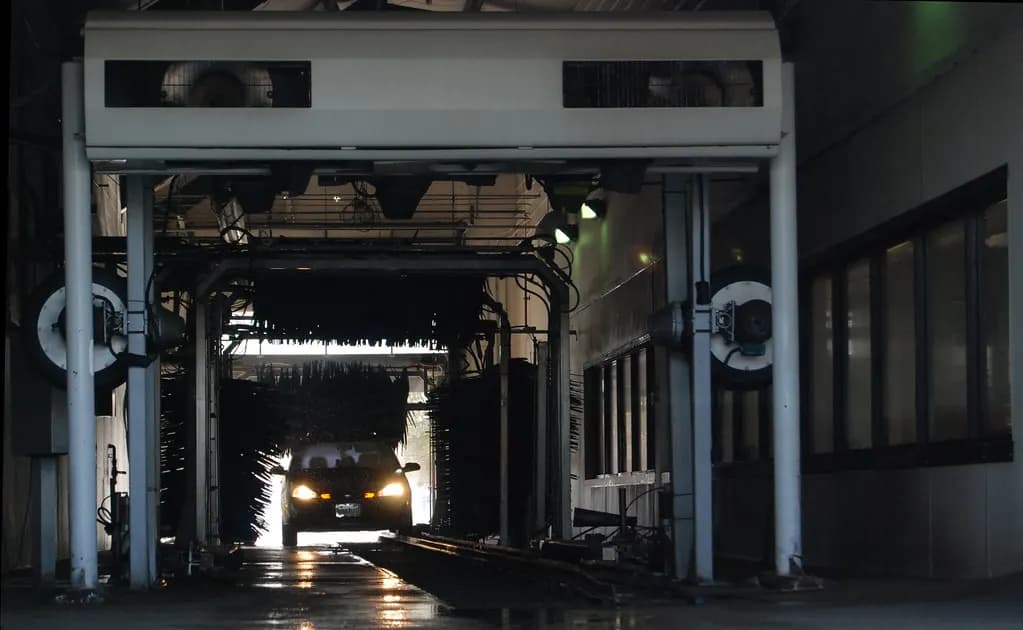
The sanitary sewer: the usual route. Most car washes discharge to the local sewer and the municipal treatment plant, known as a publicly owned treatment works (POTW). This is an indirect discharge, regulated under EPA's National Pretreatment Program, which EPA and authorized states run with approved local sewer authorities. You'll need the sewer authority's approval before you discharge, and it can set local limits on oil and grease, solids, pH, metals and other pollutants. Car washes typically pass water through sand or grit traps and an oil-water separator before it reaches the sewer.
Volume matters. EPA's pretreatment rules define a significant industrial user as one that discharges an average of 25,000 gallons per day or more of process wastewater, contributes 5% or more of the plant's dry-weather hydraulic or organic capacity, or is designated by the POTW. Significant users usually get an individual permit with sampling and reporting. A high-volume tunnel without reclaim can approach that range, which is one more reason to reclaim.
Reclaim or closed loop: increasingly the expectation. Washington's Ecology manual names zero discharge, or closed-loop water recycling, as the preferred option. Recycling systems treat and reuse wash water, cutting both water bills and sewer discharges. They aren't maintenance-free: some use chemicals that create sludge, which must be disposed of properly and tested if there's any question whether it's hazardous, and the reservoir water has to be replaced periodically, with the old water going to the sewer under the authority's approval.
Where car wash water goes
Step 1
Wash bay or tunnel drains
Step 2
Sand and grit traps
Step 3
Oil-water separator
Step 4
Reclaim system
treat and reuse
Step 5
Sanitary sewer
with sewer authority approval
Write the wastewater section of your plan around the sewer authority's answer. Include the treatment equipment, sludge and grit disposal arrangements, the expected daily discharge volume, and who will inspect and pump out traps and separators. Budget for regular pump-outs: a full separator lets oil through and is the usual cause of a violation.
Mobile and fundraiser washes
Mobile washes don't escape these rules; they just carry them along. Washington's guidance tells mobile and charity washes to send wash water only to a sanitary sewer, and where water would reach a storm drain, to block the drain temporarily and pump the water to the sewer. In practice, mobile operators use containment mats or berms and a vacuum recovery system, then dispose of the water at an approved sewer connection. Many cities require mobile washers to show their capture method to get a business license, so check before you buy equipment.
Water use, drought and reclaim economics
Water is a cost line and, in dry regions, a political issue. Reclaim cuts fresh water per car, which lowers your water and sewer bills and makes approvals easier. Some water districts restrict car washes during declared droughts or favor washes that recycle. Ask your water utility what rules apply in a shortage before you commit to a site, and whether its rates include separate charges for sewer volume and wastewater strength.
The trade-off is cost and complexity. A reclaim system adds equipment, maintenance, power and sludge disposal, and the final rinse usually still needs fresh or spot-free water to avoid spotting. Ask equipment vendors for a reclaim percentage, maintenance schedule and operating cost per car, and compare that against your local water and sewer rates over ten years.
Chemicals and worker safety
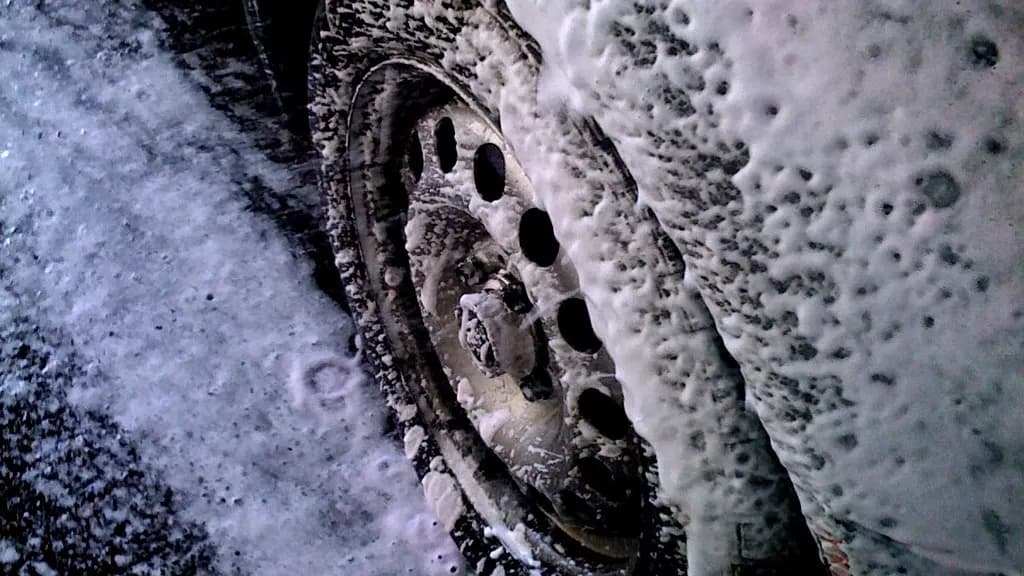
A car wash stores and pumps a range of chemicals: presoaks, wheel and tire cleaners (some acidic or caustic), foams, waxes, drying agents and spot-free treatments. If you have employees, OSHA's Hazard Communication Standard requires labels on containers, a safety data sheet for each hazardous chemical, and training so workers know how to handle them. Keep chemicals in a ventilated room with secondary containment, away from floor drains that lead anywhere other than your treatment system.
The tunnel itself is the other hazard. Conveyors, rollers and rotating brushes can injure workers who reach in while equipment is running. Write lockout procedures for maintenance, train attendants on emergency stops, and keep loading lanes clear. Insurance carriers will ask about these controls, and so will your equipment vendor's warranty terms.
Membership economics: a worked example
Unlimited memberships are the engine of the express model. The appeal is simple: members pay every month whether they wash or not, and the cost of each extra wash is small because the tunnel, labor and loan payments are fixed. The risk is that heavy users wash often and members cancel. The example below is illustrative; every number is our assumption, not an industry statistic.
Assumptions (express tunnel, monthly). 2,000 members paying an average of $30 a month and washing 3.5 times each, plus 6,000 single washes at an average of $15. Variable cost per car is about $2.10 for chemicals, water and sewer, and power, plus card fees of about 3% of revenue. Fixed costs are $118,000 a month: loan payments $50,000, labor $40,000, maintenance and repairs $8,000, marketing $6,000, property tax $5,000, insurance $3,000, software and license plate recognition $2,500 and other overhead $3,500.
| Line (monthly) | Members | Single washes | Total |
|---|---|---|---|
| Revenue | $60,000 | $90,000 | $150,000 |
| Washes | 7,000 | 6,000 | 13,000 |
| Chemicals, water, power ($2.10 a car) | $14,700 | $12,600 | $27,300 |
| Card fees (3%) | $1,800 | $2,700 | $4,500 |
| Contribution | $43,500 | $74,700 | $118,200 |
Contribution of $118,200 just covers $118,000 of fixed costs, so this wash is at break-even with about 2,000 members and 6,000 single washes a month. Each additional member adds about $21.75 a month ($30, minus 3.5 washes at $2.10, minus $0.90 of card fees). At 4,000 members and the same single-wash volume, profit before owner pay and income tax is about $43,700 a month, roughly $524,000 a year.
Try it — members needed if memberships carried all fixed costs
The calculator shows the harder case: if memberships had to cover all fixed costs on their own, you'd need about 5,425 members. That's why most plans count on both. Then layer in churn. If 5% of members cancel each month, a wash with 3,000 members must sign 150 new ones a month just to hold steady. Show your monthly sign-ups, churn and member count in the projections, starting from pre-opening sales.
Auto-renewal rules for memberships
A car wash membership is an automatic renewal plan, so consumer protection rules apply. The FTC's 2024 click-to-cancel rule was vacated on July 8, 2025, and the FTC restarted the rulemaking with an advance notice on March 11, 2026; no new rule text has been proposed. The Restore Online Shoppers' Confidence Act still applies to memberships sold online, and many states have automatic renewal laws requiring clear disclosure of the price and renewal terms, express consent and an easy way to cancel. Let members cancel online or in the app, confirm cancellations in writing, and train attendants not to make cancellation a sales battle. Our gym guide covers these rules in more detail.
Startup costs
There's no official figure for car wash startup costs, so the table below is our estimate, based on typical land, site work, building and equipment costs for new construction in suburban US markets. Land prices alone vary several-fold by region, so treat each line as a range to replace with real quotes.
| Item (new express exterior tunnel) | Estimate | Notes |
|---|---|---|
| Land (about 1 acre) | $700,000–$2,500,000 | Biggest regional variable |
| Site work, paving, utilities, stacking lanes | $500,000–$1,500,000 | Includes sewer and water connections |
| Building (tunnel and equipment room) | $900,000–$2,000,000 | Masonry or pre-engineered |
| Tunnel equipment, conveyor, dryers | $800,000–$1,800,000 | Length and package level drive cost |
| Reclaim, vacuums, pay stations, license plate recognition | $250,000–$600,000 | Central vacuum systems add cost |
| Permits, design, approvals | $100,000–$300,000 | Traffic and noise studies if required |
| Pre-opening marketing and working capital | $150,000–$400,000 | Months of fixed costs while members build |
| Total | About $3 million–$8 million+ | Self-serve or in-bay sites: about $0.5M–$2M |
Many tunnel projects are financed with commercial real estate loans or the SBA 504 program for land and building, plus equipment financing. Our guides to commercial real estate loans, SBA 7(a) loans and SBA loan requirements explain what lenders expect, including equity injections. Equipment usually qualifies for Section 179 or bonus depreciation; see our depreciation guide.
Common mistakes in car wash business plans
Assuming the sewer authority will say yes. Get the wastewater answer in writing before closing on land. A site where the sewer can't take your flows, or where pretreatment requirements are heavier than budgeted, changes the whole plan.
Undersizing the stacking lane. A queue that backs into the street draws code complaints and loses customers who drive past. Model your peak hour, not the average.
Forecasting members without churn. A plan that adds members every month and never loses any is not a plan a lender will believe.
Ignoring maintenance. Brushes, conveyors, pumps and separators wear constantly. Budget for preventive maintenance and pump-outs, and keep a parts inventory for the items that shut the tunnel down.
Making cancellation hard. It may hold members for a month, but it brings chargebacks, bad reviews and attorney general complaints.
Official links
- EPA — National Pretreatment ProgramHow sewer discharges are regulated
- EPA — Pretreatment applicabilitySignificant industrial user definition
- EPA — About NPDESPermits for discharges to waters
- EPA — Vehicle and equipment washing BMPContainment, treatment and reuse
- Washington Ecology — Vehicle washwater BMP manualDetailed discharge options and mobile wash rules
- FTC — Negative Option RuleStatus of click-to-cancel
What to do next
Pick your model, then test two or three sites against zoning, utilities and the sewer authority before anything else. Plug your own fixed costs, prices and wash counts into the break-even calculator, and assemble the full plan with the business plan generator. If you're starting smaller, our guide to starting a pressure washing business covers mobile cleaning with lower capital and the same wastewater principles.
This is general information, not legal or tax advice — confirm on the official source or with a professional.
Frequently asked questions
The standard sections (executive summary, company description, market analysis, management, services, marketing, funding request and financial projections) plus the items lenders look for in a car wash: the model, a site plan with stacking lanes, zoning status, how wastewater will be handled and approved by the sewer authority, water reclaim, equipment quotes, and a membership forecast with churn and break-even.
Not to a storm drain. Under the Clean Water Act, wash water discharged to storm drains or surface waters needs an NPDES permit, which is rarely practical. Most car washes send wash water through sand traps and an oil-water separator to the sanitary sewer, with the local sewer authority's approval and limits, or recycle it in a reclaim system. Mobile washers must capture their water.
There's no official figure. Our estimate for a new-build express exterior tunnel is roughly $3 million to $8 million or more including land, site work, building and equipment. A self-serve or in-bay automatic site typically costs $500,000 to $2 million, and a mobile wash business can start with a van, water tank and capture mat for $20,000 to $60,000.
They can be, because members pay every month whether they wash or not, and the cost of each wash is mostly fixed. In our example, a $30 member washing 3.5 times a month contributes about $21.75 a month after chemicals, water, power and card fees. The risk is churn and complaints about cancellation, so clear terms and easy cancellation matter.
Usually several: zoning approval (often a conditional or special use permit), building permits and a certificate of occupancy, a wastewater discharge authorization or permit from the local sewer authority, and a local business license. Some areas also need stormwater plans for construction, signage permits and water utility approval for new connections and backflow devices.
No. The FTC's 2024 rule was vacated on July 8, 2025, and the FTC restarted the process with an advance notice on March 11, 2026. But ROSCA still applies to memberships sold online, and many state automatic renewal laws require clear terms, consent and easy cancellation, so plan for simple online cancellation anyway.
Sources & verification
Figures on this page were checked against the sources below when it was last reviewed on 9 October 2026. Each rate and limit is stored once with its own official source and review date, and official update channels are monitored daily so changes are picked up. How we verify
- 1.National Pretreatment Program — U.S. Environmental Protection Agency · accessed 9 October 2026
- 2.Pretreatment standards and requirements: applicability — U.S. Environmental Protection Agency · accessed 9 October 2026
- 3.About NPDES — U.S. Environmental Protection Agency · accessed 9 October 2026
- 4.Stormwater best management practice: municipal vehicle and equipment washing (EPA-832-F-21-030H) — U.S. Environmental Protection Agency · accessed 9 October 2026
- 5.Vehicle and equipment washwater discharges: best management practices manual (WQ-R-95-056) — Washington State Department of Ecology · accessed 9 October 2026
- 6.Negative Option Rule — Federal Trade Commission · accessed 9 October 2026
- 7.Hazard communication — Occupational Safety and Health Administration · accessed 9 October 2026
MSMETOOLS is an independent platform and is not affiliated with any government agency, ministry or department.
Tools for this
Break Even Calculator
Find your break even point and units.
Business Plan Generator (US)
Create a professional business plan for US investors and banks.
Startup Cost Calculator
Estimate how much capital you need to launch.
Profit Margin Calculator
Calculate profit, markup and margin for your products or services.
Related guides
 How to Start a Gym in 2026: Laws, Costs & Business PlanRead guide
 How to Start a Mobile Detailing Business in 2026: Full GuideRead guide
 How to Start a Pressure Washing Business in 2026: GuideRead guide
 How to Start a Laundromat in 2026: Buy or Build?Read guide
Official links open the government site in a new tab.