 Starting & growing a business
How to Start a Mobile Detailing Business in 2026: Licenses, Wash Water Rules, Insurance, Equipment and Pricing
How to start a mobile detailing business in 2026: licenses, stormwater and wash water rules, insurance, equipment costs, sales tax and a worked pricing break-even.
 Edited by Sumeet YadavFounder & editor, MSMETOOLS · fact-checked against official sources

Contents (10)
- 1. Decide what services you'll offer
- 2. Register the business and get licensed
- 3. Wash water and stormwater rules
- 4. Chemicals and worker safety
- 5. Insurance for mobile detailers
- 6. Equipment and startup costs
- 7. Sales tax on detailing
- 8. Pricing and a worked break-even
- 9. Common mistakes when starting a mobile detailing business
- 10. What to do next
Mobile detailing is one of the cheapest service businesses to start: a vehicle you may already own, a few thousand dollars of equipment and customers who'll pay to have their car cleaned in their own driveway or office lot. What most new detailers miss is the water. Soapy, oily wash water running into a storm drain breaks local stormwater rules almost everywhere, and the fixes shape your equipment list. This guide is for anyone in the US planning to start a mobile detailing business in 2026. It covers registration and licenses, wash water rules with real examples from several states, insurance, equipment and startup costs, sales tax, pricing and a worked break-even. Rules were checked against EPA, state and local agencies, the IRS and BLS in October 2026.
Quick answer
To start a mobile detailing business, form an LLC or register as a sole proprietor, get an EIN and a local business license, and ask your city's stormwater office what it requires for mobile washing. Buy equipment that contains or avoids wash water, insure the business with general liability, commercial auto and garage keepers coverage, and price each package from your time, supplies and driving costs.
Wash water can't go into storm drains; send it to the sanitary sewer, recycle it or use waterless methods
Washington requires containment at least 4 feet beyond the vehicle on all sides
Startup: about $1,500–$3,500 budget, $5,000–$15,000 professional, excluding the vehicle (StartCosts estimates)
IRS business mileage rate: 76 cents per mile from July 1, 2026
Our $250 full detail leaves about $212 after supplies, driving and card fees
Decide what services you'll offer
Detailing ranges from a quick exterior wash and vacuum to multi-day paint correction and ceramic coating. Your service menu decides your equipment, how long each job takes and what you can charge. A maintenance wash and interior refresh is quick, repeatable and good for monthly memberships. A full detail covers deep interior cleaning, shampooing or extraction, clay bar treatment and a wax or sealant. Paint correction uses a machine polisher to remove swirls and light scratches, and ceramic coatings add a long-lasting protective layer; both take skill, controlled conditions and much higher prices.
Most new detailers start with two or three packages, such as an express wash, a full interior and a full detail, and add correction and coatings once they've practiced on their own and friends' cars. Fleet work for dealerships, rental companies and businesses with company vehicles can fill weekdays, while residential customers book evenings and weekends. If you also want to clean driveways and siding, our pressure washing business guide covers that work, which has its own lead paint and wash water issues.
Register the business and get licensed
Start with the business structure. Many detailers begin as sole proprietors, but an LLC separates business debts and claims from your personal assets, which matters in a business that handles customers' cars. LLC filing fees run $35 – $500 depending on the state; our LLC registration guide walks through the steps. Get a free EIN from the IRS (Free ($0)) through our EIN application guide, and open a business bank account.
Before your first paid detail
- 1
Register the business
LLC or sole proprietorship, a DBA if you'll use a trade name, and an EIN.
- 2
Get a local business license
Business licenses guideFrom the city or county where you're based; some cities also license businesses that work within their limits.
- 3
Ask about mobile wash rules
Call the stormwater or public works office and ask whether you need a mobile washing permit and where wash water may go.
- 4
Register for sales tax if required
Check whether your state taxes detailing services or only the products you sell.
- 5
Insure before you start
General liability, commercial auto and garage keepers coverage; get a certificate for fleet clients.
- 6
Set up chemicals and safety data sheets
Keep SDSs for every product and train anyone you hire.
Licensing for mobile detailing is mostly local. Your city or county business license is the baseline. On top of that, some cities regulate mobile washing directly. Monroe, North Carolina, for example, exempts individual residential and charity car washing from its stormwater ordinance but requires a permit for most commercial operations such as mobile vehicle washing. Other cities fold the rules into their business license or stormwater code without a separate permit. Ask before your first job, and keep the answer in writing.
If you'll work at office parks, apartment complexes or dealerships, the property owner may have its own rules on water use and runoff, and many will ask for proof of insurance before you start. Get permission in writing for regular sites.
Wash water and stormwater rules
This is the part of mobile detailing most guides skip. Storm drains in streets and parking lots carry rainwater, usually untreated, straight to streams, lakes and the ocean. Under the Clean Water Act, cities and counties that run municipal separate storm sewer systems (MS4s) must have programs to find and stop illicit discharges, and EPA's guidance says those programs include local ordinances that prohibit them. MS4 permits usually list a few allowable discharges, such as residential car washing and firefighting water, but a business washing cars for pay generally isn't on that list. Wash water carries soap, oil, brake dust, metals and grime, even when products are labeled biodegradable.
Local rules put this into practice in different ways:
- Washington: Ecology's guidance for mobile washers says wash water must be collected and discharged to a municipal wastewater (sanitary sewer) system, reused in a closed-loop recycling system, or hauled to a treatment facility. Washing must be done on an impervious surface that extends at least 4 feet beyond the vehicle on all sides, using a portable mat or wash pit on porous ground. Over pavement that drains to a storm sewer, you plug the drain temporarily and pump the water out. Mobile washers may not discharge to the ground, storm sewers or surface waters.
- San Diego County, California: the county says all pollution from mobile car washing is prohibited from leaving the property and entering streets or storm drains, and releasing it is a violation of its Watershed Protection Ordinance. Wash water must go to the sewer system, such as a sink or drain connected to the sewer.
- Monroe, North Carolina: the city lists four options: limited discharge to a storm drain only with no soaps or chemicals and other conditions; soaking into landscaped areas in some cases; collection and pretreatment for the sanitary sewer with permission; or disposal through a liquid waste company. It specifically lists mobile and fleet washing and detailing among the activities that can't use the first two options.
Where your wash water can go
Step 1
Contain it (mat, berm, drain plug)
Step 2
Recover it (vacuum or pump)
Step 3
Sanitary sewer
with the sewer utility's permission
Step 4
Or recycle / haul
closed loop or waste hauler
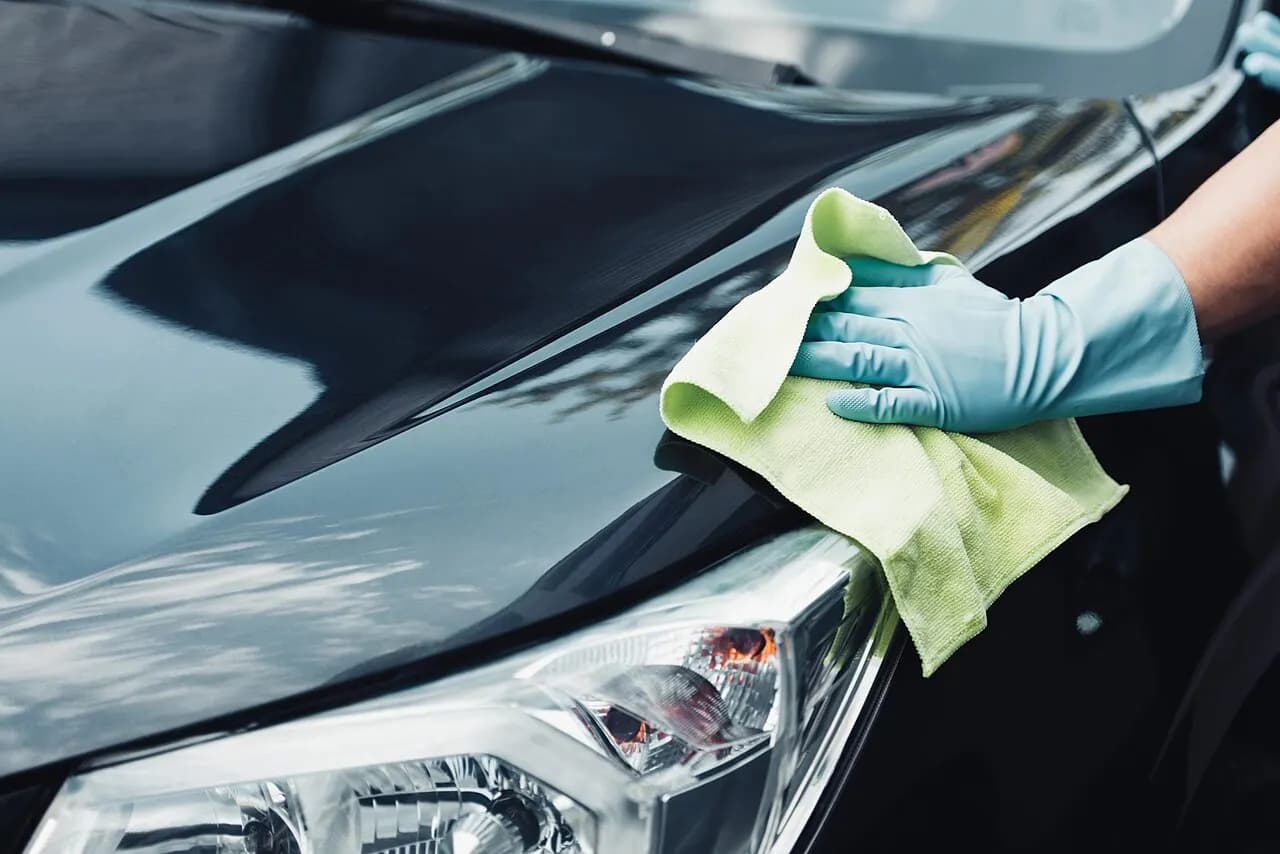
In practice, that gives you three ways to work. Waterless and rinseless washing uses spray products and microfiber towels with little or no runoff and suits lightly soiled cars, garages and apartment lots. Contain and recover uses a containment mat under the car, a water tank, a pressure washer and a vacuum recovery unit, with the collected water emptied at an approved sewer connection. Shop or host-site washing uses a location with a proper drain connected to the sewer, often through an oil-water separator. Never empty your recovery tank into a street drain or a customer's yard; ask your local sewer utility where you can dispose of it.
Drought rules can also apply. Many water utilities restrict outdoor washing during shortages, often with exemptions for businesses that recycle water or use very little. Check before you plan a hose-heavy service menu.
Chemicals and worker safety
Detailing chemicals, including degreasers, wheel acids, solvents and coating products, can burn skin and eyes or irritate lungs in an enclosed garage. Once you hire anyone, OSHA's Hazard Communication Standard requires you to keep labels on containers, have safety data sheets for each hazardous chemical, and train workers to understand them and handle the chemicals safely. Keep the SDSs in the vehicle, since that's your workplace. Provide gloves and eye protection, and ventilate when you work inside garages.
Store chemicals upright and secured in the van, and never decant them into unlabeled bottles. Spills of concentrated products in a customer's driveway can stain concrete and, if they reach a drain, become the kind of discharge stormwater rules prohibit.
Insurance for mobile detailers
Insurance is where a lot of new detailers cut corners, and one damaged car can show why that's a mistake. General liability covers injuries and property damage you cause, such as a customer tripping on your hose. Commercial auto covers the vehicle you work from; personal auto policies often exclude business use, so tell your insurer what you do. Garage keepers coverage protects customers' vehicles while they're in your care, custody or control, which general liability usually excludes. That matters when you're polishing paint, moving a car or holding keys.
StartCosts estimates general liability at about $40 to $70 a month and garage keepers at $100 to $300 a month for a mobile operation; these are market estimates, and your quote depends on your state, services and claims history. Add inland marine or equipment coverage for tools stored in the van, and workers' compensation once you hire, which most states require. Our business insurance guide explains each policy.
Equipment and startup costs
Mobile detailing is cheap to start compared with a fixed car wash site; see our car wash business plan for that model. StartCosts estimates a budget mobile set-up at $1,500 to $3,500 and a professional one at $5,000 to $15,000, assuming you already own a suitable vehicle. All figures below are market estimates, not official numbers.
| Item | Budget | Professional | Basis |
|---|---|---|---|
| Pressure washer (1,000–1,500 PSI) | $120–$350 | $500–$1,600 | StartCosts estimate |
| Extractor or wet/dry vacuum | $60–$150 | $200–$500 | StartCosts estimate |
| Dual-action polisher | $100–$200 | $200–$600 | StartCosts estimate |
| Inverter generator (if needed) | $300–$800 | $800–$2,500 | StartCosts estimate |
| Water tank (50–100 gallons) | $50–$150 | $100–$300 | StartCosts estimate |
| Chemicals, compounds, waxes, towels, brushes | $425–$900 | $950–$2,750 | StartCosts estimate, several lines combined |
| Business license | $50–$200 | $50–$200 | StartCosts estimate; varies by city |
| Website and marketing | $100–$500 | $500–$2,000 | StartCosts estimate |
| LLC filing and EIN | $35 – $500; EIN Free ($0) | Same | State filing fees; IRS |
| Containment mat and water recovery | Not included | Varies | Our note: budget for it where wash water must be recovered |
The containment and recovery gear is the line most cost lists leave out, and in cities with strict stormwater rules it's not optional. Buy it before you start rather than after a warning. Equipment and the vehicle can usually be depreciated; our depreciation guide explains how. Total your own list with the startup cost calculator.
Sales tax on detailing
Sales tax on detailing depends entirely on your state. New York is a clear example of a state that taxes it: under Tax Bulletin ST-105, car wash services are taxable when staff wash, wax or vacuum the car or help with it, and detailing performed at least partly by staff is taxable. Carpet and upholstery cleaning with cleaning compounds or solvents isn't taxable if it's offered separately, but simple vacuuming of the interior doesn't count as that exclusion. Many other states don't tax the detailing labor itself, but you still pay sales tax when you buy chemicals and supplies, and products you sell to customers, such as air fresheners or a bottle of spray wax, are usually taxable. Check your state's revenue department before you set prices, and see our sales tax guide for the method.
Pricing and a worked break-even
Price each package from the time it takes and the costs it carries, then check the local market. StartCosts lists typical ranges of $40 to $100 for a basic wash and vacuum, $225 to $500 for a full interior and exterior detail, $300 to $600 for one-stage paint correction and $600 or more for a ceramic coating. Charge more for large SUVs, trucks and heavily soiled interiors, and say so on your price list.
Worked example. A full detail sells for $250 and takes about four and a half hours including travel. Variable costs per job: supplies about $15; a 20-mile round trip costed at the IRS business rate of 76 cents per mile, or about $15.20; and card fees of 3%, or $7.50. That leaves $212.30 per detail, or about $47 an hour of your time before overhead.
Monthly fixed costs: general liability $55 and garage keepers $150; phone and booking software $80; marketing $300; equipment repair and replacement $150; a van payment $450; generator fuel and water $100; and accounting $100, for $1,385. Add an owner's draw of $5,000 and the business needs $6,385 a month, or about 30 full details a month, roughly one and a half a day over 20 working days. Without the draw, it breaks even at about seven details.
Try it — details a year to cover costs and your draw
For context, BLS reports a median wage of $35,830 a year for cleaners of vehicles and equipment in May 2025. A busy mobile detailer can earn well above that, but only by keeping the van full: travel time between jobs is unpaid, so cluster appointments by neighborhood and sell maintenance plans that bring the same cars back every month. Use our hourly rate calculator to set a target rate, and send written quotes with the quotation generator for fleet work.
Common mistakes when starting a mobile detailing business
The first mistake is letting wash water run into the street. It's the most visible violation a detailer can make, neighbors report it, and in many cities it can bring fines. Choose waterless methods or containment and recovery from the start. The second is skipping garage keepers coverage: if you damage a customer's paint or interior, general liability may not pay.
The third is underpricing to win the first customers. A $99 full detail that takes five hours pays less than minimum wage once you count driving and supplies. The fourth is not tracking mileage: the IRS standard mileage rate was 72.5 cents per mile for the first half of 2026 and 76 cents per mile from July 1, so a mileage log is real money at tax time, and self-employed detailers should set money aside for quarterly estimated taxes. The fifth is ignoring reviews and local search. Most detailing customers search on their phones, so set up a Google Business Profile and ask every happy customer for a review.
Official links
- EPA — illicit discharge detection and eliminationWhy wash water can't go into storm drains
- Washington Ecology — vehicle washwater BMPsMobile washer rules and containment
- San Diego County — mobile vehicle washingExample county rules
- Monroe, NC — pressure washing and mobile car washingExample city permit and disposal options
- NY Tax Bulletin ST-105Sales tax on car wash and detailing services
- OSHA hazard communicationChemical labels, SDSs and training
- IRS standard mileage rates2026 business rates
What to do next
Call your city's stormwater or public works office this week and ask two questions: do you need a mobile washing permit, and where can you dispose of collected wash water? Then build your equipment list around the answer, total it in the startup cost calculator, and set prices that clear your break-even with the break-even calculator. If you want to add exterior cleaning of homes and driveways later, read our pressure washing business guide; if you'd rather grow into a fixed site, start with our car wash business plan.
This is general information, not legal or tax advice — confirm on the official source or with a professional.
Frequently asked questions
There's no official figure. StartCosts estimates about $1,500 to $3,500 for a budget mobile set-up and $5,000 to $15,000 for a professional one, assuming you already own a suitable vehicle. That covers a pressure washer, extractor, polisher, generator, water tank, chemicals, towels, a business license and marketing, plus monthly insurance. A van, trailer build-out or water recovery system adds more.
Usually you need a local business license, and many cities and counties also regulate where your wash water goes. Some require a separate permit for commercial mobile washing; Monroe, North Carolina, for example, exempts residential and charity washing but requires a permit for most commercial operations. You'll also register the business, get an EIN (Free ($0)) and, in some states, collect sales tax.
Generally no. Storm drains carry water untreated to streams and lakes, and local stormwater ordinances treat soapy or oily wash water as an illicit discharge. Washington's Ecology guidance tells mobile washers to contain water on an impervious surface at least 4 feet beyond the vehicle on all sides and send it to the sanitary sewer, a closed-loop system or a treatment facility. Waterless and rinseless methods avoid most runoff.
At minimum, general liability and commercial auto coverage for the vehicle you work from, because personal auto policies often exclude business use. Detailers also need garage keepers coverage, which protects customers' cars while they're in your care, since general liability usually excludes them. StartCosts estimates $40 to $70 a month for general liability and $100 to $300 a month for garage keepers.
Price from your costs and the time each package takes. StartCosts lists $40 to $100 for a basic wash and vacuum and $225 to $500 for a full interior and exterior detail, with paint correction and ceramic coatings higher. In our example, a $250 full detail leaves about $212 after supplies, driving and card fees, and about 30 details a month cover overhead and a $5,000 owner's draw.
It depends on the state. New York's Tax Bulletin ST-105 treats washing, waxing and vacuuming by staff as taxable services, while separately offered carpet and upholstery cleaning with cleaning compounds isn't taxed. Many other states don't tax detailing labor but tax the supplies you buy. Check your state revenue department before you set prices.
Sources & verification
Figures on this page were checked against the sources below when it was last reviewed on 13 October 2026. Each rate and limit is stored once with its own official source and review date, and official update channels are monitored daily so changes are picked up. How we verify
- 1.Illicit discharge detection and elimination — BMP fact sheet — U.S. Environmental Protection Agency · accessed 13 October 2026
- 2.Vehicle and equipment washwater discharges — best management practices manual (95-056) — Washington State Department of Ecology · accessed 13 October 2026
- 3.Mobile vehicle washing — County of San Diego Department of Public Works · accessed 13 October 2026
- 4.Pressure washing and mobile car washing — City of Monroe, North Carolina · accessed 13 October 2026
- 5.Tax Bulletin ST-105: Car wash services — New York State Department of Taxation and Finance · accessed 13 October 2026
- 6.Hazard communication — Occupational Safety and Health Administration · accessed 13 October 2026
- 7.Standard mileage rates — Internal Revenue Service · accessed 13 October 2026
- 8.Hand laborers and material movers — Pay — U.S. Bureau of Labor Statistics · accessed 13 October 2026
- 9.Auto detailing startup costs — StartCosts (secondary) · accessed 13 October 2026
MSMETOOLS is an independent platform and is not affiliated with any government agency, ministry or department.
Tools for this
Startup Cost Calculator
Estimate how much capital you need to launch.
Freelance Hourly Rate Calculator
Work out the hourly rate you need to charge.
Break Even Calculator
Find your break even point and units.
Quotation Generator
Create professional quotes for clients.
Related guides
 Car Wash Business Plan 2026: Water Rules, Costs & MembersRead guide
 How to Start a Pressure Washing Business in 2026: GuideRead guide
 How to Start a Dog Grooming Business in 2026: GuideRead guide
 How to Start a Handyman Business in 2026: Limits & PricingRead guide
Official links open the government site in a new tab.