 Starting & growing a business
How to Start a Handyman Business in 2026: State Exemption Limits, Insurance, Startup Costs and Pricing
How to start a handyman business in 2026: handyman exemption limits by state (CA, FL, AZ, NV, OR), insurance, startup costs and how to set your hourly rate, worked.
 Edited by Sumeet YadavFounder & editor, MSMETOOLS · fact-checked against official sources

Contents (10)
- 1. What a handyman business does
- 2. Handyman exemption limits by state
- 3. What a handyman can't do without a license
- 4. Insurance for a handyman business
- 5. Startup costs and equipment
- 6. How to set your handyman rate, with a worked example
- 7. When to get a contractor license
- 8. Finding customers
- 9. Common mistakes when starting a handyman business
- 10. What to do next
A handyman business is one of the fastest trades to start: if you're good with tools, you can be taking paid jobs within weeks for a few thousand dollars. The catch is that "handyman" isn't a license in most states. It's a narrow exemption from contractor licensing, with a dollar cap, conditions about permits and advertising, and carve-outs for plumbing, electrical and HVAC work. Cross those lines and you're contracting without a license, which can mean fines and unpaid invoices. This guide is for anyone starting a handyman business in 2026. It covers the exemption limits with real state examples, what a handyman can and can't do, insurance, startup costs and a worked example of setting your hourly rate, checked against state statutes, licensing boards, the IRS and BLS in October 2026.
Quick answer
To start a handyman business, register the business and get a local business license, then learn your state's handyman exemption: the job-size cap, whether permitted work is excluded and whether you must disclose that you're unlicensed. Stay out of plumbing, electrical and HVAC work that needs a trade license, buy general liability insurance, and set an hourly rate with a minimum charge that covers your costs and unbilled time.
California: under $1,000, no permit, no employees
Florida: under $2,500; not if you advertise as a contractor
Arizona and Nevada: under $1,000; no permitted work
Washington: every contractor must register with L&I
Our worked solo rate: about $85 an hour with a two-hour minimum
What a handyman business does
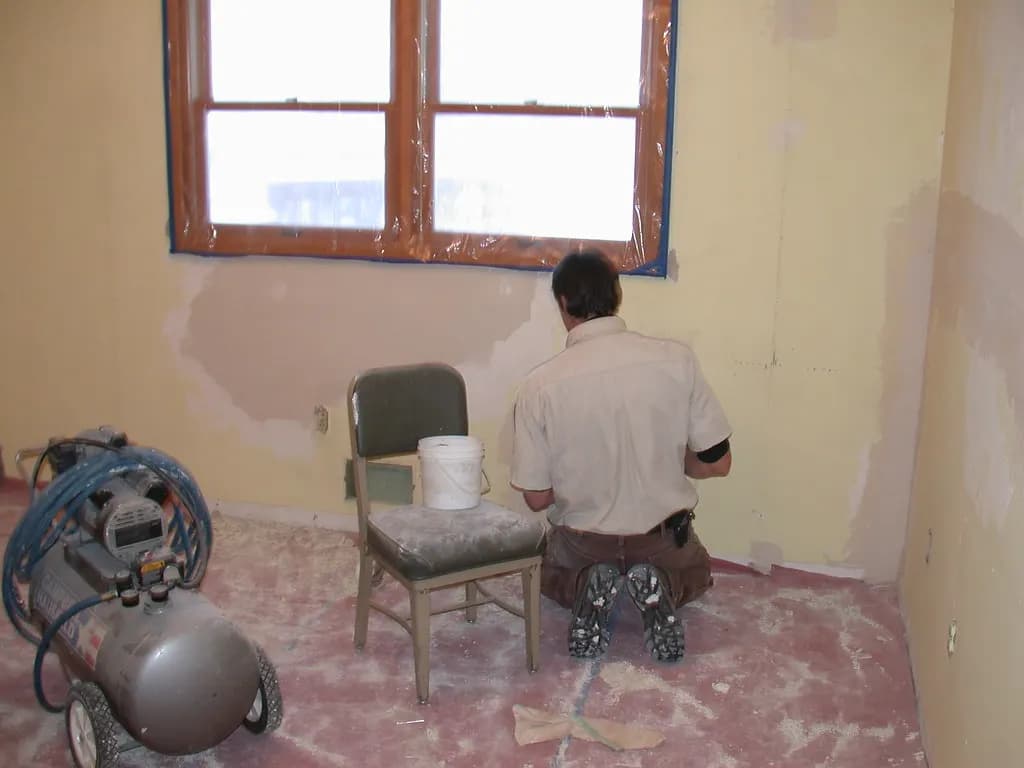
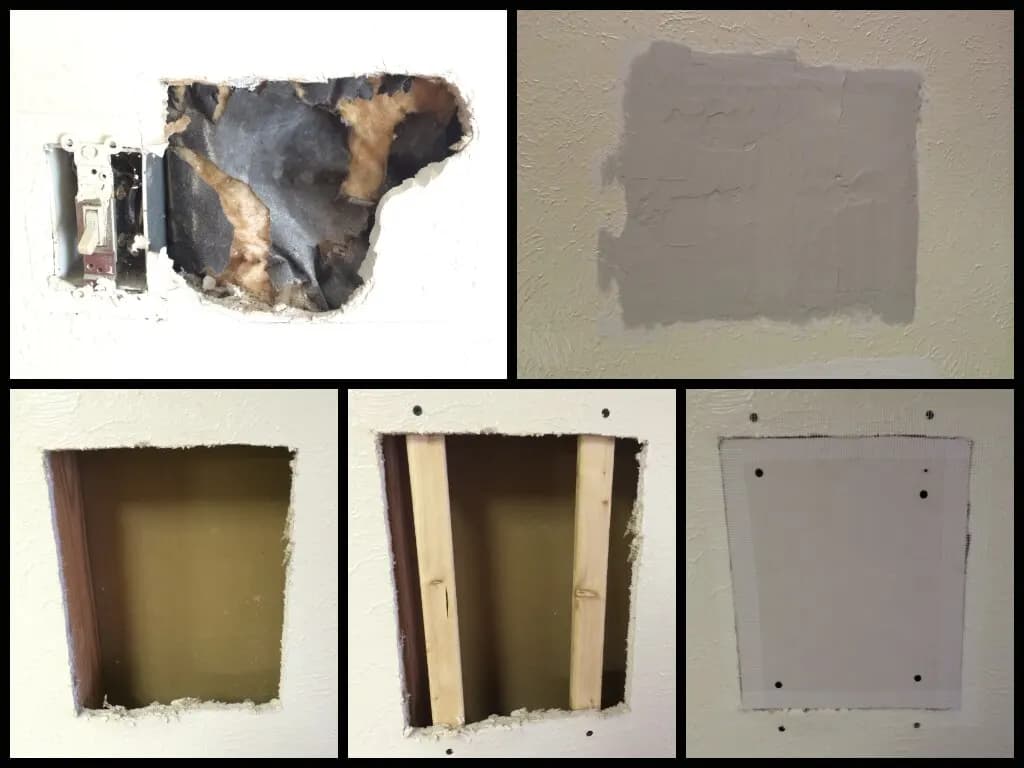
Handyman work is small repairs and improvements that don't justify hiring a specialist: patching drywall, rehanging doors, assembling furniture, mounting TVs and shelves, replacing trim, caulking tubs, fixing fences and gates, pressure washing, gutter cleaning and punch lists for home sellers. Customers include busy homeowners, older homeowners who want trustworthy help, landlords and property managers who need unit turnovers, and real estate agents who need repairs before a listing or after an inspection.
The model works because jobs are quick, materials are cheap and demand doesn't depend on new construction. It also has a built-in ceiling: in most states the exemption caps how big a job you can take without a contractor license. Many handymen use the business to build a customer base and experience, then get a general or specialty license later. Plan for that from the start, keep records of your work, and you'll have the experience documentation many boards ask for.
Handyman exemption limits by state
There's no national handyman license. Most states license contractors above a certain job size and exempt small, minor work below it. The dollar figure is only part of the test: the exemption usually covers the total price including labor and materials, excludes work that needs a building permit, bans splitting a bigger project into smaller contracts, and may disappear if you advertise as a contractor. Start by registering the business (LLC filing fees run $35 – $500; an EIN is Free ($0)) and getting any local business license; see our business license guide.
Handyman exemption limits — state examples
| State | Limit without a license | Key conditions |
|---|---|---|
California | Under $1,000 per project | No building permit; no employee labor; can't split jobs or claim to be licensed |
Florida | Under $2,500 | Casual, minor or inconsequential work; not if you advertise as a contractor or the job is part of a larger one |
Arizona | Under $1,000 | No permit needed; ads must say 'not a licensed contractor' |
Nevada | Under $1,000 repair or maintenance | No permit; not plumbing, electrical or HVAC work; not part of a larger project |
Oregon | Under $1,000, casual or minor work | Not available to anyone who advertises as a contractor |
Virginia | License required on single jobs over $1,000 | Class C license covers smaller firms |
Washington | No dollar exemption | All contractors register with L&I and post a bond |
California
- Limit without a license
Under $1,000 per project
- Key conditions
No building permit; no employee labor; can't split jobs or claim to be licensed
Florida
- Limit without a license
Under $2,500
- Key conditions
Casual, minor or inconsequential work; not if you advertise as a contractor or the job is part of a larger one
Arizona
- Limit without a license
Under $1,000
- Key conditions
No permit needed; ads must say 'not a licensed contractor'
Nevada
- Limit without a license
Under $1,000 repair or maintenance
- Key conditions
No permit; not plumbing, electrical or HVAC work; not part of a larger project
Oregon
- Limit without a license
Under $1,000, casual or minor work
- Key conditions
Not available to anyone who advertises as a contractor
Virginia
- Limit without a license
License required on single jobs over $1,000
- Key conditions
Class C license covers smaller firms
Washington
- Limit without a license
No dollar exemption
- Key conditions
All contractors register with L&I and post a bond
California
California's minor-work exemption is the most widely known and one of the narrowest. You can work without a CSLB license only when the combined value of labor, materials and all other costs on one or more contracts for the project is less than $1,000, the work needs no building permit, and you use no employee labor. A bigger project can't be broken into smaller contracts to get under the limit, and you can't advertise yourself as a licensed contractor. The limit was raised from $500 to $1,000 from January 1, 2025, which helps, but it still rules out most kitchen and bath work.
Florida, Arizona and Nevada
Florida exempts work that is casual, minor or inconsequential when the aggregate contract price for labor, materials and everything else is less than $2,500; the limit rose from $1,000 in 2020. The exemption doesn't apply if the work is part of a larger operation, if contracts are split to evade licensing, or to anyone who advertises as a contractor or represents themselves as qualified to contract. Ask your county or city too, because many Florida jurisdictions treat permitted work as outside the exemption and some require local registration.
Handyman work in numbers
$23.84 an hour ($49,590 a year)
Median maintenance and repair pay
BLS, May 2025
$2,500
Florida handyman limit
§489.103(9)
$1,000
California minor-work limit
Labor + materials
15.3%
Self-employment tax rate
IRS
Arizona's exemption covers jobs where the total price is under $1,000, it never covers work that needs a building permit, and anyone relying on it must include "not a licensed contractor" in their advertising. Nevada exempts repair and maintenance work valued at less than $1,000, including labor and materials, unless it needs a building permit, is the kind of work done by a specialty classification such as plumbing, electrical, refrigeration, heating or air conditioning, or is part of a larger project. Counties add their own rules: Clark County, which covers Las Vegas, issues a handyman business license for $150.
Oregon, Washington and Virginia
Oregon exempts casual, minor or inconsequential work on a single structure or project when total contract prices are under $1,000, but the exemption doesn't apply to anyone who advertises or uses signs or cards suggesting they're a contractor. For a handyman business that markets itself, that means getting a Construction Contractors Board license. Washington goes further: there's no dollar exemption, and every construction contractor must register with L&I, file a $15,000 specialty or $30,000 general bond, and carry liability insurance. Virginia requires a contractor license for single jobs over $1,000, with the Class C license designed for smaller firms. Some states set much higher thresholds for general work, such as Tennessee at $25,000 and North Carolina at $40,000, but they still license the trades separately.
What a handyman can't do without a license
Even under the exemption, trade work is usually off limits. Plumbing, electrical, HVAC and gas work generally requires a state or local trade license at any job size; Nevada says so in its exemption, and Texas, which has no general contractor license, still licenses plumbers, electricians and HVAC contractors. Roofing, structural work, and anything that needs a permit are usually outside the exemption too.
Jobs to refer out or license for first
0/6Work on older homes has a federal layer. If you disturb more than 6 square feet per room of painted surface inside or 20 square feet outside in a home built before 1978, the EPA lead rule requires firm certification and a certified renovator; our painting business guide explains what that takes. Build a referral list of licensed plumbers, electricians and HVAC contractors. Passing those jobs on keeps you legal, and licensed trades often send small jobs back to a handyman they trust.
Insurance for a handyman business
General liability is the one policy every handyman should carry from day one. It covers damage to the customer's property, such as a leak after you replace a toilet seal or a scratched floor, and injuries to people around your work. Property managers, real estate agents and many homeowners will ask for a certificate of insurance before you start, often naming them as additional insured. Commercial auto covers a vehicle used mainly for work; your personal policy may not. Tool coverage protects equipment stolen from your truck. Once you hire anyone, workers' compensation is required in most states; see our workers' comp guide.
Hiring helpers as 1099 contractors to avoid payroll and workers' comp is risky: a helper who works only for you, on your schedule, with your tools is probably an employee. In California, using employee labor also takes you out of the minor-work exemption entirely. Our 1099 vs W-2 guide and business insurance guide explain the details.
Startup costs and equipment
There's no official benchmark for handyman startup costs. These are our planning estimates for a solo handyman who already owns a pickup or van. Expect roughly $3,000 to $15,000 in total: business registration and local license fees; general liability insurance, often $500 to $2,000 a year for a solo operator depending on the state and the work; a core set of cordless tools, a miter saw, ladders, a stud finder, levels and hand tools, often $1,500 to $5,000 if you're starting from scratch; van shelving and a stock of fasteners, caulk, patching compound and common hardware; a simple website, business cards and listings; and a cash cushion for the first slow months.
Most tools and a vehicle used mainly for business can be deducted in the year you place them in service under Section 179 (limit $2,560,000 for 2026). Keep receipts and a mileage log from the first day. Our startup cost calculator totals your list and shows how much cash you need before the first invoices are paid.
How to set your handyman rate, with a worked example
Handymen usually charge in one of three ways: hourly with a minimum, flat rate per task, or a mix in which common tasks have set prices and everything else is hourly. Whichever you use, start from the hourly rate you actually need. The trap is dividing your target income by 2,000 hours. Nobody bills 2,000 hours: driving between jobs, buying materials, quoting, invoicing and slow weeks eat into the year, and most solo trades bill 1,000 to 1,400 hours.
Worked example. A solo handyman wants to pay himself $55,000 a year. Self-employment tax is 15.3% on 92.35% of net earnings, roughly $7,770 on that income. Business costs are about $22,000: van payment, fuel and maintenance, $13,800; insurance, $2,500; tool replacement, $1,500; phone, software and accounting, $1,200; marketing, $3,000. That's $84,770 a year to cover. He works 50 weeks of 40 hours, but bills only 60% of them, or 1,200 hours.
The break-even rate is 84,770 ÷ 1,200 = $70.64 an hour. To keep a 15% profit for slow seasons, tool upgrades and growth, divide by 0.85: $83.11, rounded to $85 an hour. Because short visits cost the same drive time as long ones, he sets a two-hour minimum ($170). Materials are billed at cost plus 20% to cover the time spent buying them and the occasional return trip.
| Item | Annual amount | Basis |
|---|---|---|
| Owner pay target | $55,000 | Your choice |
| Self-employment tax | $7,770 | 15.3% × 92.35% of $55,000 |
| Vehicle, fuel and maintenance | $13,800 | Our estimate |
| Insurance, tools, software, marketing | $8,200 | Our estimate |
| Total to cover | $84,770 | |
| Billable hours | 1,200 | 60% of 2,000 |
| Break-even rate | $70.64 | Total ÷ hours |
| Rate with 15% profit | $85 | ÷ 0.85, rounded |
Now a typical half-day job: patch two drywall holes, rehang a sticking door, install two grab bars and recaulk a tub, an estimated 4.5 hours. Labor is $382.50 and materials cost $60, billed at $72, so the invoice is $454.50. That's well under California's $1,000 limit, but note that the limit covers the whole project: if the same customer asks you back next week to finish more of the same bathroom, the total counts.
Try it — your own handyman rate
Turn your most common jobs into flat prices once you've timed them a few times: TV mounting, ceiling fan swaps where your state allows them, door adjustments, faucet aerators, smoke detector replacements. Customers like knowing the price, and you earn more when you get faster. Send each customer a written quote and invoice from our quotation generator and invoice generator.
When to get a contractor license
Many handymen hit the exemption ceiling within a year or two. Customers who like your work ask for the bigger job: a full bathroom refresh, a deck, a basement finish. Turning those down sends your best customers to someone else, so plan the move to a license before you need it. In California that means a CSLB license, often a B General Building or a specialty class, with 4 years within the last 10 of documented experience, two exams and a $25,000 bond. In Arizona it might be a residential specialty or general license with the Registrar of Contractors; in Florida, a residential contractor certificate or a local registration.
From handyman to licensed contractor
Step 1
Small jobs under the exemption
Step 2
Document experience
Step 3
Pick license class
Step 4
Exams and bond
Step 5
Bigger projects
with permits
Keep the paper trail that boards ask for. Save invoices, photos and customer details for the work you do, note the type of work and hours, and ask a licensed contractor you work with whether they'd verify your experience later. Getting licensed also changes your insurance, bonding and pricing, so revisit your hourly rate and overhead when you make the switch. Our guide to starting a construction company walks through licensing and bonding in more detail.
Finding customers
Most handyman work comes from local search, neighborhood referrals and repeat customers. Set up your local business listings with real photos, ask every happy customer for a review, and leave a card or magnet with a list of the jobs you do. Real estate agents and property managers are worth a visit: pre-listing repairs and post-inspection punch lists are steady, fast-paying work, and one property manager can keep you busy for weeks. Be careful with lead-generation apps that charge per lead; track what each source costs per paid job and drop the ones that don't pay.
Common mistakes when starting a handyman business
The biggest mistake is drifting over the exemption line: taking a $3,000 bathroom refresh in a state with a $1,000 limit, or splitting it into three invoices. If you're unlicensed above the limit, you may be unable to sue for payment and can face fines. The second is doing trade work you're not licensed for because the customer asked; an electrical fire or a gas leak can end the business. The third is pricing too low because you divided by 2,000 hours and forgot self-employment tax.
Others include working without liability insurance, not putting the scope and price in writing, advertising yourself as a "contractor" where that voids the exemption, and taking on so many small jobs across town that drive time eats your day. Group jobs by neighborhood and keep a waiting list rather than zig-zagging the city.
Official links
- CSLB — minor work exemptionCalifornia $1,000 limit and conditions
- Florida Statutes §489.103Exemptions, including (9) for minor work
- Arizona A.R.S. §32-1121Handyman exemption
- Nevada State Contractors Board — handyman exemptionsNRS 624.031 limits
- Oregon ORS Chapter 701Exemptions in 701.010
- Washington L&I — register as a contractorRegistration, bond and insurance
What to do next
Look up your state's exemption limit and conditions, register the business, and buy general liability insurance before your first job. Build a referral list of licensed trades for the work you can't do, then calculate your hourly rate with our hourly rate calculator and plan your launch budget with the startup cost calculator. When you're ready for bigger jobs, our guide to starting a construction company explains contractor licensing, bonding and job costing, and our painting business guide covers painting licenses and the EPA lead rule.
This is general information, not legal or tax advice — confirm on the official source or with a professional.
Frequently asked questions
Often not for small jobs, but every state draws the line differently. California lets unlicensed handymen take jobs under $1,000 with no permit and no employees. Florida's exemption stops below $2,500, and Arizona's and Nevada's below $1,000. Washington requires every contractor to register. Plumbing, electrical and HVAC work usually needs a trade license at any size.
The limit is the total job price, including labor and materials, under your state's exemption: under $1,000 in California, under $2,500 in Florida, under $1,000 in Arizona and Nevada. You can't split a bigger project into small invoices to stay under the line, and most states exclude any job that needs a building permit.
There's no official figure. Our estimate for a solo handyman who already owns a pickup or van is roughly $3,000 to $15,000: business registration and any local license, general liability insurance, a core set of power and hand tools, ladders, a website and listings, and a cash cushion. Buying a used work van, trailer or specialty tools adds more.
Build the rate from your costs. Add the pay you want, self-employment tax, and business costs such as vehicle, insurance, tools and marketing, then divide by the hours you'll actually bill, usually 1,000 to 1,400 a year. In our worked example that needs about $71 an hour to break even and $85 an hour with profit, plus a two-hour minimum.
General liability is essential, because one water leak or broken window can cost thousands. Add commercial auto if you drive a work vehicle, workers' compensation once you hire, and tool coverage. Some exemptions require proof of insurance, and property managers and real estate agents commonly ask for a certificate naming them as additional insured before you start.
It can be, because overhead is low and demand is steady from homeowners, landlords and agents. BLS puts the median wage for general maintenance and repair workers at $23.84 an hour ($49,590 a year), and a self-employed handyman who prices well can earn more. The limits are the exemption caps on job size and the hours one person can bill, so many handymen eventually get licensed or hire.
Sources & verification
Figures on this page were checked against the sources below when it was last reviewed on 12 October 2026. Each rate and limit is stored once with its own official source and review date, and official update channels are monitored daily so changes are picked up. How we verify
- 1.Before applying for a license — California Contractors State License Board · accessed 12 October 2026
- 2.Florida Statutes §489.103 — Exemptions — Florida Legislature · accessed 12 October 2026
- 3.A.R.S. §32-1121 — Persons not required to be licensed — Arizona Legislature · accessed 12 October 2026
- 4.Handyman exemptions — Nevada State Contractors Board · accessed 12 October 2026
- 5.ORS Chapter 701 — Construction contractors — Oregon Legislature · accessed 12 October 2026
- 6.Register as a contractor — Washington State Department of Labor & Industries · accessed 12 October 2026
- 7.Code of Virginia §54.1-1100 — Definitions — Virginia General Assembly · accessed 12 October 2026
- 8.List of license categories and fees — Clark County, Nevada · accessed 12 October 2026
- 9.General maintenance and repair workers — Occupational Outlook Handbook — U.S. Bureau of Labor Statistics · accessed 12 October 2026
- 10.Topic no. 554, Self-employment tax — Internal Revenue Service · accessed 12 October 2026
MSMETOOLS is an independent platform and is not affiliated with any government agency, ministry or department.
Tools for this
Freelance Hourly Rate Calculator
Work out the hourly rate you need to charge.
Startup Cost Calculator
Estimate how much capital you need to launch.
Quotation Generator
Create professional quotes for clients.
Invoice Generator
Create professional invoices with tax, logo and custom details.
Related guides
 How to Start an HVAC Business in 2026: Licenses & PricingRead guide
 How to Start a Painting Business in 2026: Licenses & PricingRead guide
 How to Start a Construction Company in 2026: Full GuideRead guide
 How to Start a Pressure Washing Business in 2026: GuideRead guide
Official links open the government site in a new tab.