 Starting & growing a business
How to Start a Dog Grooming Business in 2026: Licensing, Mobile Rules, Insurance and Pricing
How to start a dog grooming business in 2026: state licensing in Connecticut and Colorado, mobile wastewater rules, insurance, equipment, pricing and pay rules.
 Edited by Sumeet YadavFounder & editor, MSMETOOLS · fact-checked against official sources

Contents (10)
- 1. Choose your grooming business model
- 2. Do you need a license to groom dogs?
- 3. Mobile dog grooming permits and wash water rules
- 4. Insurance for a dog grooming business
- 5. Dog grooming equipment and startup costs
- 6. How much to charge for dog grooming: a worked example
- 7. Taxes, sales tax and hiring groomers
- 8. Common mistakes new grooming businesses make
- 9. Marketing a new grooming business
- 10. What to do next
Dog grooming is one of the few pet businesses you can start with skill, a few thousand dollars of equipment and a room, and it brings repeat customers by design: most coated breeds need a groom every four to eight weeks. This guide is for anyone in the US starting one in 2026, from home, in a salon or from a van, and covers state licensing examples, mobile wash water rules, insurance, equipment, taxes and pricing, checked against official sources in October 2026.
Quick answer
To start a dog grooming business, get trained (most groomers learn on the job or at a grooming school), pick a model (home, salon or mobile), form an LLC, get an EIN and local business licenses, check zoning and any state facility licence, buy liability insurance that covers animals in your care, and set prices from your time per dog. Mobile groomers also need a plan to send wash water to a sanitary sewer, never a storm drain.
No federal groomer licence; Connecticut and Colorado are examples of states that license grooming businesses
Mobile wash water must not reach storm drains; San Diego fines run up to $10,000 per day per incident
Insure animals in your care: standard liability often excludes them
Grooming is a taxable service in some states, such as Connecticut at 6.35%
Our example: 5 dogs a day at $85 makes a solo groomer about $83,000 before tax
Choose your grooming business model
There are three common ways in, and the right one depends mostly on your capital and where your customers live.
Home-based grooming. You convert a garage, basement or spare room into a grooming room with a tub, table and dryer. Startup costs are lowest and there's no commute, but you're limited by zoning, parking and the number of dogs you can hold safely at once. It suits a groomer building a client list before taking on a lease.
Salon or storefront. A rented space lets you add bathers and groomers, take walk-ins, sell retail and run several tables at once. Rent, build-out for plumbing and drainage, and payroll raise the break-even point, so most salons need two or more full-time groomers to work. Some groomers rent a table or a room inside an existing salon, pet store or veterinary clinic first, which is a cheap way to test a neighborhood.
Mobile grooming. A van or trailer with its own tub, water tanks, generator or power hookup, and dryer goes to the customer's driveway. You can charge more for convenience and you groom one dog at a time with no kennel stress, but you'll groom fewer dogs a day because of driving, and the vehicle is the biggest single cost. It's also the model with the most permit questions, covered below.
Whichever you pick, get real grooming experience first. The Bureau of Labor Statistics notes that groomers usually learn on the job under an experienced groomer, though grooming schools exist too. No federal law requires certification, but private certifications from grooming associations and schools help with customer trust and some insurers.
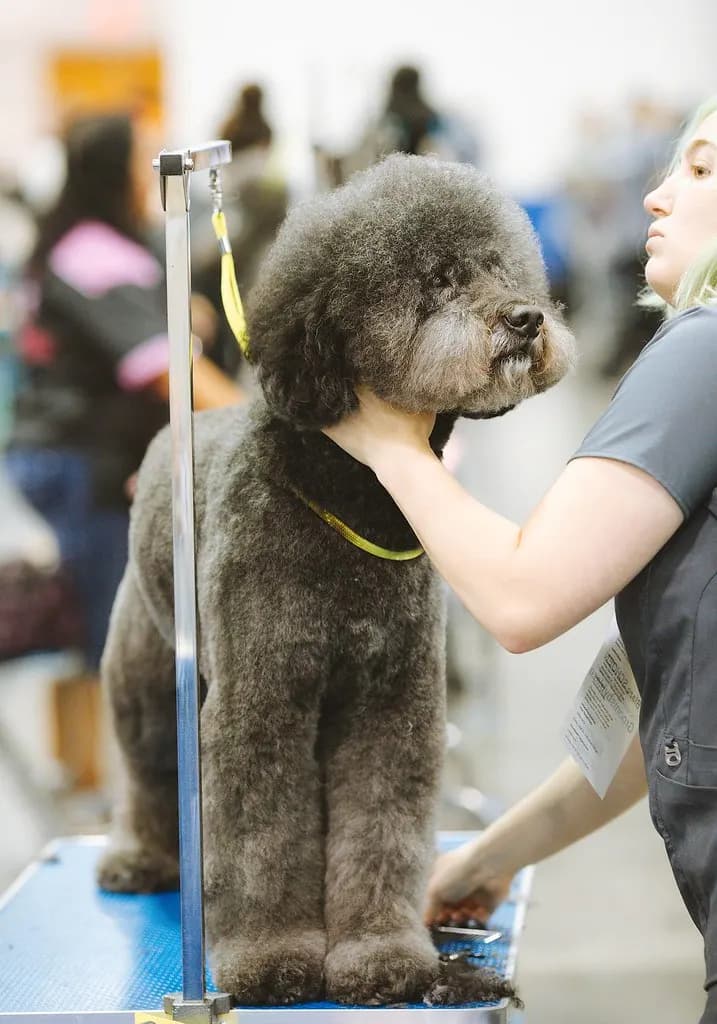
Do you need a license to groom dogs?
There's no federal licence for groomers, and most states don't license individual groomers either. That doesn't mean there are no rules. Every grooming business needs the same base registrations as any other small business, and a handful of states license the grooming business or facility itself.
The base layer, everywhere. Form an LLC so a claim over an injured dog stays with the business, at state filing fees of $35 – $500; get an EIN, which costs Free ($0); and apply for your city or county business licence. The Bureau of Labor Statistics points out that many states require self-employed animal care workers to hold a business licence. Our LLC registration guide and business licenses guide walk through the steps.
Connecticut: a state grooming facility licence. Connecticut's Department of Agriculture licenses grooming facilities under Section 22-344 of the state statutes, alongside kennels, pet shops and training facilities. The state defines a grooming facility as any place, other than a commercial kennel, maintained as a business where dogs are groomed. A first application must include a zoning approval form signed by the local zoning official, and the facility is inspected by the state's Animal Control Division. Confirm the current fee and renewal cycle with the department's licensing unit when you apply.
Colorado: PACFA licences for facilities and groomers. Colorado's Pet Animal Care Facilities Act (PACFA), run by the Colorado Department of Agriculture, licenses businesses that groom pets. Under the PACFA rules, each separate physical facility needs its own licence, and a licensed groomer can work as an independent contractor at up to 3 PACFA-licensed grooming facilities on the same groomer licence, as long as the department is told about each location. People who only do nail trims, ear cleaning, teeth cleaning or anal gland expression are exempt. The rules were updated effective July 15, 2025, so check the current version and fee schedule on the department's PACFA pages before applying.
Elsewhere. Other states, New Jersey among them, have debated groomer licensing bills for years after high-profile injuries in grooming salons, so check your state legislature and agriculture department for anything new. Cities and counties can add their own rules, such as kennel or animal establishment permits if you also board dogs overnight.
Zoning and home occupation permits. A home grooming room brings customer cars, barking and water use, which is exactly what home occupation rules limit. Many cities cap client visits, employees and signage, and some require a conditional use permit for animal services. Get written zoning confirmation before you spend money on plumbing.
Dog grooming launch checklist
0/10Mobile dog grooming permits and wash water rules
A mobile grooming van is a small business on wheels, and it collects permits from both its home base and every city it works in. Expect to need a business licence where your business is based, and possibly a licence or registration in each city where you groom regularly. Some cities treat mobile service vehicles like any other business vehicle; others require a separate mobile business permit. Parking rules matter too: grooming in a customer's driveway is usually fine, while parking on the street to run a generator may not be.
The rule that catches mobile groomers most often is wash water. Storm drains carry water straight to creeks and the ocean without treatment, so city and county storm water programs prohibit discharging anything other than rain into them. The City of San Diego's mobile business fact sheet says it's illegal to discharge polluted water from mobile business activities, naming pet grooming specifically, into the storm sewer system under its municipal code, with violations costing up to $10,000 per day per incident. Marin County's storm water program tells mobile groomers that even soaps labelled biodegradable or nontoxic are prohibited discharges, and that wash water should go to the sanitary sewer through a sink or sewer clean-out, or be held in a tank for later disposal at an approved location.
In practice, that means your van needs a grey water holding tank sized for a full day of baths, a strainer to catch hair before it goes into any drain, and an arrangement to empty the tank into a sanitary sewer connection at your base. Write that process down: an inspector or a customer's homeowners association may ask how you handle it. Flea and tick shampoos deserve extra care, because pesticide residue in wash water is exactly what storm water programs target.
Where mobile wash water must go
Step 1
Bath in van tub
Step 2
Strainer catches hair
Step 3
Grey water holding tank
Step 4
Empty to sanitary sewer at base
never a storm drain
Count the vehicle costs honestly too. Track business miles from day one; the IRS business standard mileage rate is 72.5 cents per mile for January to June 2026 and 76 cents per mile from July 1, 2026, though owners of a heavily converted van often deduct actual expenses and depreciation instead.
Insurance for a dog grooming business
Insurance for groomers has one trap worth understanding before you buy: the dogs in your care. Pets are treated as personal property, and many standard general liability policies exclude damage to property in your care, custody or control. That means a basic policy may cover a customer who slips in your lobby but not the dog that's cut by clippers or injured jumping off a table. Ask specifically for care, custody and control coverage, sometimes called animal bailee coverage, and read the per-animal limit.
Most groomers end up with a package that includes:
- General liability for injuries to people and damage to their property.
- Care, custody and control (animal bailee) for injury, illness or death of animals while you have them.
- Professional liability, which some insurers bundle for groomers, for claims that your work itself caused harm.
- Commercial auto for a mobile van or any vehicle used to pick up dogs; personal auto policies usually exclude business use.
- Equipment or inland marine coverage for expensive clippers, dryers and van build-outs.
- Workers' compensation once you hire employees; most states require it, and grooming injuries from bites and scissors are common.
Our business insurance guide explains each type. Pair insurance with paperwork that limits disputes: a signed intake form that records the dog's age, health conditions and vaccinations, permission to shave a matted coat, and authority to take the dog to a vet in an emergency.
Dog grooming equipment and startup costs
Equipment needs are similar across models; the difference is how much plumbing and vehicle work sits around them. Prices below are our estimates for a solo groomer based on typical new professional equipment, not quotes, and used equipment can cut them substantially. Price your own list with written quotes.
| Item | Home or rented room (estimate) | Mobile van (estimate) |
|---|---|---|
| Grooming table with arm | $300–$1,200 | Built into van |
| Bathing tub and plumbing | $800–$3,000 | Built into van |
| High-velocity and stand dryers | $400–$1,500 | $400–$1,500 |
| Clippers, blades, shears, brushes | $800–$2,000 | $800–$2,000 |
| Shampoos, towels, ear and nail supplies (first months) | $300–$800 | $300–$800 |
| Vehicle and grooming build-out | Not needed | Commonly $40,000 and up, new or converted |
| Insurance, licences, booking software (first year) | $1,500–$3,500 | $3,000–$6,000 |
The table shows why many groomers start at home or by renting a table and move to mobile once they have a waiting list. A van is the largest risk in this business: if it's off the road for repairs, you have no income that day. Before you buy one, build a list of clients in the area you plan to serve.
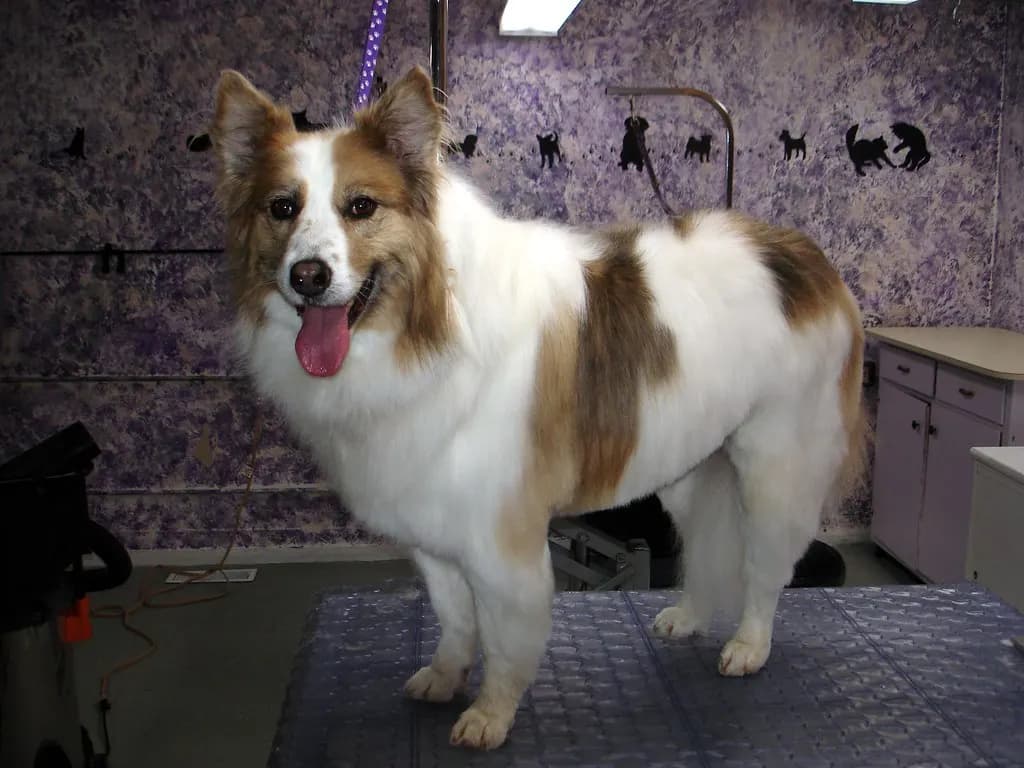
How much to charge for dog grooming: a worked example
Price from your time, not from a competitor's menu. A small dog with a short coat might take an hour; a matted doodle can take three. The cleanest way to set prices is to decide what each hour must earn, then multiply by the time each size and coat type takes.
Here's a labelled example for a solo home-based groomer. All figures are illustrative assumptions, not market data. The groomer works 5 days a week, 48 weeks a year, and grooms 5 dogs a day, or 1,200 grooms a year. The average ticket is $85. Supplies, card fees and utilities come to about $9 per groom. Fixed costs, including insurance, booking software, equipment replacement, licences and marketing, are $8,000 a year.
Revenue is $102,000 (1,200 × $85). Variable costs are $10,800 (1,200 × $9). Subtract fixed costs and the business makes about $83,200 before the owner's self-employment tax and income tax. Self-employment tax alone takes about $11,800 of that (15.3% on 92.35% of profit), which leaves about $71,000 before income tax. If the groomer drops to 4 dogs a day, profit before tax falls to about $65,000.
Try it — grooms you need to break even
Each groom contributes $76, so this business covers its fixed costs after about 106 grooms. Everything after that pays the owner. The real limit isn't break-even; it's how many dogs your hands and back can manage, which is why groomers who want to grow add a bather or a second groomer rather than working longer days.
A few pricing habits protect that math. Charge a dematting or handling fee by the 15 minutes, since matted and anxious dogs eat time. Add a mobile convenience fee or a minimum per stop for vans. Take a card on file and charge for no-shows; one missed two-hour appointment a week costs this business more than $8,000 a year. Raise prices once a year, and tell regular clients in writing ahead of time. Our hourly rate calculator helps you work back from the income you need.
Taxes, sales tax and hiring groomers
Income tax. As a single-member LLC, your profit flows to your personal return and is subject to self-employment tax. Pay quarterly estimated taxes once you're profitable; our quarterly estimated taxes guide covers the dates.
Sales tax. States differ on whether grooming itself is taxable. Connecticut's Department of Revenue Services lists pet grooming and pet boarding as taxable services, unless they're provided as an integral part of professional veterinary services, so a Connecticut groomer charges 6.35% on grooming. Many other states don't tax grooming services but do tax retail products such as shampoos, collars and treats you sell. Look up your state's list of taxable services, and register before you collect anything.
Hiring groomers. Most grooming salons pay groomers on commission, often a percentage of each groom. Commission pay is legal, but federal wage law still applies. Employees must earn at least the minimum wage for all hours worked, which is $7.25 an hour federally and higher in many states, so a slow week can trigger a top-up. Overtime is the bigger trap. Under section 7(i) of the Fair Labor Standards Act, a service establishment doesn't owe overtime to a commissioned employee only if the employee's regular rate is more than 1.5 times the federal minimum wage and more than half of their pay over a representative period of at least one month comes from commissions. Fail either test and overtime is due for hours over 40.
Calling groomers independent contractors to avoid all this is risky if you set their schedules, prices and methods; our 1099 vs W-2 guide explains the tests. Booth or table rental, where the groomer pays you rent and keeps their own clients and prices, is a different model that's more likely to support contractor status. In Colorado, an independent groomer working inside licensed facilities still needs their own PACFA groomer licence.
Grooming at a glance (2026)
$35,360
Median wage, animal caretakers
BLS, May 2025
12%
Projected job growth, 2025–2035
BLS, animal caretakers
6.35%
Connecticut tax on grooming
Taxable service
$7.25 an hour
Federal minimum wage
State rates may be higher
Common mistakes new grooming businesses make
The first is skipping the insurance detail. Groomers who buy the cheapest general liability policy often learn about the care, custody and control exclusion only after a dog is injured. Ask the agent to show you, in writing, which part of the policy pays if a dog in your care is hurt.
The second is underpricing difficult dogs. A flat price per breed ignores matting, behavior and senior dogs that need breaks. Build handling and dematting fees into your price list from the start, and show them on your website so customers aren't surprised.
The third is building before checking zoning. Plumbing a garage tub or signing a storefront lease before confirming that animal grooming is allowed at that address is an expensive way to find out it isn't. In licensing states such as Connecticut, the zoning sign-off is part of the licence application, so it has to come first anyway.
The fourth is draining a mobile tank anywhere convenient. A single complaint from a neighbor who sees suds in the gutter can bring a storm water violation. Keep disposal records and a spill kit in the van.
The fifth is weak intake paperwork. Without a signed form recording health conditions, vaccinations and permission to shave or seek vet care, every incident becomes your word against the owner's. Finally, don't let rebooking slide: the best grooming businesses book the next appointment before the dog leaves, which turns one visit into six or eight a year.
How to start, step by step
- 1
Get trained and test demand
Work under an experienced groomer or attend a grooming school, then groom friends' and neighbors' dogs to build a client list.
- 2
Pick a model and check zoning
Decide on home, salon, table rental or mobile, and confirm in writing that your location or vehicle use is allowed.
- 3
Register the business
LLC registration guideForm an LLC, get an EIN, and apply for city or county licences and any state facility licence.
- 4
Insure and paper it
Buy liability with care, custody and control coverage, commercial auto if mobile, and write your intake and policy forms.
- 5
Equip and price
Hourly rate calculatorBuy or lease equipment, set prices by time per dog, and set a deposit and no-show policy.
- 6
Launch and rebook
Set up your Google Business Profile, take bookings online, and rebook every client before they leave.
Marketing a new grooming business
Grooming is a local search business. Most new clients find a groomer through a map search, a neighbor's recommendation or a community group, so set up a complete Google Business Profile with your service area, prices from, photos of finished dogs and online booking. Ask every happy client for a review in the first few months; a profile with steady recent reviews beats one with a perfect but thin record.
Partnerships work well too. Veterinary clinics, dog trainers, daycare and boarding businesses that don't groom, and new apartment complexes that allow pets are all steady referral sources. Mobile groomers do best by clustering: booking several clients on the same street or in the same subdivision on the same day cuts driving time, which is the hidden cost that decides whether a van makes money. A small discount for neighbors booked back-to-back pays for itself in saved miles.
Official links
- Connecticut DOAG — pet facility licences (grooming)Sec. 22-344 licence and zoning form
- Colorado PACFA rules (Part 2)Facility and groomer licensing
- Connecticut DRS — taxable servicesPet grooming and boarding
- San Diego — mobile business storm water fact sheetWash water rules and penalties
- BLS — animal care and service workersPay and job outlook
- 29 U.S.C. 207(i)Commission overtime exemption
What to do next
Start with the two decisions that shape everything else: where you'll groom and whether your state or city licenses that kind of facility. Then form your LLC, buy the right insurance and set prices from your time per dog using the hourly rate calculator and break-even calculator. When you're ready to hire, read how to hire your first employee before you agree on commission pay.
This is general information, not legal or tax advice — confirm on the official source or with a professional.
Frequently asked questions
There's no federal groomer license and most states don't license individual groomers. A few states license the business or facility: Connecticut requires a grooming facility license from its Department of Agriculture under Section 22-344, and Colorado licenses grooming facilities and independent groomers under its Pet Animal Care Facilities Act. Everywhere, you still need local business licenses, zoning approval and any state tax registration.
Often, yes, if your city's home occupation rules allow customer visits, animals and the water and noise a grooming room creates. Many cities limit client traffic, signage and employees at home businesses, and some require a conditional use permit. In Connecticut, every new grooming facility licence application needs the local zoning official's sign-off, so check zoning before you build a room.
It depends on the model. In our labelled estimates, a home or rented-room setup using a tub, table, dryer and clippers can start in the low thousands of dollars, while a converted mobile grooming van usually costs tens of thousands because of the vehicle, water tanks, generator and build-out. Get written quotes before you commit; our checklist lists the items to price.
At minimum, general liability plus coverage for injury to animals in your care, often sold as care, custody and control or animal bailee coverage, because standard liability policies commonly exclude property in your custody, and pets are legally property. Mobile groomers need commercial auto coverage for the van, and anyone with employees needs workers' compensation in most states.
In some states. Connecticut lists pet grooming and pet boarding as taxable services at its 6.35% sales tax rate, unless they're part of veterinary care. Many states don't tax grooming services but do tax the shampoo, bows or retail products you sell. Check your state revenue department's list of taxable services before you set prices.
The Bureau of Labor Statistics reports a median annual wage of $35,360 for animal caretakers, the group that includes groomers, as of May 2025. Owners earn more or less than that depending on how many dogs they groom a day, their prices and their costs. In our worked example, a solo groomer doing 5 dogs a day at an $85 average makes about $83,000 before tax, or about $71,000 after self-employment tax.
Sources & verification
Figures on this page were checked against the sources below when it was last reviewed on 9 October 2026. Each rate and limit is stored once with its own official source and review date, and official update channels are monitored daily so changes are picked up. How we verify
- 1.Pet Facility License (grooming facility, commercial kennel) — Sec. 22-344 — Connecticut Department of Agriculture · accessed 9 October 2026
- 2.Statutory Provisions for Sales of Taxable Services — Connecticut Department of Revenue Services · accessed 9 October 2026
- 3.8 CCR 1202-15 Part 2 — PACFA application and conditions for licensure — Colorado Department of Agriculture rules (via LII) · accessed 9 October 2026
- 4.Mobile Businesses — stormwater fact sheet — City of San Diego · accessed 9 October 2026
- 5.Mobile Pet Groomers — storm water guidance — Marin County Stormwater Pollution Prevention Program · accessed 9 October 2026
- 6.Animal Care and Service Workers — Occupational Outlook Handbook — U.S. Bureau of Labor Statistics · accessed 9 October 2026
- 7.29 U.S.C. 207 — Maximum hours (section 7(i)) — U.S. Code (via LII) · accessed 9 October 2026
- 8.Standard mileage rates — Internal Revenue Service · accessed 9 October 2026
MSMETOOLS is an independent platform and is not affiliated with any government agency, ministry or department.
Tools for this
Freelance Hourly Rate Calculator
Work out the hourly rate you need to charge.
Break Even Calculator
Find your break even point and units.
Startup Cost Calculator
Estimate how much capital you need to launch.
Invoice Generator
Create professional invoices with tax, logo and custom details.
Related guides
 How to Start a Mobile Detailing Business in 2026: Full GuideRead guide
 How to Start a Handyman Business in 2026: Limits & PricingRead guide
 How to Start a Bookkeeping Business in 2026: Rules & PricingRead guide
 How to Start a Concrete Business in 2026: Licenses & PricingRead guide
Official links open the government site in a new tab.