 Starting & growing a business
How to Start a Painting Business in 2026: Licenses, EPA Lead Certification, Costs and Pricing per Square Foot
How to start a painting business in 2026: license thresholds by state, EPA RRP lead certification, insurance, startup costs and pricing per square foot, worked.
 Edited by Sumeet YadavFounder & editor, MSMETOOLS · fact-checked against official sources

Contents (9)
- 1. Choose your painting niche
- 2. Do you need a license to paint houses?
- 3. EPA RRP lead-safe certification for painters
- 4. Insurance for a painting business
- 5. Startup costs and equipment
- 6. How to price a painting job per square foot, with a worked example
- 7. Finding customers and getting paid
- 8. Common mistakes when starting a painting business
- 9. What to do next
Painting is one of the cheapest construction businesses to start and one of the easiest to start badly. A ladder, brushes and a truck are enough to take your first job, which is why the market is crowded with low bids. What separates painting companies that last is the business side: knowing which jobs need a license, following the EPA lead rules on older homes, carrying the right insurance and pricing from measured surfaces and real production rates instead of guesses. This guide is for painters starting a residential or light commercial painting business in 2026. It covers license thresholds with state examples, EPA RRP lead-safe certification, insurance, startup costs and a worked price-per-square-foot estimate, checked against state boards, EPA rules and BLS data in October 2026.
Quick answer
To start a painting business, register the business, check whether your state requires a painting or contractor license for the job sizes you'll take, and get EPA RRP lead-safe firm certification plus a certified renovator before you work on any pre-1978 home. Buy general liability and, once you hire, workers' comp, then price each job from measured surface area, paint coverage, production rates, overhead and margin.
California: C-33 license for jobs of $1,000 or more
Arizona: R-34, C-34 or CR-34; handyman exemption only below $1,000
Washington: L&I registration, $15,000 specialty bond
EPA RRP firm certification: $300, valid five years
Our worked interior repaint sells for about $1.92 per sq ft of surface
Choose your painting niche
Most painting companies fall into a few markets. Residential repaint is the biggest: interiors in winter, exteriors in the dry months, paid on completion by homeowners. New construction painting works for builders on tight schedules and thin margins, with payment on the builder's terms. Commercial painting covers offices, retail and apartment turnovers for property managers, with repeat work but more insurance and paperwork. Specialty work, such as cabinet refinishing, epoxy floors, deck staining or industrial coatings, commands higher prices but needs specific skills and equipment.
New painting businesses usually start with residential repaints and apartment turnovers, because jobs are small enough to finish quickly and the customer pays directly. Your niche also decides your compliance load. Repainting older homes means the EPA lead rule applies on most jobs, while new construction and post-1978 homes avoid it, so make the choice with your eyes open.
Do you need a license to paint houses?
There's no federal painting license, and states differ widely. Some license painting as a specialty trade, some only require a general contractor registration, and some leave it to cities. Register the business first: form an LLC (state filing fees run $35 – $500), get an EIN (Free ($0)) and a local business license; see our LLC registration guide and business license guide.
Painting licensing — state examples
| State | Credential | Key requirements |
|---|---|---|
California | C-33 Painting and Decorating (CSLB) | Jobs of $1,000 or more; 4 years within the last 10 experience; exams; $25,000 bond |
Arizona | R-34 residential, C-34 commercial or CR-34 dual (ROC) | Exams; bond $1,000 to $7,500 residential; handyman exemption below $1,000 |
Washington | Specialty contractor registration (L&I) | $15,000 bond; liability $200,000 public liability and $50,000 property damage, or $250,000 combined single limit; $150.20 fee |
Texas | No state painting license | City registration and permits where required |
Every state | EPA RRP firm + certified renovator | Pre-1978 housing and child-occupied facilities |
California
- Credential
C-33 Painting and Decorating (CSLB)
- Key requirements
Jobs of $1,000 or more; 4 years within the last 10 experience; exams; $25,000 bond
Arizona
- Credential
R-34 residential, C-34 commercial or CR-34 dual (ROC)
- Key requirements
Exams; bond $1,000 to $7,500 residential; handyman exemption below $1,000
Washington
- Credential
Specialty contractor registration (L&I)
- Key requirements
$15,000 bond; liability $200,000 public liability and $50,000 property damage, or $250,000 combined single limit; $150.20 fee
Texas
- Credential
No state painting license
- Key requirements
City registration and permits where required
Every state
- Credential
EPA RRP firm + certified renovator
- Key requirements
Pre-1978 housing and child-occupied facilities
California
California licenses painters as C-33 Painting and Decorating contractors, covering surface preparation and the application of paints, coatings and similar finishes. You need the license for any job where labor, materials and other costs on one or more contracts total $1,000 or more. Below that, CSLB's minor-work exemption only applies if the work needs no building permit and you use no employee labor, and a larger project can't be split into smaller contracts to stay under the line. To get the license, your qualifier needs 4 years within the last 10 of journey-level experience, must pass the law and business exam and the trade exam, and the business must file a $25,000 bond. Unlicensed painters can't advertise themselves as licensed contractors.
Arizona
Arizona's Registrar of Contractors licenses painting and wall covering in three forms: R-34 for residential work, C-34 for commercial work and CR-34 for both. The scope covers surface preparation and applying paint, wall coverings, decorative texture and liquid floor and wall coatings. Residential specialty licenses carry a bond of $1,000 to $7,500 depending on expected volume. Arizona's handyman exemption covers only jobs where the total price is under $1,000, never work that needs a permit, and anyone using it must say they are not a licensed contractor in their advertising, which makes it unsuitable for a real painting business.
Painting in numbers
$23.75 an hour ($49,400 a year)
Median painter pay
BLS, May 2025
31%
Painters who are self-employed
BLS, 2025
1978
RRP applies to homes built before
$300
EPA RRP firm certification fee
Valid five years
Washington and Texas
Washington doesn't license painters by exam, but it requires all construction contractors to register with the Department of Labor & Industries, painters included. A painting company registers as a specialty contractor, files a continuous surety bond of $15,000 (general contractors need $30,000; both amounts rose on July 1, 2024), carries liability insurance of $200,000 public liability and $50,000 property damage, or $250,000 combined single limit with L&I as certificate holder, and pays a $150.20 application fee. Texas has no state painting license, so you can start without one, but cities can require registration and permits, and customers and property managers will still ask for your insurance certificate. In other states, check the contractor board's dollar threshold: many states only require a license above a project value, such as North Carolina's general contractor threshold of $40,000.
EPA RRP lead-safe certification for painters
The EPA's Renovation, Repair and Painting rule is the federal rule most painting businesses must follow. It applies when you disturb painted surfaces for compensation in housing built before 1978 or in child-occupied facilities such as daycares and schools built before 1978. Lead-based paint was banned for residential use in 1978, so homes built earlier are presumed to contain lead-based paint unless a certified inspector or a recognized test kit shows otherwise.
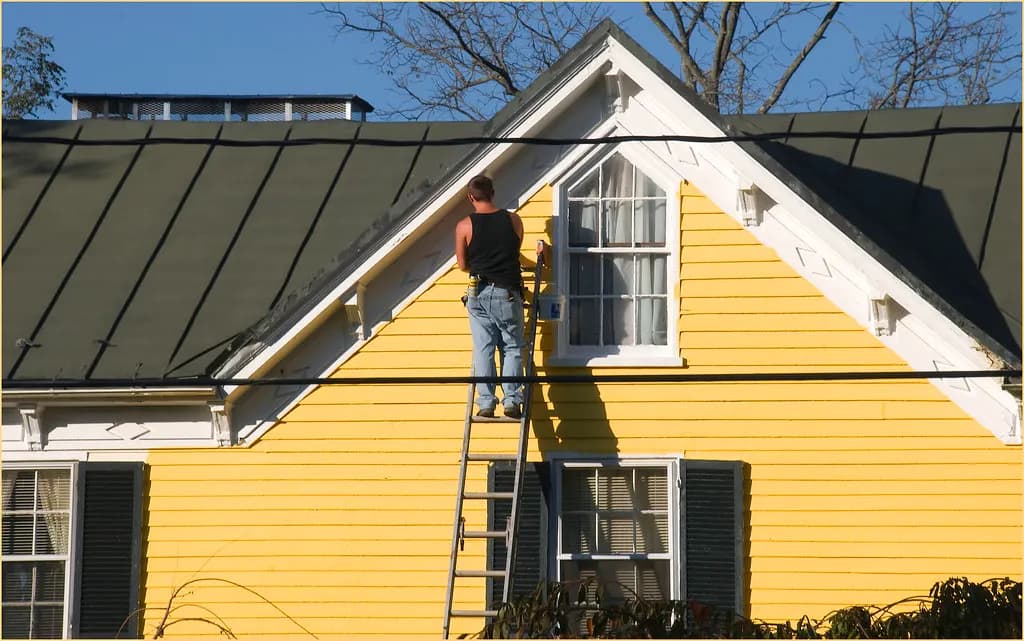
Two credentials are needed. The firm, including a sole proprietorship, must be certified by EPA; the fee is $300 and the certification is good for five years. At least one certified renovator must be assigned to each job, which means completing an 8 hours (including 2 hours hands-on) initial course with an accredited training provider. Refreshers are 4 hours; a renovator who takes a hands-on refresher stays certified for five years, and an online-only refresher gives three years. Fifteen states, including North Carolina, Georgia, Oregon, Washington, Wisconsin and Utah, run their own EPA-authorized programs, so firms working there apply to the state, not EPA.
There is a small-job exception. Minor repair and maintenance that disturbs no more than 6 square feet per room of painted surface inside or 20 square feet outside is exempt, but not if it involves window replacement, demolition of painted surfaces or prohibited practices. A full-room repaint with scraping and sanding, or an exterior repaint with prep, almost always crosses those lines.
How to run an RRP job
- 1
Hand over the pamphlet
Give the owner EPA's lead-safe renovation pamphlet no more than 60 days before work and get a signed acknowledgment, or mail it at least 7 days before you start.
- 2
Contain the work area
Post warning signs, cover floors and furniture with plastic, close and seal doors and vents inside, and cover the ground outside.
- 3
Use lead-safe methods
No open-flame burning, no power sanding or grinding without a shroud and HEPA vacuum, and heat guns only below 1,100°F.
- 4
Clean and verify
HEPA-vacuum and wet-wipe, then do the cleaning verification your certified renovator learned in the course.
- 5
Keep the records
Keep the acknowledgment, training certificates and job records for 3 years after the job.
Budget for RRP on every pre-1978 job: plastic sheeting, tape, a HEPA vacuum, disposable suits and extra time for setup and cleaning. Price it as a line item so customers see why your bid is higher than a painter who skips it. Skipping it isn't cheaper in the end: EPA and the authorized states can bring enforcement actions with civil penalties, and a child's elevated blood-lead level traced to a job can lead to a lawsuit your liability policy may exclude.
Insurance for a painting business
General liability is the policy you'll use most: paint on a hardwood floor, overspray on a neighbor's car, a ladder through a window. Property managers and general contractors usually ask for $1 million per occurrence and to be named as additional insured, and Washington sets a minimum for registration. Ask your agent about pollution or lead exclusions if you work on older homes, because many standard policies exclude lead claims. Workers' compensation is required in most states once you hire; ladder falls make painting a moderate-risk class. Commercial auto covers your vehicles, and inland marine or tool coverage protects sprayers, ladders and equipment left in a trailer.
Paying helpers as 1099 contractors to avoid workers' comp and payroll taxes is common in painting and risky. A helper who works only for you, on your schedule and with your tools, is probably an employee. Our 1099 vs W-2 guide explains the tests, and our business insurance guide covers the policies.
Startup costs and equipment
There's no official benchmark for painting startup costs; these are our planning estimates for a small residential painting company whose owner already has a pickup or van.
Painting business startup checklist
0/8That adds up to roughly $5,000 to $20,000. Ladders, sprayers and a vehicle used mostly for business can usually be deducted in the year you place them in service under Section 179 (limit $2,560,000 for 2026). Our startup cost calculator totals your own list and shows how much cash you need before the first invoice is paid.
How to price a painting job per square foot, with a worked example
Painters quote in three ways: by the hour, by the room or by the square foot. Per-square-foot pricing is the most common for full repaints, but be clear what the square feet are. Some contractors quote per square foot of floor area, which is easy for customers to understand; it's more accurate to estimate from paintable surface area: wall area is the room's perimeter times wall height, minus large openings such as garage doors and big windows, plus ceilings if included. Trim, doors and cabinets are priced separately by the lineal foot or by the piece.
Labor is the biggest cost, so track your production rates: how many square feet of wall a painter rolls and cuts in per hour, per coat, on typical surfaces. Paint quantity comes from the manufacturer's spread rate, often around 350 to 400 square feet per gallon on smooth walls, less on rough or porous surfaces.
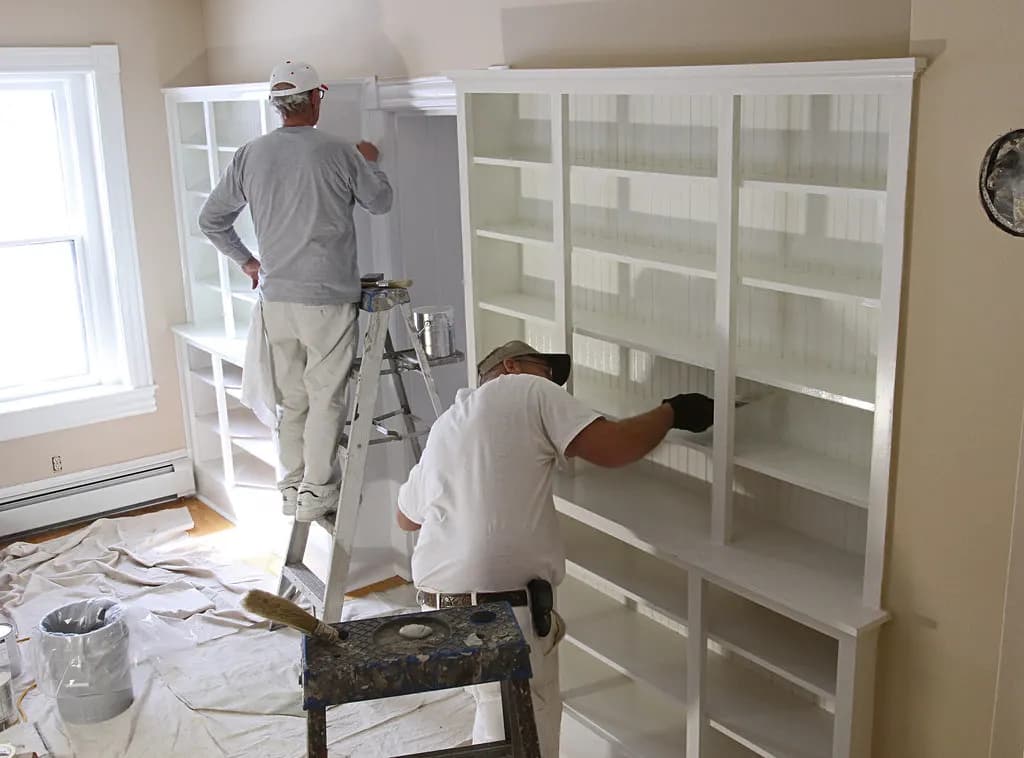
Worked example. A homeowner wants four rooms repainted: 1,600 square feet of walls with two coats and 550 square feet of ceilings with one coat, a total of 2,150 square feet of surface. The house was built in 1995, so RRP doesn't apply. Our cost estimates, based on 2026 supplier and labor pricing, are: wall paint, 3,200 square feet of coverage at 350 per gallon is 9.1 gallons, so 10 gallons at $50, $500; ceiling paint, 2 gallons at $40, $80; patching compound, caulk, tape, plastic and roller covers, $180. Materials total $760.
For labor, use your production rates: 10 hours of prep, masking and patching; 3,200 square feet of wall coats at 175 square feet an hour, about 18 hours; 550 square feet of ceiling at 125 an hour, about 4.5 hours; and 3.5 hours of cleanup, for 36 hours. At a loaded cost of $32 an hour (wages near the BLS median of $23.75 an hour ($49,400 a year) plus payroll taxes and workers' comp), labor is $1,152. Overhead covers the office, insurance, vehicle, marketing and your own time selling: if you expect $90,000 of overhead over 2,700 crew hours a year, that's about $33 an hour, or $1,188 on this job. Total cost is $3,100.
To earn a 25% net margin, divide by 0.75: 3,100 ÷ 0.75 = $4,133, which you'd quote as $4,135. That's about $1.92 per square foot of paintable surface. A 33.4% markup on cost gives the same price; our markup calculator converts between the two, and our markup guide explains why adding "25%" to cost leaves you with only a 20% margin.
| Line item | Our estimate | Basis |
|---|---|---|
| Wall paint (10 gallons) | $500 | 3,200 sq ft of coverage ÷ 350 per gallon |
| Ceiling paint (2 gallons) | $80 | 550 sq ft, one coat |
| Prep and masking supplies | $180 | Patch, caulk, tape, plastic, covers |
| Labor, 36 hours | $1,152 | $32 loaded hourly cost |
| Overhead, 36 hours | $1,188 | $33 per crew hour |
| Profit (25% margin) | $1,035 | Price minus total cost |
| Price | $4,135 | About $1.92 per sq ft of surface |
If the same house had been built in 1965, you'd add RRP setup, containment, cleaning verification and records, often several crew hours plus supplies, and say so in the quote. Send customers a line-item quote that lists rooms, surfaces, coats, colors, who moves furniture and what prep is included; our quotation generator makes one in minutes.
Finding customers and getting paid
Painting is a referral business. Every finished house is an advertisement, so ask permission to put a yard sign out during and after the job, photograph your work, and ask happy customers for a review the day you finish. Local listings and a simple website with real photos of your jobs usually bring more residential work than paid ads in the first year. For steadier volume, approach property managers about apartment turnovers and real estate agents about pre-listing touch-ups; they pay less per job but send repeat work through the slow season.
From estimate to paid invoice
Step 1
Measure and estimate
Step 2
Line-item quote
Step 3
Signed contract and deposit
Step 4
Prep, paint, clean
Step 5
Walkthrough and invoice
same day
Agree on payment terms before you start. A written contract should list the scope, surfaces, colors, number of coats, start date, deposit and when the balance is due. Keep deposits modest and tied to materials; California, for example, caps home improvement down payments at $1,000 or 10% of the contract price, whichever is less. Invoice the day you finish, after a walkthrough with the customer, and take card or bank payments on the spot so you aren't chasing checks.
Common mistakes when starting a painting business
The first mistake is bidding by guesswork or by matching the lowest competitor. If you don't know your production rates and overhead per hour, you can be busy all season and still lose money. Time every job for the first few months, by surface and coat, and update your estimating numbers. The second is ignoring the 1978 line: one complaint from a homeowner with young children can bring an EPA or state inspection, and you'll need the pamphlet acknowledgment and records to show you followed the rule.
Others include working above your state's license threshold without a license, which can leave you unable to enforce payment; taking large deposits and using them to finish earlier jobs; not putting color selections, sheen and number of coats in writing; underestimating prep on exteriors with peeling paint; and not getting a certificate of insurance from any subcontractor you use. Each of these is cheaper to prevent than to fix.
Official links
- EPA — RRP firm certificationApply, fees and authorized states
- EPA — RRP renovator trainingCourse length and refreshers
- 40 CFR 745.85 — RRP work practicesContainment and prohibited practices
- CSLB — Before applying for a licenseCalifornia $1,000 threshold
- Arizona ROC — license classificationsR-34, C-34 and CR-34
- Washington L&I — register as a contractorBond, insurance and fee
What to do next
Check your state's painting or contractor license threshold, register the business, and book an RRP renovator course before you take work on any home built before 1978. Get liability insurance quotes, then measure your first few jobs carefully and track production rates so your pricing gets sharper every month. Use our startup cost calculator to plan your launch budget and the quotation generator for clear line-item quotes. If you want to add small repairs to your painting work, our handyman business guide covers the exemption limits, and our guide to starting a construction company covers contractor licensing in more states.
This is general information, not legal or tax advice — confirm on the official source or with a professional.
Frequently asked questions
It depends on the state and job size. California requires a C-33 Painting and Decorating license for jobs of $1,000 or more. Arizona licenses painters as R-34, C-34 or CR-34 contractors, with a handyman exemption only below $1,000. Washington requires every contractor to register with L&I and post a $15,000 specialty bond. Texas has no state painting license, though cities may require registration.
Yes, if you disturb painted surfaces in housing or child-occupied facilities built before 1978. The firm needs EPA RRP certification ($300, valid five years), and a certified renovator who has taken an 8 hours (including 2 hours hands-on) course must be assigned to each job. Some states run their own program instead of EPA. Minor jobs below 6 square feet per room inside or 20 square feet outside are exempt.
There's no official figure. Our estimate for a small residential painting company with an existing pickup or van is roughly $5,000 to $20,000: business registration and any license or bond, EPA RRP firm and renovator certification, liability insurance deposits, ladders, a sprayer, drop cloths and hand tools, a website and two or three months of overhead. A trailer, scaffolding or a second sprayer adds more.
Measure the paintable surface, not just the floor area: wall area is perimeter times height, minus large openings. Estimate paint by coverage, labor by production rate, add overhead and divide by one minus your margin. In our worked example a 2,150 sq ft interior repaint costs $3,100 and sells for $4,135, about $1.92 per square foot of surface at a 25% margin.
General liability is the core policy, because spills, overspray and damaged floors are common claims. Add commercial auto, workers' compensation once you hire (required in most states) and tool or equipment coverage. Washington requires registered contractors to carry $200,000 public liability and $50,000 property damage, or $250,000 combined single limit, and general contractors and property managers often ask for $1 million per occurrence.
It can be, because startup costs are low and repaint demand is steady. BLS reports a median painter wage of $23.75 an hour ($49,400 a year) and says about 31% of painters are self-employed, so competition is real. Profit comes from accurate measurement, production rates you track, pricing that covers overhead and a steady stream of referrals and repeat customers.
Sources & verification
Figures on this page were checked against the sources below when it was last reviewed on 12 October 2026. Each rate and limit is stored once with its own official source and review date, and official update channels are monitored daily so changes are picked up. How we verify
- 1.Renovation, Repair and Painting Program: Firm Certification — U.S. Environmental Protection Agency · accessed 12 October 2026
- 2.Renovation, Repair and Painting Program: Renovator Training — U.S. Environmental Protection Agency · accessed 12 October 2026
- 3.40 CFR 745.83 — Definitions (minor repair and maintenance) — U.S. EPA regulations (via LII) · accessed 12 October 2026
- 4.40 CFR 745.84 — Information distribution requirements — U.S. EPA regulations (via LII) · accessed 12 October 2026
- 5.40 CFR 745.85 — Work practice standards — U.S. EPA regulations (via LII) · accessed 12 October 2026
- 6.40 CFR 745.86 — Recordkeeping — U.S. EPA regulations (via LII) · accessed 12 October 2026
- 7.Before applying for a license — California Contractors State License Board · accessed 12 October 2026
- 8.CSLB licensing classifications — California Contractors State License Board · accessed 12 October 2026
- 9.License classifications — Arizona Registrar of Contractors · accessed 12 October 2026
- 10.A.R.S. §32-1121 — Persons not required to be licensed — Arizona Legislature · accessed 12 October 2026
- 11.Register as a contractor — Washington State Department of Labor & Industries · accessed 12 October 2026
- 12.Painters, construction and maintenance — Occupational Outlook Handbook — U.S. Bureau of Labor Statistics · accessed 12 October 2026
MSMETOOLS is an independent platform and is not affiliated with any government agency, ministry or department.
Tools for this
Startup Cost Calculator
Estimate how much capital you need to launch.
Markup Calculator
Turn cost and markup into a selling price.
Quotation Generator
Create professional quotes for clients.
Invoice Generator
Create professional invoices with tax, logo and custom details.
Related guides
 How to Start an HVAC Business in 2026: Licenses & PricingRead guide
 How to Start a Handyman Business in 2026: Limits & PricingRead guide
 How to Start a Concrete Business in 2026: Licenses & PricingRead guide
 How to Start a Pressure Washing Business in 2026: GuideRead guide
Official links open the government site in a new tab.