 Starting & growing a business
How to Start an HVAC Business in 2026: Licenses, EPA 608, Insurance, Startup Costs and Pricing
How to start an HVAC business in 2026: state HVAC licenses (TX, FL, CA), EPA 608 certification, the refrigerant switch, insurance, startup costs and pricing, worked.
 Edited by Sumeet YadavFounder & editor, MSMETOOLS · fact-checked against official sources
Contents (10)
- 1. Choose your HVAC niche
- 2. HVAC licenses: how states differ
- 3. EPA Section 608 certification
- 4. The refrigerant switch: what changed in 2025 and 2026
- 5. Insurance and bonds for an HVAC business
- 6. Startup costs and equipment
- 7. How to price HVAC jobs, with a worked example
- 8. Maintenance agreements and cash flow
- 9. Common mistakes when starting an HVAC business
- 10. What to do next
Heating and air conditioning is one of the steadiest trades to build a business around: every building with central air or a furnace needs maintenance, emergency repairs and a full replacement every 15 years or so. It's also heavily regulated, with state licenses, federal EPA certification and the biggest refrigerant change in a generation. This guide is for technicians starting a residential or light commercial HVAC company in 2026. It covers state HVAC licenses, EPA Section 608, the low-GWP refrigerant switch, insurance, startup costs and a worked replacement price, checked against state boards, the EPA, the IRS and BLS in October 2026.
Quick answer
To start an HVAC business, get EPA Section 608 certification for everyone who handles refrigerant, then get the contractor license your state requires, such as a Texas TDLR ACR license, a Florida Class A, B or C air-conditioning license or a California C-20. Form an LLC, get an EIN, buy liability, auto and workers' comp insurance, and price every replacement from equipment, labor and overhead with a target margin.
EPA 608: Type I, II, III or Universal; the certification does not expire
Texas: $115 application, 48 months under a licensed ACR contractor within the last 72 months
New AC and heat pump equipment must use refrigerant below GWP 700 (since January 1, 2025)
The 25C heat pump tax credit ended for systems placed in service after December 31, 2025
Our worked example sells a 3-ton AC replacement for $8,140 at a 20% margin
Choose your HVAC niche
HVAC companies make money in four different ways, and the mix decides your licensing class, tools and cash needs. Residential service and repair is diagnosing and fixing furnaces, air conditioners and heat pumps. It needs a well-stocked van and good dispatching, and it pays quickly because homeowners pay on completion. Residential replacement is swapping out complete systems. Tickets are large, usually several thousand dollars, and most of your profit will come from here, but you need sales skills, supplier credit and the ability to offer financing. Maintenance agreements are annual tune-up plans that bring predictable revenue in the slow spring and fall months and feed your replacement pipeline. Light commercial work covers rooftop units, small refrigeration and restaurant equipment, with bigger systems, slower payment and more paperwork.
Most new HVAC owners start with residential service plus replacements, after several years as a technician for another company. Decide early whether you'll also do refrigeration, because in Texas, for example, each license carries only one endorsement, and commercial refrigeration is a separate one from environmental air conditioning. If you plan to do ductwork fabrication or boiler work, check whether your state treats those as separate trades.
HVAC licenses: how states differ
There's no federal HVAC contractor license; the EPA certifies technicians, and states license the businesses. Some states license HVAC as its own trade, some fold it into a mechanical contractor license, and a few leave it to cities and counties. Register the business first: form an LLC (state filing fees run $35 – $500) and get an EIN (Free ($0)); our LLC registration guide walks through it. Then check your state's HVAC rules before you advertise or bid.
HVAC contractor licensing — state examples
| State | License | Key requirements |
|---|---|---|
Texas | ACR contractor, Class A or Class B (TDLR) | 48 months under a licensed ACR contractor within the last 72 months; exam; $115 fee; liability insurance $300,000/$600,000 (Class A) |
Florida | Class A, B or C air-conditioning contractor (CILB) | Exam after 4 years (at least 1 as a foreman); insurance $100,000 liability and $25,000 property damage |
California | C-20 Warm-Air Heating, Ventilating and Air-Conditioning (CSLB) | Jobs of $1,000 or more; 4 years within the last 10 experience; $25,000 bond; workers' comp even with no employees |
Every state | EPA Section 608 technician certification | Type I, II, III or Universal; required to handle refrigerant; does not expire |
Texas
- License
ACR contractor, Class A or Class B (TDLR)
- Key requirements
48 months under a licensed ACR contractor within the last 72 months; exam; $115 fee; liability insurance $300,000/$600,000 (Class A)
Florida
- License
Class A, B or C air-conditioning contractor (CILB)
- Key requirements
Exam after 4 years (at least 1 as a foreman); insurance $100,000 liability and $25,000 property damage
California
- License
C-20 Warm-Air Heating, Ventilating and Air-Conditioning (CSLB)
- Key requirements
Jobs of $1,000 or more; 4 years within the last 10 experience; $25,000 bond; workers' comp even with no employees
Every state
- License
EPA Section 608 technician certification
- Key requirements
Type I, II, III or Universal; required to handle refrigerant; does not expire
Texas
Texas is one of the strictest HVAC states, even though it has no general contractor license. The Texas Department of Licensing and Regulation requires anyone who performs air conditioning and refrigeration contracting to hold an ACR contractor license, and each permanent business location must employ a licensed ACR contractor. A Class A license covers any size of unit; a Class B license is limited to cooling systems of 25 tons and under and heating systems of 1.5 million BTU/hour and under. You need 48 months under a licensed ACR contractor within the last 72 months, or a technician certification held for 12 months plus 36 months of supervised experience. You must be 18, pay a $115 application fee and pass the exam within a year of applying. The license lasts one year and requires commercial general liability insurance: $300,000 per occurrence and $600,000 aggregate for Class A, or $100,000 and $200,000 for Class B.
Florida
Florida law sets out three air-conditioning contractor classes. A Class A contractor is unlimited. A Class B contractor is limited to 25 tons of cooling and 500,000 Btu of heating in any one system, which covers nearly all homes and small businesses. A Class C contractor is limited to servicing air-conditioning, heating and refrigeration systems, which suits a repair-only business. As with other Florida trades, you can be state certified, which lets you work anywhere in Florida, or registered with a local jurisdiction and limited to it. The licensing board requires air-conditioning contractors to carry at least $100,000 of public liability and $25,000 of property damage insurance, and Florida construction employers with 1 or more employees must carry workers' compensation.
HVAC in numbers
$29.33 an hour ($61,010 a year)
Median HVAC technician pay
BLS, May 2025
11%
Projected job growth, 2025–2035
BLS, much faster than average
GWP < 700
Refrigerant limit for new AC equipment
EPA, since 2025
do not expire
EPA 608 certification
No renewal needed
California
California includes HVAC in its CSLB system as the C-20 Warm-Air Heating, Ventilating and Air-Conditioning classification, which covers installing and servicing heating and cooling equipment with its ducts, controls and filters. The usual CSLB rules apply: a license for any job of $1,000 or more in labor and materials, a qualifier with 4 years within the last 10 of journey-level experience, a law and business exam plus the trade exam, and a $25,000 contractor's bond. One difference is expensive: C-20 is one of the classifications that must carry workers' compensation whether or not you have employees, so even a one-person shop pays a premium. Our construction company guide covers CSLB fees and the application process in more detail.
In other states, look for the HVAC or mechanical board first, then the city. Many cities and counties issue their own mechanical permits and some require a local registration even where the state license is the main credential, so a phone call to the building department where you'll work most is worth making before you print business cards.
EPA Section 608 certification
Whatever your state requires, the federal Clean Air Act requires technicians who maintain, service, repair or dispose of equipment that could release refrigerant into the atmosphere to be certified under Section 608. There are four types: Type I for servicing small appliances, Type II for high- and very high-pressure appliances, which includes nearly all residential split systems and heat pumps, Type III for low-pressure appliances such as some chillers, and Universal for all of them. You earn it by passing a core section plus the relevant type sections through an EPA-approved certifying organization; for Universal, the core exam must be taken proctored, not open book. EPA doesn't issue the cards itself, and the certification does not expire.
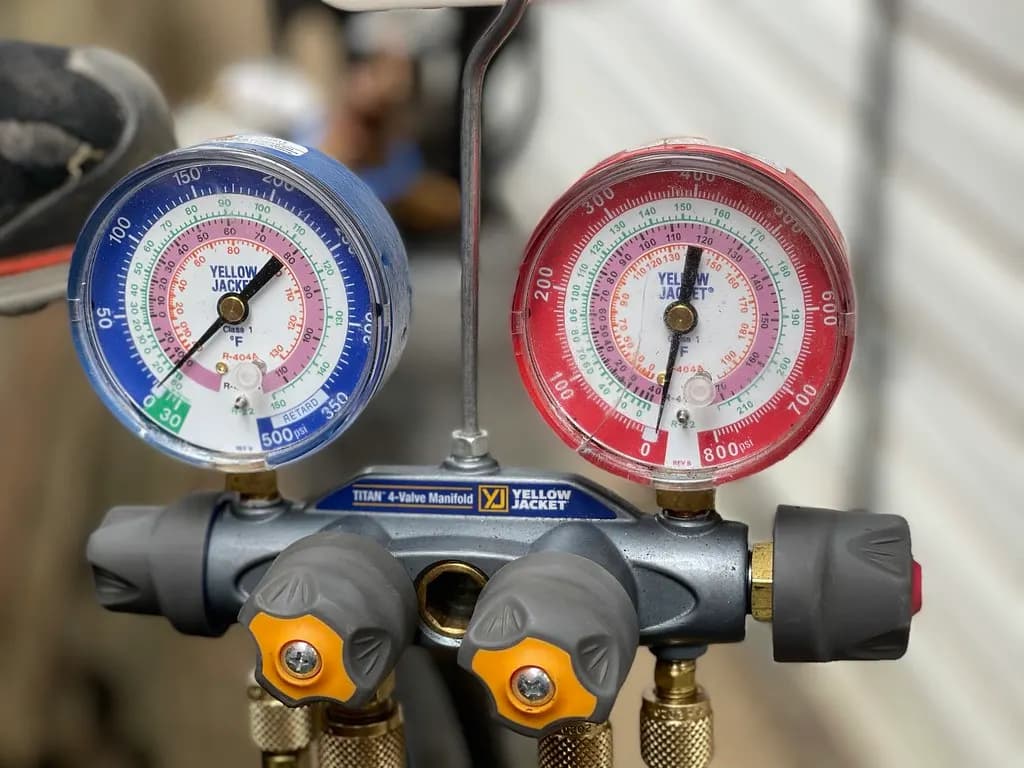
For a business owner, 608 matters in three practical ways. First, refrigerant wholesalers check certification before they sell you refrigerant, so every technician you send to the counter needs a card or a copy on file. Second, knowingly venting refrigerant is illegal, which means every truck that does replacements needs a recovery machine and recovery cylinders, and your crews need to follow evacuation procedures. Third, recovered refrigerant has to go back through the proper channels: a reclaimer or the wholesaler's return program. Final processors that receive refrigerant-containing appliances keep the recovery statements they collect for three years. Make a simple policy: no technician touches a refrigerant circuit until you have a copy of their 608 card in the personnel file.
The refrigerant switch: what changed in 2025 and 2026
The biggest change in residential HVAC in years is the move away from R-410A. Under EPA's Technology Transitions rule, made under the AIM Act, new residential and light commercial air conditioning and heat pump equipment manufactured or imported since January 1, 2025 must use a refrigerant with a global warming potential below 700. In practice that means systems using R-454B or R-32, both of which are classed as mildly flammable (A2L) refrigerants. They need compatible recovery machines, leak detectors and handling practices, and your technicians need training on them.
The refrigerant switch for residential AC and heat pumps
January 1, 2025
New equipment made or imported must use refrigerant below GWP 700
December 31, 2025
25C heat pump tax credit ends for systems placed in service after this date
2026
EPA reconsideration rule drops the installation deadline for split systems built from pre-2025 components
January 1, 2027
Installation compliance date for new VRF systems
The installation side has changed twice. The original rule allowed R-410A split systems built from components made before 2025 to be installed only until January 1, 2026. EPA's 2026 Technology Transitions reconsideration rule removed that installation deadline for systems whose components were all manufactured or imported before January 1, 2025, so remaining stock of older equipment can still be installed. Variable refrigerant flow systems have their own installation date of January 1, 2027. Servicing existing R-410A systems is still allowed, and parts for them can still be sold for repairs.
For a new business, the practical advice is to quote new installations on low-GWP equipment by default, explain the refrigerant to customers in plain terms, and price service on older R-410A systems knowing that refrigerant costs can move as supply tightens. Check EPA's sector table before each season, because the rule has already been reconsidered once.
Insurance and bonds for an HVAC business
HVAC risk comes from three places: damage to the customer's home, injuries to your crew, and the trucks. General liability covers property damage and injuries to the public, such as a condensate leak through a ceiling or a fire after a gas furnace install. Texas and Florida set minimums for licensed contractors, and commercial customers commonly ask for $1 million per occurrence and to be named as additional insured. Workers' compensation is required in most states once you hire, and in California even without employees for C-20 contractors; see our workers' comp guide. Commercial auto covers service vans, and inland marine or tool coverage protects gauges, recovery machines and vacuum pumps that can easily total $10,000 a truck.
Add license bonds where your state or city requires them, such as California's $25,000 contractor's bond, and expect performance and payment bonds on public and larger commercial jobs. Don't try to save on workers' comp by paying installers as 1099 contractors: if they work only for you, on your schedule, in your trucks, they are probably employees. Our 1099 vs W-2 guide and business insurance guide explain the tests.
Startup costs and equipment
There's no official benchmark for HVAC startup costs. These are our planning estimates for a one-truck residential service and replacement company whose owner already has a pickup or van.
HVAC business startup checklist
0/9That adds up to roughly $25,000 to $75,000 before a new van. Gauges, recovery machines and vehicles used more than half for business can usually be deducted in the year you place them in service under Section 179, which has a limit of $2,560,000 for 2026; see our depreciation guide. Use our startup cost calculator to total your own list and see how many months of runway you have. If you need financing, SBA microloans go up to $50,000 and suppliers often offer trade credit once you have a license and a few months of purchases; our startup business loans guide compares the options.
Total your HVAC startup costsAdd your license, insurance, tools, van and marketing costs and see the cash you need before the first job.Distributors are a bigger part of an HVAC startup than in most trades. Opening an account with one or two equipment distributors gives you credit terms, training on new refrigerants, warranty registration support and sometimes leads. Ask what they need from you: usually your license, 608 cards, a certificate of insurance and a credit application.
How to price HVAC jobs, with a worked example
HVAC companies use two pricing models. Flat-rate pricing for repairs sets a price per task, such as replacing a capacitor or a blower motor, that includes the part and a standard labor time. Customers like knowing the price before you start, and it rewards efficient technicians. Job costing for replacements builds the price from equipment, materials, labor, a warranty reserve and overhead, then adds profit.
Start with your true cost per billable hour, because a technician paid for 2,000 hours a year might bill only 1,200 once you count drive time, shop time, callbacks and slow days. If a technician costs $45 an hour loaded (wages near the BLS median of $29.33 an hour ($61,010 a year) plus payroll taxes, workers' comp and benefits), that's $90,000 a year spread over 1,200 billable hours, or $75 an hour. Add the van at about $10 a billable hour and an overhead share of $60, and you need $145 per billable hour just to break even. That's the number your flat-rate book is built on, and it's why quoting by the clock at "$95 an hour" loses money.
Worked example. A homeowner needs a 3-ton split air conditioner replaced with a matching coil. Our cost estimates, based on 2026 distributor and labor pricing, are: condenser and matching evaporator coil using R-454B, $3,600; line set adapters, pad, disconnect, whip, condensate fittings and refrigerant, $650; mechanical permit, $200. Labor is two technicians for one 9-hour day, 18 hours at $45 loaded, $810. Add a warranty and callback reserve of $150. Direct cost is $5,410.
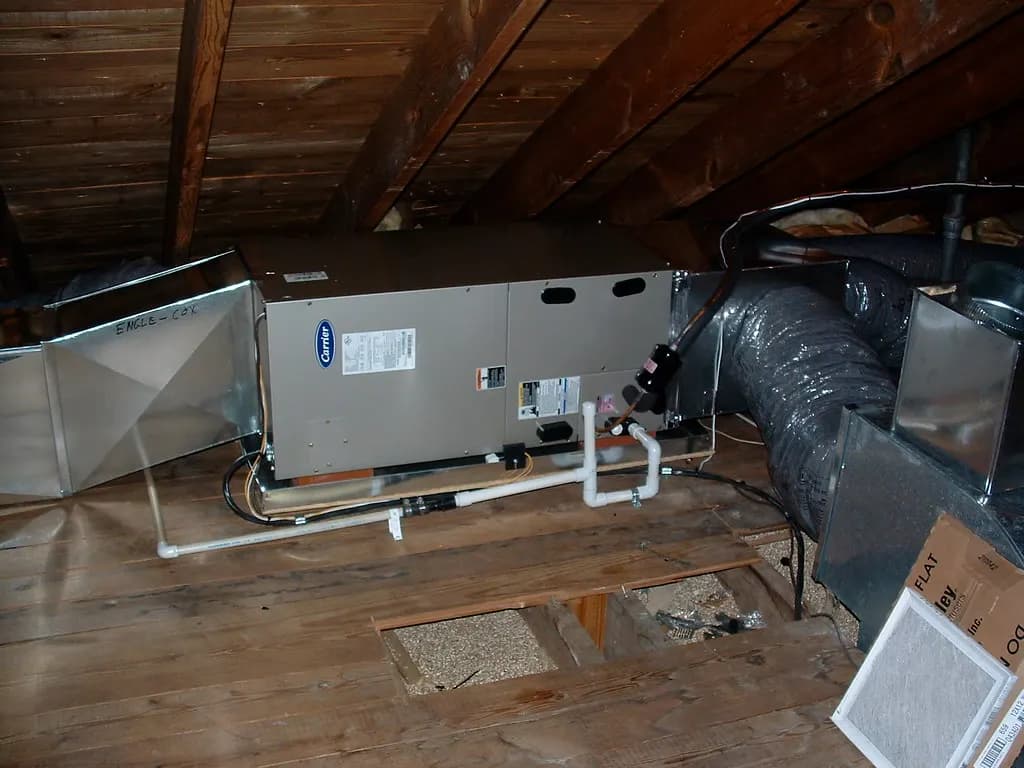
Overhead is everything you don't charge to a job: office staff, the owner's salary, insurance not already in labor, software, marketing, rent and the sales process. If you expect $220,000 of overhead and 200 replacements a year, that's $1,100 a system. Total cost is $6,510. To earn a 20% net margin, divide by 0.80: 6,510 ÷ 0.80 = $8,137.50, quoted as $8,140. Price the extras separately in writing: a new pad, electrical upgrades, duct modifications, crane or attic access charges, and haul-away of the old unit.
A 25% markup on cost gives the same price as a 20% margin; adding "20%" to cost leaves you with only about a 16.7% margin. Our markup guide explains the conversion.
| Line item | Our estimate | Basis |
|---|---|---|
| Condenser and matching coil (3-ton, R-454B) | $3,600 | Distributor quote |
| Line set adapters, pad, disconnect, refrigerant, fittings | $650 | Supplier pricing |
| Mechanical permit | $200 | Varies by city |
| Labor, 18 hours | $810 | $45 loaded hourly cost |
| Warranty and callback reserve | $150 | Planning allowance |
| Overhead share | $1,100 | $220,000 ÷ 200 systems |
| Profit (20% margin) | $1,630 | Price minus total cost |
| Price | $8,140 | 20% net margin |
One sales change matters for 2026: the federal energy efficient home improvement credit under section 25C, which allowed up to $2,000 a year for qualifying heat pumps, doesn't apply to property placed in service after December 31, 2025. Don't promise customers a federal tax credit on a new heat pump; check for utility rebates and state programs instead, and put any rebate in the quote only after you confirm it. Send each customer a clear line-item quote from our quotation generator.
Maintenance agreements and cash flow
HVAC demand is seasonal. Phones ring nonstop in the first heat wave and the first cold snap, and go quiet in April and October. Maintenance agreements smooth that out. A plan that includes two tune-ups a year, priority service and a repair discount gives you scheduled work in the shoulder seasons, a reason to inspect equipment that's near the end of its life, and recurring revenue that makes the business easier to finance or sell. Price agreements so the visits themselves are profitable, not loss leaders, and track renewal rates.
Price a maintenance agreement
- 1
Cost each visit
Multiply the visit time, including drive time, by your cost per billable hour, and add filters and parts included in the plan.
- 2
Add the promises
Estimate the cost of the repair discount and priority scheduling you offer members.
- 3
Set the price and track renewals
Add your margin, offer monthly or annual billing, and watch the renewal rate; a plan only pays if members stay.
Cash flow on replacements needs attention too. You often pay the distributor before the customer pays you, and financed jobs can take days to fund. Take a deposit where your state allows it, invoice on completion, and keep a line of credit for the summer peak. California, for example, caps home improvement down payments at $1,000 or 10% of the contract price, whichever is less, so check your state's rules before you set a deposit policy.
Common mistakes when starting an HVAC business
The first mistake is assuming EPA 608 is a license. It's a technician credential; most states also require a contractor license, and working without one can make your contracts unenforceable and expose you to fines. The second is pricing by the hour without knowing your cost per billable hour, which is how busy HVAC companies go broke in July. The third is buying tools that aren't rated for A2L refrigerants and then having to replace them within a year.
Others include skipping mechanical permits on replacements, which can void manufacturer warranties and cause problems when the home is sold, not registering equipment for the extended manufacturer warranty, promising tax credits that no longer exist, and letting the owner stay in the field full time so nobody answers the phone or follows up on quotes. Build a simple system early: every call logged, every quote followed up within two days, every job photographed before and after.
Official links
- TDLR — ACR contractor licenseTexas classes, experience, fee and insurance
- Florida Statutes §489.105Class A, B and C air-conditioning contractors
- CSLB — C-20 HVAC classificationCalifornia HVAC license scope
- EPA — Section 608 technician certificationCertification types and approved programs
- EPA — Technology Transitions by sectorRefrigerant GWP limits and dates
- IRS — Energy Efficient Home Improvement Credit25C termination after 2025
What to do next
Get your 608 card if you don't already have Universal certification, then check your state's HVAC license, exam and insurance rules and book the exam. Get insurance quotes before you set prices, open a distributor account, and work out your cost per billable hour before you print a price book. Use our startup cost calculator to plan your launch budget, the markup calculator to hit your margin, and the quotation generator to send line-item replacement quotes. If you also plan to do plumbing, our plumbing business guide covers those licenses, and our guide to starting a construction company covers bonding and contractor licensing in more states.
This is general information, not legal or tax advice — confirm on the official source or with a professional.
Frequently asked questions
In most states, yes. Texas requires a TDLR air conditioning and refrigeration contractor license, with 48 months under a licensed ACR contractor within the last 72 months. Florida licenses Class A, B and C air-conditioning contractors, and California requires a C-20 HVAC license for jobs of $1,000 or more. Separately, every technician who handles refrigerant needs EPA Section 608 certification.
EPA Section 608 certification is the federal credential technicians need to service, repair or dispose of equipment that could release refrigerant. There are four types: Type I for small appliances, Type II for high-pressure systems such as most home AC, Type III for low-pressure chillers, and Universal for all. You pass an exam through an EPA-approved certifying organization, and the certification does not expire.
There's no official figure. Our estimate for a one-truck residential service and replacement company is roughly $25,000 to $75,000 if you already own a pickup or van: licensing and exam fees, insurance deposits, gauges, a recovery machine, vacuum pump and other tools, a starter stock of parts, software, marketing and two to three months of overhead. A new equipped service van adds $50,000 or more.
Since January 1, 2025, new residential and light commercial AC and heat pump equipment made or imported in the US must use refrigerant with a GWP below 700, such as R-454B or R-32. Under EPA's 2026 reconsideration rule, split systems whose components were all made or imported before 2025 have no installation deadline. Servicing existing R-410A systems is still allowed.
Most residential HVAC companies use flat-rate pricing for repairs and a full job cost for replacements. Price replacements from equipment, materials, permit, labor hours, a warranty reserve and an overhead share, then divide by one minus your target margin. In our worked example a 3-ton AC replacement costs $6,510 including overhead and sells for $8,140, a 20% net margin.
It can be. BLS projects employment of HVAC mechanics to grow 11% from 2025 to 2035, much faster than average, and every home with central air needs service and eventual replacement. Profit depends on pricing that covers unbilled time, a steady maintenance-agreement base, and avoiding callbacks. Treat 10% to 20% net margins as a planning range, not a published benchmark.
Sources & verification
Figures on this page were checked against the sources below when it was last reviewed on 12 October 2026. Each rate and limit is stored once with its own official source and review date, and official update channels are monitored daily so changes are picked up. How we verify
- 1.Air conditioning and refrigeration contractor license — apply — Texas Department of Licensing and Regulation · accessed 12 October 2026
- 2.Florida Statutes §489.105 — Definitions — Florida Legislature · accessed 12 October 2026
- 3.Fla. Admin. Code R. 61G4-15.003 — Financial responsibility (insurance) — Florida Construction Industry Licensing Board (via LII) · accessed 12 October 2026
- 4.C-20 Warm-Air Heating, Ventilating and Air-Conditioning — California Contractors State License Board · accessed 12 October 2026
- 5.Workers' compensation requirements — California Contractors State License Board · accessed 12 October 2026
- 6.Section 608 technician certification requirements — U.S. Environmental Protection Agency · accessed 12 October 2026
- 7.Questions and answers about the refrigerant sales restriction — U.S. Environmental Protection Agency · accessed 12 October 2026
- 8.Technology Transitions HFC restrictions by sector — U.S. Environmental Protection Agency · accessed 12 October 2026
- 9.Energy Efficient Home Improvement Credit — Internal Revenue Service · accessed 12 October 2026
- 10.Instructions for Form 5695 (2025) — Internal Revenue Service · accessed 12 October 2026
- 11.Heating, air conditioning and refrigeration mechanics and installers — Occupational Outlook Handbook — U.S. Bureau of Labor Statistics · accessed 12 October 2026
MSMETOOLS is an independent platform and is not affiliated with any government agency, ministry or department.
Tools for this
Startup Cost Calculator
Estimate how much capital you need to launch.
Markup Calculator
Turn cost and markup into a selling price.
Quotation Generator
Create professional quotes for clients.
Invoice Generator
Create professional invoices with tax, logo and custom details.
Related guides
 How to Start a Painting Business in 2026: Licenses & PricingRead guide
 Start a Plumbing Business in 2026: Licenses & PricingRead guide
 How to Start a Handyman Business in 2026: Limits & PricingRead guide
 How to Start a Roofing Business in 2026: Licenses & PricingRead guide
Official links open the government site in a new tab.