 Starting & growing a business
Organic Farming Business in India (2026): Certification, Subsidy, Labelling and a Worked Plan
Start an organic farming business in India in 2026: NPOP vs PGS-India, the 2–3 year conversion, PKVY and MOVCDNER support, Jaivik Bharat labels, GST and a ₹ plan.
 Edited by Sumeet YadavFounder & editor, MSMETOOLS · fact-checked against official sources
Contents (11)
- 1. Is organic farming a good business in India?
- 2. NPOP vs PGS-India: which certification do you need?
- 3. The conversion period — and how the 2024 NPOP edition shortened it
- 4. Government support: PKVY and MOVCDNER
- 5. FSSAI rules: selling organic food and the Jaivik Bharat logo
- 6. GST on organic produce and inputs
- 7. Worked example: two acres of organic vegetables
- 8. How to start an organic farming business: step by step
- 9. Licences and registrations you may need
- 10. Common mistakes in organic farming businesses
- 11. What to do next
Organic farming as a business is not the same as farming without chemicals. The money is in proving it — through certification — and then selling to buyers who pay for that proof. This guide is for farmers converting their own land, young entrepreneurs leasing a few acres near a city, and farmer groups planning to supply retailers or exporters. It explains the two certification routes (NPOP and PGS-India), how long conversion takes, what PKVY and MOVCDNER actually pay, the FSSAI labelling rules, how GST applies, and a worked rupee plan showing the conversion-year dip and the payback.
Quick answer
An organic farming business in India needs certified land and a buyer who pays a premium. Choose PGS-India (peer certification, low cost, domestic market only) or NPOP (third-party certification via APEDA-accredited bodies, needed for export). Conversion takes at least two years before sowing for annual crops and at least three years before the first harvest for perennials. Small farmers can get ₹31,500 per hectare over three years under PKVY by joining a cluster.
PKVY pays ₹15,000 per hectare of its support straight to farmers by DBT for organic inputs
North East: MOVCDNER gives ₹46,500 per hectare over three years
Packaged organic food needs FSSAI registration and NPOP or PGS-India certification to carry the Jaivik Bharat logo
Fresh produce is GST-exempt; pre-packaged labelled grains and pulses carry 5%
Is organic farming a good business in India?
India has one of the largest organic areas in the world. The Agriculture Ministry told Parliament in February 2025 that the cumulative area certified under NPOP and PGS-India came to about 59.74 lakh hectares, and by October 2025 PKVY alone had covered 16.90 lakh hectares since 2015. Demand has grown in cities, in hotel and restaurant supply, and in exports of spices, oilseeds, tea, rice and processed foods.
That does not make every organic farm profitable. Three facts decide whether yours is:
- The conversion gap. For two or three years you farm to organic standards but cannot sell as certified organic. Yields often drop in this period while the soil adjusts, and you sell at conventional prices.
- The premium is earned, not automatic. A mandi trader will usually pay the same rate for organic and conventional tomatoes. The premium comes from selling direct (farm stalls, subscriptions, housing societies), to organic retailers and brands, or under an export contract.
- Input costs fall, labour rises. Compost, vermicompost, jeevamrut and bio-pesticides cost less than bought fertiliser and chemicals, but making and applying them, hand weeding and pest scouting take more labour.
Organic farming works best as a business when you already have a market in mind — a city 30–80 km away, a buyer who has asked for certified produce, or a farmer group that can pool volumes for a brand or exporter. If you only plan to sell at the local mandi, convert slowly and keep conventional plots until you have buyers.
Crop choice matters as much as certification. Leafy greens, tomatoes, gourds and herbs turn over quickly and sell well direct to households, but they need daily harvesting and fast delivery. Pulses, millets, turmeric, ginger, jaggery and cold-pressed oils store well, travel to distant buyers and carry a visible organic premium in packaged form, which suits farmers far from cities. Fruit orchards and spice plantations take longer to convert but attract exporters. Many successful organic farms run a mix: fast vegetables for cash flow, plus one storable crop that can be packed and branded.
NPOP vs PGS-India: which certification do you need?
India has two government organic certification systems, and the right one depends on where you will sell.
NPOP vs PGS-India at a glance
| NPOP (third-party) | PGS-India (participatory) | |
|---|---|---|
Run by | APEDA, Ministry of Commerce & Industry | NCONF, Ministry of Agriculture & Farmers Welfare |
Who certifies | An APEDA-accredited certification body | Your local group of farmers, approved by a Regional Council |
Who can apply | Individual farm, grower group, processor, trader, exporter | Local group of at least five farmers; individual route for isolated farmers |
Market | Domestic and export | Domestic only — not exportable as organic |
Cost | Inspection and certification fees charged by the body | Low; PKVY funds certification for cluster members |
Conversion | at least two years before sowing (annual), at least three years before the first harvest (perennial) | From Regional Council registration; 'PGS-Green' status meanwhile |
Logo | India Organic + Jaivik Bharat | PGS-India Organic + Jaivik Bharat |
Run by
- NPOP (third-party)
APEDA, Ministry of Commerce & Industry
- PGS-India (participatory)
NCONF, Ministry of Agriculture & Farmers Welfare
Who certifies
- NPOP (third-party)
An APEDA-accredited certification body
- PGS-India (participatory)
Your local group of farmers, approved by a Regional Council
Who can apply
- NPOP (third-party)
Individual farm, grower group, processor, trader, exporter
- PGS-India (participatory)
Local group of at least five farmers; individual route for isolated farmers
Market
- NPOP (third-party)
Domestic and export
- PGS-India (participatory)
Domestic only — not exportable as organic
Cost
- NPOP (third-party)
Inspection and certification fees charged by the body
- PGS-India (participatory)
Low; PKVY funds certification for cluster members
Conversion
- NPOP (third-party)
at least two years before sowing (annual), at least three years before the first harvest (perennial)
- PGS-India (participatory)
From Regional Council registration; 'PGS-Green' status meanwhile
Logo
- NPOP (third-party)
India Organic + Jaivik Bharat
- PGS-India (participatory)
PGS-India Organic + Jaivik Bharat
NPOP (National Programme for Organic Production) is notified under the Foreign Trade (Development and Regulation) Act, and APEDA is its secretariat. Any organic product exported from India must comply with it. Certification is done by certification bodies accredited by APEDA's National Accreditation Body; APEDA's April 2026 list shows around forty, including private firms and several state government certification agencies. Each one has a defined scope — crop production, processing and handling, livestock, or aquaculture — and an accreditation validity date, so check both before you sign a contract.
An individual large farmer can be certified alone, but most smallholders use a grower group. Under clause 5.2 of the NPOP 8th Edition, a grower group must be a registered society, farmer producer organisation or cooperative of 25 to 500 farmers, farming within a 50 km radius and selling as one entity. It runs an internal control system (ICS) that inspects every member twice a year, and the certification body then audits the group. Members with 4 hectares or more are inspected separately.
PGS-India (Participatory Guarantee System) is the cheaper, farmer-led route for the domestic market. Farmers form a local group of at least five members from the same or nearby villages, register with a Regional Council (usually a state agriculture department, university or recognised NGO), and fill in an application, a farm history sheet and a farmer's pledge for each member on the PGS-India portal. Members inspect each other's farms and the group declares the produce organic. During conversion the produce gets PGS-Green status, which cannot be sold as organic. PGS-India produce cannot be exported as organic; if you later want export buyers, three continuous years of PGS certification can count towards NPOP conversion (see below).
The conversion period — and how the 2024 NPOP edition shortened it
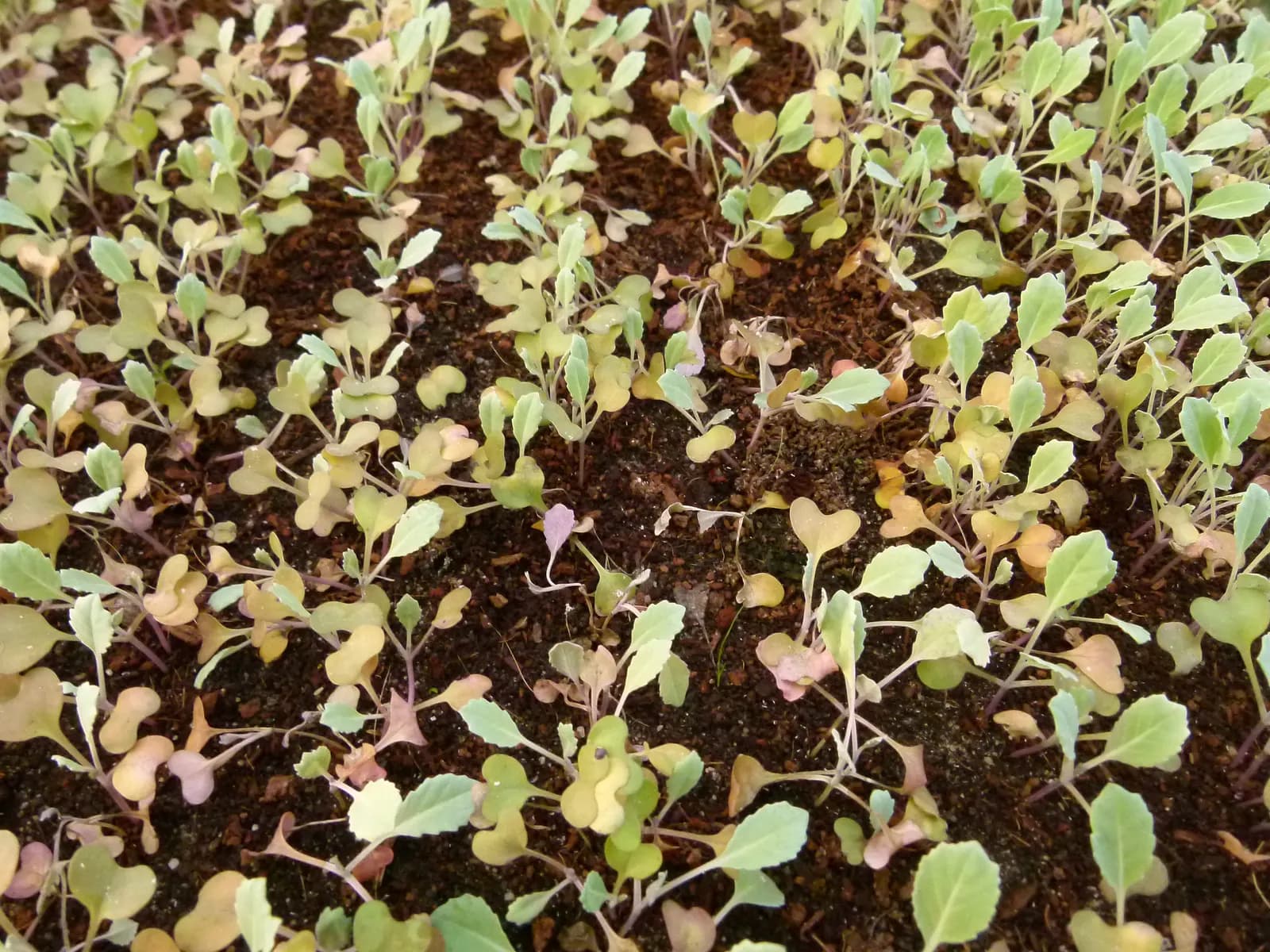
Clause 3.1.3 of the NPOP 8th Edition, released by the Commerce Ministry in January 2025, sets the minimum conversion periods:
- Annual and biennial crops (vegetables, cereals, pulses, oilseeds, cotton): at least two years before sowing of organic management, counted to the start of the production cycle.
- Perennial crops (mango, coconut, spices, tea, coffee, orchards): the first harvest can be certified after at least three years before the first harvest of organic management.
The certification body can extend or shorten these periods depending on the land's past use. The 8th Edition also added a formal derogation in clause 3.1.4. Your earlier years can count towards the full conversion period if you can prove either of these for at least three continuous years:
- The land was certified under PGS-India for the three years immediately before, with no sanctions for integrity breaches. You submit the PGS certificate, and the certification body verifies it with NCONF.
- The land lies in a hilly area (above 600 m or with a 30-degree average slope) of Jammu & Kashmir, Ladakh, Himachal Pradesh, Uttarakhand or the North East, and the state has notified that area as natural — not treated with prohibited substances for three years. You submit the notification and a geo-tagged map.
There is also Large Area Certification (LAC), under which the Agriculture Ministry certifies whole regions that have never used farm chemicals — Sikkim, Lakshadweep, the Car Nicobar and Nancowry islands, and parts of Ladakh and Dantewada have been covered. If your land is in such an area, ask your state agriculture department whether it is already certified.
What to do during conversion. Keep records from day one: a field map, crop history, every input bought (with bills) and applied, and harvest and sale records. Buffer zones or hedges are needed where neighbours spray chemicals. Sell during conversion as "in-conversion" or as conventional produce, never as organic; under FSSAI's rules, in-conversion produce cannot carry the Jaivik Bharat logo.
Most conversion failures trace back to three problems. The first is drift: a neighbour's pesticide spray or a shared irrigation channel carrying fertiliser run-off, which shows up in residue tests and can cost a whole season. The second is bought inputs that are not permitted — a "bio" fertiliser that turns out to contain chemical nutrients, or untreated seed that was actually dressed with fungicide. Ask suppliers for the product's registration and composition, and keep the bag labels. The third is poor paperwork: an inspector cannot certify what you cannot prove, and a missing input register is the most common reason a grower group's member gets suspended. A simple notebook per field, updated weekly, is enough.
Government support: PKVY and MOVCDNER
The two central schemes are cluster programmes run through state agriculture departments, not grants you apply for alone. Both stress end-to-end support — from inputs to certification and marketing — and prefer small and marginal farmers.
Organic farming support (2026)
₹31,500 per hectare over three years
PKVY support (all states except NE)
PIB, Dec 2025
₹15,000 per hectare
PKVY DBT to farmers for organic inputs
within the ₹31,500
₹46,500 per hectare over three years
MOVCDNER support (North East)
incl. FPO formation
two hectares
Max landholding per PKVY beneficiary
PIB backgrounder 2025
Paramparagat Krishi Vikas Yojana (PKVY) runs in every state except the North East. Farmers are grouped into clusters — the Ministry's December 2025 reply describes clusters of 500–1,000 hectares and about 500 farmers. Support is ₹31,500 per hectare over three years. The PIB backgrounder splits it as ₹15,000 for on-farm and off-farm organic inputs (paid by DBT), ₹4,500 for marketing, packaging and branding, ₹3,000 for certification and residue testing, and ₹9,000 for training and capacity building. The marketing and training money is spent through the cluster, so the cash a farmer actually receives is the DBT component. Applications go through your district agriculture office or the Regional Council for your area, which compiles them into the state's annual action plan.
MOVCDNER (Mission Organic Value Chain Development for the North Eastern Region) gives ₹46,500 per hectare over three years, covering farmer producer organisation formation, inputs, training and certification; ₹32,500 per hectare of it is for organic inputs, including ₹15,000 by DBT. By October 2025, 479 FPOs of about 500 farmers each had been formed under the scheme.
Other schemes that fit an organic business:
- Agriculture Infrastructure Fund — loans for post-harvest infrastructure such as pack houses, sorting and grading units, cold rooms and warehouses, with interest subvention of 3% a year on loans up to ₹2 crore. See our Agriculture Infrastructure Fund guide.
- PMFME — 35% credit-linked subsidy for micro food processing units, useful if you plan to make organic flour, spices, jaggery or pickles. See the PMFME guide.
- Kisan Credit Card — crop loans at 7% interest (4% with prompt repayment) up to ₹3 lakh.
- State schemes — several states run their own organic or natural farming missions with extra input or certification support. Our agriculture subsidy guide lists the main central and state options.
The government is also promoting natural farming through the National Mission on Natural Farming. Natural farming avoids bought inputs altogether, but it is a separate programme; produce from natural farming is sold as organic only if it is certified under NPOP or PGS-India.
FSSAI rules: selling organic food and the Jaivik Bharat logo
The Food Safety and Standards (Organic Foods) Regulations, 2017 decide what can be sold as "organic" in India. Under regulation 4, food can be offered or sold as organic only if it is certified under NPOP or PGS-India and meets the standards of that system. FSSAI's unified Jaivik Bharat logo then goes on the pack along with the certification mark.
What this means in practice:
- Packaged or branded organic food — atta, dal, rice, spices, honey, jaggery, oils — needs FSSAI registration or a licence for the business that packs it (see our FSSAI registration guide), NPOP or PGS-India certification, and labels carrying the certification mark and the Jaivik Bharat logo.
- Small direct sellers. Organic produce marketed directly by a small original producer or producer organisation to the end consumer is exempt from certification under regulation 4(2). FSSAI sets who counts as "small" through its directions — its FAQ has used an annual organic turnover of ₹12 lakh — so check the current limit with FSSAI before you rely on it. Exempt produce must not carry the Jaivik Bharat logo.
- Aggregators. FSSAI's December 2021 SOP lets an aggregator or intermediary who buys from such small producers and sells only to end consumers claim the exemption if turnover stays within ₹50 lakh a year. It must hold a state FSSAI licence, keep purchase and farmer records, display exempt produce separately, and must not process, private-label or sell to other traders.
- Retailers selling certified organic food must keep it apart from conventional food and keep certification records traceable to the farm.
GST on organic produce and inputs
GST treats organic produce the same as conventional produce — the organic label does not change the rate.
| Item | GST | Basis |
|---|---|---|
| Fresh vegetables, fruits, unbranded grains and pulses | Exempt | Notification 2/2017-CT (Rate) |
| Pre-packaged and labelled grains, pulses, flours | 5% | Notification 9/2025-CT (Rate), Sch. I |
| Organic or vegetable fertilisers, pre-packaged and labelled | 5% | Notification 9/2025-CT (Rate), Sch. I |
| Listed bio-pesticides (Trichoderma, Bt, NPV, neem-based) | 5% | Sch. I, from 22 Sep 2025 (was 12%) |
| Ploughing, harvesting and renting farm machinery for cultivation | Nil (exempt) | Notification 12/2017-CT (Rate) |
| Tractors and listed tractor parts | 5% | Sch. I, from 22 Sep 2025 |
Registration. Section 23(1)(b) of the CGST Act says an agriculturist is not liable to register for the supply of produce out of cultivation of land. A farmer selling his own vegetables or grain needs no GST registration. The position changes when you buy produce from other farmers to resell, pack and brand it, or process it into flour or oil — that is a trading or manufacturing business, and the normal threshold of ₹40 lakh for goods applies, or registration from the first inter-state sale. A farmer producer company selling packaged organic atta across states needs GST registration from day one.
Income tax. Income from cultivation is agricultural income and exempt from income tax under section 10(1) of the Income-tax Act. Profit from processing, trading or selling bought-in produce is business income and taxable.
Worked example: two acres of organic vegetables
These are MSMETOOLS estimates for 2026, built from typical vegetable yields, conventional wholesale prices and organic retail premiums seen in direct-to-consumer sales near tier-2 cities. Your crops, prices and labour costs will differ — use this as a template, not a forecast.
The farm. Two acres (0.81 ha) of owned land, 40 km from a city. Mixed vegetables in rotation with a pulse cover crop. The farmer joins a PGS-India local group under a PKVY cluster. Year one is conversion (PGS-Green); full organic status from year three.
| Line (₹ a year) | Year 1 (conversion) | Year 4 (certified) |
|---|---|---|
| Output (quintals) | 160 | 190 |
| Average price received (₹/kg) | 18 (conventional) | 26 (direct + retail) |
| Gross sales | 2,88,000 | 4,94,000 |
| Seeds, seedlings | 20,000 | 20,000 |
| Compost, vermicompost, bio-inputs | 35,000 | 20,000 |
| Hired labour (weeding, harvest, packing) | 45,000 | 75,000 |
| Irrigation power, diesel, repairs | 15,000 | 15,000 |
| Transport and selling costs | 15,000 | 60,000 |
| Packaging and labels | — | 20,000 |
| PGS group costs, residue tests | 3,000 | 4,000 |
| Total costs | 1,33,000 | 2,14,000 |
| PKVY DBT for inputs (share of ₹15,000/ha over 3 years) | +4,000 | — |
| Net farm income | 1,59,000 | 2,80,000 |
What the numbers show. Year one earns less than the farmer's old conventional income would have, because yield dips and there is no premium yet. By year four, yield recovers, the bought-input bill falls, and the price rises by about ₹8 a kg — but only because the farmer now delivers to households and an organic store. Transport and packing triple. Selling, not growing, decides the profit.
Break-even on the direct-sales round. If a weekly delivery van costs about ₹1,200 a trip in fuel and driver time, and each box of 5 kg sells at ₹150 against ₹70 of produce cost at farm-gate prices, each box contributes ₹80. You need 15 boxes a trip just to cover the van. Thirty boxes a trip, twice a week, leaves about ₹1.25 lakh a year after the van. Model your own round in the calculator below.
Try it — boxes per delivery trip to break even
How to start an organic farming business: step by step
From conventional field to certified organic sales
- 1
Pick your market before your crop
Visit organic stores, housing societies, restaurants and exporters within reach. Note what they buy, how often, the price and the certification they want (PGS-India or NPOP).
- 2
Get a soil and water test
Use the Soil Health Card programme or a state lab. Plan compost, green manure and rotation from the results.
- 3
Choose the certification route
NPOP certification bodiesDomestic buyers: join or form a PGS-India local group of at least at least five farmers farmers. Exporters or national brands: approach an APEDA-accredited certification body, alone or as a grower group.
- 4
Enrol in PKVY or MOVCDNER
Ask the district agriculture officer which cluster covers your village. PKVY cluster members get inputs support by DBT and certification paid for.
- 5
Convert and keep records
Follow the standards for at least two years before sowing (annual crops) or at least three years before the first harvest (perennials). Record every input, field operation and sale.
- 6
Register the business side
Udyam (free) once you process or trade; FSSAI before you pack or brand food; GST if you trade, process or sell across states.
- 7
Sell certified and build a brand
Jaivik Kheti portalList on the Jaivik Kheti portal, supply organic stores, or pool with your group for an FPO brand.
Licences and registrations you may need
The farm itself needs little paperwork, but each step up the value chain adds a registration. For certification you need either PGS-India registration through a Regional Council or an NPOP certificate from an APEDA-accredited body, plus cluster enrolment with the district agriculture office if you want PKVY or MOVCDNER support. Once you pack, label or brand food, take FSSAI registration or a licence. If you process, trade or run an FPO enterprise, register on Udyam (Free) and take GST registration when you cross the threshold or sell across states. A group that sells as one entity needs to be registered as an FPO, cooperative or society, and anyone planning to export needs an IEC from DGFT and an NPOP certificate whose scope covers export.
Common mistakes in organic farming businesses
Calling produce organic before certification. Selling "organic" vegetables without certification or outside the small-producer exemption breaks the FSSAI regulations and, in a retail chain's audit, can end the relationship. Sell in-conversion produce honestly as what it is.
Converting the whole farm at once without a buyer. Convert one or two plots first, learn the pest and nutrient management, and expand as orders grow. NPOP allows parallel conventional production only with strict separation, so plan field boundaries carefully.
Losing records. Certification bodies and PGS peer groups suspend members for missing input registers more often than for using banned products. A notebook per field and photos of every bag of input you buy go a long way.
Pricing like a mandi seller. If you deliver to homes, your price must cover transport, packing, wastage and unsold produce. Start with your cost per kilogram delivered, then add margin.
Ignoring water. Organic soils hold water better over time, but early yields depend on reliable irrigation. Drip and mulching pay back quickly, and drip systems get subsidy under the central micro-irrigation component — see our agriculture subsidy guide.
Official links
- NPOP — APEDA organic portalAccredited certification bodies and their scope
- PGS-India portal (NCONF)Local group registration and FAQs
- Jaivik Kheti portalDirect sale of organic produce
- PIB — PKVY and MOVCDNER support (9 Dec 2025)
- FSSAI — SOP for organic aggregators
- Agriculture Infrastructure FundLoans for pack houses, cold rooms, warehouses
What to do next
Before you change a single field, line up two or three buyers and ask what certification they need. Then talk to your district agriculture office about the nearest PKVY or MOVCDNER cluster and PGS-India local group. Build your conversion-year cash flow in the startup cost calculator and draft a plan in the business plan generator. When you are ready to add a pack house or processing unit, read our guides to the Agriculture Infrastructure Fund and farm subsidies.
This is general information, not legal or tax advice — confirm on the official source or with a professional.
Frequently asked questions
It can be, but rarely in the first two years. Yields often dip during conversion while you still sell at conventional prices. Profit comes later, from a premium on certified produce sold direct or under contract and from lower input bills once on-farm compost and bio-inputs replace bought fertiliser. Our worked example of two acres of vegetables earns about ₹2.8 lakh a year in year four, against about ₹1.6 lakh in year one.
Under NPOP, annual crops need at least two years before sowing of organic management, and perennial crops need at least three years before the first harvest. The certification body can shorten this where land has three years of PGS-India certification or lies in notified natural hill areas of the Himalayan states and the North East. PGS-India issues a 'PGS-Green' in-conversion status first and full organic status after conversion.
NPOP is third-party certification run by APEDA under the Commerce Ministry, by accredited certification bodies; you need it to export organic produce. PGS-India is a peer-review system under the Agriculture Ministry, where a local group of at least at least five farmers farmers inspects each other's farms. PGS-India is cheaper and suits the domestic market, but its produce cannot be exported as organic.
Under Paramparagat Krishi Vikas Yojana (PKVY), support is ₹31,500 per hectare over three years, of which ₹15,000 per hectare reaches farmers by direct benefit transfer for organic inputs. In the North Eastern states, MOVCDNER gives ₹46,500 per hectare over three years, including ₹32,500 per hectare for inputs. Both are cluster schemes run through the state agriculture department, not individual grants.
A farmer selling his own fresh produce is generally not treated as a food business operator. Once you pack, label, process or trade organic food — or sell under a brand — you need FSSAI registration or a licence, and the product must be certified under NPOP or PGS-India to carry the Jaivik Bharat logo. Very small direct sellers have an exemption, but they cannot use the logo.
Fresh vegetables, fruits and unbranded grains and pulses are exempt from GST whether organic or not, and a farmer selling produce from his own cultivation does not need GST registration. Pre-packaged and labelled grains, pulses and flours attract 5% GST. Bought inputs such as packaged organic manure and listed bio-pesticides carry 5%.
Sources & verification
Figures on this page were checked against the sources below when it was last reviewed on 9 October 2026. Each rate and limit is stored once with its own official source and review date, and official update channels are monitored daily so changes are picked up. How we verify
- 1.Production of Organic Fertilizers — written reply (PIB, 9 December 2025) — Ministry of Agriculture & Farmers Welfare (Press Information Bureau) · accessed 9 October 2026
- 2.Promotion of Organic Farming — written reply (PIB, 7 February 2025) — Ministry of Agriculture & Farmers Welfare (Press Information Bureau) · accessed 9 October 2026
- 3.PKVY: Nurturing Organic Farming in India (PIB backgrounder, 2025) — Press Information Bureau · accessed 9 October 2026
- 4.National Programme for Organic Production, 8th Edition (2024) — APEDA, Ministry of Commerce & Industry (copy hosted by TNAU) · accessed 9 October 2026
- 5.List of accredited certification bodies under NPOP (1 April 2026) — APEDA · accessed 9 October 2026
- 6.PGS-India — Frequently Asked Questions — National Centre for Organic and Natural Farming (NCONF) · accessed 9 October 2026
- 7.SOP for aggregators or intermediaries selling exempt organic produce (20 December 2021) — Food Safety and Standards Authority of India · accessed 9 October 2026
- 8.Notification No. 9/2025-Central Tax (Rate), 17 September 2025 — Ministry of Finance (Department of Revenue) · accessed 9 October 2026
- 9.CGST Act, 2017 — section 23 (persons not liable for registration) — CBIC · accessed 9 October 2026
- 10.CGST (Rate) notifications — Notification 2/2017 as amended — GST Council · accessed 9 October 2026
MSMETOOLS is an independent platform and is not affiliated with any government agency, ministry or department.
Tools for this
Break Even Calculator
Find your break even point and units.
Startup Cost Calculator
Estimate how much capital you need to launch.
Profit Margin Calculator
Calculate profit, markup and margin for your products or services.
Business Plan Generator (US)
Create a professional business plan for US investors and banks.
Related guides
 Dairy Farm Business Plan 2026: 10-Cow Costs, Loans & ProfitRead guide
 Goat Farming Business Plan 2026: Costs, NLM Subsidy & ProfitRead guide
 Mushroom Farming Business 2026: Subsidy, Cost & ProfitRead guide
 Fish Farming Business in India 2026: PMMSY Subsidy & ProfitRead guide
Official links open the government site in a new tab.