 Starting & growing a business
Goat Farming Business Plan (2026): Unit Cost, NLM Subsidy, Breeds and a Worked P&L
Goat farming business plan for India in 2026: NABARD unit costs, NLM 50% subsidy status, breeds, feed, health, marketing and a 100-doe P&L with break-even.
 Edited by Sumeet YadavFounder & editor, MSMETOOLS · fact-checked against official sources
Contents (12)
- 1. Choose your scale and system
- 2. Breeds and where to buy them
- 3. Setup cost for a 100-doe breeding unit
- 4. The NLM subsidy for goat farming — as currently notified
- 5. Housing, feed and fodder
- 6. Health: where goat farms win or lose
- 7. Marketing your goats
- 8. Worked example: monthly P&L and break-even
- 9. Funding a goat farm
- 10. Goat farming business plan template
- 11. Mistakes that sink new goat farms
- 12. What to do next
Goat farming attracts first-time farmers because goats are cheaper than cows, breed faster, eat browse and crop residues, and sell easily — every town has a mutton shop and every Bakrid sees prices jump. But most goat farms that fail do so for the same reasons: animals bought from the wrong source, kids dying in the first three months, fodder bought instead of grown, and a project report that assumed twins from every doe. This goat farming business plan is for farmers, rural youth and small entrepreneurs in India. It uses NABARD's 2025-26 unit costs as the basis for setup costs, explains the National Livestock Mission subsidy as currently notified, and works through a 100-doe P&L with break-even. Scheme details were checked against DAHD, NABARD and the NLM portal in October 2026.
Quick answer
A goat farming business plan sets out your herd size, breed, housing, feeding system, health plan, markets and the number of goats you must sell each year to cover feed, labour and loan repayments. NABARD's 2025-26 Rajasthan unit cost for a 10-doe, 1-buck unit is ₹1,65,000. The National Livestock Mission gives 50% of project cost, up to ₹50 lakh for breeding farms of 100 does and more — check that new sanctions are open first.
Smallest NLM goat unit: 100 does + 5 bucks, subsidy up to ₹10 lakh; largest 500 does + 25 bucks, subsidy up to ₹50 lakh
You bring at least 10% of project cost; no subsidy on land, rent, working capital or vehicles
Live goats carry Nil GST; livestock insurance premium is shared, with you paying 15% of the premium
Worked example: a 100-doe unit breaks even at about 148 young goats sold a year
Choose your scale and system
Your first decision is how many animals and how they will be fed, because that sets your land, shed, labour and funding needs.
- Backyard or starter unit (10–20 does) — common with small farmers and women's self-help groups. Goats graze by day and are housed at night. NABARD's 2025-26 unit costs price a 10+1 unit at ₹1,65,000 in Rajasthan and ₹1,50,270 in Arunachal Pradesh, where animals are valued at ₹7,000 instead of ₹15,000. Banks lend for these units under their agri-allied schemes.
- Semi-intensive unit (30–100 does) — goats graze for a few hours and are fed green fodder, dry fodder and concentrate in the shed. This is the most common commercial model where grazing land is shrinking.
- Stall-fed breeding farm (100–500 does) — goats stay in a raised shed and are fed cut fodder and concentrate. It needs your own fodder land, more capital and good management, but it's the model the NLM subsidy supports and it suits buyers who want breeding stock.
Start smaller than your ambition. A farmer who has kept 20 goats alive and healthy for a year makes a far better case to a bank than one who has read a project report.
Breeds and where to buy them
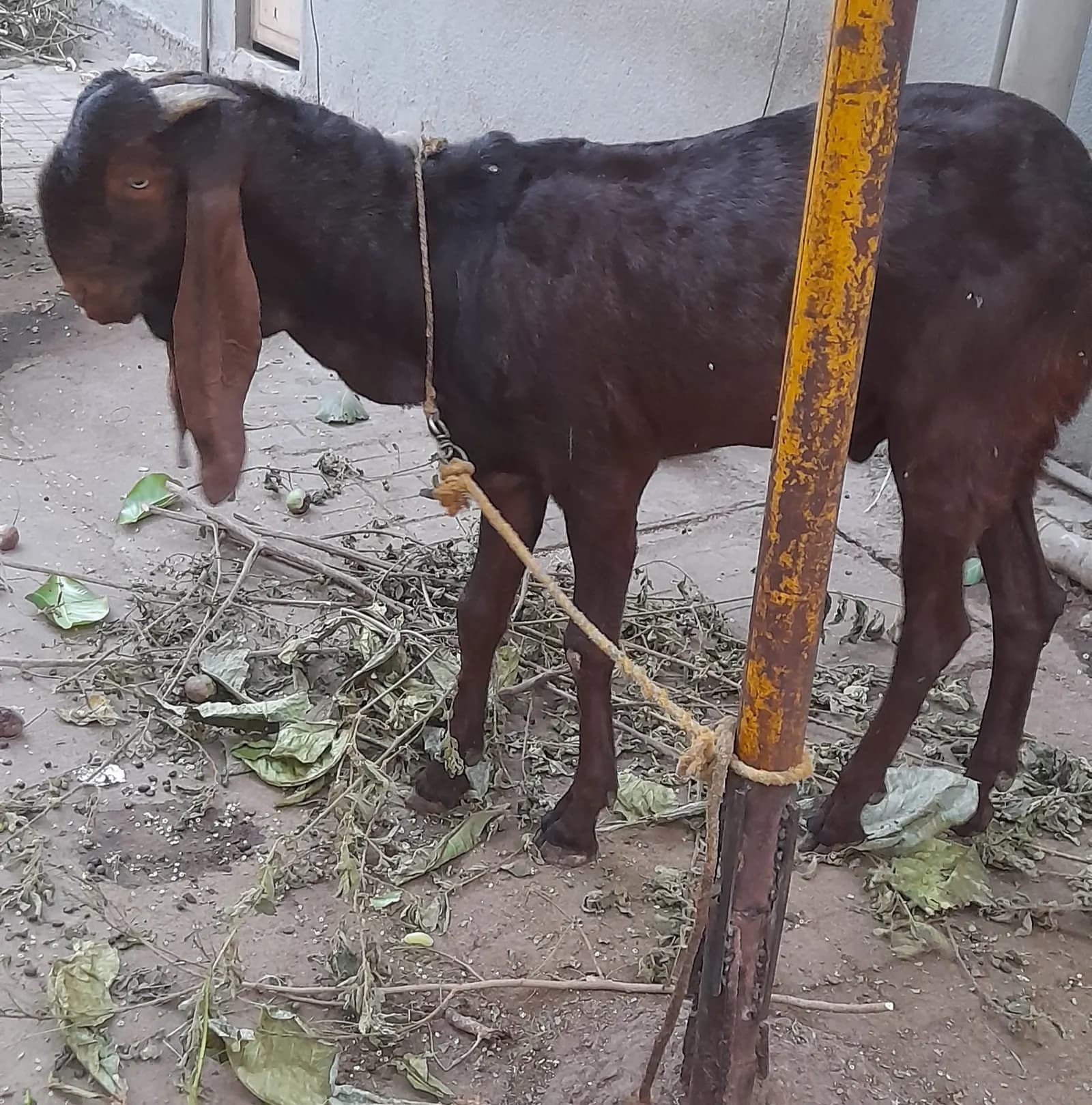
Pick a breed that suits your climate, feeding system and buyers, then buy from a known breeding farm or a government or university farm, not from a weekly haat where you can't check health history. DAHD's NLM guidelines include an indicative list of goat germplasm farms, and your state animal husbandry department can tell you which breeds it recommends.
Goat breeds commonly reared in India
| Breed | Home region | Main use | Notes for your plan |
|---|---|---|---|
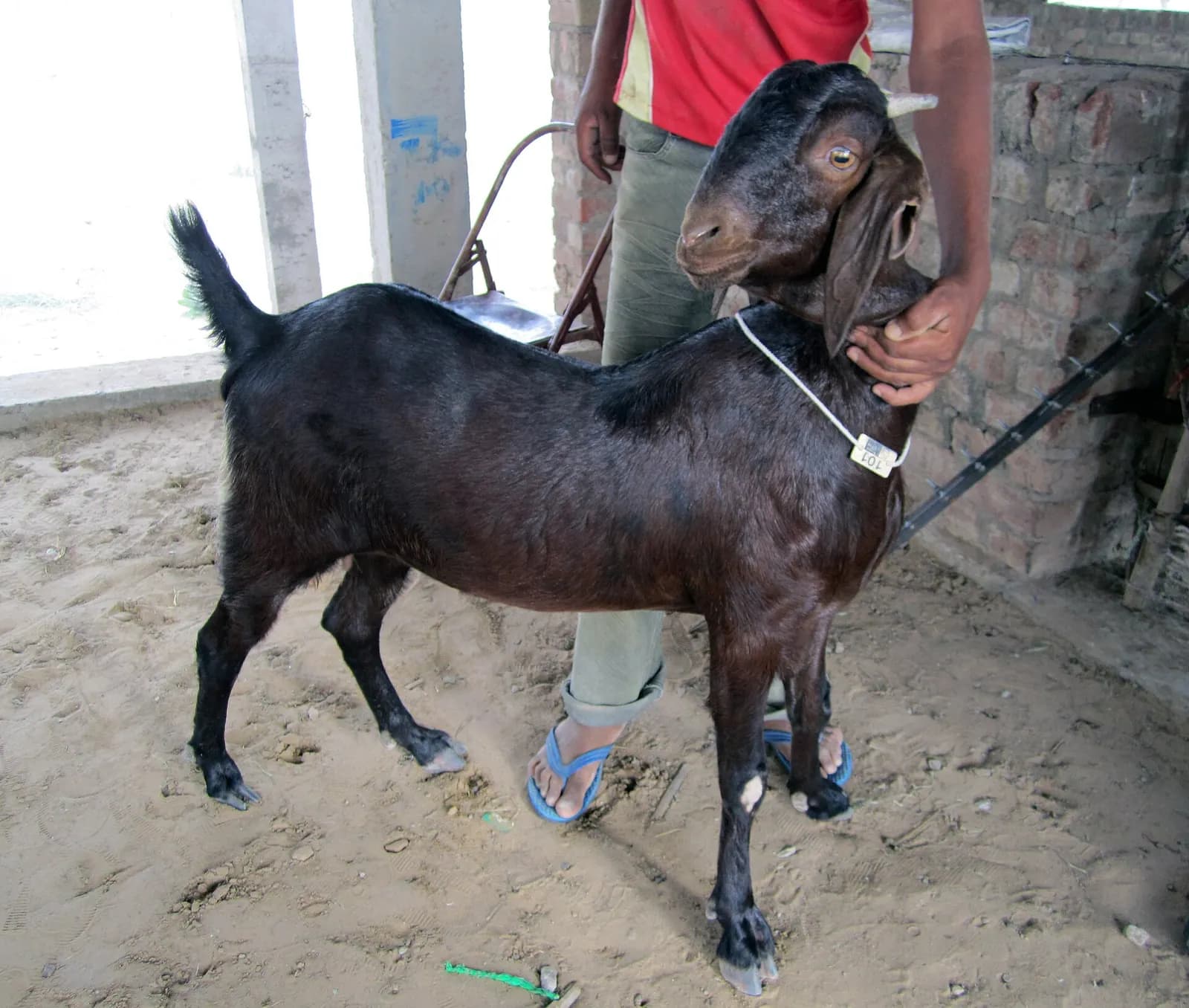
Sirohi | Rajasthan, Gujarat | Meat (and some milk) | Hardy, tolerates dry heat, widely used for stall feeding |
Jamunapari | Etawah region, Uttar Pradesh | Milk and meat | Large and long-legged; needs more feed and space |
Beetal | Punjab, Haryana | Milk and meat | Large dual-purpose breed; good for milk sales |
Barbari | Uttar Pradesh, Haryana, Rajasthan | Meat and milk | Small, handles confinement and stall feeding well |
Osmanabadi | Maharashtra | Meat | Prolific; suits the Deccan's semi-arid conditions |
Black Bengal | West Bengal, Odisha, Assam, Bihar | Meat and skin | Small, very prolific, prized meat; slower to reach heavy weights |
Sirohi
- Home region
Rajasthan, Gujarat
- Main use
Meat (and some milk)
- Notes for your plan
Hardy, tolerates dry heat, widely used for stall feeding
Jamunapari
- Home region
Etawah region, Uttar Pradesh
- Main use
Milk and meat
- Notes for your plan
Large and long-legged; needs more feed and space
Beetal
- Home region
Punjab, Haryana
- Main use
Milk and meat
- Notes for your plan
Large dual-purpose breed; good for milk sales
Barbari
- Home region
Uttar Pradesh, Haryana, Rajasthan
- Main use
Meat and milk
- Notes for your plan
Small, handles confinement and stall feeding well
Osmanabadi
- Home region
Maharashtra
- Main use
Meat
- Notes for your plan
Prolific; suits the Deccan's semi-arid conditions
Black Bengal
- Home region
West Bengal, Odisha, Assam, Bihar
- Main use
Meat and skin
- Notes for your plan
Small, very prolific, prized meat; slower to reach heavy weights
For a meat business, the numbers that matter are how often does kid, how many kids survive, and how fast kids grow to sale weight. For a milk business — goat milk sells at a premium in some cities — choose a milk breed and check FSSAI rules before you sell milk directly.
Setup cost for a 100-doe breeding unit
The table below is a MSMETOOLS estimate for a stall-fed 100-doe, 5-buck Sirohi or similar breeding unit on your own land in 2026. Animal prices follow NABARD's 2025-26 Rajasthan unit cost of ₹15,000 per doe and buck; the cost heads follow the NLM list of items eligible for subsidy (shed, kid shed and sick pen, animals, transport, fodder cultivation, chaff cutter, equipment, insurance, miscellaneous). The shed line assumes a low-cost raised slatted shed of about 1,800 sq ft — roughly 10–12 sq ft per adult plus a kid and sick pen — and varies the most.
| Setup item | Estimated range | Worked plan | Basis / notes |
|---|---|---|---|
| 100 does | ₹7,00,000 – ₹18,00,000 | ₹15,00,000 | NABARD 2025-26: ₹7,000 (Arunachal) to ₹15,000 (Rajasthan) per animal |
| 5 bucks | ₹35,000 – ₹1,50,000 | ₹75,000 | Pay more for proven breeding bucks |
| Shed, kid shed and sick pen (≈1,800 sq ft) | ₹4,50,000 – ₹11,00,000 | ₹5,40,000 | ₹250–₹600 per sq ft by design and material |
| Chaff cutter, feeders, waterers, weighing scale, tools | ₹75,000 – ₹2,00,000 | ₹1,25,000 | |
| Fodder plot preparation (about 2 acres) | ₹30,000 – ₹80,000 | ₹50,000 | Napier, maize, legumes |
| Insurance on animals (first year) | ₹40,000 – ₹1,00,000 | ₹79,000 | About 5% of animal value |
| Transport of animals | ₹20,000 – ₹80,000 | ₹40,000 | Distance from breeding farm |
| Miscellaneous (power, water line, first medicines) | ₹30,000 – ₹1,00,000 | ₹50,000 | |
| Project cost | ₹13,80,000 – ₹36,10,000 | ₹24,59,000 | |
| Working capital: 3 months' feed and wages (not subsidised) | ₹1,50,000 – ₹3,50,000 | ₹2,50,000 | Kids won't sell for 8–12 months |
For comparison, NABARD's 2025-26 sheet for Manipur prices a 100-doe, 5-buck goat breeding unit at ₹8,39,500, which shows how much animal and construction costs differ between states. Always ask your bank which NABARD unit cost it uses for your district. List your own costs in the startup cost calculator.
The NLM subsidy for goat farming — as currently notified
The National Livestock Mission, run by the Department of Animal Husbandry and Dairying (DAHD) since 2021-22, has an entrepreneurship component (NLM-EDP) that gives a one-time capital subsidy for sheep and goat breeding farms. Under the comprehensive guidelines DAHD has published:
- Unit sizes run in multiples of 100 does + 5 bucks: subsidy up to ₹10 lakh, ₹20 lakh, ₹30 lakh, ₹40 lakh and ₹50 lakh for 100, 200, 300, 400 and 500 does.
- Who can apply: individuals, self-help groups, farmer producer organisations, farmer cooperatives, joint liability groups and Section 8 companies.
- Eligibility: training or experience in goat farming (or trained experts on the team), a bank loan sanction or a bank guarantee with bank appraisal, your own or leased land, the ability to run the farm for at least three years, KYC documents, and at least 10% of project cost as margin money.
- How it's paid: SIDBI releases the subsidy in two equal instalments to your lending bank — the first after the bank releases the first loan instalment and the state agency confirms it, the second after the project is completed and verified. Self-financed projects must show 25% spending before the first instalment and furnish a three-year bank guarantee.
- What's excluded: land purchase, rent or lease, working capital and personal vehicles get no subsidy.
- Breed: the unit must use high-genetic-merit animals from the guideline list or as agreed with the state.
Status in 2026. NLM was realigned for the period from 2021-22. The NLM portal's notice says beneficiaries who received a first instalment between 2023-24 and 2025-26, and projects approved by the project approval committee on or before 31 March 2026, had to complete their projects and submit documents by 30 September 2026 — otherwise the project can be cancelled and the subsidy recovered with 10% interest. Whether fresh NLM-EDP applications are being sanctioned after March 2026 depends on the scheme's continuation, so check the portal's notices and your state implementing agency before you build your funding plan around the subsidy. Apply only through nlm.udyamimitra.in; agents who promise "guaranteed NLM subsidy" for a fee are not part of the scheme.
In our worked plan the project cost is ₹24.59 lakh, so 50% would be ₹12.3 lakh — but the cap for a 100-doe unit is ₹10 lakh, so that is the subsidy.
Housing, feed and fodder
Housing. Build the shed on high, well-drained ground, running east–west so the long sides get less direct sun. A raised slatted floor keeps goats dry and cuts worm and foot problems; keep separate pens for bucks, pregnant does, kids and sick animals. Plan roughly 10–12 sq ft per adult goat inside the shed plus an open paddock, and more for large breeds such as Jamunapari.
Feed. Feed is the biggest running cost, so grow as much of it as you can. A working ration for an adult stall-fed goat combines green fodder (Napier hybrid, fodder maize or sorghum, and a legume such as lucerne, berseem or cowpea), dry fodder (crop residues, groundnut haulms, hay) and 200–300 g of concentrate a day, more for pregnant and milking does. Kids need creep feed from a few weeks of age to reach sale weight quickly. Silage made in the flush season smooths out summer shortages — the NLM item list includes a silage-making machine for larger units.
Water and minerals. Clean water all day and mineral mixture or licks prevent many fertility and growth problems that are blamed on breed.
Health: where goat farms win or lose
Kid deaths are the biggest hidden cost in goat farming. Losing one kid in five turns a profitable plan into a loss, as the worked example shows. Build your health plan with the local veterinary officer before animals arrive:
Goat health plan
0/7Banks, insurers and NLM inspectors all ask for these records, and they are the only way to see whether a problem is the breed, the feed or the management.
Marketing your goats
Goat farmers usually sell through four channels, and a good plan uses at least two:
- Weekly markets and traders — quick cash, but the trader sets the price. Know your animals' live weight before you go.
- Direct to meat shops and hotels — better prices for steady supply of uniform animals. Agree a price per kg live weight.
- Festival sales — demand and prices peak before Bakrid and some regional festivals. Plan kidding so a batch of males is ready then, and sell directly to buyers or through local livestock fairs.
- Breeding stock — well-grown, recorded does and bucks of a pure breed sell to other farmers, including new NLM units, at a premium over meat prices.
Goats sold live are exempt from GST — Nil under HSN 0104 — and you don't need FSSAI registration to sell live animals. Slaughter must happen in a licensed slaughterhouse, and selling meat or milk directly brings in FSSAI and municipal rules. Check your panchayat or municipality for any local permission needed for a farm of your size, and follow animal-transport rules when moving goats.
Worked example: monthly P&L and break-even
Here's a sample plan for a 100-doe, 5-buck stall-fed Sirohi unit with 2 acres of fodder, where the owner works full time and hires one worker. All figures are illustrative planning estimates — replace them with your own.
Herd assumptions: does kid about 1.5 times a year with an average of 1.4 kids per kidding, giving about 210 kids a year. With 12% kid mortality, about 185 are raised; 20 females are kept as replacements and 165 young goats are sold at 9–12 months, plus about 15 culled does a year.
Revenue (monthly average): 13.75 young goats × ₹9,000 = ₹1,23,750; culled does ₹10,000; manure ₹4,000 = about ₹1,37,750.
Variable cost per young goat sold: creep feed and concentrate, extra dry fodder, kid medicines and transport to market = about ₹2,000. Contribution per goat = ₹7,000.
| Fixed monthly cost (herd of 105 adults) | Amount (estimate) |
|---|---|
| Concentrate for adults (250 g a day at ₹28/kg) | ₹22,000 |
| Dry fodder for adults (1 kg a day at ₹6/kg) | ₹19,000 |
| Green fodder cultivation (seed, fertiliser, irrigation) | ₹6,000 |
| One hired worker | ₹11,000 |
| Veterinary care, vaccines, deworming | ₹4,000 |
| Insurance renewal (monthly share) | ₹6,000 |
| Electricity, water, chaff cutter running | ₹3,000 |
| Repairs and miscellaneous | ₹3,000 |
| Loan EMI (net loan about ₹12.1 lakh, 10%, 5 years) | ₹26,000 |
| Total fixed costs | ₹1,00,000 |
- Monthly contribution = 13.75 × ₹7,000 + ₹14,000 (culls and manure) = about ₹1,10,250
- Profit = ₹1,10,250 − ₹1,00,000 = about ₹10,000 a month, plus the owner's own labour
- Break-even = (₹1,00,000 − ₹14,000) ÷ ₹7,000 = about 12.3 young goats a month, or 148 a year
The loan is the heaviest single cost here: once it is repaid in year five, profit rises by about ₹26,000 a month. The plan is also very sensitive to kid survival. If mortality rises from 12% to 20%, you sell about 148 goats instead of 165 — exactly break-even. On the upside, selling 40 males before Bakrid at ₹14,000 instead of ₹9,000 adds about ₹2 lakh a year. That's why experienced goat farmers obsess over kid care, grow their own fodder and time their kidding.
Try it — goat farm break-even (goats sold per month)
Funding a goat farm
- NLM-EDP with a bank loan — for 100 does and above, as described earlier. Your bank appraises the project, you bring at least 10% of project cost, and the subsidy is credited to your loan account. In our plan: own margin about ₹2.5 lakh, bank loan about ₹22.1 lakh, NLM subsidy ₹10 lakh, net loan about ₹12.1 lakh — plus ₹2.5 lakh of working capital from savings or a KCC limit.
- Kisan Credit Card for animal husbandry — working capital for feed, fodder and veterinary costs. Short-term loans up to ₹3 lakh carry 7% interest, effectively 4% with prompt repayment, without collateral up to ₹2 lakh.
- Mudra — agri-allied income-generating activities qualify. Collateral-free up to ₹10 lakh; suits starter and semi-intensive units. See the Mudra loan guide.
- Stand-Up India — greenfield agri-allied projects by women and SC/ST entrepreneurs, from ₹10 lakh to ₹1 crore.
- State schemes — several states run their own goat or sheep distribution and subsidy schemes, often for SC/ST families, women's groups or drought-prone districts. Ask your district animal husbandry office.
Keep the repayment period realistic. NABARD's unit costs allow five years with a one-year gestation period for goat units, because kids don't generate income for the first several months. Use the EMI calculator to test your instalment, and register free on Udyam if you run the farm as an enterprise. If you are weighing goats against cattle, compare this plan with our dairy farm business plan.
Goat farming business plan template
Fill in each line; the business plan generator can format it for your bank or the NLM application.
Fill-in goat farming business plan
0/11Mistakes that sink new goat farms
- Buying the whole herd from a weekly market. Mixed, untested animals bring disease. Buy from known farms, in batches, and quarantine.
- Assuming twins from every doe. Project reports that promise 2.5 kids per doe a year with no deaths are fiction. Plan conservatively.
- Buying all the fodder. Purchased green fodder and concentrate can swallow your margin. Secure fodder land before buying animals.
- Building an expensive shed. A raised, ventilated low-cost shed works as well as a costly one. Put the money into better animals and fodder.
- Counting on a subsidy that isn't open. Check NLM's current notices before you sign a loan that only works with the subsidy.
- No records. Without weights, kidding and health records you can't spot problems — or prove progress to the bank and NLM inspectors.
Official links
- National Livestock Mission portalApply, check notices and model DPRs
- NLM comprehensive operational guidelines (DAHD)Unit sizes, subsidy, eligibility, insurance
- NABARD unit costs 2025-26 — RajasthanGoat 10+1 and 20+1 units
- NABARD model bankable scheme on goat farmingProject report structure
- Stand-Up IndiaAgri-allied greenfield loans
- Udyam Registration portalFree MSME registration
What to do next
Visit two working goat farms in your district and the nearest government veterinary hospital before you buy a single animal. Then cost your own unit in the startup cost calculator, test the herd numbers in the break-even calculator, and take your plan — with your bank's NABARD unit cost for your district — to the lender. If you're aiming for the NLM subsidy, check the notices on nlm.udyamimitra.in first and apply only through the portal.
This is general information, not financial or legal advice — confirm scheme terms on the official portal or with your bank and veterinary officer.
Frequently asked questions
NABARD's 2025-26 unit cost for Rajasthan puts a 10-doe, 1-buck unit at ₹1,65,000, valuing each animal at ₹15,000. Our estimate for a 100-doe, 5-buck stall-fed breeding unit — the smallest size eligible for the NLM subsidy — is about ₹24.6 lakh, plus ₹2–3 lakh of working capital. Animal prices and shed costs vary widely by state.
Under the National Livestock Mission's entrepreneurship programme, the Centre gives 50% of project cost, up to ₹50 lakh for sheep and goat breeding farms. The smallest eligible unit is 100 does + 5 bucks, subsidy up to ₹10 lakh; the largest is 500 does + 25 bucks, subsidy up to ₹50 lakh. The NLM portal's notice says projects approved up to 31 March 2026 had to finish by 30 September 2026, so check whether new applications are being sanctioned before relying on it.
Choose a breed suited to your region and market. Sirohi suits dry western and central India and stall feeding; Jamunapari and Beetal are large dual-purpose breeds of the north; Osmanabadi and Black Bengal are prolific meat breeds of Maharashtra and the east; Barbari is small and handles confinement well. Buy from known breeding farms, not weekly markets, and ask your state veterinary department.
It can be, but margins are thinner than most project reports suggest. In our worked 100-doe example, the farm earns about ₹10,000 a month on top of the owner's own labour while the loan is being repaid, rising by about ₹26,000 a month once the EMI ends. Kid survival, own fodder and festival sales decide whether a farm makes money.
Yes. Kisan Credit Card limits for animal husbandry need no collateral up to ₹2 lakh, and Mudra loans for agri-allied activities are collateral-free up to ₹10 lakh under Tarun. For larger NLM projects the bank appraises the project and may ask for security or CGTMSE-type cover above those limits.
No. Live sheep and goats under HSN 0104 are exempt from GST — the rate is Nil. Fresh, unbranded meat is also outside the GST charge, but if you start processing, packaging or selling branded meat products, check the rate and FSSAI rules for that activity.
Sources & verification
Figures on this page were checked against the sources below when it was last reviewed on 7 October 2026. Each rate and limit is stored once with its own official source and review date, and official update channels are monitored daily so changes are picked up. How we verify
- 1.Comprehensive Operational Guidelines for National Livestock Mission — Department of Animal Husbandry and Dairying · accessed 7 October 2026
- 2.National Livestock Mission portal — home page notice — DAHD / SIDBI · accessed 7 October 2026
- 3.National Livestock Mission (Lok Sabha reply, 4 February 2025) — PIB · accessed 7 October 2026
- 4.Unit costs for FY 2025-26 — Rajasthan Regional Office — NABARD · accessed 7 October 2026
- 5.Unit cost for investment in agriculture and allied activities — Arunachal Pradesh 2025-26 — NABARD · accessed 7 October 2026
- 6.Unit cost for the year 2025-26 — Manipur — NABARD · accessed 7 October 2026
- 7.Notification No. 2/2017-Central Tax (Rate) — GST Council · accessed 7 October 2026
- 8.Stand-Up India scheme details — SIDBI / Department of Financial Services · accessed 7 October 2026
- 9.MUDRA — frequently asked questions — MUDRA · accessed 7 October 2026
- 10.Model bankable scheme on goat farming — NABARD · accessed 7 October 2026
MSMETOOLS is an independent platform and is not affiliated with any government agency, ministry or department.
Tools for this
Break Even Calculator
Find your break even point and units.
Startup Cost Calculator
Estimate how much capital you need to launch.
EMI Calculator
Calculate loan EMIs for business and personal loans.
Business Plan Generator (US)
Create a professional business plan for US investors and banks.
Related guides
 Dairy Farm Business Plan 2026: 10-Cow Costs, Loans & ProfitRead guide
 Poultry Farming Business Plan 2026: Costs, Subsidy & ProfitRead guide
 Fish Farming Business in India 2026: PMMSY Subsidy & ProfitRead guide
 Mushroom Farming Business 2026: Subsidy, Cost & ProfitRead guide
Official links open the government site in a new tab.