 Government schemes & funding
Subsidy for Agriculture in 2026: Every Major Central Scheme for Farm Businesses and How to Apply
Subsidy for agriculture in 2026: AIF 3% interest subvention, 40–50% machinery subsidy, 55% drip subsidy, NHB's new 35% rate, PMFME status and how to apply.
 Edited by Sumeet YadavFounder & editor, MSMETOOLS · fact-checked against official sources
Contents (12)
- 1. Which agriculture subsidy fits your project
- 2. Agriculture Infrastructure Fund: interest subvention for post-harvest assets
- 3. Farm machinery: SMAM subsidy
- 4. Drip and sprinkler: Per Drop More Crop subsidy
- 5. Horticulture: NHB and MIDH after the August 2026 changes
- 6. Food processing: PMFME status
- 7. Crop loans: KCC interest subvention
- 8. State subsidies and top-ups
- 9. How to apply for agriculture subsidy
- 10. Common reasons applications are rejected
- 11. Official links
- 12. What to do next
"Subsidy for agriculture" covers dozens of schemes, but a farm business usually needs only two or three of them: one for the asset (a warehouse, a tractor, a drip system, a polyhouse), one for working capital, and sometimes a state top-up. This guide is for farmers, FPOs, agri-entrepreneurs and small processors who want to know what the government will actually pay in 2026, at what rate, through which portal, and which schemes have changed or paused. Every figure is checked against the scheme guidelines and official releases as of October 2026.
Quick answer
The biggest central subsidies for agriculture today are the Agriculture Infrastructure Fund (interest subvention on post-harvest and farm infrastructure loans), SMAM (machinery), Per Drop More Crop (drip and sprinklers), NHB/MIDH (horticulture) and KCC interest subvention (crop loans). Most are applied for online and paid by DBT or as a back-ended subsidy through your bank.
AIF: 3% a year interest subvention on loans up to ₹2 crore per project, for up to 7 years
Machinery (SMAM): 50% for small, marginal, SC/ST and women farmers; 40% for others
Drip/sprinkler: 55% for small and marginal farmers, 45% for others
NHB horticulture: cut to 35% (45% in NE/hill states) from 21 August 2026
PMFME's extension ended 30 September 2026; a 2026–31 continuation is pending
Which agriculture subsidy fits your project
Start with the asset you're paying for, not the scheme name. A cold store and a tractor sit under different ministries and portals, and some projects can draw on two schemes at once.
| What you're funding | Scheme | Support | Who applies | Where |
|---|---|---|---|---|
| Warehouse, cold store, pack-house, sorting/grading, primary processing | Agriculture Infrastructure Fund | 3% a year interest subvention + credit guarantee | Farmers, FPOs, PACS, agri-entrepreneurs, start-ups, SHGs, cooperatives | agriinfra.dac.gov.in + lending bank |
| Tractor, power tiller, implements | SMAM (under PM-RKVY) | 40%–50% of cost, capped per machine | Individual farmers | agrimachinery.nic.in or state portal |
| Custom hiring centre / farm machinery bank | SMAM | 40% of project cost (projects up to ₹2.5 crore); FMBs 80% of project cost (up to ₹30 lakh) | Rural entrepreneurs, FPOs, SHGs, PACS | State agriculture department |
| Drip or sprinkler irrigation | Per Drop More Crop (under PM-RKVY) | 45%–55% of unit cost | Farmers | State micro-irrigation portal |
| Polyhouse, orchards, large cold stores | NHB | 35% / 45%, back-ended | Individuals, firms, FPOs | nhb.gov.in |
| Smaller horticulture and cold-chain units | MIDH via State Horticulture Mission | Back-ended subsidy per state norms | Farmers and entrepreneurs | District horticulture office |
| Micro food-processing unit | PMFME | 35% up to ₹10 lakh (when open) | Micro processors, FPOs, SHGs | pmfme.mofpi.gov.in |
| Crop loan | KCC with interest subvention | 4% effective rate on prompt repayment | Farmers | Any bank |
Two structural points help. First, SMAM and Per Drop More Crop are now components of the Pradhan Mantri Rashtriya Krishi Vikas Yojana (PM-RKVY), restructured in October 2024 as an umbrella of nine schemes. States can shift money between components, so the budget for drip or machinery in your district may run out sooner or later than last year. Second, the Agriculture Infrastructure Fund explicitly allows convergence with MIDH, PMFME, SMAM, PMKSY, RKVY, PMEGP and PM-KUSUM, so a subsidy from one scheme and AIF's interest subvention can sit on the same project if the guidelines of both are met.
Agriculture Infrastructure Fund: interest subvention for post-harvest assets
The Agriculture Infrastructure Fund (AIF) is a ₹1 lakh crore financing facility for farm-gate and post-harvest infrastructure. It doesn't pay a capital subsidy; instead the government pays 3% a year of the interest on your bank loan, limited to loans of ₹2 crore per project in one location, for up to 7 years. Your loan can be larger — the subvention simply applies to the first ₹2 crore. Loans up to ₹2 crore also get a credit guarantee, and repayment can run up to seven years including a moratorium of up to two years.
Eligible projects include warehouses and silos, cold stores and cold chains, pack-houses, sorting and grading units, assaying units, ripening chambers, reefer vans, farm-waste management, e-marketing and supply-chain platforms, and primary processing such as cleaning, grading, milling, de-husking, oil extraction and drying. The AIF portal lists crop-wise which processing counts as primary or integrated secondary processing; alcoholic beverage making is excluded.
How an AIF-backed project moves
Step 1
Register on AIF portal
Step 2
Upload DPR + choose bank
Step 3
Bank sanction
subvention starts
Step 4
Build + geo-tag on Krishi Mapper
Step 5
Other scheme subsidy
if converging
Eligible borrowers are a long list: individual farmers, FPOs and their federations, PACS, marketing and multipurpose cooperatives, SHGs and their federations, joint liability groups, agri-entrepreneurs, start-ups, APMCs, state agencies and PPP projects. A private entity such as a farmer, agri-entrepreneur or start-up can claim the benefit for up to 25 projects, each in a separate location with its own LGD code.
Worked example. An FPO in Nashik borrows ₹1.8 crore at 9% to build a 2,500-tonne onion storage and grading shed. AIF pays 3 percentage points on the whole ₹1.8 crore because it is under the cap, so the FPO effectively pays 6%. In the first year that's about ₹5.4 lakh of interest borne by the government (₹1.8 crore × 3%); the saving shrinks as the principal is repaid, but over seven years it is easily worth ₹20 lakh or more on this loan. If the same FPO borrowed ₹3 crore, the subvention would still be calculated on ₹2 crore only.
Stacking AIF with a capital subsidy
Because AIF is an interest subsidy rather than a capital grant, it is the scheme most often combined with another one. Take a farmer-entrepreneur in Krishnagiri setting up a ₹60 lakh mango pack-house and ripening chamber. If the project qualifies for back-ended assistance under MIDH through the Tamil Nadu horticulture department, that subsidy is credited to the loan account after completion and reduces the principal. The rest of the loan still carries AIF's 3% a year subvention, because the AIF guidelines list MIDH among the schemes it converges with. The practical rule is to tell the bank at the start which schemes you are combining, so the DPR, the loan sanction and the subsidy claim all describe the same project cost; mismatched figures between the AIF portal and the horticulture department's file are the commonest reason such claims stall.
Farm machinery: SMAM subsidy
The Sub-Mission on Agricultural Mechanization (SMAM) pays part of the cost of tractors, power tillers, implements and harvesters bought by individual farmers, and funds custom hiring centres and village farm machinery banks. Under the 2025 operational guidelines, small and marginal farmers, SC/ST farmers, women farmers and farmers in the North-Eastern and Himalayan states get 50% of the machine cost; all other farmers get 40%. Each machine also has a rupee cap — a 2WD tractor of 20–40 PTO HP, for example, is capped at ₹3 lakh for the 50% category. The subsidy goes to your bank account through DBT after the machine is verified.
SMAM support at a glance (2026)
50%
Small/marginal, SC/ST, women, NE farmers
40%
Other farmers
₹2,000 per hectare (up to 2 ha a year)
Drone spraying hired from CHCs
small & marginal farmers
21.61 lakh
Machines funded, 2014-15 to 2025-26
PIB, July 2026
If you want to run machinery as a business, the custom hiring centre route is the one to look at. Rural youth, farmer-entrepreneurs, FPOs, SHGs, panchayats and PACS can get 40% of project cost (projects up to ₹2.5 crore), as a credit-linked back-ended subsidy, and training at a Farm Machinery Training and Testing Institute is mandatory for CHC beneficiaries. Village-level farm machinery banks for SHGs and FPOs get 80% of project cost (up to ₹30 lakh). The guidelines also tell states to steer expensive machines — tractors above 40 HP, combines and sugarcane harvesters — towards CHCs rather than individual ownership. The full tractor caps, state examples and the application flow are in our tractor subsidy guide.
Drip and sprinkler: Per Drop More Crop subsidy
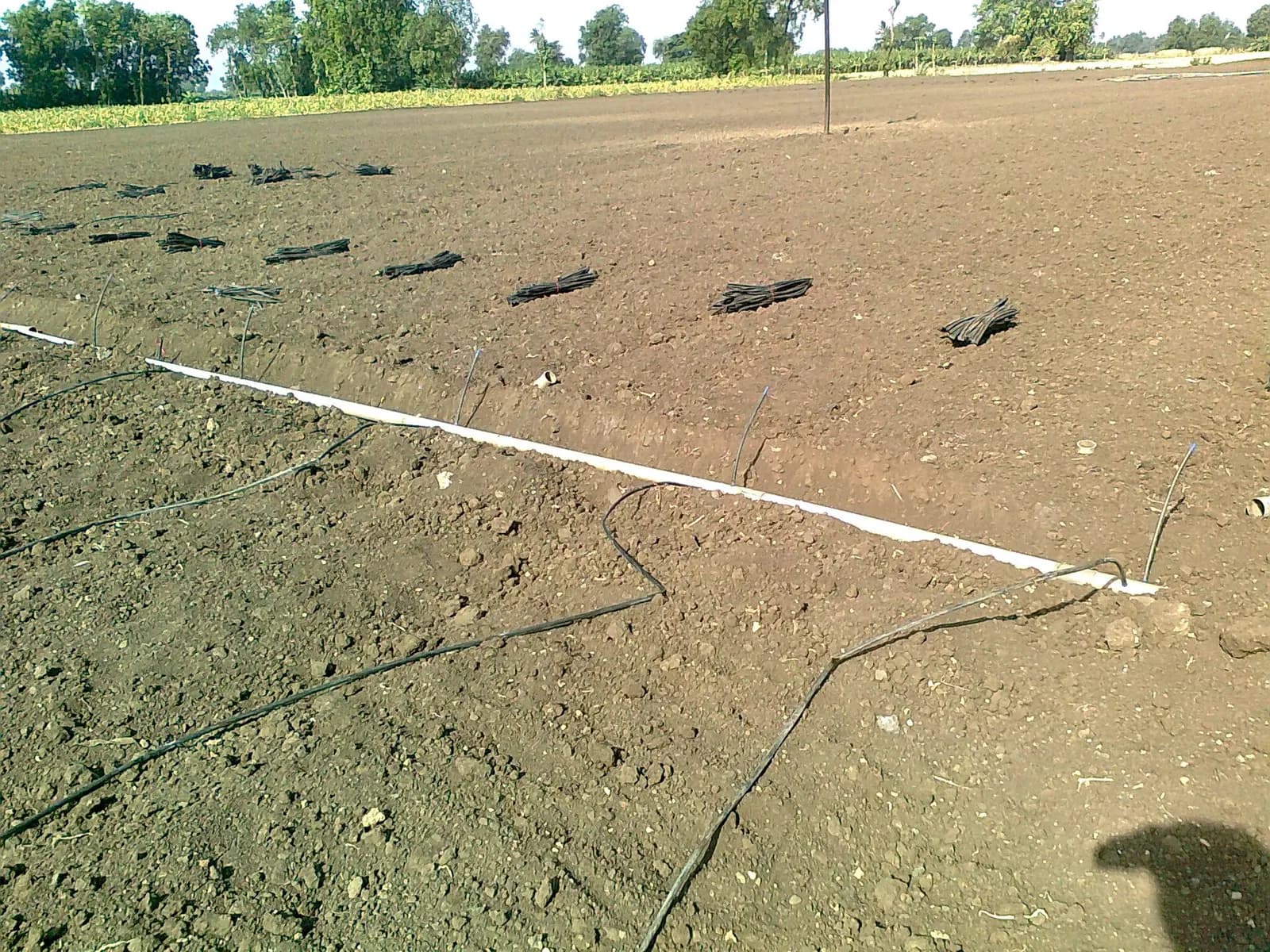
Per Drop More Crop (PDMC) is the micro-irrigation subsidy, and it is the most widely used agriculture subsidy after crop loans: 12.3 lakh farmers benefited in 2025–26 alone. It covers drip (online and inline) and sprinkler systems (portable, semi-permanent, mini and micro sprinklers, rain guns). Small and marginal farmers get 55% of the cost and other farmers 45%, up to 5 hectares per beneficiary. Several states add their own top-up, and once you've received assistance you can claim again on the same land only after 7 years.
The percentage applies to the unit cost the state has approved for that crop spacing and system, not to whatever a supplier quotes. That's why two farmers in neighbouring districts can get different rupee amounts for the same acreage. Under the revised PDMC guidelines, states can also fund farm ponds, diggis and other water-harvesting structures under PDMC's "other interventions" without the earlier 20% cap on such spending.
Worked example (illustrative). A marginal farmer in Jalgaon installs drip on 1.5 hectares of banana. Suppose the state's approved unit cost for that spacing is ₹1.3 lakh per hectare, so the eligible cost is ₹1.95 lakh. At 55%, the subsidy is about ₹1.07 lakh, leaving ₹88,000 for the farmer — less if Maharashtra's state top-up applies that year. A large farmer with the same field would get 45%, about ₹88,000. Check your state's current unit costs; they are revised from time to time.
Horticulture: NHB and MIDH after the August 2026 changes
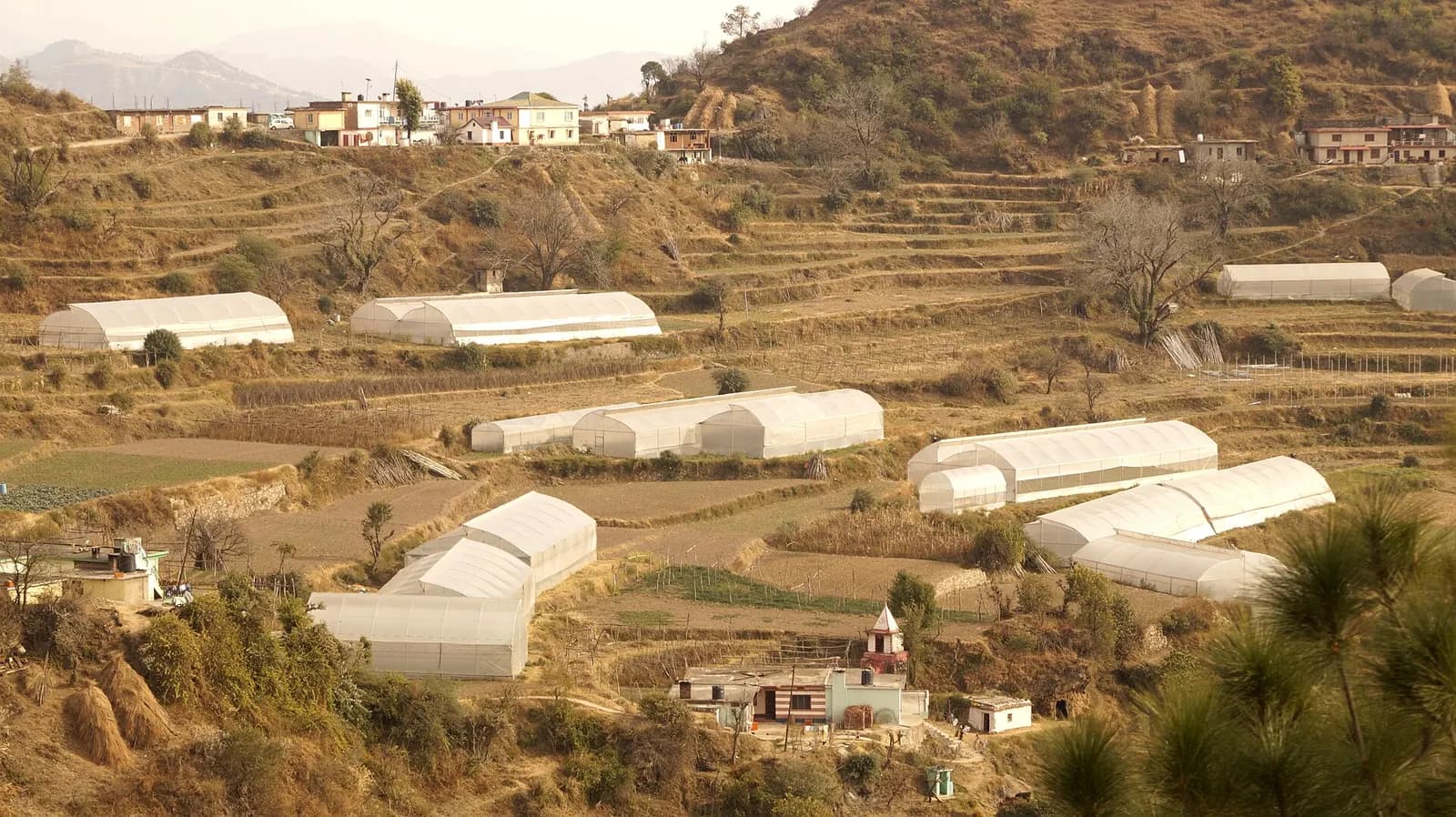
Horticulture subsidies come from two channels. The National Horticulture Board (NHB) funds larger commercial projects — high-value orchards, protected cultivation (polyhouses and shade nets), tissue culture, mushrooms, post-harvest infrastructure and cold storage — as a credit-linked back-ended subsidy released after your bank loan is disbursed and the project is inspected. The Mission for Integrated Development of Horticulture (MIDH) funds smaller units through State Horticulture Missions and district horticulture offices; for cold storage under MIDH, the government has told Parliament the subsidy is 35% of project cost in general areas and 50% in hilly and scheduled areas.
NHB changed its rules sharply on 21 August 2026, with immediate effect. The subsidy for open-field and protected cultivation projects, tissue culture, mushrooms, post-harvest components and cold storage is now 35% of eligible project cost in general areas and 45% in North-Eastern and Himalayan states, scheduled areas, island UTs, Jammu & Kashmir and Ladakh — down from up to 50%. NHB's subsidy on any cold storage project cannot exceed ₹2 crore, and land cost no longer counts towards project cost.
The eligibility rules tightened too. "Family" now means the applicant's spouse, father, mother, sons and daughters, and only one family member can ever get NHB assistance — whether as an individual, an HUF, a firm or a company director. Sitting ministers, MPs, MLAs, mayors, district panchayat chairpersons, serving government and PSU employees (other than MTS/Group-D staff), pensioners drawing ₹10,000 a month or more, and groups of farmers are ineligible. Pending applications are being decided case by case under the new provisions, so anyone mid-way through an NHB project should check with the NHB regional office before relying on the old 50%.
What the cut means in rupees. A 4,000 sq m polyhouse in Pune with an eligible cost of ₹40 lakh would have drawn up to ₹20 lakh at the old 50% rate; at 35% it draws ₹14 lakh. The same project in Solan, Himachal Pradesh, draws ₹18 lakh at 45%. Rework your project report and loan size before applying.
Food processing: PMFME status
The PM Formalisation of Micro Food Processing Enterprises (PMFME) scheme gives micro food processors a credit-linked subsidy of 35% of eligible project cost, up to ₹10 lakh. It has been popular — the target of two lakh units has been met — but it is in limbo. The scheme's temporary extension ran until 30 September 2026, and the Ministry of Food Processing Industries has proposed a fresh five-year phase for 2026–31 with revised norms. As of 9 October 2026 we found no Cabinet approval or further extension. If you're planning a pickle, flour-mill or spice unit, check the PMFME portal for whether new applications are being accepted, and meanwhile compare the PMEGP loan, which funds food processing at 15–35% subsidy, and AIF, which covers primary processing.
Agriculture subsidy changes to know
22 Sep 2025
GST on tractors, farm machinery and drip/sprinkler systems cut from 12% to 5%
2025 guidelines
SMAM operational guidelines revised — lottery for oversubscribed windows, telematics on tractors
21 Aug 2026
NHB subsidy cut to 35% (45% NE/hill); one-family rule; ₹2 crore cold storage cap
30 Sep 2026
PMFME temporary extension ended; 2026–31 continuation awaiting approval
Crop loans: KCC interest subvention
The Kisan Credit Card gives farmers short-term crop loans at 7% on amounts up to ₹3 lakh, through the Modified Interest Subvention Scheme. Repay on time and you get a further 3% prompt repayment incentive, so the effective rate is 4%. Loans up to ₹2 lakh need no collateral. The government has also announced a higher MISS limit of ₹5 lakh from 2025–26; ask your bank whether it is applying the enhanced limit to your card. KCC also covers animal husbandry and fisheries working capital, which matters for dairy and poultry units — see the dairy farm business plan for how that fits a project.
State subsidies and top-ups
States run their own agriculture subsidies on top of the central ones, and they often pay more. Maharashtra routes its farm mechanisation, micro-irrigation and horticulture schemes through the MahaDBT farmer portal, where you register with Aadhaar OTP, upload your 7/12 and 8-A land extracts, and are selected by lottery; a farmer who gets a tractor cannot apply for another tractor for 10 years, though they can apply for other equipment the next year. Gujarat runs its schemes, including a state tractor-purchase scheme, through the iKhedut portal, which opens application windows for each component. Most other states have a similar single portal. Two rules of thumb: apply as soon as a window opens, because many states select by lottery or first-come-first-served within a fixed budget; and never buy the asset before you have a pre-sanction letter, because most schemes refuse subsidy on purchases made before approval.
How to apply for agriculture subsidy
Applying, scheme by scheme
- 1
Get your farmer and land records in order
Aadhaar linked to your bank account (needed for DBT), land records in your name (7/12, khatauni, patta or equivalent), caste or category certificate if you claim the higher rate, and your state farmer registration or Farmer ID where your state has issued one.
- 2
AIF — apply through a bank on the portal
Open the AIF portalRegister as a beneficiary on agriinfra.dac.gov.in, upload a DPR (templates are on the portal), choose a lending institution and submit. The bank appraises the loan; subvention and guarantee follow automatically once it is sanctioned.
- 3
Machinery — apply on agrimachinery.nic.in or your state portal
Open the farm machinery portalApply when your state opens the SMAM window. If selected, buy a tested model from an empanelled dealer, get the machine physically verified and the subsidy is paid by DBT.
- 4
Drip/sprinkler — apply on the state micro-irrigation portal
Pick a registered micro-irrigation company, get the design and estimate, apply online, install after pre-sanction, and the subsidy is released after joint inspection.
- 5
Horticulture — NHB or your State Horticulture Mission
Open NHBFor NHB, apply online at nhb.gov.in for in-principle approval before taking the bank loan. For MIDH, apply at the district horticulture office or the state's horticulture portal.
Documents most agriculture subsidies ask for
0/7Common reasons applications are rejected
- Buying before approval. Most schemes, including state SMAM and micro-irrigation programmes, pay nothing on assets bought before the pre-sanction letter.
- Land in someone else's name. Machinery and drip subsidies need land records in the applicant's name; a parent's land usually disqualifies you unless the state allows joint holdings.
- Using an unlisted dealer or untested model. SMAM pays only for machines from manufacturers with a valid test report and on the state's empanelled list.
- Applying again too soon. Drip assistance on the same land is barred for 7 years; Maharashtra bars a second tractor for 10 years.
- Old NHB assumptions. Project reports still showing 50% NHB subsidy, land cost in project cost, or a second family member applying will be rejected under the August 2026 rules.
On cost: GST 2.0 cut GST on tractors, agricultural machinery (HSN 8432, 8433, 8436) and drip and sprinkler systems from 12% to 5% from 22 September 2025, so the eligible cost — and the farmer's share — is lower than it was a year ago. See GST 2.0 for the full rate list.
Official links
Official agriculture subsidy portals
- Agriculture Infrastructure FundRegister, DPR templates, apply via bank
- Farm machinery DBT portalSMAM applications and tested-machine lists
- SMAM Operational Guidelines 2025Rates and machine-wise caps
- NHB circular, 21 Aug 2026Revised NHB subsidy and eligibility
- PMFME portalCheck whether applications are open
- MahaDBT farmer portalExample of a state single-window portal
What to do next
Decide the asset, then price the loan: the EMI calculator shows what an AIF-backed loan costs after subvention, and the break-even calculator tells you how much produce a cold store or pack-house must handle to pay for itself. If the asset is a tractor or implement, go straight to the tractor subsidy guide. For a solar pump or rooftop system on the farm, see solar panel subsidy.
This is general information, not legal or tax advice — confirm on the official source or with a professional.
Frequently asked questions
It depends on the asset. For warehouses, cold stores, pack-houses and primary processing, the Agriculture Infrastructure Fund gives 3% a year interest subvention on loans up to ₹2 crore. For machinery, SMAM pays 40%–50%. For drip or sprinklers, Per Drop More Crop pays 45%–55%. Many projects can combine AIF with another scheme's subsidy.
Under Per Drop More Crop, small and marginal farmers get 55% of the approved unit cost and other farmers 45%, for up to 5 hectares per beneficiary. Several states add a top-up from their own budget. You can get assistance again on the same land only after 7 years. Apply through your state's micro-irrigation or agriculture portal.
From 21 August 2026, the National Horticulture Board pays 35% of eligible project cost in general areas and 45% in North-Eastern and Himalayan states and scheduled areas, down from up to 50%. Cold storage subsidy is capped at ₹2 crore per project, land cost no longer counts, and only one member of a family can ever claim NHB assistance.
PMFME's temporary extension ran until 30 September 2026. The Food Processing Ministry has proposed continuing it for 2026–31 with revised norms, but no Cabinet approval had been announced as of 9 October 2026. Check the PMFME portal before preparing a new application.
Short-term crop loans under KCC are given at 7% on amounts up to ₹3 lakh, and farmers who repay on time get a further 3% incentive, bringing the effective rate to 4%. KCC loans up to ₹2 lakh need no collateral.
Yes, for some schemes. Agri-entrepreneurs and start-ups can use the Agriculture Infrastructure Fund, with up to 25 eligible projects in different locations. Rural entrepreneurs, FPOs and SHGs can set up custom hiring centres under SMAM at 40% of project cost (projects up to ₹2.5 crore). Individual machinery and drip subsidies, however, go only to farmers with land records.
Sources & verification
Figures on this page were checked against the sources below when it was last reviewed on 9 October 2026. Each rate and limit is stored once with its own official source and review date, and official update channels are monitored daily so changes are picked up. How we verify
- 1.Agriculture Infrastructure Fund — main features, eligible projects, who can apply — Department of Agriculture & Farmers Welfare · accessed 9 October 2026
- 2.Sub-Mission on Agricultural Mechanization — Operational Guidelines 2025 — Department of Agriculture & Farmers Welfare · accessed 9 October 2026
- 3.Sub-Mission on Agricultural Mechanization — PIB backgrounder (9 July 2026) — PIB · accessed 9 October 2026
- 4.Water-Smart Farming with Per Drop More Crop — PIB backgrounder (29 Aug 2026) — PIB · accessed 9 October 2026
- 5.NHB Public Circular — amendment to Commercial Horticulture and Cold Storage scheme guidelines (21 Aug 2026) — National Horticulture Board · accessed 9 October 2026
- 6.Cold storage assistance under MIDH — Rajya Sabha reply via PIB — PIB (Ministry of Agriculture) · accessed 9 October 2026
- 7.PMFME — media interaction (22 May 2026) — PIB (Ministry of Food Processing Industries) · accessed 9 October 2026
- 8.Kisan Credit Card explainer (11 March 2026) — PIB · accessed 9 October 2026
- 9.Notification 9/2025–Central Tax (Rate) — CBIC / Gazette of India · accessed 9 October 2026
- 10.State Agriculture Mechanization Scheme — MahaDBT — Government of Maharashtra · accessed 9 October 2026
- 11.PMFME set for fresh five-year push (secondary report) — Outlook Business · accessed 9 October 2026
MSMETOOLS is an independent platform and is not affiliated with any government agency, ministry or department.
Tools for this
EMI Calculator
Calculate loan EMIs for business and personal loans.
Loan Eligibility Calculator
Check your business loan eligibility based on income and existing loans.
Break Even Calculator
Find your break even point and units.
Related guides
 Tractor Subsidy 2026: SMAM Rates, Caps & How to ApplyRead guide
 Agri Infrastructure Fund 2026: 3% Subvention & StatusRead guide
 Govt Loan for Business (2026): Every Central Scheme ComparedRead guide
 Electric Scooter Subsidy for Women 2026: PM E-DRIVE & StatesRead guide
Official links open the government site in a new tab.