 Government schemes & funding
PM FME Scheme in 2026: Subsidy, Eligibility, Current Status and How to Apply
PM FME scheme in 2026: 35% subsidy up to ₹10 lakh, SHG seed capital, ODOP, who qualifies, a worked ₹ example and where the post-September 2026 extension stands.
 Edited by Sumeet YadavFounder & editor, MSMETOOLS · fact-checked against official sources
Contents (11)
- 1. What the PM FME scheme is
- 2. Is PMFME open in 2026? The extension position
- 3. What PMFME pays: every component
- 4. Who is eligible for PMFME
- 5. What counts in the project cost
- 6. Worked example: a pickle unit upgrade in Andhra Pradesh
- 7. How to apply on pmfme.mofpi.gov.in
- 8. Why PMFME applications get stuck or rejected
- 9. PMFME vs PMEGP and other options
- 10. After sanction: the three years that matter
- 11. What to do next
If you run a small pickle, papad, spice, flour, bakery, dairy or millet unit, or plan to start one, the PM FME scheme is the government programme built for you. This guide is for proprietors, partners, SHG members and FPOs. It covers what the scheme pays, who qualifies, how the grant actually reaches you, and the question everyone is asking in 2026: is PMFME still open now that its approved period has ended?
Quick answer
PM FME (Pradhan Mantri Formalisation of Micro Food Processing Enterprises) gives micro food processing units a credit-linked subsidy of 35% of eligible project cost, up to ₹10 lakh. Its approved period ran to 30 September 2026. The ministry has proposed a 2026-31 continuation, but as of October 2026 no Cabinet approval or fresh extension had been published. Check with your District Resource Person before you commit money.
You contribute at least 10% of project cost; a bank lends the rest
SHG members in food processing: seed capital of ₹40,000 per SHG member
FPOs, SHGs and cooperatives: 35% for common infrastructure, up to ₹3 crore
Apply on pmfme.mofpi.gov.in; a District Resource Person helps with the project report
What the PM FME scheme is
PMFME is a centrally sponsored scheme of the Ministry of Food Processing Industries (MoFPI), launched in 2020 under the Aatmanirbhar Bharat package. Its job is to pull India's informal food processors into the formal economy. The ministry estimates there are about 25 lakh unregistered food processing enterprises. In practice that means getting them bank credit, FSSAI and Udyam registration, better machines, packaging and a brand.
The scheme was approved with an outlay of ₹10,000 crore for 2020-21 to 2024-25. Costs are shared between the Centre and the states in a 60:40 ratio. For North-Eastern and Himalayan states the ratio is 90:10, and the Centre pays the full cost in UTs without a legislature. That matters to you because your state's nodal agency runs the scheme day to day. The speed of sanctions and subsidy release varies from state to state.
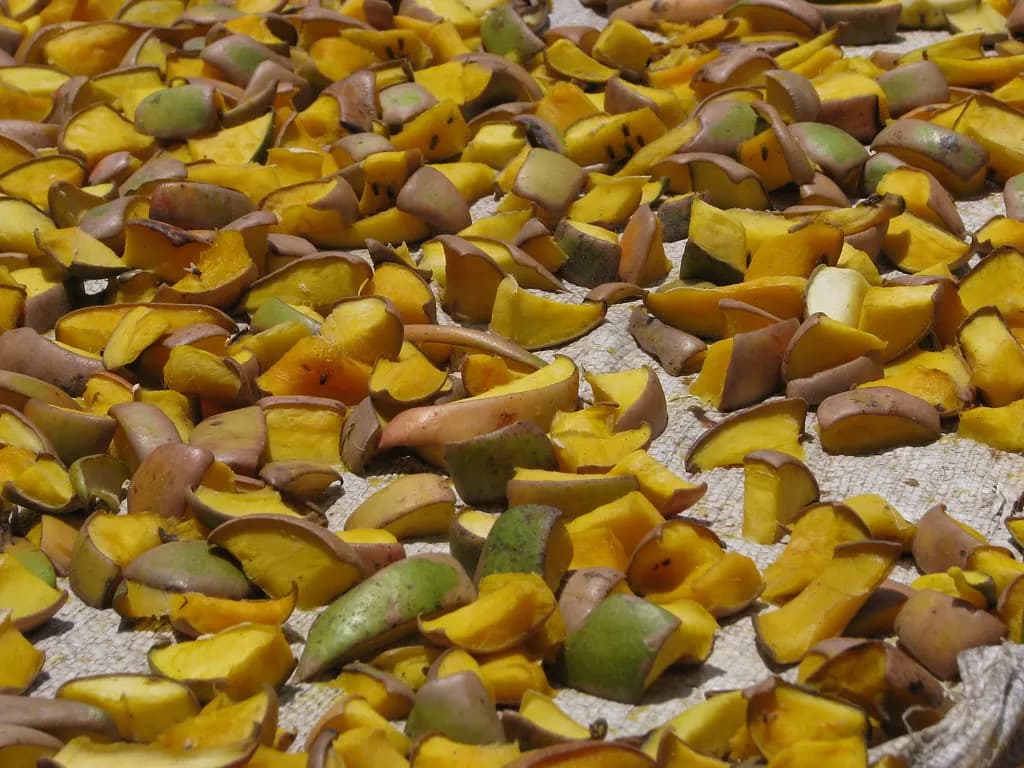
PMFME is built around One District One Product (ODOP). Each state picked a food product for each district, such as mango in one district, makhana in another, or millet products, spices or fish in others. According to MoFPI's May 2026 briefing, 137 unique products have been identified across 726 districts in 35 states and UTs. Units making the district's ODOP product get preference for subsidy, and common infrastructure and branding support go mainly to ODOP products.
How a PMFME subsidy reaches you
Step 1
Apply on PMFME portal
Step 2
DRP prepares project report
Step 3
District committee recommends
Step 4
Bank sanctions loan
Step 5
Grant parked in mirror account
via nodal bank
Step 6
Adjusted against loan
after 3 years if account is standard
Is PMFME open in 2026? The extension position
This is the part most websites get wrong.
- The original scheme period was 2020-21 to 2024-25.
- A MoFPI Office Memorandum of 30 September 2024 extended it to 31 March 2026 (FY 2025-26), with the same components and the same ₹10,000 crore outlay, so that it ended with the 15th Finance Commission cycle.
- In May 2026, MoFPI said the scheme had been extended till September 2026. This was a short interim extension while a longer renewal was considered.
- The ministry has sent a proposal to continue PMFME for 2026-31, in line with the 16th Finance Commission period. Press reports from May and August 2026 say the proposal includes a higher subsidy ceiling than ₹10 lakh and priority for women entrepreneurs and units in hill areas. The ministry's secretary said an extension, "in the same or a revised form", was expected.
Where things stand on October 2026: we checked PIB's Cabinet decisions, MoFPI's announcements page and the PMFME portal. We found no Cabinet approval for 2026-31 and no new extension order after the approved period ended on 30 September 2026. The portal is still online. Units sanctioned before the deadline still have their subsidy and lock-in rules. But it is unclear whether fresh applications filed now will be sanctioned under the old terms, held until the renewal is decided, or moved to revised terms.
What this means for you:
- Don't buy machinery on the assumption of a subsidy. Subsidy is linked to a loan sanctioned under the scheme. Spending first and applying later rarely works.
- Ask your District Resource Person (DRP) or district nodal officer whether your district is still accepting and recommending applications. Get the answer in writing if you can.
- Prepare your file anyway. The project report, FSSAI licence, Udyam registration and quotations stay useful under PMFME 2.0, PMEGP or a plain bank loan.
- Watch for a Cabinet decision. If a revised scheme is approved, the ceiling and eligibility may change. We will update this page when it is notified.
PMFME key dates
29 Jun 2020
Scheme launched with ₹10,000 crore outlay for 2020-21 to 2024-25
2021-22
First credit-linked loans sanctioned (3,218 that year)
30 Sep 2024
MoFPI OM extends the scheme to 31 March 2026 with no change in components or outlay
22 May 2026
MoFPI says the scheme has been extended till September 2026; 1,96,270 units supported
24–25 Aug 2026
PMFME Conclave in New Delhi; ministry says the 2-lakh unit target is met and a 2026-31 proposal is pending
30 Sep 2026
End of the approved period; no Cabinet approval for 2026-31 published as of 9 Oct 2026
What PMFME pays: every component
PMFME has more than one benefit, and most people only hear about the ₹10 lakh subsidy. Here is the full set as MoFPI describes it.
1. Credit-linked subsidy for individual units. This is 35% of the eligible project cost, capped at ₹10 lakh per unit. It is for setting up or upgrading a micro food processing unit. You put in at least 10% of the project cost and take a bank term loan for the rest. Because the grant is linked to credit, you cannot get it without a loan.
2. Credit-linked grant for groups. FPOs, farmer producer companies, SHGs, their federations and producer cooperatives get 35% with credit linkage for capital investment. For common infrastructure the cap is ₹3 crore. That covers facilities such as sorting and grading lines, cold storage, warehousing, common processing or a testing lab that other units can hire.
3. Seed capital for SHGs. Each SHG member already engaged in food processing can get ₹40,000 per SHG member for working capital and small tools. The money goes as a grant to the SHG federation through the State Rural Livelihood Mission. The federation lends it to members, and they repay it to their SHG, so it stays in the group.
4. Branding and marketing. Groups of FPOs, SHGs and cooperatives, and state-level SPVs or agencies, can get a grant of 50% of the cost to build a brand. This covers packaging design, product standardisation, trademark registration and e-commerce or retail listing. In May 2026 MoFPI said 40 ODOP brands had been approved and more than 200 products launched under this route.
5. Training and handholding. Every supported unit gets entrepreneurship and product-specific training. This includes FSSAI standards, hygiene, packaging, bookkeeping and GST. Each district has resource persons who help you prepare the project report, open the bank file and complete registrations.
6. Incubation centres. States and institutions can set up common incubation centres where micro units can process, test and trial products. MoFPI reports 80 approved and 31 commissioned.
PMFME at a glance (MoFPI, May 2026)
1,96,270
Individual units given credit-linked subsidy
More than 40% women
4 lakh+
SHG members approved for seed capital
137
ODOP products
Across 726 districts, 35 states/UTs
₹10,000 crore
Approved outlay
Centre and states combined
Who is eligible for PMFME
The scheme guidelines (para 4.2) set out the conditions for individual units. Read them alongside the later modifications described below.
- It must be a micro food processing unit. The guidelines aim at unincorporated enterprises employing fewer than 10 workers.
- Ownership: a proprietorship or partnership, and the applicant must own the enterprise.
- Age and education: over 18 years old and at least Class 8 pass.
- One per family: only one person per family can get assistance, where family means self, spouse and children. A husband and wife cannot each claim ₹10 lakh for two units.
- Willingness to formalise: you must put in at least 10% of the project cost, take a bank loan and get the registrations the unit needs.
- No land in the project cost. Land is excluded. The 2020 guidelines let a ready-built or rented workshed into the project cost (rent for at most three years), but the later modifications described by state agencies exclude rent and lease costs, so plan without them.
ODOP versus non-ODOP. Under the original guidelines, existing units making any food product could be supported, with ODOP products preferred, but new units were supported only for ODOP products. State nodal agencies and lenders now describe a modified position. Both ODOP and non-ODOP proposals, for both existing and new units, are accepted, and some list private limited companies among eligible applicants. We could not find the modifying order on the ministry's website. So confirm with your DRP whether your state accepts a new non-ODOP unit or a company before you apply.
FPOs and cooperatives need a turnover of at least ₹1 crore, and the project cost cannot exceed their current turnover. Members need three years' experience with the product. The group must be able to fund 10% of the cost plus working capital margin. SHGs applying for a capital grant need their own funds for 10% of the project cost and 20% working capital margin, and members need three years' experience with the ODOP product.
What counts in the project cost
The subsidy is 35% of the eligible project cost, so what goes into that figure decides how much you get.
- Included: plant and machinery, and technical civil work needed for the process. This covers flooring, drainage, a hygienic processing area and a cold room shell. Ministry modifications, as reported by state agencies, cap technical civil work at 30% of the eligible project cost.
- Grey area: shed rent or lease. The 2020 guidelines allowed up to three years of workshed rent; the modified rules as reported by state agencies exclude it. Treat rent as your own cost unless your DRP confirms otherwise.
- Excluded: land, and in practice general building work not tied to the process, vehicles for personal use and second-hand machinery the bank will not finance.
Banks also give working capital loans to PMFME units, but the 35% grant is calculated on the capital project cost. Ask the bank to sanction the term loan and the working capital limit together. A unit with new machines and no money for raw material is a common reason for early stress on the loan.
Worked example: a pickle unit upgrade in Andhra Pradesh
Lakshmi runs a home-based mango and gongura pickle business in Guntur district as a sole proprietor, with four workers. She wants to move into a rented shed with proper machinery. Her DRP helps her prepare a detailed project report. The figures below are illustrative, so use your own quotations.
| Item | Amount |
|---|---|
| Machinery (cutter, mixer, pulveriser, filling and sealing machines, SS tables) | ₹14,40,000 |
| Technical civil work (flooring, drainage, washing area) | ₹3,60,000 |
| Eligible project cost | ₹18,00,000 |
| Shed rent (₹20,000 a month, paid by Lakshmi, not in the project cost) | — |
Civil work is ₹3.6 lakh, 20% of the eligible cost and within the 30% cap. The arithmetic:
- Subsidy at 35%: 35% × ₹18,00,000 = ₹6,30,000. This is below the ₹10 lakh ceiling, so the full amount is admissible.
- Lakshmi's own contribution, at least 10%: ₹1,80,000.
- Bank term loan: ₹16,20,000, plus a separate working capital limit for mangoes, oil and jars.
Once the bank sanctions the loan, the ₹6.3 lakh grant reaches the branch through the nodal bank and is parked in a mirror account in her name. She repays the loan as normal. If, three years after the last disbursement, her account is standard and the unit is running, ₹6.3 lakh is adjusted against the loan. She pays no interest on that part of the loan from the date the bank received the grant. If the account turns NPA within three years, the bank adjusts the grant towards her dues instead.
Had her project cost been ₹35 lakh, 35% would be ₹12.25 lakh, but the subsidy would stop at ₹10 lakh. Any project above about ₹28.6 lakh hits the ceiling. Run your EMI on the full loan with our EMI calculator, because you service the whole loan until the adjustment. Then check when the unit covers its costs with the break-even calculator.
How to apply on pmfme.mofpi.gov.in
Individual applications go through the PMFME portal and are processed at district level. The exact routing (district committee or state agency) is decided by each state. The broad flow is the same everywhere.
Applying for the PMFME subsidy (individual unit)
- 1
Check the scheme status in your district
Before anything else, ask the district nodal officer (usually at the District Industries Centre or the agriculture or horticulture department) or a DRP whether new applications are being recommended after 30 September 2026.
Tip: Use the PMFME portal's district contact lists, or ask at your DIC.
- 2
Register on the portal
Open PMFME portalGo to pmfme.mofpi.gov.in, choose Applicant Login and register as an individual applicant with your mobile number, Aadhaar and PAN.
- 3
Get a District Resource Person
A DRP is assigned or chosen to verify your unit, prepare the detailed project report and fill the online application. The scheme pays the DRP. You should not pay a fee for this.
- 4
District-level scrutiny
The DRP's report and your application go to the District Level Committee or the State Nodal Agency, which may interview you and then recommend the case to a bank.
- 5
Bank appraisal and sanction
The bank appraises the project report like any MSME term loan, checks your CIBIL and sanctions the loan. The sanction is reported to the nodal bank.
- 6
Subsidy to mirror account, then training
The grant is released to your branch and parked in a mirror account. You complete the training and set up the unit, then get FSSAI, Udyam and GST registration where needed.
Documents to keep ready. These are the usual papers: Aadhaar and PAN of the applicant, bank statements for six to twelve months, proof that the unit is running (electricity bill, purchase and sales records, photos), quotations for machinery from GST-registered suppliers, the rent agreement or ownership papers for the premises, a passport photo, and educational proof of Class 8. Existing licences, such as an FSSAI registration and Udyam, strengthen the file. Without them, you will be asked to get them before or during the project. See our FSSAI registration guide and Udyam registration guide.
Why PMFME applications get stuck or rejected
District officials and bankers see the same problems again and again. Most can be fixed before you file.
- Bank rejection on credit history. The subsidy cannot help if the bank won't lend. Check your CIBIL score first and clear small overdues. If you have no credit history, the bank can cover the loan under the CGTMSE guarantee. The guidelines say PMFME loans should get CGTMSE cover, so you shouldn't be asked for collateral just because the loan is new.
- A project report that doesn't add up. Inflated sales, missing raw-material costs or machine prices well above market make bankers suspicious. Quotes should be recent and from real suppliers, and sales assumptions should match what you sell today.
- Land or a building in the project cost. These are ineligible items and get cut, which reduces the subsidy. Leave land out from the start.
- Two applications from one family. Spouses or a parent and child applying separately get caught at verification.
- The unit is not really running. For "existing unit" applications, the DRP checks for machines, stock and sales. A unit that exists only on paper fails at that point.
- Paying a middleman. Some agents charge ₹20,000–₹50,000 to "get the subsidy". The scheme already pays the DRP, and nobody can guarantee a sanction. Report anyone who demands money to the district nodal officer.
- Timing around the deadline. Files that were not sanctioned by the bank before 30 September 2026 are the ones most exposed to the renewal decision. If yours is pending, ask the branch and the district office in writing what status it has.
PMFME vs PMEGP and other options
Many food entrepreneurs qualify for more than one scheme. You cannot claim two capital subsidies for the same machinery, so choose the one that fits.
PMFME vs PMEGP vs Mudra for a food unit
| PMFME | PMEGP | Mudra | |
|---|---|---|---|
Who runs it | Ministry of Food Processing Industries with states | KVIC, KVIB and DICs (MSME Ministry) | Banks, NBFCs and MFIs (Department of Financial Services) |
Benefit | 35% of project cost, max ₹10 lakh | 15–35% margin money subsidy | Loan only, no subsidy |
Units | Existing and new micro food processing units | New units only | New and existing micro businesses |
Collateral | CGTMSE cover expected | None up to ₹10 lakh; CGTMSE above | None (CGFMU cover) |
Status in 2026 | Approved period ended 30 Sep 2026; 2026-31 proposal pending | Running | Running |
Who runs it
- PMFME
Ministry of Food Processing Industries with states
- PMEGP
KVIC, KVIB and DICs (MSME Ministry)
- Mudra
Banks, NBFCs and MFIs (Department of Financial Services)
Benefit
- PMFME
35% of project cost, max ₹10 lakh
- PMEGP
15–35% margin money subsidy
- Mudra
Loan only, no subsidy
Units
- PMFME
Existing and new micro food processing units
- PMEGP
New units only
- Mudra
New and existing micro businesses
Collateral
- PMFME
CGTMSE cover expected
- PMEGP
None up to ₹10 lakh; CGTMSE above
- Mudra
None (CGFMU cover)
Status in 2026
- PMFME
Approved period ended 30 Sep 2026; 2026-31 proposal pending
- PMEGP
Running
- Mudra
Running
PMEGP suits a first-time entrepreneur starting a brand-new unit. It has a margin-money subsidy of 15–35% depending on category and location, and a manufacturing project cost of up to ₹50 lakh. Our PMEGP loan guide covers it. PMFME is the better fit for an existing unit that wants to upgrade, and for ODOP products where district support and branding help is available. If neither subsidy is open when you need the money, a Mudra loan or an ordinary MSME term loan with CGTMSE cover is the fall-back. Our guide to government loans for business compares the options.
After sanction: the three years that matter
Getting the sanction is only half the job. The grant becomes yours only if you keep the loan standard and the unit operating for three years after the last loan disbursement. In practice:
- Pay EMIs on time. One NPA classification within three years means the bank adjusts the grant against your dues and the interest benefit is lost.
- Keep the unit running and inspectable. States verify units after they are commissioned. Keep the machines installed, keep the licences valid and keep basic books.
- Complete your registrations. The second instalment of the DRP's fee is tied to your unit being completed with FSSAI, Udyam and GST registration where required. Expect the DRP to follow up on these.
- Use the marketing support. PMFME units can be listed on the PMFME marketplace and, under a MoFPI–GeM MoU, onboarded to GeM. The August 2026 conclave added agreements with APEDA, ONDC and NABKISAN for exports, digital marketing and credit. Ask your state nodal agency how to take part.
The scheme's own numbers show that the money reaches people. Loan sanctions rose from 3,218 in 2021-22 to more than 50,000 a year in 2023-24 and 2024-25, and over 40% of beneficiaries are women. Small states have done well too. Goa, for example, sanctioned 160 applications against a target of 134 and won the small-state award at the 2026 conclave.
Official links
- PMFME portal — applicant loginRegister and track an individual application
- PMFME scheme guidelines (MoFPI)Eligibility, components, credit linkage
- MoFPI — One District One ProductFind your district's ODOP
- MoFPI — Seed capital to SHGsHow SHG seed capital is routed
- PIB — PMFME media interaction (22 May 2026)Latest official figures and extension to September 2026
- MoFPI OM — extension to 31 March 2026Previous extension order
What to do next
If you run a food unit, do three things this month. Find out from your district nodal officer or a DRP whether PMFME applications are being recommended after 30 September 2026. Put your FSSAI and Udyam registrations in order. Build a realistic project report with real quotations. Those three steps help whether PMFME is renewed in its old form, comes back as PMFME 2.0 with a higher ceiling, or you end up using PMEGP or a bank loan instead. For costing your products, try our food cost calculator. For a full business plan in a common category, see our bakery business plan.
Frequently asked questions
PMFME's approved period ran to 30 September 2026. The food processing ministry has proposed continuing it for 2026-31, but as of October 2026 we found no Cabinet approval or new extension order on PIB or the ministry's site. Before you spend money on the strength of a PMFME subsidy, ask your District Resource Person or district nodal officer whether new applications are being sanctioned.
An individual micro food processing unit gets a credit-linked subsidy of 35% of eligible project cost, up to ₹10 lakh. You put in at least 10% of project cost and a bank lends the rest. Groups such as FPOs, SHGs and cooperatives get 35% for common infrastructure, up to ₹3 crore. SHG members in food processing can get seed capital of ₹40,000 per SHG member.
No. It is credit-linked. Once your bank sanctions the loan, the grant is sent through the scheme's nodal bank to your lending branch and parked in a mirror account in your name. If your loan account is still standard and the unit is running three years after the last loan disbursement, the grant is adjusted against your loan. You pay no interest on the part of the loan equal to the grant.
The guidelines cover micro food processing units run as proprietorships or partnerships with fewer than 10 workers. The applicant must be over 18, have passed Class 8, own the enterprise and be ready to put in 10% and take a bank loan. Only one person per family (self, spouse and children) can get assistance. Units making the district's ODOP product get preference.
Yes, with conditions. The 2020 guidelines limited new units to ODOP products. Later ministry modifications, as described by state agencies and lenders, allowed new and existing units making non-ODOP products too. Ask your District Resource Person what your state accepts today, because district committees still give ODOP products priority.
Individual applicants register on the PMFME portal at pmfme.mofpi.gov.in using Applicant Login. A District Resource Person helps you prepare the detailed project report and loan application, and the district committee sends it to a bank. SHG seed capital is routed through the State Rural Livelihood Mission rather than the individual applicant route.
Sources & verification
Figures on this page were checked against the sources below when it was last reviewed on 9 October 2026. Each rate and limit is stored once with its own official source and review date, and official update channels are monitored daily so changes are picked up. How we verify
- 1.Media Interaction on PMFME Scheme by Shri Devesh Deval (22 May 2026) — PIB — Ministry of Food Processing Industries · accessed 9 October 2026
- 2.PMFME Scheme Guidelines — Ministry of Food Processing Industries · accessed 9 October 2026
- 3.O.M. dated 30.09.2024 — extension of PMFME till FY 2025-26 — Ministry of Food Processing Industries (hosted by Andhra Pradesh SNA) · accessed 9 October 2026
- 4.Expansion of PMFME Scheme (Lok Sabha reply, 31 Jul 2025) — PIB — Ministry of Food Processing Industries · accessed 9 October 2026
- 5.Seed Capital to SHG — Ministry of Food Processing Industries · accessed 9 October 2026
- 6.Upgradation of Individual Micro Food Processing Units — Ministry of Food Processing Industries · accessed 9 October 2026
- 7.Goa wins national award for overall performance under PMFME (25 Aug 2026) — Department of Information & Publicity, Government of Goa · accessed 9 October 2026
- 8.PMFME scheme set for extension after hitting 2-lakh unit target (PTI, 24 Aug 2026) — Outlook Business · accessed 9 October 2026
- 9.Food Processing Industries Ministry seeking PMFME scheme extension with revised norms (23 May 2026) — The Hitavada · accessed 9 October 2026
- 10.Modifications in the guidelines of PMFME — Finraja · accessed 9 October 2026
MSMETOOLS is an independent platform and is not affiliated with any government agency, ministry or department.
Tools for this
EMI Calculator
Calculate loan EMIs for business and personal loans.
Break Even Calculator
Find your break even point and units.
Food Cost Calculator
Calculate food cost, menu pricing and profit margins.
Related guides
 CGTMSE Scheme 2026: ₹10 Crore Cover, Fees & How to ApplyRead guide
 Startup India Seed Fund 2026: ₹20L Grant, Eligibility & StatusRead guide
 Subsidy for Agriculture 2026: AIF, SMAM, Drip, NHB & KCCRead guide
 PM SVANidhi 2026: ₹15,000–₹50,000 Loans, Credit Card & ApplyRead guide
Official links open the government site in a new tab.