 Starting & growing a business
How to Start a Pest Control Business in 2026: Licensing, Insurance and Pest Control Pricing
Start a pest control business in 2026: EPA and state applicator licensing with categories and fees, required insurance, pest control pricing models and a break-even.
 Edited by Sumeet YadavFounder & editor, MSMETOOLS · fact-checked against official sources
Contents (11)
- 1. How pest control licensing works: EPA, FIFRA and the states
- 2. Pest control business license examples by state
- 3. Steps to start a pest control business
- 4. Insurance for a pest control business
- 5. Pest control pricing: models and price ranges
- 6. Sales tax on pest control services
- 7. Startup costs for a pest control business
- 8. Worked example: pest control profit and break-even
- 9. Hiring technicians and taxes
- 10. Mistakes to avoid when starting a pest control business
- 11. What to do next
Pest control is a licensed trade with recurring revenue built in: once a customer signs up for quarterly service, you visit four times a year for as long as they stay. That combination makes it attractive, but it also means the hard parts come before the first customer. You'll need a state applicator license in the right category, a business license, insurance that meets state minimums, and prices that cover the real cost of every visit and the drive between them. This guide is for anyone in the US starting a pest control business in 2026. It explains how federal EPA rules and state licensing fit together, the applicator categories, license fees and insurance in Texas, California and Florida, pest control pricing models, startup costs and a worked break-even. Rules were checked against the EPA and state regulators in October 2026.
Quick answer
To start a pest control business, get your state's applicator license or certification in the categories you'll work in (usually after supervised experience), license the business with your state pesticide regulator, buy liability insurance at or above the state minimum, register the company, then price each service from your cost per visit and sell recurring plans.
FIFRA requires certification to use restricted use pesticides; states run certification and license businesses
Texas business license: $300; certified applicator $125; exams $64 per category
Texas insurance minimum: $500,000 per occurrence, $1,000,000 aggregate
Typical prices: $100–$300 one-time, $40–$80 per recurring visit (Housecall Pro, 2026)
Federal rules set a minimum applicator age of 18 and recertification at least every 5 years
How pest control licensing works: EPA, FIFRA and the states
Pest control licensing has a federal floor and a state structure built on top of it. The federal law is FIFRA, the Federal Insecticide, Fungicide, and Rodenticide Act. It requires every pesticide sold in the US to be registered with the EPA and labelled, and the label's directions are legally binding: using a product in a way its label doesn't allow is a violation. FIFRA also creates the category of restricted use pesticides, the most acutely toxic products or those that need special care, which may only be used by a certified applicator or someone working under a certified applicator's direct supervision.
The EPA doesn't certify applicators itself in most cases. Instead, its certification rule at 40 CFR part 171 sets minimum standards and each state runs its own certification program under an EPA-approved plan. The rule was revised in 2017: it set a federal minimum age of 18 for certified applicators, required recertification at least every 5 years, and added specialized certification for fumigation and aerial application. States had to submit revised plans, and the EPA extended its deadline for approving them to November 4, 2023; by October 2023, 67 of 68 plans had been approved.
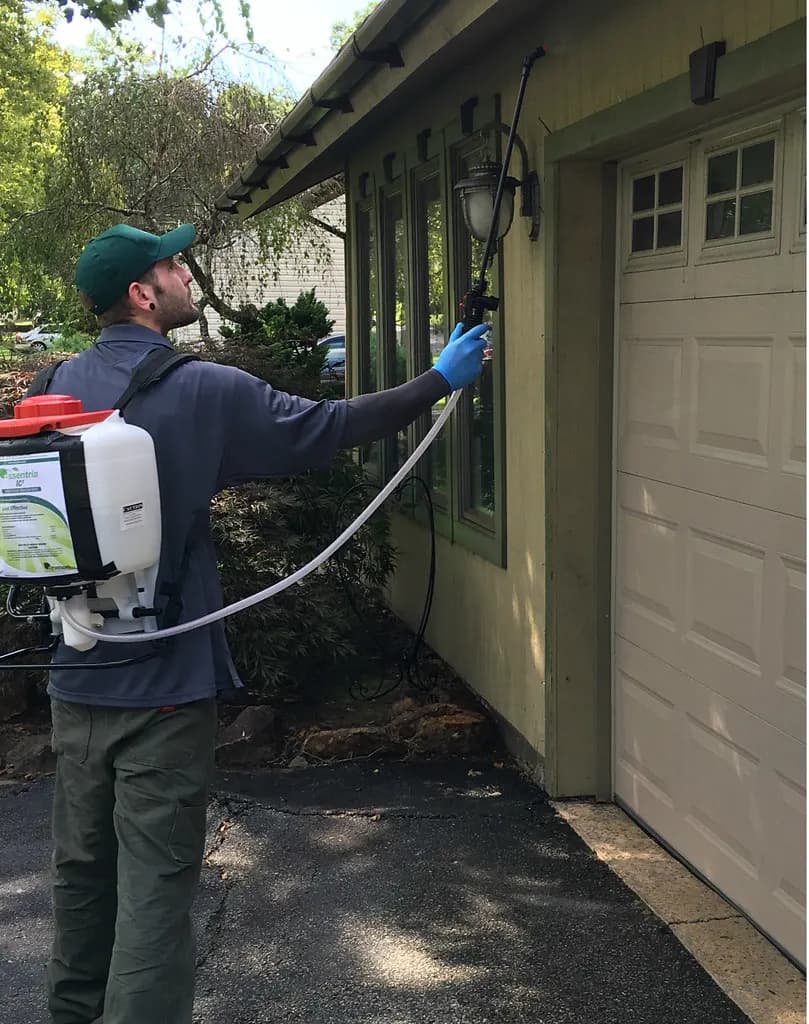
States go further than FIFRA. Most license every commercial pest control business and every person who applies any pesticide for hire, whether or not the products are restricted. So in practice, if you plan to treat homes or businesses for pay, you need a state license even if you never touch a restricted product.
Commercial applicator categories
The federal rule lists the categories states must offer for commercial applicators. States often split or rename them, but the list is the starting point.
| Federal category (40 CFR 171.101) | Typical pest control work |
|---|---|
| (a) Agricultural pest control | Crops, livestock, farm sites |
| (b) Forest pest control | Forests, nurseries |
| (c) Ornamental and turf pest control | Lawns, landscapes, golf courses |
| (d) Seed treatment | Treating seed before planting |
| (e) Aquatic pest control | Ponds, lakes, waterways |
| (f) Right-of-way pest control | Roads, rail, power lines |
| (g) Industrial, institutional, structural and health related | Homes, restaurants, schools, warehouses (most residential pest control) |
| (h) Public health pest control | Government mosquito and vector programs |
| (i) Regulatory pest control | Government pest eradication |
| (j) Demonstration and research | Training and trials |
| (k), (l) Predator control | Sodium cyanide and sodium fluoroacetate devices |
| (m) Soil fumigation; (n) Non-soil fumigation | Fumigants, including structural fumigation |
| (o) Aerial pest control | Application from aircraft |
A typical home-services pest control company works mainly in category (g), often split by states into general pest, termite and wood-destroying organisms, and fumigation, plus (c) if it treats lawns and shrubs. Each category usually means a separate exam.
Pest control business license examples by state
Here's how three large states structure licensing for structural pest control.
Texas. The Texas Department of Agriculture's Structural Pest Control Service licenses businesses and individuals. The license ladder runs from apprentice (registered by a business and not yet licensed), to technician (works under the direct supervision of a certified applicator), to certified commercial applicator, and finally the responsible certified applicator, who oversees training and supervision for one business location. A commercial business license costs $300 for an original or renewal, a certified applicator license is $125, apprentice registration is $125, and each exam category costs $64. Each business location must designate its own responsible certified applicator, who can't serve another business or location. Late renewals cost one and a half times the fee within 90 days and double after that.
California. The Structural Pest Control Board licenses structural pest control in three branches: fumigation, general pest and wood-destroying organisms. Individuals hold one of three license levels: applicator, field representative or operator. A company registers with the Board and must be qualified by a licensed operator. New fees took effect on July 1, 2025: the operator's license is now $150 with a $100 exam, the field representative's license is $45 with a $75 exam, the applicator's license is $35 with a $60 exam per branch, and company office registration is $120. The fee for reporting each wood-destroying organism inspection or completion rose to $5 per property address. Agricultural and landscape pest control in California is licensed separately by the Department of Pesticide Regulation.
Florida. The Department of Agriculture and Consumer Services licenses pest control businesses under chapter 482 of the Florida Statutes. Each business location needs its own license, with a fee set by the department between $75 and $300 and a $50 late charge after the grace period. Each location must have a certified operator in charge, certified in every category the business works in, such as general household pest and rodent control, lawn and ornamental, termite and wood-destroying organisms, and fumigation.
Most states require documented experience under a licensed company, a degree in a related field, or both, before you can sit the exam that lets you qualify a business. That's often the real barrier to entry, so check your state's experience rules first. Many owners work as technicians for a few years before opening their own company. Our business licenses guide covers the city and county licenses you'll need on top.
Steps to start a pest control business
From technician to business owner
- 1
Check your state's experience and exam rules
Find out what experience or education you need to qualify a business, and which categories you'll work in.
- 2
Get licensed in your categories
Pass the core and category exams; in Texas each category exam is $64.
- 3
Register the company
LLC registrationLLC or corporation ($35 – $500 state filing fee) and a free EIN (Free ($0)).
- 4
Buy insurance at or above the state minimum
General liability without the care, custody and control exclusion where required, plus commercial auto.
- 5
Apply for the business license
Name the responsible certified applicator or certified operator in charge for each location.
- 6
Set up storage, equipment and records
Lockable chemical storage in the vehicle, PPE, calibrated sprayers and application records for every job.
- 7
Price your services and sell recurring plans
Quotation generatorInitial treatment plus quarterly or monthly service, written agreements and clear re-service terms.
Insurance for a pest control business
Pest control carries more liability than most home services: you apply chemicals in people's homes and businesses, and a mistake can damage property or harm health. Several states set minimum coverage as a condition of the business license.
Texas requires commercial business licensees to carry at least $500,000 of bodily injury and property damage coverage per occurrence with a $1,000,000 annual aggregate. The policy must not contain the usual care, custody and control exclusion, so it covers damage to property in your care while you work, and the insurer must be authorized by the Texas Department of Insurance. Florida requires either split limits of $250,000 per person and $500,000 per occurrence for bodily injury and $250,000 per occurrence and $500,000 aggregate for property damage, or a $500,000 combined single limit. Fumigation businesses need four times as much: $2 million combined.
Beyond the minimums, Insureon's data for pest control businesses gives a sense of premiums: about $117 a month for general liability with $1 million/$2 million limits, $43 for professional liability, $89 for workers' compensation and $163 for commercial auto. Ask about pollution liability, which covers claims from pesticide drift or contamination that a standard policy may exclude. And because you're driving a vehicle full of chemicals, make sure the auto policy knows it.
Pest control pricing: models and price ranges
Pest control pricing has three common models, and most companies use all three.
- Flat rate per service. A set price for a defined job: a one-time general pest treatment, a wasp nest removal, a rodent exclusion package. Customers like knowing the price; you need to know how long it really takes.
- Recurring service plans. An initial treatment followed by monthly, every-other-month or quarterly visits at a lower per-visit price, often with free re-service between visits. This is where pest control profits come from, because each plan produces predictable revenue with little selling.
- Hourly or quoted. For wildlife removal, exclusion work and jobs where the scope isn't clear until you inspect, priced per technician-hour or by written quote after inspection.
Published pest control price ranges (Housecall Pro, 2026)
| Service | Typical price range |
|---|---|
One-time residential treatment | $100–$300 |
Recurring visit (monthly or quarterly) | $40–$80 per visit |
Commercial service visit | $150–$400 |
Ants | $100–$250 |
Mice / rats | $150–$400 / $200–$600 |
Termites | $500–$3,000+ |
Bed bugs | $1,000–$4,000+ |
Wildlife and exclusion (hourly) | $75–$150 per technician-hour |
One-time residential treatment
- Typical price range
$100–$300
Recurring visit (monthly or quarterly)
- Typical price range
$40–$80 per visit
Commercial service visit
- Typical price range
$150–$400
Ants
- Typical price range
$100–$250
Mice / rats
- Typical price range
$150–$400 / $200–$600
Termites
- Typical price range
$500–$3,000+
Bed bugs
- Typical price range
$1,000–$4,000+
Wildlife and exclusion (hourly)
- Typical price range
$75–$150 per technician-hour
These are national ranges from one software company's 2026 guide, not a price list to copy. Prices vary widely by region, pest pressure and home size, and many companies price recurring plans by square footage or lot size. Larger homes and properties with heavy pest pressure take more product and time.
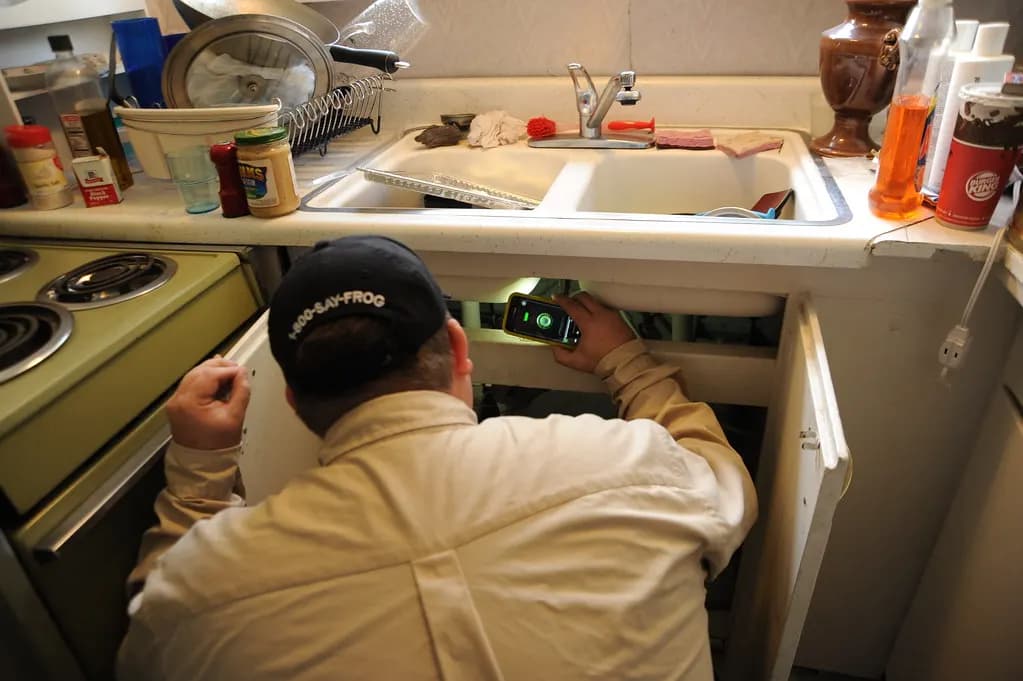
Build your own price list from costs. For each service, estimate the technician time on site plus the drive time to get there, multiply by your labor cost (the BLS median for pest control workers is $21.75 an hour, before payroll taxes), add materials, vehicle cost per visit and a share of overhead, then divide by one minus your target margin. A quarterly visit that takes 30 minutes on site plus 15 minutes of driving costs far less to deliver than an initial treatment that takes 90 minutes inside and out, which is why initial treatments are priced at two to three times a regular visit.
Recurring plans also need clear terms: how long the agreement runs, what happens if the customer cancels early, which pests are covered and which cost extra (termites, bed bugs and wildlife are usually excluded), and when you'll come back for free between visits. Put it in writing with the quotation generator.
Sales tax on pest control services
Pest control is taxed differently from state to state, so check before you send the first invoice. Texas treats structural pest control services as taxable, including inspections, reports and treatments, even when no pests are found. If you provide taxable services you can give your supplier a resale certificate instead of paying tax on the chemicals you use; for nontaxable work, such as agricultural services, you pay tax on the products. Florida taxes nonresidential pest control, such as offices, warehouses and restaurants, at 6% plus any county surtax, but not residential pest control or lawn spraying. In Florida you pay sales tax on the chemicals and equipment you buy, because you're treated as their final consumer. Many other states don't tax pest control at all.
Startup costs for a pest control business
Here's what a solo owner-operator typically spends to start, before buying a vehicle. The figures are estimates based on the Texas fee schedule, Insureon averages and typical equipment prices.
| Startup item | Estimated cost | Basis |
|---|---|---|
| Licenses and exams | $300–$800 | Texas example: $300 business license, $125 applicator, $64 per category |
| Business registration | $35 – $500 | State LLC filing fee |
| Sprayers, dusters, bait guns, flashlights, moisture meter | $1,500–$4,000 | Typical professional equipment prices |
| Protective equipment | $200–$600 | Respirators, gloves, eye protection, coveralls |
| Starting product inventory | $1,000–$3,000 | Insecticides, baits, rodent stations, traps |
| Lockable vehicle storage box and spill kit | $500–$1,500 | Secure chemical storage; check your state rules |
| Insurance deposits (first months) | $500–$1,500 | Insureon averages; annual premiums can be financed |
| Routing, scheduling and billing software | $50–$300 a month | Varies by number of technicians |
| Website, wrap or magnets, door hangers | $1,000–$3,000 | Local marketing launch |
| Total | About $6,000–$15,000 | Plus a vehicle: $15,000–$35,000 or a monthly payment |
Worked example: pest control profit and break-even
Here's a worked month for an imagined solo operator in a suburban market, mostly quarterly residential plans with some one-time jobs. The figures are illustrative assumptions, not industry averages.
The average visit brings in $95 across quarterly services and higher-priced initial treatments. Variable costs per visit are $22.85: products ($12), fuel and vehicle wear ($8) and card fees at 3% ($2.85). That leaves $72.15 per visit toward fixed costs.
Fixed monthly costs are $6,670: truck payment ($650), commercial auto insurance ($163), general liability ($117), software ($100), phone ($60), marketing ($800), equipment maintenance ($75), bookkeeping ($150), license renewals and continuing education set aside monthly ($55) and an owner's salary of $4,500.
Try it — pest control break-even (visits per month)
Break-even is $6,670 ÷ $72.15, or about 93 visits a month, under five a day over 20 working days. At eight visits a day, 160 visits a month bring in $15,200 and the business keeps about $4,874 a month after paying the owner, before income tax.
The number that matters more than any price is route density. A quarterly customer generates one visit every three months, so 160 visits a month needs roughly 480 active quarterly accounts, or fewer if some are monthly commercial accounts. Customers clustered within a few miles mean more visits a day and less fuel per visit; scattered customers can halve your capacity. That's why many companies focus their marketing on a few neighborhoods at a time and why customer retention, not just sales, drives profit.
Hiring technicians and taxes
When you add technicians, they'll almost always be employees: you train them, set their routes, supply products and vehicles, and they apply products under your license and supervision. In many states they must also be registered or licensed under your business, as apprentices or technicians in Texas. Budget for payroll taxes, workers' compensation (Insureon's average is about $89 a month for pest control businesses) and the time it takes to train and supervise. Our 1099 vs W-2 guide explains why calling technicians contractors is risky.
As a sole proprietor or single-member LLC you'll report profit on Schedule C and pay self-employment tax of 15.3%. Vehicles and equipment can be depreciated, and Section 179 lets many small businesses expense qualifying equipment in the first year. You can deduct up to $5,000 of startup costs in your first year. Keep mileage logs, because driving is a large share of your costs.
Mistakes to avoid when starting a pest control business
- Opening before you can qualify the business. Check your state's experience requirement first; it decides your timeline.
- Insurance with the care, custody and control exclusion. In Texas it doesn't meet the requirement, and it leaves you exposed everywhere.
- Using a product off-label. The label is legally binding under FIFRA.
- Poor records. Most states require pesticide application records; keep them for every visit.
- Pricing visits without drive time. Scattered customers can cost more to reach than to treat.
- Unclear service agreements. Spell out covered pests, re-service, cancellation and exclusions such as termites.
- Ignoring sales tax. Texas taxes structural pest control; Florida taxes nonresidential work.
Official links
- EPA — Certification standards for pesticide applicatorsFederal certification rule and state plans
- 40 CFR 171.101 — Applicator categoriesCommercial categories
- Texas Department of Agriculture — SPCS feesBusiness, applicator and exam fees
- Texas — 4 TAC §7.123 insuranceMinimum liability coverage
- California Structural Pest Control BoardBranches, licenses and company registration
- Florida Statutes §482.071Business licenses and insurance
- Texas Comptroller — Pest control servicesSales tax on pest control
- Florida DOR — Exterminator services (GT-800026)Nonresidential pest control tax
What to do next
Start by reading your state regulator's licensing page to find the experience you need and the categories you'll test in. While you build experience, price ten typical jobs from your own costs and map where your first customers would be. Then register the company, get an EIN, buy insurance that meets your state's minimum, and model your route in the break-even calculator before you buy a truck.
This is general information, not legal or tax advice — confirm on the official source or with a professional.
Frequently asked questions
Published 2026 ranges put one-time residential treatments at about $100 to $300, recurring monthly or quarterly visits at $40 to $80 each, commercial visits at $150 to $400 and specialty work like bed bugs at $1,000 or more. Set your own prices from cost per visit: labor and drive time, materials, vehicle cost and overhead, then compare with local competitors.
Usually two layers: an individual applicator license or certification in the right category, and a business license from the state pesticide regulator. Texas charges $300 for a structural pest control business license and requires a responsible certified applicator for each location. Florida licenses each business location and requires a certified operator in charge.
The EPA doesn't license pest control companies directly. Under FIFRA, anyone using restricted use pesticides must be a certified applicator or work under one, and certification is run by states under EPA-approved plans. States also license commercial pest control businesses and applicators who apply any pesticide for hire, so you'll need a state license even if you never use restricted products.
Many states set minimums. Texas requires at least $500,000 per occurrence and $1,000,000 aggregate liability coverage, without the care, custody and control exclusion. Florida requires $500,000 combined single limit for most businesses and $2 million for fumigation. Insureon reports pest control businesses pay about $117 a month for general liability on average.
A solo operator using a vehicle they already own can often start for about $6,000 to $15,000: licenses and exams, equipment and protective gear, a starting stock of products, a lockable chemical box, software, insurance deposits and marketing. A truck adds $15,000 to $35,000 or a monthly payment. The real barrier is often the experience required before you can qualify a business license.
Recurring service makes it one of the steadier home-service trades. In our worked example, a solo operator charging an average of $95 a visit breaks even at about 93 visits a month and keeps about $4,900 a month at 160 visits after paying themselves $4,500. Route density matters most: about 480 quarterly customers produce those 160 visits a month.
Sources & verification
Figures on this page were checked against the sources below when it was last reviewed on 8 October 2026. Each rate and limit is stored once with its own official source and review date, and official update channels are monitored daily so changes are picked up. How we verify
- 1.Certification Standards for Pesticide Applicators — U.S. Environmental Protection Agency · accessed 8 October 2026
- 2.40 CFR 171.101 — Commercial applicator certification categories — U.S. Environmental Protection Agency (via LII) · accessed 8 October 2026
- 3.SPCS Fees — Texas Department of Agriculture · accessed 8 October 2026
- 4.Structural Pest Control Business — Texas Department of Agriculture · accessed 8 October 2026
- 5.4 Tex. Admin. Code §7.121 and §7.123 — Texas Department of Agriculture (via LII) · accessed 8 October 2026
- 6.16 CCR §1948 fee increase (effective July 1, 2025) — California Structural Pest Control Board · accessed 8 October 2026
- 7.Florida Statutes §482.071 — Licenses; fees; financial responsibility — Florida Legislature · accessed 8 October 2026
- 8.Taxable services — pest control (Publication 94-114) — Texas Comptroller of Public Accounts · accessed 8 October 2026
- 9.Sales and use tax on insect or pest exterminator services (GT-800026) — Florida Department of Revenue · accessed 8 October 2026
- 10.Pest Control Workers — Occupational Outlook Handbook — U.S. Bureau of Labor Statistics · accessed 8 October 2026
- 11.Pest control business insurance cost — Insureon · accessed 8 October 2026
- 12.Pest control prices — Housecall Pro (secondary) · accessed 8 October 2026
MSMETOOLS is an independent platform and is not affiliated with any government agency, ministry or department.
Tools for this
Break Even Calculator
Find your break even point and units.
Quotation Generator
Create professional quotes for clients.
Invoice Generator
Create professional invoices with tax, logo and custom details.
Freelance Hourly Rate Calculator
Work out the hourly rate you need to charge.
Related guides
 How to Start a Tutoring Business in 2026: Rules & PricingRead guide
 How to Start a Cleaning Business in 2026: Costs & PricingRead guide
 How to Start a Landscaping Business in 2026: Full GuideRead guide
 How to Start a Bookkeeping Business in 2026: Rules & PricingRead guide
Official links open the government site in a new tab.