 Sales tax
Texas Sales Tax Rate in 2026: State and Local Rates, How Sourcing Works, and Filing
Texas sales tax rate 2026: 6.25% state plus up to 2% local, Houston and Dallas rates, origin vs destination sourcing, taxable services and filing rules.
 Edited by Sumeet YadavFounder & editor, MSMETOOLS · fact-checked against official sources
Contents (10)
- 1. The Texas sales tax rate in 2026
- 2. Sales tax rates in major Texas cities
- 3. Origin vs destination: which local rate you charge
- 4. What's taxable, what's exempt, and tax holidays
- 5. Worked examples in dollars
- 6. Remote sellers and marketplace sales
- 7. Who needs a permit, and filing frequency
- 8. Discounts, penalties and interest
- 9. Common mistakes and how to fix them
- 10. What to do next
Texas has no state income tax, so sales tax does a lot of the work, and it's one of the first things a new Texas business has to get right. This guide gives you the current Texas sales tax rate, explains how local taxes stack up to the 8.25% ceiling, and shows how the state's unusual mix of origin- and destination-based rules works when you deliver goods. It also covers which services are taxed, what remote sellers owe, filing deadlines, and the discounts you can keep for paying on time, with worked examples in dollars throughout.
Quick answer
Texas charges a 6.25% state sales tax. Cities, counties, transit authorities and special purpose districts can add up to 2% more, so the combined rate ranges from 6.25% to 8.25%.
Houston, Dallas, Austin, San Antonio, Fort Worth and El Paso are all at 8.25%
In-state sellers generally charge local tax where their place of business is, plus local use tax on some deliveries
Remote sellers must collect once Texas revenue reaches $500,000 a year
Returns are due the 20th after each period; filing on time earns a 0.5% discount
Groceries are exempt; candy, soft drinks and prepared food are taxable
The Texas sales tax rate in 2026
The Texas Comptroller of Public Accounts imposes a 6.25% state sales and use tax on retail sales, leases and rentals of most goods, and on a list of taxable services. On top of that, four kinds of local taxing jurisdictions can levy their own sales and use tax: cities (including towns and villages), counties, special purpose districts such as crime control or emergency services districts, and transit authorities.
Each jurisdiction sets its own rate, but state law caps the total local tax on any transaction at 2%. That's why you'll never see a combined Texas rate above 8.25%, even where three or four local taxes overlap. In a few "combined areas" where city and district boundaries overlap and their rates would add up to more than 2%, the Comptroller still charges 2% and splits the money between them.
Places with no local sales tax at all, such as some unincorporated rural areas outside any transit or special district, charge only the 6.25% state rate. In practice, most Texans in cities and suburbs pay 8.25%, which ranks Texas among the higher-tax states for sales tax even though its state rate is mid-range.
Texas sales tax at a glance (2026)
6.25%
State rate
2%
Maximum local tax
All local jurisdictions combined
8.25%
Maximum combined rate
$500,000
Remote seller safe harbor
Total Texas revenue, prior 12 months
0.5%
Timely filing discount
Sales tax rates in major Texas cities
All of the state's biggest cities have reached the 2% local cap, but they get there in different ways. The breakdown matters if you deliver goods, because the type of each local tax (city, county, transit or district) decides whether you owe extra local use tax at the destination, as explained in the next section.
| City | Combined rate | How the 2% local share is made up |
|---|---|---|
| Houston | 8.25% | 1% city + 1% Houston METRO transit |
| Dallas | 8.25% | 1% city + 1% Dallas Area Rapid Transit |
| Austin | 8.25% | 1% city + 1% Capital Metro transit |
| San Antonio | 8.25% | 1.125% city + 0.5% VIA transit + 0.375% advanced transportation district |
| Fort Worth | 8.25% | 1% city + 0.5% transit + 0.5% crime control district |
| El Paso | 8.25% | 1% city + 0.5% county + 0.5% transit |
Don't rely on ZIP codes to set rates. The Comptroller points out that local tax boundaries don't follow postal codes, and many ZIP codes straddle city limits. A shop with a Houston mailing address might sit in an unincorporated part of Harris County with a different mix of local taxes. Use the Comptroller's Sales Tax Rate Locator with the full street address, and recheck each quarter, since rates and city annexations are updated quarterly.

Origin vs destination: which local rate you charge
Texas uses a hybrid system. For sellers with a place of business in Texas, local sales tax is generally sourced to where the sale is "consummated," which is usually the seller's own location. That makes Texas origin-based for most in-state sellers. Local use tax, on the other hand, is tied to where the customer first stores, uses or consumes the item. When you ship or deliver into another jurisdiction, you may owe both.
A "place of business" means a store, office or other location where your sales staff receive three or more orders a year from outside customers. Warehouses that only ship aren't places of business, and neither are servers, websites or apps. Temporary sites such as a craft-fair booth do count while you're there.
Here's how the Comptroller says the sourcing works for in-state sellers:
- Order placed in person at your store: local sales tax at that store, wherever the goods ship from.
- Order received at your place of business but not in person (phone, email): local tax where the order is fulfilled, if that's another of your places of business; otherwise where the order was received.
- Order not received at a Texas place of business but fulfilled from one: local tax where it's fulfilled.
- Order fulfilled from a Texas location that isn't a place of business (for example a third-party warehouse): local tax at the ship-to address.
After working out local sales tax, you check whether local use tax is due at the destination. Three rules apply. The total local tax can't exceed 2%, and if a destination use tax can't be collected at its full rate without breaking the cap, you don't collect it at all. You add use taxes in a fixed order: city, then county, then special purpose districts, then transit. And you never collect a local use tax of the same type as a local sales tax already due, so if you charged city sales tax at your store, no second city tax applies at the customer's city.
Worked delivery example
This is based on an example in the Comptroller's local tax guide. A furniture store sits outside any city in Navarro County, which has a 0.5% county tax. A customer orders in person for delivery into a city with a 1.5% city tax. The store charges 6.25% state + 0.5% county sales tax + 1.5% destination city use tax = 8.25%. On a $2,000 sofa, that's $165.
A second customer orders the same sofa for delivery into a city with a 2% city tax. Adding the full 2% would push local tax to 2.5%, over the cap, so the city use tax can't be collected at all. The store charges just 6.25% + 0.5% = 6.75%, or $135 on the same sofa. It's counterintuitive, but it's the rule.
Same $2,000 sofa, two delivery addresses (store in Navarro County, outside city limits)
| Tax | Delivery to a 1.5% city | Delivery to a 2% city |
|---|---|---|
State sales tax | 6.25% — $125 | 6.25% — $125 |
Navarro County sales tax | 0.5% — $10 | 0.5% — $10 |
Destination city use tax | 1.5% — $30 | Not collected (would breach 2% cap) |
Total | 8.25% — $165 | 6.75% — $135 |
State sales tax
- Delivery to a 1.5% city
6.25% — $125
- Delivery to a 2% city
6.25% — $125
Navarro County sales tax
- Delivery to a 1.5% city
0.5% — $10
- Delivery to a 2% city
0.5% — $10
Destination city use tax
- Delivery to a 1.5% city
1.5% — $30
- Delivery to a 2% city
Not collected (would breach 2% cap)
Total
- Delivery to a 1.5% city
8.25% — $165
- Delivery to a 2% city
6.75% — $135
What's taxable, what's exempt, and tax holidays
Texas taxes most tangible goods and a defined list of services. Some common distinctions trip up new sellers.
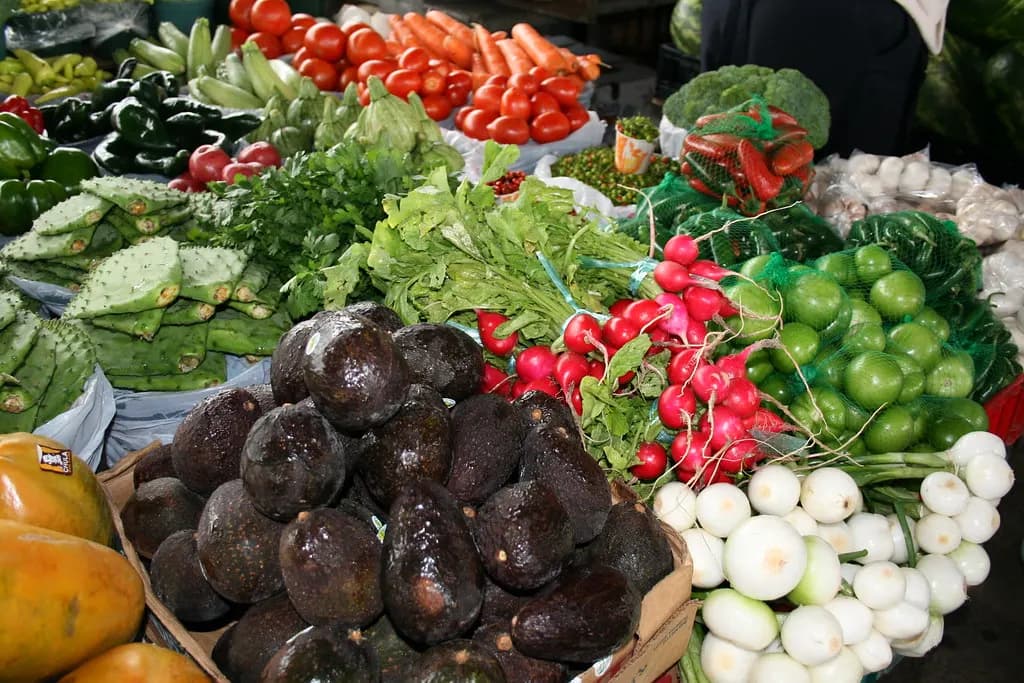
Food. Under Comptroller Rule 3.293, food and food ingredients are exempt, so most groceries carry no sales tax. Candy, soft drinks, ice, alcohol, tobacco and prepared food are taxable. Prepared food includes items sold hot, meals ready to eat, and food sold with utensils the seller provides. A bakery selling a loaf of bread for home doesn't charge tax, but the same bakery charges full tax on a hot sandwich eaten at its tables.
Delivery charges. Shipping and delivery charges connected to a taxable sale are taxable too. If you sell a $500 sofa and add a $50 delivery fee, tax is due on $550. If the sale itself is exempt, for example with a valid resale certificate, the delivery charge is also exempt.
Services. Tax Code Section 151.0101 lists 16 categories of taxable services. They include amusement services, cable TV, credit reporting, data processing, debt collection, information services, insurance services, motor vehicle parking and storage, nonresidential real property repair and remodeling, repair and maintenance of tangible personal property, certain personal services, real property services such as landscaping, janitorial and pest control work, security services, telecommunications, telephone answering and utility transmission. Internet access has been removed from the list. Professional services such as accounting, legal work or architecture aren't on the list.
Data processing covers a lot of modern businesses: web hosting, website creation and maintenance, data storage, and software as a service. For data processing and information services, 20% of the charge is exempt, so tax applies to 80%. A Dallas customer paying $1,000 a month for hosting owes tax on $800: 8.25% × $800 = $66, an effective rate of 6.6%.
Sales tax holidays. Texas has four annual tax-free weekends: emergency preparation supplies in April, ENERGY STAR products and water-efficient products over Memorial Day weekend, and the back-to-school holiday in August. During the August holiday, most clothing, footwear, school supplies and student backpacks priced less than $100 each are tax-free. Accessories such as jewelry and handbags, athletic gear, computers and textbooks don't qualify. The next back-to-school holiday runs August 6–8, 2027. Retailers must stop charging tax on qualifying items for the whole weekend, including qualifying online orders from sellers doing business in Texas.
Worked examples in dollars
These examples use the 6.25% state rate and a 2% local rate unless stated.
1. A $1,000 sale in a Houston store. State tax: $1,000 × 6.25% = $62.50. Local tax: $1,000 × 2% = $20.00. Total tax $82.50; the customer pays $1,082.50.
2. Rounding a $250 sale. At 8.25%, the tax is $20.625. The Comptroller says to calculate to the third decimal and round up at 5 or more, so you charge $20.63.
3. A taxable sale with delivery. A $500 table plus a $50 delivery charge to a customer in Austin, sold from your Austin store: taxable amount $550 × 8.25% = $45.38.
4. A remote seller using the single local rate. An out-of-state online shop with more than $500,000 of Texas revenue elects the 1.75% single local use tax rate. On a $120 order shipped anywhere in Texas, it charges 6.25% + 1.75% = 8%, or $9.60, instead of looking up each customer's local rate.
5. A quarterly filer's discount. A gift shop collects $3,600 of state and local tax in a quarter and files and pays by the 20th. It keeps the 0.5% timely filing discount: $18. Had it also prepaid by the 15th of the quarter's second month, it would keep another 1.25%, or $45, for $63 in total.
Try it — Texas sales tax on a $1,000 sale in Houston
Remote sellers and marketplace sales
An out-of-state seller with no physical presence in Texas doesn't have to register until its total Texas revenue in the preceding twelve calendar months reaches $500,000. That figure counts all gross revenue from sales into Texas, taxable and nontaxable, including separately stated shipping and handling, sales for resale and sales to exempt buyers. Once over the line, the seller must have a permit and start collecting no later than the first day of the fourth month after the month it crossed.
Remote sellers collect state use tax plus local use tax based on where each order is delivered. As an alternative, they can elect the single local use tax rate, currently 1.75%, which the Comptroller publishes in the Texas Register by January 1 each year. A new remote seller chooses it on the permit application; an existing one files Form 01-799. Businesses located in Texas can't use the single rate, and neither can marketplace providers.
Marketplace providers such as Amazon, eBay, Walmart Marketplace and Etsy that are engaged in business in Texas must collect and remit tax on all third-party sales, based on the shipping destination. If you sell only through a marketplace that has certified it collects Texas tax, you don't collect on those sales yourself, but you must keep your sales records. If you also sell through your own website, those direct sales count toward your own obligations.
Who needs a permit, and filing frequency
Anyone engaged in business in Texas who sells or leases taxable items, or sells taxable services, needs a Texas sales and use tax permit before the first sale. The permit is free from the Comptroller. Our Texas sales tax permit guide walks through the application, security bonds and resale certificates step by step.
When your permit is approved, the Comptroller tells you by letter whether you'll file monthly or quarterly. Under Rule 3.286, if you report $1,500 or more of state tax per quarter, you file monthly unless you prepay. Below that, you file quarterly. If your state tax for a full year is under $1,000, the Comptroller may authorize yearly filing.
| Filing frequency | Period covered | Return due |
|---|---|---|
| Monthly | Each calendar month | 20th of the following month |
| Quarterly | Jan–Mar, Apr–Jun, Jul–Sep, Oct–Dec | April 20, July 20, October 20, January 20 |
| Yearly | Calendar year | January 20 |
If a due date falls on a weekend or legal holiday, the next working day is the due date. You file a return for every period, even with no sales. Most businesses file through the Comptroller's Webfile system. Large taxpayers are notified when they must pay electronically through TEXNET. The Comptroller doesn't grant filing extensions except where a disaster has been declared.
Discounts, penalties and interest
Texas rewards punctual filers. Any permit holder who files and pays on time keeps a discount of 0.5% of the tax due. Monthly and quarterly filers can add a 1.25% prepayment discount by paying a reasonable estimate before the period ends. A reasonable estimate is at least 90% of the current period's tax, or 100% of the same period last year. Monthly filers prepay by the 15th of the month being reported; quarterly filers by the 15th of the second month of the quarter.
Being late costs more than the lost discount. A $50 penalty applies to each report filed after the due date. Tax paid 1–30 days late carries a 5% penalty, and tax paid more than 30 days late a 10% penalty. Interest starts 61 days after the due date. If you spot a mistake, file an amended return marked "Amended Return," and pay any extra tax with penalties and interest.
A quarterly filer's year
January 20
Q4 return due (October–December)
February 15
Optional Q1 prepayment for the 1.25% discount
April 20
Q1 return due (January–March)
July 20
Q2 return due (April–June)
October 20
Q3 return due (July–September)
Common mistakes and how to fix them
Charging by ZIP code. Local boundaries don't follow ZIP codes. Load rates by street address from the Rate Locator, and keep a separate local code for each location on your return.
Forgetting local use tax on deliveries. A store outside city limits that delivers into a city may owe the city's use tax as well. Work through the cap and the tax type order for each delivery area, and set your point-of-sale system up with delivery rates.
Collecting more than 8.25%. If your system adds a destination tax that breaks the 2% cap, you've overcharged the customer. Over-collected tax must still be paid to the state or refunded to the customer.
Treating SaaS as untaxed. Software as a service and hosting are data processing services in Texas. Charge tax on 80% of the price.
Missing returns in quiet months. A zero return is still a return. Missing one triggers the $50 penalty, and repeated misses can lead to a security requirement or permit cancellation.
Not keeping records. Keep sales records and resale and exemption certificates for four years. In an audit, a missing certificate means the sale is treated as taxable.
Official links
- Texas Comptroller — Sales and Use TaxRates, due dates, discounts, penalties
- Sales Tax Rate LocatorRate by street address
- Local Sales and Use Tax guide (94-105)Sourcing rules and delivery examples
- Remote SellersSafe harbor and single local use tax rate
- Taxable Services (96-259)The 16 categories of taxable services
- Sales Tax Holiday (98-490)Back-to-school holiday rules
What to do next
If you haven't registered yet, start with our Texas sales tax permit guide, then load the correct local rates for every location and delivery area. Use the sales tax calculator to check invoices, and our how to calculate sales tax guide for tax-inclusive pricing. Still setting up your company? See what it costs in our Texas LLC cost guide.
This is general information, not legal or tax advice — confirm on the official source or with a professional.
Frequently asked questions
The state rate is 6.25%. Cities, counties, transit authorities and special purpose districts can add local tax, but the combined local share is capped at 2%, so the most you'll pay anywhere in Texas is 8.25%. Most large cities, including Houston, Dallas, Austin and San Antonio, sit at that 8.25% maximum. Areas with no local tax charge only 6.25%.
Inside the City of Houston the combined rate is 8.25%: the 6.25% state rate, 1% city tax and 1% for the Houston Metropolitan Transit Authority. Suburbs and unincorporated parts of Harris County can differ, so check the exact address with the Comptroller's Sales Tax Rate Locator rather than relying on a ZIP code.
Both. For sellers with a place of business in Texas, local sales tax is generally sourced to that place of business, which is origin-based. If you deliver into an area with a higher local rate and haven't reached the 2% cap, you add local use tax for the destination. Remote sellers and marketplace providers collect based on the delivery address.
Some are. Texas taxes 16 broad categories of services listed in Tax Code Section 151.0101, including amusement, data processing, information, debt collection, security, telecommunications, some repair and remodeling and others. For data processing and information services, 20% of the charge is exempt, so tax applies to the remaining 80%. Most professional services, such as legal or accounting work, aren't taxable.
When its total Texas revenue in the preceding twelve calendar months reaches $500,000. The seller must get a permit and start collecting no later than the first day of the fourth month after crossing the line. Remote sellers can collect local tax at each customer's rate or elect the single local use tax rate of 1.75%.
No. Food and food ingredients sold for home preparation are exempt under Comptroller Rule 3.293. Candy, soft drinks, ice, alcohol, tobacco and prepared food, such as hot food, meals ready to eat or food sold with utensils, are taxable at the full state and local rate.
Sources & verification
Figures on this page were checked against the sources below when it was last reviewed on 9 October 2026. Each rate and limit is stored once with its own official source and review date, and official update channels are monitored daily so changes are picked up. How we verify
- 1.Sales and Use Tax — Texas Comptroller of Public Accounts · accessed 9 October 2026
- 2.Local Sales and Use Tax Collection — A Guide for Sellers (94-105) — Texas Comptroller of Public Accounts · accessed 9 October 2026
- 3.City Sales and Use Tax Rates — Texas Comptroller of Public Accounts · accessed 9 October 2026
- 4.Remote Sellers — Texas Comptroller of Public Accounts · accessed 9 October 2026
- 5.Taxable Services (96-259) — Texas Comptroller of Public Accounts · accessed 9 October 2026
- 6.Sales Tax Holiday (98-490) — Texas Comptroller of Public Accounts · accessed 9 October 2026
- 7.Texas Sales and Use Tax FAQs — Sales Tax Holidays, Sales Tax Collection, Prepayment — Texas Comptroller of Public Accounts · accessed 9 October 2026
- 8.34 Tex. Admin. Code § 3.293 — Food; Food Products; Meals; Food Service — Legal Information Institute (Cornell Law School) · accessed 9 October 2026
- 9.34 Tex. Admin. Code § 3.286 — Seller's and Purchaser's Responsibilities — Legal Information Institute (Cornell Law School) · accessed 9 October 2026
MSMETOOLS is an independent platform and is not affiliated with any government agency, ministry or department.
Tools for this
Sales Tax Calculator (US)
Calculate sales tax for all US states and cities.
Invoice Generator
Create professional invoices with tax, logo and custom details.
Related guides
 How to Calculate Sales Tax (2026): Formula & ExamplesRead guide
 Texas Sales Tax Permit 2026: Who Needs One & How to ApplyRead guide
 Mississippi Sales Tax 2026: 7% Rate, 5% on GroceriesRead guide
 Sales Tax Holidays 2026: Every State's Dates and LimitsRead guide
Official links open the government site in a new tab.