 GST & indirect tax
GST on Tiles in 2026: Ceramic, Vitrified, Marble, Granite and Kota Stone Rates, HSN Codes and Tile Laying
GST on tiles in 2026: 18% on ceramic and vitrified tiles (HSN 6907), 5% on marble and granite blocks, 18% on slabs, Kota stone, tile laying and worked ₹ bills.
 Edited by Sumeet YadavFounder & editor, MSMETOOLS · fact-checked against official sources

Contents (9)
- 1. GST rates on tiles and stone in 2026
- 2. HSN codes for tiles, marble and granite
- 3. Marble, granite, Kota stone and sandstone
- 4. Worked bills: GST on tiles and stone in rupees
- 5. Tile laying: works contract, labour-only and exempt jobs
- 6. Input tax credit on tiles
- 7. Tile makers: Morbi and the gas question
- 8. Common mistakes with GST on tiles
- 9. What to do next
Tiles and stone are often the second-largest finishing cost in a house after woodwork, and the GST on them depends on what the product is and how far it has been processed. This guide is for homeowners, tile and marble dealers, contractors and stone processors. It gives the 2026 GST rates on ceramic and vitrified tiles, marble, granite, Kota stone and sandstone, the HSN codes for each, how tile laying is taxed, who can claim input tax credit (ITC), and worked ₹ bills for a homeowner, a contractor and a marble processor. Rates were checked against the notified schedule in October 2026.
Quick answer
Ceramic, vitrified, porcelain, glazed and mosaic tiles (HSN 6907) attract 18% GST. GST 2.0 did not change this rate. Marble and granite blocks fell from 12% to 5%, but slabs and polished or cut-to-size stone are 18%. Kota stone, sandstone and similar building stone that is not mirror-polished is 5%.
On ₹60,000 of vitrified tiles, GST is ₹10,800
Supply-and-lay contracts are works contracts at 18%
Pure labour on original works for a single independent house is exempt
Tiles capitalised in your own building: no ITC
Sanitaryware and tile adhesives: 18%
GST rates on tiles and stone in 2026
Notification 9/2025–Central Tax (Rate), which replaced the 2017 goods rate schedule from 22 September 2025, lists ceramic tiles in Schedule II — the 9% central tax schedule — at serial 238: "Ceramic flags and paving, hearth or wall tiles; ceramic mosaic cubes and the like, whether or not on a backing; finishing ceramics". With the matching state tax, that is 18% within a state, or the same rate as IGST on an inter-state sale. The 56th GST Council's rate annexures do not list heading 6907 at all, which confirms that tiles were already at 18% and stayed there.
Natural stone is treated in layers. Rough and block forms are raw materials for the stone-cutting industry, and the Council cut them to 5% to keep the intermediate stage cheap. Once stone has been sawn into slabs, polished or cut to size, it moves to 18%. A third group — calcareous building stone other than marble, and sandstone, basalt and similar stone — stays at 5% whether in blocks or slabs, as long as it is not mirror-polished stone ready to use.
GST on tiles, stone and flooring (2026)
| Product (HSN) | GST rate | Schedule entry |
|---|---|---|
Ceramic, vitrified, porcelain, glazed wall and floor tiles, mosaic (6907) | 18% | Sch. II 238 |
Marble and travertine, crude or in blocks (2515 11, 2515 12 10) | 5% | Sch. I 177–178 |
Granite, crude or in blocks (2516) | 5% | Sch. I 180–181 |
Marble and travertine other than blocks — slabs (2515 12 20, 2515 12 90) | 18% | Sch. II 7 |
Granite other than blocks — slabs (2516 12 00) | 18% | Sch. II 8 |
Worked marble, granite and other stone — polished slabs, tiles, countertops (6802) | 18% | Sch. II 218 |
Kota and other calcareous building stone, not mirror-polished (2515, 6802) | 5% | Sch. I 176 |
Sandstone, basalt, porphyry blocks and slabs (2516) | 5% | Sch. I 179 |
Stone inlay work; sand lime bricks (68) | 5% | Sch. I 400 |
Glass mosaic and glass tiles (7016) | 18% | Sch. II 255 |
Vinyl, PVC and SPC flooring (3918) | 18% | Sch. II 119 |
Ceramic sanitaryware — basins, WCs, cisterns (6910) | 18% | Sch. II 240 |
Tile adhesives, grouts and sealants (3214, 3824) | 18% | Sch. II 56, 110 |
Ceramic, vitrified, porcelain, glazed wall and floor tiles, mosaic (6907)
- GST rate
18%
- Schedule entry
Sch. II 238
Marble and travertine, crude or in blocks (2515 11, 2515 12 10)
- GST rate
5%
- Schedule entry
Sch. I 177–178
Granite, crude or in blocks (2516)
- GST rate
5%
- Schedule entry
Sch. I 180–181
Marble and travertine other than blocks — slabs (2515 12 20, 2515 12 90)
- GST rate
18%
- Schedule entry
Sch. II 7
Granite other than blocks — slabs (2516 12 00)
- GST rate
18%
- Schedule entry
Sch. II 8
Worked marble, granite and other stone — polished slabs, tiles, countertops (6802)
- GST rate
18%
- Schedule entry
Sch. II 218
Kota and other calcareous building stone, not mirror-polished (2515, 6802)
- GST rate
5%
- Schedule entry
Sch. I 176
Sandstone, basalt, porphyry blocks and slabs (2516)
- GST rate
5%
- Schedule entry
Sch. I 179
Stone inlay work; sand lime bricks (68)
- GST rate
5%
- Schedule entry
Sch. I 400
Glass mosaic and glass tiles (7016)
- GST rate
18%
- Schedule entry
Sch. II 255
Vinyl, PVC and SPC flooring (3918)
- GST rate
18%
- Schedule entry
Sch. II 119
Ceramic sanitaryware — basins, WCs, cisterns (6910)
- GST rate
18%
- Schedule entry
Sch. II 240
Tile adhesives, grouts and sealants (3214, 3824)
- GST rate
18%
- Schedule entry
Sch. II 56, 110
There is no compensation cess on tiles or stone, so the GST rate is the whole tax at the point of sale. Earthen roofing tiles are part of the special scheme for brick kilns rather than heading 6907; our guide to GST on bricks explains its 12% with ITC and 6% without ITC options.
HSN codes for tiles, marble and granite
Heading 6907 covers all ceramic floor and wall tiles, and its six-digit sub-headings follow the international Harmonised System. They are split by water absorption, which is how the industry separates vitrified from ordinary ceramic tiles:
- 6907 21 — tiles with water absorption of 0.5% or less by weight. Most vitrified, double-charged, glazed vitrified (GVT) and porcelain tiles fall here.
- 6907 22 — water absorption above 0.5% and up to 10%. Many ceramic floor tiles.
- 6907 23 — water absorption above 10%. Typical glazed wall tiles.
- 6907 30 — mosaic cubes and the like.
- 6907 40 — finishing ceramics such as skirting, steps and corner pieces.
The rate is 18% across all of them, so a wrong sub-heading does not change the tax, but it does create mismatches in your GSTR-1 HSN summary. Businesses with aggregate turnover up to ₹5 crore must report at least a 4-digit HSN, and larger businesses a 6-digit HSN. Use the manufacturer's test certificate for water absorption to pick the sub-heading.
For stone, the raw forms are in Chapter 25: marble and travertine under 2515 and granite, sandstone and basalt under 2516. Worked stone is heading 6802: 6802 21, 6802 23 and 6802 29 for stone simply cut or sawn with a flat surface (marble, granite and other stone respectively), and 6802 91, 6802 92, 6802 93 and 6802 99 for further-worked stone such as polished marble, other calcareous stone, granite and other stone. Our HSN code guide and HSN code finder help with less common items.
Marble, granite, Kota stone and sandstone
The marble trade runs from quarries in Rajasthan and Gujarat to gang-saw units in Kishangarh, Rajsamand and Udaipur, and granite from quarries in Karnataka, Tamil Nadu, Andhra Pradesh and Telangana to cutting and polishing units. GST now follows that chain closely.
Blocks at 5%. Marble and travertine that is crude, roughly trimmed or in blocks (2515 11 00 and 2515 12 10), and granite crude, roughly trimmed or in blocks, are in Schedule I at serials 177 to 181. The PIB FAQs on the 56th Council say these were cut from 12% to 5% because they are intermediate goods.
Slabs at 18%. Marble and travertine "other than blocks" (2515 12 20 and 2515 12 90) and granite "other than blocks" (2516 12 00) are listed separately in Schedule II at serials 7 and 8, at 18%. Once slabs are polished, edged or cut to size as tiles or countertops, they become worked stone under 6802, also at 18%. In practice, a slab sold by a gang-saw unit and a polished granite countertop are taxed at the same rate.
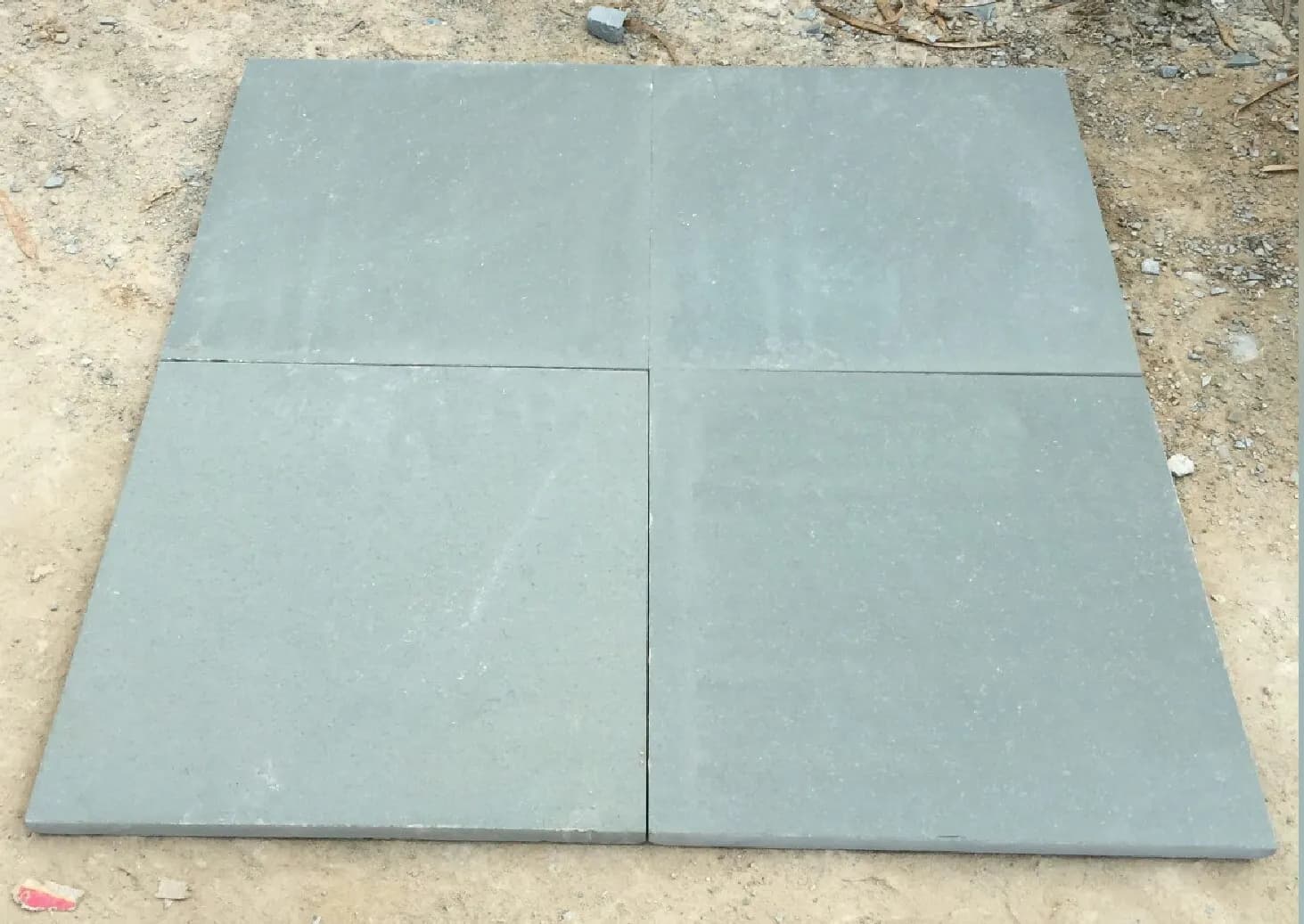
Kota stone, sandstone and similar stone at 5%. Schedule I serial 176 covers "Ecaussine and other calcareous monumental or building stone (other than marble and travertine), alabaster", in heading 2515 or 6802, "other than mirror polished stone which is ready to use". Kota stone is a fine-grained limestone, so rough-finish and semi-polished Kota slabs are usually billed under this entry at 5%. Serial 179 does the same for porphyry, basalt, sandstone and other building stone, whether roughly trimmed or cut into rectangular blocks or slabs. Dholpur and Jaisalmer sandstone flooring is therefore generally at 5%. The exception is mirror-polished stone that is ready to lay, which falls back into the general 6802 entry at 18%.
Handicrafts and inlay. Stone inlay work — the pietra dura of Agra — and sand lime bricks are in Schedule I serial 400 at 5%, down from 12%. Statues, vases and other ornamental goods essentially of stone are also at 5% under serial 401.
Worked bills: GST on tiles and stone in rupees
The prices below are illustrative — round figures to show the arithmetic, not market quotes. Tile and stone prices vary widely by brand, size, finish and city.
| Purchase | Pre-tax value | GST rate | GST | Bill total |
|---|---|---|---|---|
| 1,000 sq ft of vitrified floor tiles at ₹60 | ₹60,000 | 18% | ₹10,800 | ₹70,800 |
| 300 sq ft of wall tiles at ₹45 | ₹13,500 | 18% | ₹2,430 | ₹15,930 |
| 600 sq ft of polished granite slabs at ₹150 | ₹90,000 | 18% | ₹16,200 | ₹1,06,200 |
| 800 sq ft of rough-finish Kota stone at ₹40 | ₹32,000 | 5% | ₹1,600 | ₹33,600 |
| Marble block, 10 tonnes at ₹30,000 | ₹3,00,000 | 5% | ₹15,000 | ₹3,15,000 |
To find the GST inside a price that includes tax, multiply by 18 and divide by 118 for tiles, or by 5 and divide by 105 for blocks and Kota stone. A tile quoted at ₹70.80 a square foot "including GST" is ₹60 plus ₹10.80 of tax. Delivery, loading and breakage-replacement charges that the dealer adds to the same bill are part of the value of the tiles under section 15 of the CGST Act and take the same rate.
Try it — GST on a tile bill
A marble processor's margin. A gang-saw unit in Rajasthan buys the 10-tonne block above for ₹3,00,000 plus ₹15,000 GST, cuts it into slabs, and sells 2,500 sq ft of slabs at ₹160 a square foot. Its sale value is ₹4,00,000 and its output GST at 18% is ₹72,000. It sets off the ₹15,000 paid on the block and its credit on blades, power-plant consumables and services, and pays the balance. Because the output rate is higher than the input rate, the 2025 change does not create excess credit for slab makers — it lowers the tax paid up front on blocks.
Tile laying: works contract, labour-only and exempt jobs
How tile fitting is taxed depends on what the contractor supplies.
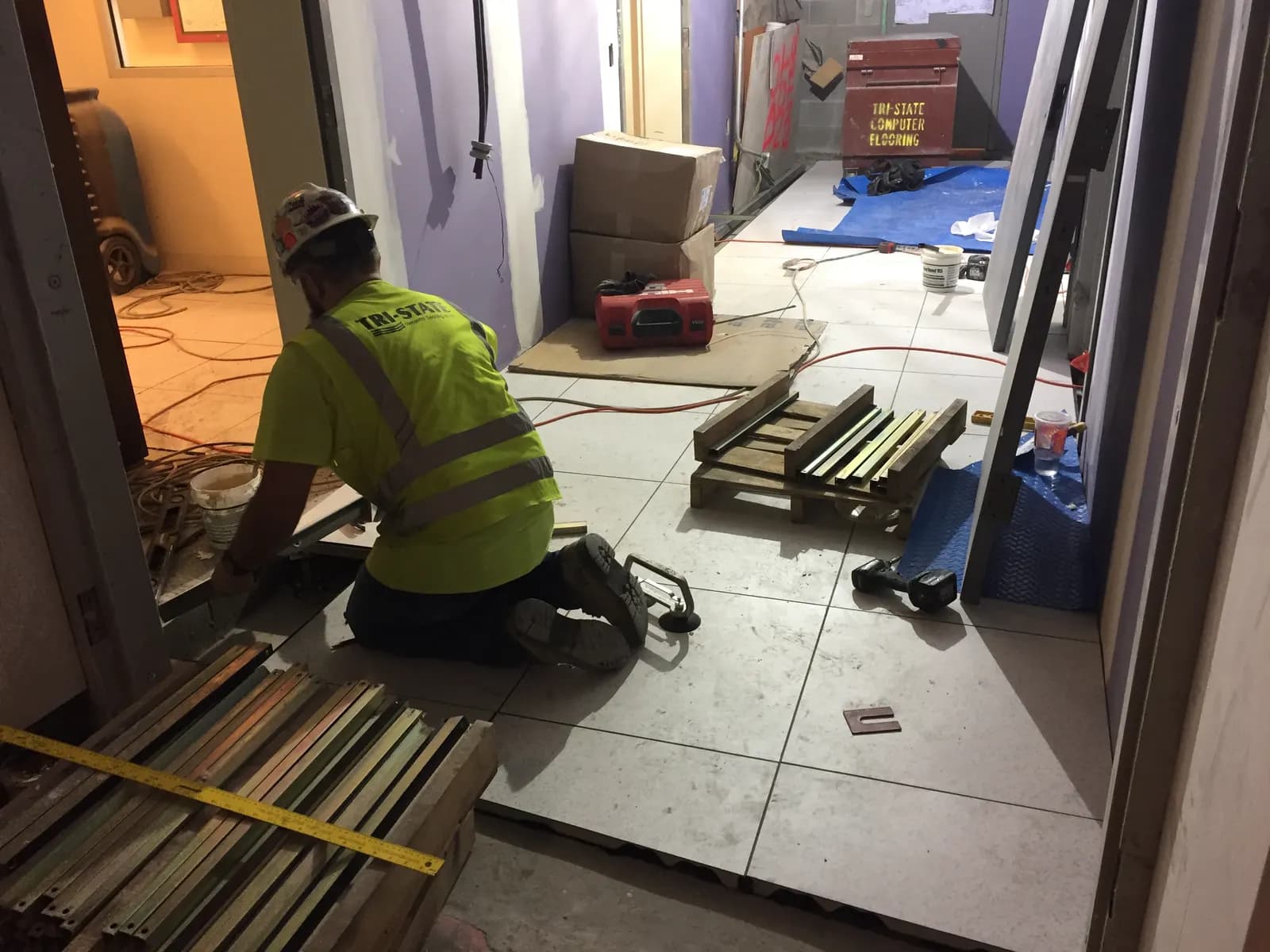
Supply and lay. A contractor who supplies the tiles, adhesive and grout and lays them in a building is supplying a works contract — a composite supply in which goods are transferred while immovable property is built or improved. Works contracts are taxed at 18% on the whole contract value. On a ₹1,90,000 contract to supply and lay 2,000 sq ft of vitrified tiles, GST is ₹34,200. The tiles inside that contract are not billed separately at 6907; the contractor claims credit on the GST it paid for them.
Labour only. A tiler who brings only labour and tools, while the owner buys the tiles, is supplying a construction service. It is taxed at 18% when the tiler is registered. On ₹25,000 of laying charges for 1,000 sq ft, that is ₹4,500.
Exempt labour. Entry 11 of Notification 12/2017–Central Tax (Rate) exempts services by way of pure labour contracts of construction, erection, commissioning or installation of original works pertaining to a single residential unit otherwise than as a part of a residential complex. When you build an independent house and hire a tiler for labour only, the tiling is Nil (exempt). The exemption is limited to original works, so re-flooring an existing house generally does not qualify.
Small tilers. A tiler whose aggregate turnover is below the registration threshold for services — ₹20 lakh in most states — does not register and does not charge GST.
Tile fitting — which GST applies?
Step 1
Contractor supplies tiles and lays them
works contract, 18%
Step 2
Labour only, registered tiler
construction service, 18%
Step 3
Labour only, new independent house
exempt
Step 4
Unregistered tiler
no GST
Input tax credit on tiles
Tile and stone dealers, contractors and processors claim full credit on their purchases, because the goods are resold or used in a taxable works contract. The difficulty is for businesses that use tiles in their own premises.
Section 17(5)(d) of the CGST Act blocks credit on goods and services received for construction of an immovable property on your own account, other than plant and machinery, even when the property is used in business. Section 17(5)(c) blocks credit on works contract services for construction of immovable property, except where the service is an input for a further works contract. Explanation 1 to section 17 says "construction" includes re-construction, renovation, additions or alterations or repairs, "to the extent of capitalisation", to the property.
That last phrase is useful. A shop or hotel that re-tiles its floor and capitalises the cost in its fixed assets cannot claim the GST. A business that replaces a few broken tiles as routine maintenance and charges the cost to its profit and loss account can usually claim it, because the expense is not capitalised. Keep the accounting entry and the invoice consistent: an auditor will compare the two.
Who can claim ITC on tiles?
| Buyer | Use of tiles | ITC? |
|---|---|---|
Tile, marble or granite dealer | Resale | Yes, in full |
Works contractor | Laid in a client's building under a taxable works contract | Yes |
Business renovating its own office, shop or hotel (capitalised) | Own immovable property | No — section 17(5)(c)/(d) |
Business doing minor repairs charged to P&L | Revenue expense, not capitalised | Generally yes |
Builder of residential flats at 1% without ITC or 5% without ITC | Construction | No — those rates carry no ITC |
Individual building a house | Own home | No — not registered |
Tile, marble or granite dealer
- Use of tiles
Resale
- ITC?
Yes, in full
Works contractor
- Use of tiles
Laid in a client's building under a taxable works contract
- ITC?
Yes
Business renovating its own office, shop or hotel (capitalised)
- Use of tiles
Own immovable property
- ITC?
No — section 17(5)(c)/(d)
Business doing minor repairs charged to P&L
- Use of tiles
Revenue expense, not capitalised
- ITC?
Generally yes
Builder of residential flats at 1% without ITC or 5% without ITC
- Use of tiles
Construction
- ITC?
No — those rates carry no ITC
Individual building a house
- Use of tiles
Own home
- ITC?
No — not registered
Residential builders on the low rates cannot claim credit at all, so tile GST is part of their cost. They must also buy at least 80% of their inputs and input services from registered suppliers or pay tax on the shortfall under reverse charge, which makes proper GST invoices for tiles important. Our GST on flat purchase guide covers the buyer's side.
Tile makers: Morbi and the gas question
Most of India's ceramic tiles come from the Morbi cluster in Gujarat. A tile maker's raw materials — clay, kaolin, feldspar and quartz sand — are at 5%, glazes and vitrifiable colours of heading 3207 carry 18%, and the finished tiles are sold at 18%. That is not an inverted structure, so tile makers generally pay tax in cash each month rather than building up excess credit.
The larger issue is fuel. Natural gas, which most Morbi kilns use, is still outside GST under section 9(2) of the CGST Act until the GST Council recommends a date to bring it in. Gas is therefore billed with state VAT, which tile makers cannot set off against their GST. Propane and other fuels that are within GST give credit; natural gas does not. The 57th GST Council, which met on 8 October 2026, made no rate changes, so this position continues.
Check your tile or stone bill
0/7Common mistakes with GST on tiles
Billing marble slabs at 5%. Only blocks and crude or roughly trimmed marble and granite moved to 5%. Slabs are listed separately at 18%, and a supplier that bills slabs as "blocks" faces a demand for the difference with interest.
Billing all Kota stone at 5%. The 5% entry excludes mirror-polished stone ready to use. Describe the finish on the invoice so the rate is supported.
Claiming ITC on own-building tiles. Showrooms, clinics and hotels often take credit on flooring during a fit-out. If the work is capitalised, section 17(5) blocks it; reverse it before an audit finds it.
Assuming all tiling labour is exempt. The exemption covers pure labour on original works for a single residential unit, not renovation work or commercial buildings.
Ignoring e-way bills. A single truckload of tiles or granite slabs usually crosses ₹50,000, so it needs an e-way bill for movement by road, including transfers between your own godowns.
Official links
- Notification 9/2025–CT(Rate) — goods rate scheduleTiles Sch. II 238; stone Sch. I 176–181 and Sch. II 7, 8, 218
- 56th GST Council — recommendationsMarble and granite blocks 12% to 5%
- PIB FAQs on GST rate rationalisationWhy blocks were cut
- Notification 12/2017–CT(Rate)Entry 11 — pure labour on a single residential unit
- Section 17, CGST ActBlocked credits on construction
- CGST rate notificationsLater amendments, if any
What to do next
If you are buying tiles or stone for a home, compare quotations on a pre-tax basis and check the rate on each line — 18% for tiles, 18% for polished slabs and 5% for Kota or sandstone. If you are a contractor, bill supply-and-lay jobs as one works contract and keep your purchase invoices for credit. Use the GST calculator to check any bill, and read our guides to GST on cement, GST on steel and input tax credit.
This is general information, not legal or tax advice — confirm on the official source or with a professional.
Frequently asked questions
Ceramic tiles of every kind — vitrified, porcelain, glazed floor and wall tiles, mosaic and finishing pieces — fall under HSN 6907 and attract 18% GST. GST 2.0 on 22 September 2025 did not change this rate. Polished marble and granite slabs and tiles are also 18%, while rough marble and granite blocks fell to 5%.
Vitrified and porcelain tiles are ceramic tiles under heading 6907. They usually fall under sub-heading 6907 21, which covers tiles with water absorption of 0.5% or less by weight. Ceramic tiles with absorption above 0.5% and up to 10% are 6907 22, and more porous wall tiles above 10% are 6907 23. All are taxed at 18%.
Marble and travertine blocks and granite blocks attract 5% since 22 September 2025, down from 12%. Slabs cut from them — marble and travertine other than blocks and granite other than blocks — attract 18%. Polished and worked stone of heading 6802, such as cut-to-size marble tiles and granite countertops, is also 18%.
A contractor who supplies the tiles and lays them is supplying a works contract, taxed at 18% on the whole contract value. Labour-only tiling is a construction service, also taxed at 18%, unless it is a pure labour contract for original works on a single independent house, which is exempt. A tiler below the registration threshold charges no GST.
Usually not, if the tiles are capitalised as part of the building. Section 17(5)(d) of the CGST Act blocks credit on goods used to construct immovable property on your own account, and construction includes renovation and repairs to the extent they are capitalised. Tiles bought for a repair that you charge to the profit and loss account, rather than capitalise, can qualify for credit.
Kota stone is a limestone, and calcareous building stone other than marble and travertine attracts 5% under Schedule I of Notification 9/2025–CT(Rate), whether in blocks or slabs, provided it is not mirror-polished stone ready to use. Mirror-polished Kota stone falls under the general worked-stone entry at 18%. Sandstone and basalt slabs are also 5%.
Sources & verification
Figures on this page were checked against the sources below when it was last reviewed on 9 October 2026. Each rate and limit is stored once with its own official source and review date, and official update channels are monitored daily so changes are picked up. How we verify
- 1.Notification No. 9/2025–Central Tax (Rate), 17 September 2025 (Gazette of India) — Ministry of Finance / Gazette of India · accessed 9 October 2026
- 2.Recommendations of the 56th GST Council meeting (press release with rate annexures) — GST Council / PIB · accessed 9 October 2026
- 3.FAQs on GST rate rationalisation (56th GST Council) — PIB / Ministry of Finance · accessed 9 October 2026
- 4.Notification No. 12/2017–Central Tax (Rate), entry 11 — CBIC · accessed 9 October 2026
- 5.Section 17 – CGST Act, 2017 (blocked credits) — CBIC · accessed 9 October 2026
- 6.Section 15 – CGST Act, 2017 (value of supply) — CBIC · accessed 9 October 2026
MSMETOOLS is an independent platform and is not affiliated with any government agency, ministry or department.
Tools for this
GST Calculator (India)
Calculate GST for your sales and purchases with current rates.
Invoice Generator
Create professional invoices with tax, logo and custom details.
HSN Code Finder (India)
Find the correct HSN/SAC code for your product.
Related guides
 GST on Steel 2026: TMT Bar, Structures & Scrap RatesRead guide
 GST on Bricks 2026: 6% vs 12%, Fly Ash & AAC Block RatesRead guide
 GST on Furniture 2026: Rates, HSN Codes & ITC RulesRead guide
 GST on Sanitary Ware 2026: 18% Rate, HSN 6910, CP FittingsRead guide
Official links open the government site in a new tab.