 GST & indirect tax
GST on Steel in 2026: Rates for TMT Bars, Sheets, Structures and Scrap, HSN Codes and ITC
GST on steel in 2026: 18% on TMT bars, sheets, pipes and structures, 5% on steel utensils, RCM and 2% TDS on scrap, builder ITC rules and worked ₹ bills.
 Edited by Sumeet YadavFounder & editor, MSMETOOLS · fact-checked against official sources
Contents (10)
- 1. GST rates on steel products in 2026
- 2. TMT bars, rods and sections: HSN codes in practice
- 3. Worked bills: GST on steel in rupees
- 4. Steel structures, fabrication and works contracts
- 5. Value of supply: freight, cutting charges and discounts
- 6. Input tax credit on steel: builders, contractors and factories
- 7. Steel scrap: reverse charge and TDS since October 2024
- 8. Inverted duty for steel utensil makers
- 9. Common mistakes with GST on steel
- 10. What to do next
Steel is the second-largest material cost in most buildings after cement, and a core input for fabricators, pipe makers, machine builders and scrap dealers. This guide gives the 2026 GST rates on iron and steel products — TMT bars, coils, sheets, sections, pipes, structures and utensils — with their HSN codes, the reverse charge and TDS rules that have applied to scrap since October 2024, who can and cannot claim input tax credit (ITC) on steel, and worked ₹ bills for a house builder, a fabricator and a scrap buyer. Rates were checked against the notified schedule in October 2026.
Quick answer
Iron and steel products attract 18% GST — TMT bars, rods, billets, HR and CR coils, sheets, angles, channels, beams, wire, pipes and fabricated structures. GST 2.0 did not change this rate. Household steel utensils fell from 12% to 5%. Ferrous scrap is also 18%, with reverse charge when bought from unregistered sellers and 2% (1% CGST + 1% SGST, or 2% IGST) TDS when bought from registered sellers.
TMT bars: HSN 7213–7215, 18%
Steel structures (HSN 7308): 18%
On ₹1 lakh of TMT bars, GST is ₹18,000
Builders on 1% / 5% rates cannot claim ITC on steel
Scrap RCM and TDS both started on 10 October 2024
GST rates on steel products in 2026
Notification 9/2025–Central Tax (Rate), which replaced the 2017 goods rate schedule from 22 September 2025, lists almost every iron and steel product in Schedule II, the 9% central tax schedule. With the equal state tax, that is 18% on an intra-state sale, or the same rate as IGST on an inter-state sale. The 56th GST Council did not move basic steel because it was already at 18%; its changes for this sector were on cement and on household articles.
GST on iron and steel products (2026)
| Product (HSN) | GST rate | Schedule entry |
|---|---|---|
Pig iron, ferro-alloys, sponge iron (7201–7203) | 18% | Sch. II 260–262 |
Ferrous waste and scrap (7204) | 18% | Sch. II 263 |
Ingots, billets, blooms, slabs (7206, 7207, 7218, 7224) | 18% | Sch. II 265–266 |
HR/CR coils, plates, GP/GC sheets — flat-rolled (7208–7212, 7219–7220, 7225–7226) | 18% | Sch. II 267, 272, 276 |
TMT bars, rods, wire rods (7213–7215, 7221–7222, 7227–7228) | 18% | Sch. II 268, 273, 277 |
Angles, channels, beams, sections (7216) | 18% | Sch. II 269 |
Wire, binding wire (7217, 7223, 7229) | 18% | Sch. II 270, 274, 278 |
Pipes, tubes and fittings (7303–7307) | 18% | Sch. II 281–285 |
Structures and parts — sheds, towers, roofing frames, doors, windows (7308) | 18% | Sch. II 286 |
Wire mesh, fencing, barbed wire, nails, bolts, nuts, chains (7313–7318) | 18% | Sch. II 291–296 |
Household articles and utensils of iron or steel; milk cans (7323, 7310) | 5% | Sch. I 411, 416 |
Ghamella (7323 94 10) | 18% | Sch. II 302 |
Pig iron, ferro-alloys, sponge iron (7201–7203)
- GST rate
18%
- Schedule entry
Sch. II 260–262
Ferrous waste and scrap (7204)
- GST rate
18%
- Schedule entry
Sch. II 263
Ingots, billets, blooms, slabs (7206, 7207, 7218, 7224)
- GST rate
18%
- Schedule entry
Sch. II 265–266
HR/CR coils, plates, GP/GC sheets — flat-rolled (7208–7212, 7219–7220, 7225–7226)
- GST rate
18%
- Schedule entry
Sch. II 267, 272, 276
TMT bars, rods, wire rods (7213–7215, 7221–7222, 7227–7228)
- GST rate
18%
- Schedule entry
Sch. II 268, 273, 277
Angles, channels, beams, sections (7216)
- GST rate
18%
- Schedule entry
Sch. II 269
Wire, binding wire (7217, 7223, 7229)
- GST rate
18%
- Schedule entry
Sch. II 270, 274, 278
Pipes, tubes and fittings (7303–7307)
- GST rate
18%
- Schedule entry
Sch. II 281–285
Structures and parts — sheds, towers, roofing frames, doors, windows (7308)
- GST rate
18%
- Schedule entry
Sch. II 286
Wire mesh, fencing, barbed wire, nails, bolts, nuts, chains (7313–7318)
- GST rate
18%
- Schedule entry
Sch. II 291–296
Household articles and utensils of iron or steel; milk cans (7323, 7310)
- GST rate
5%
- Schedule entry
Sch. I 411, 416
Ghamella (7323 94 10)
- GST rate
18%
- Schedule entry
Sch. II 302
The split inside heading 7323 is worth noting. Kitchen and household articles of iron or steel — stainless steel thalis, pressure cooker bodies, buckets, tiffins and similar utensils — moved to 5%, but the iron pan used on building sites to carry mortar, the ghamella, is named separately in Schedule II and stays at 18%. Iron ore itself, under heading 2601, is also in the 18% schedule.
There is no compensation cess on steel, so the GST rate is the whole tax at the point of sale. For HSN on invoices, a business with aggregate turnover up to ₹5 crore must show at least a 4-digit HSN on B2B invoices and larger businesses a 6-digit HSN. Our HSN code finder helps with less common items.
TMT bars, rods and sections: HSN codes in practice
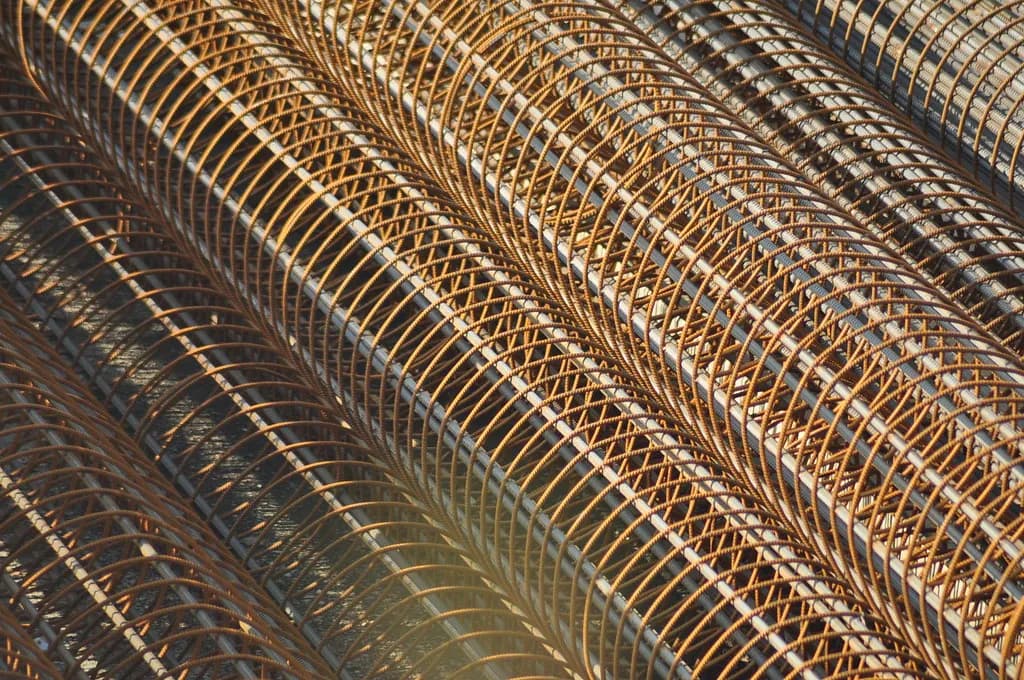
TMT (thermo-mechanically treated) bars are ribbed reinforcing bars of non-alloy steel. Bars hot-rolled in irregularly wound coils fall under 7213, and straight bars cut to length — the form most builders buy — under 7214. Bars with a minor alloy content are classified in 7227 or 7228 instead. The rate is 18% in every case, so the classification matters for your invoice and returns rather than for the tax.
Angles, channels, joists and beams used in sheds and frames sit in 7216. Galvanised and colour-coated roofing sheets are flat-rolled products of 7210. Binding wire used to tie reinforcement is 7217. Once steel has been cut, drilled, welded or assembled into something designed for a structure — a roof truss, a staircase, a shutter, a tower section — it becomes a structure or part of a structure under 7308, still at 18%.
Worked bills: GST on steel in rupees
The prices below are illustrative — round figures to show the arithmetic, not market quotes. Steel prices move weekly with raw material costs, region and brand; check your supplier's current rate.
| Purchase | Pre-tax value | GST | Bill total | Split |
|---|---|---|---|---|
| 2 tonnes of TMT bars at ₹60,000/tonne (same state) | ₹1,20,000 | ₹21,600 | ₹1,41,600 | ₹10,800 CGST + ₹10,800 SGST |
| 10 tonnes of TMT bars at ₹58,000/tonne (other state) | ₹5,80,000 | ₹1,04,400 | ₹6,84,400 | All IGST |
| Fabricated roof truss and purlins for a shed | ₹3,50,000 | ₹63,000 | ₹4,13,000 | HSN 7308 |
| Stainless steel utensils for a shop | ₹50,000 | ₹2,500 | ₹52,500 | HSN 7323, 5% |
| 20 tonnes of HMS scrap from a registered dealer at ₹32,000/tonne | ₹6,40,000 | ₹1,15,200 | ₹7,55,200 | Buyer deducts ₹12,800 GST TDS |
To find the GST inside an all-inclusive price, multiply by 18 and divide by 118. A retail quote of ₹70,800 a tonne "including GST" is ₹60,000 plus ₹10,800 GST.
An individual building a house cannot claim any of the GST back, so the ₹21,600 in the first row is a cost. If your house needs, say, 8 tonnes of steel, that is about ₹86,400 of GST at ₹60,000 a tonne — ask your engineer for the actual quantity from the structural drawings. Every consignment above ₹50,000 moving by road needs an e-way bill, which the supplier normally generates; a load of TMT bars almost always crosses that value.
Try it — GST on a steel bill
Steel structures, fabrication and works contracts
Fabricators can supply in two ways, and the GST treatment follows the contract. If you make a steel shed, mezzanine or gate in your workshop and deliver it, you supply goods under 7308 at 18%. If you fabricate and erect the structure on the client's land as part of building or improving the property, you supply a works contract service, now taxed at 18%. The rate is the same either way since the last 12% works contract entries moved to 18% on 22 September 2025, but the classification still decides the place of supply, the invoice description and whether the client can claim credit.
Job work on a principal's steel — cutting, bending, galvanising or machining steel owned by someone else — is a separate service with its own entries in the job work schedule. Agree in writing whose steel it is and move the material on delivery challans; the principal who sends its steel out for job work reports it in Form ITC-04.
Government projects add another layer. Government departments, local authorities and notified bodies deduct GST TDS of 2% (1% CGST + 1% SGST, or 2% IGST) on payments to suppliers of taxable goods or services under contracts worth more than ₹2.5 lakh, so steel suppliers and fabricators on public projects will see that deduction in their cash ledger. Our guide to TDS under GST covers the mechanics.
Fabricator's bill — goods or works contract?
Step 1
Structure made in your workshop
Step 2
Delivered only
goods, HSN 7308, 18%
Step 3
Erected on the client's property
works contract, 18%
Step 4
Client's own steel
job work service
Value of supply: freight, cutting charges and discounts
Steel bills often carry more than the base price, and section 15 of the CGST Act decides what is taxed. Freight, loading, cutting and bending charges that the supplier adds to the bill are part of the value of the steel and take its 18% rate, because they are incidental expenses charged by the supplier before or at delivery. A separate freight invoice from an independent goods transport agency follows the GTA rules instead; see GST on freight.
Steel is sold both by actual weighbridge weight and by theoretical weight per metre. Whichever basis the contract uses, GST is charged on the amount actually billed. If a later weighment shows a shortfall and the supplier agrees to reduce the bill, it issues a credit note and both sides adjust their returns.
Rate-difference and volume discounts are common in the steel trade. A discount shown on the invoice reduces the taxable value at once. A discount given after the sale reduces the value only if it was agreed before or at the time of supply, is linked to specific invoices, and the buyer reverses the matching credit; the supplier then issues a GST credit note. A "discount" that is really a commercial credit note without GST does not cut the supplier's tax, and the buyer keeps its full credit. Our guide to credit and debit notes explains the deadlines.
Imported steel attracts IGST at the same rates as domestic steel, on top of basic customs duty and any trade-remedy duties in force, and the importer claims the IGST as credit on the same terms.
Input tax credit on steel: builders, contractors and factories
Steel is fully creditable for a manufacturer or trader that uses or resells it in a taxable business. Construction is where the blocks bite. Section 17(5)(c) of the CGST Act blocks credit on works contract services for constructing immovable property, other than plant and machinery, except where the service is an input for a further works contract. Section 17(5)(d) blocks credit on goods and services received for constructing immovable property on your own account, again other than plant and machinery, even when the property is used in your business.
Who can claim ITC on steel?
| Buyer | Use of steel | ITC? |
|---|---|---|
Steel trader or stockist | Resale | Yes, in full |
Manufacturer (fabrication, pipes, machinery) | Raw material | Yes |
Works contractor building for a client at 18% | Used in the client's building | Yes — output is a works contract |
Factory building its own shed or office | Civil structure on own account | No — section 17(5)(d) |
Factory installing machinery | Foundations and structural supports for the machine | Yes — part of plant and machinery |
Builder of residential flats at 1% without ITC or 5% without ITC | Construction | No — those rates carry no ITC |
Individual building a house | Own home | No — not registered |
Steel trader or stockist
- Use of steel
Resale
- ITC?
Yes, in full
Manufacturer (fabrication, pipes, machinery)
- Use of steel
Raw material
- ITC?
Yes
Works contractor building for a client at 18%
- Use of steel
Used in the client's building
- ITC?
Yes — output is a works contract
Factory building its own shed or office
- Use of steel
Civil structure on own account
- ITC?
No — section 17(5)(d)
Factory installing machinery
- Use of steel
Foundations and structural supports for the machine
- ITC?
Yes — part of plant and machinery
Builder of residential flats at 1% without ITC or 5% without ITC
- Use of steel
Construction
- ITC?
No — those rates carry no ITC
Individual building a house
- Use of steel
Own home
- ITC?
No — not registered
The definition of plant and machinery in the explanation to section 17 matters for factories. It covers apparatus, equipment and machinery fixed to the earth by foundation or structural support and used to make outward supplies, and it includes those foundations and supports. It excludes land, buildings and other civil structures. So steel used in a machine's foundation frame, a pipe rack carrying process lines or a crane gantry supporting a production crane can qualify for credit, while the steel in the factory shed's roof generally cannot. Keep drawings and purchase records that show where the steel went.
Residential builders on the 1% without ITC and 5% without ITC rates cannot claim credit at all, so steel GST is part of their cost. They must also buy at least 80% of their inputs and input services from registered suppliers, or pay tax under reverse charge on the shortfall; entry 638 of the goods rate schedule sets that tax at 18% for goods other than cement and capital goods. Buying steel on a proper GST invoice keeps it inside the 80%. For the buyer's side, see GST on flat purchase, and for the other big input, GST on cement, which fell from 28% to 18% in September 2025.
Steel scrap: reverse charge and TDS since October 2024
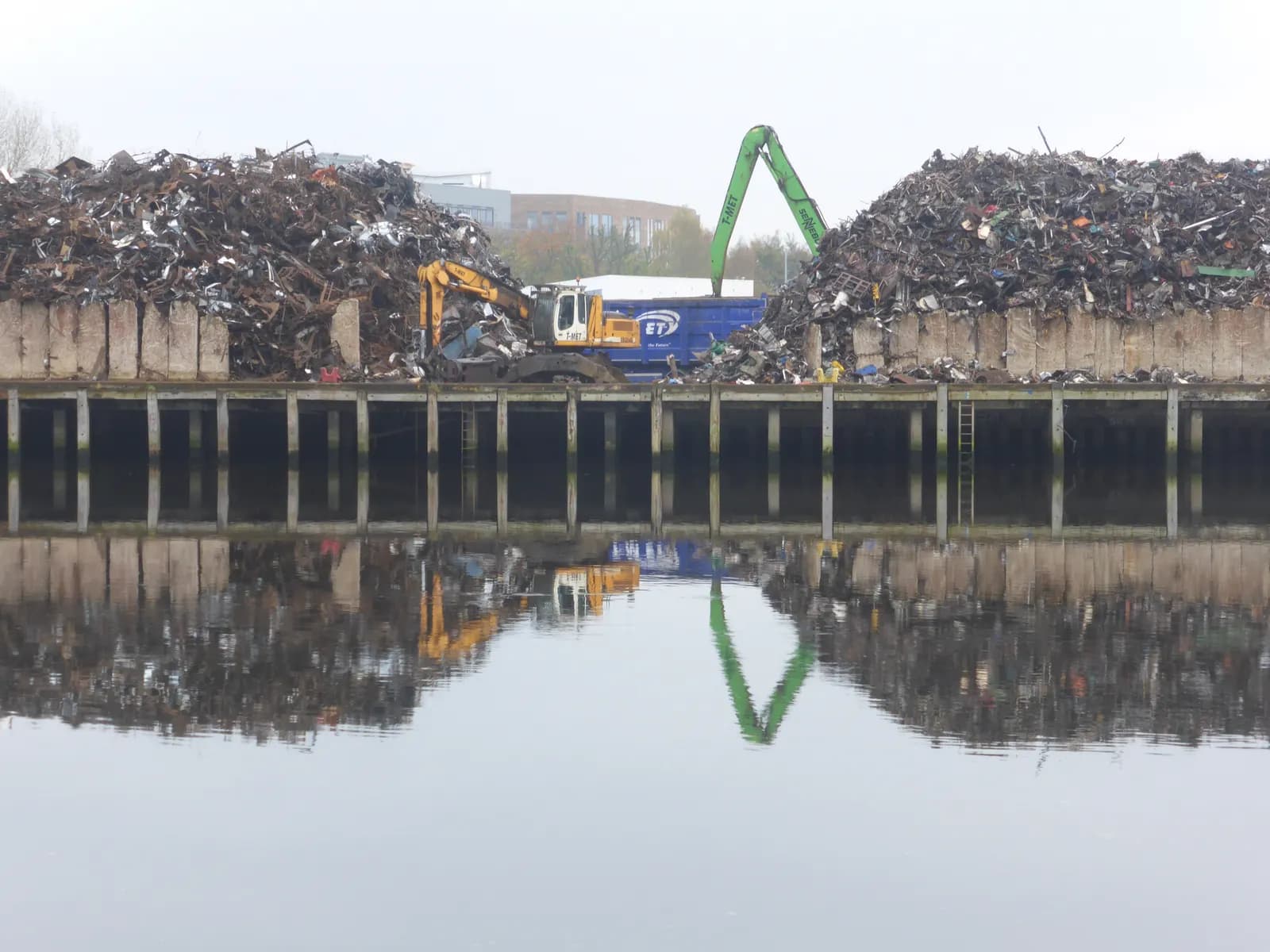
Scrap was a large source of GST leakage, with fake invoices issued by shell dealers to pass credit on scrap that never moved. The 54th GST Council recommended a two-part fix that took effect on 10 October 2024.
Unregistered seller — reverse charge. Notification 06/2024–Central Tax (Rate) added metal scrap falling under chapters 72 to 81 to the reverse charge list for goods, where the supplier is any unregistered person and the recipient is any registered person. The buyer pays GST at 18% on ferrous scrap in cash, issues a self-invoice within 30 days of receipt, and can then claim the same amount as credit.
Registered seller — TDS. Notification 25/2024–Central Tax made every registered person receiving metal scrap from another registered person a TDS deductor under section 51. The seller charges GST normally. The buyer deducts 2% (1% CGST + 1% SGST, or 2% IGST) of the taxable value — excluding GST — when the value of supply under the contract exceeds ₹2.5 lakh, deposits it, and files GSTR-7 by the 10th of the next month. The buyer needs a separate TDS registration, and the seller sees the deduction in its electronic cash ledger once GSTR-7 is filed.
Here is the arithmetic for the scrap row in the worked table. A foundry buys 20 tonnes of heavy melting scrap from a registered dealer at ₹32,000 a tonne. Taxable value ₹6,40,000, GST at 18% ₹1,15,200, invoice ₹7,55,200. The contract is above ₹2.5 lakh, so the foundry deducts 2% (1% CGST + 1% SGST, or 2% IGST) of ₹6,40,000 — ₹12,800 — and pays the dealer ₹7,42,400. The dealer gets ₹12,800 in its cash ledger and uses it to pay its own GST. The foundry still claims ₹1,15,200 as input tax credit, subject to the usual conditions.
If the same foundry buys from a kabadiwala who is not registered, there is no TDS. The foundry raises a self-invoice for ₹6,40,000, pays ₹1,15,200 under reverse charge in cash, and claims it as credit in the same month. Splitting one purchase across several invoices does not avoid TDS, because the threshold is tested on the value of supply under the contract. Scrap sellers also need to watch registration: a dealer whose turnover from scrap crosses the threshold for goods must register and charge tax.
Inverted duty for steel utensil makers
The cut on household steel articles created a familiar problem. A maker of stainless steel utensils buys sheets and coils at 18% but sells finished utensils at 5%, so credit piles up. Section 54(3) of the CGST Act allows a refund of credit accumulated because the tax on inputs is higher than on outputs, using the formula in Rule 89(5); input services and capital goods are left out of that formula. The 56th Council also recommended that 90% of inverted-duty refund claims be sanctioned provisionally. File the refund regularly rather than letting credit sit, and keep stock records that tie input purchases to the utensils sold.
Check your steel bill
0/6Common mistakes with GST on steel
Claiming credit on steel for your own building. Factories and warehouses often take credit on steel for sheds, mezzanines and boundary walls. Unless the steel forms part of plant and machinery, section 17(5)(d) blocks it; reverse it with interest before an audit finds it.
Billing all chapter 73 items at 5%. Only household articles, utensils and milk cans moved to 5%. Steel furniture parts, pipes, fasteners, ghamellas, drums and structures stay at 18%.
Paying a scrap seller in full when TDS applies. Registered buyers who pay a registered scrap dealer the full invoice amount on a contract above ₹2.5 lakh remain liable for the TDS they failed to deduct, with interest, and late fees for missed GSTR-7 returns.
Buying scrap from unregistered sellers without a self-invoice. The reverse charge is payable in cash, and credit is available only after it is paid. A missing self-invoice also breaks the paper trail if the department questions where the scrap came from.
Accepting "kachha" bills on steel. Builders on the low residential rates need GST invoices to stay within the 80% registered-purchase rule; unbilled steel can turn into reverse-charge tax at year-end.
Official links
- Notification 9/2025–CT(Rate) — goods rate scheduleChapters 72 and 73 in Schedule II; utensils in Schedule I
- 56th GST Council — recommendationsUtensils 12% to 5%; cement 28% to 18%
- Notification 06/2024–CT(Rate) — RCM on metal scrapUnregistered seller to registered buyer
- Notification 25/2024–CT — TDS on metal scrapRegistered seller to registered buyer
- Section 17, CGST ActBlocked credits on construction; plant and machinery
- CGST rate notificationsLater amendments, if any
What to do next
If you sell steel, check that your billing software uses 18% with the right HSN, and 5% only for household utensils. If you buy scrap, sort your suppliers into registered and unregistered, and set up TDS registration or self-invoicing accordingly. If you build, work out early whether your steel is creditable. Use the GST calculator to check any bill, and read our guides to GST on cement, input tax credit and reverse charge.
This is general information, not legal or tax advice — confirm on the official source or with a professional.
Frequently asked questions
Iron and steel under HSN chapter 72 — ingots, billets, TMT bars, rods, coils, sheets, angles, channels and wire — attract 18% GST. Most articles of steel in chapter 73, such as pipes, structures, fasteners and wire mesh, are also at 18%. GST 2.0 did not change these rates. Household utensils of iron or steel attract 5%.
TMT bars are bars and rods of non-alloy steel, classified under headings 7213 to 7215 — usually 7214 for hot-rolled ribbed bars cut to length and 7213 for bars in coils. All bars and rods of iron or non-alloy steel attract 18% under Notification 9/2025–Central Tax (Rate). On ₹60,000 of TMT bars, GST is ₹10,800.
Yes, when the seller is unregistered. From 10 October 2024, a registered buyer of metal scrap under chapters 72 to 81 from an unregistered seller pays GST at 18% under reverse charge and issues a self-invoice. When the seller is registered, the seller charges GST normally and the registered buyer deducts GST TDS of 2% (1% CGST + 1% SGST, or 2% IGST) if the contract value exceeds ₹2.5 lakh.
Usually not. Section 17(5)(d) of the CGST Act blocks credit on goods used to construct immovable property on your own account, and residential projects at 1% without ITC or 5% without ITC carry no credit anyway. A works contractor who builds for a client and charges 18% can claim the credit, as can a factory for steel used in machinery and its foundations and supports.
Not for steel itself. Bars, rods, sheets, coils, sections, pipes and structures were 18% before and after GST 2.0. The changes that touched steel users were cement, which fell from 28% to 18%, and household steel utensils, which fell from 12% to 5%.
From 10 October 2024, a registered person buying metal scrap from another registered person must deduct GST TDS of 2% (1% CGST + 1% SGST, or 2% IGST) on the taxable value when the contract is worth more than ₹2.5 lakh. The buyer takes a separate TDS registration, files GSTR-7 by the 10th of the next month and the seller uses the credit in its cash ledger.
Sources & verification
Figures on this page were checked against the sources below when it was last reviewed on 9 October 2026. Each rate and limit is stored once with its own official source and review date, and official update channels are monitored daily so changes are picked up. How we verify
- 1.Notification No. 9/2025–Central Tax (Rate), 17 September 2025 (Gazette of India) — Ministry of Finance / Gazette of India · accessed 9 October 2026
- 2.Recommendations of the 56th GST Council meeting (press release with annexures) — GST Council / PIB · accessed 9 October 2026
- 3.Notification No. 06/2024–Central Tax (Rate), 8 October 2024 — CBIC · accessed 9 October 2026
- 4.Notification No. 25/2024–Central Tax, 9 October 2024 — CBIC · accessed 9 October 2026
- 5.Section 17 – CGST Act, 2017 (blocked credits) — CBIC · accessed 9 October 2026
- 6.TDS under GST for the metal scrap industry — ClearTax · accessed 9 October 2026
- 7.GST TDS vs RCM on scrap purchase — Juris Hour · accessed 9 October 2026
MSMETOOLS is an independent platform and is not affiliated with any government agency, ministry or department.
Tools for this
GST Calculator (India)
Calculate GST for your sales and purchases with current rates.
Invoice Generator
Create professional invoices with tax, logo and custom details.
HSN Code Finder (India)
Find the correct HSN/SAC code for your product.
Related guides
 TDS on GST 2026: 2% Rate, ₹2.5 Lakh Rule & GSTR-7 GuideRead guide
 GST on Flat Purchase 2026: 1% or 5% and How to CalculateRead guide
 GST on Plywood 2026: 18% Rate, HSN 4412, MDF & LaminatesRead guide
 GST on Sanitary Ware 2026: 18% Rate, HSN 6910, CP FittingsRead guide
Official links open the government site in a new tab.