 GST & indirect tax
GST on Sanitary Ware in 2026: Ceramic Sanitaryware, CP Fittings, Pipes, Plumbing Work and ITC
GST on sanitary ware in 2026: 18% on ceramic WCs and basins (HSN 6910), CP taps (8481), pipes and geysers, plumbing works contracts, ITC rules and worked ₹ bills.
 Edited by Sumeet YadavFounder & editor, MSMETOOLS · fact-checked against official sources
Contents (10)
- 1. GST rates on sanitary ware and bath fittings in 2026
- 2. HSN codes for sanitary ware and CP fittings
- 3. Worked bills: a bathroom in rupees
- 4. Installation and plumbing: works contract or supply of goods?
- 5. Input tax credit on sanitary ware
- 6. Repairs, warranty replacements and AMCs
- 7. What GST 2.0 changed for a bathroom budget
- 8. Makers and dealers: Thangadh, Morbi and the trade
- 9. Common mistakes with GST on sanitary ware
- 10. What to do next
A bathroom brings together more GST headings than almost any other room: ceramic WCs and basins, chrome taps and mixers, plastic and metal pipes, tanks, a geyser, a mirror, tiles and the plumber's labour. Almost all of it is at one rate, but the way the job is billed — goods, labour or a works contract — changes who pays what and who can claim credit. This guide is for sanitary ware and bath-fittings dealers, plumbing and bathroom contractors, builders, hotels and homeowners checking a quote. It gives the 2026 GST rates and HSN codes for sanitary ware, CP fittings, pipes and water heaters, how installation is taxed, input tax credit rules and worked bills in rupees. Rates were checked against the notified schedule in October 2026.
Quick answer
Ceramic sanitary ware — WCs, wash basins, pedestals, urinals, cisterns (HSN 6910) — attracts 18% GST. So do plastic, steel and brass sanitary ware, CP taps, mixers and valves (8481), plumbing pipes and fittings, water tanks and electric geysers. GST 2.0 did not change any of these. Solar water heaters are the main exception, at 5%.
A ₹9,000 wall-hung WC: GST ₹1,620
Supply-and-install bathroom jobs: works contract at 18%
Pure labour on a new independent house: exempt
Capitalised in your own building: no ITC
No compensation cess on sanitary ware
GST rates on sanitary ware and bath fittings in 2026
Notification 9/2025–Central Tax (Rate), the goods rate schedule in force since 22 September 2025, lists ceramic sanitary ware in Schedule II — the 9% central tax schedule — at serial 240: "Ceramic sinks, wash basins, wash basin pedestals, baths, bidets, water closet pans, flushing cisterns, urinals and similar sanitary fixtures". With the matching state tax, that is 18% within a state, or the same rate as IGST between states. The 56th GST Council's rate annexures do not list sanitary ware, taps or pipes, which confirms that they were already at 18% and stayed there.
The same schedule covers the rest of the bathroom. Plastic baths, shower trays, sinks, basins, WC seats and covers and flushing cisterns are at serial 123 under 3922. Sanitary ware of iron and steel, such as stainless-steel kitchen sinks, is at serial 303 under 7324, and copper and brass goods of 7418 other than household utensils at serial 320. Taps, cocks and valves are at serial 466 under 8481.
GST on sanitary ware, fittings and plumbing (2026)
| Product (HSN) | GST rate | Schedule entry |
|---|---|---|
Ceramic WC pans, basins, pedestals, urinals, cisterns, sinks (6910) | 18% | Sch. II 240 |
Plastic baths, shower trays, basins, seat covers, PVC cisterns (3922) | 18% | Sch. II 123 |
Stainless-steel sinks and sanitary ware (7324) | 18% | Sch. II 303 |
Copper and brass sanitary ware (7418) | 18% | Sch. II 320 |
Taps, mixers, diverters, angle valves, cocks (8481) | 18% | Sch. II 466 |
PVC, CPVC, uPVC, HDPE, PPR pipes and fittings (3917) | 18% | Sch. II 118 |
GI and steel pipes and fittings (7304–7307) | 18% | Sch. II 282–285 |
Copper pipes and fittings (7411, 7412) | 18% | Sch. II 316–317 |
Plastic water tanks and builders' ware (3925) | 18% | Sch. II 126 |
Electric geysers and immersion heaters (8516) | 18% | Sch. II 489 |
Solar water heaters and systems (8419 12) | 5% | Sch. I 428 |
Glass mirrors (7009) | 18% | Sch. II 249 |
Ceramic wall and floor tiles (6907) | 18% | Sch. II 238 |
Ceramic WC pans, basins, pedestals, urinals, cisterns, sinks (6910)
- GST rate
18%
- Schedule entry
Sch. II 240
Plastic baths, shower trays, basins, seat covers, PVC cisterns (3922)
- GST rate
18%
- Schedule entry
Sch. II 123
Stainless-steel sinks and sanitary ware (7324)
- GST rate
18%
- Schedule entry
Sch. II 303
Copper and brass sanitary ware (7418)
- GST rate
18%
- Schedule entry
Sch. II 320
Taps, mixers, diverters, angle valves, cocks (8481)
- GST rate
18%
- Schedule entry
Sch. II 466
PVC, CPVC, uPVC, HDPE, PPR pipes and fittings (3917)
- GST rate
18%
- Schedule entry
Sch. II 118
GI and steel pipes and fittings (7304–7307)
- GST rate
18%
- Schedule entry
Sch. II 282–285
Copper pipes and fittings (7411, 7412)
- GST rate
18%
- Schedule entry
Sch. II 316–317
Plastic water tanks and builders' ware (3925)
- GST rate
18%
- Schedule entry
Sch. II 126
Electric geysers and immersion heaters (8516)
- GST rate
18%
- Schedule entry
Sch. II 489
Solar water heaters and systems (8419 12)
- GST rate
5%
- Schedule entry
Sch. I 428
Glass mirrors (7009)
- GST rate
18%
- Schedule entry
Sch. II 249
Ceramic wall and floor tiles (6907)
- GST rate
18%
- Schedule entry
Sch. II 238
There is no compensation cess on any of these goods, so the rate on the invoice is the whole tax. Tile adhesives, grouts and sealants are 18%, and bathroom vanity cabinets are furniture at 18%. Our GST on tiles guide covers the floor and walls.
HSN codes for sanitary ware and CP fittings
The correct HSN code depends on the material and the function. For the main items:
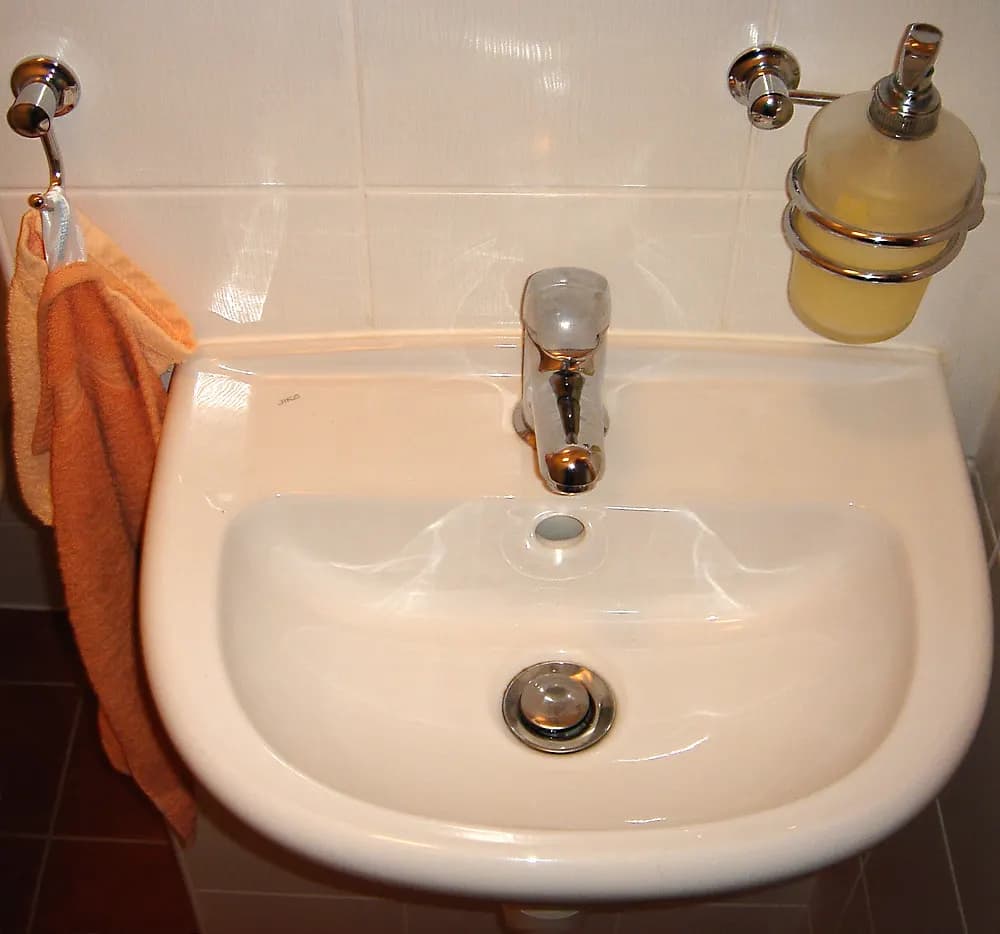
- 6910 10 — sanitary fixtures of porcelain or china, which covers most vitreous-china WCs, basins and urinals sold in India.
- 6910 90 — sanitary fixtures of other ceramics, such as fireclay sinks.
- 3922 — sanitary ware of plastics: acrylic bathtubs, PVC cisterns, plastic seat covers and shower trays.
- 7324 — sanitary ware of iron or steel, including stainless-steel sinks and steel bathtubs.
- 7418 — sanitary ware of copper or copper alloys such as brass.
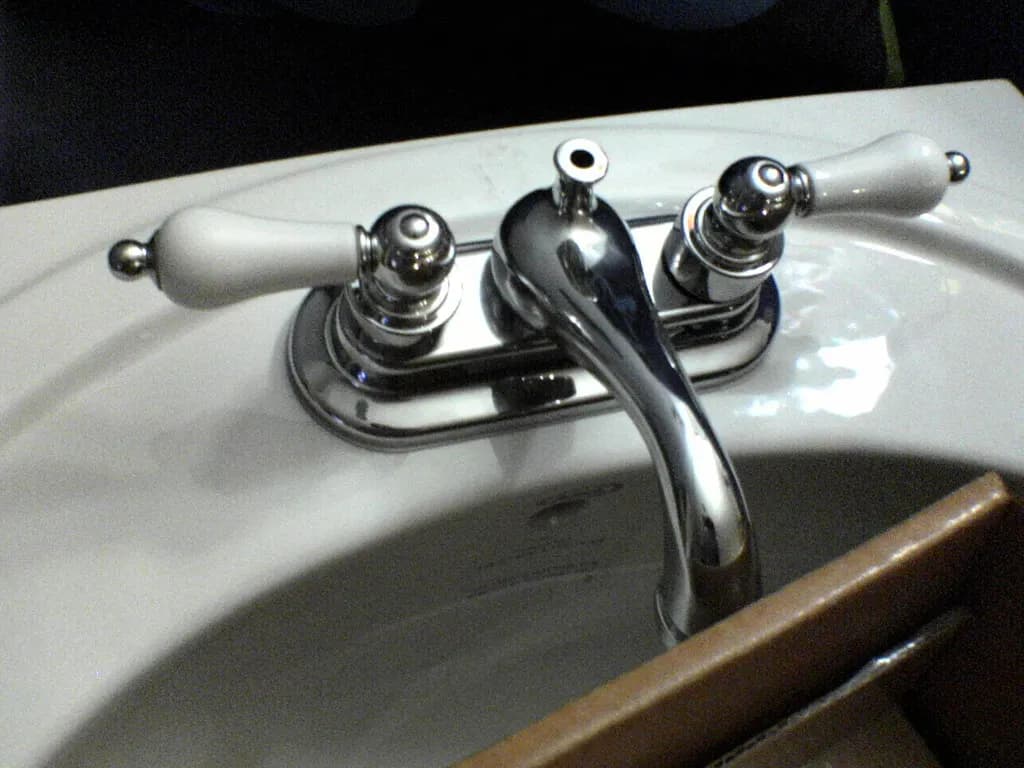
- 8481 — taps, cocks, valves and similar appliances for pipes, tanks and the like, including mixers, diverters, angle valves, stop cocks, flush valves and thermostatic valves.
- 3917, 7304–7307, 7411–7412 — pipes and fittings of plastics, steel and copper.
All carry 18%, so a wrong code does not change the tax, but it creates mismatches in your HSN summary. In GSTR-1, businesses with aggregate turnover up to ₹5 crore report at least a 4-digit HSN code and larger businesses a 6-digit HSN code. Concealed cisterns and flush plates sold as a single set are usually classified by the material of the main body. Use our HSN code finder for unusual items.
Worked bills: a bathroom in rupees
The prices below are illustrative — round figures for a mid-range bathroom to show the arithmetic, not market quotes. Prices vary widely by brand and city.
| Item | Pre-tax value | GST rate | GST | Total |
|---|---|---|---|---|
| Wall-hung WC with seat cover | ₹9,000 | 18% | ₹1,620 | ₹10,620 |
| Wash basin with pedestal | ₹3,500 | 18% | ₹630 | ₹4,130 |
| CP fittings set — basin mixer, shower mixer, health faucet, angle valves | ₹12,000 | 18% | ₹2,160 | ₹14,160 |
| CPVC pipes and fittings | ₹6,000 | 18% | ₹1,080 | ₹7,080 |
| 15-litre electric geyser | ₹8,000 | 18% | ₹1,440 | ₹9,440 |
| Mirror | ₹2,500 | 18% | ₹450 | ₹2,950 |
| Materials total | ₹41,000 | ₹7,380 | ₹48,380 |
If the homeowner buys these materials and hires a registered plumber for ₹8,000 of labour, the plumber adds ₹1,440 of GST, and the job costs ₹57,820 in all. If the plumber is unregistered — most independent plumbers are below the services threshold of ₹20 lakh — there is no GST on the labour and the job costs ₹56,380. If the house is a new independent house and the plumber supplies pure labour for its original construction, the labour is exempt even when the plumber is registered.
Solar instead of electric. A 100-litre solar water heater at ₹22,000 attracts 5%, or ₹1,100. An electric geyser of the same price would attract ₹3,960. The 56th Council cut renewable energy devices from 12% to 5%; our GST on solar panels guide covers the rest of that list.
Try it — GST on a sanitary ware bill
Installation and plumbing: works contract or supply of goods?
How installation is taxed depends on what the contractor supplies and whether the result is part of the building.
Bathroom fit-out by a contractor. A contractor who supplies the WC, basin, fittings, pipes and tiles and installs them in a new or renovated bathroom is supplying a works contract — a composite supply in which goods are transferred while immovable property is built or improved. Works contracts are taxed at 18% on the whole contract value under Notification 11/2017–Central Tax (Rate) as amended by Notification 15/2025. On a ₹1,20,000 bathroom renovation contract, GST is ₹21,600. The contractor claims credit on the sanitary ware, fittings and pipes it bought, and on sub-contracted plumbing. Our GST on works contract guide explains the rules.
A dealer who supplies and fixes a product. A dealer who sells a geyser or a water purifier and mounts it on the wall for an extra ₹500 is not building immovable property; the product can be removed and reused. Section 8 of the CGST Act treats this as a composite supply whose principal supply is the goods, so the installation charge takes the rate of the geyser — 18%. Where the installation is free, there is nothing extra to tax.
Labour only. A registered plumber who fits fixtures that the owner has bought is supplying a service at 18%. Entry 11 of Notification 12/2017–Central Tax (Rate) exempts pure labour contracts for construction, erection, commissioning or installation of original works pertaining to a single residential unit otherwise than as part of a residential complex. Plumbing for a new independent house is therefore Nil (exempt), but repairs and renovation of an existing house, and work inside an apartment complex, generally are not.
Bathroom job — which GST applies?
Step 1
Contractor supplies fixtures and installs
works contract, 18%
Step 2
Dealer supplies and mounts a geyser
composite supply, goods rate
Step 3
Labour only, registered plumber
18%
Step 4
Labour only, new independent house
exempt
Input tax credit on sanitary ware
Dealers and works contractors claim full credit on sanitary ware they buy, because it is resold or used in a taxable works contract. For businesses that install sanitary ware in their own premises — hotels, hospitals, restaurants, offices, factories — the position is different.
Section 17(5)(c) of the CGST Act blocks credit on works contract services for construction of immovable property, except where they are an input for a further works contract. Section 17(5)(d) blocks credit on goods and services received for construction of immovable property on your own account, other than plant and machinery, even when used in business. Explanation 1 to section 17 says construction includes re-construction, renovation, additions, alterations or repairs "to the extent of capitalisation".
A hotel example. A hotel renovates 20 bathrooms at ₹1,50,000 each through a contractor — ₹30,00,000 plus ₹5,40,000 GST — and capitalises the cost. The ₹5,40,000 is blocked and becomes part of the asset's cost. Separately, the hotel replaces 40 leaking mixers at ₹3,000 each during the year and charges the ₹1,20,000 to repairs and maintenance. The ₹21,600 of GST on those mixers is not capitalised, so it can generally be claimed.
Who can claim ITC on sanitary ware?
| Buyer | Use | ITC? |
|---|---|---|
Sanitary ware or bath-fittings dealer | Resale | Yes, in full |
Works contractor | Installed in a client's building | Yes |
Hotel, hospital or office renovating its own building (capitalised) | Own immovable property | No — section 17(5)(c)/(d) |
Business replacing taps or WCs as maintenance charged to P&L | Revenue expense | Generally yes |
Builder of residential flats at 1% without ITC or 5% without ITC | Construction | No — those rates carry no ITC |
Homeowner | Own home | No — not registered |
Sanitary ware or bath-fittings dealer
- Use
Resale
- ITC?
Yes, in full
Works contractor
- Use
Installed in a client's building
- ITC?
Yes
Hotel, hospital or office renovating its own building (capitalised)
- Use
Own immovable property
- ITC?
No — section 17(5)(c)/(d)
Business replacing taps or WCs as maintenance charged to P&L
- Use
Revenue expense
- ITC?
Generally yes
Builder of residential flats at 1% without ITC or 5% without ITC
- Use
Construction
- ITC?
No — those rates carry no ITC
Homeowner
- Use
Own home
- ITC?
No — not registered
Residential builders paying GST at the concessional rates cannot claim credit, so sanitary ware is part of their cost. They must also source at least 80% of inputs and input services from registered suppliers or pay tax on the shortfall under reverse charge, which makes proper tax invoices for sanitary ware important. Our GST on flat purchase guide covers the buyer's side.
Repairs, warranty replacements and AMCs
Not every bathroom bill is a new installation. A plumber who repairs a leaking cistern or replaces a cartridge, and supplies the spare part, is supplying a service of repair with the part as part of it; when the plumber is registered the whole bill is generally taxed at 18%. If the part is billed separately as a sale of goods, it takes its own rate — which for most sanitary spares, valves and cartridges is also 18%. In practice the total GST on a small repair is the same either way, but keep the description on the invoice accurate.
Warranty work is different. Circular 195/07/2023-GST, issued on 17 July 2023, clarified that when a manufacturer replaces parts or provides repair services free of charge during the warranty period, no GST is payable on that replacement, because the value of the original sale already includes the likely cost of warranty repairs, and the manufacturer does not have to reverse the credit on the parts used. The same applies when a distributor carries out the replacement on the manufacturer's behalf without charging the customer. If the customer pays anything extra, GST is due on that amount. A later Circular 216/10/2024-GST deals with cases where the whole product, rather than a part, is replaced; check it before deciding the treatment for full-unit replacements of WCs or geysers.
An annual maintenance contract for a hotel or office's plumbing, covering labour and routine spares for a fixed fee, is a service taxed at 18%. Because the hotel charges the AMC to its profit and loss account rather than capitalising it, the credit is usually available.
What GST 2.0 changed for a bathroom budget
The sanitary ware, fittings, pipes and tiles in a bathroom were all at 18% before 22 September 2025 and remain at 18%. What changed is mostly around them. Cement fell from 28% to 18%, which lowers the cost of the masonry and plaster work in a new bathroom. Solar water heaters fell from 12% to 5%, widening the gap with electric geysers. The last 12% works contract entries moved to 18%, so a few government and earthwork contracts became costlier, but ordinary building contracts were already at 18%. As of October 2026, no later change to sanitary ware or bath-fitting rates has been notified; a recommendation from a GST Council meeting takes effect only once a rate notification is issued.
Makers and dealers: Thangadh, Morbi and the trade
Much of India's ceramic sanitary ware is made in the Thangadh and Morbi area of Gujarat. A sanitary ware maker's raw materials — clay, kaolin, feldspar and quartz sand — are at 5%, glazes and moulds are mostly at 18%, and finished sanitary ware is sold at 18%. That is not an inverted structure, so makers generally pay some tax in cash each month rather than building up excess credit.
As with tiles, the larger issue is fuel. Natural gas, which most kilns use, is still outside GST under section 9(2) of the CGST Act until the Council recommends a date to bring it in. Gas is billed with state VAT, which cannot be set off against GST, so it is a cost rather than a credit. Brass CP fittings makers, many in Jamnagar and around Delhi, buy brass rods and castings at 18% and sell at 18%, so they too are in a normal credit position.
Dealers must register once aggregate turnover crosses ₹40 lakh in most states. A dealer whose customers are mainly plumbers, contractors and builders should stay under the regular scheme rather than composition, because a composition dealer cannot issue a tax invoice and its business customers lose the 18% credit. Consignments above ₹50,000 need an e-way bill, including stock transfers to your own branch or godown.
Common mistakes with GST on sanitary ware
Check your sanitary ware or bathroom bill
0/6Claiming ITC on a capitalised renovation. Hotels and clinics often take credit on sanitary ware during a refurbishment. If the work is capitalised, section 17(5) blocks it; reverse it before an audit finds it.
Treating all plumbing labour as exempt. The exemption covers pure labour on original works for a single residential unit, not repairs, renovation or work in apartment complexes and commercial buildings.
Charging 5% on water heaters. Only solar water heaters and systems are at 5%. Electric storage and instant geysers and immersion heaters stay at 18%.
Splitting a works contract to look cheaper. A contractor who bills sanitary ware separately from labour is still supplying a works contract if it installs them in a building. Splitting invoices does not change the rate, and it can create mismatches between the contractor's purchases and sales.
Using MRP as the taxable value. GST is charged on the actual selling price after any discount shown on the invoice, not on the printed MRP of a box of fittings.
Official links
- Notification 9/2025–CT(Rate) — goods rate scheduleSanitary ware Sch. II 240; taps 466; pipes 118
- 56th GST Council — recommendations and annexuresRate changes from 22 September 2025
- Notification 12/2017–CT(Rate)Entry 11 — pure labour on a single residential unit
- Section 8, CGST ActComposite supply
- Section 17, CGST ActBlocked credits on construction
- CGST rate notificationsLater amendments, if any
What to do next
If you are fitting out a bathroom, ask your contractor whether the quote is a works contract with GST included, and compare it with buying the fixtures yourself and paying for labour separately. If you run a hotel, clinic or office, decide early whether a refurbishment will be capitalised, because that decides whether you can claim the credit. Use the GST calculator to check any bill, and read our guides to GST on tiles, GST on works contract and input tax credit.
This is general information, not legal or tax advice — confirm on the official source or with a professional.
Frequently asked questions
Ceramic sanitary ware — WC pans, wash basins, pedestals, urinals, cisterns, sinks and bidets under HSN 6910 — attracts 18% GST. Plastic sanitary ware such as PVC cisterns and seat covers (3922), steel sinks (7324) and copper or brass sanitary ware (7418) are also 18%. GST 2.0 on 22 September 2025 did not change these rates.
Ceramic sanitary fixtures are heading 6910 — 6910 10 for porcelain or china and 6910 90 for other ceramics. Plastic sanitary ware is 3922, stainless-steel sinks and sanitary ware 7324, and copper-alloy sanitary ware 7418. Taps, mixers, valves and cocks are 8481. All of them attract 18%.
Chrome-plated taps, basin and shower mixers, diverters, angle valves, stop cocks and flush valves are classified under heading 8481, 'taps, cocks, valves and similar appliances', at 18%. Shower heads, health faucets and bathroom accessories follow their own material headings, and most are also 18%.
Plastic pipes and fittings — PVC, CPVC, uPVC, HDPE and PPR — under 3917 are 18%. GI and steel pipes and fittings (7304–7307) are 18%, and copper pipes and fittings (7411, 7412) are 18%. Plastic water tanks are builders' ware of plastics under 3925 at 18%.
A contractor who supplies sanitary ware, fittings and pipes and installs them in a building is supplying a works contract, taxed at 18% on the whole value. A registered plumber providing labour only charges 18%. Pure labour on original works for a single independent house is exempt, and an unregistered plumber below the threshold charges no GST.
Usually not, when the sanitary ware and plumbing are capitalised as part of the building. Section 17(5)(c) and (d) of the CGST Act block credit on works contracts and on goods used to construct immovable property on your own account, including renovation to the extent of capitalisation. Replacing a broken tap or WC as routine maintenance charged to the profit and loss account can generally be claimed.
Sources & verification
Figures on this page were checked against the sources below when it was last reviewed on 9 October 2026. Each rate and limit is stored once with its own official source and review date, and official update channels are monitored daily so changes are picked up. How we verify
- 1.Notification No. 9/2025–Central Tax (Rate), 17 September 2025 (Gazette of India, G.S.R. 641(E)) — Ministry of Finance / Gazette of India · accessed 9 October 2026
- 2.Recommendations of the 56th GST Council meeting (press release with rate annexures) — GST Council / PIB · accessed 9 October 2026
- 3.Notification No. 12/2017–Central Tax (Rate), entry 11 — CBIC · accessed 9 October 2026
- 4.Section 8 – CGST Act, 2017 (composite and mixed supplies) — CBIC · accessed 9 October 2026
- 5.Section 17 – CGST Act, 2017 (blocked credits) — CBIC · accessed 9 October 2026
- 6.Notification No. 15/2025–Central Tax (Rate), 17 September 2025 (copy) — Ministry of Finance (copy hosted by taxo.online) · accessed 9 October 2026
- 7.Circular No. 195/07/2023-GST, 17 July 2023 — warranty replacements — CBIC (copy on GST Council site) · accessed 9 October 2026
MSMETOOLS is an independent platform and is not affiliated with any government agency, ministry or department.
Tools for this
GST Calculator (India)
Calculate GST for your sales and purchases with current rates.
Invoice Generator
Create professional invoices with tax, logo and custom details.
HSN Code Finder (India)
Find the correct HSN/SAC code for your product.
Related guides
 GST on Tiles 2026: Vitrified, Marble & Granite Rates, HSNRead guide
 GST on Steel 2026: TMT Bar, Structures & Scrap RatesRead guide
 GST on Solar Panels 2026: 5% Rate, 70:30 Rule & ITCRead guide
 GST on Plywood 2026: 18% Rate, HSN 4412, MDF & LaminatesRead guide
Official links open the government site in a new tab.