 GST & indirect tax
GST on Furniture in 2026: Rates by HSN Code, Bamboo vs Wooden, Mattresses and ITC for Businesses
GST on furniture in 2026: 18% on wooden and metal furniture, 5% on bamboo and cane, mattresses, HSN 9401/9403/9404, office furniture ITC and worked bills.
 Edited by Sumeet YadavFounder & editor, MSMETOOLS · fact-checked against official sources
Contents (10)
- 1. GST rate on furniture by HSN code (2026)
- 2. Wooden vs metal vs bamboo furniture
- 3. Mattresses, pillows and bedding
- 4. Office furniture and ITC for businesses
- 5. Modular kitchens, fitted wardrobes and works contracts
- 6. Worked bills in ₹
- 7. Furniture sellers: registration, invoices and composition
- 8. Hospital, salon, school and hotel furniture
- 9. Common mistakes with GST on furniture
- 10. What to do next
Whether you're buying a sofa for your home, fitting out a new office, or running a furniture showroom or carpentry unit, the GST on furniture decides the final price and, for a business, how much tax you can get back. The headline is simple — most furniture is at 18% — but the details catch people out: bamboo and cane furniture is now at 5%, mattresses stay at 18%, and fitted furniture can turn into a works contract on which a business loses its input tax credit. This guide sets out the rates by HSN code from the GST 2.0 rate notification, explains how they apply to different materials and buyers, and works through real bills in rupees. Rates were checked against the notification text in October 2026.
Quick answer
GST on furniture is 18% for almost everything — wooden, metal, plastic and upholstered furniture, sofas, beds, chairs and office workstations (HSN 9401 and 9403). Furniture made wholly of bamboo, cane or rattan is at 5% from 22 September 2025. Mattresses and pillows (9404) are at 18%. Businesses can usually claim ITC on furniture bought for business use, but not on fitted furniture that becomes part of the building.
Wooden, metal, plastic, upholstered furniture: 18%
Wholly bamboo, cane or rattan furniture: 5% (was 12%)
Mattresses, pillows, cushions — including coir mattresses: 18%
Hospital and medical furniture (9402): 18%
Fitted furniture under a works contract: 18%, with ITC blocked for businesses
GST rate on furniture by HSN code (2026)
GST rates on goods come from Notification 9/2025 – Central Tax (Rate), which replaced the 2017 rate notification from 22 September 2025 and collapsed the old 12% and 28% slabs into 5% and 18% (plus 40% for a few luxury and sin goods). Furniture sits mainly in Chapter 94 of the tariff. Here is how the entries line up:
| HSN | What it covers | GST rate |
|---|---|---|
| 9401 | Seats — chairs, sofas, recliners, sofa-cum-beds, office chairs, car seats (other than aircraft seats) | 18% |
| 9402 | Medical, surgical, dental and veterinary furniture; barbers' chairs with rotating, reclining and elevating movements | 18% |
| 9403 | Other furniture — beds, tables, wardrobes, cabinets, shelves, desks, workstations, kitchen furniture — in wood, metal, plastic or other materials | 18% |
| 9403 | Furniture made wholly of bamboo, cane or rattan | 5% |
| 9404 | Mattresses, mattress supports, pillows, cushions, quilts and similar bedding, including coir mattresses | 18% |
| 9404 | Coir products other than coir mattresses | 5% |
| 9404 | Cotton quilts and quilted textile products up to ₹2,500 per piece | 5% |
| 4420 | Wooden articles of furniture not falling in Chapter 94, wood marquetry and inlay, caskets | 5% |
Two rules sit behind this table. First, GST 2.0 did not cut the rate on ordinary furniture: wooden, metal and upholstered furniture were at 18% before 22 September 2025 and remain at 18%. Second, the 5% bamboo entry is narrow. It covers furniture made wholly of bamboo, cane or rattan, and nothing else.
Furniture GST rates at a glance
18%
Wooden, metal, upholstered furniture
HSN 9401 / 9403
5%
Wholly bamboo, cane or rattan
from 22 Sep 2025
18%
Mattresses and pillows
HSN 9404
18%
Fitted furniture works contract
ITC blocked if capitalised to building
Wooden vs metal vs bamboo furniture
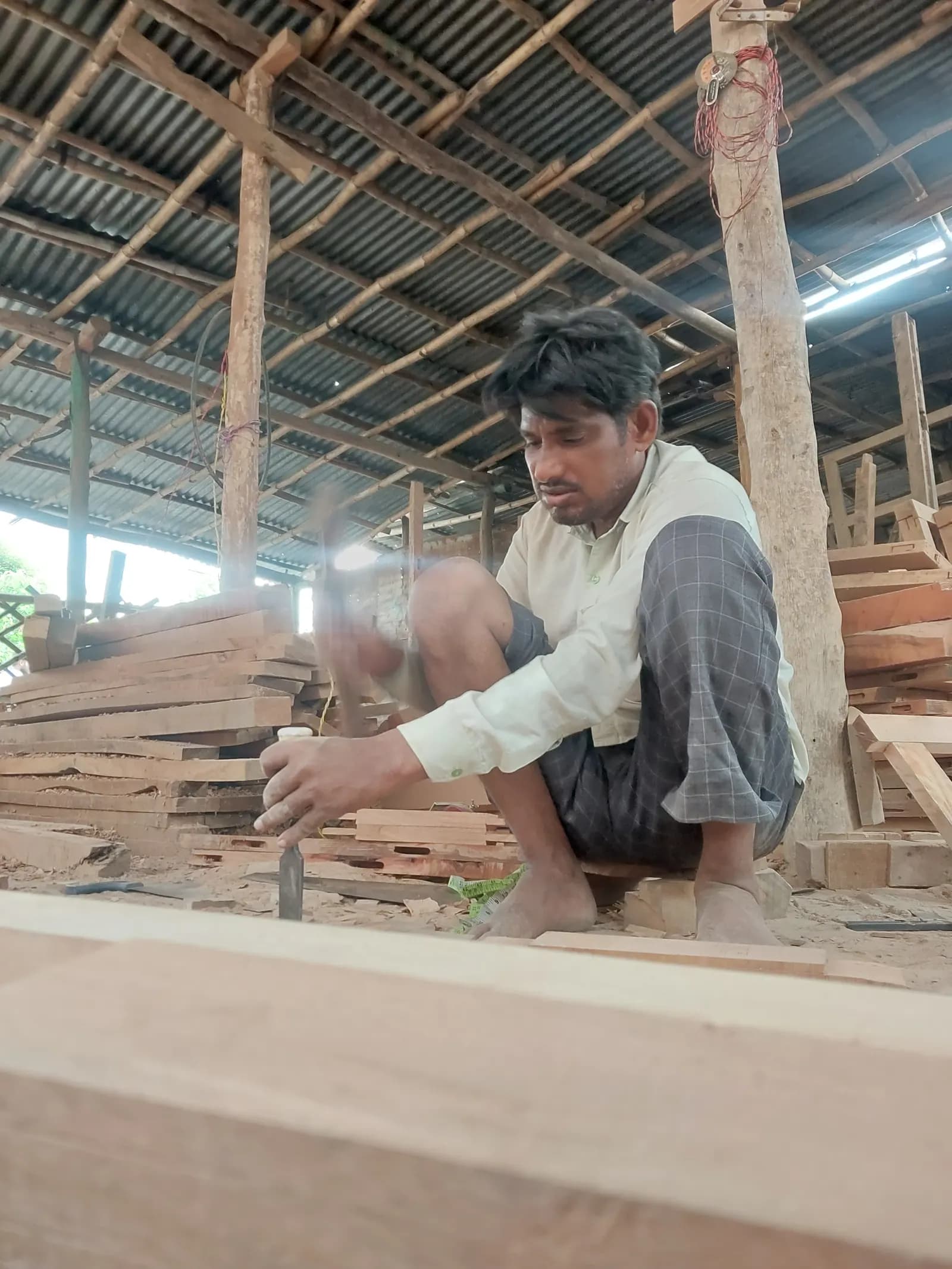
Wooden furniture. A teak dining table, a sheesham bed, a particle-board wardrobe or a plywood TV unit are all furniture of heading 9403 (or 9401 if it's a seat) and taxed at 18%. The type of wood doesn't change the rate, and neither does whether a factory or a local carpenter made it. The inputs a furniture maker buys — plywood, particle board, MDF and builders' joinery — are also at 18%, so a registered manufacturer's input credit roughly matches the tax on its sales.
Metal and plastic furniture. Steel almirahs, metal bunk beds, school desks with steel frames, moulded plastic chairs and aluminium outdoor furniture are all at 18% under 9401 or 9403. Be careful with steel office storage: filing cabinets, card-index cabinets and similar desk equipment of base metal fall under heading 8304 rather than 9403, but they're also taxed at 18%, so the rate doesn't change even if the HSN does.
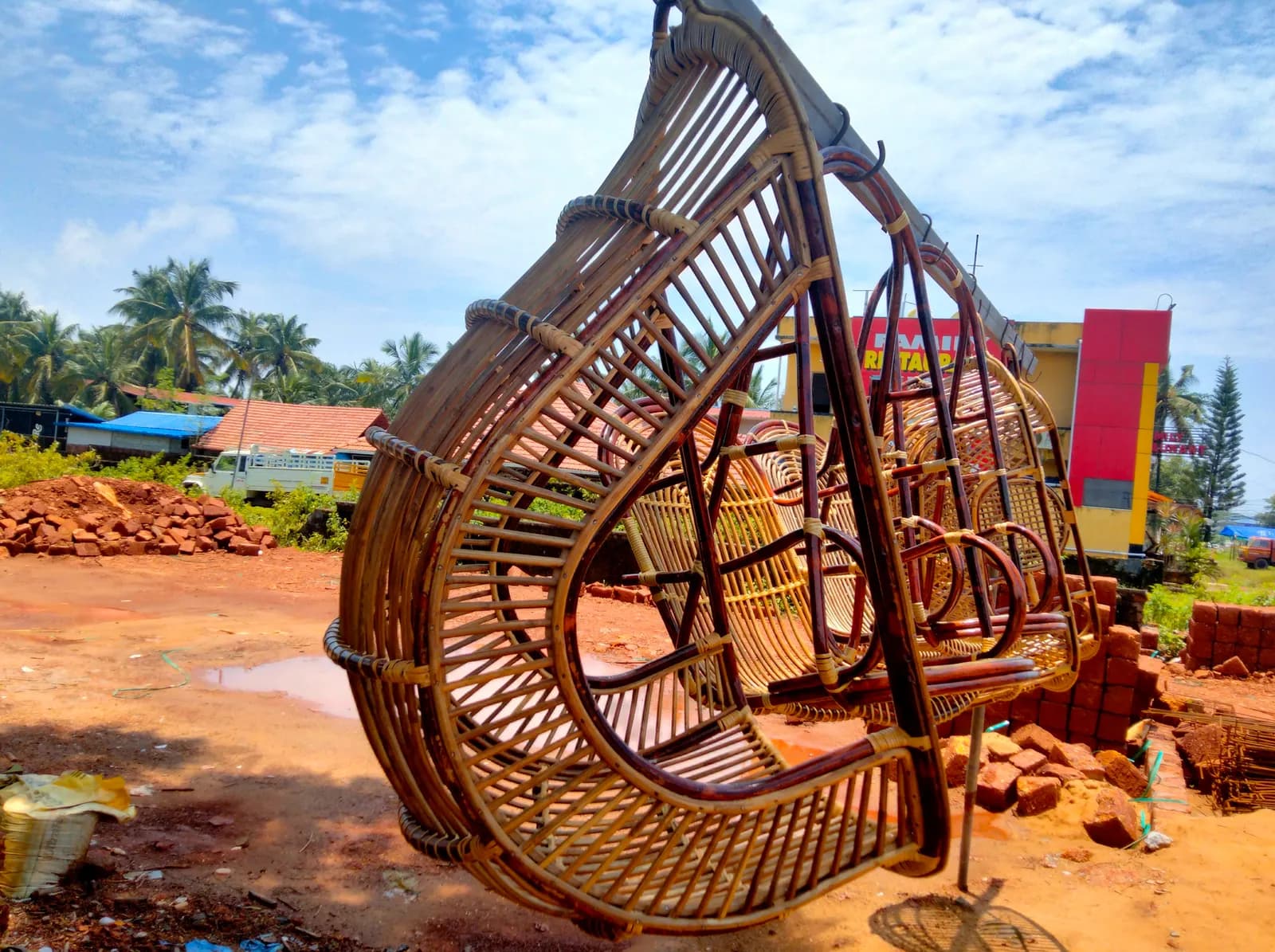
Bamboo, cane and rattan furniture. Under GST 2.0 this furniture moved from 12% to 5%, which helps craft clusters in the North-East, Kerala, West Bengal and Odisha. The word "wholly" matters. A cane swing chair hung on a steel stand, a bamboo sofa with a plywood base and foam cushions, or a rattan-look chair woven from plastic cord is not furniture wholly of bamboo, cane or rattan. Those items fall back to the general 9401/9403 entries at 18% unless the other material is genuinely minor — classification disputes over small fittings like nails and binding wire are possible, so describe the product accurately on the invoice and keep photos.
Small wooden articles. Jewellery boxes, inlaid caskets, wooden statuettes and "wooden articles of furniture not falling in Chapter 94" — small decorative pieces that aren't furniture in the tariff sense — are at 5% under heading 4420.
Mattresses, pillows and bedding
Mattresses are a separate heading, 9404, and the rate is 18% for foam, spring, latex, hybrid and coir mattresses, along with pillows, cushions, pouffes, mattress supports and stuffed quilts. Coir mattresses are specifically kept at 18%, even though other coir products — coir mats, matting and similar items — are at 5%.
There is one carve-out that affects bedding shops. Cotton quilts with a sale value up to ₹2,500 a piece, and products wholly made of quilted textile materials up to ₹2,500 a piece, are at 5%. The ₹2,500 limit applies per piece, so a ₹2,800 quilt is at 18% on the full value, not just the excess.
When a bed and mattress are sold together at one price, the supply is usually a mixed supply of two separate goods, which is taxed at the higher rate — here both are 18%, so it makes no difference. It does matter when you bundle a cane bed (5%) with a foam mattress (18%) at one price: as a mixed supply, the whole bundle goes at 18%. Pricing them separately on the invoice keeps the cane bed at 5%.
Office furniture and ITC for businesses
For a GST-registered business, the rate on furniture is mostly a cash-flow issue, because the tax can usually be recovered as input tax credit. Under section 16 of the CGST Act you can claim ITC on furniture used in the course of business if you have a tax invoice, have received the goods, and the supplier has reported the invoice in its return (so it shows in your GSTR-2B). Furniture is a capital good, and the full ITC is available in the month you receive it — there's no need to spread it over years.
When ITC is blocked. Section 17(5) blocks credit in several situations that matter for furniture:
- Personal use. Furniture for a director's or partner's home, even if billed to the company, is not for business use.
- Works contracts for immovable property. Under section 17(5)(c), ITC on a works contract for constructing an immovable property is blocked, except where it is plant and machinery. "Construction" includes renovation, additions and alterations to the extent you capitalise them.
- Construction on your own account. Under section 17(5)(d), goods and services you buy to build an immovable property yourself — again including capitalised renovation — are blocked.
In practice: loose furniture — chairs, desks, movable workstations, storage units, sofas in a reception area — bought from a supplier is goods, and ITC is available. Built-in items fixed to walls and floors as part of an office fit-out, such as fixed panelling, false ceilings with integrated cabinets or built-in counters, are often part of the interior works contract and capitalised with the building, in which case ITC is lost. Ask your interior contractor to bill loose furniture separately from civil and fit-out work, and record them as separate assets.
Exempt and personal-use businesses. If you make both taxable and exempt supplies — for example, a hospital or a school — the ITC on common furniture has to be apportioned and partly reversed. See our input tax credit guide for the rules.
How to work out GST on a furniture purchase
Step 1
What is it made of?
Step 2
Wholly bamboo/cane/rattan?
5% · else 18%
Step 3
Mattress or bedding?
18% (quilts ≤ ₹2,500: 5%)
Step 4
Fixed into the building?
works contract 18%
Step 5
Business buyer?
check ITC under s.16 / s.17(5)
Modular kitchens, fitted wardrobes and works contracts
Modular kitchens and wardrobes raise the classification question most often. There are broadly two ways a vendor can supply them.
Supply of furniture with installation. The vendor manufactures cabinet modules in a factory, delivers them and screws them into place. The main supply is furniture, installation is incidental, and the whole job is a composite supply taxed at the furniture rate of 18%. The modules can be taken down and reused, which supports treating them as goods.
Works contract. A carpenter or interiors firm builds wardrobes and kitchen units on site, fixed into walls and floors so they become part of the building. That is a works contract — a contract for building, fitting out or improving immovable property involving a transfer of goods — taxed at 18%.
For a household, both routes cost the same 18%. For a business, the difference matters: ITC on the furniture-supply route is available if the items are business assets, while ITC on a works contract for immovable property is blocked. Advance rulings on modular kitchens have gone different ways depending on how the contract was written, so the contract wording and invoice description carry real weight.
Worked bills in ₹
All prices below are before GST. Within a state, GST is split equally into CGST and SGST; across states, it's IGST.
Bill 1 — a sofa set in Pune (intra-state). Wooden-frame upholstered sofa, HSN 9401, ₹60,000. CGST 9% = ₹5,400; SGST 9% = ₹5,400. Total ₹70,800.
Bill 2 — four cane chairs from a Kerala craft unit (intra-state). 4 × ₹3,500 = ₹14,000, HSN 9403 (wholly cane). CGST 2.5% = ₹350; SGST 2.5% = ₹350. Total ₹14,700. Before 22 September 2025, at 12%, the same bill was ₹15,680.
Bill 3 — a queen-size mattress and two pillows. Mattress ₹25,000 + pillows ₹3,000 = ₹28,000, HSN 9404 at 18% = ₹5,040. Total ₹33,040.
Bill 4 — office workstations bought from another state. A Bengaluru start-up buys 20 workstations at ₹20,000 each from a Delhi manufacturer: ₹4,00,000 + IGST 18% = ₹72,000. Total ₹4,72,000. Because the consignment is over ₹50,000, the supplier must generate an e-way bill. The start-up claims ₹72,000 as ITC once the invoice appears in its GSTR-2B, so its real cost is ₹4,00,000.
Bill 5 — fitted wardrobes in a new office. An interiors firm builds wardrobes and a reception counter fixed into the walls for ₹3,00,000 under a works contract at 18% = ₹54,000. The business capitalises the cost as part of its office premises, so the ₹54,000 is blocked under section 17(5)(c) and becomes part of the asset cost.
Check any bill in seconds with our GST calculator:
Try it — GST on a ₹60,000 sofa set
Furniture sellers: registration, invoices and composition
Registration. A furniture shop or manufacturer must register once its aggregate turnover crosses ₹40 lakh in a year in most states (lower thresholds apply in some special category states), or immediately if it sells inter-state or through an e-commerce marketplace.
HSN on invoices. Businesses with turnover up to ₹5 crore must show at least the 4-digit HSN code on B2B invoices; above that, the 6-digit HSN code. Use 9401 for seats, 9403 for other furniture, 9404 for mattresses — and describe bamboo, cane or rattan furniture as "wholly of bamboo/cane/rattan" if you're charging 5%. Our HSN code finder helps with the sub-headings.
Composition scheme. A small furniture trader or manufacturer can opt for composition and pay 1% of turnover instead of charging GST. The catch: you can't charge GST on your bills, your business customers can't claim ITC, and you can't sell inter-state. That makes composition a poor fit if you sell office furniture to companies. See our composition scheme guide.
Second-hand furniture. A dealer in used furniture who doesn't claim ITC on purchases can pay GST only on the margin — selling price minus purchase price — under rule 32(5) of the CGST Rules. If you buy a used sofa for ₹8,000 and sell it for ₹11,000, GST at 18% is due on ₹3,000 only, which is ₹540 (tax-inclusive treatment may apply; ask your accountant). If the margin is negative, no GST is payable.
Furniture GST checklist for sellers and business buyers
0/7Hospital, salon, school and hotel furniture
Specialised furniture follows the same chapter, with a few points to watch. Hospital beds with mechanical fittings, operating and examination tables, dentists' chairs and barbers' chairs that rotate, recline and rise are classified under heading 9402 and taxed at 18%. An ordinary bed or chair bought for a clinic's waiting room is still 9401 or 9403 at 18%, so the HSN depends on the item, not on who buys it.
The bigger issue for these buyers is credit. Most healthcare services and many education services are exempt from GST, and a business that supplies only exempt services can't claim ITC on furniture at all; one that makes both taxable and exempt supplies must split the credit. A salon, gym or hotel, whose services are taxable, can generally claim ITC on furniture used for those services, subject to the blocked-credit rules above. Repairs, polishing and re-upholstery of furniture are services taxed at 18%, and a business can claim that GST back on the same conditions.
Common mistakes with GST on furniture
Charging 12% on cane or bamboo. Some sellers and billing software still use the old 12% rate. From 22 September 2025 it is 5%. Charging more than the notified rate overcharges your customer and leaves you correcting invoices with credit notes later.
Charging 5% on mixed-material "cane" furniture. The 5% rate needs furniture wholly of bamboo, cane or rattan. Steel frames, plywood seats and plastic cane lookalikes take it back to 18%.
Assuming mattresses went down with GST 2.0. They stayed at 18%, including coir mattresses.
Claiming ITC on interiors. Built-in furniture capitalised as part of a building is blocked credit. If a GST officer finds it in your ITC, you'll pay it back with interest.
One invoice line for everything. Separate lines for each HSN and rate make your invoice defensible and help your buyer's ITC. Our free invoice generator handles multiple rates on one bill.
What to do next
If you sell furniture, check your billing software's rate for bamboo, cane and rattan items and your HSN mapping today. If you're buying for a business, ask suppliers to bill loose furniture separately from fit-out work so you keep the credit. For the wider picture of what changed in September 2025, read our GST 2.0 guide, and use our GST calculator to check any quote.
This is general information, not legal or tax advice — confirm on the official source or with a professional.
Frequently asked questions
Most furniture — wooden, metal, plastic or upholstered, including sofas, beds, tables, chairs, wardrobes and office workstations — is taxed at 18% under HSN 9401 and 9403. The exception is furniture made wholly of bamboo, cane or rattan, which has been at 5% since 22 September 2025. GST 2.0 left the main furniture rate unchanged.
Wooden furniture is taxed at 18% whether it is factory-made or built by a local carpenter, and whether it is teak, sheesham or engineered wood. Seats such as wooden chairs and sofas fall under HSN 9401 and other wooden furniture under 9403 — both at 18%. Only small wooden articles outside Chapter 94, such as caskets and inlay work, are at 5%.
Mattresses, pillows, cushions and similar stuffed bedding under HSN 9404 are taxed at 18%, including foam, spring and coir mattresses. Other coir products are at 5%, and cotton quilts or quilted textile products priced up to ₹2,500 a piece are also at 5%.
Yes, if the furniture is bought for business use, is recorded as a capital asset and the supplier has reported the invoice. ITC is blocked if the furniture is for personal use, or if it is built into the building as part of a works contract or construction that you capitalise as immovable property — such as fixed wall panelling or built-in cabinetry.
If the vendor sells ready modules and installs them, it is usually taxed as a supply of furniture at 18%. If the job is a works contract that becomes part of the building, it is taxed at 18%. Either way the rate is 18%; the difference matters for a business, because ITC on a works contract for immovable property is blocked.
Yes, if the seller is registered. A dealer in used goods who hasn't claimed input tax credit can pay GST only on the margin — the selling price minus the purchase price — under rule 32(5) of the CGST Rules. If the margin is negative, no GST is due. Individuals selling their own used furniture aren't in business and don't charge GST.
Sources & verification
Figures on this page were checked against the sources below when it was last reviewed on 8 October 2026. Each rate and limit is stored once with its own official source and review date, and official update channels are monitored daily so changes are picked up. How we verify
- 1.Notification No. 9/2025 – State Tax (Rate), Maharashtra (mirrors central Notification 9/2025 – Central Tax (Rate)) dated 17 September 2025 — Finance Department, Government of Maharashtra · accessed 8 October 2026
- 2.Notification No. 9/2025-Central Tax (Rate) — complete HSN-wise GST rate chart effective 22 September 2025 — TaxGuru · accessed 8 October 2026
- 3.CGST Act, 2017 — Section 17 (apportionment of credit and blocked credits) — CBIC · accessed 8 October 2026
- 4.CGST Act, 2017 — Section 16 (eligibility and conditions for taking input tax credit) — CBIC · accessed 8 October 2026
- 5.CGST Rules, 2017 — Rule 32 (determination of value in respect of certain supplies) — CBIC · accessed 8 October 2026
- 6.GST Goods and Services Rates — CBIC · accessed 8 October 2026
- 7.GST on Furniture 2026: Rates, HSN Codes & Latest Updates — LegalDev · accessed 8 October 2026
MSMETOOLS is an independent platform and is not affiliated with any government agency, ministry or department.
Tools for this
GST Calculator (India)
Calculate GST for your sales and purchases with current rates.
HSN Code Finder (India)
Find the correct HSN/SAC code for your product.
Invoice Generator
Create professional invoices with tax, logo and custom details.
Related guides
 GST on Electronics 2026: AC, TV, Laptop Rates, HSN & ITCRead guide
 GST on Plywood 2026: 18% Rate, HSN 4412, MDF & LaminatesRead guide
 HSN Code for Cement & GST Rate 2026: 2523, 18% After GST 2.0Read guide
 GST on Toys 2026: 5% Non-Electronic, 18% Electronic, HSN 9503Read guide
Official links open the government site in a new tab.