 GST & indirect tax
GST on Bricks in 2026: Red, Fly Ash and AAC Rates, the 6% Brick Kiln Scheme and Worked Examples
GST on bricks in 2026: 12% with ITC or 6% without for red and fly ash bricks, 5% sand lime, 18% AAC and concrete blocks, ₹20 lakh kiln limit, worked ₹ bills.
 Edited by Sumeet YadavFounder & editor, MSMETOOLS · fact-checked against official sources
Contents (10)
- 1. GST rates on bricks and blocks in 2026
- 2. HSN codes for bricks: which heading is yours?
- 3. Registration and composition rules for brick kilns
- 4. 6% or 12%: worked example for a kiln
- 5. Worked bills for buyers: bricks, fly ash and AAC
- 6. Fly ash bricks and AAC blocks
- 7. Job work on bricks
- 8. Switching options, mixed businesses and delivery charges
- 9. Common mistakes with GST on bricks
- 10. What to do next
Bricks have their own corner of the GST law. Since April 2022, red clay bricks, fly ash bricks and earthen roofing tiles have carried two rates — a lower one if the kiln gives up input tax credit, and a higher one with credit — plus a lower registration threshold and a bar on the normal composition scheme. GST 2.0 left that structure in place and cut only sand lime bricks. This guide gives the 2026 rates for every common walling material, from red bricks to AAC blocks, the HSN codes, how a kiln should choose between 6% without ITC and 12% with ITC, and worked ₹ examples for kiln owners and house builders. Rates were checked against the notifications in October 2026.
Quick answer
Red clay bricks, fly ash bricks and blocks, and earthen roofing tiles attract 12% with ITC GST with input tax credit, or 6% without ITC if the supplier takes no credit. GST 2.0 did not change this. Sand lime bricks fell to 5%. AAC and concrete blocks attract 18%, or 12% for AAC blocks with more than 50% fly ash.
Brick kilns register above ₹20 lakh, not ₹40 lakh
Brick makers cannot use the regular 1% composition scheme
On 10,000 bricks at ₹7, GST is ₹4,200 at 6% or ₹8,400 at 12%
Refractory bricks: 18%
Coal, the main kiln fuel, is now 18% — which changes the 6% vs 12% maths
GST rates on bricks and blocks in 2026
Bricks were taxed at 5% from 2017 until March 2022. The 45th GST Council, acting on a group of ministers' report on capacity-based taxation, recommended a special regime for brick kilns, and from 1 April 2022 the rate on bricks became 12% with credit, with an optional 6% without credit. When the 2017 goods rate schedule was replaced on 22 September 2025, the government re-notified the 12% rate in a separate notification, 14/2025–Central Tax (Rate), at 6% central tax. The 6% option sits in a different kind of notification — an exemption under section 11 — that was not replaced, and CBIC's FAQs on the 56th Council confirm that bricks other than sand lime bricks continue at 6% without credit or 12% with credit.
GST on bricks and walling materials (2026)
| Material (HSN) | GST rate | Notification |
|---|---|---|
Building bricks — red clay bricks (6904 10 00) | 12% with ITC with ITC, or 6% without ITC without ITC | 14/2025 and 02/2022–CT(Rate) |
Fly ash bricks, fly ash blocks, fly ash aggregates (6815) | 12% with ITC with ITC, or 6% without ITC without ITC | 14/2025 and 02/2022–CT(Rate) |
Bricks of fossil meals or siliceous earths (6901 00 10) | 12% with ITC, or 6% without ITC without ITC | 14/2025 and 02/2022–CT(Rate) |
Earthen or roofing tiles (6905 10 00) | 12% with ITC, or 6% without ITC without ITC | 14/2025 and 02/2022–CT(Rate) |
Sand lime bricks (chapter 68) | 5% (was 12%) | 9/2025, Sch. I |
AAC blocks with more than 50% fly ash (6815) | 12% | Circular 247/04/2025–GST |
Other AAC blocks, concrete blocks, pavers, hollow blocks (6810) | 18% | 9/2025, Sch. II |
Refractory bricks; ceramic flooring and filler blocks (6902, 6904) | 18% | 9/2025, Sch. II |
Fly ash (2621) — raw material | 5% | 9/2025, Sch. I |
Building bricks — red clay bricks (6904 10 00)
- GST rate
12% with ITC with ITC, or 6% without ITC without ITC
- Notification
14/2025 and 02/2022–CT(Rate)
Fly ash bricks, fly ash blocks, fly ash aggregates (6815)
- GST rate
12% with ITC with ITC, or 6% without ITC without ITC
- Notification
14/2025 and 02/2022–CT(Rate)
Bricks of fossil meals or siliceous earths (6901 00 10)
- GST rate
12% with ITC, or 6% without ITC without ITC
- Notification
14/2025 and 02/2022–CT(Rate)
Earthen or roofing tiles (6905 10 00)
- GST rate
12% with ITC, or 6% without ITC without ITC
- Notification
14/2025 and 02/2022–CT(Rate)
Sand lime bricks (chapter 68)
- GST rate
5% (was 12%)
- Notification
9/2025, Sch. I
AAC blocks with more than 50% fly ash (6815)
- GST rate
12%
- Notification
Circular 247/04/2025–GST
Other AAC blocks, concrete blocks, pavers, hollow blocks (6810)
- GST rate
18%
- Notification
9/2025, Sch. II
Refractory bricks; ceramic flooring and filler blocks (6902, 6904)
- GST rate
18%
- Notification
9/2025, Sch. II
Fly ash (2621) — raw material
- GST rate
5%
- Notification
9/2025, Sch. I
The concessional notification covers supplies within a state (as 3% CGST plus 3% SGST), and a matching integrated tax notification, 02/2022–Integrated Tax (Rate), gives the same concession on inter-state supplies. Its condition is strict. Credit on goods and services used exclusively for making the bricks must not be taken, and credit on anything used partly for bricks and partly for other taxable supplies must be reversed as if the bricks were an exempt supply, under section 17(2) and the reversal rules. A kiln cannot charge 6% on some bricks and claim credit on the coal used to fire them.
HSN codes for bricks: which heading is yours?
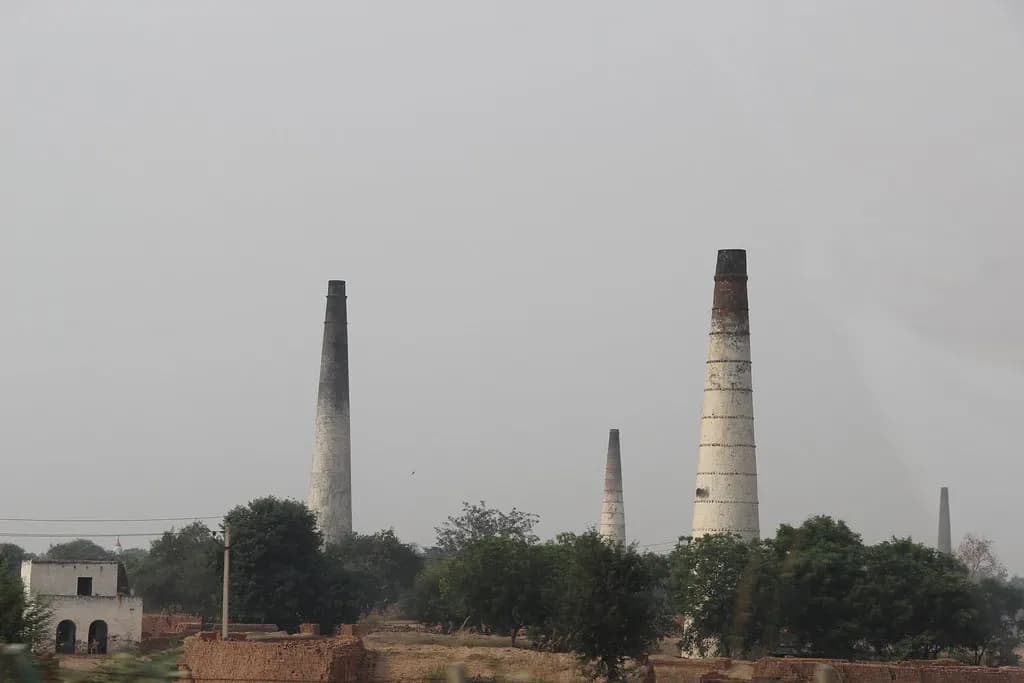
The tariff splits bricks by material. Fired clay bricks — the red bricks made in Bull's trench and zigzag kilns across the Indo-Gangetic plain — are building bricks, 6904 10 00. Clay roofing tiles and country tiles are 6905 10 00. Bricks made from siliceous fossil meals such as diatomite are 6901 00 10, a small niche. Refractory bricks for furnaces and boilers are 6902 and are outside the special regime at 18%. Ceramic flooring blocks, support and filler tiles — other items in heading 6904 — are also at 18%; only "building bricks" get the special rates.
Non-fired products sit in chapter 68. Fly ash bricks, blocks and aggregates fall in 6815. The 2022 entry originally required 90% or more fly ash for fly ash aggregate; it was amended in July 2022, and the current entry simply reads "Fly ash bricks; Fly ash aggregates; Fly ash blocks". Sand lime bricks, made from sand and lime cured under steam, have their own chapter 68 entry at 5%. Concrete blocks, solid and hollow, paver blocks and AAC blocks are articles of cement or concrete under 6810 at 18%.
Registration and composition rules for brick kilns
Most suppliers of goods register only when their aggregate turnover crosses ₹40 lakh in a year. That higher limit comes from Notification 10/2019–Central Tax, which lists goods excluded from it — ice cream, pan masala and tobacco, among others. Notification 03/2022–Central Tax added fly ash bricks and blocks, fossil-meal bricks, building bricks and earthen roofing tiles to that exclusion table from 1 April 2022. A brick maker therefore falls back to the basic threshold in section 22 of the CGST Act: ₹20 lakh of aggregate turnover in a financial year, and a lower figure in the special-category states named in that section.
Aggregate turnover counts all taxable, exempt and inter-state supplies under the same PAN across India, before tax. A kiln selling ₹18 lakh of bricks and ₹4 lakh of firewood or farm produce from the same PAN has ₹22 lakh of aggregate turnover and must register.
Notification 04/2022–Central Tax added the same four items to the list in Notification 14/2019–Central Tax of manufacturers who cannot opt for the composition levy under section 10(1). A brick maker cannot pay 1% on turnover under the normal composition scheme, even with turnover below ₹1.5 crore. The 6% without ITC-without-credit option, which CBIC's FAQs describe as a special composition scheme, takes its place. Unlike the regular composition scheme, a kiln paying 6% issues a normal tax invoice, files regular returns (GSTR-1 and GSTR-3B), and can sell across state lines.
Getting a brick kiln GST-ready
- 1
Check aggregate turnover
Add every supply under your PAN for the year. Register within 30 days of crossing ₹20 lakh.
- 2
Register on the GST portal
Open GST portalApply in Form GST REG-01 with PAN, Aadhaar, kiln address proof and bank details. Registration is free.
- 3
Choose 6% or 12%
Work out your likely input tax credit for the year before deciding (see the worked example below).
Tip: Decide before your first invoice — mixing rates on the same bricks causes credit reversal problems.
- 4
Set up invoices and returns
Invoice with HSN 6904 10 00 (or 6815 for fly ash), file GSTR-1 and GSTR-3B, and keep coal and transport invoices on file.
6% or 12%: worked example for a kiln
The figures below are illustrative — a mid-sized kiln with round numbers, not industry data. Your own costs, prices and buyers decide the answer.
A kiln sells 10 lakh bricks in a season at ₹6.50 each before tax: turnover ₹65 lakh. It buys coal worth ₹15 lakh before tax, now taxed at 18% (₹2,70,000 GST), and spends ₹3 lakh on machinery repairs, transport and other taxed services at 18% (₹54,000 GST). Clay, moulding labour and diesel carry no GST credit.
| 6% without ITC | 12% with ITC | |
|---|---|---|
| Output GST on ₹65 lakh | ₹3,90,000 | ₹7,80,000 |
| Input tax credit on coal and services | ₹0 (and not claimed) | ₹3,24,000 |
| GST paid in cash | ₹3,90,000 | ₹4,56,000 |
| Price of 1,000 bricks to a buyer | ₹6,890 | ₹7,280 |
| Buyer can claim credit? | Yes, ₹390 per 1,000 if registered | Yes, ₹780 per 1,000 if registered |
On these numbers, 6% costs the kiln ₹66,000 less in cash and gives the buyer a lower shelf price. The 12% option wins when credit is more than 6% of turnover — here, above ₹3.9 lakh — which happens for kilns that buy most of their coal on GST invoices at 18%, have large taxed service costs, or are buying new machinery. Before September 2025, coal was taxed at 5% plus compensation cess, and the cess could not be set off against GST, so credit on coal was smaller and the 6% option looked better for almost every kiln. That calculation is worth redoing now.
The buyer mix matters too. An individual building a house, or a builder on the 1% without ITC and 5% without ITC residential rates, cannot use credit, so they want the lowest tax-inclusive price — the 6% invoice. A works contractor building a factory or a commercial project pays output tax at 18% and can claim credit, so the 12% invoice costs it nothing extra.
Worked bills for buyers: bricks, fly ash and AAC
These are illustrative prices to show the arithmetic, not market quotes; prices vary widely by region and season.
| Purchase | Pre-tax value | Rate | GST | Bill total |
|---|---|---|---|---|
| 10,000 red bricks at ₹7 from a kiln on the 6% option | ₹70,000 | 6% without ITC | ₹4,200 | ₹74,200 |
| 10,000 red bricks at ₹7 from a kiln on the 12% option | ₹70,000 | 12% with ITC | ₹8,400 | ₹78,400 |
| 8,000 fly ash bricks at ₹6 | ₹48,000 | 12% with ITC | ₹5,760 | ₹53,760 |
| 20 cubic metres of AAC blocks at ₹4,200 | ₹84,000 | 18% | ₹15,120 | ₹99,120 |
| 5,000 sand lime bricks at ₹8 | ₹40,000 | 5% | ₹2,000 | ₹42,000 |
Each load above ₹50,000 moving by road needs an e-way bill. A brick trader or dealer who buys from a kiln and resells is also a supplier of bricks, and the same two options apply to its own sales; a trader that buys at 12% and claims credit will normally sell at 12%.
For an individual building a home, walling material is a smaller GST item than cement or steel, but the choice of material changes the tax. Moving from red bricks at 6% to plain AAC blocks at 18% triples the rate, though AAC needs less mortar and plaster per square metre of wall, which also carry GST. Compare the total wall cost, not the rate alone. Our guides to GST on cement and GST on steel cover the other big items.
Fly ash bricks and AAC blocks
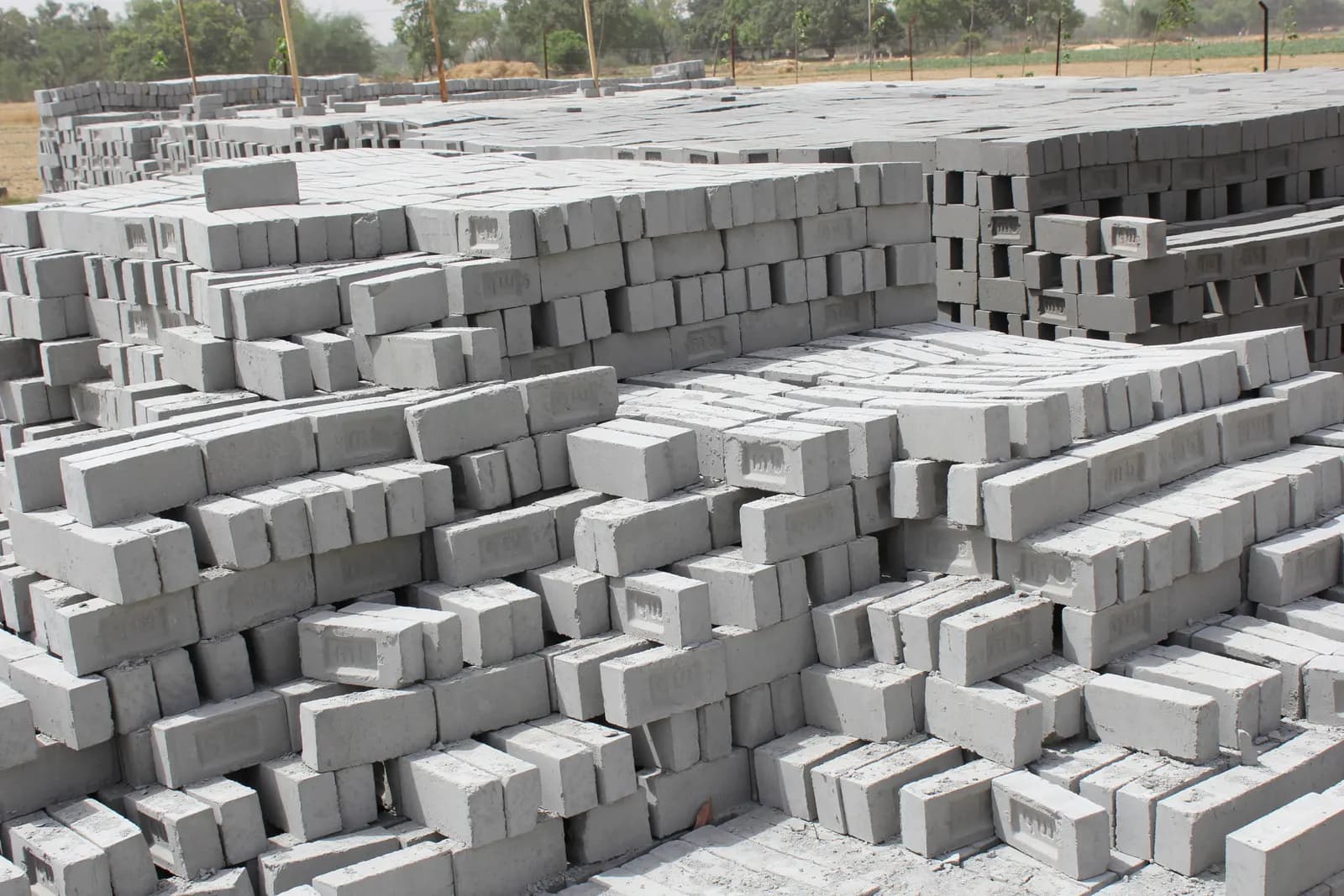
Fly ash bricks are made by pressing fly ash from thermal power plants with lime, gypsum, cement or sand. Fly ash itself is a separate item under 2621 at 5%, so a fly ash brick plant buying fly ash on a GST invoice pays 5% on its main raw material, plus 18% on cement and on most machinery. Because fly ash plants usually have more creditable inputs than clay kilns — cement, machinery and power-plant fly ash — more of them choose the 12% with ITC rate with credit.
AAC blocks were a classification fight for years: manufacturers argued that blocks containing fly ash should be taxed as fly ash blocks, while the department classed them as articles of concrete. CBIC's Circular 247/04/2025–GST, issued after the 55th Council in February 2025, settled it: AAC blocks containing more than 50% fly ash fall under 6815 and attract 12%. AAC blocks with 50% or less fly ash stay under 6810 at 18%. Plants should document the fly ash content batch-wise, because the rate turns on it. Whether high-fly-ash AAC blocks can also use the 6% without-credit option depends on whether they are "fly ash blocks" within the 2022 concessional entry; take advice before invoicing them at 6%.
Job work on bricks
Some kilns fire bricks for others: a brick trader supplies the moulded green bricks or the clay, and the kiln charges for firing. That is a job work service. Under the September 2025 changes, job work "in relation to bricks falling under Chapters 68 or 69 … which attract central tax @2.5%" is taxed at 5%. Only sand lime bricks attract 2.5% central tax now, so on a plain reading the 5% job work rate covers sand lime bricks, and job work on red clay or fly ash bricks falls under the residual job work entry at 18%. Before 22 September 2025, job work on bricks was taxed at 12%. If you do job work for others, check this reading with an adviser, because it materially changes the price of your service.
Which rate applies to your walling material?
Step 1
Red clay, fly ash bricks, roofing tiles
12% with ITC or 6% without
Step 2
Sand lime bricks
5%
Step 3
AAC with more than 50% fly ash
12%
Step 4
Other AAC, concrete blocks, refractory bricks
18%
Switching options, mixed businesses and delivery charges
The concessional notification works supply by supply, but its condition looks at credit on the inputs used for those supplies, so in practice a kiln picks one option for a season and sticks to it. Moving from 12% to 6% part-way through a year means stopping credit on the inputs used for the bricks you will sell at 6%. Credit already taken on coal or materials in stock that will now go into 6% bricks has to be reversed, and credit on common inputs has to be split in the ratio of your 6% turnover to your other turnover. Moving from 6% to 12% is simpler going forward, but you cannot go back and claim credit on inputs already consumed in bricks sold at 6%. Keep a written note in your records of the date you switched and why.
Many kilns also sell other goods — firewood, sand, aggregate, farm produce from their land — or own a tractor-trolley that they hire out. Each supply is taxed at its own rate, and the reversal rule for common credit only bites if you choose the 6% option for bricks while making other supplies with credit.
Delivery is the other frequent question. When the kiln delivers bricks in its own truck or tractor and charges a single delivered price, the freight is part of the value of the bricks and takes the brick rate. When the buyer hires a separate transporter, the transporter's charges follow the rules for goods transport; see GST on freight. Wages paid to moulders and firemen are not supplies and carry no GST, but labour contractors who supply workers to a kiln charge GST on their manpower services at 18%, and a kiln on the 12% option can claim that credit.
Brick kiln GST checklist
0/7Common mistakes with GST on bricks
Believing bricks went to 5% under GST 2.0. Several websites say so. Only sand lime bricks moved to 5%; red clay and fly ash bricks are at 12% with ITC with credit or 6% without ITC without, as Notification 14/2025 and CBIC's FAQs confirm.
Charging 6% and claiming credit on coal. The concession is conditional on not taking credit. A kiln that bills at 6% and claims coal credit in GSTR-3B can face a demand for the full 12% plus interest.
Waiting for ₹40 lakh to register. The ₹40 lakh limit does not apply to bricks. Kilns that crossed ₹20 lakh and did not register owe tax on past sales, with interest and penalty.
Billing AAC blocks at 12% without checking fly ash content. Only AAC blocks with more than 50% fly ash qualify. Keep mix records.
Selling bricks in cash without bills. Brick kilns have been a focus of GST enforcement because of large cash sales. Builders on the residential rates also need GST invoices to meet the 80% registered-purchase rule, so unbilled bricks cost your customers too.
Official links
- Notification 14/2025–CT(Rate) — 12% on bricksRe-notified from 22 Sep 2025
- Notification 02/2022–CT(Rate) — 6% without ITCConcessional rate and conditions
- Notification 03/2022–CT — registration thresholdBricks excluded from the ₹40 lakh limit
- Notification 04/2022–CT — composition barBrick makers cannot opt for section 10(1)
- Notification 9/2025–CT(Rate) — goods rate scheduleSand lime bricks, AAC/concrete blocks, refractory bricks, coal
- GST portal — new registrationForm GST REG-01
What to do next
If you run a kiln, redo the 6% versus 12% calculation with this year's coal invoices, and check that you registered when you crossed ₹20 lakh. If you are building, ask your supplier which option it uses and get a GST invoice either way. Use the GST calculator to check any bill, the invoice generator to prepare compliant invoices, and our guides to GST registration and GST on flat purchase for the next steps.
This is general information, not legal or tax advice — confirm on the official source or with a professional.
Frequently asked questions
Building bricks, fly ash bricks and blocks, fossil-meal bricks and earthen roofing tiles attract 12% with ITC, or 6% without ITC if the supplier does not take input tax credit. Sand lime bricks attract 5%. AAC blocks and concrete blocks are articles of concrete at 18%, except AAC blocks with more than 50% fly ash, which attract 12%.
Only for sand lime bricks, which fell from 12% to 5% on 22 September 2025. For red clay bricks, fly ash bricks and earthen roofing tiles, CBIC's FAQs on the 56th Council say there is no change: 6% without ITC without ITC or 12% with ITC with ITC continues, re-notified in Notification 14/2025–Central Tax (Rate).
₹20 lakh. Since 1 April 2022, Notification 03/2022–Central Tax has excluded bricks and earthen roofing tiles from the higher ₹40 lakh limit for goods suppliers, so a kiln registers once its aggregate turnover crosses ₹20 lakh in a financial year (less in special-category states). Brick makers also cannot opt for the regular composition scheme.
Compare your input tax credit with 6% of turnover. At 6% without ITC you pay less tax but lose all credit on coal, machinery and services. At 12% with ITC you pay more but claim credit. With coal now at 18%, kilns that buy a lot of coal on GST invoices, or sell mainly to registered contractors who want credit, may find 12% better.
Building bricks of clay are 6904 10 00; earthen or roofing tiles 6905 10 00; bricks of fossil meals or siliceous earths 6901 00 10; fly ash bricks and blocks 6815; refractory bricks 6902; sand lime bricks chapter 68; and concrete or AAC blocks 6810. Fly ash itself is 2621 at 5%.
Autoclaved aerated concrete blocks are articles of concrete under 6810 at 18%. CBIC's Circular 247/04/2025–GST clarified that AAC blocks containing more than 50% fly ash fall under 6815 and attract 12%. Ask your supplier for the fly ash content and the HSN on the invoice.
Sources & verification
Figures on this page were checked against the sources below when it was last reviewed on 9 October 2026. Each rate and limit is stored once with its own official source and review date, and official update channels are monitored daily so changes are picked up. How we verify
- 1.Notification No. 14/2025–Central Tax (Rate), 17 September 2025 — Ministry of Finance (copy hosted by TaxO) · accessed 9 October 2026
- 2.Notification No. 02/2022–Central Tax (Rate), 31 March 2022 — CBIC · accessed 9 October 2026
- 3.Notification No. 03/2022–Central Tax, 31 March 2022 — CBIC · accessed 9 October 2026
- 4.Notification No. 04/2022–Central Tax, 31 March 2022 — CBIC · accessed 9 October 2026
- 5.Notification No. 9/2025–Central Tax (Rate), 17 September 2025 (Gazette of India) — Ministry of Finance / Gazette of India · accessed 9 October 2026
- 6.Recommendations of the 56th GST Council meeting (press release with annexures) — GST Council / PIB · accessed 9 October 2026
- 7.Notification No. 15/2025–Central Tax (Rate), 17 September 2025 — Ministry of Finance (copy hosted by TaxO) · accessed 9 October 2026
- 8.CBIC clarifies GST on AAC blocks (Circular 247/04/2025-GST) — A2Z Taxcorp LLP · accessed 9 October 2026
- 9.CBIC prescribes new GST rates for fly ash bricks, building bricks etc. — Taxmann · accessed 9 October 2026
- 10.Notification No. 02/2022–Integrated Tax (Rate), 31 March 2022 — GST Gyaan · accessed 9 October 2026
- 11.FAQs on GST 2.0 — CBIC FAQs on 56th GST Council recommendations — VJM & Associates · accessed 9 October 2026
MSMETOOLS is an independent platform and is not affiliated with any government agency, ministry or department.
Tools for this
GST Calculator (India)
Calculate GST for your sales and purchases with current rates.
Invoice Generator
Create professional invoices with tax, logo and custom details.
HSN Code Finder (India)
Find the correct HSN/SAC code for your product.
Related guides
 HSN Code for Cement & GST Rate 2026: 2523, 18% After GST 2.0Read guide
 GST on Steel 2026: TMT Bar, Structures & Scrap RatesRead guide
 GST Composition Scheme 2026: Limit, Rates, CMP-08 & RulesRead guide
 GST on Flat Purchase 2026: 1% or 5% and How to CalculateRead guide
Official links open the government site in a new tab.