 GST & indirect tax
GST on Flat Purchase in 2026: Under-Construction vs Ready Flats, Charges and a Worked Example
GST on flat purchase in 2026: 1% on affordable and 5% on other under-construction flats, nil on ready flats with OC, the 1/3 land rule and a worked ₹ example.
 Edited by Sumeet YadavFounder & editor, MSMETOOLS · fact-checked against official sources

Contents (9)
- 1. When GST applies to a flat — and when it doesn't
- 2. GST rates on under-construction flats
- 3. Who qualifies for the 1% affordable rate
- 4. The one-third land deduction explained
- 5. Parking, PLC, club, maintenance and other charges
- 6. Worked example: buying an under-construction flat in Bengaluru
- 7. Under-construction or ready: which costs less?
- 8. Common mistakes buyers and small builders make
- 9. What to do next
Buying a flat is the largest purchase most families make, and GST can add lakhs to the bill — or nothing at all, depending on when and from whom you buy. This guide is for home buyers comparing an under-construction flat with a ready one, for small builders pricing a project, and for anyone checking a builder's demand letter. It explains the 1% and 5% rates, who qualifies for affordable housing, why ready flats with a completion certificate carry no GST, what happens to parking, preferential location and maintenance charges, how stamp duty and TDS sit alongside GST, and walks through worked ₹ examples. Rules were checked against CBIC notifications and FAQs in October 2026.
Quick answer
On an under-construction flat bought from a builder, GST is 1% without ITC for an affordable flat and 5% without ITC for any other residential flat, on the full price (the one-third land deduction is built in). A ready-to-move flat sold after the completion certificate, and any resale flat, carries no GST. Stamp duty is separate and paid to the state.
Affordable = carpet up to 60 sq m in metros / 90 sq m elsewhere AND price up to ₹45 lakh
PLC, parking, club and development charges are taxed at the same rate as the flat
Stamp duty, registration and maintenance deposits are not part of GST value
GST 2.0 (September 2025) did not change residential rates; it cut cement to 18%
When GST applies to a flat — and when it doesn't
GST is a tax on supplies of goods and services. Land and completed buildings are deliberately kept out. Schedule III of the CGST Act lists "sale of land and, subject to clause (b) of paragraph 5 of Schedule II, sale of building" as neither a supply of goods nor of services. The exception in Schedule II is construction: building a complex or flat intended for sale is a service, except where the entire consideration has been received after the completion certificate is issued by the competent authority, or after first occupation, whichever is earlier.
That gives three situations a buyer meets in practice:
- Under-construction flat from a builder. You pay in instalments while the building goes up. Each instalment is consideration for a construction service, so GST applies at the residential rates.
- Ready-to-move flat from a builder, bought after the completion certificate (CC) or occupation certificate (OC) is issued, with the whole price paid after that date. This is a sale of a building. No GST.
- Resale flat bought from an existing owner. Again a sale of a building, outside GST, whether the flat is two years old or twenty.
Stamp duty and registration charges apply in all three cases. GST and stamp duty are separate taxes; one does not replace the other.
The deciding document is the certificate the local authority issues on completion. Different states call it a completion certificate, an occupancy certificate or a building-use permission. CBIC's FAQs explain that "first occupation" means occupation as permitted under the applicable law, and that a part OC for some towers does not make the whole project complete. If you are buying in a tower that has its own certificate, ask for a copy; if the builder says the flat is "ready" but the certificate has not been issued, GST still applies.
GST rates on under-construction flats
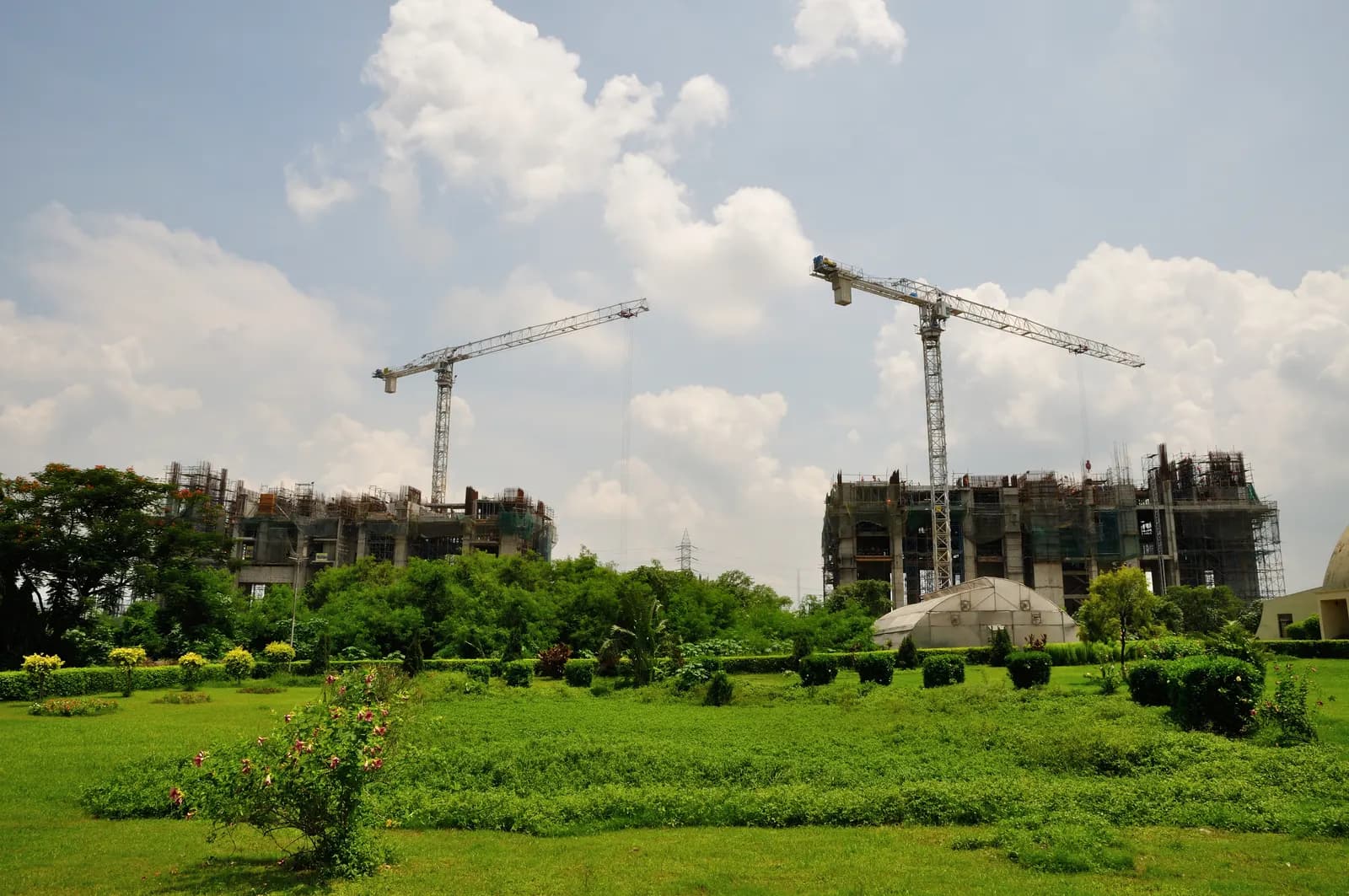
Since 1 April 2019 (Notification 3/2019–CT(Rate)), construction of residential apartments by a promoter in a real estate project is taxed at two effective rates:
| Type of flat | Effective GST rate | Input tax credit for the builder |
|---|---|---|
| Affordable residential apartment | 1% without ITC | Not available |
| Other residential apartment | 5% without ITC | Not available |
| Commercial units in a residential project (up to 15% of carpet area) | Same as other residential, 5% without ITC | Not available |
| Ongoing pre-2019 projects where the builder opted to stay on old rates | 8% (affordable) / 12% (other), with credit | Available |
The notified rates are 0.75% CGST + 0.75% SGST for affordable flats and 3.75% + 3.75% for others, applied after deducting land. Because land is deemed to be one-third of the total, the rates work out to 1% and 5% of the full amount you pay — which is why buyers and builders usually just say "1%" and "5%". The ongoing-project option had to be exercised by 10 May 2019; a few legacy projects still bill at 12% with credit, and your builder's invoices should say which scheme applies.
The trade-off for the builder is credit. At 1% and 5% the builder cannot set off the GST it pays on cement, steel, tiles, contractor services and so on. It must also buy at least 80% of inputs and input services (other than certain items such as electricity and TDR) from registered suppliers, or pay tax under reverse charge on the shortfall. All of that becomes part of the builder's cost and, ultimately, your price. The September 2025 cut of cement from 28% to 18% lowers one of the larger blocked taxes; our GST on cement guide has the details.
Who qualifies for the 1% affordable rate
An "affordable residential apartment" must meet both tests:
- Carpet area of not more than 60 sq m in a metropolitan city, or 90 sq m in any other city or town (including villages); and
- Gross amount charged by the builder of not more than ₹45 lakh.
For GST, the "metropolitan cities" are a fixed list: Bengaluru, Chennai, Delhi NCR (limited to Delhi, Noida, Greater Noida, Ghaziabad, Gurgaon and Faridabad), Hyderabad, Kolkata and Mumbai (the whole of MMR), within their government-prescribed limits. Everything else — Pune, Ahmedabad, Surat, Jaipur, Lucknow, Kochi, Indore, Chandigarh and every other town — uses the larger 90 sq m limit. Because MMR includes Thane, Kalyan, Navi Mumbai and Vasai-Virar, a ₹40 lakh 70 sq m flat in Kalyan is not affordable for GST, while the same flat in Pune is.
Same ₹42 lakh, 75 sq m flat — different city, different GST
| Detail | Pune | Thane (MMR) |
|---|---|---|
Metropolitan city for GST? | No | Yes — whole of MMR |
Carpet limit for affordable | 90 sq m | 60 sq m |
Affordable? | Yes (75 ≤ 90, ₹42 lakh ≤ ₹45 lakh) | No (75 > 60) |
GST rate | 1% without ITC | 5% without ITC |
GST payable | ₹42,000 | ₹2,10,000 |
Metropolitan city for GST?
- Pune
No
- Thane (MMR)
Yes — whole of MMR
Carpet limit for affordable
- Pune
90 sq m
- Thane (MMR)
60 sq m
Affordable?
- Pune
Yes (75 ≤ 90, ₹42 lakh ≤ ₹45 lakh)
- Thane (MMR)
No (75 > 60)
GST rate
- Pune
1% without ITC
- Thane (MMR)
5% without ITC
GST payable
- Pune
₹42,000
- Thane (MMR)
₹2,10,000
Carpet area has the meaning in the RERA Act: the net usable floor area within the walls, excluding external walls, service shafts, exclusive balconies or verandas and open terraces, but including internal partition walls. CBIC's Part II FAQs confirm the GST definition adopts RERA's. Your RERA agreement for sale states the carpet area; use that figure, not the "super built-up" area in the brochure.
Gross amount means everything the builder charges you for the flat. The Part II FAQs say this includes preferential location charges, development charges, parking charges, common facility charges and any other amount the promoter charges — and specifically answers that amenity charges, society formation and legal charges count too. Only stamp duty paid to the government and maintenance charges or deposits for upkeep of the flat or common areas are left out. Builders sometimes try to keep a flat under ₹45 lakh by moving parking or club fees into a separate agreement; that does not work for GST if the builder charges them.
The one-third land deduction explained
A flat's price pays for two things: the share of land underneath and the construction above it. GST is meant to tax only the construction. Rather than value land project by project, paragraph 2 of Notification 11/2017–CT(Rate) deems the value of land, or the undivided share of land, to be one-third of the total amount charged for the supply. Tax is levied on the remaining two-thirds.
So for a ₹60 lakh non-affordable flat: land is deemed ₹20 lakh, the construction value is ₹40 lakh, and GST at 7.5% (3.75% CGST + 3.75% SGST) on ₹40 lakh is ₹3 lakh — exactly 5% of ₹60 lakh. For an affordable flat, 1.5% on two-thirds equals 1% of the whole. You never need to do this two-step calculation yourself; it is why the effective rates are quoted on the full price. A builder's invoice may still show the deduction line, and that is fine.
The deeming applies even if land in your city is worth far more than a third of the price, as it often is in central Mumbai or Bengaluru. Builders have argued for a larger land deduction in court; until the law changes, one-third is the rule.
Parking, PLC, club, maintenance and other charges
Builders' cost sheets list a dozen heads. Here is how GST treats each when you buy an under-construction flat:
Preferential location charges (PLC) — for a higher floor, park-facing or corner unit — are part of the consideration for the flat and taxed at the flat's rate. They also count toward the ₹45 lakh limit.
Flat purchase GST numbers (2026)
1% without ITC
Affordable under-construction flat
5% without ITC
Other under-construction flat
one-third of the total amount
Deemed land value
built into the rates
Nil
Ready flat after CC, or resale
Car parking — whether covered, stilt or open — is taxed with the flat at the same rate when the builder charges it. Whatever the builder charges for parking forms part of the gross amount.
Club membership, development, infrastructure and amenity charges collected by the builder are part of the same supply and taxed at the flat's rate.
Legal and society formation charges collected by the builder count toward the gross amount under CBIC's FAQs; when they are part of the agreement, the builder charges GST at the flat's rate.
Advance maintenance for the first one or two years is not construction. It is excluded from the gross amount for the affordable test and is a separate maintenance service, which the builder bills at the 18% rate for maintenance services if it is registered. Refundable deposits such as a sinking fund or corpus held for the society are not consideration for a service until used.
Society maintenance after handover. Once the resident welfare association takes over, its monthly charges are exempt up to ₹7,500 per member a month, and an RWA with annual turnover up to ₹20 lakh does not need to register at all. Circular 109/28/2019-GST says that if the charge exceeds ₹7,500 per member per month, the entire amount is taxable at 18%, not just the excess; this reading has been challenged in court, so societies near the limit should take advice.
Stamp duty and registration are state levies paid on the agreement or conveyance. They are not part of the GST value and GST is not charged on them. Rates vary by state; check your state registration department's calculator.
Worked example: buying an under-construction flat in Bengaluru
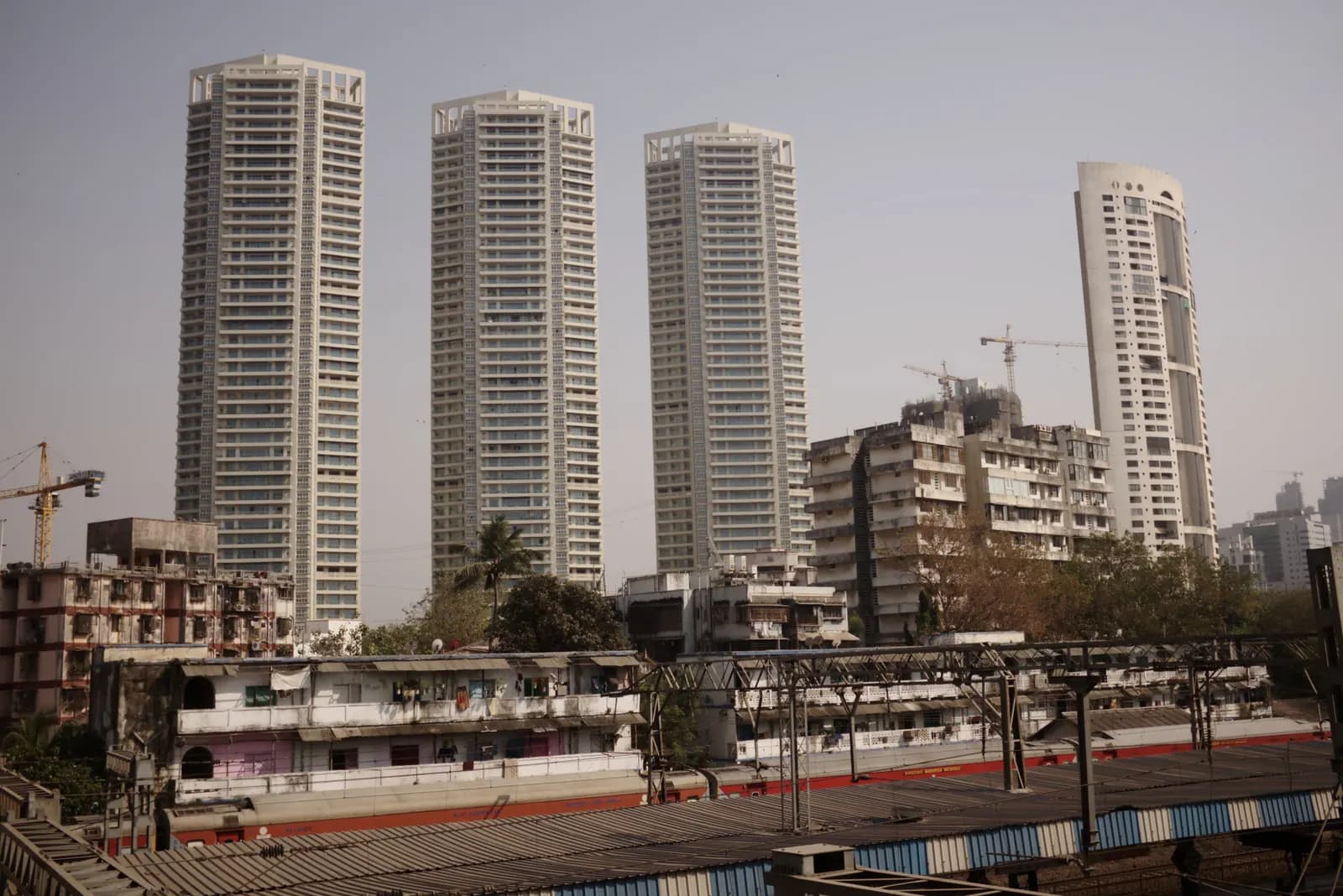
Rohan and Priya book a 1,150 sq ft (about 78 sq m carpet) 2BHK in an under-construction project in Bengaluru. The builder's cost sheet reads:
| Head | Amount |
|---|---|
| Base price | ₹85,00,000 |
| Preferential location (park-facing) | ₹2,00,000 |
| Covered car parking | ₹4,00,000 |
| Clubhouse and amenities | ₹1,50,000 |
| Legal and society formation | ₹50,000 |
| Advance maintenance (2 years) | ₹1,20,000 |
| Corpus fund (refundable to society) | ₹1,00,000 |
Step 1 — is it affordable? Bengaluru is a metro, so the carpet limit is 60 sq m; at 78 sq m and over ₹45 lakh, it fails both tests. The rate is 5% without ITC.
Step 2 — find the value for GST at 5%. Add the base price, PLC, parking, clubhouse and legal charges: ₹93,00,000. Leave out advance maintenance and the corpus.
Step 3 — compute GST. ₹93,00,000 × 5% = ₹4,65,000 (₹2,32,500 CGST + ₹2,32,500 SGST). Behind the scenes, land is deemed ₹31,00,000 and 7.5% applies to ₹62,00,000 — the same answer.
Try it — 5% GST on an under-construction flat
Step 4 — maintenance. The ₹1,20,000 advance maintenance is a separate service; if the builder charges GST on it at 18%, that adds ₹21,600.
Step 5 — payment schedule. GST is due on each instalment as it is demanded. On a construction-linked plan where 20% is paid at booking, the first demand carries ₹93,000 of GST on ₹18,60,000.
Step 6 — TDS. Because the consideration exceeds ₹50 lakh, the buyers must deduct TDS at 1% on each payment to the builder under the 194-IA rule (from 1 April 2026, carried into section 393 of the Income-tax Act, 2025) and deposit it through Form 26QB or its successor. CBDT Circular 23/2017 says TDS is computed on the amount excluding GST where the GST is shown separately, so 1% applies to ₹93 lakh plus the other non-GST consideration, not to the ₹4.65 lakh of GST. Our TDS guide explains the new section numbering.
Total outflow, excluding stamp duty and registration: ₹93,00,000 + ₹4,65,000 GST + ₹1,20,000 maintenance (+ ₹21,600 GST) + ₹1,00,000 corpus = ₹1,00,06,600. Had the couple bought a completed flat in the same project after the CC, at the same price, the ₹4,65,000 would not apply — but builders typically price ready inventory higher.
Under-construction or ready: which costs less?
GST is one line in a larger decision. A ready flat avoids GST and construction risk, and you can move in or rent it out at once — useful if you are paying rent today. An under-construction flat is usually cheaper per square foot at launch, can be paid for over two to four years, and lets you choose the unit. Whether the price gap covers the 1% or 5% GST, the rent you keep paying, and the risk of delay depends on the project.
Some practical points:
- GST is not refundable to you. Unlike a business, a home buyer cannot claim input tax credit. The 1% or 5% is a final cost.
- Delayed projects. GST is charged when instalments are due, not at handover, so a delay does not increase GST — but it does increase rent and EMI-overlap costs.
- Cancellation. If you cancel a booking, the builder can issue a credit note and adjust its GST only within the time limits in section 34 of the CGST Act; get the refund of GST written into the cancellation agreement.
- Rental income later. Residential rent to an individual for residence is exempt. Our GST on rent guide covers the cases where it is not, and the rental yield calculator helps compare returns.
Before you sign the agreement for sale
0/6Common mistakes buyers and small builders make
Buyers assuming a "ready" flat is GST-free without a certificate. Without a CC or OC, the builder is still supplying construction and must charge GST. Ask for the certificate, not the marketing label.
Testing the ₹45 lakh limit on the base price alone. PLC, parking and club charges count. A ₹43 lakh base price with ₹3 lakh of parking is not affordable.
Using super built-up area for the carpet test. GST uses RERA carpet area. A flat marketed as 1,100 sq ft super built-up may have 65–75 sq m of carpet.
Assuming Navi Mumbai or Thane are outside the metro limit. The entire MMR is metropolitan for GST.
Builders charging 12% out of habit. Projects that started after 1 April 2019 cannot use the old 12% or 8% rates. A buyer billed at 12% on a new project should ask for a revised invoice.
Paying TDS on the GST amount. TDS applies to the property consideration, not to the GST shown separately — overpaying TDS ties up money until the builder's refund.
Small builders missing the 80% rule. A small promoter buying sand, aggregate and labour from unregistered suppliers must pay reverse-charge GST on the shortfall below 80% at year-end. Our guide to starting a real estate business covers RERA and project registration.
Official links
- CBIC FAQs on real estate (7 May 2019)Rates, affordable definition, metro list
- CBIC FAQs on real estate — Part IIWhat counts in the ₹45 lakh gross amount
- Notification 11/2017-CT(Rate)Paragraph 2 — one-third land deduction
- Circular 109/28/2019-GST (RWA maintenance)₹7,500 limit and ₹20 lakh turnover
- Income Tax e-filing portal — Form 26QBPay TDS on property purchase
What to do next
Before you book, put the builder's full cost sheet into the GST calculator at 1% or 5%, add stamp duty for your state and run your loan through the EMI calculator. If you are comparing ready and under-construction options, price the GST against the rent you will keep paying until possession. Builders and developers should read our guides to input tax credit and GST on cement to understand the costs that sit inside the 1% and 5% rates.
This is general information, not legal or tax advice — confirm on the official source or with a professional.
Frequently asked questions
For an under-construction flat bought from a builder, GST is 1% without ITC on an affordable flat and 5% without ITC on any other residential flat. These are effective rates on the total price, after the builder deducts one-third as the value of land. The builder cannot claim input tax credit at these rates. The 2025 GST overhaul did not change them.
No, if the builder sells it after the completion certificate is issued and the entire price is received after that. Sale of a completed building is outside GST under Schedule III of the CGST Act. Resale flats bought from another owner also carry no GST. Stamp duty and registration charges still apply in every case.
A residential flat with carpet area up to 60 sq m in the six metropolitan areas, or 90 sq m elsewhere, and a gross amount charged by the builder of not more than ₹45 lakh. Both conditions must be met. The metros are Bengaluru, Chennai, Delhi NCR (Delhi, Noida, Greater Noida, Ghaziabad, Gurgaon, Faridabad), Hyderabad, Kolkata and the whole Mumbai Metropolitan Region.
Add every amount the builder charges you for the flat — base price, preferential location, parking, club and development charges — but leave out stamp duty, registration and maintenance deposits. Multiply by 5% without ITC (or 1% without ITC for affordable flats). Example: ₹80 lakh × 5% = ₹4 lakh. The one-third land deduction is already built into these rates.
Yes, when the builder charges them as part of an under-construction flat. CBIC's real estate FAQs say preferential location, development, parking and common facility charges are part of the amount charged for the flat, so they attract the same 1% without ITC or 5% without ITC rate and also count toward the ₹45 lakh affordable-housing limit.
Only above a limit. A resident welfare association's charges to members are exempt up to ₹7,500 per member a month, and an RWA with turnover up to ₹20 lakh a year need not register at all. Under Circular 109/28/2019-GST, if the monthly charge exceeds the limit, CBIC treats the whole amount as taxable at 18%.
Sources & verification
Figures on this page were checked against the sources below when it was last reviewed on 9 October 2026. Each rate and limit is stored once with its own official source and review date, and official update channels are monitored daily so changes are picked up. How we verify
- 1.Notification No. 11/2017 – Central Tax (Rate) (services rates), paragraph 2 — CBIC · accessed 9 October 2026
- 2.FAQs on real estate (F. No. 354/32/2019-TRU, 7 May 2019) — CBIC Tax Research Unit (hosted by GST Council) · accessed 9 October 2026
- 3.FAQs on real estate — Part II (14 May 2019) — CBIC Tax Research Unit (hosted by GST Council) · accessed 9 October 2026
- 4.Circular No. 109/28/2019-GST — GST on maintenance charges of RWAs — CBIC · accessed 9 October 2026
- 5.Recommendations of the 56th Meeting of the GST Council — PIB, Ministry of Finance · accessed 9 October 2026
- 6.CBDT Circular No. 23/2017 — TDS on the GST component — CBDT (copy hosted by ITATonline) · accessed 9 October 2026
MSMETOOLS is an independent platform and is not affiliated with any government agency, ministry or department.
Tools for this
GST Calculator (India)
Calculate GST for your sales and purchases with current rates.
EMI Calculator
Calculate loan EMIs for business and personal loans.
Rental Yield Calculator
Calculate gross and net rental yield.
Related guides
 HSN Code for Cement & GST Rate 2026: 2523, 18% After GST 2.0Read guide
 GST on Rent 2026: Residential, Commercial, RCM & TDS RulesRead guide
 Start a Real Estate Business in India (2026): RERA & TaxRead guide
 How to Calculate Customs Duty in India (2026 Formula)Read guide
Official links open the government site in a new tab.