 GST & indirect tax
GST on Solar Panels in 2026: Rates on Modules, Inverters and Installation, the 70:30 Rule and ITC
GST on solar panels in 2026: 5% on modules after GST 2.0, the 70:30 split for installation contracts, inverters and batteries, ITC for businesses and ₹ examples.
 Edited by Sumeet YadavFounder & editor, MSMETOOLS · fact-checked against official sources
Contents (8)
- 1. GST rate on solar panels and equipment after GST 2.0
- 2. The 70:30 rule for supply-and-install contracts
- 3. Worked examples: GST on solar invoices
- 4. Inverters, batteries and other components
- 5. GST and the PM Surya Ghar subsidy for homes
- 6. Input tax credit on solar plants for businesses
- 7. Common GST mistakes on solar quotes
- 8. What to do next
If you're pricing a rooftop solar system for your home or a plant for your factory, GST is now one of the smaller lines on the quote — but it's also the line most vendors explain badly. This guide is for homeowners, businesses and solar installers who want the exact numbers: the GST rate on panels, inverters and batteries after GST 2.0, how the 70:30 rule taxes a supply-and-install contract, how GST sits alongside the PM Surya Ghar subsidy, when a business can claim input tax credit, and worked ₹ invoices you can match against your own quote. Every rate was checked against the GST rate notification effective 22 September 2025 in October 2026.
Quick answer
Solar panels, solar power generators and other solar power-based devices attract 5% GST from 22 September 2025 (they were 12% before GST 2.0). When one vendor supplies and installs the system, 70% of the price is taxed at 5% and 30% at 18%, an effective rate of about 8.9%.
Standalone installation, civil work or AMC by a separate contractor: 18%
Inverter as part of a solar system: generally 5%; sold as a general power converter: 18%
Lithium-ion or lead-acid batteries sold on their own: 18%
Homes pay GST on the full price; the PM Surya Ghar subsidy (up to ₹78,000) arrives later and doesn't change it
GST rate on solar panels and equipment after GST 2.0
Solar equipment gets its concessional rate from a single entry in the goods rate notification — entry 437 of Schedule I in the GST 2.0 schedules, which covers "renewable energy devices and parts for their manufacture" falling in Chapters 84, 85 or 94. The list includes solar power-based devices, solar power generators, solar lanterns and lamps, and photovoltaic cells "whether or not assembled in modules or made up into panels". The 56th GST Council recommended cutting this entry from 12% to 5%, and the new rate applies from 22 September 2025.
GST on solar items (2026)
| Item | HSN | GST rate | Notes |
|---|---|---|---|
Solar PV modules / panels | 8541 43 | 5% | Cells and modules, mono or poly, any wattage |
Solar power generator / complete system | 84, 85 or 94 | 5% | When sold as goods without services |
Solar inverter (as part of a solar system) | 8504 | 5% | Generally accepted; see inverter section |
General inverter / UPS sold standalone | 8504 | 18% | Not a solar device |
Batteries (lithium-ion, lead-acid) sold standalone | 8507 | 18% | Grey area inside a solar package |
Solar water heater and system | 8419 12 | 5% | Separate entry |
Solar lantern / solar lamp | 94 | 5% | Listed by name |
Installation, civil work, AMC by a separate contractor | SAC 9954 / 9987 | 18% | Services only |
Supply + installation by one vendor | — | 70% at 5% + 30% at 18% | ≈ 8.9% effective |
Solar PV modules / panels
- HSN
8541 43
- GST rate
5%
- Notes
Cells and modules, mono or poly, any wattage
Solar power generator / complete system
- HSN
84, 85 or 94
- GST rate
5%
- Notes
When sold as goods without services
Solar inverter (as part of a solar system)
- HSN
8504
- GST rate
5%
- Notes
Generally accepted; see inverter section
General inverter / UPS sold standalone
- HSN
8504
- GST rate
18%
- Notes
Not a solar device
Batteries (lithium-ion, lead-acid) sold standalone
- HSN
8507
- GST rate
18%
- Notes
Grey area inside a solar package
Solar water heater and system
- HSN
8419 12
- GST rate
5%
- Notes
Separate entry
Solar lantern / solar lamp
- HSN
94
- GST rate
5%
- Notes
Listed by name
Installation, civil work, AMC by a separate contractor
- HSN
SAC 9954 / 9987
- GST rate
18%
- Notes
Services only
Supply + installation by one vendor
- HSN
—
- GST rate
70% at 5% + 30% at 18%
- Notes
≈ 8.9% effective
"Parts for their manufacture" matters for manufacturers and EPC contractors. Cells bought to make modules, and components bought to build a solar power generator, can be billed at 5% when they're supplied for that purpose. A generic part — a length of cable or a standard MCB sold over the counter — doesn't become a solar part just because it might end up on a roof; it keeps its own rate, which is usually 18%. For how the code is chosen, see our HSN code guide.
The 70:30 rule for supply-and-install contracts
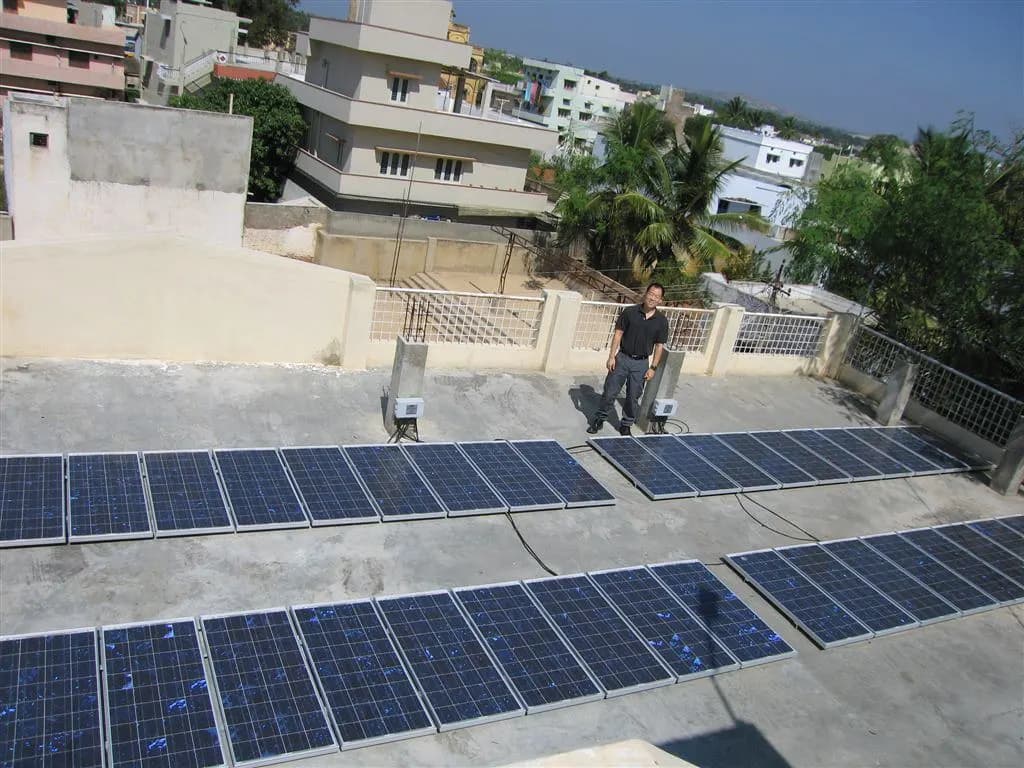
Very few buyers purchase panels in a box. Most sign a turnkey or EPC contract — design, panels, inverter, mounting structure, wiring, installation and commissioning for one price. Before 2019 that created endless disputes: was it a composite supply of goods at the lower rate, a works contract at 18%, or something in between? The GST Council settled it in December 2018 with a deemed valuation rule, effective 1 January 2019, and CBIC later applied the same mechanism back to July 2017 for pending cases through Circular 163/19/2021-GST.
The rule now sits as an Explanation under entry 437. Where the solar goods are supplied by a supplier along with other goods and a taxable service, the value of the goods is deemed to be 70% of the gross consideration for all those supplies, and the remaining 30% is deemed to be the value of the service. The goods portion takes 5%; the service portion takes 18%.
The effective rate after GST 2.0 works out as:
- 70% × 5% = 3.5%
- 30% × 18% = 5.4%
- Total = 8.9% of the contract price
Under the old 12% rate the same contract carried 70% × 12% + 30% × 18% = 13.8%, so the cut saves almost five percentage points on every turnkey quote.
Three practical points follow from the wording. First, the split is deemed, not negotiated — a vendor can't put 90% down as goods to lower your GST, and an invoice that does so is wrong. Second, it applies only when the same supplier provides the goods and the service together. If you buy panels from a distributor and hire a separate electrician, each invoice carries its own rate (5% on panels, 18% on the labour). Third, the 30% covers all other elements of the contract, including the mounting structure, cables and civil work, so a vendor shouldn't then add a separate 18% line for those within the same contract.
How a turnkey solar invoice is taxed
Step 1
Total contract price
Step 2
70% deemed goods
taxed at 5%
Step 3
30% deemed services
taxed at 18%
Step 4
≈ 8.9% GST overall
CGST+SGST or IGST
Worked examples: GST on solar invoices
Example 1 — a 3 kW home system in Pune under PM Surya Ghar. The registered vendor quotes ₹1,80,000 before tax for supply and installation.
| Line | Value | Rate | GST |
|---|---|---|---|
| Deemed goods (70%) | ₹1,26,000 | 5% | ₹6,300 |
| Deemed services (30%) | ₹54,000 | 18% | ₹9,720 |
| Invoice total | ₹1,80,000 | ₹16,020 → ₹1,96,020 |
The vendor is in Maharashtra and so is the house, so the ₹16,020 shows as ₹8,010 CGST and ₹8,010 SGST. After commissioning and DISCOM inspection, the central subsidy of ₹78,000 reaches the owner's bank account, taking the net cost to ₹1,18,020. At the old 12% rate the GST would have been ₹24,840, so GST 2.0 saves this household ₹8,820.
Example 2 — a 50 kW rooftop plant on a factory in Coimbatore. The EPC price is ₹22,00,000 and the contractor is based in Karnataka, so IGST applies.
- Goods: 70% = ₹15,40,000 × 5% = ₹77,000
- Services: 30% = ₹6,60,000 × 18% = ₹1,18,800
- Total IGST: ₹1,95,800 (8.9%); invoice ₹23,95,800
If the factory uses the power for its own taxable manufacturing, it can claim the ₹1,95,800 as input tax credit (see the ITC section below), so GST is not a real cost. It shows up only as cash flow for a month or two.
Example 3 — buying parts separately. A small installer buys 10 panels from a distributor for ₹1,00,000 and charges a customer ₹20,000 for labour only, with the customer buying the panels directly from the distributor. The distributor bills ₹5,000 GST at 5%; the installer bills ₹3,600 GST at 18%. Total GST is ₹8,600 on ₹1,20,000 — 7.2%. That's lower than 8.9% because the labour share here is only 17%, not the deemed 30%. Splitting genuinely separate supplies like this is legitimate; relabelling one turnkey contract as two invoices from the same vendor is not, and an officer can treat it as a single supply.
Run your own quote through the calculator — use 8.9 as the rate for a turnkey contract.
Try it — GST on a turnkey solar quote
Inverters, batteries and other components
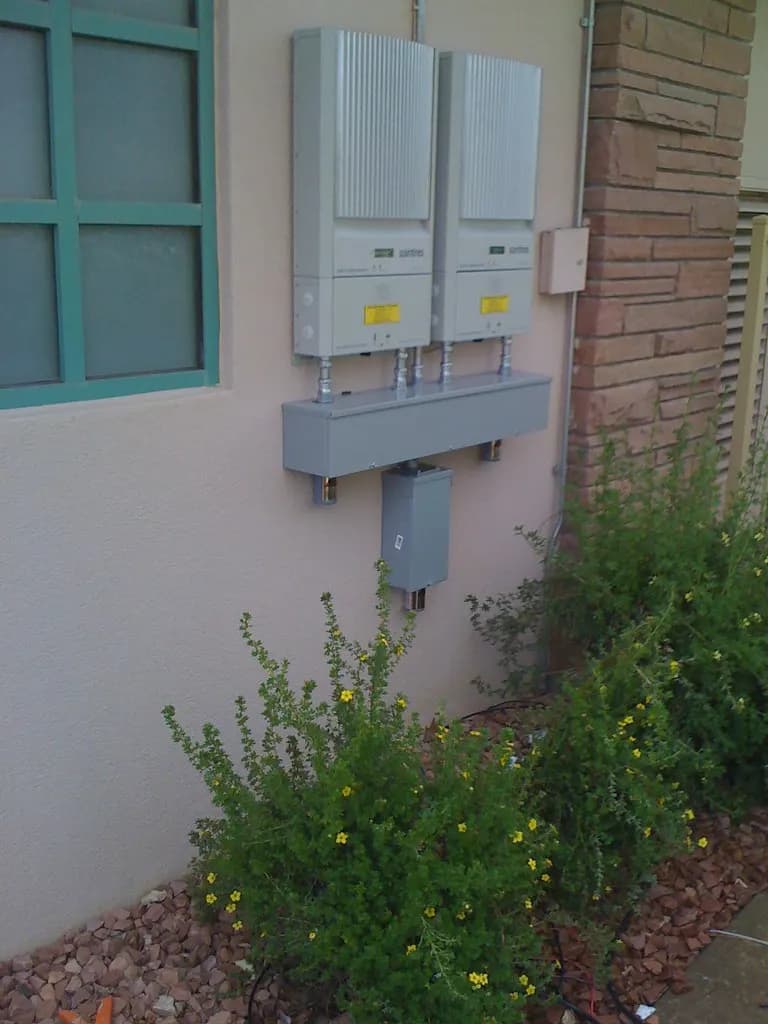
Inverters. Inverters are static converters under heading 8504, which sits in the 18% schedule. The question has always been whether a solar inverter — which converts the panels' DC output to AC — is a "part" of a solar power generator under the 5% entry. In 2026 the Karnataka High Court, in ABB India Ltd v Joint Commissioner (WP 9686/2025), held that it is: a solar inverter is an essential part of a solar power generating system and attracts the concessional rate, and Circular 163/19/2021-GST dealt only with EPC valuation, not eligibility. The ruling quashed demands of over ₹120 crore. It's a single-judge decision in one state and may be appealed, so the cautious practice is: bill at 5% when the inverter is a grid-tie or hybrid solar inverter supplied for a solar system and described that way on the invoice; bill at 18% when it's a home UPS or general-purpose inverter.
Batteries. Accumulators under heading 8507 — including lithium-ion and lead-acid batteries — are 18%. When a battery is part of an off-grid or hybrid solar package from one vendor, some sellers treat the whole package as a solar power generator at 5%, and the Uttarakhand Authority for Advance Ruling accepted that view for one applicant. Advance rulings bind only the applicant, so a vendor billing batteries inside a solar package at 5% should hold its own ruling or legal opinion. Battery replacements bought later are always at 18%. Our GST on batteries guide covers the rest of heading 8507.
Mounting structures, cables and balance of system. Supplied inside a turnkey contract, they fall within the 70:30 split. Bought separately — galvanised steel structures under 7308, cables under 8544 — they carry 18% unless the supplier can show they are parts made for a solar power generator.
Solar water heaters and pumps. Solar water heaters have their own entry at 5%. Solar water pumps supplied as solar power-based devices also fall in the 5% entry; farmers buying under PM-KUSUM are covered in our solar panel subsidy guide.
GST and the PM Surya Ghar subsidy for homes
For households, GST and the subsidy work independently. Under PM Surya Ghar: Muft Bijli Yojana, the Centre pays ₹30,000 per kW for the first 2 kW and ₹18,000 per kW for the third kW, capped at ₹78,000. These amounts are fixed per kW — they're not a percentage of the invoice — so neither a higher price nor GST changes them.
Home solar — subsidy vs GST (2026)
₹78,000
Maximum central subsidy
3 kW and above
≈ 8.9%
Effective GST on a turnkey quote
70% at 5% + 30% at 18%
₹16,020
GST on a ₹1.8 lakh 3 kW system
was ₹24,840 at 12%
The order of events explains why GST is charged on the full price. You choose a registered vendor on the national portal, agree the price, and the vendor installs the system and issues a tax invoice with GST on the full contract value. The DISCOM installs the net meter and inspects; only then is the subsidy released to your own bank account (or your loan account if you financed through the portal). The vendor never receives the subsidy, so there's nothing to deduct from the taxable value.
Two things to check on a PM Surya Ghar invoice: that GST is calculated at the 70:30 split (about 8.9% of the base price), not at a flat 12% or 18% left over from old billing templates; and that the system capacity on the invoice matches the capacity uploaded to the portal, since the subsidy is paid on the capacity actually installed. Housing societies claiming ₹18,000 per kW for common-area plants pay GST the same way.
Input tax credit on solar plants for businesses
For a GST-registered business, the real question isn't the rate but whether the GST comes back as credit. Three rules decide it.
Blocked credits don't usually bite. Section 17(5)(c) and (d) of the CGST Act block credit on works contracts and on goods and services used to construct immovable property — but both clauses exclude plant and machinery, defined as apparatus, equipment and machinery fixed to earth by foundation or structural support and used to make outward supplies. A rooftop or ground-mounted solar plant feeding your factory, shop or office is equipment on a structural support used in your business, so credit is normally available. Civil works that become part of the building itself (land, the building, other civil structures) remain excluded.
The power must serve taxable supplies. Credit follows use. A factory making taxable goods gets full credit. A hospital or school whose output is exempt doesn't. A business with mixed taxable and exempt supplies reverses a share under Rules 42 and 43 — for a solar plant, which is a capital good, the reversal is spread over five years.
Selling surplus power is an exempt supply. Electrical energy is exempt from GST. If your plant exports surplus units to the DISCOM and you're paid for them, that sale is an exempt outward supply, and the share of the plant's credit attributable to it may need reversing. Where net metering only offsets your own consumption, the exported share is usually small; where you run the plant mainly to sell power, the credit may be largely lost. Rulings have gone different ways on large plants, so take your CA's view before you claim credit on a big project. Our input tax credit guide explains Rules 42 and 43.
Common GST mistakes on solar quotes
Check your solar invoice
0/6Missing e-way bill on deliveries. Panels and inverters moved by road in a consignment worth more than ₹50,000 need an e-way bill, generated by the vendor or transporter. For a turnkey contract the e-way bill covers the goods being moved, valued at their invoice or delivery-challan value — not the deemed 70% figure. A truck of modules stopped without one can be detained, which delays the installation more than it costs in penalty. Larger vendors above the e-invoice threshold of ₹5 crore must also generate an IRN for every B2B invoice, so a factory buyer should check that the invoice carries a QR code before claiming credit.
Old rates on new invoices. Some vendors' billing templates still apply 12% on goods or 13.8% overall. Any invoice dated on or after 22 September 2025 should show 5% on the goods portion.
Wrong place-of-supply tax. A vendor in one state installing in another should charge IGST, not CGST and SGST. A wrong split means the buyer's credit appears under the wrong head and has to be fixed by the vendor.
Inflating the goods share. A 90:10 or 100:0 split on a turnkey contract understates tax. The buyer may lose credit on audit if the vendor's tax is reassessed, and a household loses nothing now but may face a vendor's recovery claim later.
Separate "installation" invoice inside a turnkey deal. If the same vendor issues a 5% invoice for the whole system and a second 18% invoice for "installation", the deemed 30% has been double-counted or the 70:30 rule has been bypassed. Ask for one contract and one invoice at the deemed split.
Batteries at 5% without support. Unless the vendor has a ruling or a clear legal basis, expect batteries sold separately at 18%.
Official links
- GST rates for goods (CBIC)Rate notifications, including Notification 9/2025-CT(Rate)
- 56th GST Council recommendations (PIB)Renewable energy devices cut from 12% to 5%
- CGST Act section 17Blocked credits and plant and machinery
- PM Surya Ghar national portalApply, choose a registered vendor, track subsidy
What to do next
Before you sign, ask the vendor to show the 70:30 split on the quote, the HSN on each item and whether IGST or CGST plus SGST applies. Households should then read our solar panel subsidy guide for the subsidy steps; businesses can test the payback with our ROI calculator and finance it with the EMI calculator.
This is general information, not legal or tax advice — confirm on the official source or with a professional.
Frequently asked questions
Solar panels — photovoltaic cells whether or not assembled into modules — attract 5% GST from 22 September 2025, down from 12% before GST 2.0. The same 5% applies to solar power generators, solar power-based devices, solar lanterns and parts used to make them. Solar water heaters are also 5%.
When one supplier provides the solar equipment together with installation or other taxable services, the rate notification deems 70% of the total price to be goods taxed at 5% and the remaining 30% to be services taxed at 18%. The effective GST on a turnkey contract is therefore about 8.9% of the contract price.
An inverter supplied as part of a solar power system is generally billed at 5%, and the Karnataka High Court held in 2026 that solar inverters are parts of solar power generating systems. An inverter sold as a general power converter or home UPS under heading 8504 is 18%. Ask the vendor to describe the inverter as a solar inverter on the invoice.
Before. The vendor charges GST on the full contract price, and the central subsidy — up to ₹78,000 for a home — is paid into your bank account after the DISCOM inspects the system. The subsidy is a fixed amount per kW, so it doesn't change with the GST, and it doesn't reduce the GST you pay on the invoice.
Usually yes. Section 17(5) blocks credit on works contracts for immovable property, but it excludes plant and machinery — equipment fixed by a foundation or structural support and used to make taxable supplies. A rooftop plant powering a factory or shop normally qualifies. If part of the power is sold to the grid as exempt electricity, a proportionate reversal may apply.
Solar cells and modules fall under heading 8541 — photovoltaic cells assembled in modules or made up into panels are 8541 43. For GST, they're covered by the renewable-energy entry that spans Chapters 84, 85 and 94, which gives them the 5% rate. Grid-tie inverters are 8504 and lithium-ion batteries 8507.
Sources & verification
Figures on this page were checked against the sources below when it was last reviewed on 9 October 2026. Each rate and limit is stored once with its own official source and review date, and official update channels are monitored daily so changes are picked up. How we verify
- 1.Notification No. 9/2025 – State Tax (Rate), Maharashtra (mirrors central Notification 9/2025-CT(Rate)) — Government of Maharashtra · accessed 9 October 2026
- 2.Recommendations of the 56th GST Council meeting (PIB press release) — GST Council / PIB · accessed 9 October 2026
- 3.CGST Act, 2017 — Section 17 (blocked credits; definition of plant and machinery) — CBIC · accessed 9 October 2026
- 4.PM Surya Ghar: Muft Bijli Yojana national portal — Ministry of New and Renewable Energy · accessed 9 October 2026
- 5.Karnataka HC: solar inverters eligible for 5% concessional GST (ABB India Ltd v Joint Commissioner, WP 9686/2025) — SAG Infotech · accessed 9 October 2026
- 6.Karnataka High Court rules solar inverters attract 5% GST and not 18% — Mercom India · accessed 9 October 2026
- 7.GST Council recommends 5% GST rate for 70% of solar project cost — Mercom India · accessed 9 October 2026
- 8.Uttarakhand AAR: solar components as composite supply — Mercom India · accessed 9 October 2026
MSMETOOLS is an independent platform and is not affiliated with any government agency, ministry or department.
Tools for this
GST Calculator (India)
Calculate GST for your sales and purchases with current rates.
ROI Calculator
Calculate return on investment for your business projects.
EMI Calculator
Calculate loan EMIs for business and personal loans.
Related guides
 Subsidy for Solar Panels 2026: PM Surya Ghar ₹78,000 GuideRead guide
 GST on Batteries 2026: Lithium-ion, Lead-acid & EV RatesRead guide
 GST on Electronics 2026: AC, TV, Laptop Rates, HSN & ITCRead guide
 Solar Panel Installation Business 2026: Vendor Rules & ProfitRead guide
Official links open the government site in a new tab.