 GST & indirect tax
HSN Code for Cotton in 2026: Raw Cotton, Yarn, Fabric and Garments — GST Rates, Reverse Charge and a Worked Chain
HSN code for cotton in 2026: chapter 52 codes 5201–5212 for raw cotton, yarn and fabric, 5% GST, reverse charge on farm purchases and the ₹2,500 garment rule.
 Edited by Sumeet YadavFounder & editor, MSMETOOLS · fact-checked against official sources
Contents (8)
- 1. HSN codes for cotton: Chapter 52
- 2. GST rates across the cotton chain in 2026
- 3. Raw cotton and reverse charge
- 4. Worked chain: GST from cotton field to shirt
- 5. Job work, inverted duty and refunds
- 6. Registration and compliance for cotton businesses
- 7. Common mistakes with cotton HSN codes and GST
- 8. What to do next
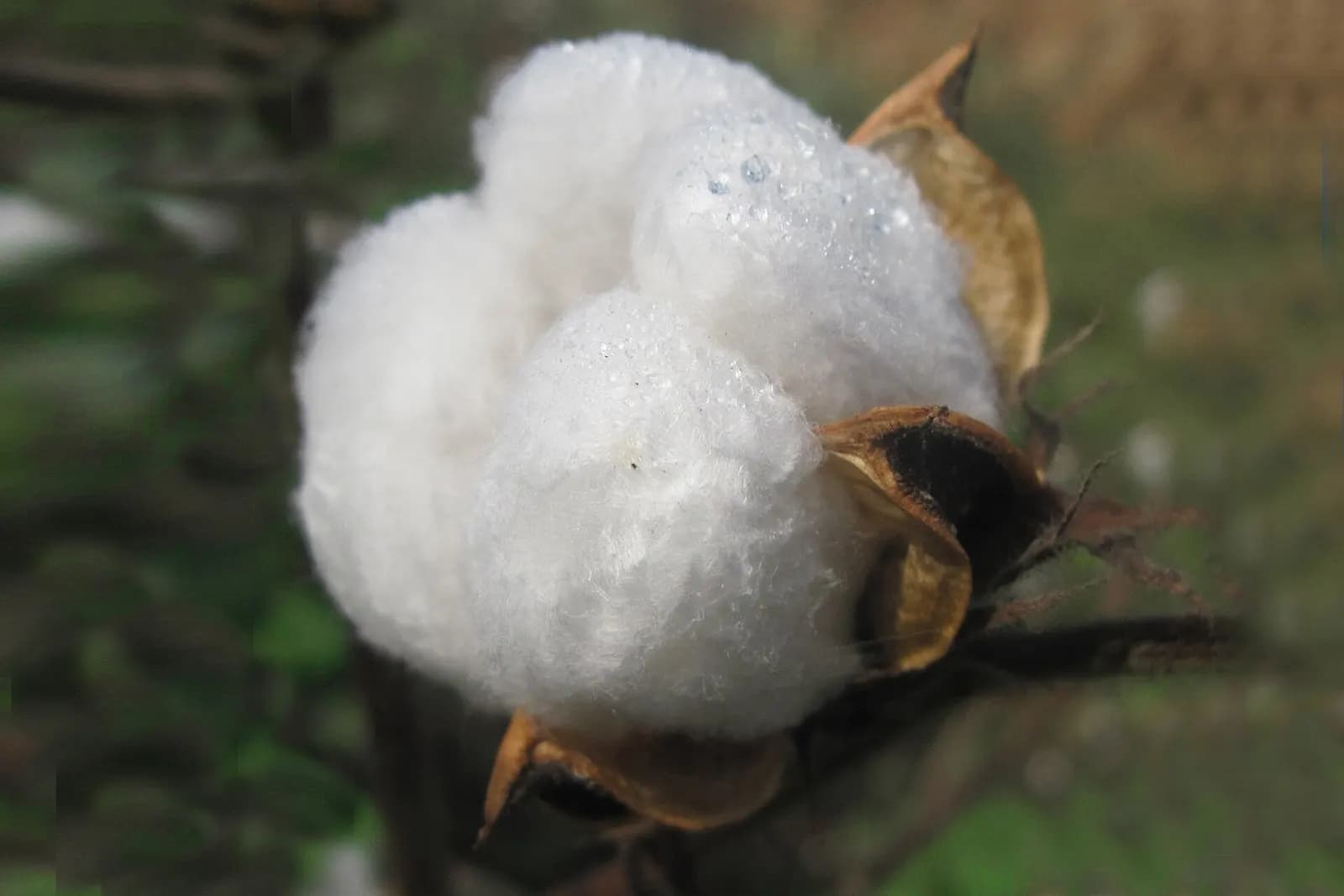
India is one of the world's largest cotton producers, and cotton passes through many hands before it becomes a shirt: a farmer, a ginner, a spinning mill, a weaver or knitter, a processor, a garment maker and a retailer. Each needs the right HSN code on the invoice and the right GST rate. This guide is for ginners, cotton traders, spinners, weavers, garment makers and accountants. It lists the Chapter 52 HSN codes for raw cotton, yarn and fabric, the 2026 GST rates, the reverse charge on raw cotton bought from farmers, how cotton garments are taxed after GST 2.0, and a worked farm-to-shop chain in rupees. Rates were checked against the notified schedules in October 2026.
Quick answer
Cotton is HSN Chapter 52. Raw cotton is 5201, cotton waste 5202, carded or combed cotton 5203, sewing thread 5204, cotton yarn 5205–5207 and woven cotton fabric 5208–5212. All of them attract 5% GST, unchanged by GST 2.0. When a farmer sells raw cotton to a registered buyer, the buyer pays the GST under reverse charge. Cotton garments are 5% up to ₹2,500 a piece and 18% above it.
Raw cotton, yarn, thread and fabric: all 5%
Khadi yarn is exempt
Knitted cotton fabric (Chapter 60): 5%
Job work on cotton textiles: 5%
Report a 4-digit HSN up to ₹5 crore turnover, 6 digits above
HSN codes for cotton: Chapter 52
The HSN (Harmonised System of Nomenclature) code identifies the product on a GST invoice and decides which entry of the rate schedule applies. India's GST rate notifications use the customs tariff codes, and cotton has its own chapter. The four-digit headings follow the international Harmonised System:
| HSN | What it covers | GST |
|---|---|---|
| 5201 | Cotton, not carded or combed — raw cotton, ginned lint | 5% |
| 5202 | Cotton waste, including yarn waste and garnetted stock | 5% |
| 5203 | Cotton, carded or combed | 5% |
| 5204 | Cotton sewing thread, whether or not put up for retail sale | 5% |
| 5205 | Cotton yarn with 85% or more cotton, not for retail sale | 5% |
| 5206 | Cotton yarn with less than 85% cotton, not for retail sale | 5% |
| 5207 | Cotton yarn put up for retail sale | 5% |
| 5208 | Woven cotton fabric, 85% or more cotton, up to 200 g/m² | 5% |
| 5209 | Woven cotton fabric, 85% or more cotton, over 200 g/m² | 5% |
| 5210 | Woven cotton fabric, under 85% cotton, mixed mainly with man-made fibres, up to 200 g/m² | 5% |
| 5211 | As 5210, over 200 g/m² | 5% |
| 5212 | Other woven fabrics of cotton | 5% |
Two splits run through the chapter. Yarn and fabric are divided by cotton content — 85% or more cotton by weight versus less, with the blend mainly man-made fibre — and fabric is further divided by weight per square metre, with 200 grams as the line between lighter shirting-type fabric and heavier drill, denim or canvas. The rate is the same either way, so a wrong sub-heading doesn't change the tax, but it does create mismatches in the HSN summary of your GSTR-1 and can matter for exports.
How many digits to show. Under the HSN reporting rules, a business with aggregate turnover up to ₹5 crore must show at least a 4-digit HSN on B2B invoices, and a business above ₹5 crore at least a 6-digit HSN. Exporters and importers use the full eight-digit Indian tariff item on shipping bills and bills of entry, which customs brokers take from the tariff schedule. Our HSN code guide explains the reporting rules and the HSN code finder helps with less common items.
GST rates across the cotton chain in 2026
Notification 9/2025–Central Tax (Rate), the goods rate schedule in force since 22 September 2025, lists cotton in Schedule I — the 2.5% central tax schedule — at serials 331 to 334. Serial 331 covers cotton and cotton waste (5201 to 5203), 332 cotton sewing thread (5204), 333 "cotton yarn [other than khadi yarn]" (5205 to 5207) and 334 woven fabrics of cotton (5208 to 5212). With the matching state tax, each is 5% within a state, or the same as IGST between states.
GST 2.0 did not change any of these. The textile changes in the 56th GST Council's package were aimed at man-made fibre: polyester and viscose fibre fell from 18% to 5% and man-made yarn from 12% to 5%, which brought synthetic yarn into line with cotton yarn, already at 5%. The change that did affect cotton was at the garment end, where the per-piece threshold for the low apparel rate rose from ₹1,000 to ₹2,500.
Products around the main chain:
- Cotton seed sold for crushing or feed is an oilseed under heading 1207 at 5%; seed of sowing quality is exempt under Notification 2/2017–Central Tax (Rate). Cotton linters — the short fuzz left on seed after ginning — are also 5%.
- Khadi yarn is exempt under serial 130 of Notification 2/2017, which is why the 5% yarn entry excludes it. Gandhi topi is also exempt.
- Knitted cotton fabric — the base for T-shirts, hosiery and innerwear — is Chapter 60, taxed at 5% under serial 387.
- Absorbent cotton wool (heading 5601) and cotton handbags and shopping bags (4202 22) are taxed at 5% under Schedule I.
- Cotton garments fall under Chapters 61 (knitted) and 62 (woven) at 5% or 18% depending on the per-piece value, explained below.
Raw cotton and reverse charge
Raw cotton is the one link in the chain where the tax is collected from the buyer rather than the seller. Notification 4/2017–Central Tax (Rate) lists the goods on which GST is paid under reverse charge, and an amendment in November 2017 (Notification 43/2017–Central Tax (Rate)) added serial 4A: raw cotton of heading 5201, supplied by an agriculturist, to any registered person.
Why. Farmers who sell their own produce don't need GST registration — section 23 of the CGST Act exempts agriculturists supplying produce from cultivation of land — so the tax would otherwise never be collected at this stage. Putting the liability on the registered buyer keeps the chain intact and gives the buyer a proper credit to set off against its own sales.
Who counts as an agriculturist. Section 2(7) of the CGST Act defines an agriculturist as an individual or Hindu Undivided Family that cultivates land personally, by their own labour, family labour, or hired labour under personal supervision. A commission agent, trader or company selling cotton is not an agriculturist, so the reverse charge doesn't apply when you buy from them; a registered trader charges 5% on its tax invoice in the normal way.
What is "raw cotton". Ginners mostly buy kapas — seed cotton straight from the field — and the trade generally treats it as raw cotton under heading 5201 for this entry. If you buy kapas or lint from a farmer, apply the reverse charge.
What the buyer must do:
- Issue a self-invoice for the purchase, because the farmer can't issue a tax invoice, and a payment voucher when paying the farmer, under section 31(3)(f) and (g) of the CGST Act.
- Pay the 5% in cash through GSTR-3B for the month in which the time of supply falls. Reverse-charge tax cannot be paid from the electronic credit ledger.
- Claim the same amount as input tax credit in the same return, and use it against tax on your own sales of lint, seed or yarn.
The time of supply for goods under reverse charge is the earliest of the date you receive the goods, the date you pay, and the date immediately after 30 days from the supplier's invoice. For a ginning season where purchases run daily, most ginners raise one self-invoice per farmer per lot and reconcile monthly. Our guide to the reverse charge mechanism covers the self-invoice format.
Raw cotton bought from a farmer
Step 1
Farmer sells kapas
unregistered, no GST on bill
Step 2
Ginner self-invoices
5% under RCM
Step 3
Pays GST in cash
GSTR-3B
Step 4
Claims same GST as ITC
same month
Step 5
Sells lint and seed at 5%
forward charge
Worked chain: GST from cotton field to shirt
The figures below are illustrative — round numbers per lot of cotton, to show how GST moves along the chain. They are not market prices, and real chains include other inputs such as dyes, power, packing and services.
| Stage | Sale value | GST charged | ITC used | GST paid in cash |
|---|---|---|---|---|
| Farmer → ginner: raw cotton (5201) | ₹1,000 | Nil on farmer's bill | — | ₹50 by ginner under RCM |
| Ginner → spinning mill: lint (5201) | ₹1,600 | ₹80 | ₹50 | ₹30 |
| Spinning mill → weaver: yarn (5205) | ₹2,600 | ₹130 | ₹80 | ₹50 |
| Weaver → garment maker: fabric (5208) | ₹4,000 | ₹200 | ₹130 | ₹70 |
| Garment maker → retailer: 10 shirts at ₹1,000 (62) | ₹10,000 | ₹500 | ₹200 | ₹300 |
| Retailer → customers: 10 shirts at ₹1,600 | ₹16,000 | ₹800 | ₹500 | ₹300 |
| Total paid to government | ₹800 |
The total cash paid across the chain — ₹50, ₹30, ₹50, ₹70, ₹300 and ₹300 — is ₹800, exactly the GST the final customers pay at 5% of ₹16,000. That is the point of the credit chain: each business pays tax only on the value it adds. The reverse charge at the start means the ginner, not the farmer, pays the first ₹50, and gets it back as credit when selling lint.
If the shirt crosses ₹2,500. Suppose a premium brand sells the same shirt to customers at ₹3,000 a piece. The retail sale is then taxed at 18%: ₹540 a shirt. The garment maker's sale to the retailer is also tested piece by piece on its own value — a shirt sold to the retailer at ₹2,000 stays at 5% at that stage, even though the same shirt will be sold to the customer at 18%. Our guide to GST on garments works through discounts, MRP and the per-piece test.
Try it — GST on a cotton yarn invoice
Job work, inverted duty and refunds
Job work. Much of the cotton chain runs on job work: ginning and pressing for traders, sizing and weaving for yarn merchants, dyeing and printing for fabric traders, and stitching for garment brands. Notification 15/2025–Central Tax (Rate) kept job work on "textiles and textile products falling under Chapters 50 to 63" at 2.5% central tax, so a registered job worker charges 5% on its processing charges. The principal can send goods to the job worker without paying tax on the movement, under a delivery challan, and must get them back within the time limits of section 143 of the CGST Act.
Inverted duty. A cotton weaver or processor sells at 5% but buys dyes, chemicals, machinery spares and many services at 18%. That builds up credit it can't use. Section 54(3) of the CGST Act allows a refund of unutilised credit where the rate on inputs is higher than the rate on output. The formula in Rule 89(5) counts credit on inputs — goods — but not input services or capital goods, so a processor whose excess credit comes mainly from job-work charges, freight or rent will get less back than the ledger balance suggests. Plan purchase invoices with that in mind.
Exports. Cotton yarn, fabric and garments are major exports from Gujarat, Maharashtra, Tamil Nadu and Punjab. Exports are zero-rated: exporters usually ship under a Letter of Undertaking and claim back the GST on their purchases, rather than charging IGST. See what is LUT in GST.
Registration and compliance for cotton businesses
Ginners and traders must register once their aggregate turnover crosses ₹40 lakh for goods within a state (₹20 lakh in the special-category states that use the lower limit), and from the first sale if they sell across state lines. A business liable to pay tax under reverse charge must register regardless of turnover, under section 24 of the CGST Act. In practice, every ginner buying from farmers needs a GSTIN.
E-way bills. Cotton moves in bulk — a single truck of bales or yarn usually exceeds ₹50,000, so an e-way bill is required, including for movements to and from job workers.
E-invoicing. Larger spinning mills and textile groups whose aggregate turnover exceeds ₹5 crore in any year since 2017-18 must generate e-invoices for B2B sales.
Market fees are not GST. In the main cotton states — Gujarat, Maharashtra, Telangana, Rajasthan, Madhya Pradesh, Punjab and Haryana — cotton bought in regulated markets usually also attracts a market fee or similar levy under the state's agricultural produce marketing law. That fee is a state levy outside GST: it is not shown as CGST or SGST, it cannot be claimed as input tax credit, and its rate and rules differ from state to state. Ask the market committee for the current rate, and keep the fee receipt separate from your GST records so that the two don't get mixed up in reconciliation.
Large institutional buyers. The reverse charge is not limited to private ginners. Any registered person that buys raw cotton directly from farmers, including large institutional buyers operating at procurement centres, pays the 5% under reverse charge on those purchases in the same way.
Cotton imports. India also imports extra-long-staple cotton and other varieties. Imports pay IGST at 5% plus basic customs duty, which is set separately by customs notifications and has been changed from time to time; check the current rate with your customs broker.
Check your cotton invoice
0/7Common mistakes with cotton HSN codes and GST
Not paying reverse charge on farm purchases. Ginners who buy from farmers on simple purchase slips and pay no reverse-charge GST face a demand with interest. The tax would have been creditable, but interest and penalty are not.
Applying reverse charge to traders. The reverse charge covers only supplies by an agriculturist. If you buy from a registered trader, the trader charges GST; if the trader is unregistered but not a farmer, there is no reverse charge and you should ask why the trader isn't registered.
Using 5208 for blends. Fabric with less than 85% cotton, mixed mainly with polyester, is 5210 or 5211, not 5208 or 5209. Fabric where man-made fibre predominates by weight belongs in Chapter 54 or 55 instead. The rate is the same 5%, but the HSN summary and any export documents should be right.
Taxing all cotton clothing at 5%. Cotton garments above ₹2,500 a piece are 18%. Fabric, including saree lengths and unstitched suit material, stays at 5% whatever the price, because it is fabric rather than apparel.
Expecting a full inverted-duty refund. Credit on services and capital goods is left out of the Rule 89(5) formula.
The 57th GST Council met in early October 2026; nothing changing cotton rates had been notified when this page was checked.
Official links
- Notification 9/2025–CT(Rate) — goods rate scheduleSchedule I S.No. 331–334, 387–389
- Notification 15/2025–CT(Rate) — servicesTextile job work at 5%
- Notification 2/2017–CT(Rate) — exempt goodsKhadi yarn, Gandhi topi, seed-quality seeds
- 56th GST Council — recommendationsApparel threshold and textile changes
- CGST rate notificationsIncluding 4/2017–CT(Rate) on reverse charge
What to do next
If you trade or process cotton, set up your item master with the right Chapter 52 headings, make sure farm purchases go through a self-invoice and reverse-charge payment, and check whether you are owed an inverted-duty refund. Use the HSN code finder for less common items and the invoice generator for compliant bills. Further down the chain, read our guides to GST on garments and starting a clothing manufacturing business.
This is general information, not legal or tax advice — confirm on the official source or with a professional.
Frequently asked questions
Cotton is Chapter 52 of the customs tariff. Raw cotton that is not carded or combed is HSN 5201, cotton waste 5202, carded or combed cotton 5203, sewing thread 5204, cotton yarn 5205 to 5207, and woven cotton fabric 5208 to 5212. Knitted cotton fabric is in Chapter 60 and cotton garments in Chapters 61 and 62. Businesses with turnover up to ₹5 crore report the four-digit code.
Raw cotton and cotton waste under HSN 5201 to 5203 attract 5% GST. The rate has not changed since GST began in 2017, and GST 2.0 on 22 September 2025 left it at 5%. When an agriculturist sells raw cotton to a registered buyer, the buyer pays this 5% under reverse charge instead of the farmer.
Yes, for raw cotton bought from an agriculturist. Notification 4/2017–Central Tax (Rate), as amended in November 2017, makes the registered buyer — usually a ginner, trader or spinning mill — liable to pay GST on raw cotton of HSN 5201 supplied by an agriculturist. The buyer pays the tax in cash, issues a self-invoice, and can claim the same amount as input tax credit.
Cotton yarn of HSN 5205 to 5207 attracts 5%, and woven cotton fabric of HSN 5208 to 5212 attracts 5%, whatever the price per metre. Khadi yarn is exempt. Knitted cotton fabric under Chapter 60 is also 5%. These rates were unchanged by GST 2.0.
Cotton garments follow the same rule as all apparel: 5% when the sale value is up to ₹2,500 a piece, and 18% above it, since 22 September 2025. The test is the value of each piece before GST, so a ₹2,400 cotton kurta is taxed at 5% and a ₹2,600 one at 18%.
Cotton seed sold for crushing or feed — not of seed quality — is an oilseed under heading 1207 and attracts 5%. Cotton seed of seed quality, sold for sowing, is exempt. Cotton linters, the short fibres left on seed after ginning, are also taxed at 5%.
Sources & verification
Figures on this page were checked against the sources below when it was last reviewed on 9 October 2026. Each rate and limit is stored once with its own official source and review date, and official update channels are monitored daily so changes are picked up. How we verify
- 1.Notification No. 9/2025–Central Tax (Rate), 17 September 2025 (Gazette of India) — Ministry of Finance / Gazette of India · accessed 9 October 2026
- 2.Recommendations of the 56th GST Council meeting (press release) — GST Council / PIB · accessed 9 October 2026
- 3.Notification No. 4/2017–State Tax (Rate), Maharashtra — reverse charge on goods (consolidated, mirrors 4/2017–CT(Rate)) — Government of Maharashtra · accessed 9 October 2026
- 4.Notification No. 2/2017–Central Tax (Rate) (nil-rated goods) — GST Council / CBIC · accessed 9 October 2026
- 5.Notification No. 15/2025–Central Tax (Rate) (services rates) — Ministry of Finance / Gazette of India · accessed 9 October 2026
- 6.Section 23 – CGST Act, 2017 (persons not liable for registration) — CBIC · accessed 9 October 2026
- 7.Rule 89 – CGST Rules, 2017 (refund formula) — CBIC · accessed 9 October 2026
MSMETOOLS is an independent platform and is not affiliated with any government agency, ministry or department.
Tools for this
HSN Code Finder (India)
Find the correct HSN/SAC code for your product.
GST Calculator (India)
Calculate GST for your sales and purchases with current rates.
Invoice Generator
Create professional invoices with tax, logo and custom details.
Related guides
 GST on Garments 2026: 5% vs 18%, ₹2,500 Rule & HSN CodesRead guide
 HSN Code List 2026: Digits, Lookup & Rates for Common GoodsRead guide
 GST on Advocate Fees 2026: RCM, Exemptions & 18% RateRead guide
 GST on Security Services 2026: RCM Rules, 18% Rate & SACRead guide
Official links open the government site in a new tab.