 Starting & growing a business
How to Start a Clothing Business in India (2026): Saree Business at Home, Boutique or Online
How to start a clothing or saree business in India in 2026: sourcing hubs, home vs boutique vs online costs, GST by price slab after GST 2.0, funding and profit.
 Edited by Sumeet YadavFounder & editor, MSMETOOLS · fact-checked against official sources
Contents (10)
- 1. Choose your format and niche first
- 2. Where to source: Surat, Tiruppur, Ludhiana and weaving clusters
- 3. Setup cost: home saree business vs boutique
- 4. Registrations and licences for a clothing business
- 5. GST on clothes and sarees after GST 2.0
- 6. How to start a saree business at home: worked example
- 7. Funding a clothing business
- 8. Clothing business plan template
- 9. Mistakes new clothing sellers make
- 10. What to do next
Clothing is the business almost everyone in India thinks about starting — a saree collection sold from home, a kurti boutique in the local market, or an Instagram label. It's easy to begin and hard to run profitably, because money gets stuck in unsold stock, discounts and returns. This guide shows how to start a clothing business step by step, with a special section on how to start a saree business at home: who each format suits, where to source (Surat, Tiruppur, Ludhiana and weaving clusters), estimated setup costs with their basis, registrations, GST on clothes and sarees after GST 2.0, funding, a worked profit-and-loss and a fill-in plan. Tax rules were checked against GST Council and CBIC sources in October 2026.
Quick answer
To start a clothing business, pick one niche and one format (home/online, boutique, or marketplace), buy a small first lot from a wholesale hub, price for a gross margin that survives discounts and returns, and register the business. Since 22 September 2025, garments up to ₹2,500 a piece carry 5% GST and those above carry 18%; sarees and other fabrics are 5% at any price.
Home saree or kurti business: about ₹70,000–₹2.5 lakh to start (our estimate)
Boutique of 200–300 sq ft: roughly ₹7–17 lakh including stock and deposit (our estimate)
Shipping to another state needs GST registration from the first sale
Funding: Mudra loans up to ₹10 lakh without collateral
Choose your format and niche first
Clothing is too broad to start in. Narrow it down to one customer and one product family — for example "cotton sarees under ₹1,500 for working women", "kids' ethnic wear for festivals" or "plus-size kurtis". A tight niche makes buying, photographing and marketing far easier, and lets you buy depth instead of one of everything.
Then pick a format:
- Home / social-media business — sarees, kurtis or dress material sold through WhatsApp catalogues, Instagram, Facebook groups and exhibitions. Lowest cost; suits homemakers and part-timers with a network. Growth depends on your content and repeat buyers.
- Boutique or retail shop — a 200–300 sq ft shop in a market or residential area, often with tailoring or alterations. Higher fixed cost, but walk-in trade, trial rooms and trust.
- Marketplace seller — listing on large e-commerce platforms. Reach is huge, but commissions, shipping, return charges and price competition squeeze margins. Use it to clear stock or test designs, not as your only channel at the start.
- Own label / manufacturing — designing and getting garments stitched, either in your own unit or through job workers. Highest margin potential, most working capital, and eligible for PMEGP as manufacturing.
Where to source: Surat, Tiruppur, Ludhiana and weaving clusters
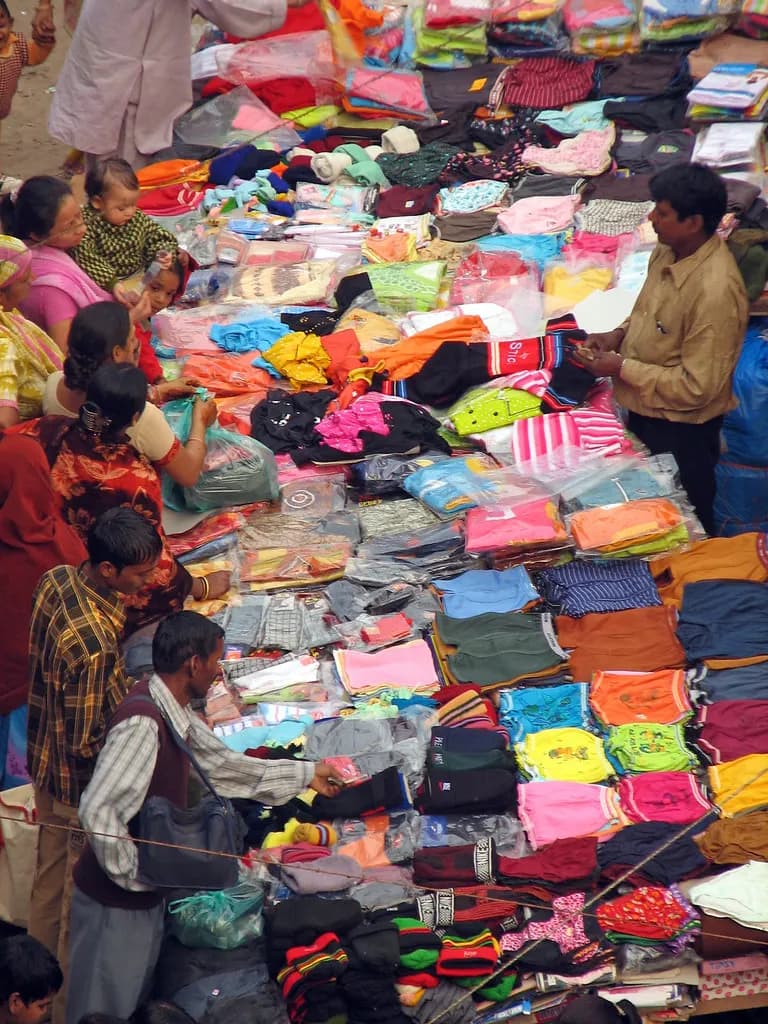
Most small sellers buy from wholesalers in a few large hubs, either by visiting or through the wholesalers' own WhatsApp catalogues:
- Surat (Gujarat) — India's centre for man-made fabrics: synthetic and georgette sarees, dress material and printed fabrics. Large textile markets with hundreds of wholesalers; most sell by the catalogue set rather than the single piece.
- Tiruppur (Tamil Nadu) — the knitwear capital: T-shirts, innerwear, kidswear, sportswear and casual wear. PIB noted Tiruppur's textile production and exports at about ₹30,000 crore a year, supporting around 10 lakh jobs.
- Ludhiana (Punjab) — woollen knitwear, hosiery, sweaters, shawls and winterwear.
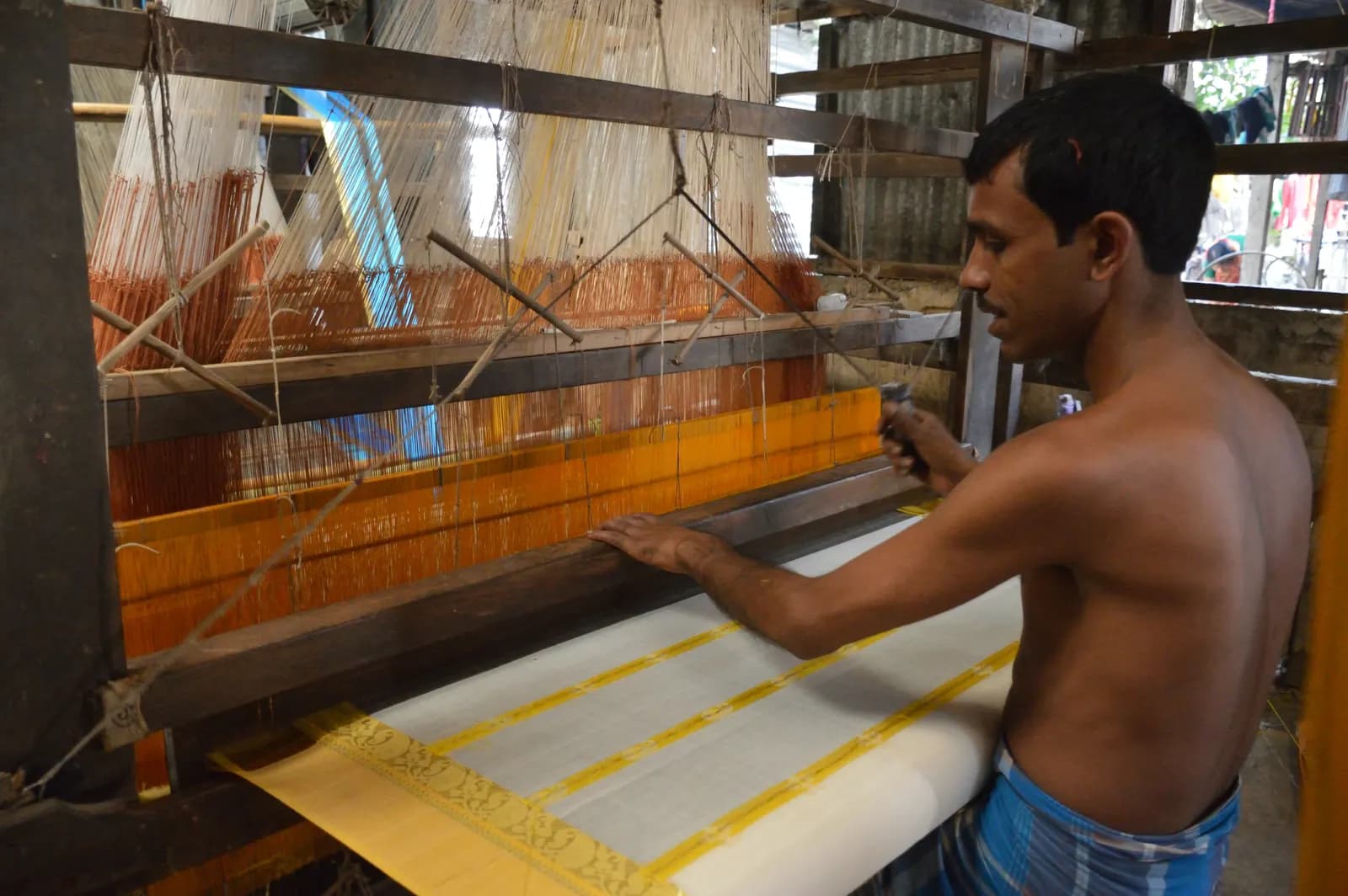
- Handloom and silk clusters — Varanasi, Kanchipuram, Chanderi, Maheshwar, Phulia and Shantipur, Pochampally and many more. Buying from weavers or their cooperatives gives you authenticity to market; check the Handloom Mark or GI tag where it applies.
- Local wholesale markets — Delhi's Gandhi Nagar, Mumbai's wholesale clusters, Kolkata's Burrabazar and similar markets in every metro, good for quick restocks.
Before you buy in volume: ask for a sample lot, check fabric and colour fastness, confirm the GST invoice (you need it to claim input tax credit), the minimum order and the return policy for defects. Start with a small first order of your best-guess styles and re-order what sells.
Setup cost: home saree business vs boutique
These are MSMETOOLS estimates for 2026, built on an assumed wholesale cost of ₹400–₹1,000 per mid-range saree (check current wholesaler catalogues), common rent-deposit terms and fixture costs in tier-2 cities. Your stock budget is the line to plan most carefully.
| Item | Home / online saree business | Boutique (200–300 sq ft) |
|---|---|---|
| Opening stock | ₹50,000 – ₹1,50,000 | ₹3,00,000 – ₹6,00,000 |
| Shop deposit and advance rent | — | ₹1,00,000 – ₹3,00,000 |
| Interiors, lighting, trial room | — | ₹1,50,000 – ₹4,00,000 |
| Racks, mannequins, mirrors, display | ₹5,000 – ₹15,000 (photo set-up) | ₹50,000 – ₹1,50,000 |
| Packaging, tags, carry bags | ₹5,000 – ₹15,000 | ₹15,000 – ₹40,000 |
| Website or catalogue tools, billing software | ₹0 – ₹25,000 | ₹15,000 – ₹40,000 |
| Registrations, CA set-up, signage | ₹2,000 – ₹10,000 | ₹15,000 – ₹40,000 |
| Launch marketing (ads, exhibition stall) | ₹10,000 – ₹30,000 | ₹20,000 – ₹50,000 |
| Working capital (2–3 months) | Included in stock | ₹1,00,000 – ₹2,00,000 |
| Estimated total | ₹70,000 – ₹2,50,000 | ₹7,00,000 – ₹17,00,000 |
Use the startup cost calculator to replace these with your own quotes.
Registrations and licences for a clothing business
- Business structure and bank account. Most start as a sole proprietor with a current account in the business name; partnerships and LLPs suit two or more founders.
- Shops and Establishments registration or intimation with your state labour department for a shop (and in some states even for an office or godown).
- Trade licence from the municipal body for a retail shop, where your city requires one.
- Udyam registration — free, online and useful for loans and MSME benefits. See our Udyam guide.
- GST registration — see the next section; for many online sellers it's needed from day one.
- Trademark for your label name, ideally before you print tags and bags. Our trademark registration guide covers the class (25 for clothing) and fees.
GST on clothes and sarees after GST 2.0
GST 2.0 took effect on 22 September 2025 and changed the apparel slab. Under Notification 9/2025-Central Tax (Rate), the concessional rate now runs to ₹2,500 per piece, up from ₹1,000:
| Product | GST from 22 Sep 2025 |
|---|---|
| Readymade garments and clothing accessories (Ch. 61, 62), sale value up to ₹2,500 per piece | 5% |
| Readymade garments and clothing accessories, above ₹2,500 per piece | 18% (was 12%) |
| Other made-up textile articles and sets (Ch. 63), up to / above ₹2,500 | 5% / 18% |
| Woven fabrics of silk, cotton, wool or man-made fibre — including sarees and unstitched dress material | 5% at any price |
Sarees are generally classified as woven fabric under the heading for their fibre (5007 for silk, 5208–5212 for cotton, 5407–5408 for synthetic filament), all in the 5% schedule, so the ₹2,500 test doesn't apply to them. A stitched lehenga, a readymade blouse or a kurta set is a garment and does follow the slab. Confirm the HSN of unusual items with your CA.
When you must register. The normal threshold for goods is ₹40 lakh in most states. But section 24 of the CGST Act requires registration for any inter-state sale of goods, whatever your turnover — so a home seller shipping sarees to buyers in other states needs a GSTIN from the first such order. Since 1 October 2023 (Notification 34/2023-Central Tax), a small seller supplying goods only within one state through a marketplace can work with a GST-portal enrolment number instead of registration.
Composition scheme. Turnover up to ₹1.5 crore can opt for composition at 1% of turnover, but composition dealers can't make inter-state sales of goods — so it fits a local boutique, not a pan-India online seller. Our GST registration guide explains the steps, and the GST calculator splits tax out of a price.
How to start a saree business at home: worked example
"Meera's Drapes" sells mid-range Surat synthetic and cotton sarees from home through a WhatsApp catalogue and Instagram, shipping across India. Because it ships to other states, it is GST-registered from the start. All figures are illustrative estimates.
Per saree:
- Selling price ₹1,150 including 5% GST → ₹1,095 revenue after GST
- Purchase cost ₹700 + GST (the GST is claimed back as input tax credit) → ₹700
- Courier and packaging about ₹60; payment fees, cash-on-delivery costs and a returns allowance about ₹55
- Contribution per saree: ₹1,095 − ₹815 = ₹280 (about 26% of net revenue)
| Fixed monthly cost | Amount (estimate) |
|---|---|
| Instagram / Facebook ads | ₹10,000 |
| Photography props, model or editing | ₹2,000 |
| Phone and internet | ₹1,000 |
| Accountant for GST returns | ₹1,500 |
| Buying trip to Surat (spread across months) | ₹3,000 |
| Storage, tags and sundries | ₹1,000 |
| Total fixed costs | ₹18,500 |
- Break-even = ₹18,500 ÷ ₹280 = about 66 sarees a month
- At 150 sarees a month: 150 × ₹280 − ₹18,500 = about ₹23,500 profit, before paying yourself
- Stock tied up: a 150-piece rotation at ₹700 = ₹1,05,000 — this, not the fixed costs, is your real investment
Two levers move this the most. Returns: if one in ten sarees comes back and is resold at a discount, your ₹55 allowance is used up quickly. And unsold stock: a saree still on the shelf after three months should be cleared at cost and the cash put into styles that sell. Check your selling price with the markup calculator, or model marketplace fees with the marketplace profit calculator.
Try it — home saree business break-even
Funding a clothing business
- Mudra (PMMY) — the most common route: Shishu up to ₹50,000, Kishore up to ₹5 lakh, Tarun up to ₹10 lakh, without collateral, for trading, manufacturing or services. A Kishore loan fits a boutique's stock and fit-out. See the Mudra loan guide.
- PMEGP — for a new manufacturing unit such as a garment-stitching or embroidery unit, up to ₹50 lakh, with a 15–35% subsidy. Pure resale is generally not what PMEGP funds, so check eligibility with your DIC or KVIB before you apply. See the PMEGP guide.
- Stand-Up India — for women and SC/ST founders starting a first enterprise in manufacturing, services or trading, loans from ₹10 lakh to ₹1 crore; suits a larger boutique or own-label unit.
- PM Vishwakarma — registered tailors (darzi) can get a toolkit voucher and loans at 5%; see our PM Vishwakarma guide.
Clothing business plan template
Fill-in clothing business plan
0/10Mistakes new clothing sellers make
- Buying too wide. Twenty designs in two pieces each is worse than five designs in eight pieces. Re-order winners.
- Pricing from old GST slabs. The concessional limit is now ₹2,500 per piece, and above it the rate is 18%. A kurta set priced at ₹2,600 pays far more tax than one at ₹2,499 — price around the line deliberately.
- Shipping out of state without a GSTIN. Inter-state sales of goods need registration from the first order.
- Ignoring returns and COD failures. Track the percentage every month and put it in your pricing.
- Mixing personal and business money. Use a separate current account and UPI ID from day one; lenders and GST officers look at it.
Official links
- GST Council — 56th meeting press releaseApparel slab raised to ₹2,500
- CBIC — CGST Act section 24Compulsory registration for inter-state supply
- GST portalRegistration and e-commerce enrolment
- Udyam Registration portalFree MSME registration
- MUDRA — FAQsLoan categories
- Stand-Up IndiaLoans for women and SC/ST founders
What to do next
Pick your niche and price band, then build your per-piece numbers in the break-even calculator. Register on Udyam, apply for GST registration if you'll ship out of state, and protect your label with a trademark before you print tags.
This is general information, not legal or tax advice — confirm on the official source or with a professional. Product classification can differ for embellished or mixed items, so confirm HSN codes with your CA.
Frequently asked questions
By our estimates, a home-based saree or kurti business selling on WhatsApp and Instagram can start with about ₹70,000 to ₹2.5 lakh, most of it stock. A 200–300 sq ft boutique in a tier-2 city needs roughly ₹7 lakh to ₹17 lakh including deposit, interiors, fixtures, opening stock and working capital. These are estimates — price your own stock and premises before you commit.
Since 22 September 2025, readymade garments and clothing accessories priced up to ₹2,500 per piece attract 5% GST, and those above ₹2,500 attract 18%. Woven fabrics — including sarees, which are generally classified as fabric — are 5% at any price. The slab is decided by the sale value of each piece.
Pick a niche (Surat synthetics, cotton handlooms, silk), buy a small first lot from a wholesaler or weaving cluster, photograph every piece well and sell through WhatsApp catalogues, Instagram and local exhibitions. Take advance payment or cash on delivery carefully, track returns, and register for GST before you ship to another state — inter-state sales of goods need registration regardless of turnover.
If you sell goods only within your own state through a marketplace and your turnover is under the threshold, an enrolment on the GST portal can be enough since 1 October 2023. Selling to buyers in other states — through your own website, WhatsApp or a marketplace — needs GST registration regardless of turnover under section 24 of the CGST Act.
It can be, but margins are eaten by unsold stock, discounts and returns. In our worked example a home saree business buying at ₹700 and selling at ₹1,150 keeps about ₹280 per saree after shipping and payment costs, breaks even at about 66 sarees a month, and makes roughly ₹23,500 a month at 150 sarees.
Sources & verification
Figures on this page were checked against the sources below when it was last reviewed on 7 October 2026. Each rate and limit is stored once with its own official source and review date, and official update channels are monitored daily so changes are picked up. How we verify
- 1.Recommendations of the 56th GST Council meeting (press release) — GST Council / PIB · accessed 7 October 2026
- 2.Notification No. 9/2025-Central Tax (Rate), 17 September 2025 (compiled copy) — ICAI GST & Indirect Taxes Committee · accessed 7 October 2026
- 3.CGST Act 2017, section 24 — compulsory registration in certain cases — CBIC · accessed 7 October 2026
- 4.CGST Act 2017, section 22 — persons liable for registration — CBIC · accessed 7 October 2026
- 5.Notification 34/2023-Central Tax — exemption from registration for suppliers of goods through e-commerce operators — TaxTMI · accessed 7 October 2026
- 6.Government of India wants to create 75 textile hubs like Tiruppur (26 June 2022) — PIB / Ministry of Textiles · accessed 7 October 2026
- 7.MUDRA — Frequently Asked Questions — MUDRA Ltd · accessed 7 October 2026
- 8.Stand-Up India — scheme features — SIDBI / Department of Financial Services · accessed 7 October 2026
MSMETOOLS is an independent platform and is not affiliated with any government agency, ministry or department.
Tools for this
Break Even Calculator
Find your break even point and units.
Markup Calculator
Turn cost and markup into a selling price.
GST Calculator (India)
Calculate GST for your sales and purchases with current rates.
Marketplace Profit Calculator
Profit after Amazon, Etsy, Shopify and Flipkart fees.
Related guides
 How to Start a Boutique in India (2026): Cost, GST & NamesRead guide
 How to Start a Tuition Centre in 2026: Rules, GST & ProfitRead guide
 Clothing Manufacturing Business 2026: Costs, Licences & ProfitRead guide
 How to Start a Jewellery Business in 2026: BIS, GST & PlanRead guide
Official links open the government site in a new tab.