 GST & indirect tax
GST Composition Scheme in 2026: Eligibility, Rates, Returns and Whether It Saves You Tax
GST composition scheme in 2026: ₹1.5 crore limit (₹75 lakh in 8 states), 1%/5%/6% rates, CMP-02, CMP-08, GSTR-4, e-commerce rule and a ₹ comparison.
 Edited by Sumeet YadavFounder & editor, MSMETOOLS · fact-checked against official sources
Contents (11)
- 1. What is the composition scheme in GST?
- 2. Who is eligible: turnover limits and special-category States
- 3. Composition scheme rates for traders, manufacturers, restaurants and services
- 4. Who cannot opt for composition
- 5. How to opt in: new registrations and existing taxpayers
- 6. Bill of supply, records and the signboard rule
- 7. Returns and due dates: CMP-08 and GSTR-4
- 8. Composition vs regular scheme: a worked ₹ comparison
- 9. Switching out: crossing the limit, withdrawal and denial
- 10. Common mistakes composition dealers make
- 11. What to do next
The composition scheme is GST's shortcut for small businesses: you pay a small flat percentage of turnover, skip input tax credit and file far fewer returns. It suits a neighbourhood shop, a small restaurant or a local service business — and can quietly cost money for a low-margin trader or anyone selling to other businesses. This guide covers who can opt in 2026, the turnover limits (including the lower limit in eight States), the rates for traders, manufacturers, restaurants and service providers, the forms CMP-02, CMP-08 and GSTR-4, the e-commerce and inter-state restrictions, the bill of supply, how to switch in and out, and a worked ₹ comparison with the regular scheme. Every rule was checked against the CGST Act, the CGST Rules and CBIC notifications in October 2026.
Quick answer
The composition scheme (section 10, CGST Act) lets a business with aggregate turnover up to ₹1.5 crore in the previous year (₹75 lakh in eight north-eastern and hill States) pay GST at a flat 1% (traders and manufacturers) or 5% (restaurants). Service providers with turnover up to ₹50 lakh pay 6%. You cannot collect GST from customers or claim input tax credit.
Opt in with FORM GST CMP-02 before 1 April, or tick the option in your registration application
Pay quarterly through CMP-08 by the 18th; file GSTR-4 once a year by 30 June
Issue a bill of supply, not a tax invoice; no inter-state sales
Goods may be sold through e-commerce platforms since 1 October 2023; services may not
What is the composition scheme in GST?
Under the normal GST system, a registered business charges tax on every sale, claims credit for the tax it paid on purchases, and pays the difference every month through GSTR-3B. That needs invoice-level records, monthly or quarterly GSTR-1 filings and constant reconciliation of supplier data. Section 10 of the CGST Act offers an alternative for small taxpayers: pay a fixed percentage of your turnover in the State, keep simpler records and file one quarterly statement and one annual return.
The trade-off is built into the law. Section 10(4) says a composition taxpayer cannot collect any tax from the recipient and cannot take input tax credit. So the tax is a cost you absorb, and the GST you pay to your suppliers is a cost too. Your customers, in turn, get no credit on what they buy from you. That is why the scheme works best for businesses that sell to final consumers — who cannot claim credit anyway — and worst for those selling to other GST-registered businesses.
The scheme is optional and voluntary. Nobody is put into it automatically, and you can leave it whenever you want. Once you opt in, the option continues year after year without a fresh application, as long as you keep meeting the conditions (rule 5(2) of the CGST Rules).
Who is eligible: turnover limits and special-category States
The test is your aggregate turnover in the preceding financial year. Aggregate turnover is PAN-based and all-India: it adds up taxable, exempt, export and inter-state supplies across every GSTIN registered on your PAN, but leaves out GST itself and interest income on deposits, loans and advances. Notification 14/2019–Central Tax, in force since 1 April 2019, sets the limit at ₹1.5 crore for most of India.
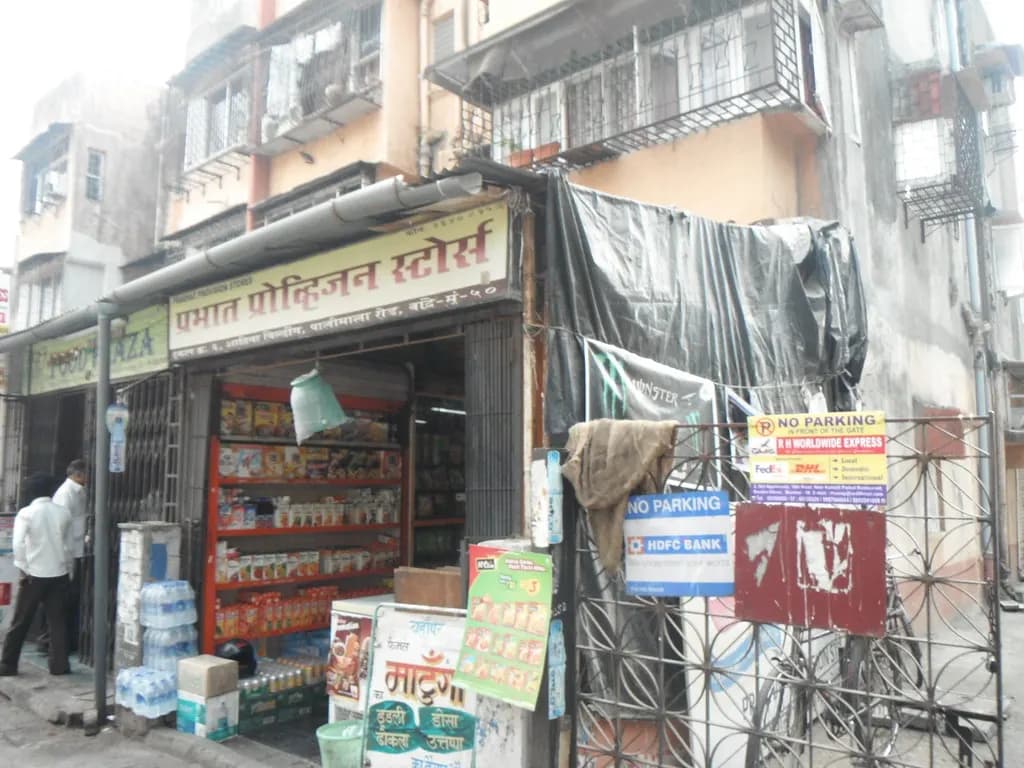
A lower limit of ₹75 lakh applies to a business registered in any of eight States: Arunachal Pradesh, Manipur, Meghalaya, Mizoram, Nagaland, Sikkim, Tripura and Uttarakhand. Other special-category States such as Assam, Himachal Pradesh and Jammu & Kashmir are not on that list, so the ₹1.5 crore limit applies there. A shop in Dehradun with ₹90 lakh of sales last year therefore cannot opt in, while an identical shop in Shimla or Guwahati can.
If you have more than one registration on the same PAN — say a shop in Pune and a godown registered in Goa — the proviso to section 10(2) says all of them must opt together. You cannot keep one GSTIN on composition and another on the regular scheme.
The services allowance for goods dealers
A trader or manufacturer under section 10(1) may also supply some services — repairs, installation, a little rental income — without losing the scheme, as long as their value does not exceed the higher of 10% of last year's turnover in the State or ₹5 lakh. A hardware shop with ₹80 lakh of turnover can therefore earn up to ₹8 lakh from fitting and repair work and stay a composition dealer.
The separate scheme for service providers
Section 10(2A) — available since 1 April 2019, first by notification and written into the Act from 1 January 2020 — opened a second route for businesses that are not eligible under section 10(1) — mainly service providers such as repair shops, coaching centres, beauty parlours, consultants and small contractors. The limit is ₹50 lakh of aggregate turnover in the previous year and the rate is 6% on all supplies of goods and services in the State. A mixed business whose services exceed the 10% / ₹5 lakh allowance can also use this route if its total turnover is within ₹50 lakh.
Composition scheme rates for traders, manufacturers, restaurants and services
Rule 7 of the CGST Rules sets the central-tax rate; an equal State or Union territory tax is added, so the totals below are double the rule 7 figures. The scheme does not change with the product's normal GST rate — the same 1% applies whether you sell 5% groceries or 18% electrical goods. The GST rate rationalisation of 22 September 2025, which moved most goods to 5% or 18%, did not touch composition rates.
Composition rates by category (CGST + SGST)
| Category | Law | Total rate | Charged on |
|---|---|---|---|
Traders (resellers) | s.10(1), rule 7 Sl. 3 | 1% | Turnover of taxable supplies only |
Manufacturers (other than notified goods) | s.10(1), rule 7 Sl. 1 | 1% | Total turnover in the State |
Restaurants and caterers not serving alcohol | s.10(1), Schedule II para 6(b) | 5% | Total turnover in the State |
Service providers and mixed suppliers | s.10(2A), rule 7 Sl. 4 | 6% | Turnover of goods and services in the State |
Traders (resellers)
- Law
s.10(1), rule 7 Sl. 3
- Total rate
1%
- Charged on
Turnover of taxable supplies only
Manufacturers (other than notified goods)
- Law
s.10(1), rule 7 Sl. 1
- Total rate
1%
- Charged on
Total turnover in the State
Restaurants and caterers not serving alcohol
- Law
s.10(1), Schedule II para 6(b)
- Total rate
5%
- Charged on
Total turnover in the State
Service providers and mixed suppliers
- Law
s.10(2A), rule 7 Sl. 4
- Total rate
6%
- Charged on
Turnover of goods and services in the State
One detail matters for traders: since rule 7 was amended, the 1% for "any other supplier" applies only to taxable supplies. A kirana store that sells ₹30 lakh of loose rice, wheat flour, fresh vegetables and other exempt items alongside ₹70 lakh of packaged goods pays composition tax on the ₹70 lakh only. A manufacturer, by contrast, pays on its whole turnover in the State.
Restaurants pay the higher 5% because the law treats serving food as a service (Schedule II, paragraph 6(b)). The restaurant rate is available only when the business does not serve alcoholic liquor — selling alcohol is a supply not taxable under GST, which section 10(2) does not allow.
Who cannot opt for composition
Turnover is only the first test. Section 10(2) and rule 5 shut the scheme to several kinds of business, whatever their size.
| Restriction | What it means in practice | Where it comes from |
|---|---|---|
| Inter-state outward supplies | You cannot sell goods (or, under 10(2A), services) to a buyer in another State. Inter-state purchases are fine. | s.10(2)(c), s.10(2A)(b) |
| Non-taxable supplies | No supplies outside GST, such as alcoholic liquor for human consumption or petrol and diesel | s.10(2)(b) |
| Services via e-commerce | No supply of services through an e-commerce operator that collects TCS. Goods are allowed since 1 October 2023. | s.10(2)(d), s.10(2A)(c) |
| Notified manufacturers | Makers of ice cream and edible ice, pan masala, tobacco products, aerated water, and bricks and roofing tiles | Notifications 14/2019, 43/2019 and 4/2022–CT |
| Casual and non-resident taxable persons | Temporary and foreign registrations are excluded | s.10(2)(f), rule 5(1)(a) |
| Input service distributors, TDS deductors, TCS collectors | These registrations cannot opt | GST portal FAQ |
The e-commerce rule is the one most guides still get wrong. Until 30 September 2023 a composition dealer could not sell goods through Amazon, Flipkart, Meesho or any platform that collects tax at source. The Finance Act 2023 removed the word "goods" from that bar from 1 October 2023, and Notification 36/2023–Central Tax set out a special procedure: the platform must stop composition sellers from making inter-state sales and must collect TCS at 0.5% (0.25% CGST + 0.25% SGST, or 0.5% IGST) and report the sales in GSTR-8. In practice you can sell to buyers in your own State through a marketplace, but the platform will hide your listing for buyers elsewhere. Services through such platforms — a salon taking bookings through an aggregator that collects TCS, for example — remain barred.
The manufacturer exclusions apply only to makers of those goods. A retailer that sells ice cream, cold drinks or packaged pan masala from a shop is a trader, not a manufacturer, and can still opt in.
How to opt in: new registrations and existing taxpayers
There are two routes, and the timing rules differ. A new business chooses composition while applying for registration: Part B of FORM GST REG-01 has a composition option, and ticking it counts as your intimation under rule 3(2). Approval is automatic. If you are already registered under the regular scheme, you file FORM GST CMP-02 on the portal before the financial year starts — in practice, by 31 March — and the option applies from 1 April.
Switching an existing GSTIN to composition
- 1
Check last year's aggregate turnover
Add up turnover across every GSTIN on your PAN for the year just ending. It must not exceed ₹1.5 crore (₹75 lakh in the eight listed States, ₹50 lakh for section 10(2A)).
- 2
File CMP-02 before 1 April
On gst.gov.in go to Services > Registration > Application to Opt for Composition Levy, choose the category (manufacturer, trader, restaurant or 10(2A)) and sign with DSC or EVC.
Tip: Every GSTIN on the same PAN must file CMP-02 for the same year.
Open the GST portal - 3
Reverse credit on stock with ITC-03
Within 60 days of the start of the year, file FORM GST ITC-03 and pay back the input tax credit on inputs, semi-finished and finished goods held on 31 March, and on capital goods.
- 4
Change your stationery and signboard
From 1 April issue bills of supply headed 'composition taxable person, not eligible to collect tax on supplies' and put 'composition taxable person' on the signboard at every place of business.
- 5
Pay quarterly through CMP-08
Pay the flat-rate tax in cash by the 18th of the month after the quarter. GSTR-1 and GSTR-3B stop.
The reversal in step three surprises many switchers. Section 18(4) of the CGST Act requires you to pay back the credit you claimed on stock you are carrying into the scheme, because composition dealers cannot hold credit. If you carry ₹10 lakh of 18% stock on 31 March, about ₹1.8 lakh of credit must be paid back — so switching just after a big stock purchase is expensive. Any balance left in your electronic credit ledger after that reversal lapses.
Bill of supply, records and the signboard rule
A composition dealer cannot issue a tax invoice. Instead you issue a bill of supply with the usual details — your name, address and GSTIN, a serial number, date, buyer's name, description of goods or services, HSN where required, and value — but with no tax column. Rule 5(1)(f) requires the words "composition taxable person, not eligible to collect tax on supplies" at the top of every bill. Rule 5(1)(g) requires "composition taxable person" on the notice or signboard at your principal place of business and every additional place.
Never show GST as a separate line, even if a customer asks. Collecting tax you are not entitled to collect breaks section 10(4), and the amount still has to be paid to the government. Price your goods so that the composition tax comes out of your margin; our profit margin calculator helps you check the effect before you set prices.
You must also keep paying tax under reverse charge at full normal rates on inward supplies that attract it — for example freight paid to a goods transport agency or fees paid to an advocate (rule 5(1)(d)). That reverse-charge tax is paid in cash through CMP-08 and cannot be claimed as credit. Our guide to the reverse charge mechanism lists the services concerned.
Returns and due dates: CMP-08 and GSTR-4
The compliance calendar is the scheme's main attraction. In place of twelve GSTR-3B returns and twelve or four GSTR-1 returns a year, a composition dealer files four CMP-08 statements and one GSTR-4. CMP-08 is a statement-cum-challan: you declare outward turnover and any reverse-charge inward supplies for the quarter and pay the tax in cash. GSTR-4 is the annual return that summarises the year, including inward supplies from registered and unregistered suppliers.
Composition compliance calendar for FY 2026-27
By 31 March 2026
CMP-02 to opt in for the year (existing regular taxpayers)
Within 60 days of 1 April
ITC-03 to reverse credit on stock carried in
18 July 2026
CMP-08 for April–June
18 October 2026
CMP-08 for July–September
18 January 2027
CMP-08 for October–December
18 April 2027
CMP-08 for January–March
30 June 2027
GSTR-4 annual return for FY 2026-27
The GSTR-4 deadline moved from 30 April to 30 June after the financial year from FY 2024-25, following the 53rd GST Council meeting in June 2024. The portal does not let you file GSTR-4 until every CMP-08 for that year is filed. A late GSTR-4 attracts a late fee of ₹50 a day, capped at ₹2,000 where there is no tax payable; late CMP-08 payments attract interest at 18% a year on the tax paid late. Our GST return filing guide covers the regular-scheme returns you would file instead.
Composition dealers also skip e-invoicing and do not file GSTR-9, because GSTR-4 is the annual return. They still generate e-way bills for consignments above the e-way bill threshold.
Composition vs regular scheme: a worked ₹ comparison
Whether composition saves money depends on your margin, the GST rate on what you sell and who buys from you. The rule of thumb: the higher your margin and the higher the normal GST rate on your goods, the more composition saves; the thinner your margin and the lower the normal rate, the more likely the regular scheme is cheaper. The two examples below assume B2C sales at the same shelf price under both schemes, so the customer pays the same amount either way.
Shop A sells 18% goods — electrical fittings — buying ₹80 lakh worth before GST (₹94.4 lakh including ₹14.4 lakh GST) and selling for ₹1.2 crore including tax. Shop B sells 5% goods — packaged groceries — buying ₹1 crore before GST (₹1.05 crore with ₹5 lakh GST) and selling for ₹1.2 crore including tax.
| Line | Shop A — regular | Shop A — composition | Shop B — regular | Shop B — composition |
|---|---|---|---|---|
| Sales collected from customers | ₹1,20,00,000 | ₹1,20,00,000 | ₹1,20,00,000 | ₹1,20,00,000 |
| GST in the price (output tax) | ₹18,30,508 | — | ₹5,71,429 | — |
| Input tax credit | ₹14,40,000 | Not allowed | ₹5,00,000 | Not allowed |
| GST paid in cash | ₹3,90,508 | ₹1,20,000 (1%) | ₹71,429 | ₹1,20,000 (1%) |
| Cost of purchases | ₹80,00,000 | ₹94,40,000 | ₹1,00,00,000 | ₹1,05,00,000 |
| Gross profit | ₹21,69,492 | ₹24,40,000 | ₹14,28,571 | ₹13,80,000 |
For Shop A, composition leaves ₹2,70,508 more profit, because the 18% tax on a 25% margin is far more than 1% of turnover. For Shop B it costs ₹48,571, because 5% tax on a thin margin is already below 1% of turnover — and composition also throws away the ₹5 lakh of input credit. Run your own numbers with the GST calculator before switching.
Restaurants are a closer call. A non-alcohol restaurant outside hotel "specified premises" pays 5% (no input tax credit) under the regular scheme anyway. If diners pay ₹42 lakh in a year, a regular restaurant keeps ₹40 lakh and passes ₹2 lakh to the government; a composition restaurant charging the same final price pays 5% of ₹42 lakh, or ₹2.1 lakh, and keeps ₹39.9 lakh. The ₹10,000 difference buys you four CMP-08s instead of monthly GSTR-1 and GSTR-3B filings — which is often worth it for a small eatery.
Services see the biggest saving. A two-person mobile-repair shop with ₹45 lakh of GST-inclusive B2C receipts and ₹5 lakh of 18% inputs would owe about ₹6.86 lakh of output tax under the regular scheme, less ₹90,000 of credit — roughly ₹5.96 lakh in cash. Under section 10(2A) it pays 6% of ₹45 lakh, or ₹2.7 lakh, saving more than ₹3 lakh a year.
Stay on the regular scheme if any of these apply
0/5Switching out: crossing the limit, withdrawal and denial
The option lapses automatically on the day your aggregate turnover during the current year crosses the limit (section 10(3)). From that day you are a regular taxpayer: you issue tax invoices, charge GST at normal rates and file GSTR-1 and GSTR-3B. Rule 6(2) gives you 7 days to file the CMP-04 intimation. The same applies if you break any other condition — for example by making a single inter-state sale.
You can also leave voluntarily at any time by filing CMP-04 before the date you want to exit. Either way, rule 6(6) lets you file FORM GST ITC-01 within 30 days to claim input tax credit on inputs and goods in stock on the day before the switch, as section 18(1)(c) allows. Keep purchase invoices for that stock — credit is allowed only on invoices dated within a year.
If a tax officer believes you were never eligible, or have broken the rules, they issue a show-cause notice in CMP-05. You reply in CMP-06 within 15 days, and the officer passes an order in CMP-07 within 30 days of your reply. A denial can be backdated to the date of the breach, with tax at normal rates, interest and a penalty under section 10(5). The most common triggers are inter-state sales, collecting GST on bills and turnover above the limit across a PAN's registrations.
Common mistakes composition dealers make
Charging GST on the bill. Billing software set up for regular dealers often adds a tax line by default. Turn it off and use a bill-of-supply format — our free invoice generator has one.

Forgetting other GSTINs on the same PAN. A trader with a composition registration in one State and a regular registration in another breaks the PAN-level rule. Either every registration opts in or none do.
Counting only taxable turnover for the limit. Exempt sales, such as fresh vegetables or unbranded flour, count towards the ₹1.5 crore limit even though the trader pays no composition tax on them.
Missing the CMP-02 window. Filed on 2 April, CMP-02 takes effect only from the next financial year. Set a reminder for March.
Ignoring reverse charge. Composition dealers still pay reverse-charge tax at full rates — on freight paid to a goods transport agency, legal fees and other notified services — and cannot claim it back. Budget for it.
Assuming composition means no registration. Composition is a way of paying GST after you register, not an exemption. If your turnover is below the registration threshold of ₹40 lakh for goods, you may not need GST at all; see our GST registration guide and what is GST.
Official links
- GST portal — opt for composition (CMP-02) and file CMP-08 / GSTR-4Services > Registration and Returns
- Portal FAQ: opting for compositionGSTN user guide
- CGST Act section 10 — composition levyCBIC tax information portal
- CGST Rule 7 — composition ratesAlso see rules 3, 5 and 6 in the same chapter
- Notification 14/2019–Central Tax₹1.5 crore / ₹75 lakh limits and excluded manufacturers
What to do next
If you sell mainly to walk-in customers within your State, have a healthy margin and want fewer returns, compare your last year's numbers under both schemes using the table above and file CMP-02 before 31 March. If your buyers are businesses that need input tax credit, stay on the regular scheme and read our input tax credit guide to make the most of it.
This is general information, not legal or tax advice — confirm on the official source or with a professional.
Frequently asked questions
It is an optional, simplified way of paying GST under section 10 of the CGST Act for small businesses. Instead of charging GST on each invoice and claiming input tax credit, you pay a flat percentage of your turnover — 1% for traders and manufacturers, 5% for restaurants and 6% for service providers — file a quarterly CMP-08 and one annual GSTR-4.
Aggregate turnover in the previous financial year must not exceed ₹1.5 crore for goods suppliers and restaurants, or ₹75 lakh in Arunachal Pradesh, Manipur, Meghalaya, Mizoram, Nagaland, Sikkim, Tripura and Uttarakhand. Service providers opting under section 10(2A) have a limit of ₹50 lakh. Turnover is counted across every GSTIN on the same PAN.
Yes, for goods, since 1 October 2023. The Finance Act 2023 removed the bar on supplying goods through e-commerce operators that collect TCS, and Notification 36/2023–Central Tax requires the platform to block inter-state sales by composition sellers. Services through such platforms are still not allowed, so a service provider under section 10(2A) cannot sell through them.
No. Section 10(4) bars a composition taxpayer from collecting tax from customers. You issue a bill of supply, not a tax invoice, with the words 'composition taxable person, not eligible to collect tax on supplies' at the top. The tax you pay comes out of your own margin, and your buyers cannot claim input tax credit on your bills.
CMP-08, the quarterly statement-cum-challan, is due by the 18th of the month after the quarter, so 18 July, 18 October, 18 January and 18 April. GSTR-4, the annual return, is due by 30 June after the financial year. Late GSTR-4 attracts a late fee of ₹50 a day capped at ₹2,000 for nil filers, and late CMP-08 payment attracts interest.
File FORM GST CMP-04 on the GST portal before the date you want to withdraw. If you cross the turnover limit or break a condition, the option lapses that day and you must file CMP-04 within 7 days. You then issue tax invoices, and you can claim credit on stock held that day by filing FORM GST ITC-01 within 30 days.
Sources & verification
Figures on this page were checked against the sources below when it was last reviewed on 7 October 2026. Each rate and limit is stored once with its own official source and review date, and official update channels are monitored daily so changes are picked up. How we verify
- 1.CGST Act 2017, section 10 — Composition levy — CBIC · accessed 7 October 2026
- 2.CGST Rules — rule 3 (intimation), rule 5 (conditions), rule 6 (validity) and rule 7 (rates) — CBIC · accessed 7 October 2026
- 3.Notification No. 14/2019 – Central Tax (composition threshold) — GST Council / CBIC · accessed 7 October 2026
- 4.FAQ — To opt for composition (GST portal user guide) — GSTN · accessed 7 October 2026
- 5.CGST Rule 62 — returns of composition taxpayers — CBIC · accessed 7 October 2026
- 6.CBIC notifies special procedure for ECOs for supplies by composition dealers (Notification 36/2023-CT) — Taxmann · accessed 7 October 2026
- 7.Composition: goods whose manufacturers are barred — TaxClue · accessed 7 October 2026
- 8.Composition scheme under GST — ClearTax · accessed 7 October 2026
MSMETOOLS is an independent platform and is not affiliated with any government agency, ministry or department.
Tools for this
GST Calculator (India)
Calculate GST for your sales and purchases with current rates.
Invoice Generator
Create professional invoices with tax, logo and custom details.
Profit Margin Calculator
Calculate profit, markup and margin for your products or services.
Related guides
 GST Return Filing in 2026: Types, Due Dates & ProcessRead guide
 What Is GST? Goods and Services Tax in India Explained (2026)Read guide
 GSTR-4 in 2026: Due Date, CMP-08, Late Fee & How to FileRead guide
 Bill of Supply under GST 2026: Rule 49 Format & When to UseRead guide
Official links open the government site in a new tab.