 GST & indirect tax
GST on Fertilizers in 2026: Chemical, Organic and Bio-Fertilisers, Inputs, Subsidy and Inverted Duty
GST on fertilizers in 2026: 5% on urea, DAP and NPK, Nil on loose manure, 5% on micronutrients, sulphuric acid and ammonia, subsidy value rules and worked ₹ bills.
 Edited by Sumeet YadavFounder & editor, MSMETOOLS · fact-checked against official sources

Contents (10)
- 1. GST rates on fertilisers in 2026
- 2. HSN codes for fertilisers and how classification works
- 3. Organic manure, bio-fertilisers and micronutrients
- 4. Fertiliser inputs after GST 2.0
- 5. Subsidy, MRP and the taxable value
- 6. Worked bills: GST on fertilisers in rupees
- 7. Inverted duty: what GST 2.0 fixed and what remains
- 8. Dealers, cooperatives and farmers
- 9. Common mistakes with GST on fertilisers
- 10. What to do next
Fertilisers are one of the few farm inputs where GST is simple at the counter and complicated behind it. The farmer pays one low rate; the manufacturer deals with subsidised prices, raw materials taxed at different rates and, until 2025, a large pile of unused credit. This guide is for fertiliser dealers, cooperative societies, organic-input and micronutrient makers, fertiliser and chemical manufacturers, and farmers who want to check a bill. It gives the 2026 GST rates on chemical, organic and bio-fertilisers, micronutrients and key inputs, the HSN codes, how the subsidy affects the taxable value, the inverted-duty position after GST 2.0, and worked bills in rupees. Rates were checked against the notified schedules in October 2026.
Quick answer
Chemical and mineral fertilisers of HSN 3102–3105 — urea, DAP, MOP, SSP, NPK complexes — attract 5% GST. Pre-packaged and labelled organic fertilisers are 5%, and loose organic manure is Nil. From 22 September 2025, sulphuric acid, nitric acid and ammonia fell from 18% to 5%, and FCO-listed micronutrients from 12% to 5%.
On a ₹1,350 bag of DAP (illustrative), GST is ₹67.50
Fertiliser-type goods clearly not for use as fertiliser: 18%
Chemical pesticides 18%; listed bio-pesticides 5%
Government subsidy is not part of the taxable value
Farmers cannot claim the GST back
GST rates on fertilisers in 2026
Notification 9/2025–Central Tax (Rate), the goods rate schedule in force since 22 September 2025, lists the whole of Chapter 31 in Schedule I, the 2.5% central tax schedule. Serial 237 covers "all goods i.e. animal or vegetable fertilisers or organic fertilisers pre-packaged and labelled" under 3101. Serials 238 to 241 cover mineral or chemical fertilisers that are nitrogenous (3102), phosphatic (3103) and potassic (3104), and fertilisers containing two or three of nitrogen, phosphorus and potassium, other fertilisers, and Chapter 31 goods in tablets or packages up to 10 kg (3105) — in each case "other than those which are clearly not to be used as fertilizers". With the matching state tax, the rate is 5% within a state, or the same as IGST.
The fertilisers themselves were already at 5% before GST 2.0, which is why most news coverage of the 56th GST Council focused on the inputs. The Council's fertiliser annexure cut sulphuric acid, nitric acid and ammonia from 18% to 5%, and gibberellic acid, twelve named bio-pesticides and FCO micronutrients from 12% to 5%. The Council described these cuts as a "correction of inverted duty structure in fertilizer sector".
GST on fertilisers and agri-chemicals (2026)
| Product (HSN) | GST rate | Schedule entry |
|---|---|---|
Urea, ammonium sulphate, CAN — nitrogenous fertilisers (3102) | 5% | Sch. I 238 |
Single super phosphate and other phosphatic fertilisers (3103) | 5% | Sch. I 239 |
Muriate of potash and other potassic fertilisers (3104) | 5% | Sch. I 240 |
DAP, NPK complexes, water-soluble fertilisers, packs up to 10 kg (3105) | 5% | Sch. I 241 |
Any of 3102–3105 clearly not to be used as fertiliser | 18% | Sch. II 39–42 |
Organic fertiliser, pre-packaged and labelled (3101) | 5% | Sch. I 237 |
Organic manure and 3101 goods, not pre-packaged and labelled | Nil | Exemption S.No. 116 |
FCO micronutrients by FCO-registered makers (28 or 38) | 5% | Sch. I 221 |
Gibberellic acid (29 or 3808 93) | 5% | Sch. I 222 |
Listed bio-pesticides — Trichoderma, Bt, NPV, neem-based (3808) | 5% | Sch. I 260 |
Other insecticides, fungicides, herbicides, growth regulators (3808) | 18% | Sch. II 95 |
Urea, ammonium sulphate, CAN — nitrogenous fertilisers (3102)
- GST rate
5%
- Schedule entry
Sch. I 238
Single super phosphate and other phosphatic fertilisers (3103)
- GST rate
5%
- Schedule entry
Sch. I 239
Muriate of potash and other potassic fertilisers (3104)
- GST rate
5%
- Schedule entry
Sch. I 240
DAP, NPK complexes, water-soluble fertilisers, packs up to 10 kg (3105)
- GST rate
5%
- Schedule entry
Sch. I 241
Any of 3102–3105 clearly not to be used as fertiliser
- GST rate
18%
- Schedule entry
Sch. II 39–42
Organic fertiliser, pre-packaged and labelled (3101)
- GST rate
5%
- Schedule entry
Sch. I 237
Organic manure and 3101 goods, not pre-packaged and labelled
- GST rate
Nil
- Schedule entry
Exemption S.No. 116
FCO micronutrients by FCO-registered makers (28 or 38)
- GST rate
5%
- Schedule entry
Sch. I 221
Gibberellic acid (29 or 3808 93)
- GST rate
5%
- Schedule entry
Sch. I 222
Listed bio-pesticides — Trichoderma, Bt, NPV, neem-based (3808)
- GST rate
5%
- Schedule entry
Sch. I 260
Other insecticides, fungicides, herbicides, growth regulators (3808)
- GST rate
18%
- Schedule entry
Sch. II 95
There is no compensation cess on fertilisers. Seeds for sowing are Nil (exempt), tractors and most agricultural machinery are 5%, and services such as ploughing, harvesting and renting farm machinery for cultivation are exempt — see our guides to GST on tractors and GST exemptions.
HSN codes for fertilisers and how classification works
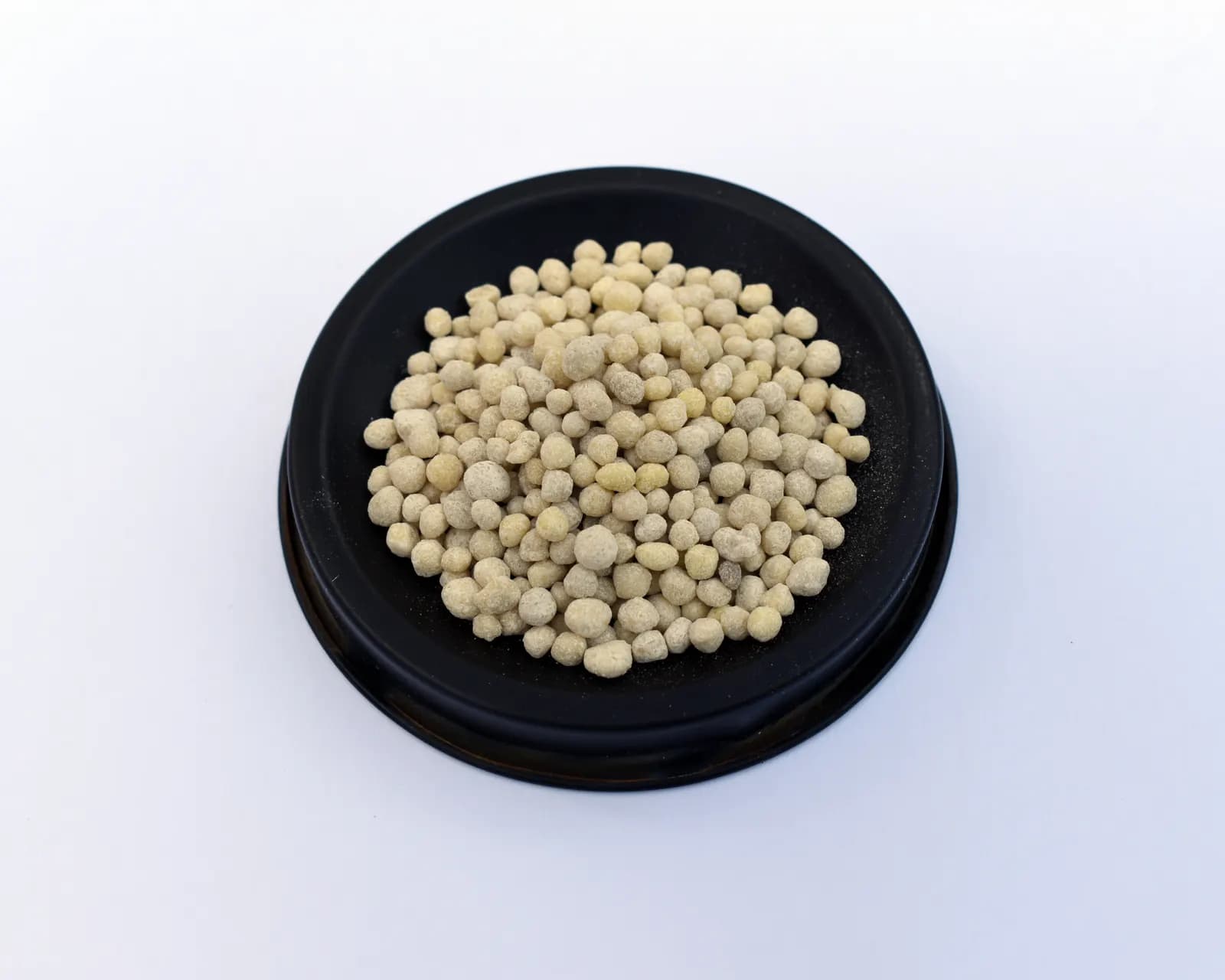
Chapter 31 of the Customs Tariff is built around the nutrient. A product with only nitrogen, such as urea (3102 10), ammonium sulphate or calcium ammonium nitrate, is 3102. Single super phosphate is 3103. Muriate of potash and sulphate of potash are 3104. Diammonium phosphate (3105 30), monoammonium phosphate, NPK complexes, water-soluble mixtures and any Chapter 31 product sold in tablets or in packs up to 10 kg gross go to 3105. Organic fertilisers and manures of animal or vegetable origin are 3101.
Classification inside Chapter 31 does not change the rate for genuine fertilisers, because every heading is at 5%. It still matters for your invoices and returns: businesses with aggregate turnover up to ₹5 crore report at least a 4-digit HSN code in GSTR-1, and larger businesses a 6-digit HSN code.
What does change the rate is the end use. Each of the four 5% entries excludes goods "clearly not to be used as fertilizers", and Schedule II serials 39 to 42 tax those at 18%. Technical-grade urea sold to resin and adhesive makers — the plywood industry is a big buyer — and ammonium nitrate of explosive grade are the usual examples. A supplier who sells the same chemical to both farmers and factories should document the grade, packaging and buyer for each sale so that the rate can be defended.
Organic manure, bio-fertilisers and micronutrients
Organic manure — Nil or 5%. Notification 10/2025–Central Tax (Rate), the exemption schedule issued alongside GST 2.0, exempts "all goods and organic manure, other than pre-packaged and labelled" of heading 3101 at serial 116. Farmyard manure, compost and vermicompost sold loose by weight are therefore Nil. Once the product is pre-packaged and labelled — a packed commodity of up to 25 kg that must carry Legal Metrology declarations — it moves to Schedule I at 5%. A small vermicompost unit that sells 1,000 kg loose to farmers and 200 five-kg retail packs to nurseries charges no GST on the first and 5% on the second.
Bio-fertilisers. Products such as Rhizobium, Azotobacter, PSB and mycorrhizal formulations are regulated as bio-fertilisers under the Fertiliser Control Order, 1985, but the GST rate schedule does not name them. Their rate follows their classification. Makers commonly classify them in Chapter 31 as organic or "other" fertilisers, which puts them at 5%; a product that is really a microbial culture or a pesticide may fall elsewhere. If you make or trade bio-fertilisers, keep the FCO registration, product composition and classification note on file, and consider an advance ruling if the amounts are large.
Micronutrients. Zinc sulphate, boron, chelated micronutrients and similar products are chemicals of Chapter 28 or preparations of Chapter 38, not Chapter 31 fertilisers. GST 2.0 created a specific entry for them at Schedule I serial 221, at 5%, but only when two conditions are met: the product must be a micronutrient covered under serial 1(g) of Schedule 1, Part A of the Fertiliser Control Order, 1985, and it must be made by a manufacturer registered under the FCO. A micronutrient that misses either condition — for example, an industrial zinc sulphate sold by a chemical trader without FCO registration — is taxed under its ordinary heading, usually at 18%.
Plant-protection products. Gibberellic acid, a plant-growth regulator, is 5%. Twelve named bio-pesticides, including Trichoderma, Bacillus thuringiensis strains, Pseudomonas fluorescens, NPV and neem-based pesticides, are 5%. All other insecticides, fungicides, herbicides and growth regulators of heading 3808 remain at 18%.
Fertiliser inputs after GST 2.0
Before 22 September 2025, the main feedstocks for fertiliser plants were taxed far above the 5% output rate. Sulphuric acid, nitric acid and ammonia were at 18%. A phosphatic fertiliser plant buying sulphuric acid, or an NPK plant buying ammonia, paid more GST on inputs than it collected on sales and carried the difference as unused credit.
The 56th Council moved all three to 5% at Schedule I serials 214, 215 and 217. Fertiliser-grade phosphoric acid (serial 216), natural calcium phosphates — rock phosphate — under 2510 (serial 171), and gypsum under 2520 (serial 185) are also at 5%. The main remaining 18% items for a fertiliser maker are packaging — woven polypropylene and HDPE sacks are 18% — plant and machinery, chemicals outside the specific entries, and most services.
Key fertiliser inputs — before and after 22 September 2025
| Input (HSN) | Until 21 Sep 2025 | From 22 Sep 2025 |
|---|---|---|
Sulphuric acid (2807) | 18% | 5% |
Nitric acid (2808) | 18% | 5% |
Ammonia (2814) | 18% | 5% |
FCO micronutrients (28 or 38) | 12% | 5% |
Fertiliser-grade phosphoric acid (2809) | — | 5% |
Rock phosphate (2510) / gypsum (2520) | — | 5% |
PP/HDPE woven sacks (3923, 6305) | — | 18% |
Sulphuric acid (2807)
- Until 21 Sep 2025
18%
- From 22 Sep 2025
5%
Nitric acid (2808)
- Until 21 Sep 2025
18%
- From 22 Sep 2025
5%
Ammonia (2814)
- Until 21 Sep 2025
18%
- From 22 Sep 2025
5%
FCO micronutrients (28 or 38)
- Until 21 Sep 2025
12%
- From 22 Sep 2025
5%
Fertiliser-grade phosphoric acid (2809)
- Until 21 Sep 2025
—
- From 22 Sep 2025
5%
Rock phosphate (2510) / gypsum (2520)
- Until 21 Sep 2025
—
- From 22 Sep 2025
5%
PP/HDPE woven sacks (3923, 6305)
- Until 21 Sep 2025
—
- From 22 Sep 2025
18%
Natural gas is still outside GST. Natural gas is the main feedstock and fuel for urea and ammonia plants, and section 9(2) of the CGST Act keeps it outside GST until the Council recommends a date to bring it in. Gas is billed with state VAT rather than GST, and that tax cannot be set off against GST on fertiliser sales. For a gas-based urea plant, the gas tax is therefore a cost, not a credit.
Subsidy, MRP and the taxable value
Most chemical fertilisers in India are sold below cost. For urea, the government notifies a statutory maximum retail price and pays the manufacturer or importer the gap between the delivered cost and the net realisation from sales. In a Rajya Sabha answer of February 2025, the Department of Fertilizers gave that price as ₹242 per 45 kg bag, exclusive of neem-coating charges and applicable taxes. Phosphatic and potassic fertilisers such as DAP, MOP and NPK complexes are under the Nutrient Based Subsidy scheme, where companies set the price and the government pays a fixed subsidy per nutrient.
The subsidy is kept out of GST. Section 15(2)(e) of the CGST Act includes in the taxable value "subsidies directly linked to the price excluding subsidies provided by the Central Government and State Governments". Because fertiliser subsidies come from the central government, the manufacturer pays GST only on the price it actually charges dealers and farmers, not on its full cost. A private incentive linked to price — a scheme paid by a parent company to its distributor, for example — would be added to the value.
The practical result is that GST on a bag of fertiliser is small in rupees. On the statutory urea price of ₹242 per 45 kg bag, GST at 5% works out to ₹12.10, before neem-coating charges, which are added separately.
Worked bills: GST on fertilisers in rupees
The urea figure uses the statutory price; the other prices are illustrative round figures to show the arithmetic, not current market prices, which vary by company and state.
| Purchase | Taxable value | GST rate | GST | Bill total |
|---|---|---|---|---|
| 10 bags of urea, 45 kg, at ₹242 (statutory MRP before tax) | ₹2,420 | 5% | ₹121 | ₹2,541 |
| 4 bags of DAP, 50 kg, at ₹1,350 (illustrative) | ₹5,400 | 5% | ₹270 | ₹5,670 |
| 1,000 kg loose vermicompost at ₹8 | ₹8,000 | Nil | ₹0 | ₹8,000 |
| 100 packs of vermicompost, 5 kg, at ₹60 | ₹6,000 | 5% | ₹300 | ₹6,300 |
| 20 kg FCO zinc sulphate at ₹90 | ₹1,800 | 5% | ₹90 | ₹1,890 |
| 1 litre chemical insecticide at ₹1,200 | ₹1,200 | 18% | ₹216 | ₹1,416 |
Neem-coating charges on urea are not included in the first line. A dealer who adds transport or unloading to the same invoice must include those charges in the value at the fertiliser's rate, because incidental expenses charged by the supplier form part of the value under section 15.
Try it — GST on a fertiliser bill
Inverted duty: what GST 2.0 fixed and what remains
A plant making single super phosphate shows the effect. Assume, for illustration, monthly sales of ₹1,00,00,000 at 5%, giving ₹5,00,000 of output tax. It buys ₹40,00,000 of rock phosphate at 5% (₹2,00,000 of credit), ₹20,00,000 of sulphuric acid, ₹5,00,000 of HDPE bags at 18% (₹90,000), and ₹4,00,000 of services at 18% (₹72,000).
SSP plant, one month (illustrative)
₹5,00,000
Output GST at 5%
₹7,22,000
Credit with acid at 18%
before 22 Sep 2025
₹4,62,000
Credit with acid at 5%
after 22 Sep 2025
₹38,000
Now paid in cash each month
With sulphuric acid at 18%, its credit on the acid was ₹3,60,000 and total credit ₹7,22,000 — ₹2,22,000 more than its output tax, every month. With the acid at 5%, credit on the acid is ₹1,00,000, total credit ₹4,62,000, and the plant pays ₹38,000 in cash. The cut turned a refund-dependent business into a normal tax-paying one.
Some fertiliser makers will still have excess credit, especially those with heavy packaging, imported inputs or large service costs. Section 54(3) of the CGST Act allows a refund of credit accumulated because inputs are taxed at a higher rate than outputs. The formula in Rule 89(5) counts only inputs — not input services or capital goods — so credit on services, freight and machinery is never refunded and must be used against future output tax. CBIC's Instruction 06/2025-GST asked officers to sanction 90% of inverted-duty claims filed from 1 October 2025 provisionally, on the system's risk assessment. Claims are filed in FORM GST RFD-01 within two years from the relevant date of the relevant date.
Stock and credit already in the ledger on 22 September 2025 were not taken away. A plant with a large opening balance uses it against output tax over the following months, or claims a refund for past periods within the time limit.
Dealers, cooperatives and farmers
Fertiliser dealers. A retailer or wholesaler buys at 5% and sells at 5%, so it pays tax only on its margin after claiming credit. Registration is required once aggregate turnover crosses ₹40 lakh in most states. Many dealers also sell seeds, which are Nil (exempt), and pesticides at 18%; such a dealer must apportion common credit on rent, electricity and services between taxable and exempt sales under Rule 42. A dealer with mainly exempt seed sales cannot claim the full credit on its shop costs.
Cooperative societies and FPOs. A primary agricultural cooperative or farmer producer organisation that buys fertiliser in bulk and supplies it to members is making a taxable supply, even if it does not add a margin. It needs to register once it crosses the threshold, charge 5% and file returns. An FPO that also sells its members' produce should check which of its sales are exempt agricultural produce; our GST exemptions guide covers the produce side.
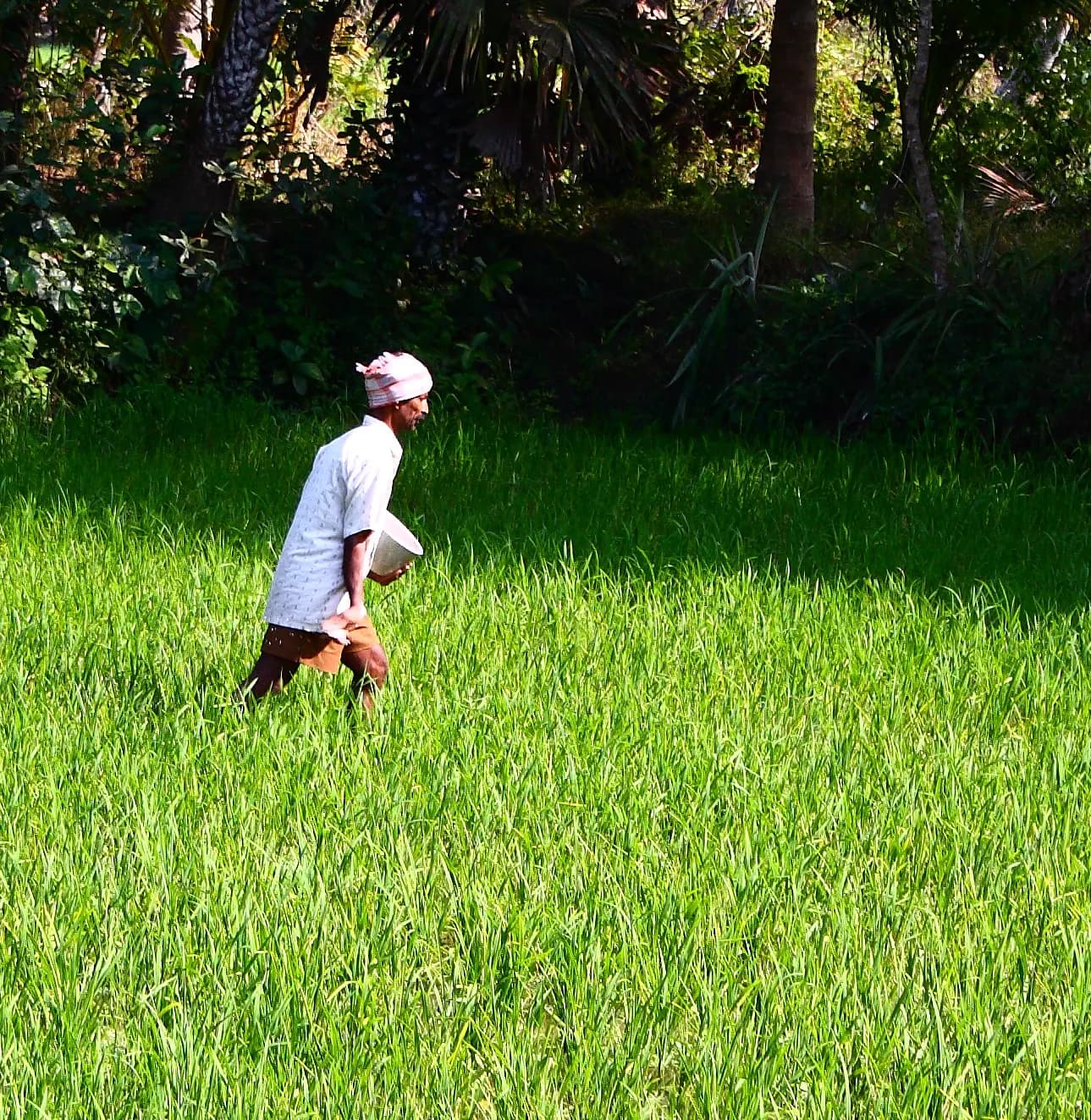
Farmers. Section 23(1)(b) of the CGST Act says an agriculturist is not liable to register to the extent of supply of produce out of cultivation of land. An unregistered farmer cannot claim credit, so the GST on fertilisers, pesticides and machinery is a cost of farming. Government subsidies on agri-inputs and equipment, covered in our guide to agriculture subsidies, are a separate benefit. Organic growers making their own compost can use it without any GST implication; selling it loose is also exempt, as explained above. Our guide to starting an organic farming business covers certification and sales.
Common mistakes with GST on fertilisers
Check your fertiliser invoice
0/7Charging 5% on technical-grade chemicals. Urea, ammonium nitrate and other Chapter 31 chemicals sold for industrial use are at 18%. The 5% entries only cover goods that are not clearly meant for non-fertiliser use.
Charging 5% on every micronutrient. The 5% entry is conditional. Without FCO listing and an FCO-registered manufacturer, the ordinary rate for the chemical applies.
Charging GST on loose compost. Loose organic manure is exempt. Charging 5% on it overcharges the buyer, and exempt sales also affect the seller's credit apportionment.
Treating all bio-products alike. Twelve bio-pesticides are named at 5%. Other bio-stimulants and plant-protection products follow their own classification and are often at 18%.
Assuming the 2025 cut removed all excess credit. Packaging, services and machinery are still at 18%. Run the Rule 89(5) formula every quarter if your credit keeps growing.
Official links
- Notification 9/2025–CT(Rate) — goods rate scheduleFertilisers Sch. I 237–241; inputs 214–222
- Notification 10/2025–CT(Rate) — exempt goodsS.No. 116 — loose organic manure
- 56th GST Council — recommendations and annexuresFertiliser sector changes
- Section 15, CGST ActSubsidy and value
- Rule 89, CGST RulesInverted-duty refunds
- Department of FertilizersSubsidy schemes and urea pricing
What to do next
If you are a dealer, check that your billing software has separate items for farm-use and industrial-use chemicals, for loose and packed organic products, and for FCO and non-FCO micronutrients. If you manufacture fertilisers or inputs, compare your credit ledger before and after 22 September 2025 and decide whether a refund claim is still worth filing. Use the GST calculator to check any bill, and read our guides to input tax credit, GST 2.0 and GST on tractors.
This is general information, not legal or tax advice — confirm on the official source or with a professional.
Frequently asked questions
Mineral or chemical fertilisers — nitrogenous, phosphatic, potassic and NPK or complex fertilisers of HSN 3102 to 3105, including urea, DAP, MOP and SSP — attract 5% GST. GST 2.0 did not change this rate. The same goods are taxed at 18% when they are clearly not meant for use as fertilisers, such as technical-grade urea for resins.
Fertiliser urea is taxed at 5%. Its maximum retail price is fixed by the government at ₹242 per 45 kg bag, which is stated to be exclusive of neem-coating charges and taxes, so GST is added on top. The subsidy the government pays to urea makers is not part of the taxable value under section 15(2)(e) of the CGST Act.
Organic manure and other goods of HSN 3101 that are not pre-packaged and labelled are exempt — Nil — under Notification 10/2025–CT(Rate). The same products sold pre-packaged and labelled, for example a branded vermicompost bag within the Legal Metrology limits, attract 5%. Selling loose compost by weight from a farm or nursery is therefore tax-free.
Fertilisers are in Chapter 31. Animal, vegetable and organic fertilisers are 3101; nitrogenous fertilisers such as urea and ammonium sulphate 3102; phosphatic fertilisers such as SSP 3103; potassic fertilisers such as MOP 3104; and fertilisers with two or three of N, P and K, such as DAP and NPK complexes, 3105. Micronutrients are usually in Chapter 28 or 38.
From 22 September 2025, sulphuric acid, nitric acid and ammonia attract 5%, down from 18%, and FCO-listed micronutrients made by FCO-registered manufacturers attract 5%, down from 12%. Fertiliser-grade phosphoric acid, rock phosphate and gypsum are also 5%. The change was made to correct the inverted duty in the fertiliser sector.
No. A farmer who only sells produce from cultivating land is not required to register under section 23(1)(b) of the CGST Act, and an unregistered person cannot claim input tax credit. The 5% paid on fertilisers is a cost of farming. Fertiliser dealers and manufacturers, who are registered, do claim credit on their purchases.
Sources & verification
Figures on this page were checked against the sources below when it was last reviewed on 9 October 2026. Each rate and limit is stored once with its own official source and review date, and official update channels are monitored daily so changes are picked up. How we verify
- 1.Notification No. 9/2025–Central Tax (Rate), 17 September 2025 (Gazette of India, G.S.R. 641(E)) — Ministry of Finance / Gazette of India · accessed 9 October 2026
- 2.Notification No. 10/2025–Central Tax (Rate) (exempt goods), Gazette of India, G.S.R. 660(E) — Ministry of Finance / Gazette of India · accessed 9 October 2026
- 3.Recommendations of the 56th GST Council meeting (press release with rate annexures) — GST Council / PIB · accessed 9 October 2026
- 4.Section 15 – CGST Act, 2017 (value of supply) — CBIC · accessed 9 October 2026
- 5.Rule 89 – CGST Rules, 2017 (refund applications and inverted-duty formula) — CBIC · accessed 9 October 2026
- 6.Rajya Sabha unstarred question — urea MRP and subsidy (answer of 4 February 2025) — Rajya Sabha / Department of Fertilizers · accessed 9 October 2026
- 7.Section 23 – CGST Act, 2017 (persons not liable for registration) — CBIC · accessed 9 October 2026
MSMETOOLS is an independent platform and is not affiliated with any government agency, ministry or department.
Tools for this
GST Calculator (India)
Calculate GST for your sales and purchases with current rates.
Invoice Generator
Create professional invoices with tax, logo and custom details.
HSN Code Finder (India)
Find the correct HSN/SAC code for your product.
Related guides
 GST on Tractors 2026: 5% Rate, Parts, HSN 8701 & ITCRead guide
 New GST Rules 2026: GST 2.0 Slabs, Changes & Latest UpdatesRead guide
 Exemption from GST 2026: Exempt, Nil, Zero-Rated & ITC RulesRead guide
 GST on Cigarettes 2026: 40% on RSP, Excise, Bidi & Pan MasalaRead guide
Official links open the government site in a new tab.