 GST & indirect tax
GST on Catering Services in 2026: Outdoor Catering, Canteens, School Meals and Worked Examples
GST on catering services in 2026: 5% outdoor catering without ITC, 18% at specified premises, canteens, school exemption, SAC 996334 and worked ₹ examples.
 Edited by Sumeet YadavFounder & editor, MSMETOOLS · fact-checked against official sources
Contents (11)
- 1. What counts as catering under GST
- 2. The 5% and 18% rates and the specified-premises test
- 3. What "no input tax credit" means for a caterer
- 4. Catering with the venue: wedding and event packages
- 5. Canteens, messes and tiffin contracts
- 6. Schools, anganwadis and other educational institutions
- 7. Can the customer claim input tax credit?
- 8. Worked examples in rupees
- 9. Registration, composition and invoicing for caterers
- 10. Common mistakes and how they are fixed
- 11. What to do next
Caterers in India feed weddings, conferences, factory shifts, hospital wards and school children, and GST treats each of those jobs a little differently. The rate can be 5% or 18%, input tax credit may or may not be allowed, and some school meals are fully exempt. This guide is for caterers setting prices and for the families, companies and institutions paying the bills. It covers the 2026 rates and SAC codes, the "specified premises" test, canteens, the education exemption, what the buyer can claim back, and worked examples in rupees. Everything was checked against the rate notifications and CBIC circulars in October 2026.
Quick answer
Outdoor catering — food served at weddings, parties, conferences and exhibitions — is taxed at 5% (no input tax credit) (SAC 996334), and the same rate applies when the caterer also provides the hall or pandal. It rises to 18% with ITC only when the caterer is a hotel at a specified premises or operates from one. Daily canteens and messes are restaurant service at 5% (no input tax credit).
The 5% rate is mandatory: a caterer cannot choose 18% to claim input tax credit
Catering to schools and anganwadis, including mid-day meals, is exempt — colleges are not
Most buyers cannot claim credit on catering bills (section 17(5)(b)), except event managers and employers with a legal duty to feed staff
GST 2.0 (22 September 2025) did not change any catering rate
What counts as catering under GST
GST law does not treat a caterer as a seller of food. Supplying food or drink "by way of or as part of any service" is a supply of services under paragraph 6(b) of Schedule II to the CGST Act, so the whole plate — ingredients, cooking, serving staff, crockery and transport — is one composite supply of services. That matters in three ways: the services registration threshold applies, the bill carries one rate rather than separate rates for each dish, and the place-of-supply rules for services decide whether the tax is CGST plus SGST or IGST.
The rate notification for services, Notification 11/2017-Central Tax (Rate), uses three defined terms that every caterer should know:
- Outdoor catering means supplying food or drink at exhibition halls, events, conferences, marriage halls and other outdoor or indoor functions "that are event based and occasional in nature".
- Restaurant service means supplying food or drink by a restaurant or eating joint, "including mess, canteen", whether eaten on the premises or taken away.
- Specified premises means, for a financial year, a hotel premises that supplied any unit of accommodation above ₹7,500 per unit per day in the preceding financial year, or one whose owner has filed an opt-in declaration.
The difference between the first two is whether the job is a one-off event or a regular arrangement. A caterer who serves 300 guests at a sangeet is supplying outdoor catering. The same caterer running a factory canteen six days a week is supplying restaurant service. At most premises both are taxed at 5%, but the classification changes which entry you quote, which SAC you print and whether the composite-with-venue entry is available.
| SAC | Description | Usual 2026 rate |
|---|---|---|
| 996331 | Restaurants, cafes, takeaway and delivery | 5% (no input tax credit) (18% at specified premises) |
| 996332 | Food services of hotels, inns, guest houses and clubs | Depends on specified premises |
| 996333 | Canteens and similar establishments | 5% (no input tax credit) |
| 996334 | Catering at exhibition halls, events, marriage halls and other functions | 5% (no input tax credit) or 18% with ITC |
| 996335 | Catering in trains, flights and the like | Depends on supplier |
| 996337 | Other contract food services | Depends on classification |
The 5% and 18% rates and the specified-premises test
Serial 7 of the rate notification was rebuilt from 1 October 2019 by Notification 20/2019-CT(Rate), and its catering entries have not changed since. Item (iv) taxes outdoor catering at 2.5% central tax — 5% (no input tax credit) in total — when it is supplied at premises other than a specified premises by anyone other than a hotel supplying accommodation at a specified premises or a supplier located in one. Item (v) gives the same rate to a composite supply of outdoor catering together with renting of the venue — "hotel, convention center, club, pandal, shamiana or any other place, specially arranged for organising a function" — on the same conditions. Item (vi) is the residual entry at 9% central tax, 18% with ITC in total, and Explanations (d) and (e) confirm it covers outdoor catering, and catering-plus-venue packages, by hotels at specified premises or by suppliers located in them.
Explanation (a) to the entry says the 5% rates "shall attract" the prescribed tax as "a mandatory rate". A wedding caterer that buys an expensive combi oven cannot opt for 18% so that it can claim credit on the oven. When GST 2.0 took effect on 22 September 2025, Notification 15/2025-CT(Rate) changed item (i) of serial 7 for hotel rooms but left the catering items exactly as they were.
How the specified-premises test works now
From 1 April 2025, Notification 05/2025-CT(Rate) replaced the old "declared tariff" test with actual values. A hotel premises is a specified premises for a financial year if, in the preceding financial year, it supplied any room above ₹7,500 a day. A hotel below that line can opt in by filing Annexure VII between 1 January and 31 March of the preceding year, or Annexure VIII within fifteen days of applying for registration; it can opt out with Annexure IX. Notification 15/2025 then clarified, with effect from 1 April 2025, that "premises" means the place from which hotel accommodation is supplied.
For a caterer this has a practical consequence. An independent caterer with a central kitchen, a banquet hall or a marriage garden has no hotel accommodation, so it is never a specified premises and always charges 5% (no input tax credit) without credit. A five-star hotel's banqueting team sending food to a client's farmhouse charges 18% with ITC, because the supplier is a hotel at a specified premises, even though the food is served elsewhere. A caterer that rents a kitchen inside such a hotel and supplies from there is also caught, because it is "located in" a specified premises.
Which rate applies to a catering job?
Step 1
Event-based food service?
daily canteen/mess → restaurant service
Step 2
Supplier is a hotel at specified premises, or located in one?
yes → 18% with ITC
Step 3
Catering alone or with the venue
both items (iv) and (v)
Step 4
5% (no input tax credit)
no input tax credit
What "no input tax credit" means for a caterer
The 5% entries carry the condition that "credit of input tax charged on goods and services used in supplying the service has not been taken". Explanation (iv) of the notification spells out what that requires. Credit on anything used only for the 5% catering — vegetables, gas, disposable plates, tent hire, a delivery van — must not be claimed at all. Credit on goods and services used partly for catering and partly for other taxable supplies that do allow credit must be reversed as if catering were an exempt supply, using section 17(2) of the CGST Act and rules 42 and 43.
This matters for caterers who also run a side business at 18%, such as renting crockery, tents or sound systems on their own, or selling packaged sweets. Rent of a shared godown, accounting software and phone bills must be split, and the share relating to catering turnover goes back every month, with a final true-up after the year ends. Capital goods used for both, such as a cold room, are reversed over their life under rule 43. Caterers often get this wrong by claiming everything because "some of it is for the 18% business"; the safer approach is a clear ledger split and a monthly reversal working kept on file.
The flip side is that a pure caterer has a simple tax position. Output tax is 5% of the bill, paid in cash through the GSTR-3B, and there is no credit ledger to reconcile. Price lists should be built on the assumption that GST on every input is a cost. A caterer paying 18% on rented chafing dishes and 5% on cooking oil should load those taxes into its per-plate rate.
Catering with the venue: wedding and event packages
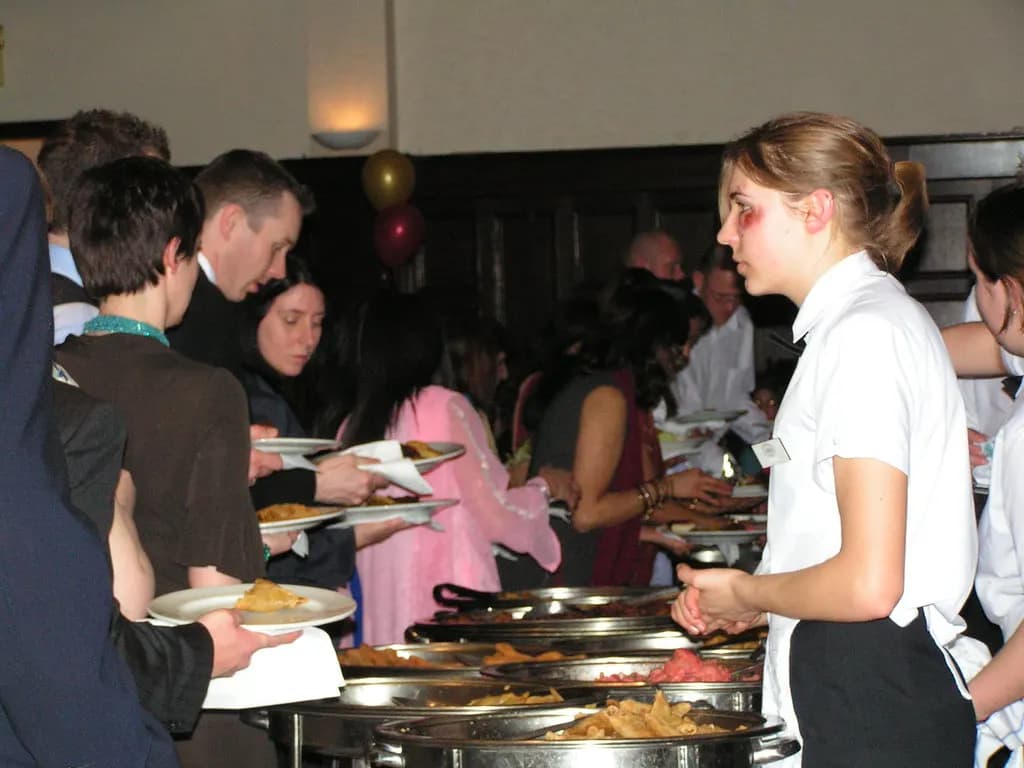
Many caterers sell a package: food, the lawn or hall, the shamiana, lighting and decoration in one price. Item (v) covers a composite supply of outdoor catering together with renting of the premises, so the whole package stays at 5% (no input tax credit) when the supplier is not linked to a specified premises. The test for a composite supply is that the elements are naturally bundled and supplied together in the ordinary course of business, with one principal supply. For a wedding caterer that owns a marriage garden, food is usually the principal supply and the venue goes with it.
The position changes when the venue is billed separately, or by someone else. A marriage hall owner who only rents the hall — the family hires its own caterer — is supplying renting of premises at 18%. If the hall owner and the caterer are different people, there are two supplies on two bills: the hall at 18% and the food at 5% (no input tax credit). If one supplier issues a single bill but the items are not genuinely bundled — say, an optional DJ and fireworks package priced separately — officers may treat those extras as separate supplies at their own rates. Keep the contract wording consistent with the bill.
A narrow exemption exists for community halls and kalyanamandapams in the precincts of a religious place run by a registered charitable or religious trust: renting them is exempt when the charge is below ₹10,000 a day. That exemption covers the trust's rent only. The caterer serving food in that hall still charges 5% (no input tax credit).
Wedding food and venue — how the bill is taxed
| Arrangement | Food | Hall or lawn |
|---|---|---|
Caterer sells food and its own hall as one package | 5% (no input tax credit) on the whole package | Included |
Hall owner and caterer are different people | 5% (no input tax credit) | 18% |
Hotel at a specified premises sells the package | 18% with ITC on the whole package | Included |
Hall in a temple precinct run by a registered trust | 5% (no input tax credit) | Exempt below ₹10,000 a day |
Caterer sells food and its own hall as one package
- Food
5% (no input tax credit) on the whole package
- Hall or lawn
Included
Hall owner and caterer are different people
- Food
5% (no input tax credit)
- Hall or lawn
18%
Hotel at a specified premises sells the package
- Food
18% with ITC on the whole package
- Hall or lawn
Included
Hall in a temple precinct run by a registered trust
- Food
5% (no input tax credit)
- Hall or lawn
Exempt below ₹10,000 a day
Canteens, messes and tiffin contracts
A canteen in a factory, office, hospital or hostel run by a contractor is restaurant service, because the definition expressly includes a "mess, canteen". It is taxed at 5% (no input tax credit) under item (ii) of serial 7, with the same no-credit condition, unless the canteen is inside a specified premises. Monthly tiffin and dabba services fall in the same place. The SAC is 996333 for canteens, or 996331 for a restaurant-style service.
Who pays the canteen contractor affects only the commercial side, not the rate. Some employers pay the contractor in full and provide free meals; some pay a subsidy and the contractor collects the rest from employees at the counter; some deduct a token amount from salaries. The contractor's bill to the employer, and any amount it collects directly from employees, carries 5% (no input tax credit). Whether the employer's own recovery from employees is a supply is a separate question: Circular 172/04/2022 says perquisites provided by an employer to employees under the employment contract are not supplies, and several advance rulings have applied that to nominal canteen deductions, but rulings bind only the applicant, so document the arrangement in the employment terms.
For the employer, credit on the contractor's tax is blocked by section 17(5)(b) unless the canteen is one a law obliges the employer to provide. Circular 172 confirmed that the statutory-obligation proviso covers the whole of clause (b), so where a labour law requires a canteen, the employer can claim the 5% (no input tax credit) charged, subject to the usual conditions. Since 21 November 2025 the Factories Act has been replaced by the Occupational Safety, Health and Working Conditions Code, so check the canteen requirement under the Code and the state's rules for your headcount before claiming. A credit claim backed only by "we always had a canteen" will not survive an audit.
Schools, anganwadis and other educational institutions
Entry 66 of Notification 12/2017-CT(Rate) is the main exemption for caterers. Clause (b)(ii) exempts services provided to an educational institution by way of "catering, including any mid-day meals scheme sponsored by the Central Government, State Government or Union territory". The proviso limits this to institutions providing pre-school education and education up to higher secondary school or equivalent. A caterer feeding a CBSE school, a state-board school or a nursery school therefore charges no GST on its bills to the school.
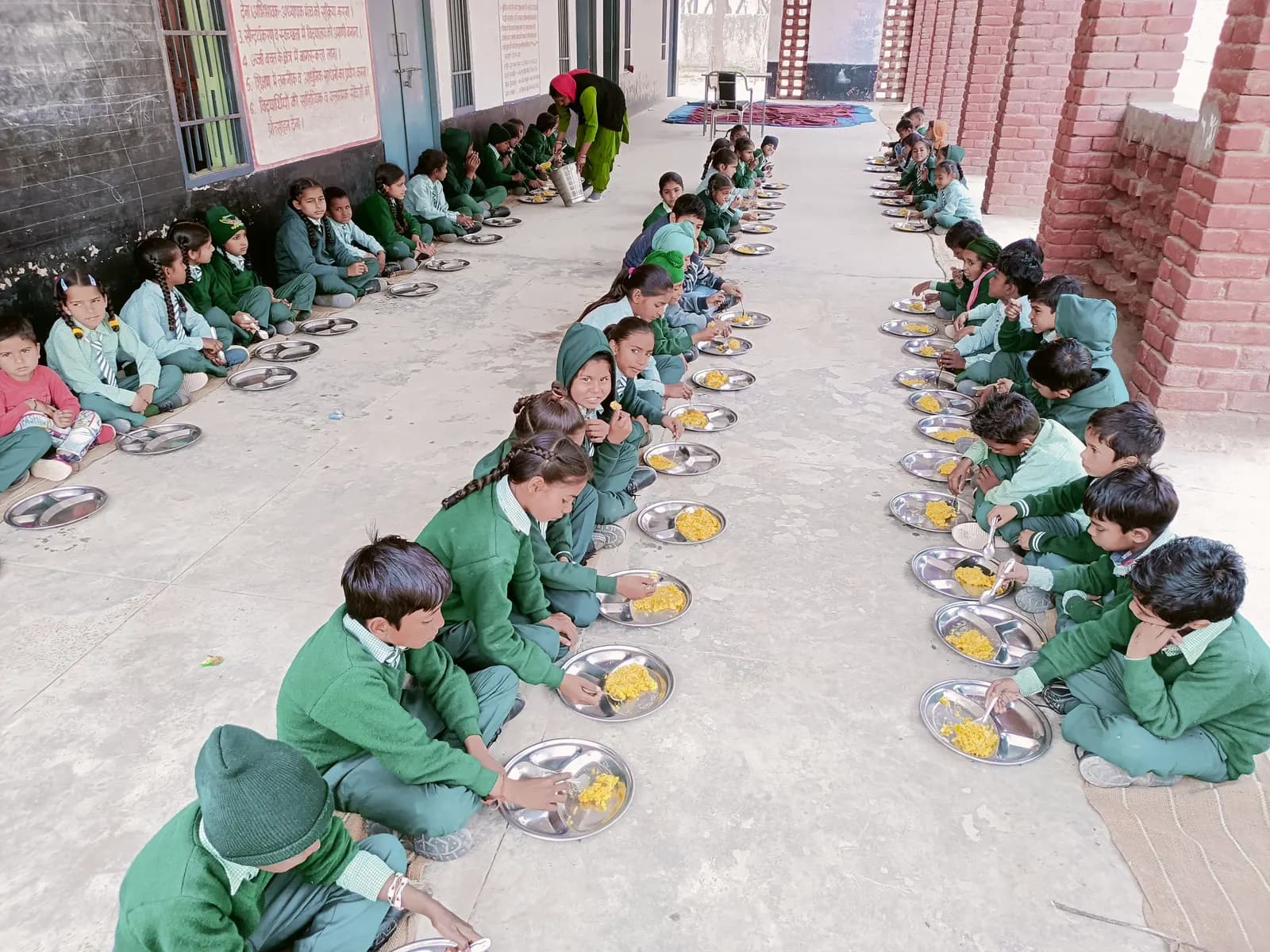
Circular 149/05/2021-GST, issued after the 43rd GST Council meeting, clarified two points that often confuse contractors. First, the exemption covers any serving of food to a school, not only meals under a government scheme, and applies whether the meals are paid for by government grants or by corporate donations. Second, an anganwadi provides pre-school non-formal education and so counts as an educational institution; food served to anganwadis is exempt whether sponsored by government or donated by companies.
Colleges, universities, coaching centres and private training institutes are outside clause (b). A caterer running a college canteen or hostel mess on contract charges 5% (no input tax credit). Where the college itself runs the mess for its own students, clause (a) of entry 66 — services by an educational institution to its students, faculty and staff — exempts the mess charge. Our GST on education guide covers the other school-supply exemptions for transport and security.
Can the customer claim input tax credit?
A family paying for a wedding is not registered, so the question does not arise. For businesses, section 17(5)(b)(i) of the CGST Act blocks credit on "food and beverages, outdoor catering" and several other items. A company that hires a caterer for its annual day, a product launch or a client dinner pays the 5% (no input tax credit) as a cost.
There are two exceptions. The first proviso allows credit where the catering is used to make an outward taxable supply of the same category or as an element of a taxable composite or mixed supply. An event management company that buys catering and bills the client for a complete event at 18% can take credit on the caterer's 5% — note that the "no ITC" condition binds only the caterer, not its customer. A hotel at a specified premises that subcontracts part of a banquet can do the same. The second proviso, discussed above, allows credit where a law obliges the employer to provide the facility to employees.
Catering GST at a glance (2026)
5% (no input tax credit)
Outdoor catering, with or without venue
S.No. 7(iv) and 7(v)
18% with ITC
Catering by or from a specified premises
S.No. 7(vi)
5% (no input tax credit)
Canteens, messes, tiffin services
Restaurant service
Nil
Catering to schools and anganwadis
Entry 66(b)(ii)
Worked examples in rupees
A wedding caterer in Jaipur. A caterer quotes ₹1,500 a plate for 400 guests at a marriage garden it does not own: ₹6,00,000. The supply is outdoor catering at a premises that is not a specified premises, so GST is 5% (no input tax credit): ₹15,000 CGST plus ₹15,000 SGST, a total bill of ₹6,30,000. The caterer pays the ₹30,000 in cash; it cannot set off the GST it paid on gas, rented tents or its new tandoor. The garden owner bills the family separately for the venue at 18%.
The same caterer selling a package with its own banquet hall. If the caterer owns the hall and sells food, hall and décor together for ₹10,00,000, the package is a composite supply of outdoor catering with renting of premises. GST is 5% (no input tax credit), ₹50,000, rather than 18% on any part of it. If the hall were rented separately from a third party, the family would pay 18% on that rent.
A five-star hotel catering at a farmhouse. A hotel that sold rooms above ₹7,500 last year sends its banqueting team to a client's farmhouse for a ₹6,00,000 dinner. The supplier is a hotel at a specified premises, so the rate is 18% with ITC: ₹1,08,000. The hotel can set off credit on its kitchen purchases against that tax.
A factory canteen contract. A contractor feeds 300 workers at an auto-parts plant for ₹4,00,000 a month. That is restaurant service at 5% (no input tax credit): ₹20,000 a month. The factory can claim the ₹20,000 only if a labour law obliges it to run the canteen; otherwise it is a cost.
A school meal contract. A contractor serves lunch to 800 children at a private CBSE school for ₹3,20,000 a month. The service is exempt under entry 66(b)(ii). The contractor shows the value as exempt in its GSTR-1 and GSTR-3B, and no tax is charged. If the same contractor also feeds an engineering college, that bill carries 5% (no input tax credit).
Work out GST on a catering bill
Registration, composition and invoicing for caterers
Because catering is a service, the registration threshold is ₹20 lakh of aggregate turnover in most states, or ₹10 lakh in the special category states that use the lower limit. Exempt school catering counts towards aggregate turnover, so a contractor with ₹15 lakh of school meals and ₹8 lakh of wedding catering must register. A caterer who goes to another state for an event and has no fixed place of business there may need registration as a casual taxable person in that state before the event.
Small caterers can consider the composition scheme under section 10(1), which is available to suppliers of food or drink as a service. The rate for such suppliers is 5% of turnover, up to a turnover of ₹1.5 crore (₹75 lakh in some special category states). Since the normal catering rate is also 5% without credit, composition saves little tax but simplifies filing to quarterly CMP-08 payments and an annual GSTR-4. The trade-offs: a composition caterer cannot collect GST from customers, must issue a bill of supply, and cannot make inter-state supplies, which rules out catering events in another state.
A regular caterer's tax invoice should show the SAC (996334 for events, 996333 for canteens), the place of supply, the taxable value and the CGST and SGST (or IGST) at 2.5% each or 5%. Hotels at specified premises should state 9% plus 9%. Advance payments taken weeks before a wedding are taxable when received: issue a receipt voucher and pay the tax on the advance in that month's return, then adjust it in the final invoice.
Common mistakes and how they are fixed
Charging 18% to win corporate clients. Some independent caterers charge 18% because corporate customers ask for "full GST" invoices. The 5% rate is mandatory, so the extra tax is collected without authority. Any tax collected must still be deposited under section 76, and the client still cannot claim credit on catering. Issue a credit note, refund the excess, and correct the invoice template.
Claiming credit on inputs. A caterer that claims credit on gas, groceries or tent hire while charging 5% breaches the condition and loses the concessional rate on the affected supplies. Officers compare GSTR-3B credit claims with outward supplies at 5%. Reverse the credit with interest at 18% a year if it was used, and stop the claims.
Treating college contracts as exempt. Entry 66(b) stops at higher secondary. Contractors serving colleges on "nil" invoices are routinely reassessed. Charge 5% (no input tax credit) from the start.
Splitting a package to reduce tax on paper. Billing food at 5% and inflating the share of the bill described as hall rent, or the reverse, invites a valuation challenge. Price each element at market value, and if the package is genuinely composite, bill it as one supply.
Checks before you bill a catering job
0/6Official links
- Notification 11/2017-CT(R) — updated consolidated copySerial 7 catering entries and definitions
- Notifications 15–17/2025-CT(R) (GST 2.0)Rates from 22 September 2025
- Notification 05/2025-CT(R)Specified premises from 1 April 2025
- Circular 149/05/2021-GSTSchool and anganwadi meals exempt
- Circular 172/04/2022-GSTSection 17(5)(b) proviso and perquisites
- Section 17, CGST ActBlocked credits
What to do next
If you run a catering business, sort your contracts into three groups — events at 5%, canteens at 5% and schools exempt — and set up an invoice template for each with the right SAC; our invoice generator handles the tax split, and the food cost calculator helps you load non-creditable GST into your per-plate price. If you are starting out, the catering business plan guide covers licences and costing, and the GST on food guide explains restaurant and packaged-food rates. Planning a full event rather than only the food? See GST on event management.
This is general information, not legal or tax advice — confirm on the official source or with a professional.
Frequently asked questions
Outdoor catering for weddings, parties, conferences and other events is taxed at 5% (no input tax credit) when the caterer is not a hotel at a specified premises and does not operate from one. Catering by or from a specified premises — a hotel that sold any room above ₹7,500 a day last year or opted in — is 18% with ITC. Regular canteen and mess contracts are restaurant service at 5% (no input tax credit).
No, not by choice. The 5% entries for outdoor catering and for catering together with the venue are mandatory rates under Notification 11/2017-CT(Rate): a caterer outside a specified premises must charge 5% (no input tax credit) and cannot take credit on its inputs. Only hotels at specified premises, or caterers located in one, charge 18% with ITC.
Outdoor and event catering is SAC 996334 — catering services in exhibition halls, events, marriage halls and other outdoor or indoor functions. Canteens are 996333, restaurants 996331, contract food services 996337 and catering on trains and flights 996335. All sit under heading 9963 (accommodation, food and beverage services). The SAC decides reporting, but the rate depends on the specified-premises test.
Yes, for schools. Entry 66(b)(ii) of Notification 12/2017-CT(Rate) exempts catering, including mid-day meals, supplied to an educational institution providing pre-school or education up to higher secondary. Circular 149/05/2021 confirms this covers any food served to a school or anganwadi, whether paid by government grants or corporate donations. Catering to colleges and universities is taxable at 5% (no input tax credit) or 5% (no input tax credit).
Usually not. Section 17(5)(b) of the CGST Act blocks credit on food and beverages and outdoor catering. Credit is allowed only if the company uses the catering to make an outward supply of the same kind (for example, an event manager billing a client) or as part of a taxable composite supply, or if a law obliges the employer to provide it — Circular 172/04/2022 confirms that proviso covers the whole clause.
A canteen or mess run by a contractor in a factory, office or hospital is 'restaurant service' under the rate notification, which expressly includes a mess and canteen. It is taxed at 5% (no input tax credit) unless it is in a specified premises. The 18% outdoor-catering rate does not apply, because a daily canteen is not event-based and occasional.
Sources & verification
Figures on this page were checked against the sources below when it was last reviewed on 11 October 2026. Each rate and limit is stored once with its own official source and review date, and official update channels are monitored daily so changes are picked up. How we verify
- 1.Notification No. 11/2017–Central Tax (Rate), updated consolidated version (Telangana State Tax copy) — Telangana Commercial Taxes Department · accessed 11 October 2026
- 2.Notifications No. 15/2025, 16/2025 and 17/2025–Central Tax (Rate), 17 September 2025 (Gazette) — Ministry of Finance (Gazette of India) · accessed 11 October 2026
- 3.Notification No. 05/2025–Central Tax (Rate), 16 January 2025 — GST Council · accessed 11 October 2026
- 4.Notification No. 12/2017–Central Tax (Rate), updated consolidated version (Telangana State Tax copy) — Telangana Commercial Taxes Department · accessed 11 October 2026
- 5.Circular No. 149/05/2021-GST — supply of food in anganwadis and schools — CBIC (GST Council website) · accessed 11 October 2026
- 6.Section 17 — CGST Act, 2017 — CBIC · accessed 11 October 2026
- 7.Circular No. 172/04/2022-GST, 6 July 2022 — CBIC (GST Council website) · accessed 11 October 2026
- 8.CGST rate on accommodation, food and beverage services (heading 9963) — GSTGyaan · accessed 11 October 2026
- 9.Hotel accommodation above ₹7,500 classified as specified premises — Taxscan · accessed 11 October 2026
MSMETOOLS is an independent platform and is not affiliated with any government agency, ministry or department.
Tools for this
GST Calculator (India)
Calculate GST for your sales and purchases with current rates.
Invoice Generator
Create professional invoices with tax, logo and custom details.
Food Cost Calculator
Calculate food cost, menu pricing and profit margins.
Related guides
 GST on Food 2026: Restaurant & Food Item Rates After GST 2.0Read guide
 GST on Education 2026: School, Coaching & Stationery RatesRead guide
 GST on Event Management 2026: 18% Rate, SAC & Pure AgentRead guide
 Hotel Room GST Rate 2026: 5% vs 18%, ₹7,500 Rule & ITCRead guide
Official links open the government site in a new tab.