 GST & indirect tax
GST on Bicycles in 2026: Cycles, Parts, E-Bikes and Worked Invoices
GST on bicycles in 2026: 5% on cycles and parts (HSN 8712, 8714) since GST 2.0, e-bicycles at 5%, pumps, lights and helmets at 18%, refunds and worked ₹ bills.
 Edited by Sumeet YadavFounder & editor, MSMETOOLS · fact-checked against official sources
Contents (10)
- 1. GST rates on bicycles and parts in 2026
- 2. What changed on 22 September 2025
- 3. HSN codes for bicycles and parts
- 4. Accessories that stayed at 18%
- 5. GST on electric bicycles and e-bike parts
- 6. Worked invoices: GST on bicycles in rupees
- 7. Inverted duty and refunds for cycle manufacturers
- 8. Dealers, online sellers and small shops
- 9. Common mistakes with GST on bicycles
- 10. What to do next
Bicycles were one of the "common man" items the GST Council picked out for relief in 2025, and the rate on cycles and their parts fell to the lowest standard slab. The detail still matters, though: some things a cycle shop sells are not "parts of bicycles" for GST, and electric bicycles follow a different entry with its own rules for spares. This guide is for bicycle dealers and repair shops, manufacturers and component makers in Ludhiana and elsewhere, e-bike sellers, online sellers and buyers who want to check a bill. It covers the 2026 rates, the HSN codes, accessories that stayed at 18%, e-bicycles, inverted-duty refunds and worked invoices in rupees. Rates were checked against the notified schedule in October 2026.
Quick answer
Bicycles and other non-motorised cycles (HSN 8712) and their parts and accessories (8714) attract 5% GST from 22 September 2025, down from 12%. Cycle tyres and tubes are 5%. Electric bicycles are 5% under the electric vehicle entry. Bicycle pumps, electric cycle lights and helmets stayed at 18%.
A ₹6,000 bicycle: GST ₹300 at 5% (was ₹720 at 12%)
A ₹35,000 e-bicycle: GST ₹1,750 at 5%
A ₹12,000 spare e-bike battery: GST ₹2,160 at 18%
No price limit, no compensation cess
Manufacturers with 18% steel inputs can claim inverted-duty refunds
GST rates on bicycles and parts in 2026
Notification 9/2025–Central Tax (Rate), the goods rate schedule in force since 22 September 2025, lists "Bicycles and other cycles (including delivery tricycles), not motorised" under heading 8712 at serial 456 of Schedule I, and "Parts and accessories of bicycles and other cycles (including delivery tricycles), not motorised, of heading 8712" under 8714 at serial 458. Schedule I is the 2.5% central tax list, so both carry 5% in all: 2.5% CGST plus 2.5% SGST within a state, or 5% IGST between states.
The PIB FAQs on the 56th GST Council put it simply: the rate on bicycles and their parts was reduced to 5% from 12%. Unlike footwear or garments, there is no price threshold. A ₹4,000 roadster and a ₹2,00,000 carbon road bike are both at 5%.
GST on bicycles, parts and accessories (2026)
| Product (HSN) | GST rate | Notification 9/2025 entry |
|---|---|---|
Bicycles, delivery tricycles, cycle rickshaws — not motorised (8712) | 5% | Sch. I 456 |
Parts and accessories of 8712 cycles — frames, forks, rims, hubs, spokes, saddles, pedals, brakes (8714) | 5% | Sch. I 458 |
Cycle tyres and inner tubes (4011, 4013) | 5% | Sch. I 272 |
Electric bicycles and other electrically operated vehicles (87) | 5% | Sch. I 441 |
Chargers for electric vehicles (8504) | 5% | Sch. I 438 |
Carriages for disabled persons and their parts (8713, 8714 20) | 5% | Sch. I 457, 459 |
Non-electric metal bells (8306) | 5% | Sch. I 420 |
Bicycle pumps and their parts (8414 20 10, 8414 90 12) | 18% | Sch. II 402–403 |
Electric lighting or signalling equipment for cycles (8512) | 18% | Sch. II 485 |
Helmets and other headgear (6506) | 18% | Sch. II 212 |
Lithium-ion and other batteries (8507) | 18% | Sch. II 480 |
Electric motors (8501) | 18% | Sch. II 474 |
Parts of motorcycles and motor-assisted cycles (8714 of 8711) | 18% | Sch. II 547 |
Bicycles, delivery tricycles, cycle rickshaws — not motorised (8712)
- GST rate
5%
- Notification 9/2025 entry
Sch. I 456
Parts and accessories of 8712 cycles — frames, forks, rims, hubs, spokes, saddles, pedals, brakes (8714)
- GST rate
5%
- Notification 9/2025 entry
Sch. I 458
Cycle tyres and inner tubes (4011, 4013)
- GST rate
5%
- Notification 9/2025 entry
Sch. I 272
Electric bicycles and other electrically operated vehicles (87)
- GST rate
5%
- Notification 9/2025 entry
Sch. I 441
Chargers for electric vehicles (8504)
- GST rate
5%
- Notification 9/2025 entry
Sch. I 438
Carriages for disabled persons and their parts (8713, 8714 20)
- GST rate
5%
- Notification 9/2025 entry
Sch. I 457, 459
Non-electric metal bells (8306)
- GST rate
5%
- Notification 9/2025 entry
Sch. I 420
Bicycle pumps and their parts (8414 20 10, 8414 90 12)
- GST rate
18%
- Notification 9/2025 entry
Sch. II 402–403
Electric lighting or signalling equipment for cycles (8512)
- GST rate
18%
- Notification 9/2025 entry
Sch. II 485
Helmets and other headgear (6506)
- GST rate
18%
- Notification 9/2025 entry
Sch. II 212
Lithium-ion and other batteries (8507)
- GST rate
18%
- Notification 9/2025 entry
Sch. II 480
Electric motors (8501)
- GST rate
18%
- Notification 9/2025 entry
Sch. II 474
Parts of motorcycles and motor-assisted cycles (8714 of 8711)
- GST rate
18%
- Notification 9/2025 entry
Sch. II 547
What changed on 22 September 2025
Before GST 2.0, bicycles and their parts sat at 12% throughout. The 56th Council's "common man items" annexure moved both headings — 8712 and the 8714 parts of 8712 — from 12% to 5%, and Notification 9/2025 gave effect to it from 22 September 2025.
For a buyer, the saving is 7% of the pre-tax price. A ₹6,000 bicycle that carried ₹720 of GST now carries ₹300; a ₹15,000 geared bicycle that carried ₹1,800 now carries ₹750.
For a dealer holding stock on 22 September 2025, the PIB FAQs are clear that GST is levied on supply, so every invoice from that date carries 5%, even on cycles bought earlier at 12%. The credit taken on the old purchases stays in the ledger and can be used against any output tax. What the dealer cannot do is claim a cash refund of that excess credit as "inverted duty". The FAQs point to Circular 135/05/2020-GST, which says the refund provision does not cover cases where the input and the output are the same goods taxed at different rates at different times. Dealers with large pre-change stocks therefore carried surplus credit for several months while it was used up.
HSN codes for bicycles and parts
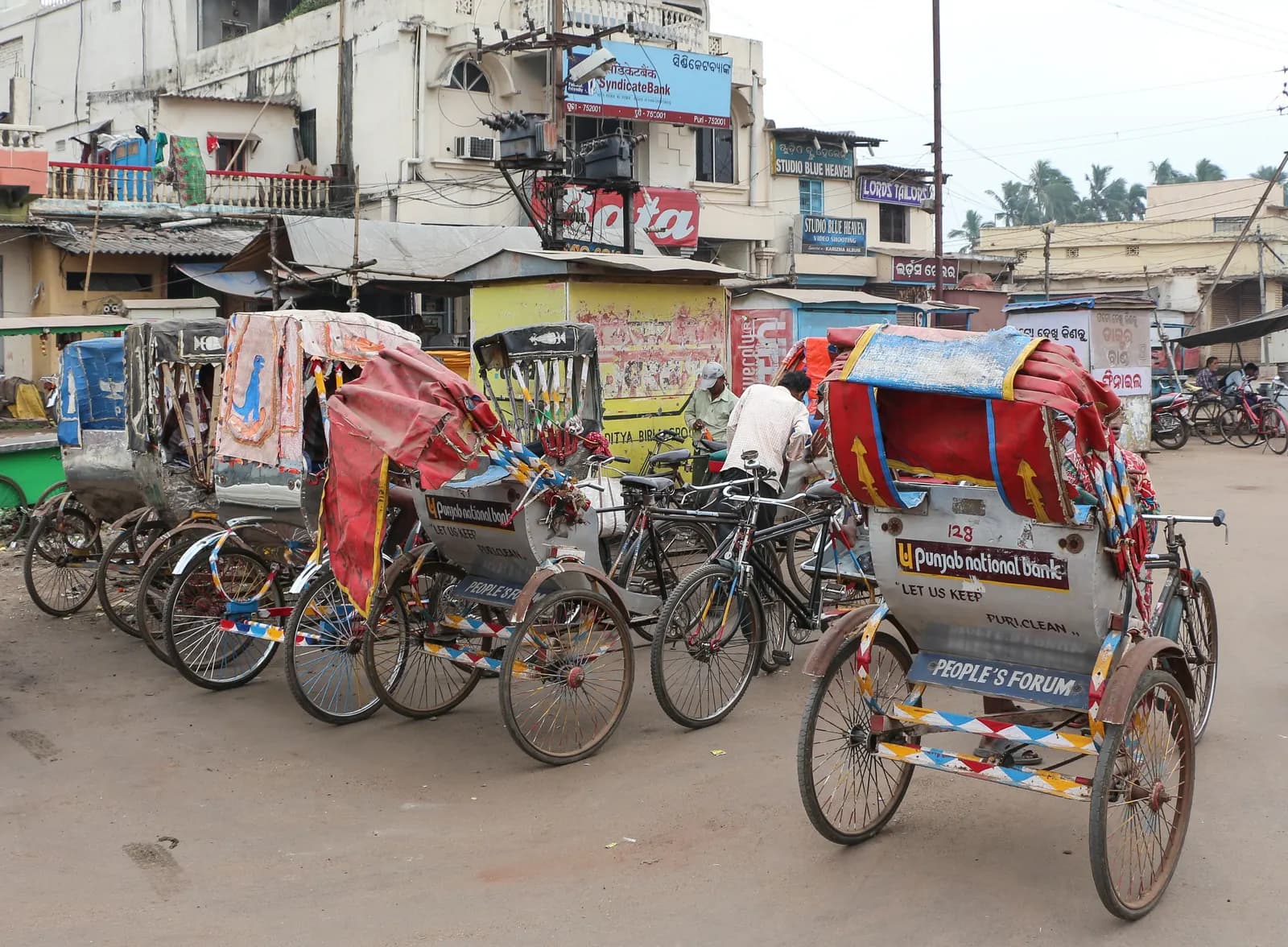
Heading 8712 covers bicycles and other cycles, including delivery tricycles and passenger cycle rickshaws, as long as they are not motorised. Heading 8714 covers parts and accessories of vehicles of headings 8711 to 8713, and the GST schedules split it by the vehicle the part belongs to. Parts of 8712 cycles (subheadings 8714 91 to 8714 99) are at 5%; parts of motorcycles and motor-assisted cycles of 8711 are at 18%; parts of carriages for disabled persons (8714 20) are at 5%.
| HSN | What it covers | Typical items |
|---|---|---|
| 8712 | Bicycles and other cycles, not motorised | Roadsters, MTBs, kids' cycles with chain drive, cargo and delivery tricycles, cycle rickshaws |
| 8714 91 | Frames and forks, and parts thereof | Steel and alloy frames, front forks |
| 8714 92 | Wheel rims and spokes | Rims, spokes, nipples |
| 8714 93 | Hubs and free-wheel sprocket wheels | Hubs, freewheels, cassettes |
| 8714 94 | Brakes and parts thereof | Rim brakes, disc brake sets, brake levers |
| 8714 95 | Saddles | Seats and seat covers |
| 8714 96 | Pedals and crank-gear, and parts thereof | Pedals, chain wheels, cranks |
| 8714 99 | Other parts and accessories | Handlebars, mudguards, carriers, stands, chain covers, baskets |
Report the code in your invoices and in Table 12 of GSTR-1 with at least 4-digit HSN if your aggregate turnover is up to ₹5 crore and 6-digit HSN above that. A bicycle chain is often classified as a chain of iron or steel under 7315 rather than as a cycle part, so check its HSN with your supplier before you apply the 8714 rate. Our HSN code guide and the HSN code finder help with borderline items.
Kids' cycles and toys. A child's bicycle with a real frame, a chain and pedals is generally classified as a bicycle under 8712. Toddler tricycles, push scooters, balance toys and pedal cars are wheeled toys of 9503. Non-electronic wheeled toys are at 5% and electronic ones at 18%. Our guide to GST on toys covers heading 9503.
Accessories that stayed at 18%
The 5% entry for 8714 covers parts and accessories that are classified as cycle parts. Several things a cycle shop sells every day belong to other headings, and the 2025 cut did not reach them.
Pumps. Bicycle pumps are named in their own tariff item, 8414 20 10, and their parts in 8414 90 12. Notification 9/2025 lists both in Schedule II at serials 402 and 403, so they are at 18%. Other hand pumps of 8414 20 20 are at 5%, which makes the bicycle pump an odd exception.
Lights. Electric lighting and signalling equipment "of a kind used for cycles or motor vehicles" is heading 8512, at 18%. Battery LED front and rear lights for cycles fall here.
Helmets. Cycle helmets are headgear of 6506, at 18%.
Which rate does a cycle-shop item take?
Step 1
Find the item's own HSN
Step 2
8712 cycle or 8714 cycle part?
frames, rims, saddles, brakes
Step 3
Yes → 5%
tyres and tubes also 5%
Step 4
No → its own heading
pumps, lights, helmets, locks: 18%
Bells. Non-electric metal bells of 8306 are at 5%; an electric horn is a signalling device of 8512 at 18%.
Locks. Padlocks and cable locks are heading 8301, which sits in Schedule II, so check them at 18% rather than at the cycle-parts rate.
When a cycle is sold together with a helmet, a lock and a pump for one price, section 8 of the CGST Act treats the package as a composite supply if the bicycle is clearly the principal supply and the extras are naturally bundled with it; the whole price then takes the bicycle's 5%. If the items are sold as a "kit" without a principal item, it can be a mixed supply taxed at the highest rate. Billing the accessories as separate lines removes the doubt.
GST on electric bicycles and e-bike parts
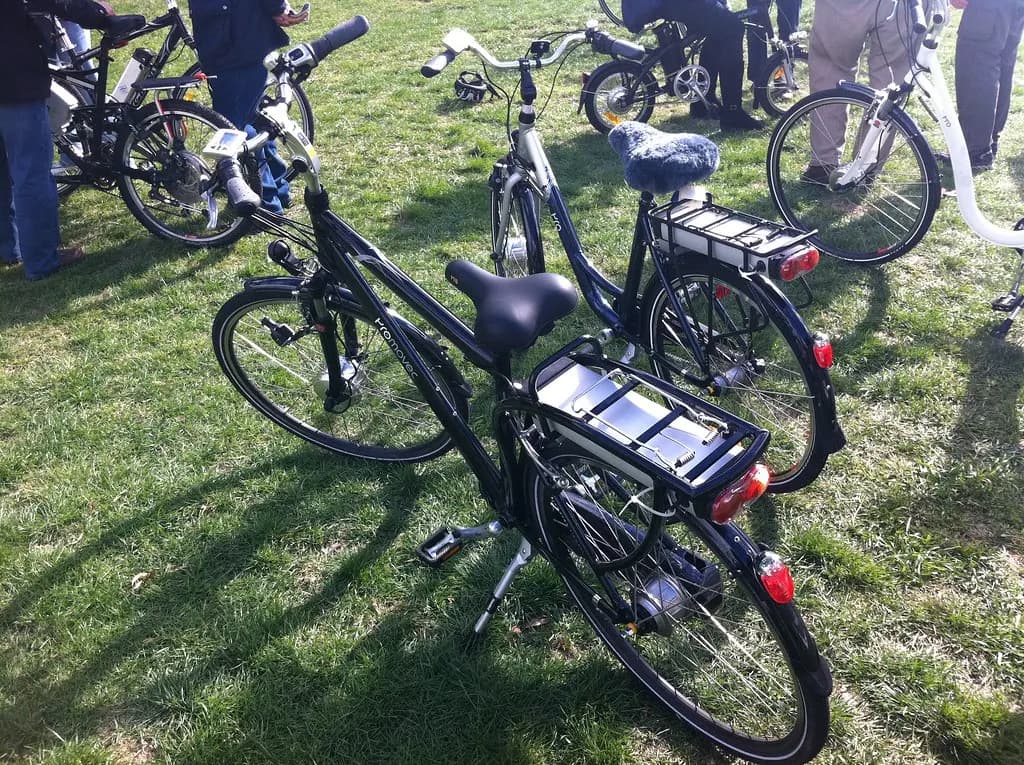
Electric bicycles are not in heading 8712. A cycle fitted with an auxiliary electric motor is classified under 8711, the motorcycle heading. That would normally put it at 18%, but serial 441 of Schedule I covers "electrically operated vehicles, including two and three wheeled electric vehicles". Its explanation defines these as vehicles run solely on electrical energy from an external source or from batteries fitted to the vehicle, and adds that the term "shall include E-bicycles". So an e-bicycle is at 5%, the same as an electric scooter.
The concession is for the complete vehicle. Spares and conversion components follow their own headings: a lithium-ion battery pack is 18%, a hub motor 18%, and other parts of 8711 vehicles 18%. A charger for an electric vehicle is at 5%. A seller who supplies a "conversion kit" to turn an ordinary cycle into an e-bike is selling parts, not an electric vehicle, so the kit does not get the 5% EV rate.
Our guide to GST on two-wheelers covers electric scooters and motorcycles, and the electric scooter subsidy guide explains the central incentive schemes, which have their own eligibility rules separate from GST.
Worked invoices: GST on bicycles in rupees
The prices below are illustrative round figures to show the arithmetic, not market quotes.
| Item (illustrative) | Taxable value | GST rate | GST | Bill total |
|---|---|---|---|---|
| Single-speed roadster | ₹6,000 | 5% | ₹300 | ₹6,300 |
| 21-speed mountain bike | ₹15,000 | 5% | ₹750 | ₹15,750 |
| Electric bicycle | ₹35,000 | 5% | ₹1,750 | ₹36,750 |
| Spare e-bike battery | ₹12,000 | 18% | ₹2,160 | ₹14,160 |
| Pair of cycle tyres | ₹900 | 5% | ₹45 | ₹945 |
| Floor pump | ₹800 | 18% | ₹144 | ₹944 |
| LED light set | ₹600 | 18% | ₹108 | ₹708 |
A repair shop bill. A repair shop replaces a rear wheel rim (₹700), a set of brake shoes (₹200) and a tube (₹150), and charges ₹300 for labour. The parts are sold as goods with the repair, and the labour is a repair service. Where the shop treats the job as a composite supply of repair services, the whole bill takes the service rate; where it bills goods and labour separately, the parts carry 5% and the labour carries the rate for repair services. Small repair shops below the registration threshold charge no GST at all.
A wholesale invoice. A Ludhiana maker sells 150 bicycles at ₹4,200 each to a dealer in Jaipur. The value is ₹6,30,000, the supply is between states, and IGST at 5% is ₹31,500. The consignment exceeds ₹50,000, so it needs an e-way bill.
Try it — GST on a bicycle
Inverted duty and refunds for cycle manufacturers
A cycle maker's main inputs are steel tubes (7306) and other steel at 18%, bearings, paint and packaging, mostly at 18%. Its output is now at 5%. That gap is an inverted duty structure, and section 54(3) of the CGST Act allows a refund of credit accumulated because the rate on inputs is higher than the rate on output supplies. Bicycles are not among the goods on which such refunds are barred.
The refund is capped by the Rule 89(5) formula: turnover of the inverted-rated supply multiplied by Net ITC and divided by adjusted total turnover, minus the tax payable on that supply multiplied by Net ITC and divided by the total ITC on inputs and input services. Net ITC counts inputs only, so credit on job work, freight, rent and capital goods never comes back as cash.
A worked month. A Ludhiana unit sells ₹50,00,000 of bicycles at 5%, so its output tax is ₹2,50,000. Its credit is ₹3,60,000 on ₹20,00,000 of 18% steel tubes, bearings and paint; ₹50,000 on ₹10,00,000 of bought-in 5% parts such as saddles, rims and tyres; and ₹72,000 on ₹4,00,000 of 18% services — ₹4,82,000 in all, or ₹2,32,000 more than its output tax.
Net ITC is ₹4,10,000. The first part of the formula is ₹50,00,000 × ₹4,10,000 ÷ ₹50,00,000 = ₹4,10,000. The second is ₹2,50,000 × ₹4,10,000 ÷ ₹4,82,000 ≈ ₹2,12,656. The maximum refund is about ₹1,97,344. The rest, about ₹34,656, is the share linked to services and stays in the ledger.
The Ludhiana cycle maker's month (illustrative)
₹2,50,000
Output GST at 5%
₹4,82,000
Total ITC for the month
≈ ₹1,97,344
Maximum inverted-duty refund
Rule 89(5)
two years from the relevant date
Time limit to file RFD-01
Component makers are in a similar position: a rim or hub maker sells at 5% and buys steel and aluminium at 18%. A maker who sells only to exporters, or exports directly under a letter of undertaking, gets zero-rated treatment instead; see our guide to the LUT in GST.
Dealers, online sellers and small shops
Registration. A cycle shop must register once its aggregate turnover crosses ₹40 lakh in most states, or ₹20 lakh in the states that did not adopt the higher limit for goods. A shop that also repairs cycles counts its service turnover in the same aggregate, and the lower service threshold of ₹20 lakh applies once services are part of the business.
Composition. A shop with turnover up to ₹1.5 crore can opt for composition and pay 1% of turnover. It cannot charge GST or claim credit. With most stock now at 5%, a shop that sells mainly to consumers should compare its purchase credit with the composition cost. Our composition scheme guide shows the arithmetic.
Online marketplaces. A seller on a marketplace charges 5% on its own invoice; the operator collects tax at source of 0.5% (0.25% CGST + 0.25% SGST, or 0.5% IGST) of the net value, which the seller can claim in its cash ledger. Selling between states through a marketplace generally needs registration whatever the turnover.
Imports. Bicycles, parts and e-bicycles imported into India pay IGST at the border at the same rate that applies inside the country — 5% for cycles, 8714 cycle parts and e-bicycles — on top of basic customs duty, as the PIB FAQs confirm for imports generally. A registered importer can take credit for that IGST; the customs duty is a cost. Importers of frames, forks and gear sets for assembly should check that the bill of entry uses the same 8714 subheading as their sales invoices, because a mismatch between the import HSN and the sale HSN is a common trigger for scrutiny notices.
Government tenders. Several states buy bicycles in bulk for schoolchildren. The 5% rate applies to those supplies as to any other sale; the tender price should state clearly whether it is inclusive of GST.
Common mistakes with GST on bicycles
Check your bicycle invoice
0/7Leaving old rates in the billing master. Many dealer systems still show 12% for cycles and parts. Overcharged invoices have to be corrected through credit notes, and the excess tax collected must be either refunded to the customer or paid to the government.
Putting accessories on the 5% line. Pumps, battery lights and helmets are not 8714 parts. Bill them at 18%.
Selling conversion kits as e-bikes. The 5% EV rate is for the complete electric vehicle. Motors, batteries and controllers sold as a kit are parts at 18%.
Expecting a refund of old-stock credit. Credit on cycles bought at 12% and sold at 5% after 22 September 2025 can be used against output tax but is not refundable as inverted duty.
Not claiming inverted-duty refunds. Manufacturers often let credit pile up. Filing regularly, within the two-year limit, frees working capital.
Official links
- Notification 9/2025–CT(Rate) — goods rate scheduleBicycles Sch. I 456, 458; e-bicycles 441
- 56th GST Council — recommendations and annexuresCommon man items: 8712, 8714
- PIB FAQs on the 56th GST CouncilBicycles 12% to 5%; stock on hand
- Section 54, CGST ActInverted-duty refunds
- CGST rate notificationsLater amendments, if any
What to do next
As of October 2026, no further change to bicycle rates has been notified; a GST Council recommendation takes effect only when a rate notification is issued. If you sell cycles, map every item in your billing software to the right heading and rate — 8712 and 8714 at 5%, and pumps, lights, helmets and locks at 18%. If you make cycles or components, run the Rule 89(5) formula on last quarter's figures. Use the GST calculator to check a bill and the invoice generator to issue one, and read our guides to GST on tyres, GST on two-wheelers and input tax credit.
This is general information, not legal or tax advice — confirm on the official source or with a professional.
Frequently asked questions
Bicycles and other cycles that are not motorised, including delivery tricycles and cycle rickshaws (HSN 8712), attract 5% GST from 22 September 2025. Before that date they were at 12%. Parts and accessories of these cycles under 8714 moved from 12% to 5% at the same time. There is no price limit and no cess.
Electric bicycles attract 5%. The electric vehicle entry in Notification 9/2025 defines electrically operated vehicles as vehicles run solely on electrical energy and says the term includes e-bicycles. Spare batteries and motors bought separately are taxed at their own rates — 18% for lithium-ion batteries and 18% for electric motors.
Bicycles and other non-motorised cycles, including delivery tricycles, are HSN 8712. Their parts and accessories — frames, forks, rims, hubs, spokes, saddles, pedals, chain wheels, brakes, handlebars — are 8714 (8714 91 to 8714 99). Cycle tyres and tubes are 4011 and 4013. Electric bicycles are classified under 8711 with motor-assisted cycles.
Parts of non-motorised cycles under 8714 are 5%, and cycle tyres and tubes are 5%. Some accessories sit in other headings: bicycle pumps (8414 20 10) are 18%, electric cycle lights (8512) 18%, helmets (6506) 18%, and non-electric metal bells (8306) 5%.
A child's bicycle with a frame, chain drive and pedals is generally a bicycle of 8712, at 5%. Toddler tricycles, push scooters and pedal cars are wheeled toys of 9503, which are 5% if non-electronic and 18% if electronic. A non-electronic kids' cycle is therefore at 5% under either heading.
Yes, where the credit builds up because inputs such as steel tubes, bearings and paint at 18% cost more tax than the 5% output. Section 54(3) allows a refund of that inverted-duty credit on inputs, using the Rule 89(5) formula, within two years from the relevant date. Credit on services and capital goods is not refunded.
Sources & verification
Figures on this page were checked against the sources below when it was last reviewed on 9 October 2026. Each rate and limit is stored once with its own official source and review date, and official update channels are monitored daily so changes are picked up. How we verify
- 1.Notification No. 9/2025–Central Tax (Rate), 17 September 2025 (Gazette of India, G.S.R. 641(E)) — Ministry of Finance / Gazette of India · accessed 9 October 2026
- 2.Recommendations of the 56th GST Council meeting (press release with rate annexures) — GST Council / PIB · accessed 9 October 2026
- 3.FAQs on the decisions of the 56th GST Council (PIB, 3 September 2025) — PIB / Ministry of Finance · accessed 9 October 2026
- 4.Section 54 – CGST Act, 2017 (refund of tax) — CBIC · accessed 9 October 2026
- 5.Section 15 – CGST Act, 2017 (value of supply) — CBIC · accessed 9 October 2026
- 6.Section 8 – CGST Act, 2017 (composite and mixed supplies) — CBIC · accessed 9 October 2026
MSMETOOLS is an independent platform and is not affiliated with any government agency, ministry or department.
Tools for this
GST Calculator (India)
Calculate GST for your sales and purchases with current rates.
Invoice Generator
Create professional invoices with tax, logo and custom details.
HSN Code Finder (India)
Find the correct HSN/SAC code for your product.
Related guides
 GST on Bikes 2026: 18% vs 40%, EVs, Bicycles & InsuranceRead guide
 GST on Tyres 2026: Car, Bike, Truck & Tractor Rates, HSN 4011Read guide
 GST on Toys 2026: 5% Non-Electronic, 18% Electronic, HSN 9503Read guide
 GST on Footwear 2026: 5% up to ₹2,500, 18% Above, HSN 64Read guide
Official links open the government site in a new tab.