 GST & indirect tax
GST on Tyres in 2026: Rates for Car, Bike, Truck and Tractor Tyres, HSN Codes and ITC
GST on tyres in 2026: 18% on car, bike and truck tyres (was 28%), 5% on tractor and cycle tyres, HSN 4011–4013, retreading, dealer ITC and worked ₹ bills.
 Edited by Sumeet YadavFounder & editor, MSMETOOLS · fact-checked against official sources
Contents (9)
- 1. GST rates on tyres in 2026: the full table
- 2. Tyre HSN codes: 4011, 4012 and 4013
- 3. Worked bills: GST on car, bike, truck and tractor tyres
- 4. GST on tyre retreading
- 5. Input tax credit on tyres: dealers, transporters, farmers and car owners
- 6. Old tyres, scrap and imports
- 7. Warranty claims and pro-rata replacements
- 8. Common mistakes with GST on tyres
- 9. What to do next
Tyres were one of the clearest winners of GST 2.0. On 22 September 2025, the rate on new car, two-wheeler, bus and truck tyres fell from 28% to 18%, and tractor tyres fell from 18% to 5%. This guide gives the 2026 rates for every kind of tyre and tube, the HSN codes to use on invoices, how retreading and fitting are taxed, who can claim input tax credit (ITC), and worked ₹ bills for car, bike, truck and tractor tyres. Rates were checked against the notified rate schedule in October 2026.
Quick answer
New tyres for cars, motorcycles, scooters, buses and trucks attract 18% GST (HSN 4011), down from 28% on 22 September 2025. Tractor tyres and tubes and bicycle and cycle-rickshaw tyres attract 5%. Retreaded and used tyres (4012) and most inner tubes (4013) attract 18%.
Retreading your own tyre is a service: 18%
Aircraft tyres (4011 30 00): 5%
No compensation cess on any tyre
Dealers and transporters can claim ITC; car owners generally cannot
On a ₹5,000 car tyre, GST is now ₹900 instead of ₹1,400
GST rates on tyres in 2026: the full table
The 56th GST Council, which met on 3 September 2025, moved new pneumatic tyres into its "transportation sector" list of cuts from 28% to 18%, and moved tractor tyres and tubes into its agriculture list of cuts from 18% to 5%. CBIC notified the new schedule as Notification 9/2025–Central Tax (Rate), effective for every supply on or after 22 September 2025, with matching state and integrated tax notifications.
GST on tyres and tubes from 22 Sep 2025
| Item (HSN) | Before 22 Sep 2025 | GST now |
|---|---|---|
New tyres for cars, SUVs, motorcycles, scooters, buses, trucks and construction vehicles (4011) | 28% | 18% |
Tractor tyres (4011 70 00) and rear tractor tyres (4011) | 18% | 5% |
Tubes for tractor tyres (4013 90 49) and rear tractor tubes | 18% | 5% |
Tyres and tubes for bicycles, cycle-rickshaws and three-wheeled powered cycle-rickshaws (4011, 4013) | — | 5% |
New aircraft tyres (4011 30 00) | — | 5% |
Retreaded or used tyres, solid or cushion tyres, treads and flaps (4012) | 28% | 18% |
Other inner tubes — car, two-wheeler, truck (4013) | — | 18% |
Retreading service on the customer's tyre | 18% | 18% |
New tyres for cars, SUVs, motorcycles, scooters, buses, trucks and construction vehicles (4011)
- Before 22 Sep 2025
28%
- GST now
18%
Tractor tyres (4011 70 00) and rear tractor tyres (4011)
- Before 22 Sep 2025
18%
- GST now
5%
Tubes for tractor tyres (4013 90 49) and rear tractor tubes
- Before 22 Sep 2025
18%
- GST now
5%
Tyres and tubes for bicycles, cycle-rickshaws and three-wheeled powered cycle-rickshaws (4011, 4013)
- Before 22 Sep 2025
—
- GST now
5%
New aircraft tyres (4011 30 00)
- Before 22 Sep 2025
—
- GST now
5%
Retreaded or used tyres, solid or cushion tyres, treads and flaps (4012)
- Before 22 Sep 2025
28%
- GST now
18%
Other inner tubes — car, two-wheeler, truck (4013)
- Before 22 Sep 2025
—
- GST now
18%
Retreading service on the customer's tyre
- Before 22 Sep 2025
18%
- GST now
18%
Where the old rate column shows a dash, we have not shown a figure because we could not confirm it from the official rate tables. The 18% rate on tyres is the same as the rate on most other vehicle parts, which were also cut from 28% to 18% at the same time. Compensation cess was never charged on tyres, so the GST rate is the whole tax at the point of sale.
The rate is decided by the date of supply, not the date the dealer bought the stock. A tyre bought by a dealer at 28% in August 2025 and sold on or after 22 September 2025 is billed at 18%, and the dealer keeps the credit of the 28% already paid. Nothing in the law requires that credit to be reversed because the output rate fell; it is used against future output tax.
Tyre HSN codes: 4011, 4012 and 4013
Heading 4011 covers new pneumatic rubber tyres, and its six-digit sub-headings follow the international Harmonised System, which identifies the vehicle the tyre is designed for. Heading 4012 covers retreaded and used pneumatic tyres, solid and cushion tyres, tyre treads and tyre flaps, and heading 4013 covers inner tubes.
| HSN | Description | GST now |
|---|---|---|
| 4011 10 | Tyres for motor cars, including station wagons and racing cars | 18% |
| 4011 20 | Tyres for buses and lorries | 18% |
| 4011 30 | Tyres for aircraft | 5% |
| 4011 40 | Tyres for motorcycles and scooters | 18% |
| 4011 50 | Tyres for bicycles | 5% |
| 4011 70 | Tyres for agricultural or forestry vehicles — tractor tyres | 5% |
| 4011 80 / 4011 90 | Tyres for construction, mining and industrial vehicles, and others | 18% |
| 4012 | Retreaded or used tyres, solid tyres, treads and flaps | 18% |
| 4013 | Inner tubes (tractor and cycle tubes at 5%) | 18% |
The 5% entry for 4011 70 00 is worded "tyre for tractors". Tyres in the same sub-heading made for combine harvesters or other farm machinery are not named, so check the classification with your supplier or an adviser before billing them at the lower rate. A business with aggregate turnover up to ₹5 crore must show at least a 4-digit HSN on B2B invoices, and larger businesses a 6-digit HSN. Our HSN code finder helps with the rest of the parts catalogue.
Tyres for electric vehicles and e-rickshaws
Electric vehicles themselves attract 5%, but that concession is for the vehicle, not its parts. A replacement tyre for an electric car is still a tyre for a motor car under 4011 10 and attracts 18%, exactly like the same size of tyre for a petrol car; the same goes for electric scooters and motorcycles. The lower 5% entry for tyres "of a kind used on" bicycles, cycle-rickshaws and three-wheeled powered cycle-rickshaws turns on the design of the tyre, not on how the buyer uses it. Whether a particular e-rickshaw tyre falls within it is a classification question to settle with the manufacturer's HSN declaration, and if in doubt with an advance ruling, before you bill it at the lower rate.
Worked bills: GST on car, bike, truck and tractor tyres
The examples below hold the pre-tax price constant, so you can see the effect of the rate change alone. Real shop prices also moved because manufacturers revised their list prices; one large maker said it would cut prices by ₹300 to ₹1,500 on passenger vehicle tyres and around ₹2,000 on truck and bus radials to pass on the cut.
| Tyre | Pre-tax price | GST then | Bill then | GST now | Bill now | You save |
|---|---|---|---|---|---|---|
| Car tyre, 185/65 R15 | ₹5,000 | 28% = ₹1,400 | ₹6,400 | 18% = ₹900 | ₹5,900 | ₹500 |
| Set of 4 car tyres | ₹20,000 | ₹5,600 | ₹25,600 | ₹3,600 | ₹23,600 | ₹2,000 |
| Motorcycle rear tyre | ₹2,200 | ₹616 | ₹2,816 | ₹396 | ₹2,596 | ₹220 |
| Truck radial tyre | ₹22,000 | ₹6,160 | ₹28,160 | ₹3,960 | ₹25,960 | ₹2,200 |
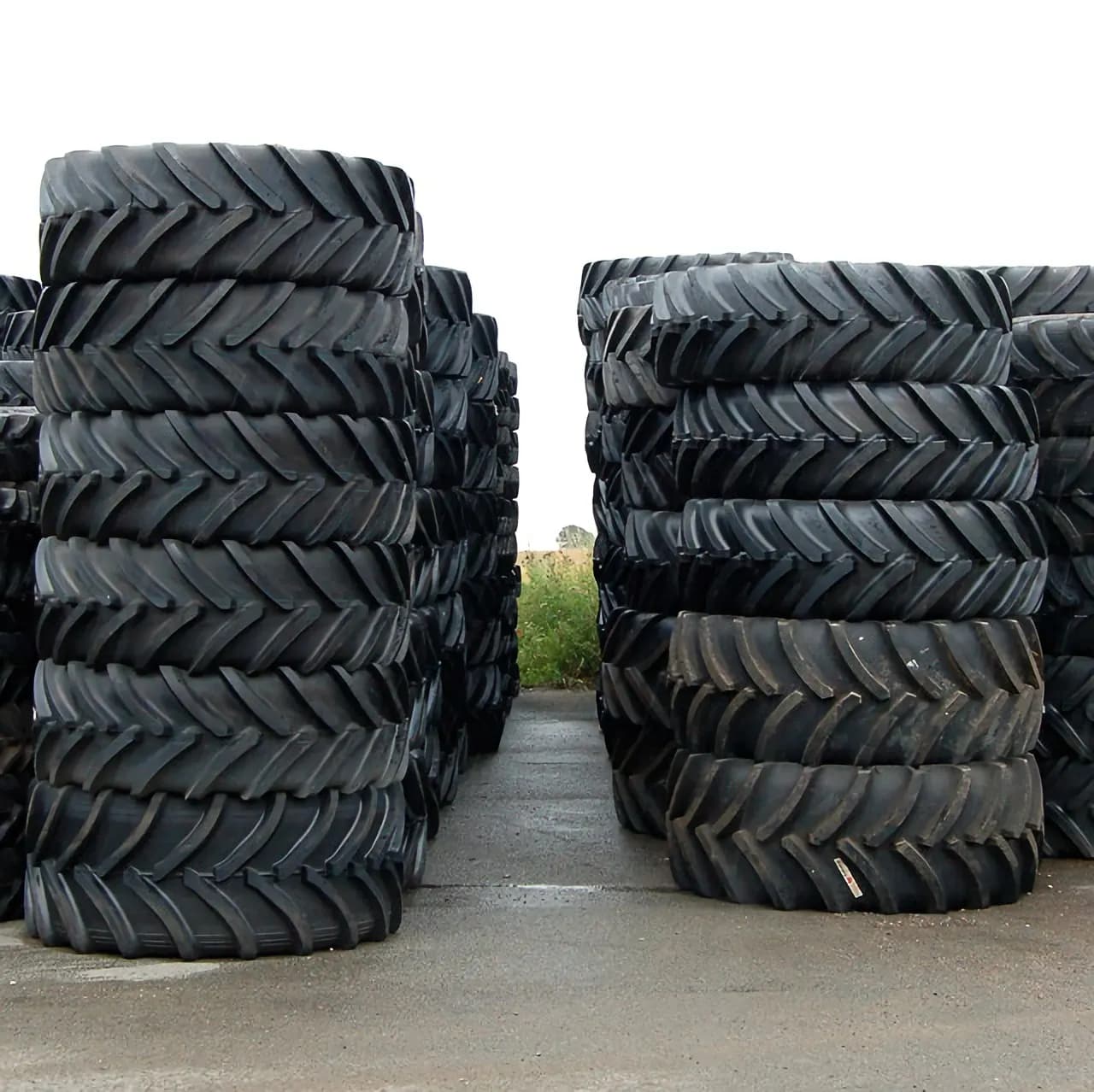
| Rear tractor tyre | ₹18,000 | 18% = ₹3,240 | ₹21,240 | 5% = ₹900 | ₹18,900 | ₹2,340 |
On a sale within the same state, the GST is split equally between CGST and SGST: the ₹900 on a car tyre becomes ₹450 CGST and ₹450 SGST. If a dealer in Gujarat sells to a buyer in Rajasthan, the whole ₹900 is IGST. To find the GST inside a tyre shop's all-inclusive price, multiply by 18 and divide by 118; at 5%, multiply by 5 and divide by 105.
For fleet operators the saving adds up quickly. A truck with ten tyres that replaces its set once a year at ₹22,000 a tyre (pre-tax) now pays ₹39,600 in GST on the set instead of ₹61,600 — ₹22,000 less a year per truck if it cannot claim credit. The tyre industry association welcomed the cut for that reason, saying it would lower vehicle operating and logistics costs. For a transporter that does claim credit, the cut mainly improves cash flow, because less credit sits in the ledger waiting to be used.
Try it — GST on a tyre
Fitting, balancing, alignment and puncture repair
Tyre shops rarely sell just the tyre. Fitting, wheel balancing, alignment, nitrogen filling and puncture repair are services. When the dealer itemises them separately, each line is taxed at its own rate, and these workshop services are generally taxed at 18% when supplied by a registered business. Tubes, valves and flaps sold with the tyre are goods, billed at their own rates from the tables above.
When a supply is a genuine bundle — a tractor tyre sold "fitted", at a single price, in the normal course of business — it may be a composite supply, taxed at the rate of the principal supply, which is the tyre. In that case the whole bundle could be billed at 5%. Keep this for supplies that really are naturally bundled, and itemise where you charge for the labour separately; the tax department looks closely at bundles that happen to push labour into a lower rate.
GST on tyre retreading
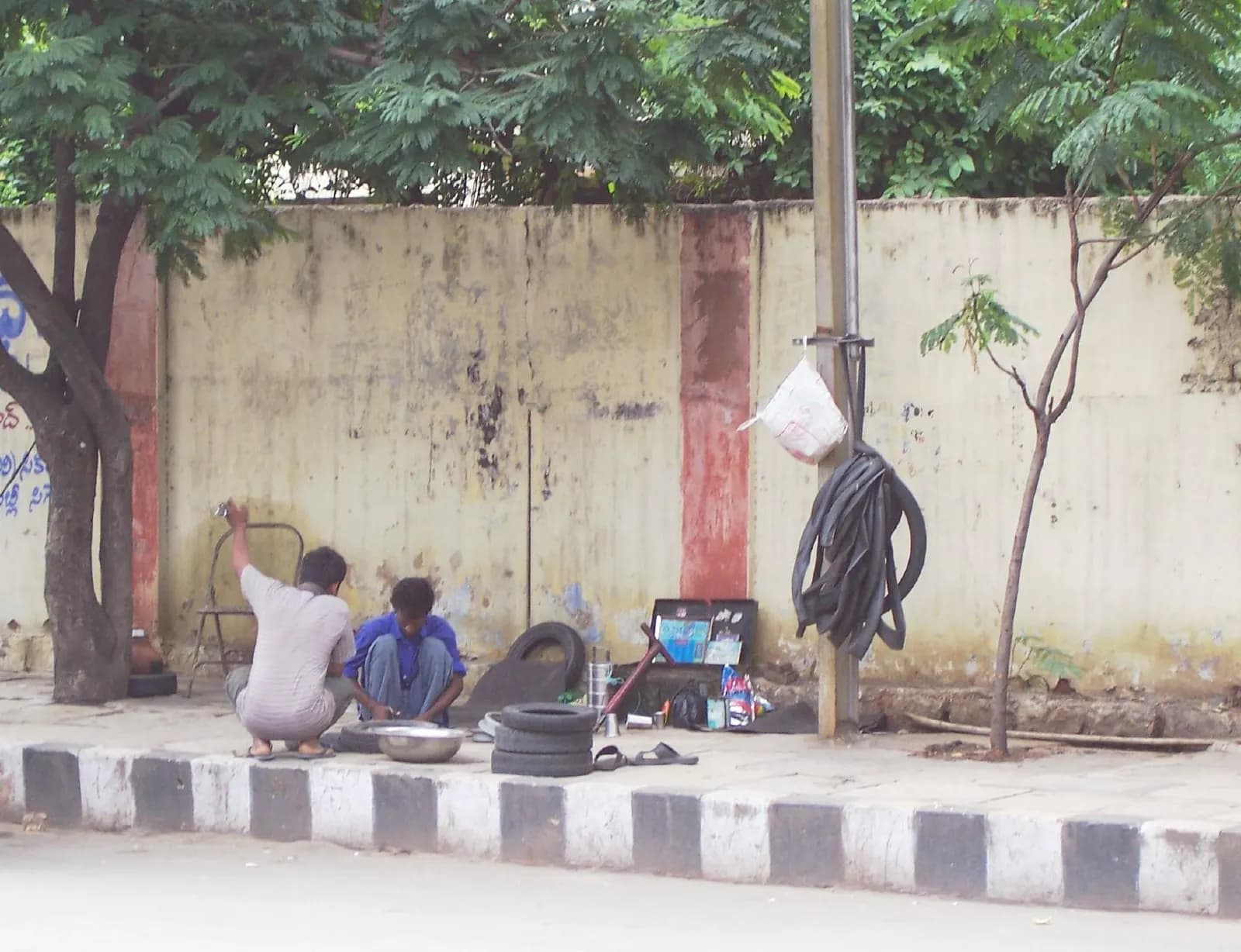
Retreading — bonding new tread rubber onto a worn casing — is a large business in India's truck and bus segment, because a casing can be retreaded more than once at a fraction of the cost of a new tyre. GST treats it in two different ways, as CBIC explained in Circular 34/8/2018–GST.
Retreading your own tyre. When a fleet owner hands over its own worn tyres, the retreader supplies a service. The circular calls it a composite supply in which the retreading process is the principal element and the tread rubber is ancillary, so the whole charge is taxed as a service at 18%.
Buying a retreaded tyre. When the casing belongs to the retreader, who sells the finished retreaded tyre, it is a supply of goods under heading 4012, now at 18%.
The retreading industry had asked the Council to cut retreading to 5%. It did not, and the industry association argued that the cut on new tyres narrows the price gap that makes retreading attractive. As of October 2026 no change has been notified, so both routes remain at 18%. For a fleet on the forward-charge GTA option the rate makes little difference, because the GST on retreading is claimed back as credit; for a small operator on the lower GTA option or an unregistered truck owner, it is a straight cost to weigh against the price of a new tyre.
Input tax credit on tyres: dealers, transporters, farmers and car owners
Whether you can recover the GST on tyres depends on who you are and what the vehicle is used for. Our input tax credit guide covers the general conditions — a valid tax invoice, the invoice in your GSTR-2B, goods received and the supplier having paid the tax.
Who can claim ITC on tyres?
| Buyer | Vehicle | ITC on tyres? |
|---|---|---|
Tyre dealer or distributor | Stock for resale | Yes, in full |
Transporter on the forward-charge GTA option (18% with ITC) | Trucks and trailers | Yes |
Transporter on the lower GTA option (5% without ITC) | Trucks and trailers | No — that option bars ITC |
Factory, contractor or warehouse | Forklifts, loaders, goods vehicles | Yes |
Registered business owning a car or SUV for staff | Car, up to 13 seats | Generally no — section 17(5) |
Taxi operator, car dealer or driving school | Car, up to 13 seats | Yes — exceptions in section 17(5) |
Unregistered farmer | Tractor | No — not registered, so no ITC |
Tyre dealer or distributor
- Vehicle
Stock for resale
- ITC on tyres?
Yes, in full
Transporter on the forward-charge GTA option (18% with ITC)
- Vehicle
Trucks and trailers
- ITC on tyres?
Yes
Transporter on the lower GTA option (5% without ITC)
- Vehicle
Trucks and trailers
- ITC on tyres?
No — that option bars ITC
Factory, contractor or warehouse
- Vehicle
Forklifts, loaders, goods vehicles
- ITC on tyres?
Yes
Registered business owning a car or SUV for staff
- Vehicle
Car, up to 13 seats
- ITC on tyres?
Generally no — section 17(5)
Taxi operator, car dealer or driving school
- Vehicle
Car, up to 13 seats
- ITC on tyres?
Yes — exceptions in section 17(5)
Unregistered farmer
- Vehicle
Tractor
- ITC on tyres?
No — not registered, so no ITC
Section 17(5)(a) blocks credit on motor vehicles for transporting people with seating of up to 13 including the driver, and clause (ab) blocks credit on their servicing, repair and maintenance, except for businesses that deal in such vehicles, carry passengers for a fare or train drivers. Tyres replaced on such a car are part of keeping it on the road, and most businesses treat that credit as blocked. Goods vehicles are not caught by this block, which is why a transporter on the 18% with ITC forward-charge option can claim the GST on every truck tyre it buys. A transporter that chose the lower 5% without ITC option gets no credit at all, so the cut from 28% to 18% reduces its costs directly. See our guide to GST on freight for the GTA options.
For manufacturers of tractor and cycle tyres, the cut can create an inverted duty structure: where inputs and input services carry a higher rate than the 5% charged on the finished tyre, unused credit builds up. Section 54(3) of the CGST Act allows a refund of credit that piles up because the tax on inputs is higher than on output, subject to the rules and the formula prescribed for such refunds.
Old tyres, scrap and imports
Selling used tyres as tyres is a supply of goods under heading 4012 at 18%. Selling them as rubber scrap for recycling is different: waste, parings and scrap of rubber (other than hard rubber) under heading 4004 sit in the 5% schedule. A registered business that sells old tyres from its own fleet charges GST on that sale like any other supply of goods; if it was blocked from taking credit when it bought them, it still charges GST on the sale.
Imported tyres attract IGST at the same rates as domestic tyres, in addition to basic customs duty, and the importer can claim the IGST as credit on the same terms as domestic purchases. Consignments of tyres worth more than ₹50,000 moving by road need an e-way bill.
Check your tyre bill
0/6Warranty claims and pro-rata replacements
Tyre warranties raise a GST question that comes up at every dealer counter. When a manufacturer replaces a defective tyre free of charge during the warranty period, CBIC's Circular 195/07/2023–GST says no further GST is payable: the price of the original tyre already included the expected cost of warranty replacements, and tax was paid on it then. The manufacturer does not have to reverse the input tax credit on the replacement, because it is not an exempt supply.
Many tyre warranties are pro-rata, though. If the tread is half worn, the customer pays part of the price of the new tyre and the company bears the rest. GST is then payable on the amount the customer pays, because the circular is clear that any additional consideration charged for a replacement part is taxable. A dealer who replaces a tyre on the manufacturer's behalf without charging the customer pays no GST on that, but if the dealer bills the manufacturer for the tyre it supplied from its own stock, that bill carries 18% and the manufacturer claims the credit.
Common mistakes with GST on tyres
Billing car or truck tyres at 28%. Some billing software and older price lists were never updated after 22 September 2025. Customers have been overcharged and businesses have overpaid output tax. Correct the rate master, issue credit notes to registered buyers who were overcharged, and adjust the next return.
Billing all farm tyres at 5%. The 5% entries name tractor tyres, rear tractor tyres and tractor tubes. Tyres for trailers, harvesters or implements are not automatically covered.
Treating retreading of a customer's tyre as a sale of goods. It is a service. Invoice it with a service code and the service rate, not HSN 4012.
Charging the wrong type of tax. A dealer in Pune selling to a fleet operator registered in Pune charges CGST and SGST; the same tyres sold to a fleet operator registered in Indore carry IGST. Charging IGST on a local sale, or the reverse, does not simply wash out: the supplier has to pay the correct tax and claim back the wrong one, and the buyer's credit is held up until it is fixed. Check the buyer's GSTIN state code against your own before raising the invoice.
Claiming ITC on tyres for a company car. Unless an exception in section 17(5) applies, the credit is blocked. If you have claimed it, reverse it in GSTR-3B with interest.
Official links
- Notification 9/2025–CT(Rate) — goods rate scheduleSchedule I and II entries for 4011, 4012, 4013 and 4004
- 56th GST Council — recommendationsTyres 28% to 18%; tractor tyres 18% to 5%
- Circular 34/8/2018–GSTRetreading — service vs goods
- Section 17, CGST ActBlocked credits on motor vehicles
- CGST rate notificationsLater amendments, if any
What to do next
If you sell or fit tyres, check that your billing software uses 18% for road-vehicle tyres and 5% for tractor and cycle tyres, with the right HSN codes. If you run a fleet, compare the two GTA options now that tyres cost less. For the vehicles themselves, see our guides to GST on cars and GST on bikes, and use the GST calculator to check any bill.
This is general information, not legal or tax advice — confirm on the official source or with a professional.
Frequently asked questions
New tyres for cars, two-wheelers, buses and trucks attract 18% GST, down from 28% before 22 September 2025. Tractor tyres, rear tractor tyres and tractor tubes attract 5%, as do tyres and tubes for bicycles and cycle-rickshaws. Retreaded and used tyres, solid tyres and other inner tubes attract 18%. No compensation cess applies.
New rubber tyres fall under heading 4011 — 4011 10 for cars, 4011 20 for buses and lorries, 4011 40 for motorcycles, 4011 50 for bicycles, 4011 70 for agricultural machines and 4011 30 for aircraft. Retreaded and used tyres, solid tyres and tyre flaps are under 4012, and inner tubes under 4013. Your invoice must show at least a 4-digit HSN code if turnover is up to ₹5 crore.
A car tyre attracts 18%. If the pre-tax price is ₹5,000, GST is ₹900 and the bill is ₹5,900; before 22 September 2025, 28% made it ₹6,400. In a sale within the state the ₹900 is split into ₹450 CGST and ₹450 SGST. Fitting, balancing and alignment charges are services billed separately.
When you give your own worn tyre for retreading, CBIC treats it as a supply of service, and GST is 18%. When a dealer sells you a retreaded tyre made from its own casing, that is a supply of goods under heading 4012, also at 18%. The 56th GST Council did not cut either rate.
A tyre dealer can claim full input tax credit on stock bought for resale. A transporter or factory can claim ITC on tyres for goods vehicles, tractors and machinery used in the business. Credit on tyres and servicing for cars and other passenger vehicles with up to 13 seats is generally blocked under section 17(5), unless you deal in vehicles, carry passengers for hire or run a driving school.
Tractor tyres, rear tractor tyres and tubes for tractor tyres attract 5% from 22 September 2025, down from 18%. A rear tractor tyre with a pre-tax price of ₹18,000 now carries ₹900 GST instead of ₹3,240, so the farmer pays ₹18,900 instead of ₹21,240.
Sources & verification
Figures on this page were checked against the sources below when it was last reviewed on 9 October 2026. Each rate and limit is stored once with its own official source and review date, and official update channels are monitored daily so changes are picked up. How we verify
- 1.Notification No. 9/2025–Central Tax (Rate), 17 September 2025 (Gazette of India) — Ministry of Finance / Gazette of India · accessed 9 October 2026
- 2.Recommendations of the 56th GST Council meeting (press release with annexures) — GST Council / PIB · accessed 9 October 2026
- 3.Circular No. 34/8/2018–GST, 1 March 2018 — CBIC · accessed 9 October 2026
- 4.Section 17 – CGST Act, 2017 (blocked credits) — CBIC · accessed 9 October 2026
- 5.Tyre industry welcomes GST cut; retreading cries foul — Tyre Trends · accessed 9 October 2026
- 6.Apollo Tyres to reduce prices to pass on GST rate cut benefit — Outlook Business · accessed 9 October 2026
- 7.Circular No. 195/07/2023–GST (warranty replacements) — CBIC · accessed 9 October 2026
- 8.Government cuts GST on tyres, ATMA welcomes the decision — 91Trucks · accessed 9 October 2026
MSMETOOLS is an independent platform and is not affiliated with any government agency, ministry or department.
Tools for this
GST Calculator (India)
Calculate GST for your sales and purchases with current rates.
Invoice Generator
Create professional invoices with tax, logo and custom details.
HSN Code Finder (India)
Find the correct HSN/SAC code for your product.
Related guides
 GST on Bikes 2026: 18% vs 40%, EVs, Bicycles & InsuranceRead guide
 GST on Tractors 2026: 5% Rate, Parts, HSN 8701 & ITCRead guide
 GST on Bicycle 2026: 5% on Cycles, Parts & E-Bikes, HSN 8712Read guide
 GST on Freight 2026: SAC/HSN Code, GTA Rate & RCMRead guide
Official links open the government site in a new tab.