 GST & indirect tax
GST on Toys in 2026: Non-Electronic vs Electronic, HSN 9503 and the BIS Toy Rules
GST on toys in 2026: 5% on non-electronic toys, dolls and board games since GST 2.0, 18% on electronic toys and consoles, HSN 9503, BIS toy rules and ₹ examples.
 Edited by Sumeet YadavFounder & editor, MSMETOOLS · fact-checked against official sources
Contents (12)
- 1. GST rates on toys and games in 2026
- 2. Which toys are at 5%: reading "toys like tricycles, scooters, pedal cars etc."
- 3. When is a toy "electronic"? The 18% line
- 4. Games, sports goods and festive items
- 5. Handicraft toys: Channapatna, Sawantwadi, Thanjavur
- 6. What changed on 22 September 2025
- 7. The BIS toy rules and GST: two separate tests
- 8. Worked bills: GST on toys in rupees
- 9. Inverted duty and refunds for toy makers
- 10. Selling toys online
- 11. Common mistakes with GST on toys
- 12. What to do next
Toys moved into the lowest standard GST slab in 2025, but the rate still turns on one question that the law never quite answers: is the toy electronic? This guide is for toy shops, wholesalers in Sadar Bazar and similar markets, manufacturers in Delhi NCR, Mumbai and elsewhere, craft-toy makers in Channapatna and Etikoppaka, importers and online sellers. It covers the 2026 rates for toys, games and sports goods, how the "electronic toy" line has been drawn, handicraft toys, the BIS toy rules that sit alongside GST, inverted-duty refunds and worked bills in rupees. Rates were checked against the notified schedules in October 2026.
Quick answer
Non-electronic toys of heading 9503 — plastic toys, dolls, soft toys, puzzles, building sets, tricycles and scooters — attract 5% GST from 22 September 2025, down from 12%. Electronic toys stay at 18%. Board games and playing cards are 5%, sports goods 5%, and video game consoles 18%.
A ₹799 building-block set: GST ₹39.95 at 5%
A ₹2,499 remote-control car: GST ₹449.82 at 18%
Handicraft wooden toys (Channapatna, Sawantwadi, Thanjavur): 5%
BIS Standard Mark is still compulsory — GST rate and BIS licence are separate tests
No compensation cess on toys
GST rates on toys and games in 2026
Notification 9/2025–Central Tax (Rate), in force from 22 September 2025, has two toy entries in heading 9503. Schedule I, the 2.5% central tax list, carries serial 497: "Toys like tricycles, scooters, pedal cars etc. (including parts and accessories thereof) [other than electronic toys]". Schedule II, the 9% list, carries serial 616: "Electronic Toys like tricycles, scooters, pedal cars etc. (including parts and accessories thereof)". Toy balloons of natural rubber latex have their own Schedule I entry, serial 496.
So a toy is either non-electronic, at 5%, or electronic, at 18%. The 56th GST Council's "sports goods and toys" annexure moved the non-electronic entry from 12% to 5%, together with board games and sports goods. Electronic toys were not on the list and stayed at 18%.
GST on toys, games and sports goods (2026)
| Product (HSN) | GST rate | Notification entry |
|---|---|---|
Non-electronic toys — plastic toys, dolls, soft toys, puzzles, blocks, tricycles, scooters, pedal cars, and their parts (9503) | 5% | N.9/2025 Sch. I 497 |
Electronic toys — RC cars, battery dolls, ride-ons with lights or music, and their parts (9503) | 18% | N.9/2025 Sch. II 616 |
Toy balloons of natural rubber latex (9503) | 5% | N.9/2025 Sch. I 496 |
Handicraft dolls and toys of wood, metal or textile (9503) | 5% | N.21/2018 as amended by N.13/2025, S.No. 34 |
Playing cards, chess, carom, ludo and other board games (9504) | 5% | N.9/2025 Sch. I 498 |
Video game consoles and machines, billiards, casino tables (9504) | 18% | N.9/2025 Sch. II 617 |
Festive, carnival and novelty articles, conjuring tricks (9505) | 18% | N.9/2025 Sch. II 618 |
Sports goods — bats, balls, rackets, skates (9506) | 5% | N.9/2025 Sch. I 499 |
Gym and exercise equipment (9506) | 18% | N.9/2025 Sch. II 619 |
Non-electronic toys — plastic toys, dolls, soft toys, puzzles, blocks, tricycles, scooters, pedal cars, and their parts (9503)
- GST rate
5%
- Notification entry
N.9/2025 Sch. I 497
Electronic toys — RC cars, battery dolls, ride-ons with lights or music, and their parts (9503)
- GST rate
18%
- Notification entry
N.9/2025 Sch. II 616
Toy balloons of natural rubber latex (9503)
- GST rate
5%
- Notification entry
N.9/2025 Sch. I 496
Handicraft dolls and toys of wood, metal or textile (9503)
- GST rate
5%
- Notification entry
N.21/2018 as amended by N.13/2025, S.No. 34
Playing cards, chess, carom, ludo and other board games (9504)
- GST rate
5%
- Notification entry
N.9/2025 Sch. I 498
Video game consoles and machines, billiards, casino tables (9504)
- GST rate
18%
- Notification entry
N.9/2025 Sch. II 617
Festive, carnival and novelty articles, conjuring tricks (9505)
- GST rate
18%
- Notification entry
N.9/2025 Sch. II 618
Sports goods — bats, balls, rackets, skates (9506)
- GST rate
5%
- Notification entry
N.9/2025 Sch. I 499
Gym and exercise equipment (9506)
- GST rate
18%
- Notification entry
N.9/2025 Sch. II 619
There is no compensation cess on toys, so the rate on the invoice is the whole tax. Children's bicycles with a chain drive are not toys; they are bicycles of 8712 at 5%, covered in our guide to GST on bicycles.
Which toys are at 5%: reading "toys like tricycles, scooters, pedal cars etc."
The wording of serial 497 names only wheeled toys, followed by "etc.". Read narrowly, it might seem to cover ride-ons alone, leaving dolls, plastic toys and puzzles in the 18% residuary entry for goods not specified elsewhere. That is not how the entry has been applied.
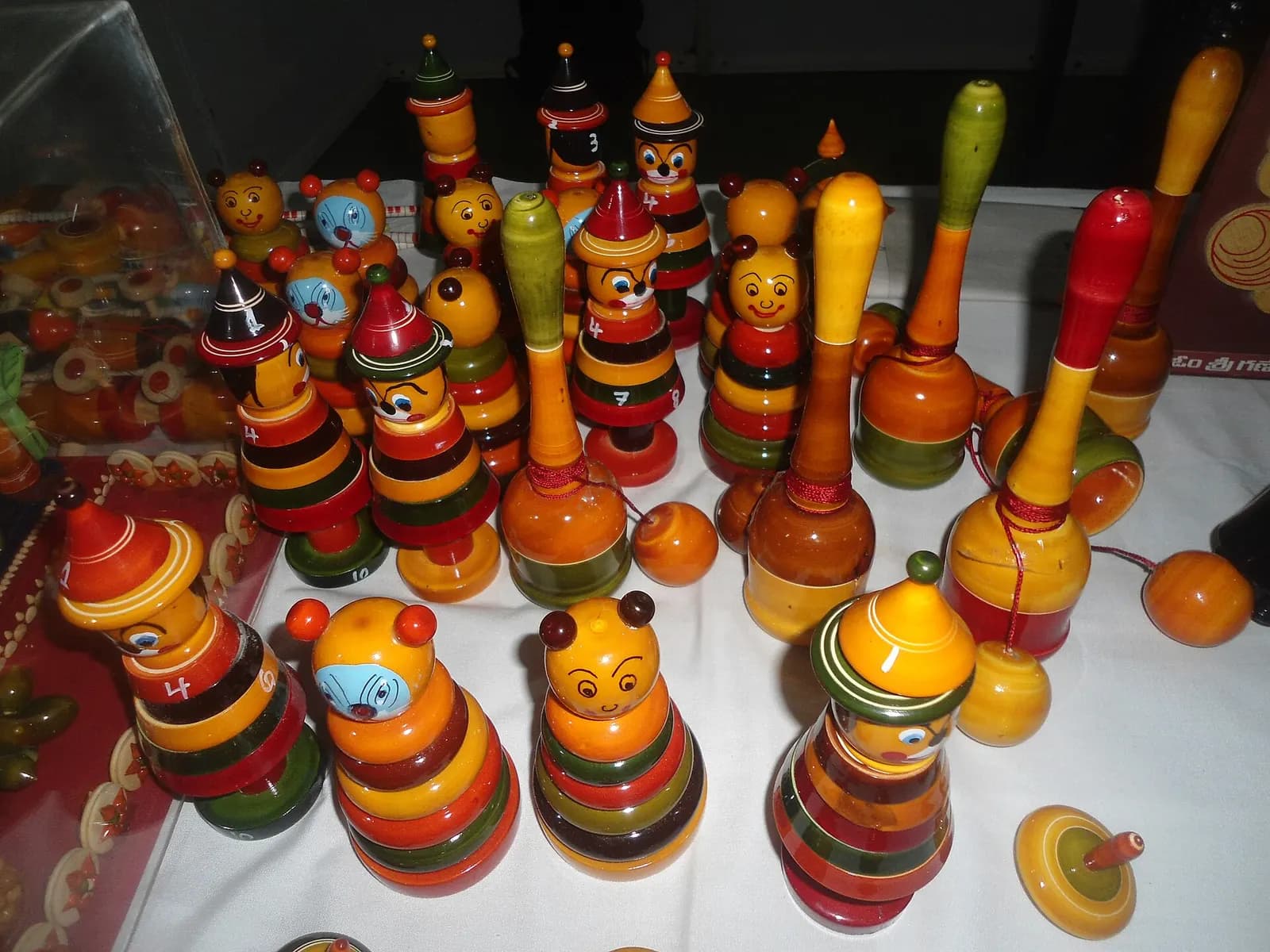
The same words sat in the 2017 schedule at 12%, and in Advance Ruling GUJ/GAAR/R/10/2021 the Gujarat Authority held that plastic toys made by a Bhavnagar manufacturer, classified under 9503 00 30, fell within that entry at 12%. The trade has long treated the entry as covering non-electronic toys of heading 9503 generally — dolls, soft toys, construction sets, puzzles, scale models, toy kitchen sets and so on — and the GST 2.0 annexure simply moved that entry from 12% to 5%.
An advance ruling binds only the applicant, and no CBIC circular has defined the entry's reach. If your range includes items at the edge of 9503 — party novelties, costume accessories, or plastic articles that are not really playthings — check the classification first. Festive and novelty articles of 9505 are a separate heading at 18%.
When is a toy "electronic"? The 18% line
Neither the GST Acts nor the rate notification define "electronic toy". The clearest guidance is a Tamil Nadu case. A Chennai toy retailer asked whether kids' scooters, activity ride-ons, "smart" tricycles and kick scooters — pushed or pedalled by the child, but fitted with a circuit that flashes lights, plays music or sounds a horn — were electronic toys. The Authority for Advance Ruling held in 2021 that they were, because they contain a built-in electronic circuit, even though physical force is the main action. The appellate authority dismissed the appeal in order TN/AAAR/01/2022, holding that toys with electronic components attract 18% regardless of how they are used.
Applying that reasoning, these are electronic toys at 18%: remote-control cars, drones and robots, battery-operated dolls and animals that move or talk, musical and light-up toys, electric ride-on cars and bikes, toy walkie-talkies and learning tablets. These are non-electronic at 5%: plush toys, dolls without electronics, building blocks, puzzles, pull-along and wind-up toys, plain tricycles and scooters, toy kitchen and doctor sets, clay and craft kits.
The ruling binds only that applicant, but it is the leading reasoning on the point, and tax officers tend to follow it. If you sell a plain tricycle and a "musical" version with a horn module, bill them as two products at two rates. A toy that only uses a battery for a light that can be removed is a judgement call; the safer course is 18% or a written opinion before you choose 5%.
Games, sports goods and festive items
Heading 9504 splits in two. Playing cards, chess, carom, ludo and other board games of 9504 90 90 are in Schedule I at 5%, down from 12%. Video game consoles and machines, articles of funfair, table or parlour games, billiards and casino tables are in Schedule II at 18%. Ganjifa cards, as a handicraft, are at 5% under the handicraft notification.
Sports goods of 9506 — cricket bats and balls, footballs, badminton rackets, shuttlecocks, skates, carrom strikers sold separately — moved to 5%, but "articles and equipment for general physical exercise, gymnastics, athletics" stayed at 18%. A toy store that also sells dumbbells and exercise cycles must keep them on a separate rate line.
Festive, carnival and entertainment articles of 9505 — Christmas decorations, Diwali and Holi novelty items, masks and conjuring tricks — are at 18%. Toy balloons of natural rubber latex are at 5%.
Handicraft toys: Channapatna, Sawantwadi, Thanjavur
Craft toys are covered twice. The general 9503 entry already puts non-electronic toys at 5%. In addition, the handicraft goods notification, Notification 21/2018–Central Tax (Rate), as substituted by Notification 13/2025–Central Tax (Rate) from 22 September 2025, lists "dolls or other toys made of wood or metal or textile material" — naming wooden toys of Sawantwadi, Channapatna toys and Thanjavur dolls — at 2.5% central tax, or 5% in all. The Council's handicrafts annexure moved them from 12% to 5%.
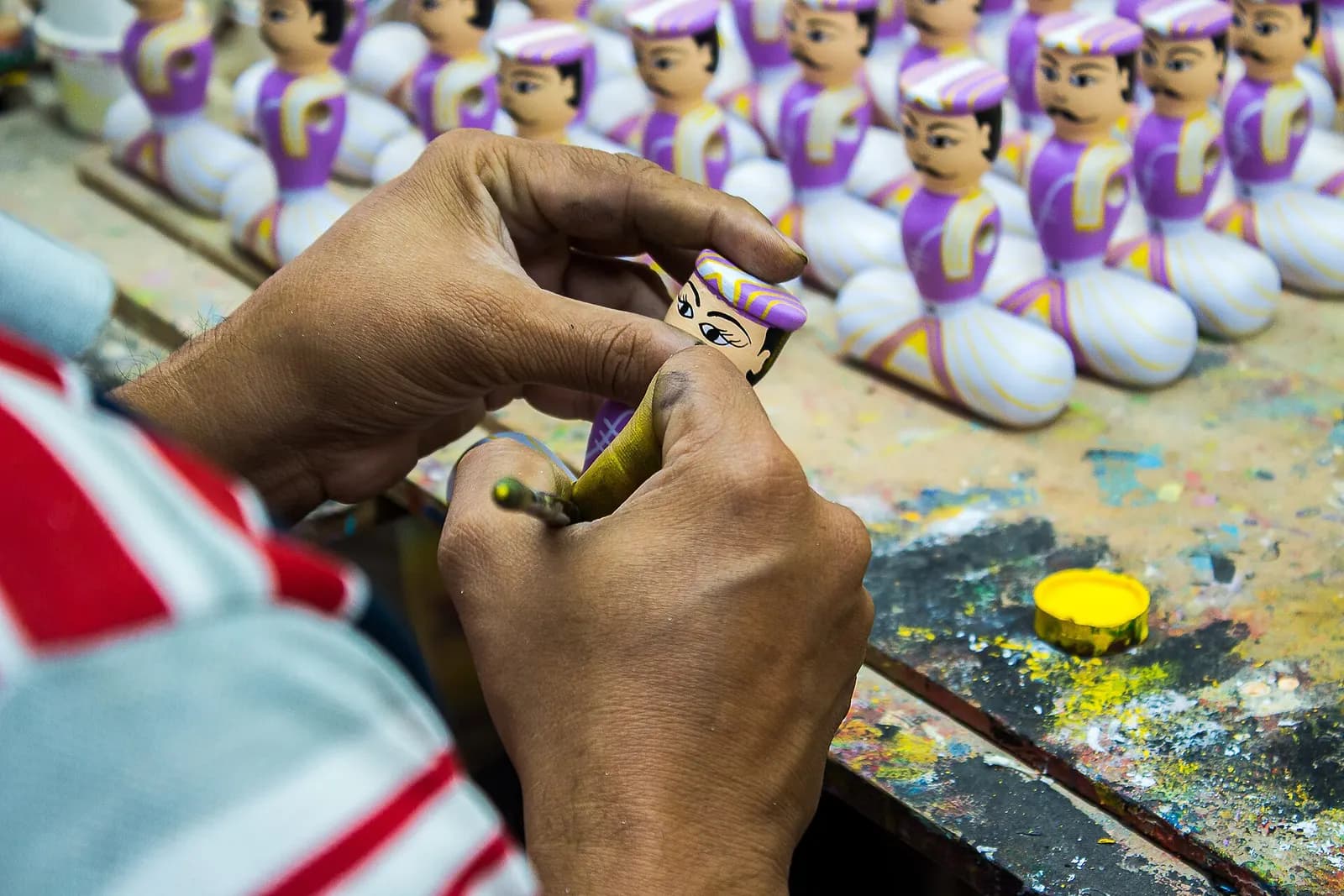
Many craft-toy makers are small, and most sell below the registration threshold of ₹40 lakh in most states (₹20 lakh in the states that kept the lower limit for goods). Below the threshold they need not register, but if they sell between states or through an e-commerce marketplace they generally must. Artisans who sell at a fair or exhibition in another state should check the rules for casual taxable persons and handicraft goods on the GST portal before they travel.
What changed on 22 September 2025
Before GST 2.0, non-electronic toys, board games, sports goods and handicraft toys were all at 12%. From 22 September 2025 all four groups are at 5%, while electronic toys, video game consoles and exercise equipment stayed at 18%.
For a retailer, the rate is set by the date of supply, not the date of purchase. The PIB FAQs on the 56th Council say goods supplied on or after 22 September 2025 take the new rate even if they were bought earlier, and credit already taken can be used against any output tax. They also cite Circular 135/05/2020-GST: a refund of accumulated credit as "inverted duty" is not available where the input and the output are the same goods taxed at different rates at different times. A toy shop that bought stock at 12% and sells it at 5% carries the surplus credit forward; it cannot ask for it in cash.
The BIS toy rules and GST: two separate tests
GST and BIS answer different questions. GST decides the tax rate; the Toys (Quality Control) Order, 2020, issued by DPIIT on 25 February 2020, decides whether a toy may be sold at all. The order applies to products "designed or clearly intended, whether or not exclusively, for use in play by children under 14 years of age". It requires every such toy to conform to the IS 9873 series or, for electric toys, IS 15644, and to carry the BIS Standard Mark under a licence. Goods meant for export are excluded. The PIB release of 12 December 2020 confirms the order came into effect on 1 January 2021.
How the BIS toy rules apply to a seller
- 1
Check whether the product is a toy for children under 14
If it is, it needs the ISI Standard Mark before it is made, imported, stored, sold or displayed for sale in India.
- 2
Identify the standard
Non-electric toys are licensed under IS 9873 (Part 1); toys with any function that depends on electricity under IS 15644. BIS's FAQ says the two need separate licence applications.
- 3
Confirm who holds the licence
BIS toy FAQOnly the manufacturer can hold a BIS licence, and each factory premises needs its own. Traders and online sellers should keep the maker's licence number for every product.
- 4
Check the exemptions
Artisans registered with the Development Commissioner (Handicrafts) and registered proprietors or authorised users of GI-registered toys are exempt (Second Amendment Order, December 2020).
The two tests also use slightly different language. BIS calls a toy "electric" if any function depends on electricity, which lines up closely with the "electronic toy" reasoning in the GST rulings. If a toy needs an IS 15644 licence because it has a circuit, billing it at 5% as non-electronic is hard to defend.
For micro and small manufacturers, BIS's fee concessions reduce the annual minimum marking fee by 80% for micro units and 50% for small units, under a concession scheme running to 31 May 2029. Selling a toy without a valid licence is an offence under section 17 of the BIS Act, 2016, with fines starting at ₹2 lakh for a first contravention. Importers face DGFT's requirement, reported by the Ministry of Commerce, that samples from each toy consignment be tested. Our BIS certification guide walks through the licence application on the Manak portal.
Worked bills: GST on toys in rupees
The prices below are illustrative round figures to show the arithmetic, not market quotes.
| Item (illustrative) | Taxable value | GST rate | GST | Bill total |
|---|---|---|---|---|
| Building-block set, 500 pieces | ₹799 | 5% | ₹39.95 | ₹838.95 |
| Soft toy (teddy bear) | ₹499 | 5% | ₹24.95 | ₹523.95 |
| Ludo and snakes-and-ladders board | ₹299 | 5% | ₹14.95 | ₹313.95 |
| Plain kids' tricycle | ₹1,800 | 5% | ₹90.00 | ₹1,890.00 |
| Musical tricycle with lights | ₹2,200 | 18% | ₹396.00 | ₹2,596.00 |
| Remote-control car | ₹2,499 | 18% | ₹449.82 | ₹2,948.82 |
| Handmade Channapatna toy set | ₹1,200 | 5% | ₹60.00 | ₹1,260.00 |
A gift box with one electronic item. A shop sells a "birthday box" containing a ₹600 doll, a ₹400 puzzle and a ₹1,000 battery-operated robot for a single price of ₹2,000. None of the items is the principal supply, so section 8 of the CGST Act treats the box as a mixed supply taxed at the highest rate among its contents — 18%, or ₹360. If the shop lists the three items separately on the invoice, the doll and puzzle carry 5% (₹50) and the robot 18% (₹180), a total of ₹230. Itemising saves the customer ₹130.
A wholesale bill. A Delhi wholesaler sells 400 plastic toy sets at ₹350 each to a retailer in Lucknow. The value is ₹1,40,000, the sale is between states, and IGST at 5% is ₹7,000. The consignment exceeds ₹50,000, so it needs an e-way bill.
Try it — GST on a toy
Inverted duty and refunds for toy makers
A plastic toy maker buys polymers and granules at 18%, moulds, paints and packaging films at 18% and sells at 5%. Corrugated cartons of 4819 10 and 4819 20 are now at 5%, which helps a little. The gap between 18% inputs and 5% output builds credit every month, and section 54(3) of the CGST Act allows a refund of credit accumulated because the input rate is higher than the output rate.
The refund follows the Rule 89(5) formula and counts only credit on inputs, not on services or capital goods. As an illustration, a moulder selling ₹30,00,000 of toys a month at 5% (₹1,50,000 output tax) with ₹2,16,000 of credit on ₹12,00,000 of 18% granules and paints and ₹36,000 on ₹2,00,000 of services (₹2,52,000 in all) can claim about ₹2,16,000 − (₹1,50,000 × ₹2,16,000 ÷ ₹2,52,000) ≈ ₹87,429. The rest of the ₹1,02,000 excess stays in the ledger. Claims are filed in RFD-01 within two years from the relevant date; our input tax credit guide covers the conditions.
Electronic toy makers selling at 18% rarely have an inverted structure, because most of their inputs are also at 18%.
Selling toys online
Toys are one of the most popular categories for new online sellers, and our list of e-commerce business ideas includes them. Three GST points matter. First, selling between states through a marketplace generally requires GST registration whatever your turnover. Second, the marketplace collects tax at source of 0.5% (0.25% CGST + 0.25% SGST, or 0.5% IGST) of your net taxable sales, which you can claim in your cash ledger. Third, the rate is chosen per product: map each listing to the right HSN and to 5% or 18% in your seller account, because a catalogue that defaults every item to one rate will be wrong for either your electronic or your non-electronic toys.
Imported toys pay IGST at the border at the same rates — 5% or 18% — on top of basic customs duty, which the PIB FAQs confirm for imports generally. Keep the BIS licence details of every product you list, so you can show them if a buyer, platform or officer asks.
Common mistakes with GST on toys
Check your toy invoice
0/7Treating "musical" or "light-up" versions as non-electronic. A tricycle with a horn module or a doll that sings is an electronic toy on the Tamil Nadu reasoning. Bill it at 18%.
Billing all toys at 18% "to be safe". Overcharging is not safe. Non-electronic toys are at 5%; collecting 18% means passing extra tax to customers, which has to be paid to the government even if it was charged in error.
Mixing exercise equipment with sports goods. Bats and balls are 5%; treadmills and dumbbells are 18%.
Expecting a refund of old-stock credit. Credit on toys bought at 12% and sold at 5% after 22 September 2025 can be used against output tax but is not refundable.
Ignoring BIS because GST is in order. A correct GST invoice does not make an unmarked toy legal to sell.
Official links
- Notification 9/2025–CT(Rate) — goods rate scheduleToys Sch. I 496–499; Sch. II 616–619
- Notification 13/2025–CT(Rate) — handicraft goodsChannapatna, Sawantwadi, Thanjavur toys
- 56th GST Council — recommendations and annexuresSports goods and toys 12% to 5%
- Gujarat AAR on plastic toys (GUJ/GAAR/R/10/2021)Plastic toys under the toy entry
- Toys (Quality Control) Order, 2020IS 9873 / IS 15644, Standard Mark
- BIS toy certification FAQLicensing for electric and non-electric toys
What to do next
As of October 2026, no further change to toy rates has been notified; a GST Council recommendation takes effect only when a rate notification is issued. Sort your catalogue into non-electronic toys at 5% and anything with a circuit at 18%, and itemise mixed gift boxes. If you make toys, check your BIS licence covers every product series and run the Rule 89(5) formula on last quarter's figures. Use the GST calculator to check a bill and the invoice generator to issue one, and read our guides to BIS certification, GST 2.0 and HSN codes.
This is general information, not legal or tax advice — confirm on the official source or with a professional.
Frequently asked questions
Non-electronic toys of heading 9503 — plastic toys, dolls, soft toys, building blocks, puzzles, tricycles and scooters — attract 5% GST from 22 September 2025, down from 12%. Electronic toys attract 18%. Board games and playing cards are 5%, and video game consoles 18%.
GST law does not define it, so rulings fill the gap. In 2021 the Tamil Nadu Authority for Advance Ruling held that kids' scooters, ride-ons and tricycles with a built-in circuit for lights, music or a horn are electronic toys, even though the child powers them, and the appellate authority upheld this in 2022. A toy with any working electronic circuit is safest billed at 18%.
Most toys are heading 9503, which covers tricycles, scooters, pedal cars and other wheeled toys, dolls, scale models, construction sets, puzzles and other toys. Board games, playing cards and video game consoles are 9504, festive and carnival articles 9505, and sports goods 9506. Report at least 4-digit HSN up to ₹5 crore turnover and 6-digit HSN above.
Handicraft dolls and other toys of wood, metal or textile, including Sawantwadi wooden toys, Channapatna toys and Thanjavur dolls, attract 5% under the handicraft goods notification, as amended by Notification 13/2025-CT(Rate). Factory-made non-electronic wooden toys are also 5% under the general toy entry, so wooden toys are at 5% either way.
Yes, the two are separate. Under the Toys (Quality Control) Order, 2020, toys for children under 14 made or imported for sale in India must carry the BIS Standard Mark from 1 January 2021, under IS 9873 or, for electric toys, IS 15644. Artisans registered with the Development Commissioner (Handicrafts) and GI-registered toy makers are exempt.
A toy maker selling at 5% while buying plastic granules at 18% has an inverted duty structure and can claim a refund of the excess credit on inputs under section 54(3), within two years from the relevant date. Credit on services and capital goods is not refundable, and a trader whose credit came from stock bought at the old 12% rate cannot claim it as a refund.
Sources & verification
Figures on this page were checked against the sources below when it was last reviewed on 9 October 2026. Each rate and limit is stored once with its own official source and review date, and official update channels are monitored daily so changes are picked up. How we verify
- 1.Notification No. 9/2025–Central Tax (Rate), 17 September 2025 (Gazette of India, G.S.R. 641(E)) — Ministry of Finance / Gazette of India · accessed 9 October 2026
- 2.Notification No. 13/2025–Central Tax (Rate), 17 September 2025, amending Notification 21/2018-CT(Rate) (handicraft goods) — Ministry of Finance / Gazette of India · accessed 9 October 2026
- 3.Recommendations of the 56th GST Council meeting (press release with rate annexures) — GST Council / PIB · accessed 9 October 2026
- 4.Advance Ruling No. GUJ/GAAR/R/10/2021, I-tech Plast India Pvt. Ltd. (20 January 2021) — Gujarat Authority for Advance Ruling (hosted by GST Council) · accessed 9 October 2026
- 5.Toys (Quality Control) Order, 2020 — DPIIT, S.O. 853(E), 25 February 2020 — DPIIT / Bureau of Indian Standards · accessed 9 October 2026
- 6.BIS certification of safety of toys — frequently asked questions — Bureau of Indian Standards · accessed 9 October 2026
- 7.Handicraft and GI Toys exempted from Quality Control Order (PIB, 12 December 2020) — PIB / Ministry of Commerce and Industry · accessed 9 October 2026
- 8.Measures to promote indigenous toys (PIB, Ministry of Commerce and Industry) — PIB / Ministry of Commerce and Industry · accessed 9 October 2026
- 9.Children Scooter, Smart Tricycle etc. fitted with electronic circuit taxable at 18% (Tamil Nadu AAR) — Taxmann (secondary) · accessed 9 October 2026
- 10.FAQs on the decisions of the 56th GST Council (PIB, 3 September 2025) — PIB / Ministry of Finance · accessed 9 October 2026
MSMETOOLS is an independent platform and is not affiliated with any government agency, ministry or department.
Tools for this
GST Calculator (India)
Calculate GST for your sales and purchases with current rates.
Invoice Generator
Create professional invoices with tax, logo and custom details.
HSN Code Finder (India)
Find the correct HSN/SAC code for your product.
Related guides
 GST on Bicycle 2026: 5% on Cycles, Parts & E-Bikes, HSN 8712Read guide
 HSN Code List 2026: Digits, Lookup & Rates for Common GoodsRead guide
 HSN Code for Corrugated Box & GST on Packaging 2026Read guide
 TCS under GST 2026: 0.5% Rate, GSTR-8 & Seller CreditRead guide
Official links open the government site in a new tab.