 Technology centres
CNC Learning Courses in 2026: Government CNC Programming and Operator Training, Fees and Where to Enrol
CNC learning courses in 2026 at MSME tool rooms, CIPET and NSIC: official fees from ₹6,336, one- to six-month options, eligibility, NSQF levels and free seats.
 Edited by Sumeet YadavFounder & editor, MSMETOOLS · fact-checked against official sources
Contents (10)
- 1. What a CNC learning course teaches
- 2. Government CNC courses and fees by centre
- 3. The NSQF ladder: which CNC course fits your qualification
- 4. Where to train: picking a centre by region
- 5. Can you learn CNC online?
- 6. Free and subsidised CNC training
- 7. How to enrol
- 8. Costs, time and what to expect afterwards
- 9. For MSME owners: training your own operators
- 10. What to do next
If you want to learn CNC — to run a lathe or machining centre, or to write the programmes that drive one — the cheapest reliable route in India is a government tool room, not a private academy. MSME tool rooms such as CTR Ludhiana, CTTC Bhubaneswar, CITD Hyderabad and IDTR Jamshedpur, along with CIPET and NSIC's technical services centres, teach on industrial machines, publish their fees and issue certificates that manufacturers recognise. This guide compares their CNC courses using each centre's own published course list: what you learn, how long it takes, who can join, what it costs, and when the course is free.
Quick answer
Government CNC learning courses run at MSME tool rooms, CIPET and NSIC centres in three lengths: short courses of 96 hours to one month for CNC programming or machining, 2–3 month operator courses, and six-month (600-hour) NSQF courses that take you from Class 10, ITI or diploma to a recognised CNC operator, technician or programmer qualification. Fees are published by each centre and are much lower than most private institutes.
Short courses: ₹6,336 for one month at CTTC Bhubaneswar, ₹12,390 for 96 hours at CTR Ludhiana
Six-month NSQF courses: ₹22,500 to ₹34,310, depending on centre and level
Entry from Class 10 (operator level) up to diploma/B.Tech (programmer level)
SC/ST candidates usually pay no course fee on NSQF courses; sponsored batches can be fully free
What a CNC learning course teaches
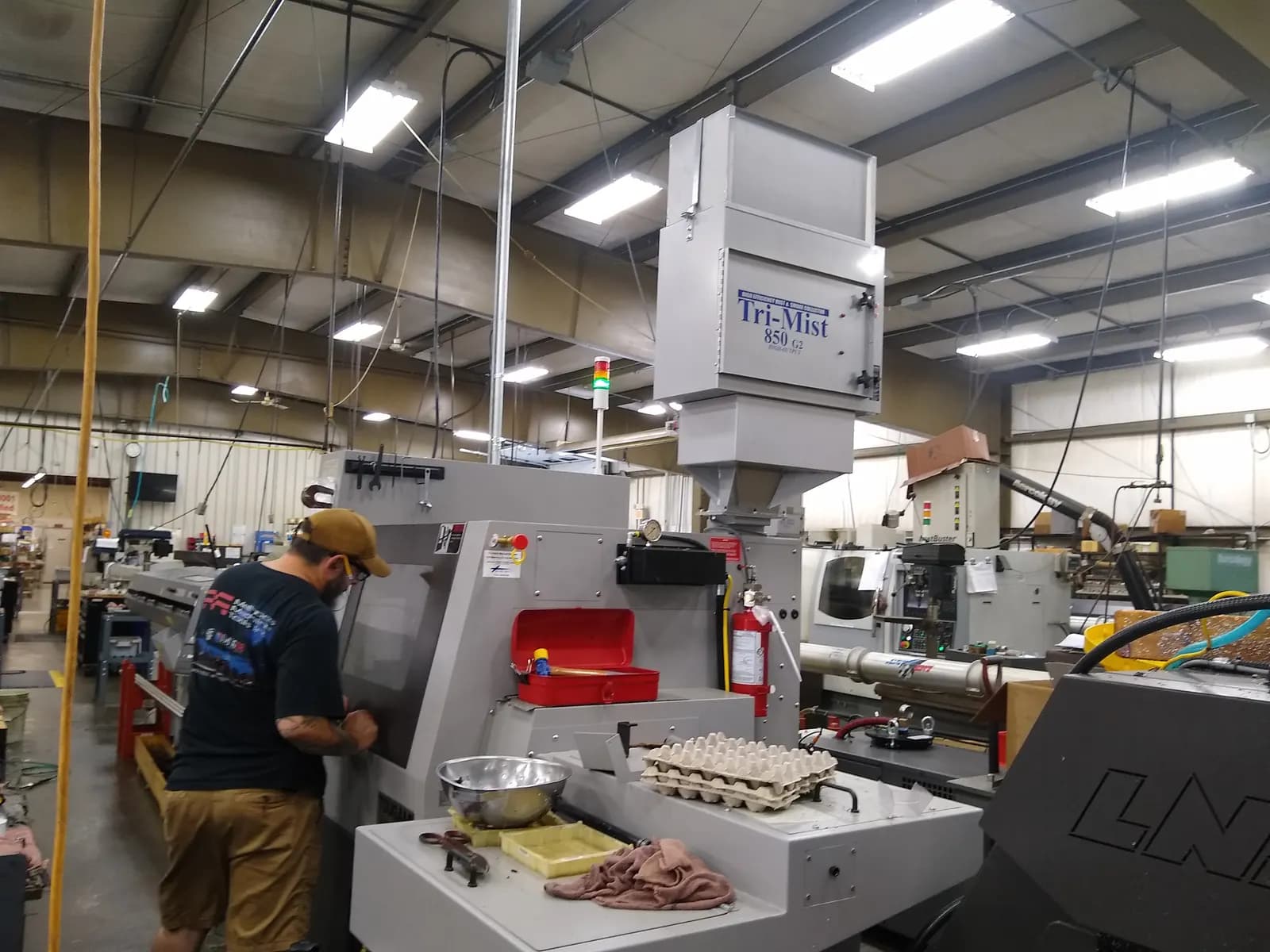
CNC stands for computer numerical control: the machine follows a programme of coordinates and commands instead of a person turning handwheels. A good course has three parts. The first is programming — G-codes for movement (rapid, linear and circular interpolation), M-codes for spindle, coolant and tool changes, canned cycles for drilling and turning, and tool-nose and cutter-radius compensation. The second is operating and setting — homing the machine, setting work and tool offsets, loading programmes, running a dry run, proving the first piece and adjusting wear offsets as tools dull. The third is measurement — using verniers, micrometers, bore gauges and, at higher levels, a coordinate measuring machine to prove the part matches the drawing.
Courses split along machine type. CNC turning (lathes and turning centres) makes round parts — shafts, bushes, pins, flanges. CNC milling (vertical machining centres, or VMCs) makes prismatic parts — plates, brackets, housings, mould inserts. Most centres teach the Fanuc control because it dominates Indian shop floors; some also teach Siemens or Heidenhain. IDTR Jamshedpur, for example, lists CNC turning on Fanuc, CNC milling on Fanuc and Heidenhain, and CNC commissioning and maintenance at its Siemens-authorised training centre.
Programmer-level courses add CAD/CAM: you draw or import the part, and software such as Mastercam generates the toolpaths and post-processes them into G-code. That's how complex mould and die work is done. Operator-level courses stick to manual programming and machine handling, which is what most first jobs need.
A simulator-only course is not a CNC course. Several government centres use simulators for the first week so you don't crash an expensive machine, but you should be cutting metal on a real machine for most of the course. Ask how many hours you'll spend at the machine before you pay.
Government CNC courses and fees by centre
The table pulls together CNC-specific courses from each centre's current published course list. Fees are as published; most include GST where the centre says so, and SC/ST waivers apply on NSQF courses at the MSME tool rooms.
| Centre | Course | Duration | Entry | Fee (official) |
|---|---|---|---|---|
| CTR Ludhiana | CNC Programming or CNC Machining — Lathe / Milling (each) | 96 hours | Class 10 | ₹12,390 |
| CTR Ludhiana | CNC Programming & Machining (combined) | 2 months | Pursuing degree/diploma/ITI (mech.) | ₹31,270 |
| CTR Ludhiana | CNC simulator | 4 weeks, 4 hrs/day | Degree/diploma/ITI or working | ₹20,000 |
| CTTC Bhubaneswar | CNC Programming / Machining on Lathe or Milling | 1 month | See centre's list | ₹6,336 |
| CTTC Bhubaneswar | Asst. Operator – CNC Milling or Turning (NSQF L3) | 6 months | Class 10 | ₹22,500 |
| CTTC Bhubaneswar | Technician – CNC Machining (NSQF L4) | 6 months | Class 12 / ITI Fitter | ₹22,500 |
| CTTC Bhubaneswar | CNC Programmer – Tool Room (NSQF L4.5) | 6 months | Diploma (mech./prod./auto) | ₹34,310 |
| CITD Hyderabad | Asst. Operator CNC Milling / Turning; Technician – CNC Machining; CNC Programmer – Tool Room | 600 hours | Class 10 (age 15+) / ITI or diploma (17+) / diploma | ₹29,400 + ₹1,000 |
| IDTR Jamshedpur | Asst. Operator CNC Turning / Milling; Technician – CNC Machining; CNC Programmer – Tool Room | 600 hours | Class 10 / ITI / diploma or B.Tech | ₹29,700 |
| NSIC NTSC Chennai | CNC Programming & Operation (lathe/VMC) | 8 weeks | Degree/diploma/ITI (mech.) | ₹8,000 (₹15,000 with CAM) |
| NSIC NTSC Chennai | CNC Operator (lathe or milling) | 3 months | Degree/diploma/ITI (mech.) | ₹12,000 |
| NSIC NTSC Chennai | Programming & operation on 5-axis CNC | 2 months | Degree/diploma/ITI (mech.) | ₹25,000 |
| CIPET (sponsored batches) | Machine Operator – CNC Lathe / Milling (L3.5); Operator & Programmer – CNC Lathe / Milling (L4) | 480 / 660 hours | Age 18+; per sponsor | No fee when sponsored |
How to read this. The cheapest per hour are the one-month CTTC courses and NSIC Chennai's eight-week course. The six-month NSQF courses cost more in total but come with an NSQF level on the certificate, on-the-job training and placement help, and are the ones employers ask about. CITD's list is headed 2024-25 but is still the one linked from its training page, so confirm the fee at registration. CTR Ludhiana's NSQF page still shows 2019-20 batch dates (for example, a Master Certificate Course in CNC Technology at ₹45,000), so treat those figures as indicative and ask the centre.
The Indo-German Tool Rooms (Ahmedabad, Aurangabad and Indore) and their extension centres also run CNC programming courses without an entrance test, but don't publish a consolidated fee list online — see our IGTR guide and ask the nearest campus.
The NSQF ladder: which CNC course fits your qualification
The six-month government courses follow the National Skills Qualifications Framework (NSQF). The level on your certificate tells an employer what you're trained to do. The same qualification titles appear at CTTC, CITD and IDTR, because the Ministry of MSME's tool rooms align their courses to the same NSQF qualification titles.
Which six-month CNC course to take
| Your qualification | Course | NSQF level | What you'll be able to do |
|---|---|---|---|
Class 10 | Assistant Operator – CNC Turning or CNC Milling (Tool Room) | 3 | Run a set-up machine, load parts and programmes, measure parts, basic AutoCAD |
ITI (Fitter/Machinist) or Class 12 | Technician – CNC Machining | 4 | Write and edit programmes, set offsets, machine parts; CAM basics (Mastercam) |
Diploma or B.Tech (mech./prod./auto) | CNC Programmer – Tool Room | 4.5 | Programme complex tool-room parts, plan processes, inspect to drawing |
Diploma or B.Tech | Junior Designer CAD/CAM | 4.5 | Model parts and moulds and generate CNC toolpaths |
Class 10
- Course
Assistant Operator – CNC Turning or CNC Milling (Tool Room)
- NSQF level
3
- What you'll be able to do
Run a set-up machine, load parts and programmes, measure parts, basic AutoCAD
ITI (Fitter/Machinist) or Class 12
- Course
Technician – CNC Machining
- NSQF level
4
- What you'll be able to do
Write and edit programmes, set offsets, machine parts; CAM basics (Mastercam)
Diploma or B.Tech (mech./prod./auto)
- Course
CNC Programmer – Tool Room
- NSQF level
4.5
- What you'll be able to do
Programme complex tool-room parts, plan processes, inspect to drawing
Diploma or B.Tech
- Course
Junior Designer CAD/CAM
- NSQF level
4.5
- What you'll be able to do
Model parts and moulds and generate CNC toolpaths
CIPET's NSQF list adds a plastics-industry flavour: Machine Operator – CNC Lathe and CNC Milling at Level 3.5 (480 hours), and Machine Operator & Programmer – CNC Lathe and CNC Milling at Level 4 (660 hours), aimed at mould-making shops.
If you have none of these qualifications, two other routes exist. ITI trades such as Machinist and Turner are two-year NCVT courses that include CNC work; several tool rooms run them, IDTR Jamshedpur among them. And assistant operator – conventional machines courses (1,200 hours from Class 8 at IDTR) build basic machining skills first.
Working machinists who already run CNC machines but have no certificate can ask a centre about a short upgrade course instead of starting from Level 3 — the 96-hour and one-month courses suit that, and a combined programming-and-machining course (two months at CTR) covers both sides.
Where to train: picking a centre by region
Distance matters more than a few thousand rupees of fee difference, because a six-month course away from home can cost more in rent and food than in tuition. The MSME tool rooms are spread so that most states have one within a day's travel.
In the north, CTR Ludhiana runs the most frequent short CNC batches, and its extension centres at Nilokheri, Karnal and Faridabad in Haryana teach CNC programming and turning closer to Delhi NCR. NSIC's Okhla centre in New Delhi also runs CNC and CMM courses. In the east, CTTC Bhubaneswar and IDTR Jamshedpur both offer the full NSQF CNC ladder, and IDTR's extension centres at Patna and Godda run shorter CNC turning and milling courses for Bihar and the Santhal Parganas. In the south, CITD Hyderabad (with its Vijayawada sub-centre) and NSIC's Chennai centre are the main options; Chennai is the place to look if you specifically want 5-axis training. In the west, the three Indo-German Tool Rooms and their satellites in Pune, Nagpur, Bhavnagar and Sanand serve the auto-component belts of Maharashtra and Gujarat.
CIPET has the widest footprint of all — around 40 locations — but its CNC courses are geared to mould making and its free seats depend on a sponsor running a batch at that centre. If you live near an auto or two-wheeler cluster, choose the centre whose recruiters match it: a course next to the factories that will hire you also makes on-the-job training and interviews easier.
Can you learn CNC online?
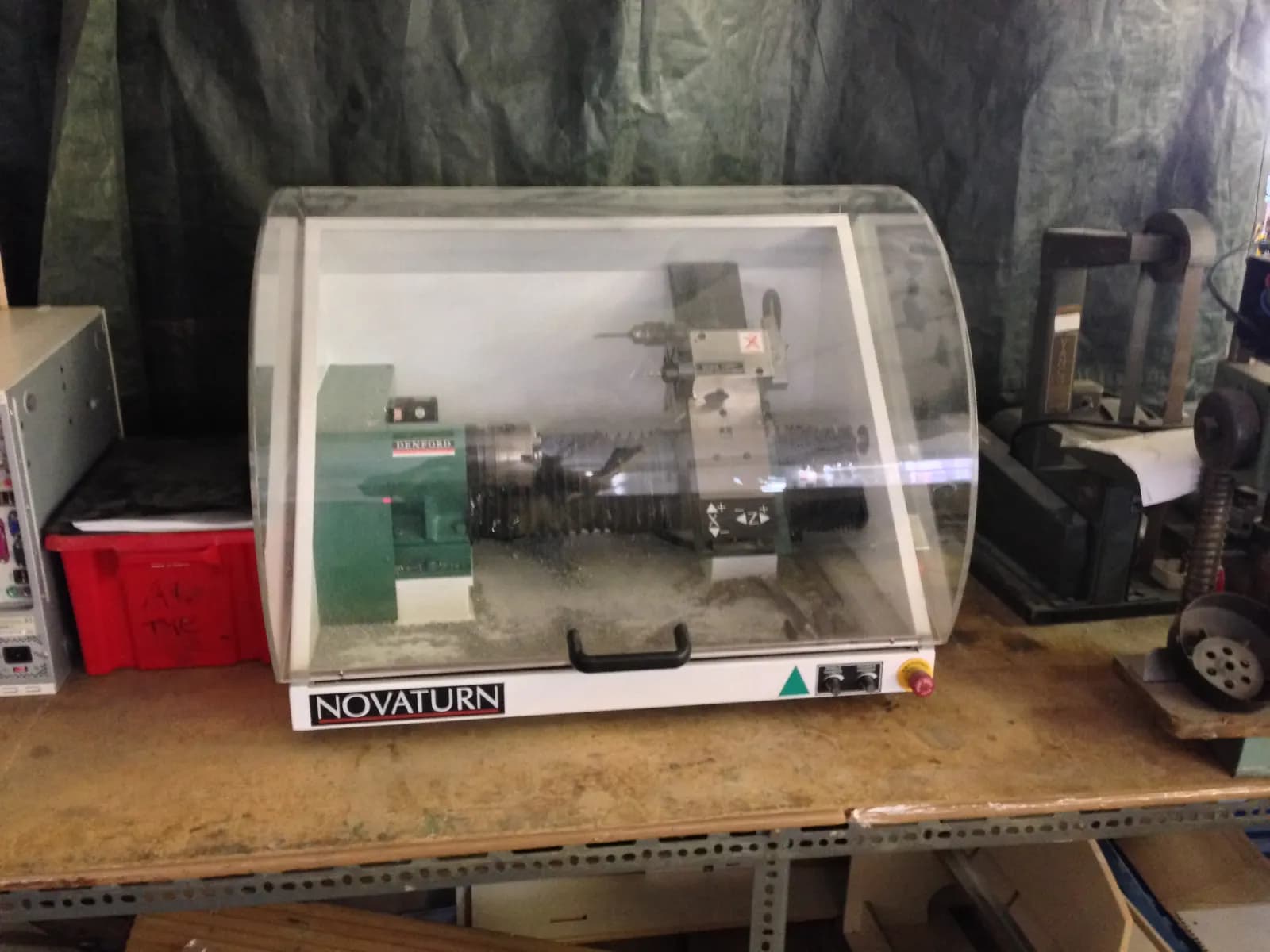
Partly. Online video courses and free simulators are a good way to learn G-code syntax, read programmes and understand canned cycles before you join a course, and some centres teach theory online. But setting tools, touching off a workpiece, judging chip colour and sound, and measuring a finished part can only be learned at a real machine. Employers test exactly those skills in a practical interview. Treat online learning as preparation, then spend your money on hours at a machine.
Free and subsidised CNC training
You can often learn CNC for little or nothing, but the free seats are tied to schemes and categories.
SC/ST fee waivers. All three of CTTC, CITD and IDTR say their NSQF courses are free of course fee for SC/ST candidates under Government of India norms. IDTR's list states this plainly at the top; CITD still collects the ₹1,000 registration fee.
Sponsored residential batches. Tool rooms run fully free courses when a scheme pays. In August 2026 IDTR Jamshedpur advertised free residential NSQF courses — CNC Programmer – Tool Room for mechanical, production and automobile diploma holders, and Senior Technician – Machine Maintenance & Automation for electrical and electronics diploma holders — free for SC/ST candidates with food and lodging, sponsored through the SC/ST Hub. The deadline was extended to 22 August 2026. Similar batches appear at other tool rooms through the year, so check each centre's notice board.
CIPET sponsored programmes. CIPET charges no course fee on skill programmes sponsored by central or state agencies or PSUs, provides free boarding and lodging on residential batches, and supplies course material, tool kit, uniform and shoes. The minimum age is 18, and selection follows the sponsoring agency's guidelines. Its target groups include school dropouts, ITI and polytechnic holders, unemployed youth, economically weaker candidates and women.
PMKVY. Pradhan Mantri Kaushal Vikas Yojana 4.0, the government's main free short-term training scheme, was slated to run until 2026. As of March 2026 the Ministry of Skill Development and Entrepreneurship was preparing a PMKVY 5.0 for approval, with ideas such as skill vouchers and loans reported. Whether a free CNC batch is available near you depends on a PMKVY-affiliated training centre offering a CNC qualification that year. Search the Skill India Digital Hub for "CNC" and your district, and ask the centre whether the batch is free, how many hours are on a real machine and who issues the certificate.
How to enrol
Short and NSQF CNC courses have no entrance test at any of the tool rooms; they fill on a first-come, first-served basis. The diplomas are different — those have entrance exams and age limits, covered in each centre's guide.
Getting a seat on a government CNC course
- 1
Pick the level
Match your qualification to the course: Class 10 → Assistant Operator; ITI/Class 12 → Technician – CNC Machining; diploma/B.Tech → CNC Programmer – Tool Room. For a quick skill, choose a 96-hour or one-month course.
- 2
Check the next batch date
CTR Ludhiana starts short CNC courses every month; CTTC lists fixed start dates for each NSQF course (for example, CNC Programmer batches in May, July, September, November, January and March).
- 3
Register and pay
Fill in the centre's application form and pay the registration fee (₹1,000 at CITD, CTTC and IDTR), usually through SBI Collect or the centre's online link. Registration fees are non-refundable.
Tip: Ask whether the course fee includes GST and whether it can be paid in two instalments — CTTC allows this on six-month courses.
- 4
Bring your documents
Aadhaar, marksheets for the qualification you're entering with, caste certificate if you're claiming a waiver, photos, and safety shoes — most centres make them compulsory on the shop floor.
- 5
Arrange a stay if needed
Hostel seats at tool rooms go first to long-term students. Ask early, or budget for a room nearby.
Costs, time and what to expect afterwards
A realistic budget for a six-month course at a tool room is the course fee (₹22,500 to about ₹34,000), plus about ₹1,000 registration, safety shoes and a basic measuring kit, plus living costs if you're away from home. For a short course, the fee is a few thousand rupees to about ₹12,000.
Worked example — ITI fitter choosing between two routes. Ravi, an ITI fitter from Cuttack, can take two one-month CNC courses at CTTC (lathe programming and lathe machining) for 2 × ₹6,336 = about ₹12,700 and be done in two months. Or he can take the six-month Technician – CNC Machining course for ₹22,500. The short route is cheaper and faster but gives him no NSQF level and no structured on-the-job training. The six-month route costs about ₹9,800 more and four extra months, but adds CAM, metrology and placement support. If Ravi already has an offer from a local job shop that only needs him to run a lathe, the short courses are enough. If he wants a tool-room or auto-component job in another city, the NSQF certificate is worth the extra cost.
Jobs and pay. Course leavers usually start as CNC operators or trainee setters in auto-component, tool-room, defence, aerospace and general engineering units, often on a stipend for the first months. None of the government centres publishes CNC course placement salaries, so ask the placement cell what last year's batch was offered. Pay rises when you can set a machine on your own and fix a programme at the control, and again when you can programme from CAD/CAM.
Common mistakes. The usual ones: paying a private academy for a "government-approved" certificate that carries no NSQF level; choosing a course that is mostly simulator time; picking a milling course when the jobs near you are on turning centres (look at local job posts first); and skipping metrology — most rejections on the shop floor come from bad measurement, not bad programming. Students also miss that the ₹1,000 registration fee isn't refunded if the batch doesn't suit them.
Ask these before you pay for any CNC course
0/8For MSME owners: training your own operators
If you run a machine shop, the same courses double as staff training. Tool rooms take working employees on short CNC courses, and several run tailor-made programmes for a single company's machines. Sending an operator on a 96-hour course for ₹12,390 is cheaper than one crashed spindle or a scrapped batch of castings. When a tool room runs a scheme-funded or subsidised batch for MSME staff, expect to be asked for your Udyam registration. Use our ROI calculator to compare the course fee with what you lose on rework and downtime each month.
Each centre has its own guide on this site with addresses, admission rules and tooling services: IDTR Jamshedpur, CTTC Bhubaneswar, CITD Hyderabad, CTR Ludhiana, the IGTR campuses, CIPET and NSIC Technical Services Centres. For the full list of 18 MSME tool rooms and the newer technology centres, see our MSME Technology Centres guide.
Official CNC course lists
- CTR Ludhiana — short-term CNC courses with feesMonthly batches
- CTTC Bhubaneswar — NSQF and one-month coursesFees and start dates
- CITD Hyderabad — CAD/CAM and CNC NSQF courses (PDF)Eligibility, fees
- IDTR Jamshedpur — NSQF course list (PDF)Hours, levels, fees
- NSIC NTSC Chennai — training calendar 2026-27 (PDF)CNC operator and 5-axis courses
- CIPET — NSQF qualifications approved by NCVET (PDF)CNC lathe and milling operator courses
- Skill India Digital HubSearch PMKVY and other free courses
What to do next
Decide which level fits your qualification, then compare the nearest two or three centres from the table on fee, start date and hours on real machines. If you're SC/ST, ask about the fee waiver and watch for sponsored residential batches. If you're an employer, send one operator on a short course first and measure the change in scrap and set-up time before sending the rest.
Frequently asked questions
It depends on length. One-month CNC programming courses cost ₹6,336 at CTTC Bhubaneswar and 96-hour courses ₹12,390 at CTR Ludhiana. Six-month NSQF CNC courses run from ₹22,500 (CTTC operator level) to ₹34,310 (CNC Programmer – Tool Room). Most MSME tool rooms waive the fee for SC/ST candidates on NSQF courses.
Yes. The NSQF Level 3 courses — Assistant Operator CNC Turning or CNC Milling (Tool Room) — need only Class 10 and run about 600 hours (six months). CITD sets a minimum age of 15 and CIPET's sponsored courses 18. CTR Ludhiana's 96-hour CNC programming course also accepts Class 10 pass. ITI holders can go straight to Technician – CNC Machining.
You can learn basic G-code and M-code programming and simple turning or milling setups in a 96-hour or one-month course. Becoming job-ready as a setter-operator usually needs the six-month (600-hour) NSQF course, which adds metrology, CAD/CAM and on-the-job training. Writing efficient programmes for complex parts takes a further year or two of shop-floor practice.
Yes. MSME tool rooms and CIPET issue certificates for NSQF-aligned qualifications that carry an NSQF level (3 to 4.5 for CNC courses), which employers and the Skill India system recognise. Short non-NSQF courses get the institute's own course certificate. A government tool room certificate generally carries more weight with manufacturers than one from an unaccredited private academy.
Sometimes. MSME tool rooms run free batches when a scheme sponsors them — IDTR Jamshedpur advertised a free residential CNC Programmer – Tool Room course for SC/ST diploma holders in August 2026, with food and lodging. CIPET charges no fee on its sponsored skill programmes. PMKVY courses are free but depend on a training centre near you offering CNC that year.
Start where your qualification fits. Class 10 and ITI holders usually begin as operators (loading, offsets, first-piece inspection) and move up. Diploma and B.Tech holders can go straight into programmer-level courses that add CAD/CAM software such as Mastercam. Programmers and setter-operators are paid more than machine minders because they control cycle time and scrap.
Sources & verification
Figures on this page were checked against the sources below when it was last reviewed on 8 October 2026. Each rate and limit is stored once with its own official source and review date, and official update channels are monitored daily so changes are picked up. How we verify
- 1.Short term courses — CNC programming, machining, wire-cut and simulator (with fees) — Central Tool Room, Ludhiana · accessed 8 October 2026
- 2.Short term courses (NSQF six-month and one-month courses) — Central Tool Room & Training Centre, Bhubaneswar · accessed 8 October 2026
- 3.CAD/CAM NSQF courses list 2024-25 — Central Institute of Tool Design, Hyderabad · accessed 8 October 2026
- 4.NSQF compliant training programmes (course list with fees) — Indo Danish Tool Room, Jamshedpur · accessed 8 October 2026
- 5.Notices — free residential NSQF courses (August 2026) — Indo Danish Tool Room, Jamshedpur · accessed 8 October 2026
- 6.NTSC Chennai training programmes 2026-27 — National Small Industries Corporation · accessed 8 October 2026
- 7.CIPET Qualifications (NSQF aligned) approved by NCVET — Central Institute of Petrochemicals Engineering & Technology · accessed 8 October 2026
- 8.FAQs — Skill Development Training Programmes — CIPET · accessed 8 October 2026
- 9.PMKVY 4.0 meets just 15% of target, MSDE plans version 5.0 — Careers360 · accessed 8 October 2026
MSMETOOLS is an independent platform and is not affiliated with any government agency, ministry or department.
Tools for this
ROI Calculator
Calculate return on investment for your business projects.
Break Even Calculator
Find your break even point and units.
Related guides
 IDTR Jamshedpur 2026: Courses, Fees, Admission & AddressRead guide
 CITD Hyderabad 2026: Courses, Fees, Entrance Exam & AddressRead guide
 IGTR 2026: Indo-German Tool Room Courses, Fees & AdmissionRead guide
 CTR Ludhiana 2026: Courses List, Fees, Admission & AddressRead guide
Official links open the government site in a new tab.